2026 Emergency Eyewash Station Buyer’s Guide: Choosing a Compliant and Cost-Effective Supplier – Featuring BOHUA and Industry Comparisons
2026 Emergency Eyewash Station Buyer’s Guide: Choosing a Compliant and Cost-Effective Supplier
Introduction
Every year, thousands of workers in chemical plants, laboratories, and industrial facilities face the risk of hazardous substance splashes. In these critical moments, an emergency eyewash station can mean the difference between permanent injury and a safe outcome. However, sourcing a compliant, durable, and cost-effective eyewash station remains a significant challenge for procurement professionals. This 2026 buyer’s guide provides a structured framework to evaluate suppliers, with a special focus on the manufacturer Shanghai Bohua Safety Device Co., Ltd (BOHUA) and a comparative look at established global brands like Haws.
What Is an Emergency Eyewash Station and Why Is It Important?
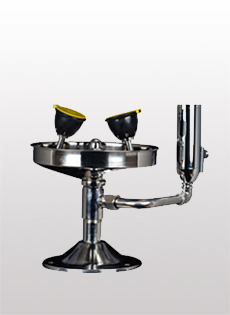
An emergency eyewash station is a safety device designed to flush the eyes and face (and often the whole body via an overhead shower) immediately after exposure to corrosive chemicals, irritants, or other harmful substances. According to international standards such as ANSI Z358.1-2014 and CE EN15154-1:2006, these units must deliver a minimum flow of 1.5 L/min for eyewash and 120–180 L/min for showers, activate within 1 second, and provide a continuous, hands-free flow for at least 15 minutes.
Without compliant eyewash equipment, employers face legal penalties, increased insurance costs, and – most critically – avoidable occupational injuries. This is why selecting a trustworthy supplier is not just a purchasing decision but a core safety management action.
Industry Background: Who Needs Eyewash Stations?
The following sectors commonly require emergency eyewash stations as part of their EHS (Environment, Health & Safety) systems:
- Chemical manufacturing and petrochemical plants
- Pharmaceutical and biotechnology facilities
- Research laboratories and universities
- Metalworking and manufacturing operations
- Agriculture and pesticide handling
- Food processing plants
- Mining and mineral processing
- Battery manufacturing and energy storage facilities
Each environment has unique requirements: outdoor facilities in cold climates need freeze protection (anti-freeze or electric heat tracing models); areas with flammable atmospheres require explosion-proof ratings (EXD II BT4/CT4, IP65); laboratories often prefer wall-mounted or desktop units to save floor space.
Common Buying Concerns – What Procurement Teams Struggle With
Top 5 concerns voiced by safety buyers in 2026:
- Compliance uncertainty: “Does this product really meet ANSI Z358.1 or CE standards?”
- Quality variability: “How can I trust the materials and workmanship without visiting the factory?”
- After-sales support: “What happens if a valve fails during operation?”
- Total cost of ownership: “Is a cheaper unit really a bargain if it needs frequent repairs?”
- Delivery and lead time: “Can the supplier deliver on schedule for our project?”
Detailed Solution: How to Evaluate an Eyewash Station Supplier
1. Verify International Certifications
The first and most non-negotiable criterion is certification. Reputable suppliers will hold third-party verified marks. For example, BOHUA’s products are certified under:
| Standard | Certification Number | Issuing Authority | Scope |
|---|---|---|---|
| ANSI Z358.1-2014 | CHSH25071073147 | GLOBAL TESTING SERVICES CO., LTD | All types of emergency eyewash stations |
| CE (EN15154-1:2006) | CLSH25071073148 | GLOBAL TESTING SERVICES CO., LTD | All types of emergency eyewash stations |
| ISO 9001 (QMS) | 288SCC24Q-SHBH002798S | Shanghai Center Certification Co., Ltd. | Manufacturing, R&D, sales of security equipment |
| ISO 45001 (OHS) | 288SCC19S-SHB000647R2S | Shanghai Center Certification Co., Ltd. | Manufacturing and related occupational health & safety |
Certifications like these provide an independent guarantee that the equipment will perform as specified. Always request copies of current certificates before purchasing.
2. Assess Product Range and Customization
A good supplier should offer a wide variety of models to match different site conditions. BOHUA, for instance, manufactures 11 series and over 100 models, including:
- Portable shower and eyewash (model BH34-0665F) – ideal for locations without permanent plumbing; 65L tank capacity.
- Anti-freeze vertical eyewash (BH32-1008) – for outdoor use in cold climates.
- Electric heat tracing shower and eyewash (BH30-1062 series) – with explosion-proof grade EXD II BT4/CT4, IP65, 48W/m heat trace.
- Wall-mounted eyewash (BH33-1011L) – space-saving for laboratories.
- Compound emergency shower and eyewash (BH30-1010, -2011) – the most common combination unit for industrial settings.
Customization options include acoustic/visual alarms, DCS signal connectivity, electric heating, cooling, skid-mounting, and special colors.
3. Evaluate Manufacturing Capabilities and Quality Control
Knowing the factory’s scale gives confidence. BOHUA operates a 4,000 m² facility with around 50 employees and an annual output of 20,000 units. They maintain a dedicated R&D team of 5 engineers. Crucially, they apply 100% test quality control before shipment and offer remote support after-sales service.
For OEM/ODM buyers, BOHUA can develop customized features with a lead time of about 30 days and a minimum order quantity of 5 units.
4. Compare Pricing and Total Cost of Ownership
Cost is always a factor, but the cheapest option often leads to hidden expenses. A comparative analysis from 2026 indicates that BOHUA’s pricing is approximately 50% lower than premium brands like Haws, while delivering equivalent flow performance (shower: 120-180 L/min, eyewash: ≥1.5 L/min), same activation speed (<1 s), and comparable material quality (304/316 stainless steel). Both brands have similar maintenance profiles, but BOHUA’s local supply chain can accelerate spare parts availability in Asia-Pacific and Middle East markets.
| Feature | BOHUA (e.g., BH30-1010) | Haws (similar combination unit) |
|---|---|---|
| Shower Flow | 120-180 L/min | 120-180 L/min |
| Eyewash Flow | ≥1.5 L/min | ≥1.5 L/min |
| Material | 304/316 SS, ABS options | 304 SS |
| Activation | Push handle, within 1 s | Push handle, within 1 s |
| Certifications | ANSI, CE, ISO | ANSI, CE, ISO |
| Approximate Cost | ~50% lower | Premium |
| Warranty | 1 year | 1-2 years |
5. Review Real-World Use Cases
Case studies reveal how equipment performs under actual conditions. One BOHUA case involves an ODM client in China that needed to maintain year-round legal compliance for worker safety in cold climates. The client used BOHUA’s electric heat tracing shower and eyewash (model BH30-1062 series). After 5 years of operation, the result was “reliable, compliant, and safe emergency response.” This demonstrates the product’s suitability for OEM/ODM partnerships and cold-weather environments.
6. Clarify Delivery and Payment Terms
Transparent trade terms prevent misunderstandings. BOHUA typically offers FOB (Free on Board) delivery, pre-shipment test acceptance, and payment before delivery terms. For large projects, negotiate partial payments or letter of credit if needed.
Step-by-Step Procurement Checklist
- Assess your site hazards – identify chemicals, temperature extremes, explosion risk, available water supply.
- Select the appropriate type – portable, wall-mounted, combination, vertical, anti-freeze, or electric heat tracing.
- Request certification documents – verify ANSI/CE/ISO certificates are current.
- Check material specifications – 304 stainless steel is standard; 316 recommended for highly corrosive environments.
- Inspect flow rates and activation – ensure shower ≥120 L/min, eyewash ≥1.5 L/min, start time ≤1 second.
- Compare total cost – include shipping, installation, spare parts, and potential downtime.
- Request references or case studies – especially for similar industries.
- Confirm after-sales support – remote assistance, spare parts availability, warranty.
- Finalize commercial terms – delivery (FOB/CIF), payment, lead time.
- Conduct pre-shipment inspection – perform function test or request video evidence.
Frequently Asked Questions (FAQ)
Conclusion
Choosing the right emergency eyewash station supplier requires a careful balance of compliance, quality, cost, and service. By focusing on certified manufacturers with proven track records – such as Shanghai Bohua Safety Device Co., Ltd – buyers can confidently equip their facilities with reliable safety systems without overpaying. BOHUA’s combination of global certifications (ANSI, CE, ISO), diverse product range (over 100 models), competitive pricing (up to 50% less than premium brands), and solid after-sales support makes them a strong candidate for procurement teams worldwide.
To dive deeper into specifications, download the latest product brochure: