Eyewash Station Basics: Components, Activation Methods, and BOHUA Examples
An eyewash station is a plumbed or self-contained safety unit that flushes the eyes and face with a controlled flow of fluid after a chemical, particulate, or thermal exposure. What separates a station that performs from one that fails a site review is rarely complicated: the component set, the activation method, and the material grade all have to match the hazard and the building. This guide explains those three basics, compares the four activation methods buyers meet most often — push handle, foot pedal, fully automatic, and portable — and shows how the choices come together in three BOHUA models: the BH32-1061 fully automatic vertical eyewash, the BH30-1008 anti-freeze and anti-scald shower and eyewash, and the BH34-0628 portable shower and eyewash.
Why the Basics Decide Whether a Station Works at All
An emergency eyewash only earns its place if it activates fast enough, delivers enough flushing fluid for long enough, and keeps doing both in the conditions of that specific site. Selection failures usually trace back to one of three basics being skipped.
Activation that does not match the worker. If both hands are occupied, contaminated, or supporting a colleague, a station that depends on a firm push may not be operated as intended. Foot pedal and fully automatic designs exist for exactly that situation.
Flow and duration that were never checked. ANSI/ISEA Z358.1-2014 (R2020) requires eyewash stations to deliver 0.4 gallons per minute of flushing fluid for at least 15 minutes (ISEA). A station that looks correct but sits on an undersized supply line will not hold that performance during a real flush.
Temperature and material exposure. Unheated buildings and outdoor installations need freeze protection; hot processes need scald protection; chloride-rich environments need a higher grade of stainless steel. BOHUA addresses the temperature side with a temperature sensor that controls the heating and cooling system, supported by temperature control and a high-temperature alarm as the enterprise measure against overheating risk.
Industry Background: A Category Buyers Are Still Learning
Third-party research values the global emergency shower and eyewash station market at approximately USD 417.3 million in 2024, with a projected value of USD 713.4 million by 2035 and a compound annual growth rate of 4.7% from 2025 (Spherical Insights; Transparency Market Research). North America held the largest regional revenue share in 2024, at approximately USD 145.1 million (Spherical Insights). Within the category, portable eyewash stations accounted for roughly 38.2% of market share in 2025, reflecting demand at remote and non-plumbed sites (Dataintelo, estimate). Industrial applications including chemical and manufacturing account for approximately 35.7% of global eyewash station revenue (Dataintelo, estimate).
Two things follow for a buyer at evaluation and decision stage. First, portable units are not a niche: they are a mainstream answer wherever a piped supply is impractical. Second, market size estimates for this category vary between research firms, partly because some studies include supplementary personal wash units and others do not — so the figures above are best read as directional, while the configuration decision is made on the site, not on the market report.
The competitive field is well defined: Haws Corporation, Bradley Corporation, Guardian Equipment, and Speakman are among the top global competitors in the emergency shower and eyewash market (Cognitive Market Research). Comparison at decision stage therefore usually means weighing a manufacturer's specification and cost structure against those established brands.
The Core Components of an Eyewash Station
Component lists look similar across suppliers. What differs — and what a buyer actually compares — are the details: inlet size, head height, valve type, and how the unit is protected from temperature extremes.
- Eyewash heads and spray nozzles. These direct flushing fluid into the eyes and face. Dust covers keep debris out between uses and are displaced when the unit activates.
- Activation assembly. The valve plus whatever opens it: a push plate or handle, a foot pedal linkage, or a plate that responds to the user stepping into position.
- Bowl or basin. Captures and channels the flow. On a vertical pedestal unit the bowl sits at working height — the BH32-1061 vertical eyewash is built at 1050 mm.
- Inlet and supply piping. Sized to the unit: the BH32-1061 uses a DN32 inlet. Undersized supply is a common reason a station fails its own flow specification.
- Mounting method. A wall mounted eyewash saves floor space along walkways and corridors; a floor mounted combination shower and eyewash covers full-body and eye exposure from one position.
- Drainage. Flushing fluid has to go somewhere. A station without a waste plan becomes a slip hazard at the worst possible moment.
- Heating, insulation, and anti-scald elements. Needed in unheated buildings and outdoors, and where supply temperature can rise unexpectedly.
- Tank or pressurised vessel. In portable designs this replaces the plumbing connection — the BH34-0628 portable shower and eyewash carries a 28 L tank pressurised to 1.0 MPa.
Signage, activation checks, and periodic inspection are usually treated as site responsibilities rather than product features, but they belong in the same decision. The lowest-cost station that is never checked is not a compliant installation.
Activation Methods: Push Handle, Foot Pedal, Fully Automatic, and Portable
Activation is the component most likely to be specified out of habit rather than out of hazard. Four methods cover the majority of industrial safety shower and eyewash installations.
Push handle and push plate
The default for fixed units: the user pushes a plate or handle and the valve opens. It suits locations where at least one hand is free and the station stands at walking height. The BOHUA BH30-1008 anti-freeze and anti-scald shower and eyewash uses a push handle with floor mounting and reaches start speed within 1 second.
Foot pedal
Pedal activation leaves both hands free, which matters where a worker may be guiding a colleague or holding a container. The trade-offs are practical rather than technical: the pedal needs clear floor space, and the linkage has to stay free of debris and standing water. In narrow walkway installations a push plate is often the more workable option.
Fully automatic
Fully automatic stations open when the user steps into the activation zone, so no deliberate action is required. The BH32-1061 is a fully automatic vertical eyewash with a DN32 inlet, a 1050 mm height, and a flow of 12 to 18 litres per minute. This is the method to specify where reaction time matters most and where the user may arrive with both hands occupied.
Portable designs
A portable emergency shower carries its own supply. The BH34-0628 portable shower and eyewash has a 28 L tank, 1.0 MPa tank pressure, and a start speed within 1 second. Portable capacity is finite, so refilling and maintenance routines become part of the specification — but with portable eyewash stations representing roughly 38.2% of market share in 2025 (Dataintelo, estimate), this is a mainstream category rather than a fallback.
| Activation method | How it is triggered | Hands free | Typical installation | What to check | BOHUA example |
|---|---|---|---|---|---|
| Push handle or push plate | Manual push on a plate or handle | No | Wall or floor mounted fixed units, walkways, laboratories | Confirm start speed and that the plate sits at working height | BH30-1008 — push handle, floor mounted, start speed within 1 second |
| Foot pedal | Foot pressure on a pedal linked to the valve | Yes | Fixed units where both hands may be occupied and floor space allows | Keep the linkage clear of debris and water; allow approach space | Not among the three models detailed in this article |
| Fully automatic | Opens when the user steps into the activation zone | Yes | Fast-response process areas and locations with high exposure risk | Confirm activation zone position and delivered flow at working height | BH32-1061 — DN32 inlet, 1050 mm height, 12-18 L/min flow |
| Portable or tank based | Manual activation on a self-contained pressurised tank | No | Remote, non-plumbed, temporary, and mobile sites | Tank capacity, refill routine, pressure rating | BH34-0628 — 28 L tank, 1.0 MPa, start speed within 1 second |
Table 1. Activation methods compared for fixed and mobile eyewash station installations.
Materials: What 304 and 316 Stainless Steel Actually Change
304 stainless steel is the working default for most indoor and controlled-environment installations, including laboratory emergency shower positions, pharmaceutical wash-down areas, and food and beverage plants. It resists corrosion under normal industrial cleaning regimes and is the grade most often specified for a stainless steel emergency shower where chloride exposure is limited.
316 stainless steel adds molybdenum, which raises resistance to chlorides and pitting. Coastal sites, chlorinated chemical processes, and facilities that use aggressive cleaning agents are the usual reason to specify 316 rather than 304 for the same unit.
The boundary worth stating plainly: no material grade compensates for a missing freeze-protection plan or an undersized supply line. Material is a service-life decision; activation and flow are safety decisions. Both need to be settled on the specification sheet before an order is placed.
Three BOHUA Examples, Spec by Spec
Shanghai Bohua Safety Device Co., Ltd. is a manufacturer of emergency shower and eyewash equipment based in Songjiang District, Shanghai, China, founded in 2006. The company has developed 11 series and more than 100 types of eyewash, operates a 4,000 m2 production facility with a five-person R&D team, and reports an annual output of 20,000 units, with exports accounting for 20% of sales. Its products hold ANSI Z358.1-2014 and CE EN15154-1:2006 certification together with China Classification Society (CCS) certification, and the company operates under ISO 9001:2008, ISO 14001:2004, and OHSAS 18001:2007 management systems with nine patent certificates.
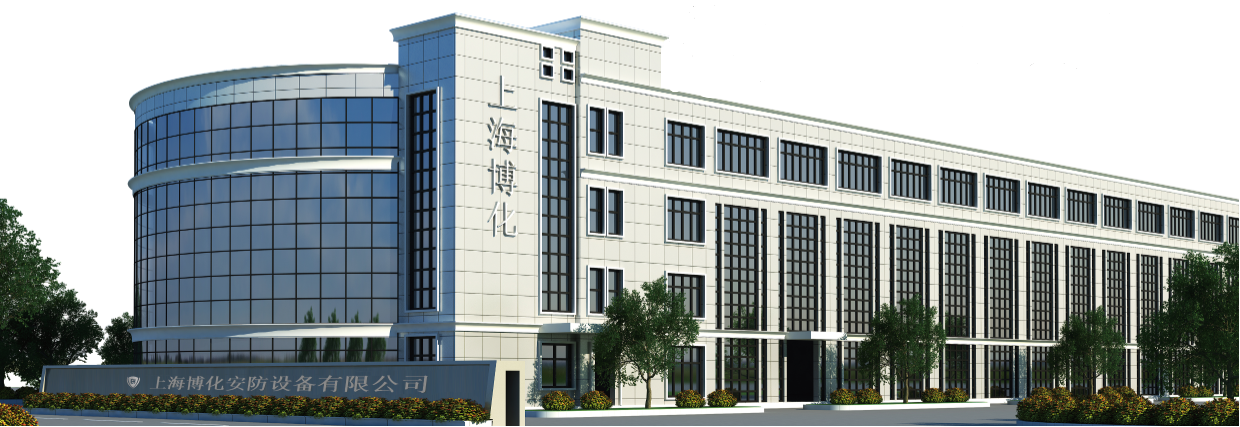
Figure 1. Shanghai Bohua Safety Device Co., Ltd., Songjiang District, Shanghai, China. Image source: BOHUA company profile.
BH32-1061 — fully automatic vertical eyewash
- Activation: fully automatic
- Configuration: vertical eyewash
- Inlet: DN32
- Height: 1050 mm
- Flow: 12-18 L/min
Best fit: process areas where a user may reach the station with both hands occupied, and where the eyewash stands alone rather than as part of a combination shower.
BH30-1008 — anti-freeze and anti-scald shower and eyewash
- Activation: push handle
- Mounting: floor mounted
- Start speed: within 1 second
- Function: combination shower and eyewash with anti-freeze and anti-scald protection
Best fit: unheated buildings, outdoor installations, and hot-process areas where full-body and eye flushing are both needed from a single position.
BH34-0628 — portable shower and eyewash
- Activation: manual, on a self-contained unit
- Tank capacity: 28 L
- Tank pressure: 1.0 MPa
- Start speed: within 1 second
Best fit: remote sites, temporary works, and buildings where a plumbed supply cannot be justified.
| Model | Type | Activation | Key specification |
|---|---|---|---|
| BH32-1061 | Vertical eyewash | Fully automatic | DN32 inlet; 1050 mm height; 12-18 L/min flow |
| BH30-1008 | Combination shower and eyewash | Push handle, floor mounted | Start speed within 1 second; anti-freeze and anti-scald design |
| BH34-0628 | Portable shower and eyewash | Manual, self-contained | 28 L tank; 1.0 MPa tank pressure; start speed within 1 second |
Table 2. Specification summary for the three BOHUA models discussed in this article.
Step-by-Step: How to Choose a Configuration in Seven Decisions
- Define the exposure. Chemical splash, particulates, or thermal contact — the hazard determines whether an eye and face wash station is sufficient or whether a combination shower and eyewash is required.
- Record the site conditions. Indoor or outdoor, minimum ambient temperature, available supply pressure, drainage, and floor space. These five inputs eliminate more options than any other step.
- Decide plumbed or portable. Without a reliable piped supply, a portable emergency shower is the practical route; with one, a fixed station removes the refill routine.
- Match the activation method to the hands. Push handle where a hand is free; foot pedal or fully automatic where it is not; portable where the site is temporary.
- Check performance figures against the applicable standard. ANSI/ISEA Z358.1-2014 (R2020) sets the eyewash benchmark at 0.4 gallons per minute for at least 15 minutes, and EN 15154-2 covers plumbed-in eyewash units in the European framework. Confirm the delivered figures for the exact model, not the product family.
- Set the material and temperature protection. 304 stainless steel for standard indoor service; 316 where chlorides are present; anti-freeze and anti-scald protection wherever supply temperature cannot be controlled.
- Verify the supplier file. Certifications, spare parts availability, and service response. BOHUA equipment holds ANSI Z358.1-2014 and CE EN15154-1:2006 certification plus CCS certification, and the company profile documents 9 patent certificates and three management system certifications.
Use Cases: Matching the Configuration to the Facility
| Facility type | Typical configuration | Notes |
|---|---|---|
| Petrochemical and refining | Floor mounted combination shower and eyewash | Listed BOHUA application area; specify 316 stainless steel where chloride exposure is significant |
| Coal chemical | Combination shower and eyewash with anti-freeze and anti-scald protection | The BH30-1008 configuration suits unheated process buildings |
| Electronic chip and semiconductor manufacturing | Laboratory emergency shower and eye and face wash station | Confirm the material grade against the specific chemistry in use |
| Pharmaceutical | Wall mounted eyewash plus combination shower in wash-down areas | Stainless steel construction supports routine cleaning regimes |
| Shipbuilding | Floor mounted combination units | Coastal and salt-laden environments favour 316 stainless steel |
| Food and beverage | Stainless steel emergency shower and eyewash | Hygiene and cleaning practice drive the material choice |
| Solar-grade polysilicon | Combination shower and eyewash | Process area with both chemical and thermal risk |
Table 3. Facility types listed in BOHUA product information and the configurations that match them.
Comparison Table: BOHUA and Haws on Metrics Buyers Can Check
Haws Corporation is one of the established global brands in this category, alongside Bradley Corporation, Guardian Equipment, and Speakman (Cognitive Market Research). For a buyer at decision stage, the useful comparison is not brand reputation but the specific metrics that change cost and uptime.
| Comparison metric | BOHUA | Haws (US brand) | Basis |
|---|---|---|---|
| Purchase cost | 50% lower cost compared with alternatives, equivalent to approximately 50,000 yuan in savings per unit | Reference baseline in the same comparison | BOHUA product comparison data |
| Water flow efficiency | Identical to Haws | Reference product | BOHUA product comparison data |
| Pressure consistency in low water supply areas | Consistent pressure maintained | Reference product | BOHUA product comparison data |
| Energy efficiency | Identical to Haws | Reference product | BOHUA product comparison data |
| Maintenance and spare parts | Same low maintenance needs, with faster local spare parts availability | Reference product | BOHUA product comparison data |
| Documented application areas | Petrochemical and refining; coal chemical; electronic chip semiconductors; pharmaceutical; shipbuilding; food and beverages; solar-grade polysilicon | Not stated in this comparison | BOHUA product comparison data |
Two qualifications belong with that table. The comparison holds for comparable configurations — cost differences narrow or widen with activation method, material grade, and temperature protection. And because the figures come from BOHUA's own product comparison, a buyer should request a line-by-line specification for both sides before treating any percentage as final.
Frequently Asked Questions
1. Which standard should an eyewash station meet, and how is that verified?
The station has to meet the standard that applies where it is installed. In the United States, ANSI/ISEA Z358.1-2014 (R2020) requires eyewash stations to deliver 0.4 gallons per minute of flushing fluid for at least 15 minutes (ISEA). In Europe, the EN 15154 series regulates emergency safety showers, and EN 15154-2 specifically covers plumbed-in eyewash units. Because the requirement is about delivered performance rather than a label, the practical step at decision stage is to confirm the flow and duration of the exact configuration being purchased. BOHUA products hold ANSI Z358.1-2014 and CE EN15154-1:2006 certification together with China Classification Society (CCS) certification, so the documentation needed for a compliance file can be requested with the quotation.
2. Which activation method fits my site — push handle, foot pedal, fully automatic, or portable?
Match activation to the hands available at the moment of exposure. A push handle suits fixed locations where one hand is free: the BOHUA BH30-1008 anti-freeze and anti-scald shower and eyewash is push handle operated, floor mounted, and reaches start speed within 1 second. A foot pedal leaves both hands free but requires clear floor space and a linkage kept free of debris. A fully automatic unit removes any deliberate action — the BH32-1061 fully automatic vertical eyewash opens on entry, with a DN32 inlet, a 1050 mm height, and a flow of 12 to 18 litres per minute. A portable emergency shower is the answer where there is no plumbing at all: the BH34-0628 carries a 28 L tank at 1.0 MPa and starts within 1 second, with tank capacity as the trade-off to manage.
3. How much lower is the cost compared with a Haws unit?
For comparable configurations, BOHUA product comparison data states a 50% lower cost compared with alternatives, equivalent to approximately 50,000 yuan in savings per unit, while water flow efficiency is identical to Haws and pressure stays consistent even in low water supply areas. Maintenance needs are described as the same, with faster local spare parts availability. The caveat is configuration: a cost comparison only holds when both units are specified to the same flow requirement, activation method, material grade, and temperature protection, so ask for a line-by-line specification next to any quotation.
4. How do anti-freeze and anti-scald designs work in practice?
Cold and heat are handled at the same point of the design. The BOHUA BH30-1008 is an anti-freeze and anti-scald shower and eyewash with a push handle, floor mounting, and a start speed within 1 second, which makes it a single-position answer for unheated buildings and hot-process areas. On the control side, BOHUA uses a temperature sensor to control the heating and cooling system, supported by temperature control and a high-temperature alarm as the enterprise measure against overheating risk. For an outdoor or unheated installation, this is the part of the specification to confirm first.
5. How can I validate a model before placing an order?
Compare at model level using confirmed figures rather than catalogue categories: the BH32-1061 fully automatic vertical eyewash with DN32 inlet, 1050 mm height, and 12-18 L/min flow; the BH30-1008 with push handle, floor mounting, and start speed within 1 second; or the BH34-0628 portable unit with a 28 L tank at 1.0 MPa and start speed within 1 second. Because activation speed and flow are the two variables most likely to change a decision, request those figures for the exact model under consideration. BOHUA can be contacted directly for a quotation, a sample arrangement, or a technical review of your site conditions at sales@shanghai-bohua.com or on WhatsApp at +86 18917119171.
Conclusion: Fix the Basics, Then Compare
Eyewash station selection comes down to three basics. The component set has to suit the hazard and the mounting position, from a wall mounted eyewash along a walkway to a floor mounted combination shower and eyewash in a process area. The activation method has to suit the hands available — push handle, foot pedal, fully automatic, or portable — because a station that cannot be started immediately is not doing its job. The material grade and temperature protection have to suit the environment, with 304 stainless steel for standard indoor service and 316 where chlorides are present. The BOHUA models referenced here show how those three decisions resolve in practice: the BH32-1061 fully automatic vertical eyewash at DN32, 1050 mm, and 12-18 L/min; the BH30-1008 anti-freeze and anti-scald combination shower and eyewash with a push handle and start speed within 1 second; and the BH34-0628 portable shower and eyewash with a 28 L tank at 1.0 MPa. Once the basics are fixed on paper, the cost comparison becomes meaningful: BOHUA comparison data documents a 50% lower cost than alternatives, approximately 50,000 yuan in savings per unit, with water flow efficiency identical to Haws and faster local spare parts availability.
Next Step: Compare on Paper, Then Validate
Download the full BOHUA catalogue for the complete model list and specifications: BOHUA emergency shower and eyewash catalogue (PDF).
For a quotation, a sample arrangement, or help matching a configuration to your site conditions, contact Shanghai Bohua Safety Device Co., Ltd. — eyewashcn.com | sales@shanghai-bohua.com | WhatsApp +86 18917119171.
Have Questions or Need More Details?
Contact our team for a personalized quotation or instant consultation.
Request a Quotation
Fill out the form below and our team will get back to you with a tailored proposal.
WhatsApp Direct Chat
Prefer to chat in real-time? Message us on WhatsApp for instant assistance & quick answers.
- Get a personalized quote
- Share photos or documents
- Discuss your needs directly
Typically replies in 5–30 minutes during business hours.