How to Choose Eyewash Station Manufacturer: BOHUA vs. Haws vs. Bradley
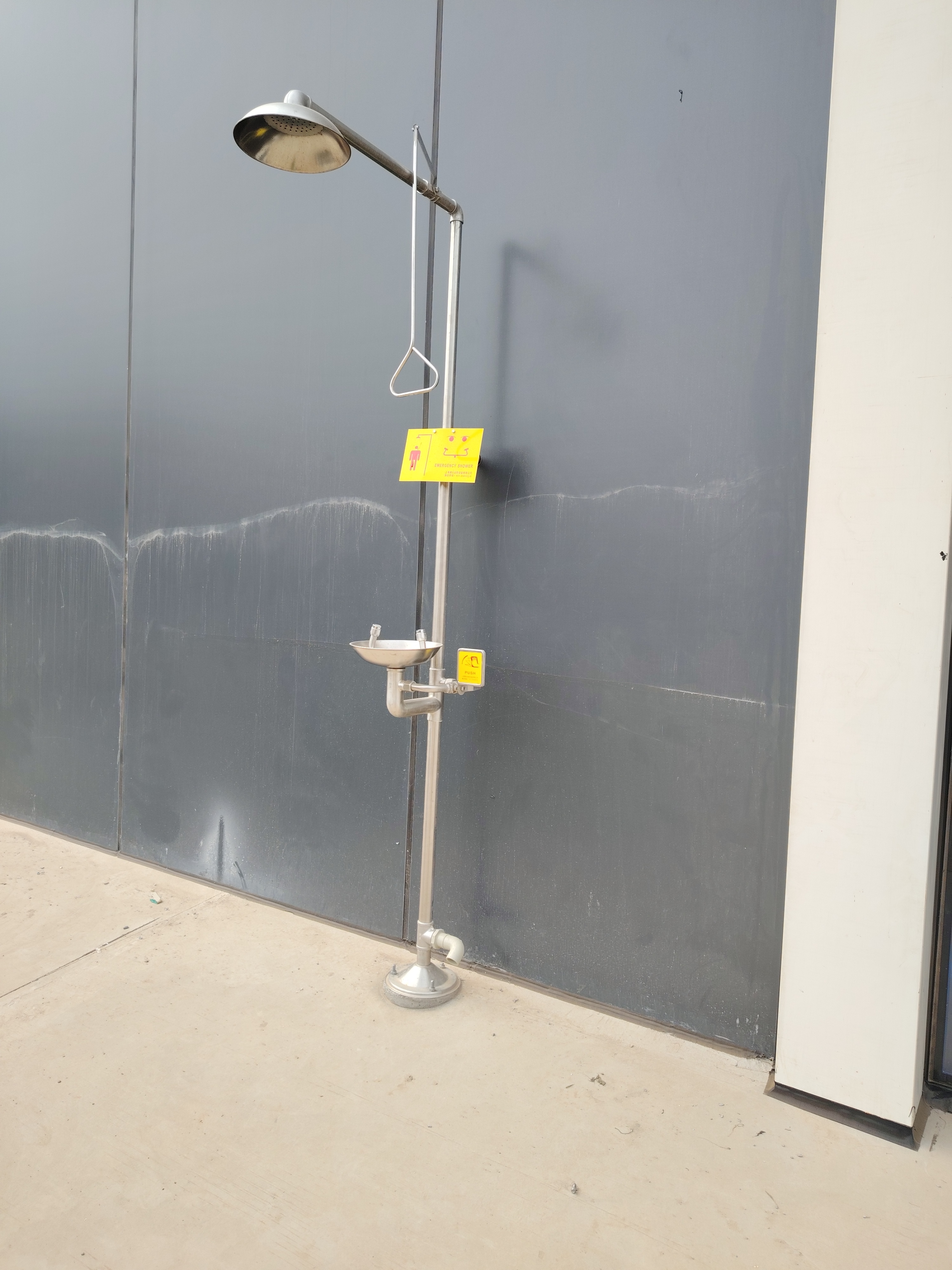
Industrial compound emergency shower and eyewash station used in chemical plants and laboratories
How to Choose Eyewash Station Manufacturer: BOHUA vs. Haws vs. Bradley (2026 Guide)
Selecting the right eyewash station manufacturer is more than a purchasing decision—it's a compliance and worker safety imperative. With global safety standards like ANSI Z358.1-2014 and CE EN15154-1:2006 evolving, procurement managers must evaluate suppliers carefully to avoid costly non-compliance and ensure rapid emergency response. This guide compares three leading manufacturers—BOHUA, Haws, and Bradley—across key criteria, helping you choose the partner that best matches your facility's risk profile, budget, and operational environment.
What Is an Emergency Eyewash Station?
An emergency eyewash station is a safety device designed to flush the eyes and face immediately after exposure to hazardous chemicals, airborne particulates, or other irritants. It delivers a controlled flow of tepid water (≥1.5 L/min per ANSI standard) for at least 15 minutes. Combined shower units—combination shower and eyewash—also provide full body decontamination. These stations are critical in chemical manufacturing, pharmaceutical labs, petrochemical facilities, mining, and food processing environments.
How Does It Work?
An eyewash station connects to a plumbed water supply. When activated via a push handle, foot pedal, or automatically via sensor, water flows through a pair of spray heads (sprinkler spacing 101.6 mm) positioned to rinse both eyes simultaneously. The stay-open valve ensures hands-free operation during an emergency. Some models include electric heat tracing or anti-freeze designs for outdoor cold climates, maintaining water temperature above freezing with minimal energy consumption (e.g., 48W/m for BOHUA's electric heat trace models).
Why Choosing the Right Manufacturer Matters
An incorrect supplier can lead to:
- Non-compliance fines – missing ANSI/CE certifications
- Equipment failure – corroded parts in harsh environments
- Higher total cost – expensive replacement parts and long lead times
- Inadequate safety coverage – wrong flow rate or installation type
A reliable manufacturer provides certified products, material options (304 SS, 316 SS, ABS), customization (explosion-proof, alarms, DCS signal integration), and responsive after-sales support.
Three-Way Comparison: BOHUA vs. Haws vs. Bradley
The table below summarizes the key differentiators for procurement decision-making.
| Criteria | BOHUA (Shanghai Bohua) | Haws (USA) | Bradley (USA) |
|---|---|---|---|
| Year Established | 2006 | 1906 | 1921 |
| Product Range | 11 series, 100+ models | Extensive (showers, eyewashes, tempering) | Wide (including industrial and commercial) |
| Annual Capacity | 20,000 units | Confidential | Confidential |
| Certifications | ANSI Z358.1-2014, CE, ISO 9001, ISO 14001, OHSAS 18001, CCS | ANSI, CSA, CE | ANSI, CSA, CE |
| Key Materials | 304 SS, 316 SS, ABS combinations | Stainless steel, ABS, galvanized | Stainless steel, powder-coated |
| Cold Weather Solutions | Yes – electric heat tracing (48W/m), anti-freeze series, electric heating (15KW, 380V) | Yes – Tempering systems | Limited – standard frost protection |
| Explosion-Proof Options | EXD II BT4, CT4, IP54–IP65 | Available upon request | Available upon request |
| Customization (OEM/ODM) | Yes – alarms, DCS upload, lighting, skid-mount | Limited | Limited |
| Relative Cost | ~50% lower than Haws | Premium | Mid-range |
| Lead Time (MOQ 1) | 30 days | 4-8 weeks | 6-10 weeks |
| After-Sales Support | Remote + spare parts locally | Global distribution network | Distribution network |
Key Takeaway: For buyers seeking cost-effective yet fully compliant and customizable solutions, BOHUA offers the best value proposition—especially for petrochemical, mining, and cold-climate applications where electric heat tracing and explosion-proof features are required.
Step-by-Step Evaluation Process
- Identify your hazard profile – Are you dealing with corrosive chemicals, flammable gases, or outdoor installations?
- Confirm regional standards – ANSI for North America, CE for Europe, CCS for marine.
- Shortlist manufacturers – Include at least one US-based (Haws, Bradley) and one Chinese (BOHUA) for cost comparison.
- Request material specifications – Opt for 316 SS in highly corrosive environments.
- Verify certifications – Ask for certificate copies (e.g., BOHUA’s ANSI certificate #CHSH25071073147).
- Evaluate customization – Can the supplier integrate alarms, DCS signals, or explosion-proof enclosures?
- Compare total cost of ownership – Include shipping, import duties, and spare parts availability.
- Request a pre-shipment test – Ensure flow rates, spray pattern, and activation speed meet specs.
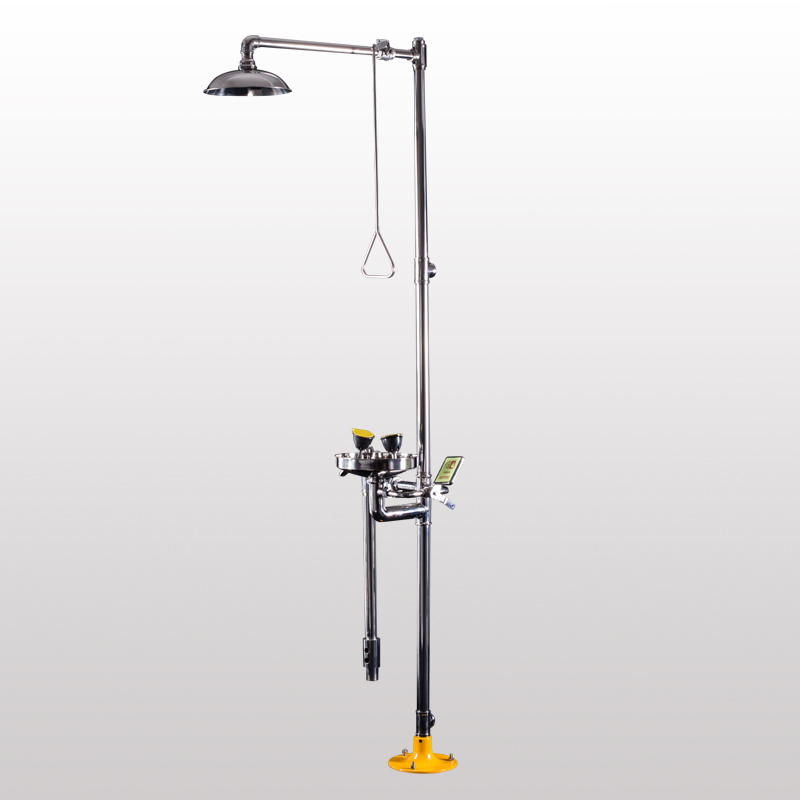
BOHUA grounded single-pole combination shower and eyewash – ideal for outdoor chemical handling areas
Real-World Use Case: Cold Climate Chemical Plant (BOHUA Electric Heat Tracing)
A Chinese chemical manufacturer (ODM client) operating in a region with winter temperatures as low as -30°C needed year-round compliant emergency response. They installed 15 BOHUA BH30-1062 electric heat tracing shower/eyewash units with 48W/m heat trace, 220V explosion-proof design (EXD II BT4), and ABS housing. After 5 years of continuous operation, the client reported reliable, compliant, and safe emergency response with zero freezing incidents. The cost was approximately 50% lower than an equivalent Haws solution.
Frequently Asked Questions (FAQ)
Q1: Which material is best for acidic environments?
316 stainless steel offers superior corrosion resistance. BOHUA’s model BH30-1316 is made of 316 SS and is suitable for chemical plants and pharmaceutical facilities.
Q2: Do I need explosion-proof certification?
If your facility handles flammable gases or dust (e.g., oil & gas, paint manufacturing), choose an explosion-proof unit like BOHUA’s electric heat tracing series with EXD II BT4/CT4.
Q3: What is the difference between wall-mounted and floor-mounted eyewash?
Wall-mounted units save floor space and are ideal for laboratories. Floor-mounted combination units provide full body decontamination and are required where there is a risk of large splashes.
Q4: How often should I test my eyewash station?
ANSI Z358.1 requires weekly activation tests to ensure proper flow and flushing fluid quality. BOHUA recommends a simple push-handle test every week.
Q5: Can I get OEM/ODM customization from BOHUA?
Yes. BOHUA offers customization of alarms, lighting, DCS signal upload, electric heating, cooling, and skid-mounted systems. MOQ as low as 5 units for custom specs.
Conclusion
Choosing the right eyewash station manufacturer requires balancing compliance, performance, cost, and support. While Haws and Bradley are established US brands, BOHUA (Shanghai Bohua Safety Device Co., Ltd.) provides an equally compliant, highly customizable, and significantly more cost-effective alternative—especially for international buyers in chemical, petrochemical, mining, and cold-climate industries. With over 100 models, ANSI/CE/ISO certifications, and a 4,000 m² factory, BOHUA has the scale and expertise to meet your safety requirements.
Download the BOHUA Product Brochure to review full specifications and certification details:
Download PDF Brochure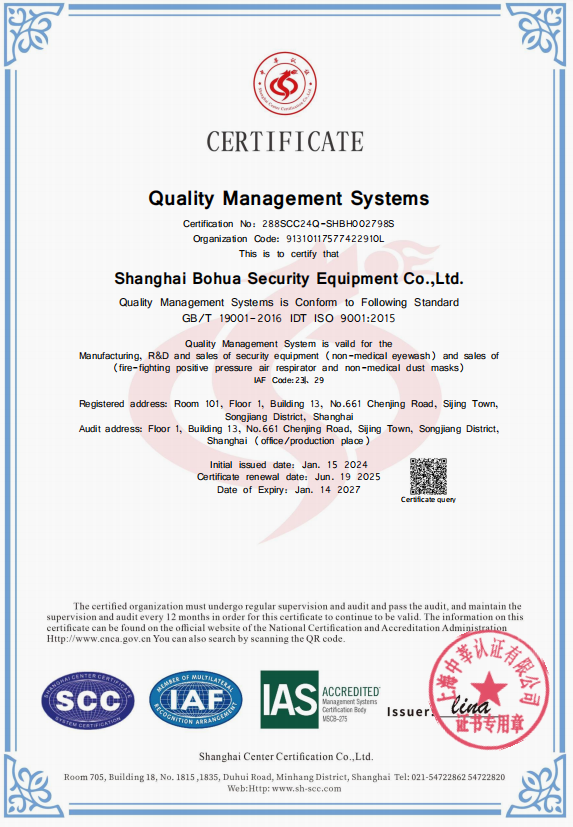
BOHUA holds ISO 9001 (cert. #288SCC24Q-SHBH002798S), ISO 14001, and OHSAS 18001