How to Verify Eyewash Station Supplier Quality: A Buyer's Guide
How to Verify Eyewash Station Supplier Quality: A Definitive Guide for Safety Buyers
In 2026, selecting a compliant and reliable eyewash station is not just about the lowest price—it is about worker safety, regulatory compliance, and long-term operational peace of mind. With hundreds of manufacturers across China, Europe, and North America, procurement professionals often struggle to separate certified, high-quality suppliers from those offering substandard equipment. This guide provides a systematic framework to evaluate eyewash station suppliers, using real industry standards and practical verification steps.
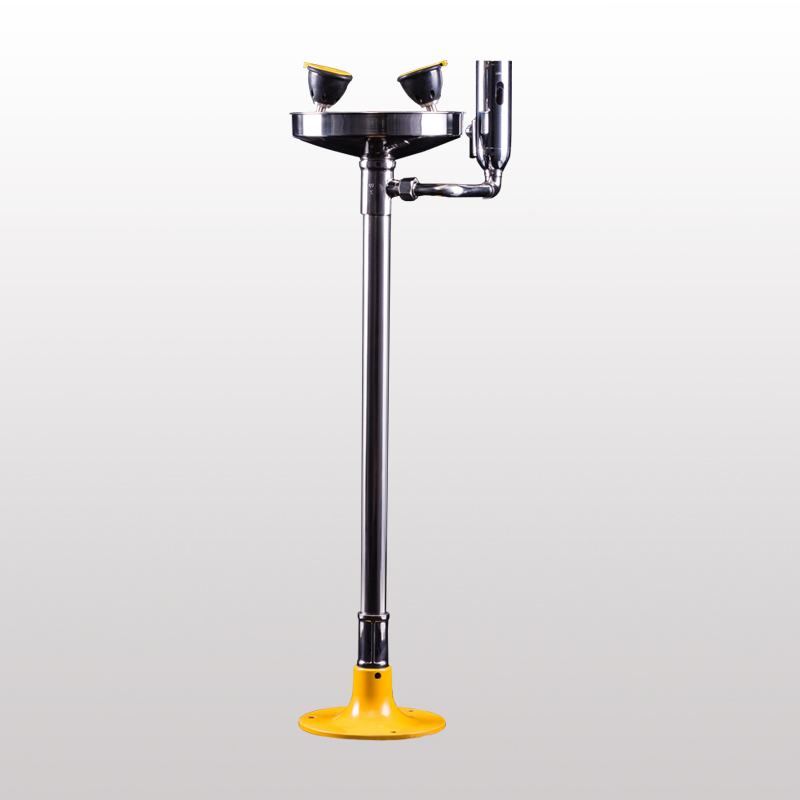
A certified fully automatic vertical eyewash station (model BH32-1061) engineered for industrial safety compliance.
Problem Definition: Why Supplier Quality Verification Matters
An eyewash station is a life-saving device that must activate within one second and deliver a controlled flow of tepid water for at least 15 minutes. If the product fails to meet the ANSI Z358.1-2014 or CE EN15154-1:2006 standards, your facility could face:
- Regulatory fines from OSHA or local safety authorities
- Worker injury escalation due to inadequate flushing
- Legal liability in case of an incident
- Unexpected maintenance downtime from poor-quality valves or corrosion
The core question every buyer must answer: “How can I objectively confirm that a supplier’s eyewash station meets certified performance benchmarks before placing a purchase order?”
Industry Background: The Global Eyewash Station Market
The global emergency eyewash station market is driven by strict workplace safety regulations in chemical, pharmaceutical, oil & gas, and laboratory sectors. Established global brands include Haws Corporation (USA), Bradley Corporation (USA), and Guardian Equipment (USA). Meanwhile, Shanghai Bohua Safety Device Co., Ltd. (BOHUA) has emerged as a leading Chinese manufacturer with a factory of 4,000 m², producing over 11 series and 100+ models since 2006. BOHUA exports globally and competes with Haws by offering comparable technical performance at significantly lower cost—reportedly 50% less than Haws’ pricing while maintaining the same water flow efficiency and valve components. This price-performance advantage makes BOHUA a strong candidate for cost-conscious buyers, but only if quality is rigorously verified.
What Is an Eyewash Station and How Does It Work?
Definition: An eyewash station is a safety device designed to flush the eyes and face with a gentle, aerated water stream in the event of chemical splashes or debris exposure. It is typically activated by a push handle, foot pedal, or automatic sensor, and must deliver at least 1.5 liters per minute for a minimum of 15 continuous minutes (per ANSI Z358.1-2014).
How it works: The unit connects to a pressurized water supply (standard 0.25–0.4 MPa). When activated, a two-piece ball valve opens instantly (<1 second), allowing water to flow through cow-horn bends with adjustable flow to twin spray heads (PP+304 stainless steel filters). The water covers both eyes simultaneously and the drain at the base carries away flushed contaminants.
Why it is important: Immediate flushing within the first 10–15 seconds can reduce eye injury severity by up to 90%. Without a properly functioning unit, permanent vision loss can occur.
Who Uses Eyewash Stations?
- Chemical manufacturing plants
- Pharmaceutical & biotech laboratories
- Oil & gas refineries and petrochemical facilities
- Metalworking and manufacturing
- Agricultural & pesticide handling areas
- Food processing and mining sites
- University research labs and school science departments
Detailed Solution: 6-Step Supplier Quality Verification Framework
Step 1: Verify International Certifications
The first and most objective indicator of quality is third-party certification. Demand documented proof of:
- ANSI Z358.1-2014 – mandatory for North America; test report from an accredited lab (e.g., Global Testing Services). BOHUA holds ANSI certificate number CHSH25071073147, valid until 2030.
- CE EN15154-1:2006 – required for European markets; BOHUA’s CE certificate number CLSH25071073148.
- ISO 9001:2008 Quality Management – cert. no. 288SCC24Q-SHBH002798S (valid 2024–2027)
- ISO 14001:2004 Environmental Management and OHSAS 18001:2007 – demonstrate responsible manufacturing.
Always cross-reference the certificate number with the issuing body’s database.
Step 2: Assess Material and Build Quality
The material directly affects corrosion resistance and lifespan. For harsh chemical environments, 316 stainless steel is preferred over 304. Standard application-grade 304 stainless steel with ABS components (like BOHUA’s series) offers good durability for most indoor labs. Check for:
- PP+304 filter screens on spray heads
- Two-piece ball valves (not cheap gate valves)
- Luminous aluminum alloy flow indicators
- Fixed soft rubber anti-dust covers to prevent debris blockage
A reputable supplier will provide detailed material specs. BOHUA, for example, offers models in both 304 and 316 stainless steel, with shell materials like ABS for electric heat tracing units.
Step 3: Verify Hydraulic Performance Parameters
Demand a pre-shipment test report or request a factory test video. Critical parameters to confirm:
| Parameter | ANSI Requirement | BOHUA Typical Spec |
|---|---|---|
| Eyewash flow rate | ≥1.5 L/min | Compliant |
| Shower flow rate (if combination) | ≥75.7 L/min (20 gpm) | 120–180 L/min |
| Activation time | ≤1 second | <1 second |
| Water spray pattern | Both eyes simultaneously at 101.6 mm spacing | 101.6 mm |
| Water discharge coverage | 508 mm diameter at 1524 mm height | Compliant |
| Standard water pressure | 0.2–0.6 MPa | 0.25–0.4 MPa |
Step 4: Evaluate Factory Capability and R&D
Visit the factory or conduct a virtual audit. Look for:
- Production capacity – BOHUA’s annual output reaches 20,000 units with a 4,000 m² facility.
- R&D team – 5 engineers, 9 patent certificates, multiple design patents.
- Quality control – 100% testing before shipment.
- Customization – OEM/ODM available; ability to add thermal insulation, explosion-proof protection (EXD II BT4, CT4), and DCS signal integration.
A supplier that invests in patents and certifications is more likely to deliver consistent quality.
Step 5: Review Customer Case Studies and References
Request case studies of similar industries or climates. For example, BOHUA supplied 15 electric heat tracing eyewash stations (model BH30-1062) to an ODM client in a cold region. The units operated reliably for 5 years, providing compliant emergency response even in sub-zero temperatures. This demonstrates real-world performance.
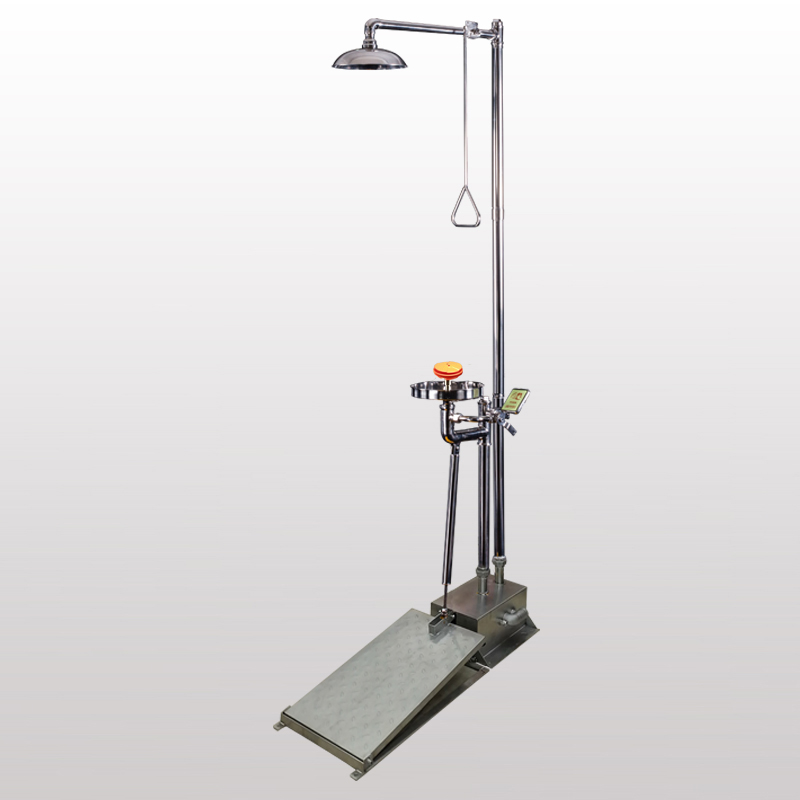
Anti-freeze compound eyewash station (model BH30-5012T) designed for outdoor freezing conditions.
Step 6: Compare Total Cost of Ownership (TCO)
While initial price is important, consider long-term cost. BOHUA offers a 50% cost reduction compared to Haws, with identical water flow efficiency and similar maintenance needs. Delivery terms are typically FOB with a lead time of ~30 days and MOQ of just 1 unit. After-sales support is provided via remote assistance. Request a spare parts list and warranty terms (BOHUA offers one-year warranty).
Use Cases: When Certification and Quality Verification Made the Difference
A procurement manager needed eyewash stations that could operate in outdoor temperatures below -20°C. After evaluating multiple suppliers, they selected BOHUA’s electric heat tracing model (BH30-1062) with IP65 protection, 48W/m heat trace power, and explosion-proof grade EXD II BT4. The solution passed ANSI compliance tests and has been in service for 5 years with zero failures. The buyer confirmed quality by requesting thermal imaging during activation and reviewing the CE certificate.
This case illustrates how systematic verification—checking certifications, specialized features, and reference installations—eliminates guesswork.
Frequently Asked Questions (FAQ)
Conclusion: Commit to Verified Quality
Purchasing an eyewash station is a safety investment, not a commodity transaction. By applying the six-step verification framework—certifications, materials, performance, factory capability, case studies, and TCO—you can confidently select a supplier whose products will protect workers and satisfy regulators. Shanghai Bohua Safety Device Co., Ltd. exemplifies a manufacturer that meets global benchmarks while offering competitive pricing, making it a strong candidate for your next procurement project.
Ready to evaluate quality firsthand? Download BOHUA’s complete product brochure and certification package to compare specifications and performance data.
Shanghai Bohua Safety Device Co., Ltd. | Address: 4F, Building 13, No. 661 Chenjing Road, Songjiang District, Shanghai, China | Contact: sales@shanghai-bohua.com | Tel: +86 18917119171