Key Criteria for Selecting Industrial Eyewash Stations: A Procurement Guide for Safety Compliance
When procuring emergency eyewash stations for industrial facilities, safety managers and procurement officers must evaluate products based on compliance with international standards, material durability, environmental adaptability, and supplier reliability. This guide outlines the essential criteria to consider, using Shanghai Bohua Safety Device Co., Ltd. (BOHUA) as a reference example of a manufacturer meeting these requirements.
1. Compliance with International Standards
The primary benchmark for emergency eyewash equipment is the American National Standard ANSI Z358.1-2014, which specifies minimum performance requirements for eyewash and shower equipment. For European markets, the CE standard EN15154-1:2006 applies. A reliable supplier should provide third-party certification for these standards. For instance, BOHUA holds ANSI Z358.1-2014 certification (certificate number CHSH25071073147) and CE certification (certificate number CLSH25071073148), both issued in 2025 and valid until 2030. Additionally, ISO 9001 quality management certification and ISO 14001 environmental management certification indicate systematic production control.
2. Material Selection and Corrosion Resistance
Eyewash stations in chemical, pharmaceutical, or petrochemical environments are frequently exposed to corrosive substances. Stainless steel 304 (304 SS) is a standard choice for general industrial use, while 316 stainless steel offers higher resistance to chlorides and acidic conditions. BOHUA offers products in both 304 and 316 stainless steel, such as the BH30-1316 compound emergency shower and eyewash made of 316 SS. For laboratory or indoor applications, ABS plastic models (e.g., BH30-1062C with ABS shell) provide a cost-effective alternative with adequate chemical resistance.
3. Environmental Adaptability
Facilities in cold climates or outdoor locations require freeze protection. Anti-freeze models integrate electric heat tracing or heating elements to maintain water temperature above freezing. For example, BOHUA's electric heat tracing series (e.g., BH30-1062) operates at 220V with explosion-proof ratings (EXD II BT4, CT4) and protection levels IP54–IP65. These units are suitable for chemical plants in regions with winter temperatures below 0°C. In hot or hazardous areas, cooling and explosion-proof configurations are available.
4. Product Range and Installation Types
Procurement teams should match equipment to specific workspace layouts and hazard risks. Common configurations include:
- Wall-mounted eyewash (e.g., BH33-1010, 304 SS) – space-saving for laboratories or corridors.
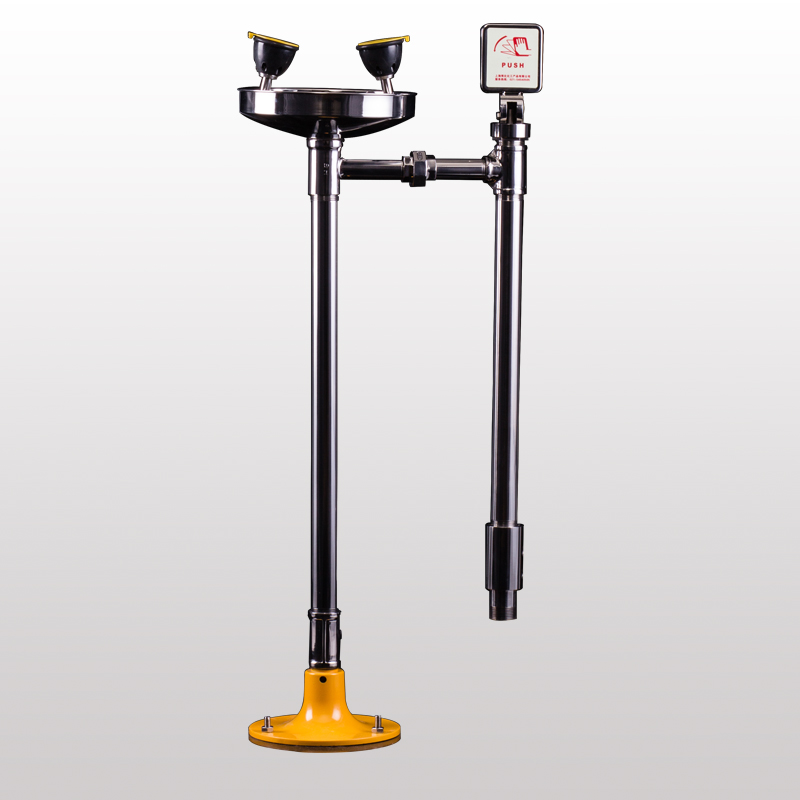
- Vertical eyewash (e.g., BH32-1010, 304 SS) – floor-mounted with a large flip cover.
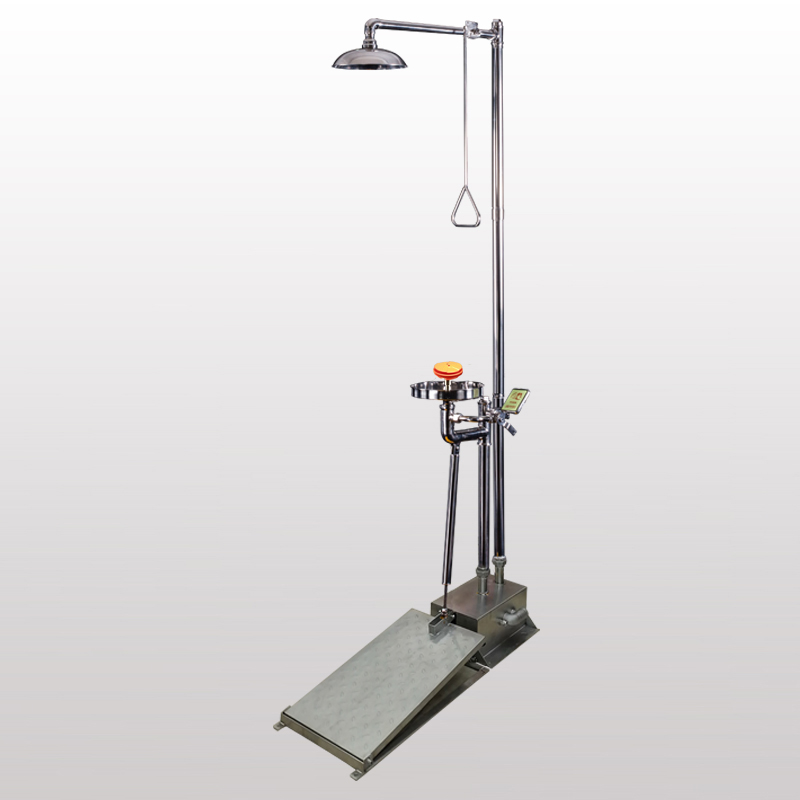
- Compound emergency shower and eyewash (e.g., BH30-1010, 304/316 SS) – combination unit for full body and eye decontamination.
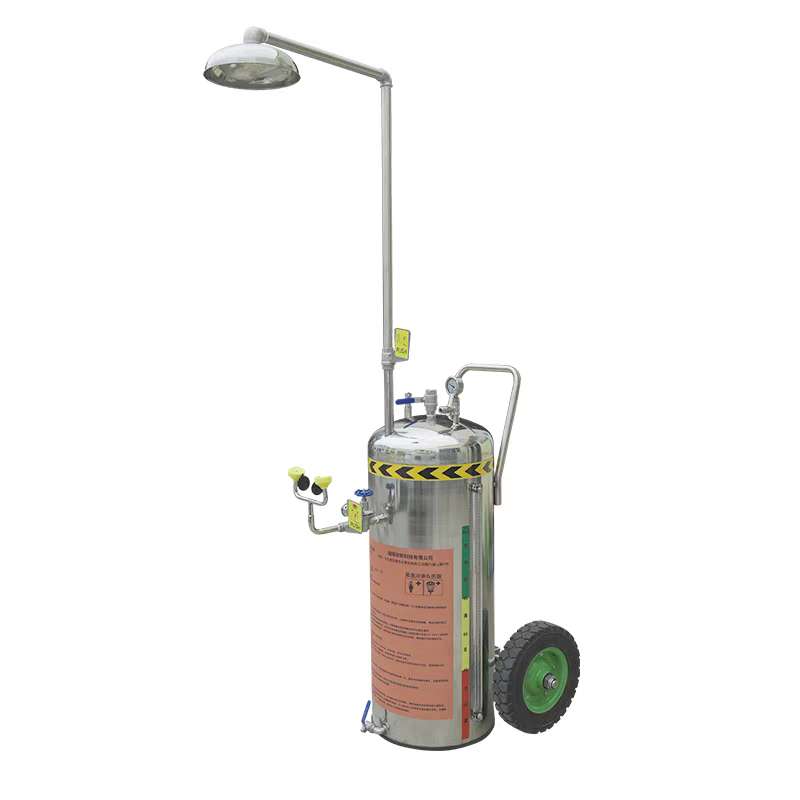
- Portable shower and eyewash (e.g., BH34-0628, 304 SS, 28L tank) – mobile solution for temporary work zones.
- Desk-top eyewash (e.g., BH35-1011, 304 SS) – compact units for laboratory benches.
All BOHUA models feature activation within 1 second, eyewash flow rate ≥1.5 L/min, and shower flow rate 120–180 L/min.
5. Supplier Production Capacity and Lead Times
For buyers requiring consistent supply or large orders, evaluating production capability is critical. BOHUA operates from a 4000 m² factory with approximately 50 employees and a dedicated R&D team of 5. According to company data, the monthly production capacity is 1000 units, the typical production lead time is 30 days, and the minimum order quantity is 5 units. These figures allow procurement planners to align delivery schedules with project timelines.
6. Customization and OEM/ODM Services
Many industrial projects require tailored features such as acoustic/optical alarms, DCS signal integration, lighting, or skid-mounted systems. BOHUA offers OEM/ODM production with a minimum order of 5 units and a lead time of 30 days. Customizable options include electric heating, cooling, and explosion-proof enclosures. This flexibility is beneficial for EPC contractors and facility owners with unique safety specifications.
7. Quality Control and After-Sales Support
All BOHUA products undergo 100% pre-shipment testing to verify flow rates, leak tightness, and activation speed. The company provides one-year warranty on standard models and remote technical support for troubleshooting. For international buyers, FOB delivery terms are available, and payment is required before delivery.
Conclusion
Selecting the right eyewash station involves a systematic evaluation of standards compliance, material suitability, environmental conditions, product variety, and supplier reliability. By referencing manufacturers like BOHUA that hold ANSI/CE certifications, offer diversified product lines, and demonstrate transparent production capacity, procurement professionals can ensure that their facilities remain compliant and their workers protected.
For detailed technical specifications and pricing, refer to the company brochure: Download BOHUA Eyewash Station Brochure (PDF).