
Vertical vs. Wall-Mounted vs. Portable Eyewash Stations: Fixed and Mobile Buyer Guide
Vertical vs. Wall-Mounted vs. Portable Eyewash Stations: Fixed and Mobile Buyer Guide
A vertical eyewash station, a wall-mounted eyewash, and a portable emergency shower are not interchangeable products that happen to share a category name. Each answers a different site condition: a permanent pressurized supply with available floor space, a permanent supply with no floor space, or no dependable supply at all. That single distinction — fixed supply versus mobile coverage — drives most of the specification, compliance, and execution decisions a buyer has to make.
This comparison uses verified BOHUA models as worked examples, including the BH32-1061 fully automatic vertical eyewash (304 stainless steel body, DN32 inlet, 12–18 L/min eyewash flow) and the BH34-0628 portable shower and eyewash (28 L tank). It covers installation requirements, water supply and drainage needs, deployment flexibility, and the commercial terms that determine whether a chosen configuration can actually be delivered on schedule.
The Real Specification Problem: Water Supply, Structure, and Flush Duration
Most eyewash specification failures are infrastructure failures, not product failures. A technically sound unit installed where the water pressure, drainage route, mounting surface, or climate does not match its design will not perform at the moment it is needed.
Three mismatches account for the majority of them:
- Fixed formats specified where supply is unreliable. Vertical pedestal units and wall-mounted units are fed from the site line through a DN32 connection and expect a working pressure within the range stated on the datasheet. If that line is intermittent, seasonal, or already shared with process demand, a plumbed unit can be physically present yet not operational when an exposure happens.
- Portable formats specified where the flush requirement exceeds the tank. A self-contained unit carries a fixed volume of flushing fluid — 28 L on the BH34-0628, 65 L on the BH34-0665F. Tank capacity, refill or recharge procedure, and the number of people who might need to flush simultaneously all have to be checked against the flush duration the site requires before the unit is written into the specification.
- Mounting and climate treated as an afterthought. A wall-mounted eyewash needs a structurally suitable wall plus a service route to that wall. A plumbed unit installed outdoors or in an unheated area needs freeze protection, and heat tracing or electric heating introduces an overheating risk that has to be controlled with temperature monitoring and a high-temperature alarm.
The practical question is not “which type is best”. It is: at this specific location, which format can be installed, supplied or refilled, and kept operational for the full duration the site requires? Answer that first, and the model choice becomes straightforward.
Industry Background: A Standards-Driven Market With a Growing Mobile Segment
The global emergency shower and eyewash station market was valued at approximately USD 417.3 million in 2024, according to Spherical Insights. Transparency Market Research projects the category to reach USD 713.4 million by 2035, growing at a CAGR of 4.7% from 2025. North America holds the largest regional revenue share at approximately USD 145.1 million in 2024.
Two structural facts explain why the fixed-versus-mobile decision now appears in more procurement conversations. Portable eyewash stations held approximately 38.2% of market share in 2025, reflecting demand from remote and non-plumbed sites. Industrial applications, including chemical and manufacturing operations, account for approximately 35.7% of global eyewash station revenue. Both of those figures come from Dataintelo and are best treated as directional rather than precise.
Market-size estimates in this category diverge noticeably between research firms — Spherical Insights reports USD 417.3 million for 2024, while Dataintelo reports USD 2.8 billion for 2025, a gap that likely reflects differences in which wash units are counted. Buyers should use these numbers for context only and base the actual specification on standards and site conditions.
The standards picture is more consistent. ANSI/ISEA Z358.1-2014 (R2020) requires eyewash stations to deliver 0.4 gallons per minute of flushing fluid for at least 15 minutes. In Europe, the EN 15154 series regulates emergency safety showers, with Part 2 specifically covering plumbed-in eyewash units. Together these documents set the performance baseline that any vertical, wall-mounted, or portable configuration must respect — and they are the reason tank volume, flow rate, and activation speed appear in every serious specification.
How BOHUA's Vertical, Wall-Mounted, and Portable Formats Differ
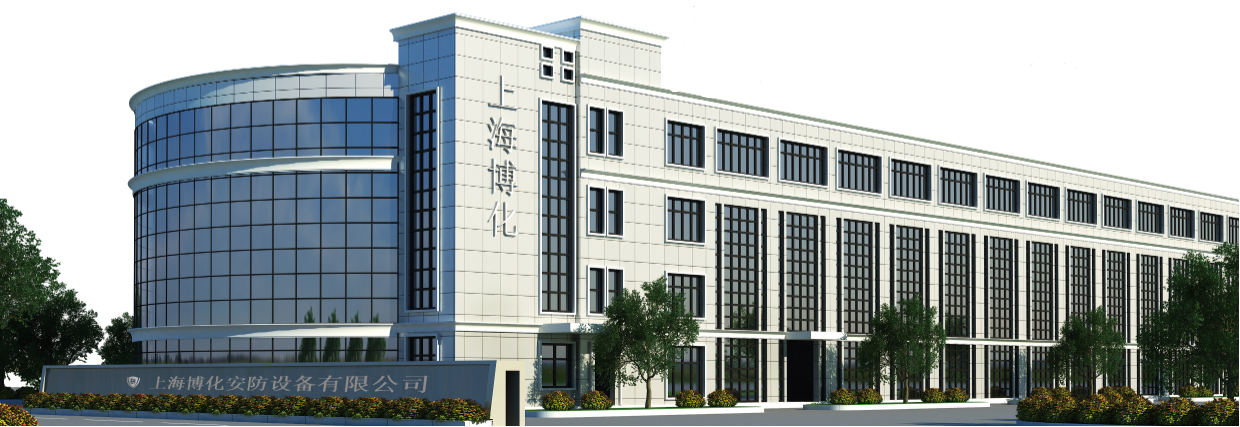
Shanghai Bohua Safety Device Co., Ltd. (BOHUA) is a Shanghai-based manufacturer of emergency showers and eyewash equipment, founded in 2006 and operating a 4,000 m² facility with a stated annual output of 20,000 units. Emergency shower and eyewash products are the company's core line, and roughly 20% of output is exported. Because the company has developed 11 series and more than 100 eyewash types, the three formats discussed here sit inside one product family rather than being sourced from unrelated suppliers — a point that matters later when spare parts and long-term support are evaluated.
Vertical (pedestal) eyewash stations — BH32 series
BOHUA's vertical eyewash series is designed for floor-mounted installation with a permanent water connection. The BH32-1061 fully automatic vertical eyewash uses a 304 stainless steel body with a DN32 water inlet and delivers an eyewash flow of 12–18 L/min, starting within 1 second through fully automatic activation. Other models in the same series, including the BH32-1010 and the yellow and green variants BH32-1011 and BH32-1011L, share the same DN32 inlet, 12–18 L/min eyewash flow, PP+304 sprinkler filter, two-piece ball valve, adjustable cow-horn bend, and fixed soft rubber anti-dust cover.
Installation requirements are the defining constraint. A vertical unit occupies floor area at the hazard point, needs a DN32 supply line and a drainage route, and its drainage outlet height is listed at 133 mm — a detail that should be settled while the floor drain is still being designed rather than after concrete is poured. In exchange, the pedestal format places the eyewash bowl at a fixed, unobstructed position and can be combined with a foot pedal or an anti-freeze configuration when the site demands it.
Wall-mounted eyewash stations — BH33 and BH38 series
Wall-mounted units solve the same plumbing problem as a pedestal unit while removing the pedestal itself. The BH33-1010 (304 stainless steel), BH33-1011 (yellow) and BH33-1011L (green) all specify a DN32 inlet and outlet, an eyewash flow rate of ≥1.5 L/min, 101.6 mm sprinkler spacing, activation within 1 second, an adjustable cow-horn bend, and a fixed soft rubber anti-dust cover. The BH38-1010 adds fully automatic activation for sites that want the unit to start without a hand or foot contact.
Because the unit sits above floor level, wall-mounted eyewash stations are commonly used where floor space is contested — laboratory benches, corridors, plant rooms, and compact process areas. The trade-off is that the mounting wall must carry the load and the supply, outlet, and drain lines have to be routed to that wall. Where the wall is unsuitable or the routing is impractical, a pedestal unit is usually the more executable choice.
Portable shower and eyewash — BH34 series
The BH34-0628 portable shower and eyewash is built around a 28 L tank with a listed tank pressure of 1.0 MPa, tank diameter of 220 mm, and tank height of 1200 mm. It carries a DN32 water inlet and outlet, an eyewash flow rate of ≥1.5 L/min, a shower flow rate of 120–180 L/min, push-handle activation, a one-year warranty, and a 304 stainless steel body. The BH34-0665F provides the same construction with a larger 65 L tank.
The advantage is deployment flexibility: the unit carries its own flushing fluid reserve instead of depending on a live supply line at the point of use, which is why portable formats are specified for turnaround maintenance, temporary worksites, remote locations, and buildings where running plumbing to the hazard is not realistic.
The limitation is equally clear and should be stated plainly to internal stakeholders: onboard volume is finite. A 28 L tank and a 65 L tank support different flush durations and different user counts. Before a portable unit is approved, confirm the site's required flush duration, how the tank is refilled or recharged in practice, and whether the unit can be positioned close enough to the hazard within the travel time the site allows. Those three questions resolve most portable-unit disputes before they reach the installation stage.
Combination units and climate-ready options
Where a full-body drench is also required, BOHUA's compound and combination units in the BH30 series combine a shower head with an eyewash bowl. Their listed specification includes a shower flow rate of 120–180 L/min, an eyewash flow rate of ≥1.5 L/min, floor mounting, push-handle activation, an overall height of 2480 mm, shower head height of 2100 mm, eyewash height of 1050 mm, and a choice of 304 or 316 stainless steel construction (BH30-1316 is specified in 316 SS).
For unheated or cold-climate installations, the same platform is available with freeze and heat options. These include the BH30-5012 anti-freeze shower and eyewash with large pedal, the BH32-5012 anti-freeze vertical eyewash, the BH30-1062 electric heat tracing shower and eyewash (220 V, 48 W/M heat trace power, protection levels IP54, IP56, and IP65, explosion-proof grades EXD II BT4, BT6, CT4, CT6), the BH32-1062 electric heat tracing vertical eyewash, and the BH30-1066 electric heating shower and eyewash rated at 380 V and 15 kW. Heating circuits carry an overheating risk, which is managed through temperature control with a high-temperature alarm and a temperature sensor that controls the heating and cooling system.
Material and flow consistency across the three formats
One practical advantage of comparing formats from a single manufacturer is that the material baseline does not change with the mounting type. The BH32 vertical series, the BH33 and BH38 wall-mounted series, and the BH34 portable series are all specified in 304 stainless steel, with some models using a 304 stainless steel plus ABS combination for covers and shells. For a multi-site program, that consistency simplifies maintenance planning: the same corrosion assumptions, the same cleaning practice, and the same spare-part families apply whether a site receives a pedestal, wall, or tank unit.
Flow figures follow a similar logic. The eyewash flow rate of ≥1.5 L/min appears across the wall-mounted and portable units as well as the compound shower and eyewash models, while the vertical eyewash series is listed at 12–18 L/min. The shower circuit on compound and portable units is listed at 120–180 L/min in both cases. Buyers standardizing across several facilities should compare these listed figures model by model against the flow requirement in the applicable standard and against the site's available supply pressure.
Configuration Comparison: Vertical vs. Wall-Mounted vs. Portable
The table below summarizes the practical differences. Every value is taken from BOHUA specification sheets for the named models; final documentation should always be checked against the datasheet for the exact model and options ordered.
| Decision factor | Vertical (BH32 series) | Wall-mounted (BH33 / BH38 series) | Portable (BH34 series) |
|---|---|---|---|
| Typical installation | Floor-mounted pedestal, freestanding at the hazard point | Wall bracket at working height, no floor footprint | Self-contained unit with an onboard tank, positioned where needed |
| Water connection | DN32 water inlet | DN32 water inlet and outlet | DN32 water inlet and outlet; onboard tank at 1.0 MPa |
| Onboard water reserve | None — depends on the live supply | None — depends on the live supply | 28 L (BH34-0628) or 65 L (BH34-0665F) |
| Eyewash flow rate | 12–18 L/min as listed for the BH32 series | ≥1.5 L/min | ≥1.5 L/min |
| Shower flow rate where combined | 120–180 L/min on BH30 combination models | Not applicable to the eyewash-only models listed | 120–180 L/min |
| Body material | 304 stainless steel (some variants 304 SS + ABS) | 304 stainless steel, or 304 SS + ABS | 304 stainless steel |
| Activation | Push handle, pedal, or fully automatic (BH32-1061) | Push handle, or fully automatic (BH38-1010) | Push handle |
| Drainage outlet height as listed | 133 mm | Not listed for the wall-mounted models | 133 mm |
| Start speed | Within 1 second | Within 1 second | Within 1 second |
| Best-fit site | Fixed process areas with reliable supply and drainage | Space-constrained labs, corridors, and plant rooms with a suitable wall | Remote, temporary, or non-plumbed worksites |
| Main constraint to verify | Supply pressure and drainage routing | Wall structure and service routing | Flush duration supported by tank volume, and refill practice |
Figures reflect the BOHUA specifications published for the models named above. Verify the final specification against the datasheet for the exact configuration quoted.
Read across the table and the pattern is consistent: the fixed formats compete on water supply and structure, and the mobile format competes on volume and deployment. No single column wins. A refinery with a pressurized line and a floor drain will usually be better served by a vertical or combination unit; a laboratory bench with no floor space is a wall-mounted problem; a temporary worksite with no plumbing is a portable problem. Sites that need both fixed and mobile coverage typically end up specifying from more than one column, which is exactly where single-source material and parts consistency pays off.
Step-by-Step: Specifying a Fixed or Mobile Station in Six Steps
- Define the hazard and the required flush duration before the hardware. Identify the substance, the exposure route, and the duration the site's compliance owner requires. ANSI/ISEA Z358.1-2014 (R2020) sets 0.4 gallons per minute for at least 15 minutes as the reference point; EN 15154-2 applies to plumbed-in eyewash units in Europe. This step determines the minimum acceptable flow and volume, and it is the step that most often eliminates a format before price is discussed.
- Confirm supply, pressure, and drainage at the exact location. Fixed formats need a live DN32 feed within the stated working pressure range and a defined drainage route. If either is missing, unreliable, or too expensive to install, move the specification toward a portable unit rather than assuming the plumbing can be added later.
- Choose the mounting structure. A floor pedestal needs clear floor area and a drainage outlet height planned into the slab — 133 mm on the models listed here. A wall-mounted unit needs a suitable wall plus routing for supply, outlet, and drain. A portable unit needs a stable standing position close enough to the hazard for the site's travel-time expectations.
- Select activation and flow. Push-handle activation is the standard on most models. Foot pedal activation appears on the anti-freeze vertical and shower models. Fully automatic activation is available where contact-free start matters, as on the BH32-1061 vertical eyewash and the BH38-1010 wall-mounted eyewash, both of which start within 1 second.
- Address climate and secondary risk. For unheated or outdoor locations, specify anti-freeze construction (BH30-5012, BH32-5012) or electric heat tracing and heating options. Confirm the electrical supply available on site, since heat tracing models are specified at 220 V while the electric heating shower and eyewash BH30-1066 is rated at 380 V and 15 kW. Require temperature control with a high-temperature alarm so the heating circuit itself does not become a hazard.
- Lock the commercial execution terms before the order is raised. Confirm the minimum order quantity, production lead time, monthly capacity, delivery terms, acceptance method, and payment terms in writing. For BOHUA, the published figures are a minimum order quantity of 5 units, a typical production lead time of 30 days, and a monthly production capacity of 1000 units, with FOB delivery, pre-shipment test acceptance, and payment before delivery. Also confirm spare-part availability for the specific series, not just the model.
Use Cases: Matching Format to Site Reality
The same three formats map onto very different operating environments. The following patterns reflect where each configuration is normally specified.
Fixed process and heavy industry — vertical or combination units
Petrochemical and refining operations, coal chemical plants, semiconductor and electronic chip manufacturing, pharmaceutical production, shipbuilding, food and beverage plants, and solar-grade polysilicon facilities are environments where a permanent supply is normally available and a full-body drench may also be required. These are vertical or combination configurations: a pedestal eyewash on its own, or a BH30 combination unit delivering both a 120–180 L/min shower and an eyewash flow of ≥1.5 L/min from the same floor-mounted column.
Laboratories and compact technical rooms — wall-mounted units
Laboratory emergency shower and eye and face wash coverage is usually installed where bench space and floor space are both constrained. A wall-mounted eyewash such as the BH33-1010 keeps the floor clear while placing the bowl within a short walk of the bench. The same reasoning applies to plant rooms, corridors, and small process areas where a pedestal would obstruct traffic.
Remote, temporary, and non-plumbed worksites — portable units
Turnaround maintenance, field construction, remote pumping or metering stations, and temporary contractor areas often have no reliable supply line at the point of hazard. The BH34-0628 with its 28 L tank and the BH34-0665F with its 65 L tank are the relevant options, and the selection between them is a flush-duration and user-count decision rather than a price decision.
Cold-climate installations — heat tracing and anti-freeze
Outdoor or unheated installations require the climate-ready variants: anti-freeze shower and eyewash units, electric heat tracing models at 220 V, or electric heating models at 380 V and 15 kW. These configurations should always be specified together with temperature control and a high-temperature alarm, since the heating function itself introduces an overheating risk to the flushing fluid.
Multi-site and distributor portfolios — standardized across formats
Importers, distributors, and multi-plant operators usually need more than one format in the same program. Because the BH32, BH33, BH38, and BH34 families are all specified in 304 stainless steel with shared component logic such as the PP+304 sprinkler filter, two-piece ball valve, adjustable cow-horn bend, and fixed soft rubber anti-dust cover, a mixed order can be supported from one source with consistent materials and one maintenance approach.
Long-Term Supply and Lifecycle: What Buyers Should Lock Down
For a decision-stage buyer, the format question is usually answered within one evaluation cycle. The supply question lasts much longer, and it is the one that determines whether a specification survives the next five years. Three items are worth locking down before the first purchase order.
Production capacity and lead time. BOHUA's published production figures are a monthly capacity of 1000 units, a typical production lead time of 30 days, and a minimum order quantity of 5 units. For a program covering several sites, those numbers determine how quickly a mixed order of vertical, wall-mounted, and portable units can be phased into installation. Delivery is on FOB terms, acceptance is by pre-shipment test, and payment terms are payment before delivery, so the acceptance and inspection step should be planned into the project schedule rather than treated as a formality.
Spare parts and service continuity. BOHUA's stated comparison against Haws, an American brand, cites lower cost positioning at approximately 50% lower on comparable configurations, identical water flow efficiency with consistent pressure even in low water supply areas, the same low maintenance requirements, and faster local spare parts availability. This is a manufacturer-stated positioning claim rather than an independent benchmark, and it should be validated through sample testing and reference checks — but the underlying question it raises is a legitimate one for any buyer: can the supplier deliver a replacement bowl, valve, or sprinkler filter within the same lead time as the original order?
Certification and quality records. BOHUA states that it has passed ISO 9001:2008 quality system certification, ISO 14001:2004 environmental management system certification, and OHSAS 18001:2007 occupational health and safety management system certification, and that its products have passed ANSI Z358.1-2014 certification, CE EN15154-1:2006 certification, and CCS (China Classification Society) certification, with 9 patent certificates and a number of appearance design patents. For fixed and mobile formats alike, these records are the practical answer to the question “will this specification still be defensible at the next audit?”
Frequently Asked Questions
Are portable eyewash stations compliant with ANSI/ISEA Z358.1-2014 (R2020)?
ANSI/ISEA Z358.1-2014 (R2020) requires eyewash stations to deliver 0.4 gallons per minute of flushing fluid for at least 15 minutes. Portable units serve a real and growing need: they held approximately 38.2% of the eyewash station market in 2025, driven by remote and non-plumbed sites. Compliance is decided at site level, not product level. Buyers must confirm that the onboard tank volume — 28 L on the BH34-0628 or 65 L on the BH34-0665F — supports the flush duration and number of users the site requires, and confirm how the tank is refilled or recharged in normal operation.
Can one manufacturer supply vertical, wall-mounted, and portable units with consistent materials?
Yes. BOHUA builds all three formats on 304 stainless steel bodies: the BH32 vertical series (including the BH32-1061 fully automatic vertical eyewash with a DN32 inlet and 12–18 L/min eyewash flow), the BH33 and BH38 wall-mounted series (DN32 inlet and outlet, ≥1.5 L/min eyewash flow, 101.6 mm sprinkler spacing), and the BH34 portable series (28 L or 65 L tank). Shared components such as the PP+304 sprinkler filter, two-piece ball valve, adjustable cow-horn bend, and fixed soft rubber anti-dust cover appear across the families, which simplifies spare-parts planning for multi-site programs.
What drives the cost difference between fixed and portable configurations?
The main cost drivers are material grade (304 versus 316 stainless steel, as on the BH30-1316 combination unit), activation type (push handle versus fully automatic), climate options (220 V electric heat tracing or 380 V / 15 kW electric heating), tank capacity on portable models, and the plumbing and drainage work that fixed formats require. Portable units avoid plumbing installation but carry finite tank volume. BOHUA's stated comparison against Haws, an American brand, positions comparable configurations at approximately 50% lower cost with identical water flow efficiency and consistent pressure even in low water supply areas — a manufacturer-stated positioning figure that should be verified through samples rather than treated as an independent benchmark.
Can we validate a unit before committing to a full order?
Yes. Pre-shipment test is the stated acceptance method for BOHUA orders, and a sample unit can be arranged for evaluation. Because the fixed-versus-portable decision depends on site conditions rather than catalogue specifications, a trial unit lets the buyer check activation speed (within 1 second on the models listed), spray coverage, drainage behavior, and whether the pedestal footprint, wall bracket, or tank position actually works in the real location. This is usually the fastest way to close the gap between a paper specification and an executable one.
What are the minimum order quantity, lead time, and monthly capacity?
BOHUA's published terms are a minimum order quantity of 5 units, a typical production lead time of 30 days, and a monthly production capacity of 1000 units, with FOB delivery, pre-shipment test acceptance, and payment before delivery. For a program that mixes fixed and mobile formats, the fastest next step is to send the site conditions — supply availability, mounting surface, climate, and required flush duration — and request a quotation or sample through sales@shanghai-bohua.com or WhatsApp and telephone at +86 18917119171, then download the product catalog at BOHUA eyewash station catalog (PDF).
Conclusion: Choose the Format That the Site Can Actually Support
The vertical, wall-mounted, and portable eyewash formats answer three different questions. A vertical pedestal unit answers “we have reliable supply, drainage, and floor space at the hazard point.” A wall-mounted unit answers “we have reliable supply but no floor space.” A portable unit answers “we have neither a dependable supply nor a practical route to install one.” The material baseline can stay consistent across all three — 304 stainless steel, DN32 connections, start speed within 1 second — but the infrastructure assumptions cannot.
For buyers at the decision and execution stage, the sequence that avoids most problems is: define the flush requirement first, confirm supply and drainage at the exact location second, choose the mounting structure third, then select activation, climate options, and commercial terms. Capacity, lead time, and spare-parts availability should be reviewed at the same time as the model number, because a format that cannot be resupplied is a liability regardless of how well it performs on day one.
Next step: match the format to your site
If you are specifying a mixed fixed-and-mobile eyewash program, send your site conditions — supply availability, mounting surface, climate, and required flush duration — and BOHUA can confirm which of the three formats fits each location. Minimum order quantity is 5 units, typical production lead time is 30 days, and monthly production capacity is 1000 units.
Email: sales@shanghai-bohua.com · Tel / WhatsApp: +86 18917119171 · Website: www.eyewashcn.com
Download the full catalog: BOHUA product brochure (PDF)
Shanghai Bohua Safety Device Co., Ltd., 4F, Building 13, No. 661 Chenjing Road, Songjiang District, Shanghai, China.