Capsule House Guide: Types, Benefits & Manufacturers
Capsule House Guide: Types, Benefits & Manufacturers
A capsule house is a compact prefabricated modular building designed for sleeping, working, or commercial use. In the hospitality sector, capsule houses are commonly used as glamping cabins, resort rooms, capsule hotel rooms, and mobile sleep pods. They are factory-built, delivered as complete units, and installed on-site with minimal civil work.
Guangdong Mingsu Sojourn Technology Co., Ltd., the company behind the BOITO-MINGSU capsule house range, is a manufacturer of modular hospitality buildings and capsule houses. The company is a member of the BOITO Group and operates from Wanxiang Industrial, Yangdong, Yangjiang, Guangdong, China. Founded in 2003, it supplies prefabricated capsule houses and modular hotel units to Southeast Asia, the EU, and the USA.
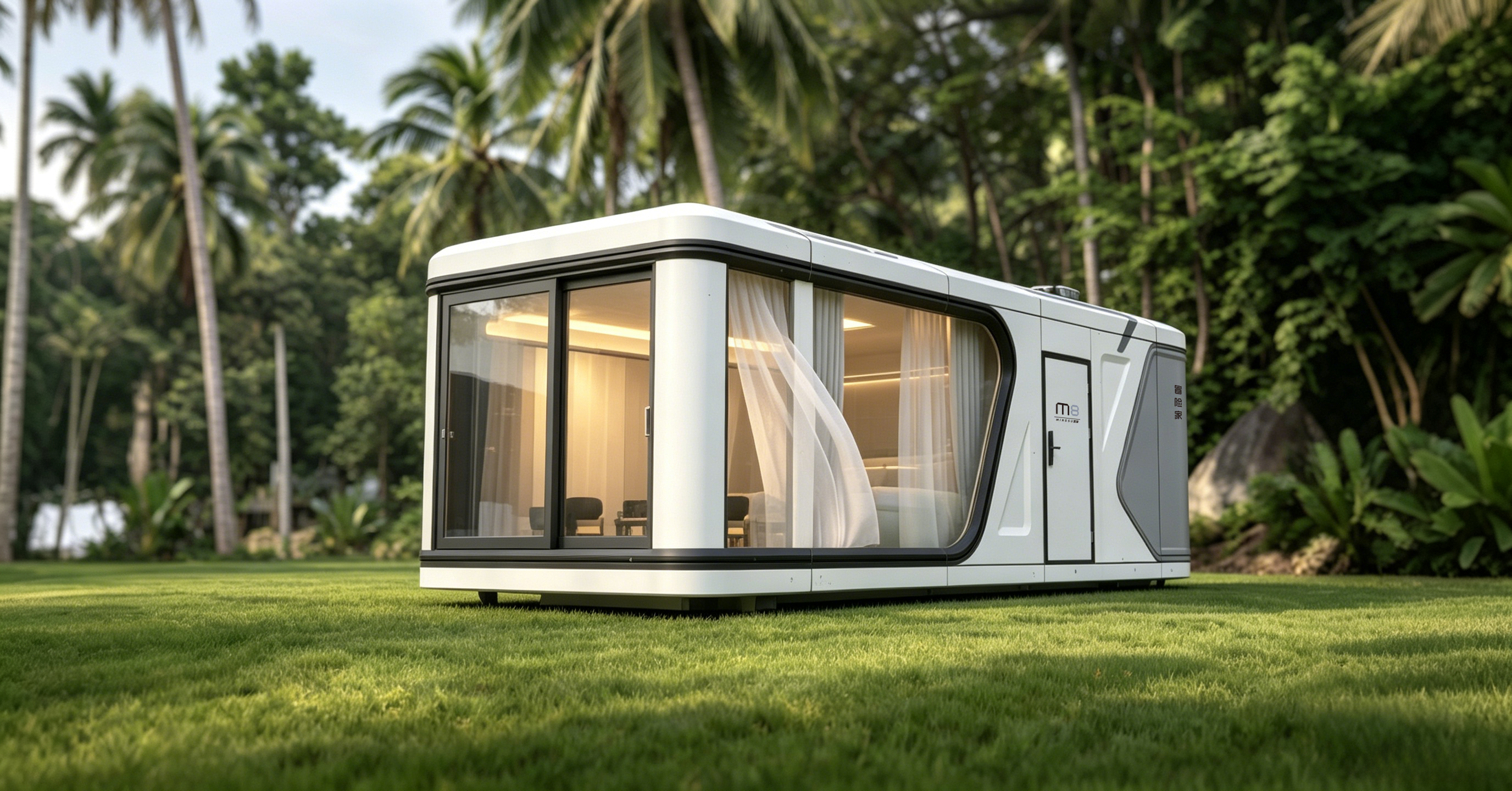
A steel modular capsule house for glamping and outdoor hospitality projects.
Problem Definition: Why Conventional Construction Slows Down Hospitality Projects
Hospitality developers, resort operators, and campsite owners often face the same problems when they plan new accommodation: long civil engineering cycles, difficult land use approval, fixed buildings that cannot be moved, poor landscape integration, and incomplete rural infrastructure. Traditional brick-and-concrete buildings also create construction waste and require a complex foundation, which adds time and cost.
Modular capsule houses address these issues through factory prefabrication. According to BOITO-MINGSU technical descriptions, no complex foundation is required on-site. The ground is levelled, the capsule is lifted into place, and the installation of a single capsule can be completed in about 2 hours. The modular structure can be moved and reused as a whole, and the technical description states that about 80% of civil construction costs can be saved compared with a conventional approach.
Industry Background: Prefabricated Housing and Glamping Demand
The capsule house market is part of a larger shift toward prefabricated and modular construction. According to Mordor Intelligence, the global prefabricated housing market is projected to reach approximately USD 152.74 billion by 2026. Modular homes are also gaining ground within the prefab sector, with an estimated CAGR of 7.05% through 2031.
Glamping is a primary demand driver for capsule cabins. Grand View Research expects the global glamping market to reach USD 7.9 billion by 2033, with a 9.5% CAGR. In 2025, cabins and pods represented the largest accommodation segment in glamping with a 43.0% share. IMARC Group also reports that the 18–32 age group accounts for about 45.3% of the glamping and capsule stay consumer base.
From a trade perspective, China exported USD 3.24 billion of prefabricated buildings under HS 9406 in 2024, with Malaysia and the US identified as key growth markets. For buyers, this means there is an established export supply chain for steel modular capsule houses, portable prefab capsule houses, and hospitality capsule units.
Detailed Solution: What Is a Steel Modular Capsule House?
A steel modular capsule house is built on a hot-dip galvanized steel frame. BOITO-MINGSU capsule house models use an anti-seismic steel structure system developed by a professional structural design team. The main frame uses hot-dip galvanized square pipes in specifications 150*100*3, 100*100*3, 100*50*2.5, and 50*50*2, meeting national standards. The frame has passed strict structural safety certification.
The building envelope is designed for outdoor all-weather conditions. The exterior wall is made of fluorocarbon paint customized aluminum plate. Insulation uses polyurethane foam with a thermal resistance of 3.2 m²K/W. The glass and door-window system uses double-layer tempered hollow Low-E glass, which provides thermal insulation and reduces heat loss. The door is an aluminum alloy flat door.
Each capsule house can include a complete bathroom system. In the BOITO-MINGSU product range, the bathroom system includes Arrow sanitary appliances such as basin, faucet, shower, toilet, sink, and bathroom mirror. This makes the units suitable for self-contained hospitality use, staff accommodation, scenic area hotels, and resort projects.
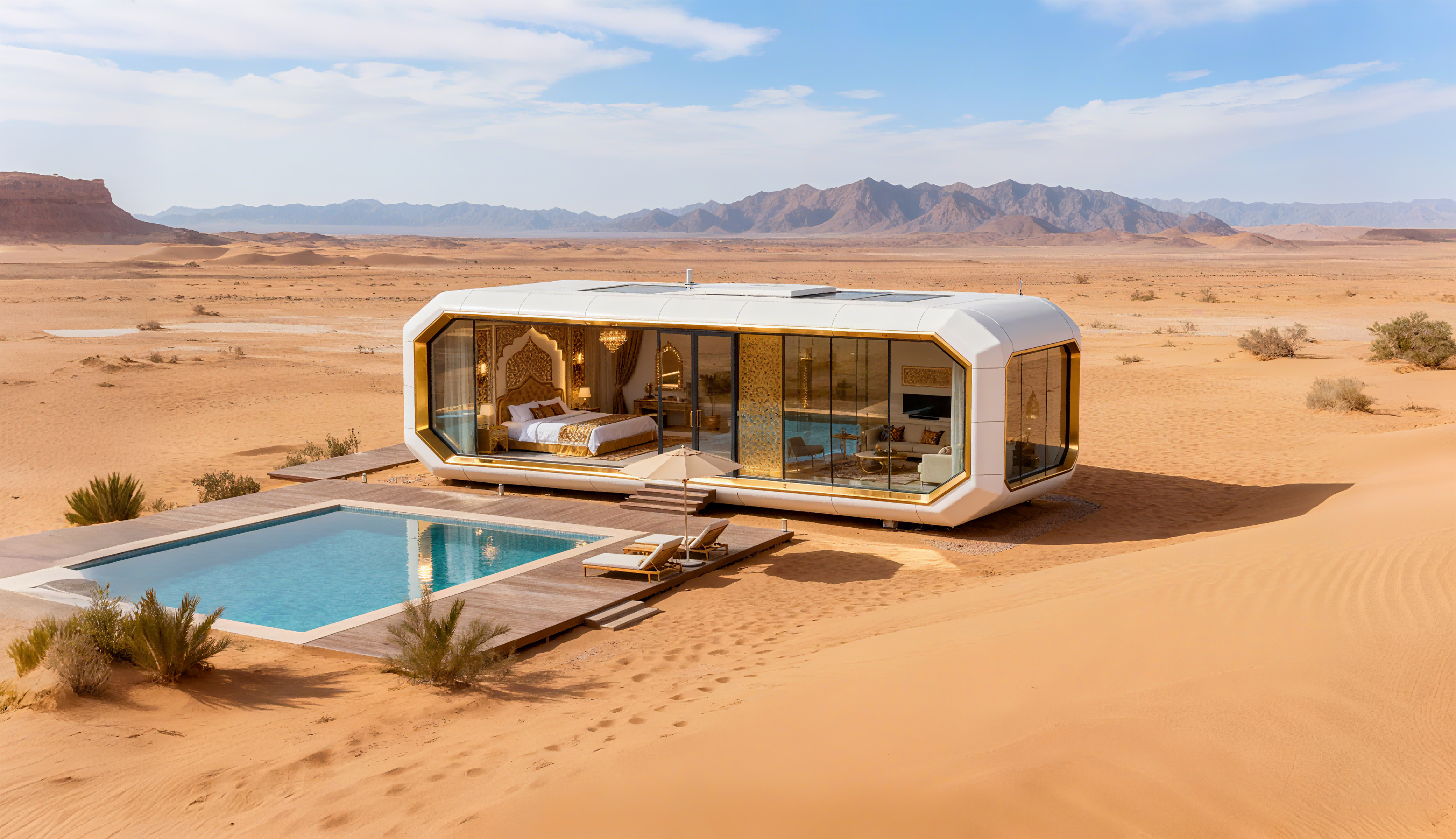
The M10 Exotic-Style Capsule House is a hospitality capsule unit with a hot-dip galvanized steel frame.
BOITO-MINGSU Capsule House Models
The BOITO-MINGSU range covers different project sizes and guest capacities:
- M8 – Sleep Pod (Adventure): Designed for outdoor adventure and glamping scenarios. Dimensions are 8.3m x 3.3m x 3.2m, covering 27.39 m², with 1–4 guests, 8 kW power consumption, and a total weight of about 7 tons.
- M10 – Exotic-Style Capsule House: A larger hospitality model with dimensions of 10m x 3.6m x 3.2m, covering 27.36 m². It holds 1–4 guests, uses 10 kW power, and weighs about 9.5 tons.
- Apple Capsule MINI: An Apple Capsule model with dimensions of 8.3m x 3.3m x 3.2m, covering 27.39 m². It accommodates 1–4 guests, uses 7 kW power, and weighs about 6.5 tons.
- M3 – Breeze Single Capsule: A compact single-person capsule with dimensions of 3m x 2.3m x 2.5m, covering 6.9 m². It uses 6 kW power and weighs about 2 tons.
- MS-XO8 F – Cafe Capsule: A commercial cabin intended for the catering service industry. Dimensions are 16m x 3.6m x 3.2m, covering 57.6 m², with 1–4 guests, 10 kW power, and a total weight of about 13 tons.
Step-by-Step Breakdown: How to Buy a Capsule House
Buyers of capsule houses are often evaluating a prefabricated hospitality building for the first time. The process can be broken down into five practical steps.
Step 1: Define the Site and Application
Determine whether the project is a camping resort, glamping site, scenic area hotel, holiday home, cafe, or staff accommodation. Capsule houses can be placed under forests, on mountainous terrain, or in coastal environments, and can be adjusted according to camp planning. A level ground area is normally sufficient for installation.
Step 2: Select the Model and Capacity
Choose a model based on the number of guests and floor area required. A single-person M3 Breeze Single Capsule may suit a rest station, while an M8 Sleep Pod or M10 Exotic-Style Capsule House suits resort guest rooms. A commercial cafe project may require the larger MS-XO8 F Cafe Capsule.
Step 3: Plan for Customization and Compliance
Check the building rules in the destination country. In the EU, capsule houses fall under the Construction Products Regulation and must bear CE marking for legal installation. In the US, capsule units may be classified as RVs, ADUs, or state-certified modular construction, each requiring different foundation types. ISO 21542 and ISO 19650 are used to classify and manage data for volumetric modular units and complete building units. Manufacturers should confirm that the frame, insulation, glazing, electrical system, and bathroom meet the project specification.
Step 4: Review Factory Production and Export
Look for a manufacturer with production capacity and export experience. Guangdong Mingsu Sojourn Technology Co., Ltd. operates a 10,000 m² factory, has about 30 employees, and produces about 1,000 units per year. The R&D team includes 25 professionals. Approximately 40% of products are exported, with main markets in Southeast Asia, the EU, and the USA.
Step 5: Prepare the Site and Install
Because capsule houses are factory-prefabricated, on-site work is limited. The ground is levelled and the capsule is lifted into place. According to BOITO-MINGSU technical descriptions, the installation and placement of a single capsule can be completed in about 2 hours, significantly shortening the project cycle compared with conventional construction.
Use Cases: Where Capsule Houses Are Used
Capsule houses are used across hospitality, tourism, and commercial projects. The application data for BOITO-MINGSU units includes the following project types:
- Resort accommodation: Camping resorts in Thailand used 10 units of M8; tourism villages in Malaysia used 4 units of M8; camping resorts in China used 36 units of M8 + M12.
- Residential and holiday homes: Holiday homes in Canada used 6 units of a customized model.
- Commercial cabins: Business cabins in Hong Kong used 2 units of a customized model.
- Campsite facilities: Capsule units are used as campsite rest areas, shower facilities, and scenic guest rooms without disrupting the ecosystem.
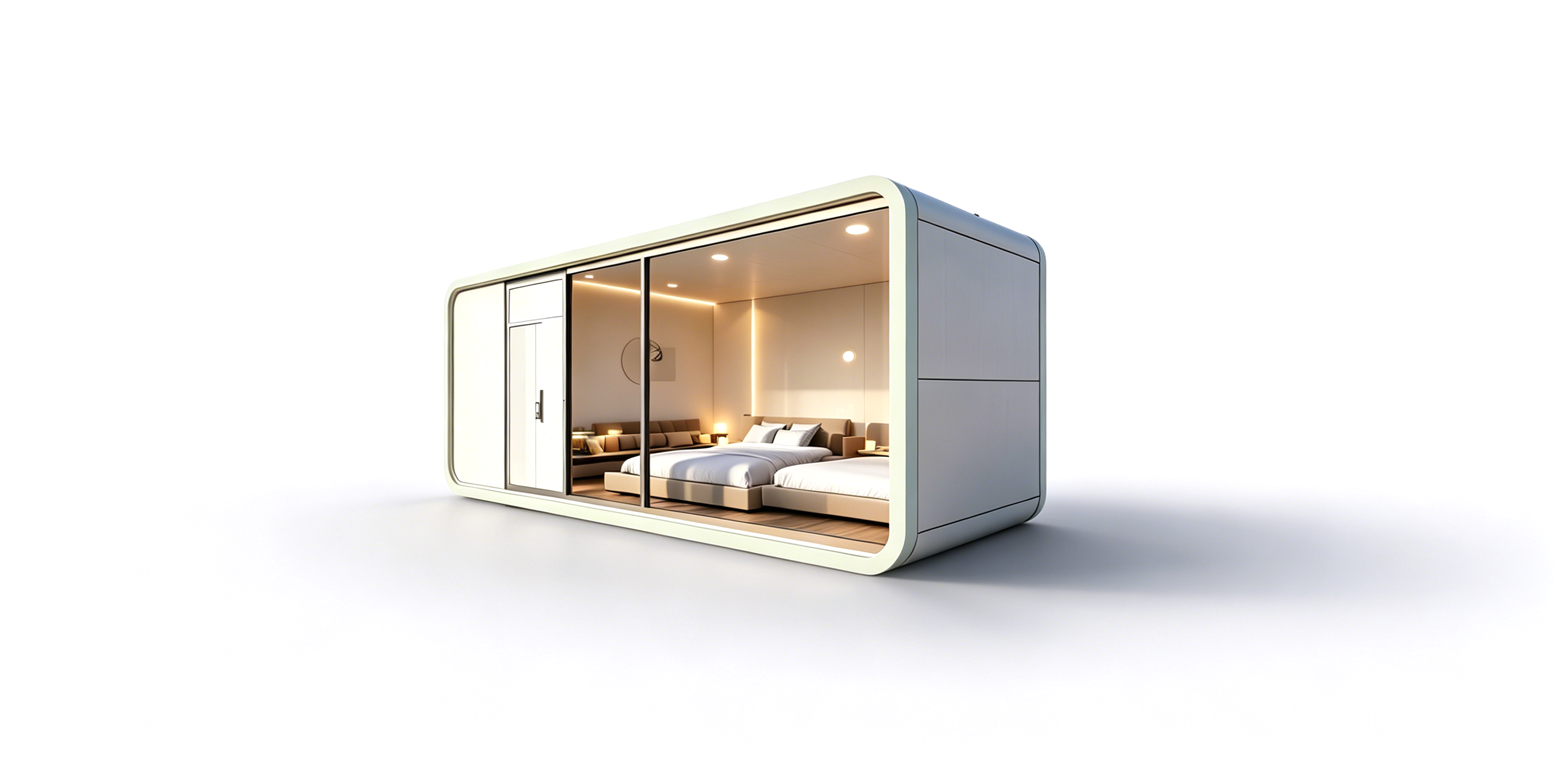
Apple Capsule MINI is a compact hospitality capsule unit from the BOITO-MINGSU range.
Comparison Table: Capsule House Models at a Glance
| Model | Type | Dimensions (LxWxH) | Area | Guests | Power | Weight | Frame |
|---|---|---|---|---|---|---|---|
| M8 | Sleep Pod (Adventure) | 8.3m x 3.3m x 3.2m | 27.39 m² | 1–4 | 8 kW | ≈7 T | Hot-dip galvanized steel |
| M10 | Exotic-Style Capsule House | 10m x 3.6m x 3.2m | 27.36 m² | 1–4 | 10 kW | ≈9.5 T | Hot-dip galvanized steel |
| Apple Capsule MINI | Apple Capsule | 8.3m x 3.3m x 3.2m | 27.39 m² | 1–4 | 7 kW | ≈6.5 T | Hot-dip galvanized steel |
| M3 | Breeze Single Capsule | 3m x 2.3m x 2.5m | 6.9 m² | 1 | 6 kW | ≈2 T | Hot-dip galvanized steel |
| MS-XO8 F | Cafe Capsule | 16m x 3.6m x 3.2m | 57.6 m² | 1–4 | 10 kW | ≈13 T | Hot-dip galvanized steel |
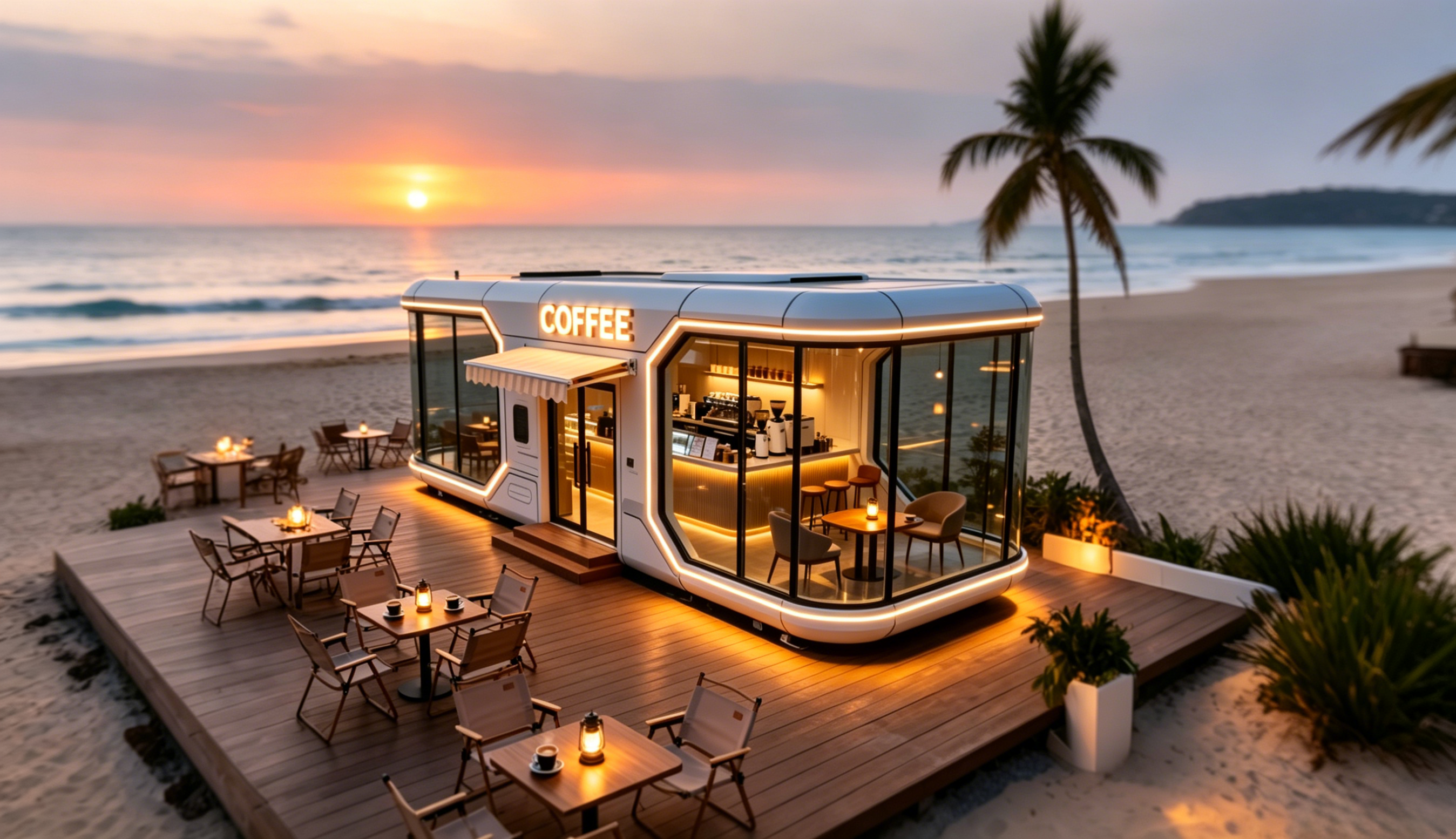
The MS-XO8 F is a commercial cabin for the catering service industry.
Frequently Asked Questions
Capsule House Manufacturers: What Do They Offer?
Capsule house manufacturers supply factory-prefabricated modular buildings for hospitality and commercial use. Guangdong Mingsu Sojourn Technology Co., Ltd., a member of the BOITO Group, specializes in capsule houses, modular hotel units, glamping cabins, mobile sleep pods, and modular villas. The company operates a 10,000 m² factory, employs about 30 people, and produces about 1,000 units per year.
What Should I Look for in a Capsule House Manufacturer?
Buyers should evaluate the steel frame, insulation, glazing, bathroom system, and compliance support. In the BOITO-MINGSU range, the main frame is hot-dip galvanized steel with an anti-seismic steel structure system, insulation uses polyurethane foam with a thermal resistance of 3.2 m²K/W, and the glass is double-layer tempered hollow Low-E glass. For EU projects, CE marking under the Construction Products Regulation may be required. In the US, the unit may be classified as an RV, ADU, or state-certified modular building.
Are Capsule Houses Suitable for Glamping and Resort Projects?
Yes. The M8 Sleep Pod (Adventure) is a portable prefabricated capsule house designed for outdoor adventure and glamping scenarios. Project references include camping resorts in Thailand with 10 M8 units, tourism villages in Malaysia with 4 M8 units, and camping resorts in China with 36 M8 + M12 units. Cabins and pods are also the largest accommodation segment in the glamping market, with a 43.0% share in 2025.
How Can I Request More Information or a Quote?
For project-specific questions, samples, or quotations, contact Guangdong Mingsu Sojourn Technology Co., Ltd. by email at info@gdmingsu.com or by phone at +86-19075309888. A downloadable brochure is available at the end of this article.
Conclusion
Capsule houses are a practical solution for hospitality operators who need quickly deployable, movable, and visually integrated accommodation. Steel modular capsule houses can be used in glamping sites, eco-resorts, holiday parks, beach resorts, mountain resorts, staff accommodation, and commercial buildings such as cafes and business cabins.
When choosing a manufacturer, review the frame structure, insulation, glazing, bathroom configuration, export experience, and compliance documentation. Companies with in-house production and R&D teams, such as Guangdong Mingsu Sojourn Technology Co., Ltd., are able to supply factory-prefabricated capsule houses and customized modular hotel units for international projects.
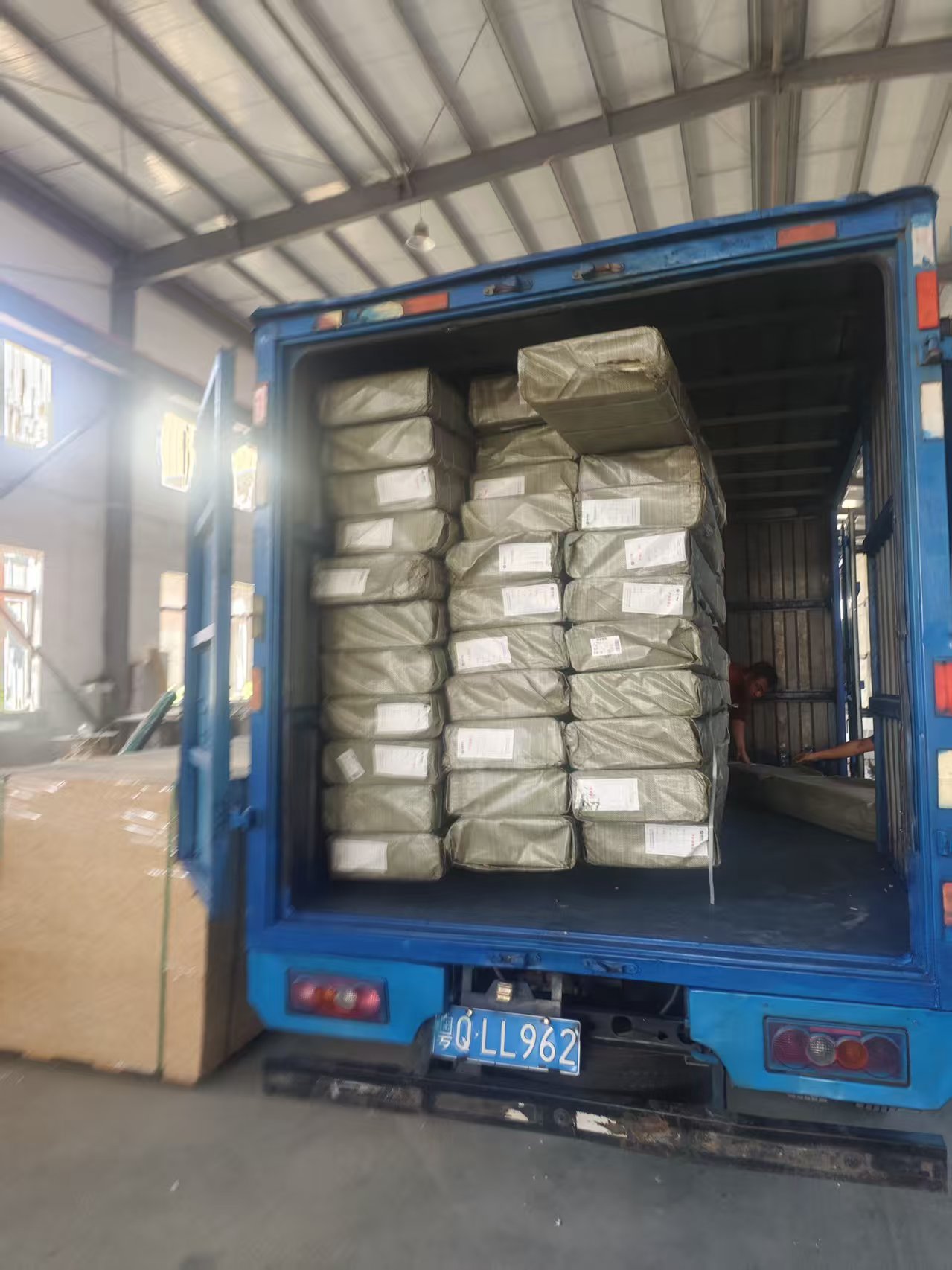
Capsule houses are factory-prefabricated before export to project sites.
If you are planning a resort, glamping site, capsule hotel, or commercial cabin project, contact BOITO-MINGSU at info@gdmingsu.com or +86-19075309888 for product information and project-specific advice.