Capsule House Models Ranked: M3, Apple Capsule MINI, M8 and MS-XO8 F
Four capsule house models cover four different jobs. The M3 is specified as a complete hospitality guest room, the Apple Capsule MINI as compact hospitality for one to four guests, the M8 for outdoor adventure and glamping on exposed sites, and the MS-XO8 F as a commercial cabin for catering and cafe use. This ranking orders the four by application fit and states, model by model, the specification facts and the selection reason behind each position — so a buyer can move from a shortlist to a site decision without guessing.
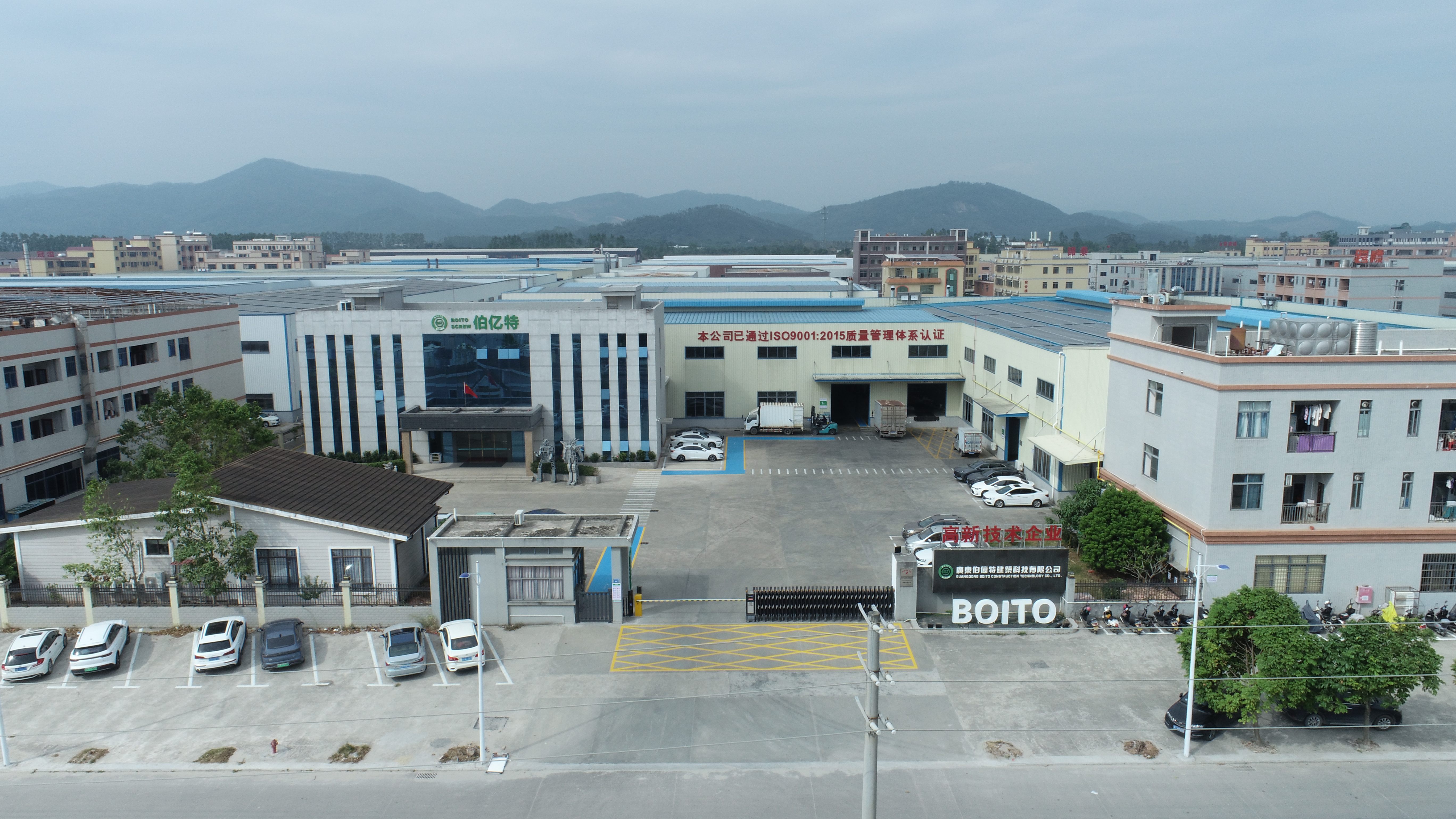
All four models are produced by BOITO-MINGSU, the capsule house brand of GUANGDONG MINGSU SOJOURN TECHNOLOGY CO., LTD. The company is a member of the BOITO Group, operates from Yangjiang, Guangdong, China, and manufactures prefabricated capsule houses, modular hotel rooms, glamping cabins and modular villas. Roughly 40% of output is exported, with Southeast Asia, the EU and the USA as the main markets.
Capsule House Projects Usually Fail on Model Fit, Not on Build Quality
Most capsule house procurement begins with a supplier shortlist and ends with a model chosen from a catalogue photograph. That order is backwards. The operating scenario decides which model is correct, and the four models in this article exist because the scenarios are genuinely different: a bookable sleeping unit for a resort, a compact unit for a high-density site, a weather-exposed unit for a mountain glamping pitch, and a revenue unit for food and beverage.
Two failure modes are common. The first is over-specification: a 57.6 sqm commercial cabin bought to serve as a sleeping unit, which then requires a heavier lifting plan, a larger electrical supply and more site area than the business case supports. The second is under-specification: a compact pod placed on an exposed site where structural documentation and thermal detailing are reviewed before any permission is granted. In both cases the unit performs as built; the mismatch sits in the brief.
A model-first ranking removes that risk. Instead of asking which capsule house is best, the question becomes which capsule house is correct for a defined application, floor area, guest count, power budget and structural requirement. The four models below answer that question in that order.
Industry Background: Why the Range Splits Into Four Models
Demand for prefabricated accommodation is expanding across several markets at once. The global prefabricated housing market is projected to reach approximately USD 152.74 billion by 2026, and modular homes within that sector are estimated to grow at a CAGR of around 7.05% through 2031, according to Mordor Intelligence. The glamping segment that most capsule projects serve is expected to reach USD 7.9 billion by 2033 at a 9.5% CAGR (Grand View Research), and cabins and pods already accounted for a 43.0% share of glamping accommodation in 2025. Asia-Pacific is the fastest-growing region for glamping and luxury modular pods, with a projected CAGR of 12.6% through 2034 (IMARC Group).
Two operational facts explain why operators keep choosing the format. Modular housing projects can reduce construction timelines by 30%–50% compared with traditional on-site building methods (Fortune Business Insights), and modular building construction reduces on-site waste by roughly 30% on average relative to site-built homes (The Freedonia Group). For a resort adding rooms ahead of a season, both numbers translate directly into revenue timing.
Compliance, by contrast, is decided at model level and at market level, not at brand level. In the EU, capsule houses fall under the Construction Products Regulation (CPR) and must bear the CE marking for legal installation. In the USA, units are treated as RVs, ADUs or state-certified modular construction, each with different foundation requirements. That is why a structural safety certification carries real weight in some destinations and is only the starting point in others.
The four-model split inside the BOITO-MINGSU range follows the same logic. Hospitality operators, compact-site operators, adventure-site operators and food and beverage operators buy on different criteria, build on different ground and follow different approval routes — so the specifications diverge before the sales conversation begins.
The Four Capsule House Models Ranked by Application Fit
Ranking criteria: intended application, floor area, guest capacity, power consumption, unit weight, and structural and insulation specification. Where a value is not published in the specification set used for this ranking, it appears as a dash in the comparison table rather than an estimate.
RANK 1
M3 Capsule House — Full-Service Hospitality
- Intended application: hospitality guest accommodation
- Frame: hot-dip galvanized steel
- Glazing: Low-E glass
- Insulation: polyurethane foam, 3.2 m²K/W
- Bathroom: Arrow bathroom fit-out
The M3 ranks first because it is the only model in this set documented as a complete guest room rather than a weatherproof shell. Three specification items carry that position. The hot-dip galvanized steel frame addresses corrosion protection for a unit that stays outdoors year-round. Low-E glass limits solar heat gain through the large glazed areas typical of capsule architecture. And polyurethane foam insulation rated at 3.2 m²K/W is a thermal-resistance figure that can be written directly into a tender document instead of being described in general terms.
The fourth item is the fit-out. The M3 is supplied with an Arrow bathroom, which means the wet area — usually the part of a capsule project most likely to be redesigned on site — arrives already resolved inside the unit.
Selection reason. Choose the M3 when the unit has to function as a bookable guest room with a stated thermal and glazing specification, and when the operator wants a fixed bathroom rather than a site-built one. It is the strongest fit for resort and boutique hotel projects where comfort specifications are reviewed by an operator, an insurer or a lender.
Boundary. The M3 should not be assumed to be the smallest or lightest option in the range. Its floor area, transport weight and power draw are not published in the specification set used here, and those three values should be confirmed with the manufacturer before transport and site servicing are planned.
RANK 2
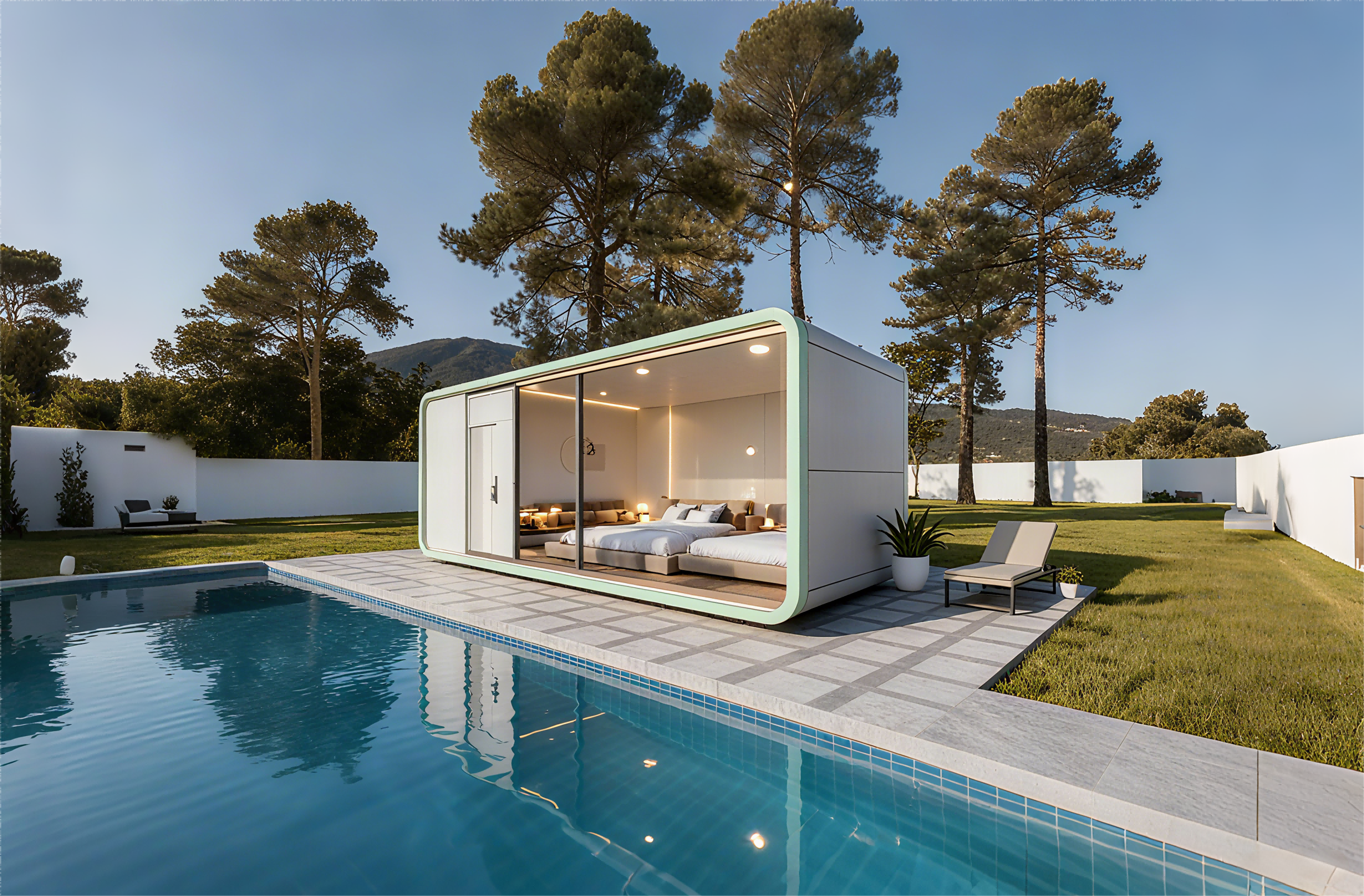
Apple Capsule MINI — Compact Hospitality
- Product category: Apple Capsule
- Floor area: 27.39 sqm
- Guest capacity: 1–4 guests
- Unit weight: 6.5 tons
- Power consumption: 7 kW
The Apple Capsule MINI ranks second because it is the most efficient way to add bookable capacity. It delivers 27.39 sqm for one to four guests at 6.5 tons and 7 kW. Among the models with published figures in this set it has both the lowest unit weight and the lowest power demand, which matters on sites where the grid connection, the access road or the lifting equipment is the binding constraint rather than the budget.
Selection reason. Specify the MINI for compact hospitality: high-density lodge layouts, phased room additions, hillside or terraced sites with limited crane access, and projects where the electrical allowance per unit is fixed. The 27.39 sqm footprint is large enough for a proper sleeping unit with a dedicated bathroom zone, and small enough that several units can share one service corridor or one transformer.
Boundary. The published guest range of one to four guests rules it out of family or group accommodation without pairing units. The 7 kW figure is a total allowance, so heating, cooling and appliance loads should be checked against the supply before the interior fit-out is finalised.
RANK 3
M8 Capsule House — Outdoor Adventure and Glamping
- Overall dimensions: 8.3 m × 3.3 m × 3.2 m (L×W×H)
- Floor area: 27.39 sqm
- Unit weight: 7 tons
- Envelope: weather-resistant broken-bridge (thermal break) system
- Documentation: structural safety certification
The M8 ranks third overall but first for exposed outdoor sites. It shares the 27.39 sqm and the 8.3 m × 3.3 m × 3.2 m envelope class of its segment, but it is specified differently: a weather-resistant broken-bridge system, which separates the frame profiles to limit thermal bridging through the aluminium, plus a structural safety certification covering the unit.
Those two items are exactly what a glamping site in a mountain, coastal or high-wind location has to produce during approval. At 7 tons the M8 is half a ton heavier than the Apple Capsule MINI, and that is the trade-off for the structural and weather detailing.
Selection reason. Use the M8 for outdoor adventure and glamping projects — mountain resort capsule houses, scenic-area capsule hotels, adventure camps and off-grid capsule cabin deployments — where the site is exposed and structural documentation is part of the permission process rather than an afterthought.
Boundary. The certification covers the structure of the unit. Regional checks on foundation type, snow load, wind load and electrical standards still apply and should be confirmed with a local engineer. Site access must also handle 7 tons at the lifting point.
RANK 4
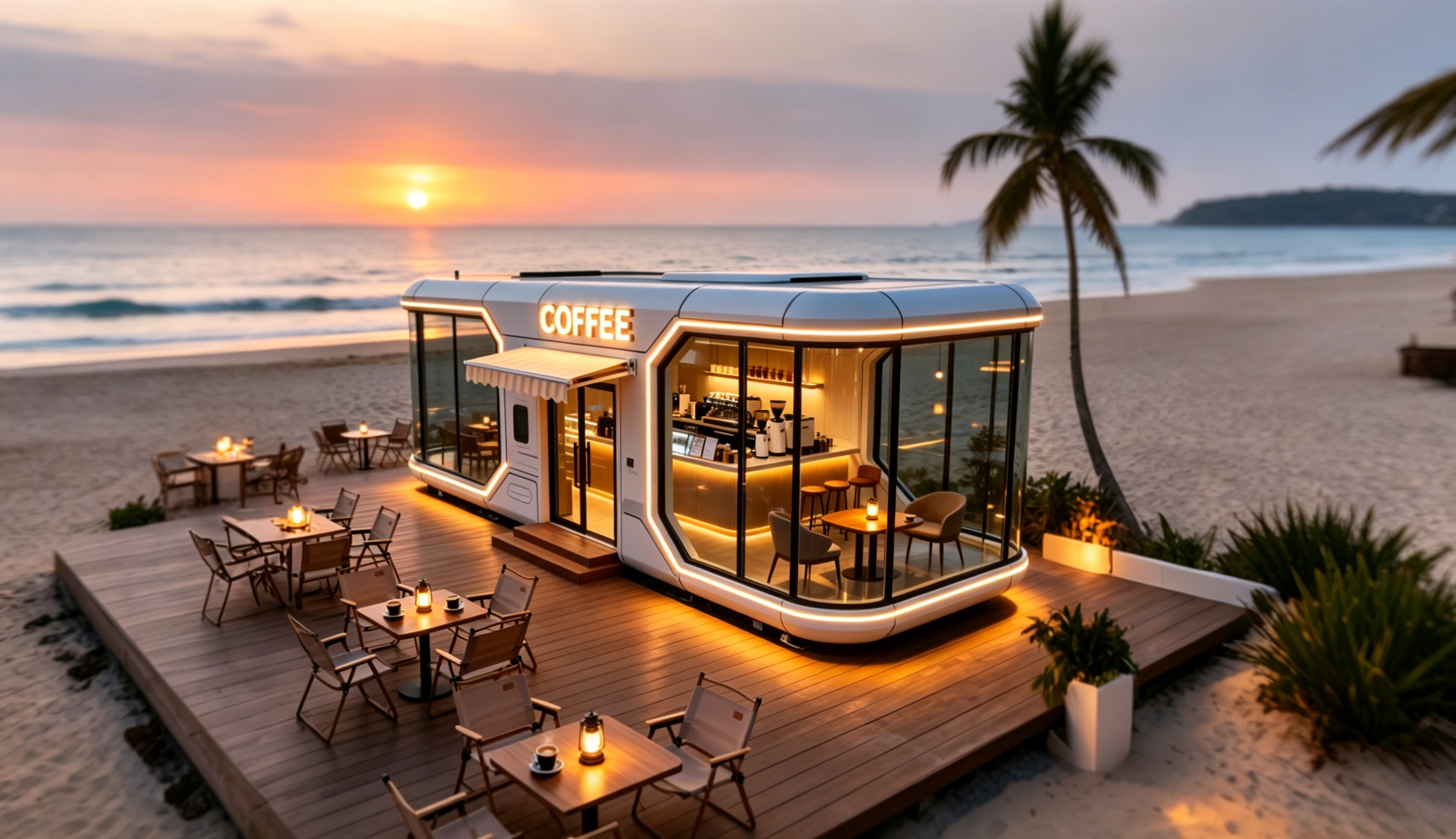
MS-XO8 F — Commercial Cabin for Catering and Cafe Use
- Product category: Cafe Capsule
- Floor area: 57.6 sqm
- Power consumption: 10 kW
- Unit weight: 13 tons
The MS-XO8 F ranks fourth in a guest-accommodation ranking and first in a revenue-space ranking. At 57.6 sqm it offers more than twice the floor area of the two 27.39 sqm models; at 10 kW it has the highest published power demand in the set; and at 13 tons it is roughly double the weight of the Apple Capsule MINI. It belongs to the Cafe Capsule product category, which is the clearest possible signal that this unit is bought for food and beverage operation rather than for sleeping.
Selection reason. Choose the MS-XO8 F for catering, cafe and commercial cabin use, where the unit itself is the revenue space and the brief is dominated by counter layout, extraction, refrigeration and seating rather than by bed count.
Boundary. Thirteen tons and 57.6 sqm set the site plan. Lifting capacity, delivery access, foundation design and a 10 kW supply should be confirmed before the order is placed, not after delivery. It is also the least suitable of the four as a pure sleeping unit, which is why it sits at the bottom of this particular ranking.
Step-by-Step Breakdown: Reproducing This Ranking for Your Own Site
The ranking is reproducible. Applied in sequence, the seven checks below will place any of the four models against a specific project brief and expose the constraint that decides the purchase.
- Fix the operating scenario in one sentence. Guest room, compact lodge unit, adventure glamping unit, or food and beverage space. If the sentence contains two scenarios, the project needs two models, not one compromise.
- Match floor area to the guest target. The Apple Capsule MINI and the M8 both offer 27.39 sqm; the MINI is documented for one to four guests. The MS-XO8 F offers 57.6 sqm of commercial floor area. Guest counts above the published range should be handled by adding units.
- Check the electrical budget. Published figures are 7 kW for the Apple Capsule MINI and 10 kW for the MS-XO8 F. Confirm the site supply and distribution before the interior equipment is chosen.
- Test the structural and thermal specification against the site climate. The M8 carries a weather-resistant broken-bridge system and a structural safety certification. The M3 pairs a hot-dip galvanized steel frame with Low-E glass and polyurethane foam rated at 3.2 m²K/W.
- Convert weight and dimensions into a logistics plan. 6.5 tons (Apple Capsule MINI), 7 tons (M8) and 13 tons (MS-XO8 F) require different lifting equipment. The M8 envelope measures 8.3 m × 3.3 m × 3.2 m, so route clearance and transport permits follow from the model, not from the supplier.
- Confirm the compliance route for the destination market. CE marking under the EU Construction Products Regulation, or an RV, ADU or modular route in the USA. On the factory side, BOITO-MINGSU holds an ISO14001 environmental management system certificate, number ISC-E-2025-5371-R, issued by Beijing International Standard United Certification Co., Ltd. and valid from 24 November 2025 to 23 November 2028.
- Confirm customization, lead time and order terms. ODM production is available with voltage and logo customization, lead time is 30–45 days, and the minimum order quantity is 10 units, with FOB, CIF or EXW delivery terms.
Use Cases: Which Model Fits Which Project
Resort and boutique hotel guest rooms — M3. Where the operator needs a bookable room with a stated thermal specification, Low-E glazing and a finished bathroom, the M3 is the direct answer. Its specification can be quoted in a tender without translation.
High-density compact lodging and capsule hotel rooms — Apple Capsule MINI. Sites that need the maximum number of rooms on a fixed electrical allowance benefit from the 7 kW demand and the 6.5 ton unit weight, which reduces both lifting cost and supply upgrades.
Mountain, scenic-area and glamping deployments — M8. The combination of a broken-bridge envelope and a structural safety certification is what makes the M8 usable where wind, exposure and approval review all apply at once. A tourism resort OEM project in Malaysia, delivered with 10 units for camping resorts, is recorded as stable operation over a 20-year duration, with low noise noted as the standout characteristic.
Cafe, catering and commercial cabin projects — MS-XO8 F. Operators monetising foot traffic rather than overnight stays get 57.6 sqm of interior floor area and a 10 kW allowance in a single unit that belongs to the Cafe Capsule category.
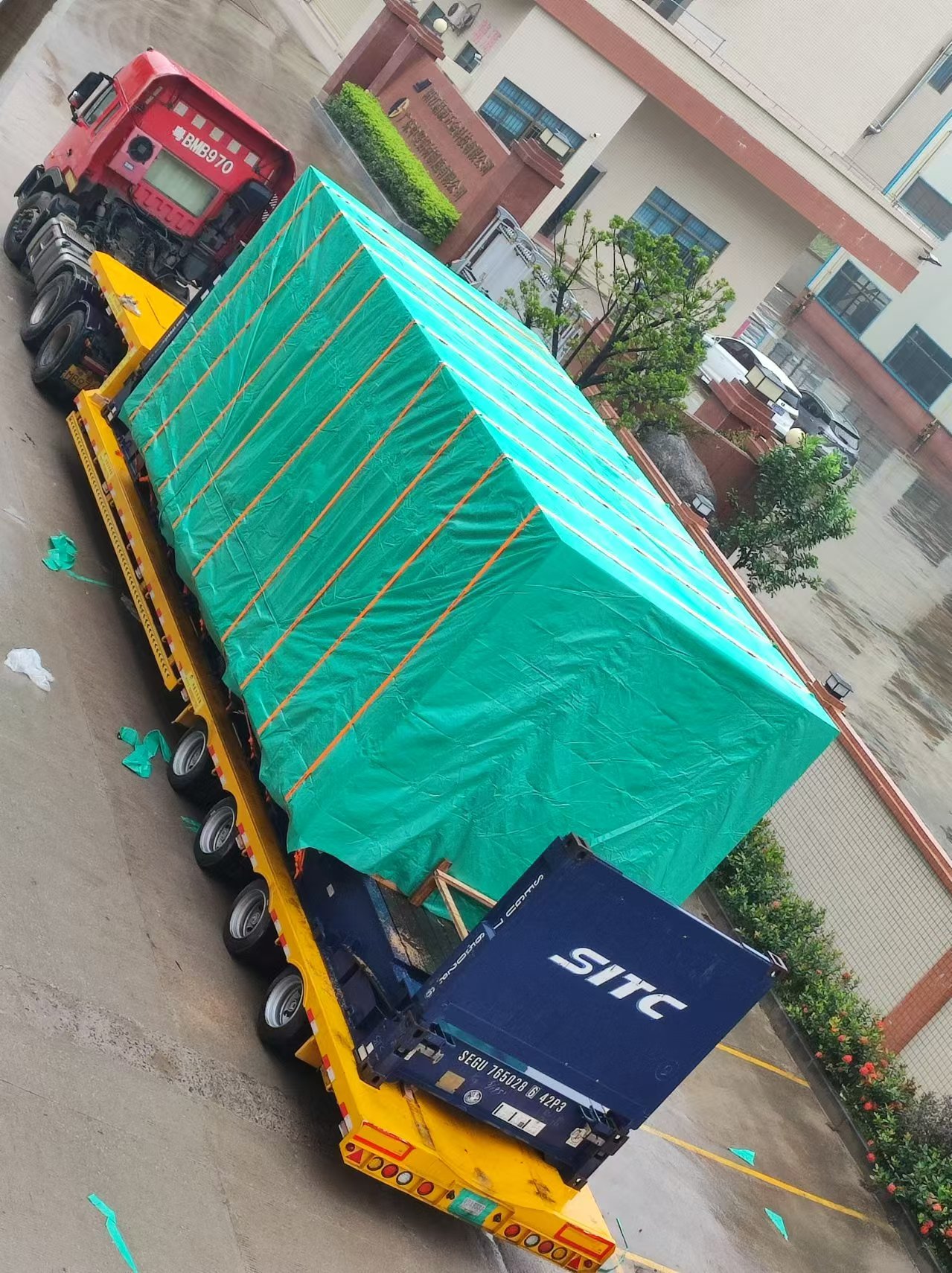
Comparison Table: M3, Apple Capsule MINI, M8 and MS-XO8 F
| Rank | Model | Best-fit application | Floor area | Guest capacity | Power | Unit weight | Structural & insulation notes |
|---|---|---|---|---|---|---|---|
| 1 | M3 Capsule House | Hospitality guest rooms | — | — | — | — | Hot-dip galvanized steel frame; Low-E glass; polyurethane foam 3.2 m²K/W; Arrow bathroom |
| 2 | Apple Capsule MINI | Compact hospitality | 27.39 sqm | 1–4 guests | 7 kW | 6.5 t | Apple Capsule product category |
| 3 | M8 Capsule House | Outdoor adventure and glamping | 27.39 sqm | — | — | 7 t | 8.3 × 3.3 × 3.2 m; weather-resistant broken-bridge system; structural safety certification |
| 4 | MS-XO8 F | Catering and cafe commercial cabin | 57.6 sqm | — | 10 kW | 13 t | Cafe Capsule product category |
Dashes mark values that are not included in the specification set used for this ranking. Confirm them with the manufacturer before tendering or planning transport.
Frequently Asked Questions
Which certifications and standards should be verified before ordering the M3, Apple Capsule MINI, M8 or MS-XO8 F?
Verification has two layers. At product level, the M8 capsule house carries a structural safety certification, which is the document most exposed sites are asked to produce. At market level, EU installations fall under the Construction Products Regulation and require CE marking, while the USA distinguishes capsule units as RVs, ADUs or state-certified modular construction, each with different foundation requirements. At factory level, BOITO-MINGSU holds an ISO14001 environmental management system certificate, number ISC-E-2025-5371-R, issued by Beijing International Standard United Certification Co., Ltd. and valid from 24 November 2025 to 23 November 2028. Product-level certification for your destination market should always be confirmed in writing.
Can these capsule house models be customized for a specific project?
Yes, within an ODM model. BOITO-MINGSU offers ODM production services with voltage and logo customization, supported by an R&D team of 25 engineers. The manufacturing base covers 10,000 m² and produces roughly 1,000 units per year, with a monthly capacity of 30 to 50 units. Quality control is a 100% test regime, and after-sales remote support is available for troubleshooting and technical assistance after delivery.
What drives the cost difference between the four models?
Four physical variables dominate. Floor area runs from 27.39 sqm on the Apple Capsule MINI and the M8 to 57.6 sqm on the MS-XO8 F. Power demand runs from 7 kW to 10 kW, which changes the supply and distribution scope. Unit weight runs from 6.5 tons to 13 tons, which changes transport and lifting cost. And specification depth varies: the M3 adds a hot-dip galvanized steel frame, Low-E glass, polyurethane foam at 3.2 m²K/W and an Arrow bathroom. Commercial terms are a minimum order of 10 units, delivery on FOB, CIF or EXW terms, and payment of a 50% TT deposit with the balance before shipment.
How can a buyer validate a unit before shipment?
Acceptance is based on factory inspection and video inspection, and every unit passes a 100% test before it leaves the production line. Because units are factory-prefabricated, the inspection happens at the point where the frame, envelope and interior fit-out can be checked together, rather than after site assembly. Buyers who need the full specification set in advance can review the published catalogue and then confirm model-specific values in writing with the sales team.
What is the lead time and minimum order quantity?
Lead time is 30–45 days, with a minimum order quantity of 10 units and a monthly production capacity of 30 to 50 units. For projects that need to reproduce this ranking against a real site, the next step is to confirm the model, floor area and structural requirement with the BOITO-MINGSU team at info@gdmingsu.com or WhatsApp +86 190 7530 9888, and request a quotation based on the confirmed specification.
Conclusion: Rank the Application First, Then the Model
Read as a ranking by application fit, the range resolves cleanly. The M3 Capsule House leads because it is documented as a complete hospitality guest room: hot-dip galvanized steel frame, Low-E glass, polyurethane foam at 3.2 m²K/W and an Arrow bathroom. The Apple Capsule MINI follows as the most efficient capacity unit, at 27.39 sqm for one to four guests on 6.5 tons and 7 kW. The M8 takes third place overall and first place on exposed sites, where its weather-resistant broken-bridge system and structural safety certification do the work. The MS-XO8 F closes the list for accommodation but leads for revenue space, with 57.6 sqm, 10 kW and 13 tons in the Cafe Capsule category.
The practical conclusion is simple: define the application, the floor area, the guest count, the power budget and the site exposure first. Once those five values are fixed, only one of the four models will fit — and the remaining work is specification confirmation rather than comparison.
Confirm the Right Model for Your Site
BOITO-MINGSU — GUANGDONG MINGSU SOJOURN TECHNOLOGY CO., LTD. — manufactures the M3, Apple Capsule MINI, M8 and MS-XO8 F capsule houses in Yangjiang, Guangdong, China. Send your application, floor area target and site conditions to receive a model recommendation and a quotation, or request a factory or video inspection of the exact unit you are considering.
Email: info@gdmingsu.com | Tel / WhatsApp: +86 190 7530 9888 | Website: www.boitohouse.com
Download the full 2026 product catalogue with model specifications: BOITO-MINGSU Capsule House Catalogue (PDF)
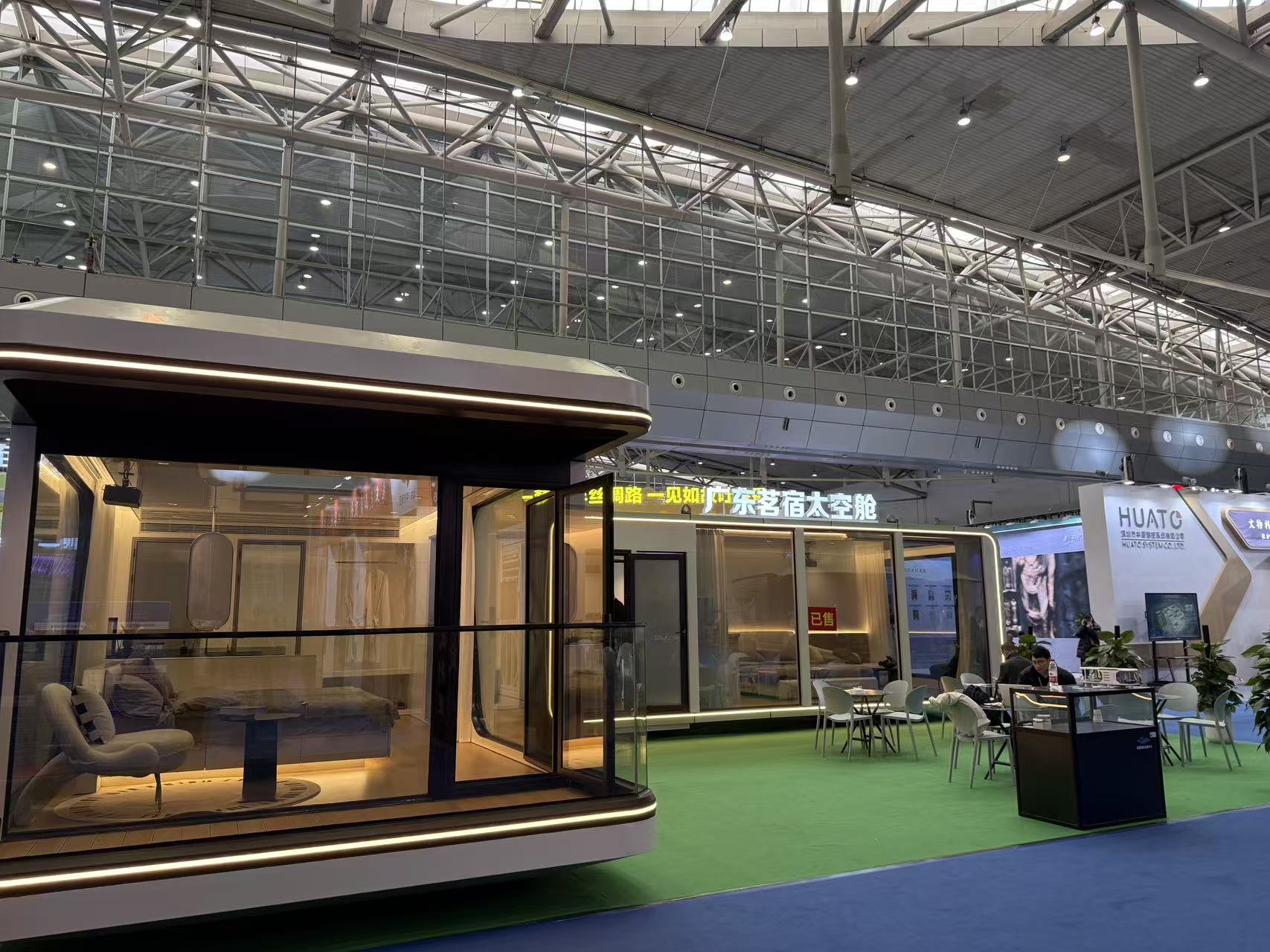
Company details: GUANGDONG MINGSU SOJOURN TECHNOLOGY CO., LTD., Wanxiang Industrial, Yangdong, Yangjiang, Guangdong, China. Founded 2003; 10,000 m² manufacturing base; 30 employees; 25 engineers; annual output approximately 1,000 units.
Have Questions or Need More Details?
Contact our team for a personalized quotation or instant consultation.
Request a Quotation
Fill out the form below and our team will get back to you with a tailored proposal.
WhatsApp Direct Chat
Prefer to chat in real-time? Message us on WhatsApp for instant assistance & quick answers.
- Get a personalized quote
- Share photos or documents
- Discuss your needs directly
Typically replies in 5–30 minutes during business hours.