Ranking the Capsule House Lineup: M3, Apple Capsule MINI, M8, and MS-XO8 F Compared
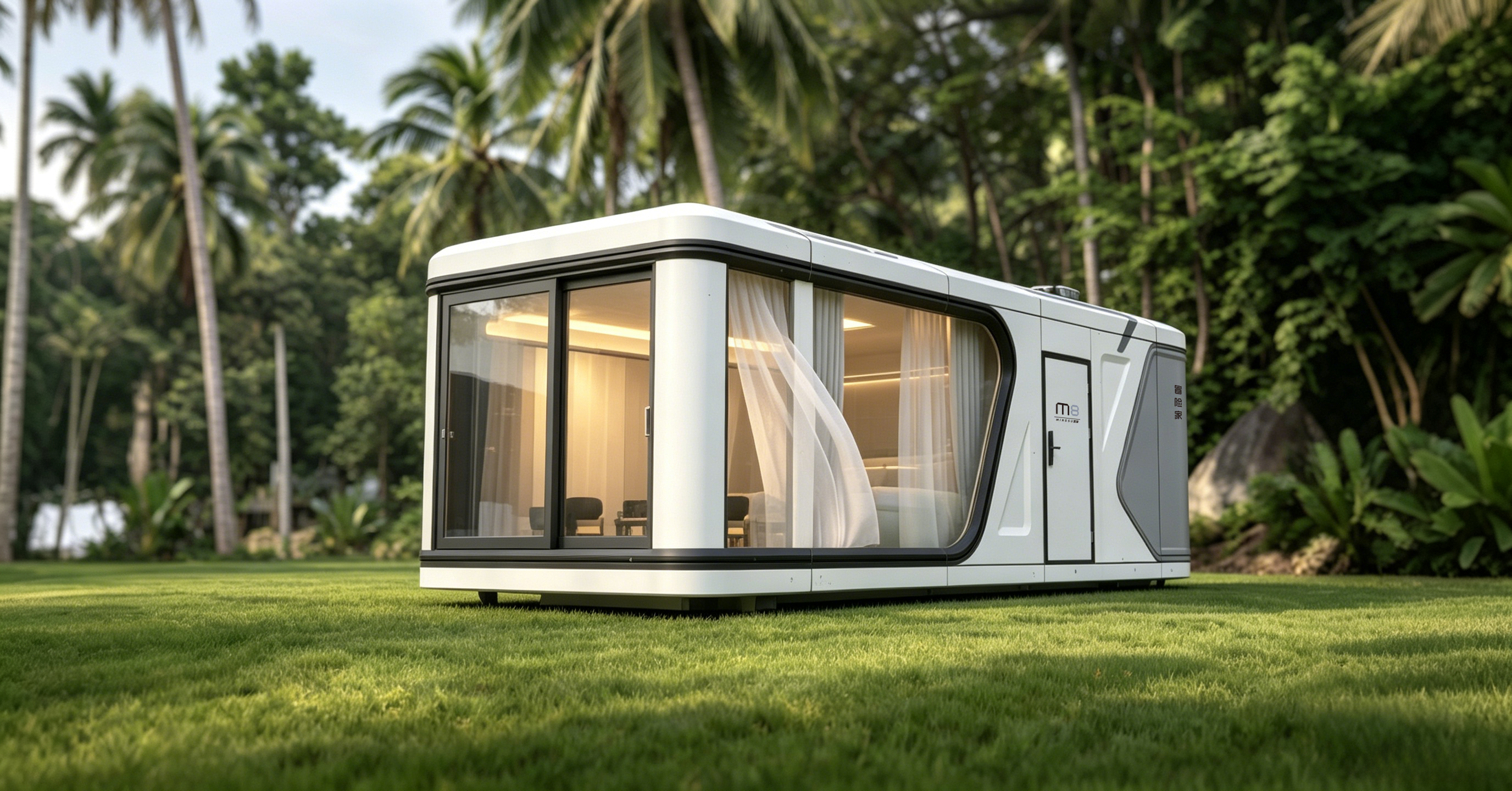
A capsule house lineup is not a menu of interchangeable substitutes. The M3, the Apple Capsule MINI, the M8 and the MS-XO8 F answer four different questions on the same site — guest accommodation, compact self-contained rooms, outdoor adventure capacity, and food-and-beverage service — and treating them as substitutes for one another is the fastest way to over-build one zone while leaving another under-used.
This article ranks the four models by application fit rather than by price. The M3 takes first place as the general hospitality accommodation unit. The Apple Capsule MINI follows as the compact, self-contained option documented for 1 to 4 guests. The M8 is third as the outdoor adventure and glamping unit. The MS-XO8 F closes the list as the catering unit, presented in the manufacturer's product material as the Cafe Capsule.
All four are manufactured by GUANGDONG MINGSU SOJOURN TECHNOLOGY CO., LTD., a BOITO Group member trading as BOITO-MINGSU that produces factory-prefabricated capsule houses and modular hotel rooms for tourism developments, resorts, campground operators, scenic-area developers and overseas engineering clients. That single-source detail shapes the entire ranking: a resort does not buy one capsule, it builds a fleet, and a fleet is only as reliable as the supply relationship behind it.
The Real Problem: Four Units That Still Work in Year Five
Buyers rarely struggle to find a capsule house. They struggle to decide which capsule house belongs in which part of a site plan, and whether the same platform can be reordered two or three years later when the second phase is funded.
That is a different question from "which model is best", and it produces four predictable failure modes:
- Capacity mismatch. A compact unit placed where a family unit was required produces permanent under-occupancy that no interior upgrade can correct.
- Logistics underestimation. Documented unit weight drives transport, lifting and pad design. A unit documented at approximately 7 tons and one documented at approximately 2 tons are not interchangeable on a steep access road.
- Utility planning gaps. Electrical design for a zone should follow the documented consumption of the units placed in it, not an estimate made after the order.
- Supplier discontinuity. A unit that cannot be reordered in phase two becomes a stranded asset, because spares, fittings and configuration no longer match the rest of the zone.
Ranking the lineup by application fit addresses the first three. The fourth — long-term supply — is why the final section of this article moves from product to manufacturer.
Industry Background: Why Capsule Programs Are Planned in Phases
The category data supports phased purchasing rather than single-unit decisions:
- The global prefabricated housing market is projected to reach approximately USD 152.74 billion by 2026, according to Mordor Intelligence.
- Within the prefab sector, modular homes are gaining ground at an estimated CAGR of 7.05% through 2031 (Mordor Intelligence).
- The glamping market, a primary demand driver for capsule cabins, is expected to reach USD 7.9 billion by 2033 at a 9.5% CAGR (Grand View Research).
- Cabins and pods are the largest accommodation segment within glamping, holding a 43.0% share in 2025 (Grand View Research).
- The 18–32 age group accounted for approximately 45.3% of the glamping and capsule-stay consumer base in 2025 (IMARC Group).
- Asia-Pacific is the fastest-growing region for glamping and luxury modular pods, with a projected CAGR of 12.6% through 2034 (IMARC Group).
- China's exports of prefabricated buildings under HS 9406 reached USD 3.24 billion in 2024, with Malaysia and the United States cited as key growth markets (OEC).
For a resort operator, the practical reading of these figures is not that demand is guaranteed. It is that the accommodation category has become standardized enough to plan in units and phases — which is exactly the condition under which model selection stops being a design decision and becomes a procurement decision.
How This Ranking Was Built: Five Criteria
- Application role fit — does the model do the job the site plan assigns to it?
- Documented guest capacity — the number of guests the manufacturer documents for the unit.
- Documented unit weight — the figure that drives transport, lifting equipment and pad preparation.
- Documented power consumption — the figure that drives electrical planning for a zone.
- Program repeatability — how well the model supports phased orders, standardization and long-term servicing.
The Capsule House Lineup Ranked by Application Fit
1. M3 — The Hospitality Accommodation Pick
The M3 Capsule House takes the top position because it is the easiest unit in this lineup to plan around for standard hospitality accommodation. Two documented figures do most of that work: a total weight of approximately 2 tons and a power consumption of 6 kW.
Weight is the specification buyers under-read. At roughly 2 tons, the M3 is the lighter of the two models with documented weights in this comparison, well below the approximately 7 tons documented for the M8. That difference repeats across every line item that scales with weight — lifting equipment, transport configuration and pad preparation — and it compounds when a resort adds rooms across several plots instead of installing one showcase unit.
The documented 6 kW consumption is equally practical for planning. It allows a zone's electrical design to be developed around a defined load figure rather than a set of assumptions, which matters most on sites where grid connection or generator sizing is decided before the units arrive.
For hospitality rooms — the unit that replaces or supplements a hotel room — reliability of planning matters more than novelty. The M3's case is not built on a single headline feature; it is built on documented, repeatable specifications that a procurement team can place into a construction schedule.
2. Apple Capsule MINI — The Compact, Self-Contained Pick
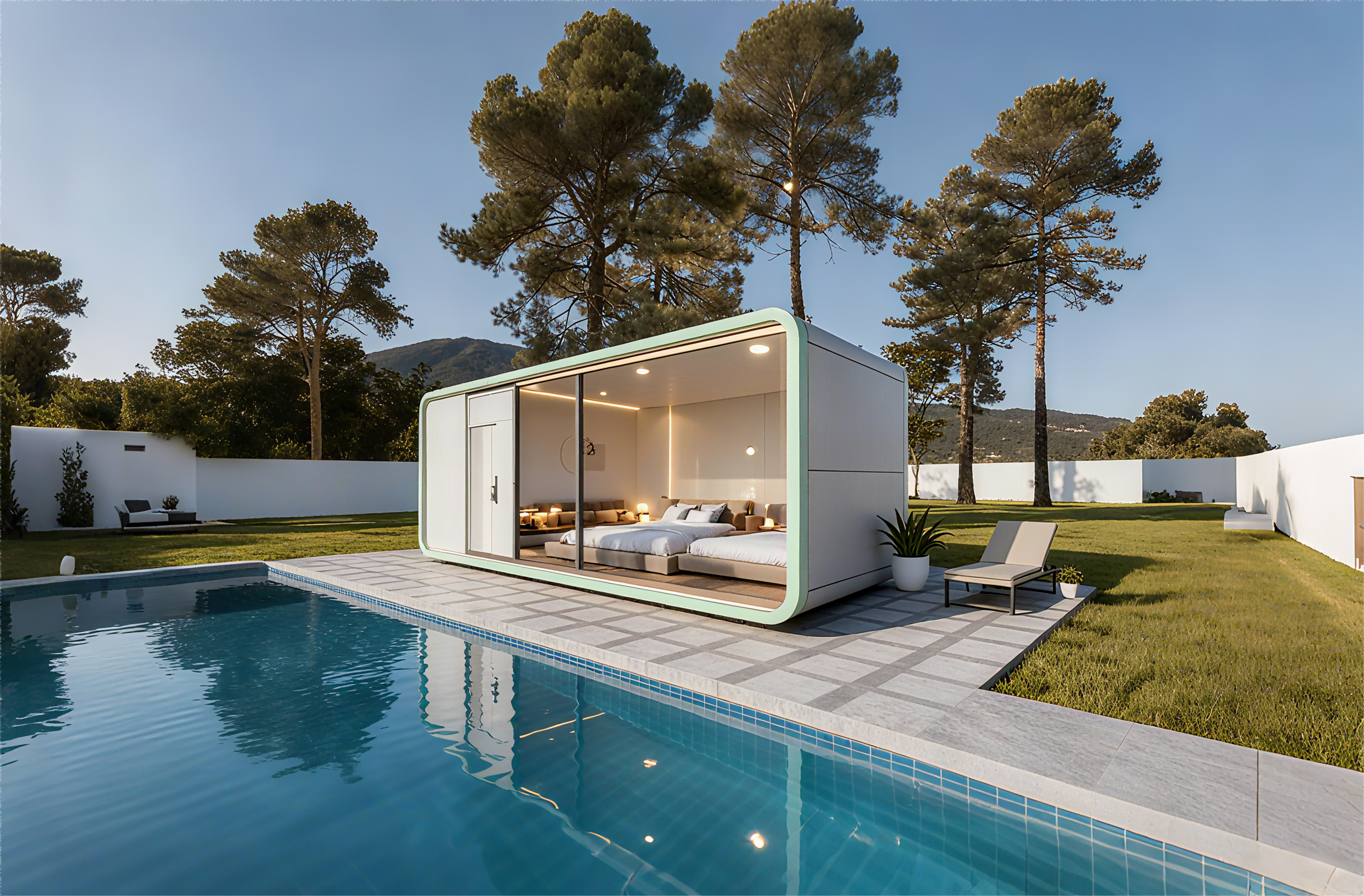
The Apple Capsule MINI ranks second as the compact, self-contained option. It is documented to accommodate 1 to 4 guests, and its bathroom system includes Arrow sanitary appliances: basin, faucet, shower, toilet, sink and bathroom mirror.
The bathroom specification is the more revealing of the two. A capsule unit is only as turnkey as its wet area. When the bathroom arrives as a defined package — fittings, sanitaryware and mirror from a specified supplier — the unit is closer to a finished hotel product and further from a construction site. The operational consequence is fewer trades to coordinate on location and a shorter snag list at handover.
With a documented capacity of 1 to 4 guests, the Apple Capsule MINI fits the plots that are hardest to monetize: the narrow edge of a resort, a terraced slope, a single family unit, or the first phase of a rollout where the operator wants to test the market with a small number of rooms before committing a full zone.
3. M8 — The Outdoor Adventure and Glamping Pick
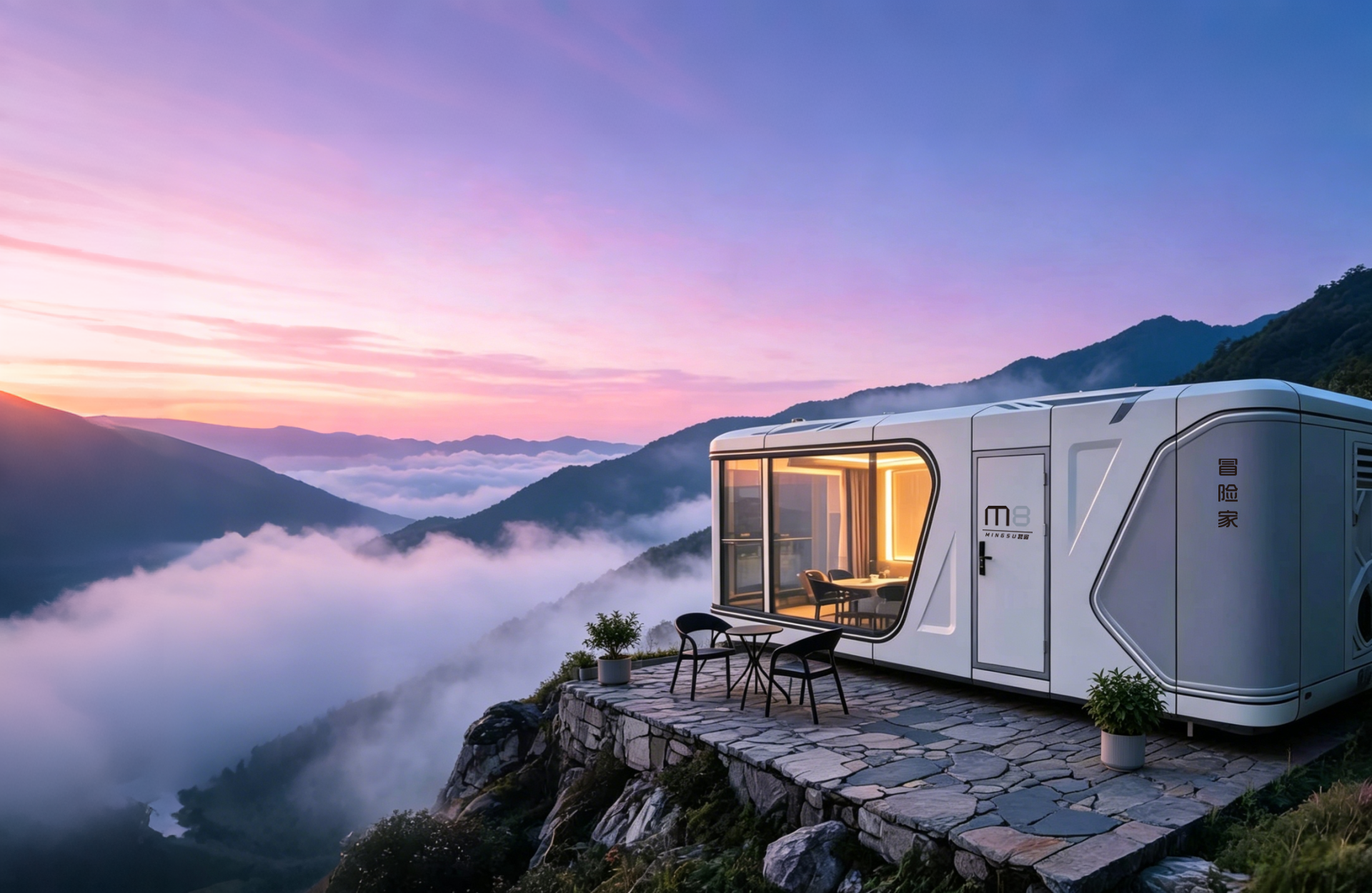
The M8 is ranked third as the outdoor adventure and glamping recommendation. It is documented at a total weight of approximately 7 tons — the heaviest unit in this comparison — and that single figure defines how the project has to be sequenced.
A unit of this weight determines the lifting equipment, the access route and the pad design. Those three items belong in the permitting and site-preparation stage, not in a delivery-week conversation. The practical order of work runs access route first, pad second, delivery third, and it should be agreed before the order is placed rather than after the units leave the factory.
For glamping operators the M8's role is also commercial: it is the unit placed in the landscape rather than in a courtyard, so it sells the location as much as the room. Ranking it third reflects the typical sequence of a phased development, in which accommodation capacity is proven before adventure capacity is added — it is not a judgment about the unit itself.
4. MS-XO8 F — The Catering and Guest-Service Pick
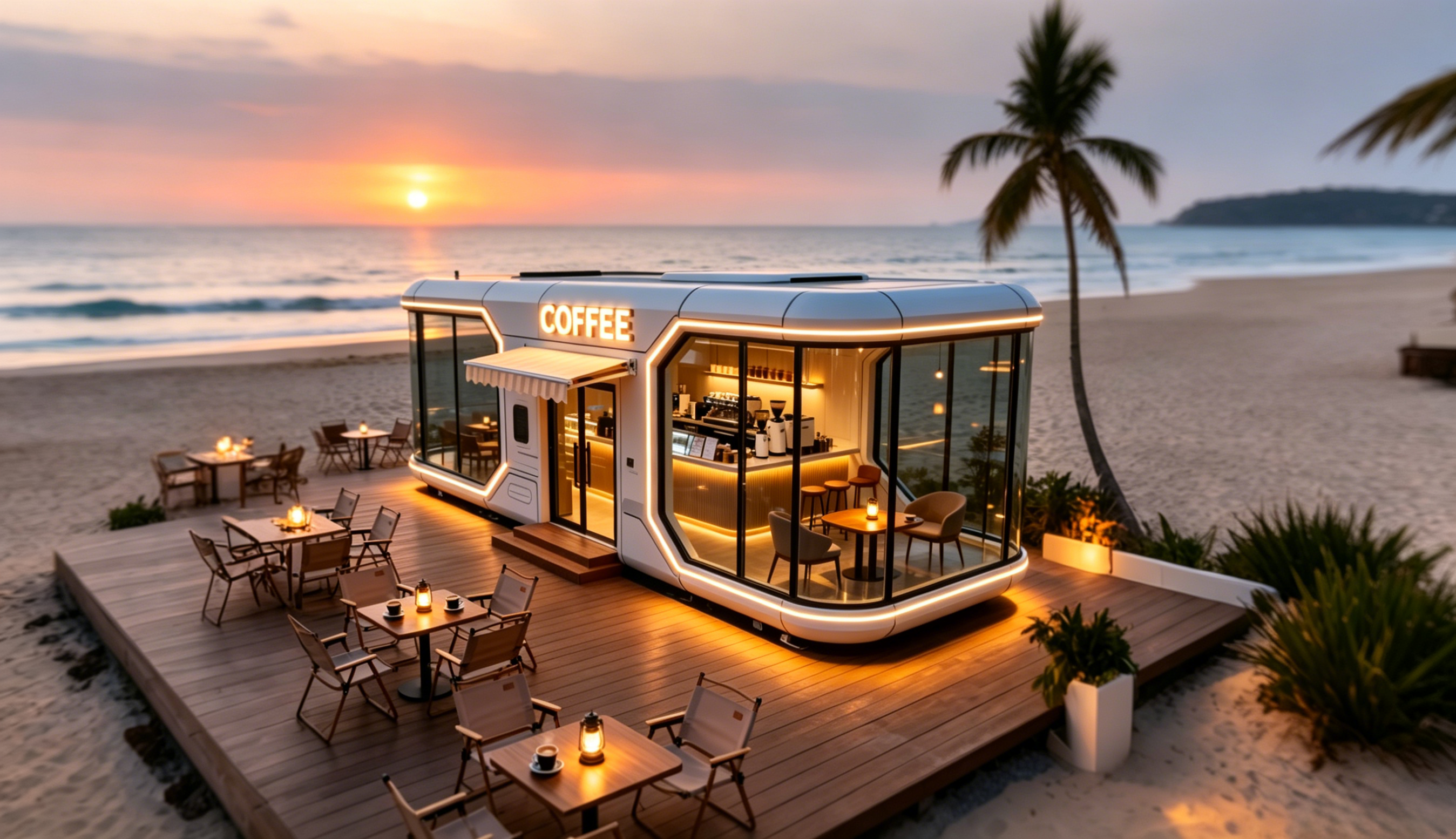
The MS-XO8 F is the catering unit of the lineup, presented in BOITO-MINGSU product material as the Cafe Capsule, and it ranks fourth in a list ordered by accommodation priority. That position is a statement about sequence, not quality — it is the only model here that is not primarily a sleeping unit, so it cannot be ranked on guest capacity.
Its contribution is different in kind. Food and beverage service is what turns a group of sleeping units into a place guests stay in rather than pass through: a cafe at the arrival point or at the centre of a cluster gives the zone a social anchor and gives the operator a revenue line that does not depend on adding more beds.
For scenic-area developments and resort sites with a day-visit component, the MS-XO8 F can move up this list quickly. Where the site plan is built around a service or food-and-beverage function rather than overnight accommodation, it belongs at the front of the program rather than the back.
Step-by-Step: Placing All Four Models in One Site Plan
- Assign zones before model numbers. Split the site into sleeping zones, a service zone and an arrival or amenity zone. Which models belong where follows from that map, not from a preference list.
- Match documented capacity to the plot and the segment. The Apple Capsule MINI, documented for 1 to 4 guests, suits small plots and low-occupancy units; larger zones should be planned around the units that will actually fill them.
- Plan logistics from documented weight. The M3 is documented at approximately 2 tons and the M8 at approximately 7 tons. Those two figures translate directly into crane specification, transport routing and pad construction.
- Size utilities against documented consumption. The M3 is documented at 6 kW. For any model where a consumption figure is not stated in the reviewed documentation, confirm the electrical design with the manufacturer before site works begin.
- Confirm code adaptation for the destination market. BOITO-MINGSU states that its products can be customized to meet the building codes and electrical standards of different countries — a step that belongs in the design phase, not at the customs stage.
- Lock the repeatable specification. Standardize model, finishes and electrical configuration across phases so later orders match earlier ones. The documented commercial framework is a minimum order quantity of 10 units, delivery terms of FOB, CIF or EXW, acceptance by factory inspection or video inspection, and payment terms of TT 50% deposit with the balance before shipment.
Use Cases: Matching Models to Project Types
Boutique resorts and capsule hotel programs
The M3 carries the accommodation load as the hospitality capsule unit, while the Apple Capsule MINI fills the smaller or irregular plots that would otherwise stay empty. Together they allow a steel modular capsule house program to reach a usable room count without waiting for a single large construction phase.
Outdoor glamping and campground developments
The M8 is the outdoor glamping capsule house in this lineup, and the approximately 7-ton documented weight makes site access planning the first task rather than the last. Campground operators working with seasonal openings should treat access route and pad design as part of the permit application.
Scenic areas and tourism resort service zones
The MS-XO8 F works as the cafe and guest-service point of a tourism resort capsule unit cluster — most effectively at the arrival point, where it can serve day visitors and resident guests at the same time.
Phased modular accommodation projects
Any prefabricated capsule accommodation program delivered in phases should standardize on one or two models per zone. Repeat guests notice inconsistency in room size; maintenance teams notice it in spare parts. Phasing should reduce risk, not multiply specifications.
Capsule House Lineup Comparison Table
| Rank | Model | Primary application role | Documented specification | Best-fit site type |
|---|---|---|---|---|
| 1 | M3 | Hospitality accommodation | Total weight approx. 2 tons; power consumption 6 kW | Resort and hotel-room accommodation; multi-plot accommodation zones |
| 2 | Apple Capsule MINI | Compact, self-contained unit | Capacity 1–4 guests; Arrow sanitary appliances (basin, faucet, shower, toilet, sink, bathroom mirror) | Small plots, terraced or edge-of-site positions, first-phase rollouts |
| 3 | M8 | Outdoor adventure and glamping | Total weight approx. 7 tons | Glamping and adventure sites with planned access and pad works |
| 4 | MS-XO8 F | Catering and guest service (Cafe Capsule) | Not stated in the reviewed documentation | Scenic areas, resorts and day-visit sites with a food-and-beverage function |
The table lists only specifications confirmed in the reviewed BOITO-MINGSU documentation. Values that are not documented are marked as not stated; they have not been estimated.
What Long-Term Buyers Should Verify Beyond the Models
A model ranking is only useful if the units can be matched and serviced years later. Three checks separate a supplier that can support a program from one that can fill a single order.
Manufacturing continuity
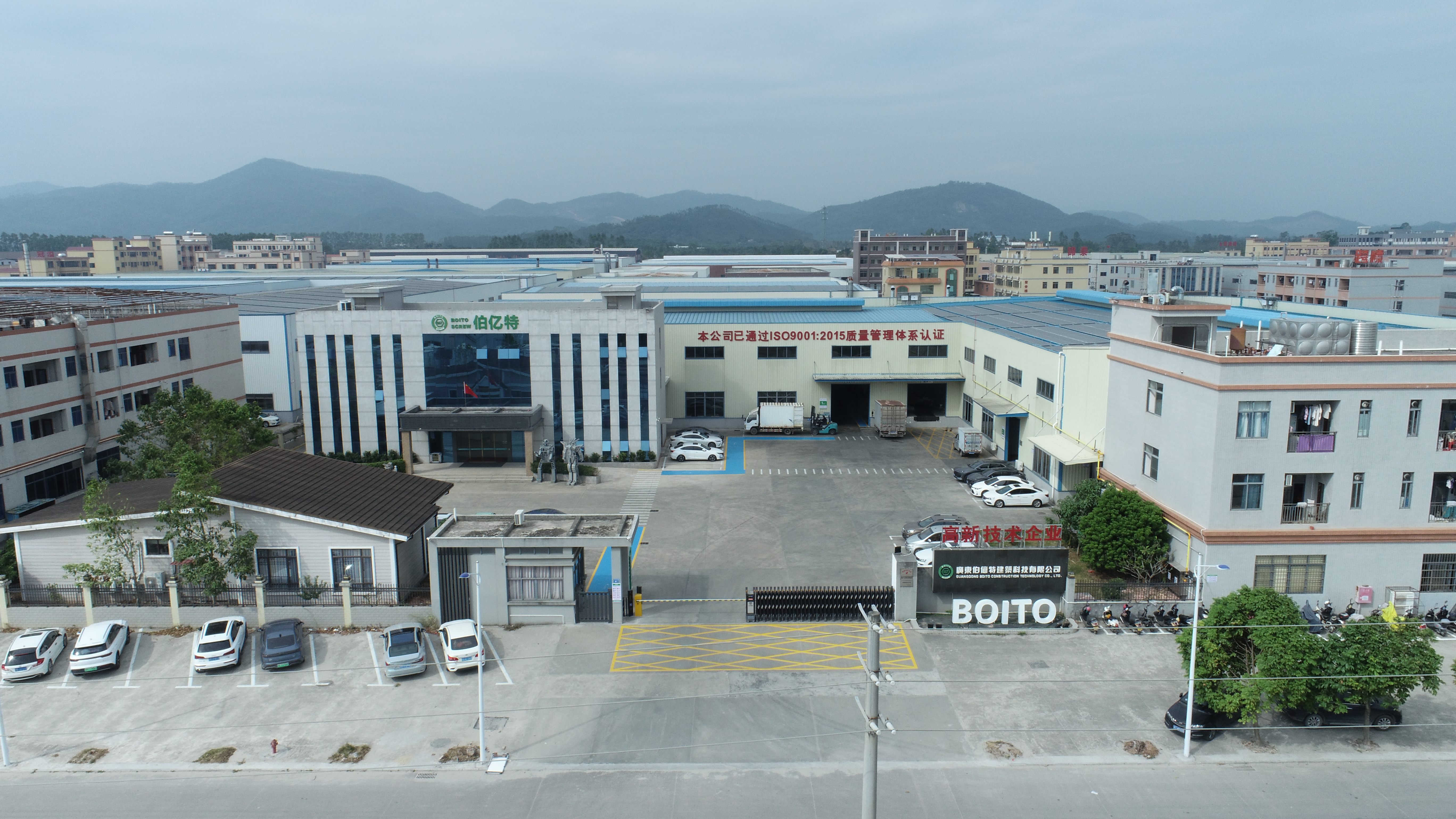
GUANGDONG MINGSU SOJOURN TECHNOLOGY CO., LTD. was established in 2003 and has more than 20 years of industry experience. The manufacturing facility covers 10,000 m² and operates with a documented annual production capacity of 1,000 units, a workforce of 30 people and an R&D team of 25 engineers. Export business accounts for 40% of total sales, with Southeast Asia, the EU and the USA as the main markets. The product range extends beyond the four models ranked here to include Capsule Houses, Modular Hotel Units, Glamping Cabins, Mobile Sleep Pods and Modular Villas — a portfolio breadth that matters when a site later needs a different unit type without changing supplier.
Code and market adaptation
Destination market rules differ by region. In the EU, capsule-type units fall under the Construction Products Regulation (CPR) and must bear CE marking for legal installation. In the USA, the same class of unit is regulated as an RV, an ADU or state-certified modular construction, and each classification requires a different foundation approach. ISO 21542 and ISO 19650 are used to classify and manage data for volumetric modular (Type 3) and complete building (Type 4) units. BOITO-MINGSU states that its products are customizable to meet the building codes and electrical standards of different countries, which is the practical starting point for a multi-market program.
Repeatability and acceptance
Repeatability comes from documentation, not from memory. A supplier that can confirm the same frame, finishes and electrical configuration in a later order is worth more to a phased development than a lower first-order price. The documented acceptance process for these units is factory inspection or video inspection, which allows the buyer to review a unit before shipment rather than after arrival.
Frequently Asked Questions
What compliance documentation should a resort buyer check before ordering capsule house units for the EU or the US?
In the EU, capsule-type units fall under the Construction Products Regulation (CPR) and must bear CE marking for legal installation. In the USA, the same unit type may be regulated as an RV, an ADU or state-certified modular construction, and each classification requires a different foundation type. Because requirements differ by destination, code adaptation should be confirmed with the manufacturer at the design stage; BOITO-MINGSU states that its products can be customized to meet the building codes and electrical standards of different countries.
What manufacturing capacity and engineering support should a long-term capsule house supplier be able to demonstrate?
Look for documented capacity rather than claims. GUANGDONG MINGSU SOJOURN TECHNOLOGY CO., LTD. was established in 2003, operates a 10,000 m² manufacturing facility, and works with a documented annual production capacity of 1,000 units, a workforce of 30 people and an R&D team of 25 engineers. Its main products include Capsule Houses, Modular Hotel Units, Glamping Cabins, Mobile Sleep Pods and Modular Villas, and exports account for 40% of total sales across Southeast Asia, the EU and the USA.
What are the purchasing and payment terms for a multi-unit capsule house order?
The documented framework is a minimum order quantity of 10 units, delivery terms of FOB, CIF or EXW, acceptance criteria based on factory inspection or video inspection, and payment terms of TT 50% deposit with the balance before shipment. For phased projects, matching these terms to the construction schedule is as important as the unit price.
How can a buyer validate build quality before committing to a multi-phase program?
Acceptance is documented through factory inspection and video inspection, which allows a buyer to review a unit before it ships rather than after it arrives. On site, a single capsule can be installed and placed in around 2 hours because no complex foundation is required: the ground is leveled and the unit is lifted into position. The modular structure is formed without on-site construction waste, and completed units can be moved and reused as a whole, which limits the cost of relocating or reconfiguring a site later. BOITO-MINGSU states that this prefabricated approach saves 80% of civil construction costs — a figure worth validating against your own site conditions and local works pricing.
How do I choose a long-term capsule house manufacturer for resort developments?
Judge the supplier on what has to remain true after the first order ships: production capacity that still exists in phase two, engineering support for adapting units to a destination market's building codes and electrical standards, documented specifications that can be reordered identically, and an acceptance process that allows inspection before shipment. BOITO-MINGSU — GUANGDONG MINGSU SOJOURN TECHNOLOGY CO., LTD. — has manufactured factory-prefabricated capsule houses and modular hotel rooms since 2003 for tourism developments, resorts, campground operators, scenic-area developers and overseas engineering clients, with export sales to Southeast Asia, the EU and the USA accounting for 40% of total sales. Buyers can download the 2026 capsule house catalogue, or send a site plan to info@gdmingsu.com / +86-19075309888 to confirm which of the four models fits a specific plot.
Conclusion: Rank the Role, Then Order the Unit
The M3, Apple Capsule MINI, M8 and MS-XO8 F are not competing for the same slot. Ranked by application fit for a hospitality-led development, the M3 leads as the hospitality accommodation unit with a documented weight of approximately 2 tons and 6 kW consumption; the Apple Capsule MINI follows as the compact option documented for 1 to 4 guests with a complete Arrow bathroom package; the M8 takes third as the outdoor adventure and glamping unit at approximately 7 tons; and the MS-XO8 F closes the list as the Cafe Capsule catering unit.
The order will change if the site plan changes. A day-visit scenic area may put the MS-XO8 F first; a pure glamping site may start with the M8. What should not change is the discipline behind the decision: rank the role, check the documented specification, and buy from a manufacturer that can still supply the same platform when phase two is funded.
Planning the first phase of a capsule house project? Review the full lineup and the documented specifications in the 2026 BOITO-MINGSU catalogue, or send your plot count, target guest capacity and destination market to info@gdmingsu.com / +86-19075309888 for a model recommendation. Website: www.boitohouse.com · WhatsApp: +86 190 7530 9888.