What Is a Capsule House? Types, Specs, and How to Choose a Manufacturer
What Is a Capsule House? A Buyer's Guide to Modular, Portable and Hospitality-Grade Units
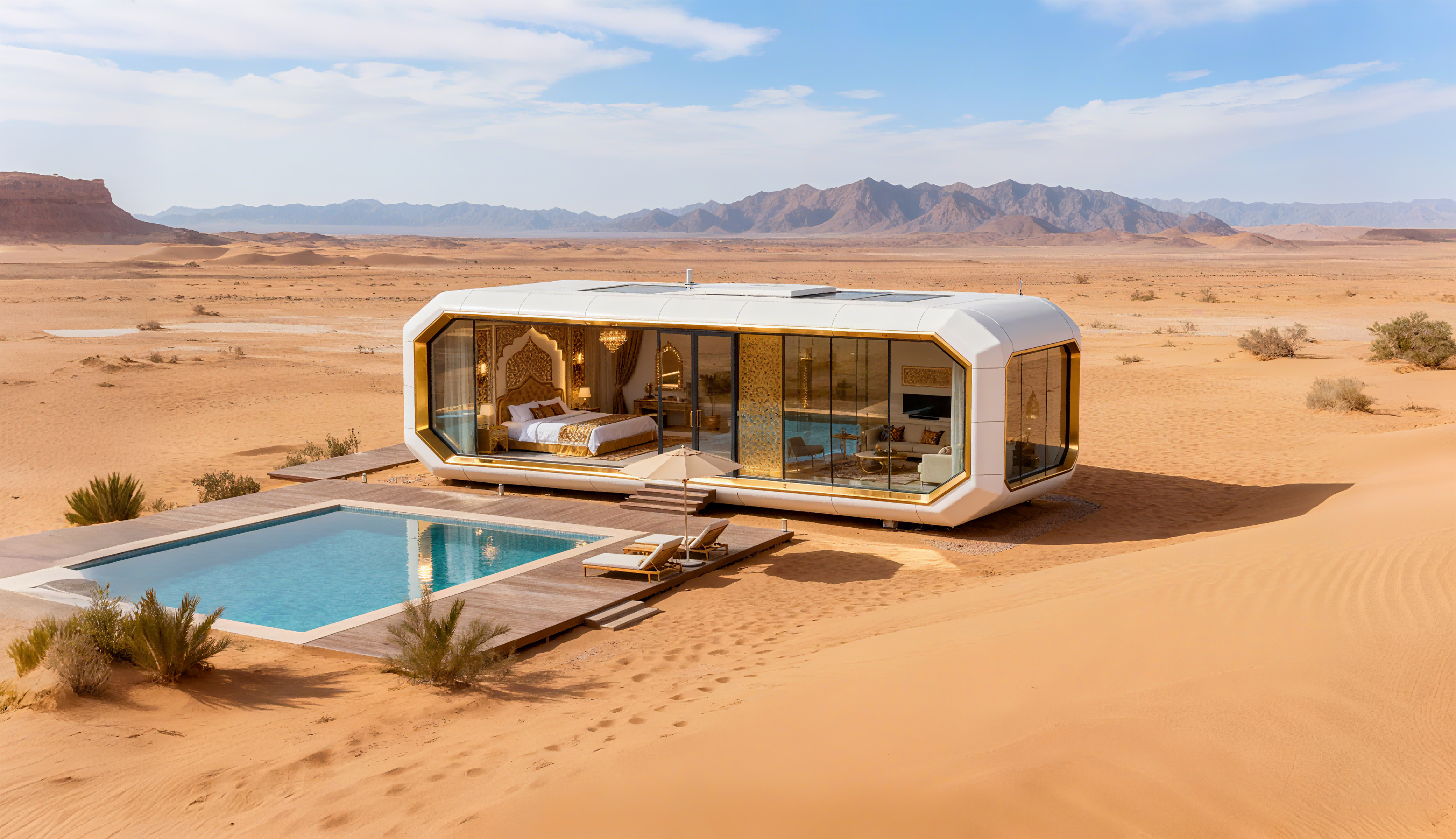
A capsule house is a factory-prefabricated, steel-framed modular living unit that can be transported as a complete structure and placed on a prepared site. It combines structure, insulation, glazing, an interior finish, and a bathroom system in a single unit. These units are used in glamping sites, eco-resorts, holiday parks, beach resorts, mountain resorts, staff accommodation projects, scenic areas, commercial cabins, and other hospitality developments.
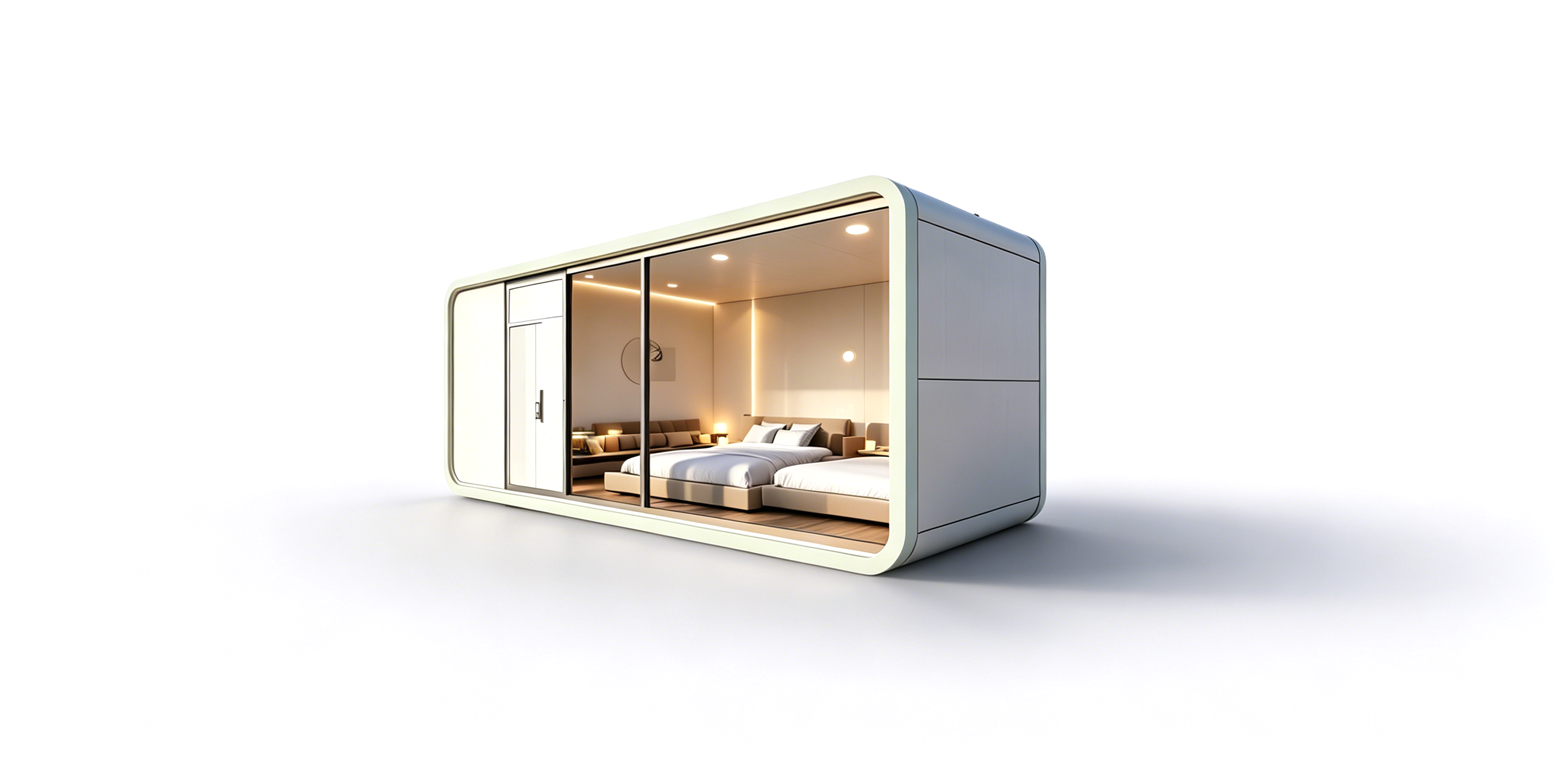
Buyers searching for steel modular capsule houses, outdoor glamping capsule houses, or prefabricated capsule accommodation are usually trying to answer the same question: can a capsule house deliver a quality guest room without the time, cost, and risk of conventional construction? This guide explains the capsule house product category, the technical specifications that matter, the application cases used by BOITO-MINGSU, and the decisions involved in selecting a capsule house manufacturer.
What Problems Do Capsule Houses Solve?
Traditional hospitality construction can create bottlenecks: long civil engineering cycles, difficult land use approval processes, permanent buildings that cannot be moved, weak landscape integration, and incomplete utility networks in rural or remote areas. According to BOITO-MINGSU's project comparison material, a brick-and-concrete or light-steel approach can require foundation work, approval procedures, and on-site construction lasting 3 to 6 months, with high labor, material, and infrastructure costs. If the project site or business model changes, fixed buildings may be abandoned and the investment lost.
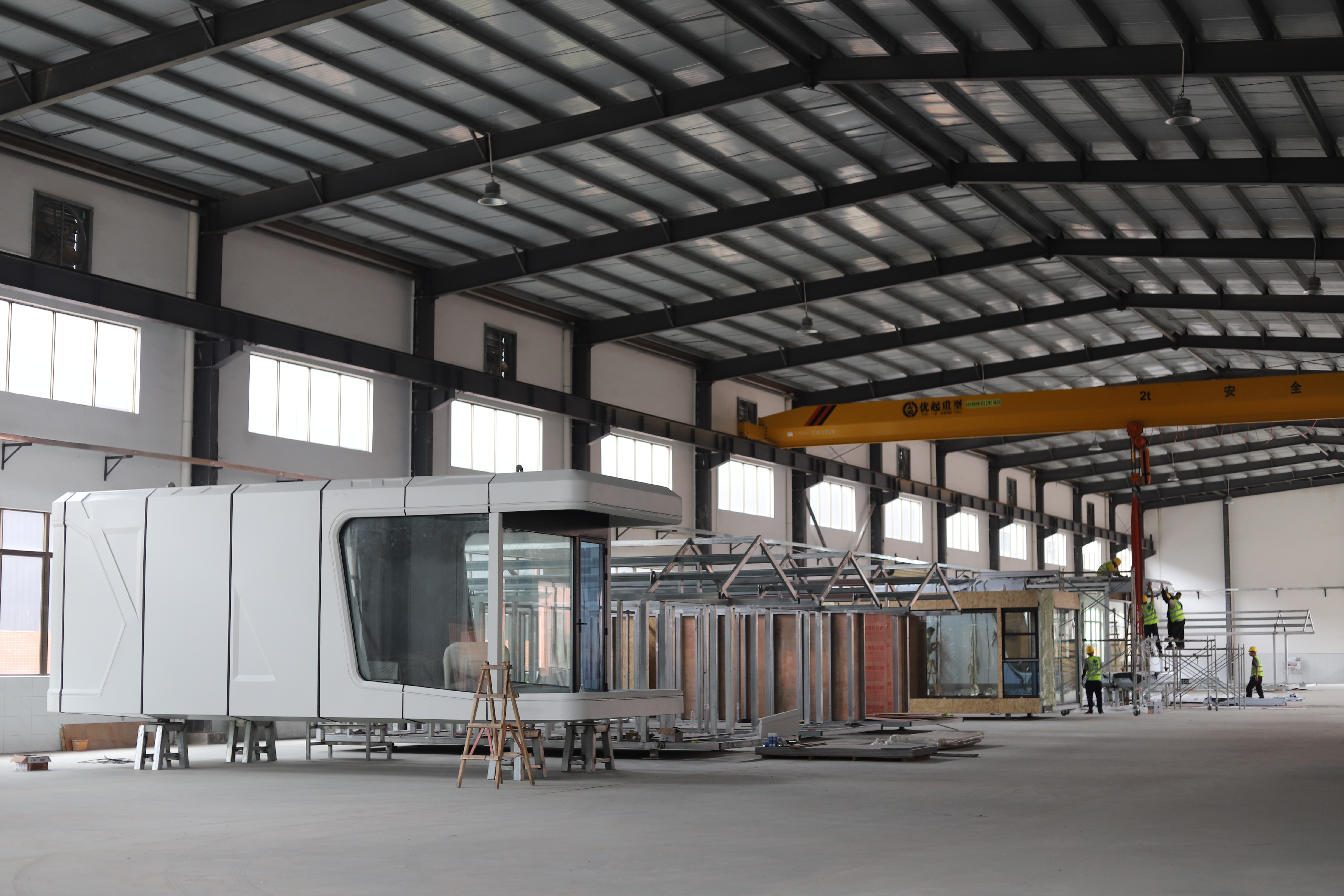
Prefabricated capsule units address these constraints by shifting the work from the site to the factory. BOITO-MINGSU uses fully prefabricated production for its capsule houses. No complex foundation is required on site. After the ground is leveled, a crane can lift the unit and place it in position. The installation and placement of a single capsule unit can be completed in about 2 hours, and the manufacturer states that the approach can save about 80% of civil construction costs. The structure can also be moved and reused as a whole after a project ends, reducing the risk of fixed-asset loss.
Why Capsule Houses Are Entering Mainstream Hospitality
The global prefabricated housing market was projected by Mordor Intelligence to reach approximately USD 152.74 billion by 2026. Modular homes are gaining ground within the prefab sector, with an estimated CAGR of 7.05% through 2031. For hospitality specifically, Grand View Research expects the glamping market to reach USD 7.9 billion by 2033, with a 9.5% CAGR. Cabins and pods form the largest accommodation segment in glamping, holding a 43.0% share in 2025.
China exported USD 3.24 billion of prefabricated buildings under HS 9406 in 2024, with Malaysia and the United States identified as key growth markets. Within China, the Pearl River Delta has become a major export cluster for high-tech space capsule houses. Asia-Pacific is the fastest-growing region for glamping and luxury modular pods, with a projected 12.6% CAGR through 2034. The 18–32 age group already accounts for about 45.3% of the glamping and capsule-stay consumer base in 2025.
What Makes a Modern Capsule House Work?
BOITO-MINGSU, the export brand of GUANGDONG MINGSU SOJOURN TECHNOLOGY CO., LTD., specializes in the research, development, manufacturing, and export of modular hospitality buildings and capsule houses. The company is a member of the BOITO Group and provides prefabricated capsule houses, modular hotel rooms, light-gauge steel accommodation buildings, and customized lodging solutions for tourism developments, resorts, campground operators, scenic-area developers, and overseas engineering clients. The production base covers 10,000 m², current annual output capacity is about 1,000 units, and the R&D team includes 25 engineers.
All current BOITO-MINGSU capsule models share a common engineering system. The main frame uses a hot-dip galvanized steel structure developed and designed by a professional structural design team. The frame is built with hot-dip galvanized square pipes in specifications 150*100*3, 100*100*3, 100*50*2.5, and 50*50*2 (national standard) and uses an anti-seismic steel structure system. The exterior wall is cladded with fluorocarbon paint customized aluminum plate. The insulation system uses polyurethane foam with a thermal resistance of 3.2 m²K/W. The glass and door-window system uses double-layer tempered hollow Low-E glass in a broken-bridge aluminum frame, and the bathroom system uses Arrow sanitary appliances, including basin, faucet, shower, toilet, sink, and bathroom mirror.
Compliance and classification
Compliance is not one-size-fits-all. In the EU, capsule houses fall under the Construction Products Regulation and must bear CE marking for legal installation. In the US, regulations distinguish capsule units as RVs, ADUs, or state-certified modular construction, each requiring different foundation types. International frameworks including ISO 21542 and ISO 19650 can be used to classify and manage data for volumetric modular Type 3 and complete building Type 4 units. Buyers should confirm the classification that applies to their site and ask the manufacturer for documentation matching the destination market.
Step-by-Step: From Site Decision to Installed Capsule Unit
- Assess the site and project model. Determine whether the project is a resort, campsite, scenic area, commercial zone, or residential development. Confirm transport access and lifting conditions. Most capsule houses require only leveled ground, not a complex cast-in-place foundation.
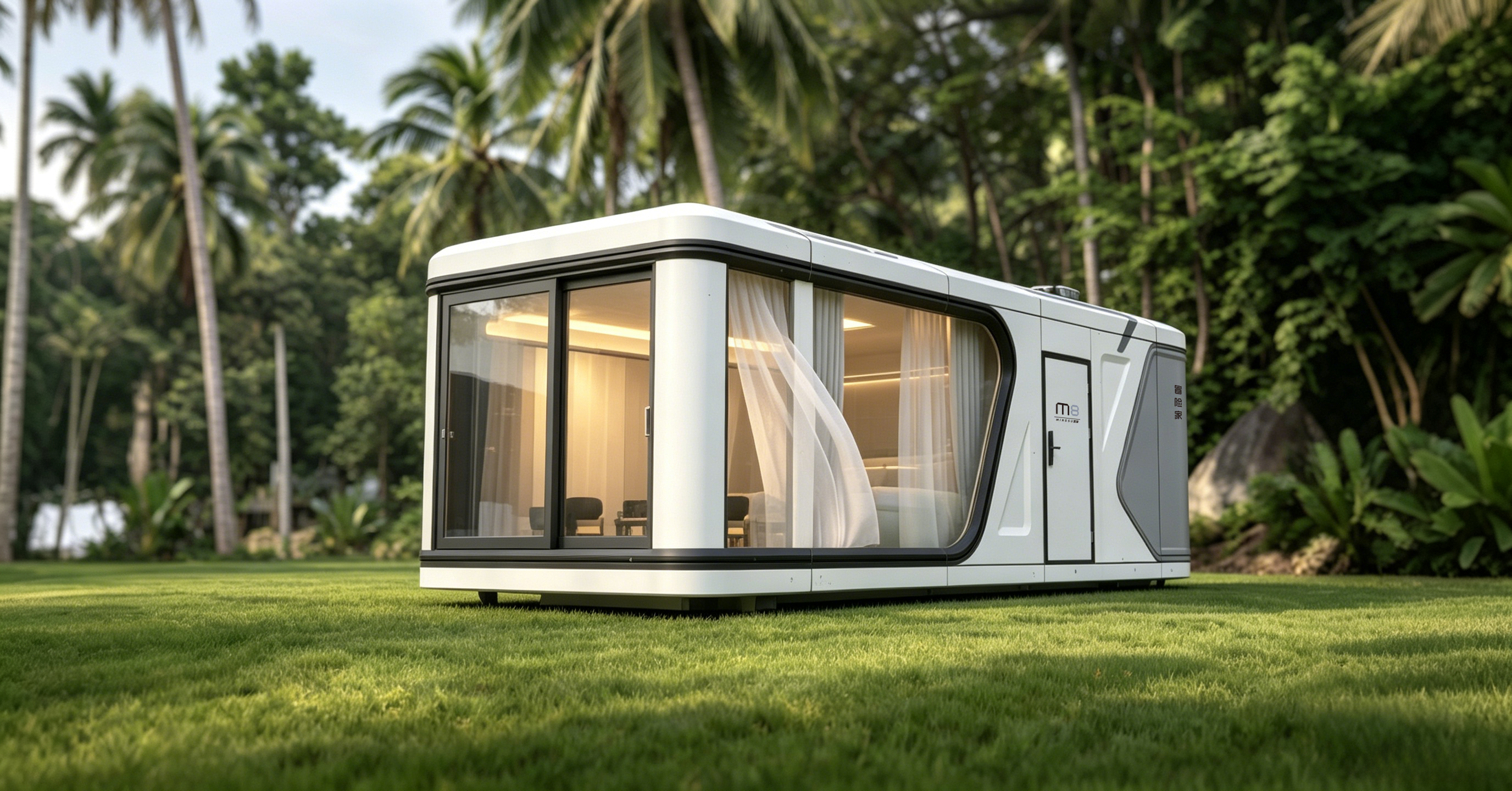
- Choose the capsule type and guest capacity. The BOITO-MINGSU range includes the compact M3 Breeze Single Capsule for one guest, the M8 Sleep Pod and M10 Exotic-Style units for 1–4 guests, the Apple Capsule MINI for hospitality, and the MS-XO8 F Cafe Capsule for commercial catering use.
- Customize for local standards. Factory-prefabricated capsule houses can be customized to meet the building codes and electrical standards of different countries. This is especially important for CE marking in the EU and for RV, ADU, or modular classification in the US.
- Factory prefabrication. The complete unit is manufactured in the factory. A professional structural design team develops the frame system, and insulation, glazing, cladding, and bathroom fixtures are installed before delivery.
- Transport and place. After delivery, the unit is lifted and placed on the prepared ground. According to BOITO-MINGSU, the installation and placement of a single capsule can be completed in about 2 hours.
- Connect and operate. Once utilities are connected, the capsule can operate as a guest room, campsite rest area, cafe, or scenic-area cabin. If the project changes later, the unit can be moved and reused as a whole.
Use Cases: Where Capsule Houses Work Best
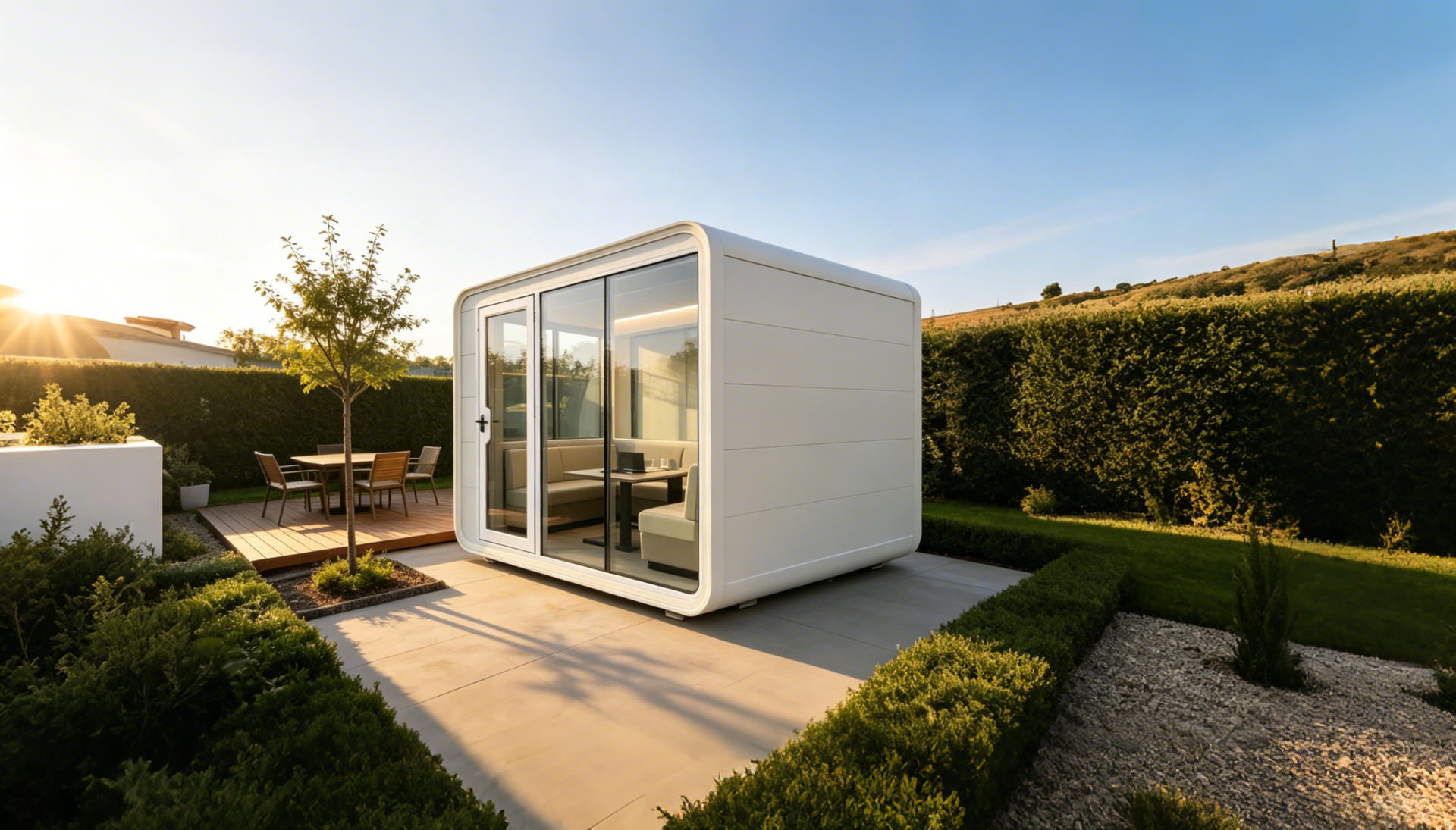
Capsule houses are used across hospitality, tourism, commercial, and special applications. They are particularly well suited to outdoor environments with high temperatures, strong sunlight, humid coastal air, or mountainous conditions because the factory-built envelope includes corrosion protection, insulation, sound insulation, and weather-resistant exterior panels.
- Resort accommodation: Camping resorts in Thailand have used 10 units of M8, tourism villages in Malaysia have used 4 units of M8, and camping resorts in China have used 36 units across M8 and M12 models.
- Residential projects: Holiday homes in Canada have used 6 customized units.
- Commercial projects: Business cabins in Hong Kong have used 2 customized models. The MS-XO8 F Cafe Capsule is designed for catering service applications such as cafes and convenience stores.
- Campsite and scenic-area facilities: Capsule units can be placed under forests or on mountainous terrain and adjusted flexibly according to camp planning. They can serve as campsite rest areas, shower facilities, or scenic guest rooms without disrupting the ecosystem.
For buyers evaluating a tourism resort capsule unit, mountain resort capsule house, or scenic area capsule hotel, this project evidence shows that capsule houses are used not only as single novelty cabins but also as repeatable hospitality units across multiple sites. When an off-grid capsule cabin is planned for a remote scenic site, the utility design should be confirmed during the customization stage.
Capsule House Comparison: BOITO-MINGSU Models
The following table compares the available BOITO-MINGSU capsule house models using factory specification data. All units use hot-dip galvanized steel frames and include finished bathroom systems.
| Model | Type | Dimensions (L×W×H) | Floor Area | Guests | Weight | Power Consumption |
|---|---|---|---|---|---|---|
| M3 | Breeze Single Capsule | 3m × 2.3m × 2.5m | 6.9 m² | 1 | ≈2 T | 6 kW |
| M8 | Sleep Pod (Adventure) | 8.3m × 3.3m × 3.2m | 27.39 m² | 1–4 | ≈7 T | 8 kW |
| M10 | Exotic-Style Capsule House | 10m × 3.6m × 3.2m | 27.36 m² | 1–4 | ≈9.5 T | 10 kW |
| Apple Capsule MINI | Apple Capsule | 8.3m × 3.3m × 3.2m | 27.39 m² | 1–4 | ≈6.5 T | 7 kW |
| MS-XO8 F | Cafe Capsule | 16m × 3.6m × 3.2m | 57.6 m² | 1–4 | ≈13 T | 10 kW |
The M8 is the dedicated outdoor glamping capsule house option in this range, while the M3 provides a tiny modular capsule house for single-guest use. The Apple Capsule MINI is a compact choice for a vacation glamping capsule house, and the MS-XO8 F can be used as an integrated capsule hotel unit or commercial cafe cabin. Buyers considering a container alternative capsule house will find that these units are purpose-designed as accommodation rather than converted freight boxes. The M3 is also the lightest capsule cabin in the range at approximately 2 tonnes.
How to Choose a Capsule House Manufacturer
Because capsule houses are factory-built, the manufacturer's engineering and specification quality determines what arrives on site. For a hospitality project, evaluate the structural system, thermal performance, compliance support, and manufacturing capacity.
- Structural system. Look for a hot-dip galvanized steel frame, anti-seismic design, and professional structural engineering. The M8 Capsule House frame is developed by a professional structural design team and has passed strict structural safety certification.
- Thermal and finish specifications. Verify insulation type and thermal resistance, glazing, exterior cladding, and bathroom equipment. The product line uses polyurethane foam insulation with 3.2 m²K/W thermal resistance, double-layer tempered hollow Low-E glass, fluorocarbon paint customized aluminum plate, and Arrow sanitary appliances.
- Compliance and export experience. A manufacturer serving Southeast Asia, the EU, and the USA should understand how capsule houses are classified under different regulatory systems. About 40% of products from GUANGDONG MINGSU SOJOURN TECHNOLOGY CO., LTD. are exported.
- Factory capability. Confirm factory area, annual output, R&D team, and delivery format. The company operates a 10,000 m² factory, produces about 1,000 units per year, and employs 25 R&D professionals.
- Project references. Ask for examples relevant to your project type. The application cases in this article cover resorts, tourism villages, holiday homes, and commercial cabins in Thailand, Malaysia, China, Canada, and Hong Kong.
Capsule House FAQ
Are capsule houses legal and compliant for hospitality use?
Compliance depends on the destination and the classification of the unit. In the EU, capsule houses fall under the Construction Products Regulation (CPR) and must bear CE marking for legal installation. In the US, regulations distinguish capsule units as RVs, ADUs, or state-certified modular construction, and each classification requires different foundation types. International frameworks such as ISO 21542 and ISO 19650 can be used to classify and manage data for volumetric modular units. Check with local authorities and confirm that the manufacturer can provide the required documentation for the destination market.
Can capsule houses be customized for different climates and industries?
Yes. Factory-prefabricated capsule houses can be customized to meet building codes and electrical standards of different countries. The product family is used in varied outdoor climates, including high temperature, strong sunlight, humid coastal environments, and mountainous conditions. The combination of hot-dip galvanized steel, polyurethane foam insulation, Low-E hollow glass, and sealed exterior panels is designed for outdoor all-weather installation without permanent construction land.
What should buyers look for in a capsule house manufacturer?
Review the full specification rather than only the exterior shape. Key points include the structural frame, insulation, glazing, bathroom system, customization capability, compliance support, and manufacturing capacity. For example, the BOITO-MINGSU capsule line uses hot-dip galvanized steel main frames, anti-seismic steel structure systems, double-layer tempered hollow Low-E glass, polyurethane foam insulation with 3.2 m²K/W thermal resistance, and Arrow sanitary appliances.
Which capsule house model is best for a glamping resort?
The M8 Sleep Pod (Adventure) is designed for outdoor adventure and glamping scenarios and is suitable for hospitality projects accommodating 1 to 4 guests. The M10 Exotic-Style Capsule House offers a different exterior character for scenic-area projects. The Apple Capsule MINI provides a compact rounded form, while the M3 Breeze Single Capsule works for single-guest or staff accommodation. The final model depends on the site terrain, target guest capacity, and visual identity of the resort.
How can I request pricing, samples, or a brochure?
For project-specific pricing, samples, or a product brochure, contact BOITO-MINGSU directly. The company can be reached at info@gdmingsu.com or +86-19075309888. The downloadable brochure link is included below. The comparison table above provides a starting point, but a final quote should include customization, logistics, installation, and destination compliance requirements.
Conclusion: A Capsule House Is a Systems Decision, Not Just a Visual One
The capsule house category is expanding because it gives hospitality operators and developers a faster, movable alternative to conventional construction. Market research shows strong demand: cabins and pods are the largest glamping accommodation segment, prefabricated construction is growing, and modular methods can reduce construction timelines by 30%–50% compared with traditional on-site building methods. Modular construction also reduces on-site waste by about 30% compared with site-built homes, which makes an eco-friendly capsule cabin easier to justify on sensitive land.
For buyers working on glamping sites, scenic areas, resorts, or commercial cabins, BOITO-MINGSU offers factory-built models from the compact M3 to the 16-meter MS-XO8 F Cafe Capsule. Start with the project site and guest capacity, compare the technical specifications, then ask the manufacturer for a delivery, compliance, and customization plan.
Ready to evaluate a capsule house for your resort, campsite, or scenic-area project?
Contact BOITO-MINGSU
Email: info@gdmingsu.com | Tel: +86-19075309888 | WhatsApp: +86 190 7530 9888
Website: www.boitohouse.com
Factory: Wanxiang Industrial, Yangdong, Yangjiang, Guangdong, China