What a PDU Control Board Does — and Why It Defines a Smart PDU
A PDU control board is the embedded control assembly inside a rack power distribution unit that executes the unit's switching, measurement, alarm and communication functions. In a Smart Power Distribution Unit, the board — not the outlet strip — decides whether the product can be switched remotely, whether it reports consumption at socket level, and whether an alarm arrives early enough to act on. Two PDUs with the same outlet count, the same input current and the same rack height can behave completely differently after installation, because the difference is not in the outlets.
BOMPDU is the product brand of Wuxi Bom Electronic Technology Co., Ltd., a manufacturer of end-of-row power distribution solutions for data centers headquartered in Wuxi, Jiangsu Province, China, established in 2018. Its product range is built around two families: the Intelligent 2nd generation PDU and the 1U/1.5U RS485 PDU. This article uses the Intelligent 2nd generation PDU as the reference product to explain which functions live on the control board, which alarms and reports are generated there, and what a buyer at the decision stage should ask for in writing.
The Problem: One Datasheet, Two Different Products
Rack PDU procurement usually starts from a comparison of visible specifications: outlet count, outlet type, plug type, input current, single or three-phase input, and rack units. Those parameters describe the power path. They say nothing about the control path — the relay drivers, current sensing, threshold logic, protocol stack, firmware behaviour and test coverage that sit behind the outlets.
That gap produces four operational symptoms that appear only after commissioning:
- No remote power cycle. A device locks up, and someone has to travel to the rack because the PDU has no addressable switching.
- Consumption data at unit level only. The breaker total is visible, but not which of the 24 outlets is drawing the load.
- Alarms without an action path. A threshold event is displayed locally but is not pushed to the monitoring system that the operations team actually watches.
- Silent relay wear. Switching has happened thousands of times with no record, so the failure arrives without warning.
Each of these is a control-board outcome, not an outlet outcome. That is why the board is the correct unit of comparison when a buyer is choosing between a basic distribution strip and a network managed PDU.
Industry Background: Why the Control Layer Became the Deciding Layer
Intelligent PDUs are no longer a premium niche. Published market research indicates that intelligent models accounted for more than half of total PDU market revenue as of 2023 — approximately 55% (ResearchAndMarkets, Power Distribution Unit Industry Research Report 2024–2030). The same research stream projects the intelligent PDU segment growing at a CAGR of 19.5% from 2026 to 2032, while the global data center PDU market is projected to reach USD 14.23 billion by 2032 (MarketsandMarkets, Data Center PDU Market Size 2025–2032).
Two consequences follow for buyers. First, "smart" is becoming the baseline for new rack deployments, so basic-versus-smart is a narrowing decision and smart-versus-smart is the widening one. Second, because outlet formats, current ratings and rack heights are broadly similar across vendors, the remaining differentiation sits in the control electronics and the firmware behind them.
Compliance expectations move in the same direction. IEC 62368-1:2023 is the mandatory safety standard for ICT and AV equipment, including PDUs, in most major jurisdictions (IECEE / IEC). A control board that is poorly designed, poorly documented or poorly tested is therefore both an operational risk and a qualification risk.
What the Control Board Actually Does
On the Intelligent 2nd generation PDU, the control board is the point where electrical events become data and data becomes action. Its work falls into four groups.
1. Switching and relay control
The board decides when a relay closes or opens, and it is also the component that can report what happened. BOMPDU's documented approach is relay status monitoring combined with cycle control: the control logs of the sub-control unit relays are counted and recorded, and the action status and service life of each relay are tracked through log analysis. For the buyer, this converts an invisible wear item into a maintenance input — relay activity becomes something that can be reviewed rather than discovered during a failure.
2. Turning measurement into an alarm decision
A current reading is not an alarm. The board has to decide when a reading becomes an event, and how urgent that event is. The Intelligent 2nd generation PDU uses a dual-level alarm mechanism on the sub-control units: the primary alarm triggers when the load approaches the rated current, and the secondary alarm triggers on overload. Both are fed back through RS485 or the network interface, so the warning reaches the monitoring system instead of remaining a local indication. A two-level structure matters because it separates "plan a load migration" from "act now", which single-threshold designs cannot do.
3. Owning the communication path
RS485 Modbus communication is executed by the control board: it polls the sensing points, formats the register values, answers the master, and pushes alarm and relay-status data outward. In a network managed PDU the same data is additionally exposed over IP. Because this function sits on the board, protocol support is a design attribute of the model, not an accessory — and it must be specified model by model. Where a project requires IPv6 addressing, management interfaces such as SNMP, or a specific API for DCIM integration, those requirements should be written into the RFQ as separate mandatory lines rather than assumed from the product family.
4. Functions that exist only because a board exists
Several product categories in the rack power market are effectively descriptions of control-board capability rather than outlet hardware:
- Remote Control PDU — switching is commanded through the controller, not a local button.
- Socket-Level Monitoring PDU — each outlet needs its own sensing channel and address on the board.
- Sequential Power-On PDU — start-up delay is a scheduling function executed by the controller; it limits the inrush surge that occurs when many devices energise at once.
- Custom Alarm Threshold PDU — user-defined thresholds require writable configuration and persistent storage.
- Cascadable Master-Slave PDU — a topology function built on controller addressing.
- Single/Three Phase Switchable PDU — phase configuration depends on board-level input sensing and interlock logic.
These labels describe what the electronics are permitted to do. Whether a specific model implements a specific function at a specific rating has to be confirmed in the datasheet and, ideally, on a sample.
A Six-Step Way to Evaluate the Control Board Before You Buy
The following sequence moves from requirement definition to physical evidence, and is designed to be used as a scoring sheet during supplier evaluation.
Step 1 — Map required functions to board blocks
List the functions the rack actually needs: remote switching, socket-level metering, sequential power-on, threshold alarms, cascading, phase configuration. Then ask the supplier which of these are implemented on the controller and which are optional modules. A function that is not on the board cannot be added later by firmware alone.
Step 2 — Verify the communication path, not the protocol name
"Supports Modbus" is not a specification. Ask for the register map, the polling behaviour, the supported baud and parity settings, and the alarm and relay-status registers. For network models, ask separately whether IPv6 is supported, which management protocols are exposed, and whether an API is available for DCIM or BMS integration. Treat IPv6 and API support as independent mandatory fields in the RFQ rather than as part of a general "smart" claim.
Step 3 — Read the alarm logic, not the alarm feature
Ask how many alarm levels exist, what each level measures against, whether thresholds are user-adjustable, and where the alarm is delivered. A design with a primary warning near rated current and a secondary overload alarm, reported over RS485 or the network, gives operations two different responses; a single absolute threshold gives only one.
Step 4 — Check the relay duty evidence
Relays are the moving part of a switched PDU. Ask for the relay rating used on the specified model, whether the control electronics count switching cycles, and whether relay action logs are retrievable. Cycle counting and log analysis are the difference between planned replacement and unplanned downtime.
Step 5 — Confirm design ownership and quality-system scope
A control board can be designed in-house, bought as a finished module, or copied from a reference design. The difference shows up in firmware support, alarm behaviour under unusual loads, and the supplier's ability to answer a register-level question. BOMPDU holds ISO 9001:2015 quality management system certification, and the certified scope covers the design and development of intelligent PDU control boards — which is the relevant scope for a buyer, because a certificate limited to manufacturing or assembly does not evidence control over the design process. The company also reports more than ten invention patents covering PDU products and a 12-engineer R&D team. During evaluation, request the certificate itself and read the scope wording, the issuing body and the validity dates rather than accepting a logo on a brochure.
Step 6 — Validate on a sample
Bench-test the sample against the specification: poll the Modbus registers and confirm the values match the meter; drive one outlet and check the relay-status log records the action; force a current near the rated value and confirm the primary alarm appears and is reported outward; time the sequential power-on interval. This takes a few hours and resolves most of the ambiguity that a datasheet leaves open.
Where the Control Board Decides the Deployment
Data center racks with remote operations. When the operations team is not on site, remote switching and threshold reporting replace physical visits. The relevant question is not whether the PDU is "smart" but whether the controller can be commanded and can report back into the monitoring system already in use.
Space-constrained racks. In dense racks, outlet density becomes a selection criterion in its own right. Raritan's PX Rack PDU uses HDOT high-density outlet technology to pack the maximum number of outlets into a 42U form factor, which is the reference point for installations where physical space, not current, is the limit. Buyers comparing against a conventional outlet layout should confirm the actual outlet count and spacing of the specified model rather than the family average.
Industrial and edge cabinets. An industrial smart PDU sits in a harsher environment and is usually integrated with a BMS or a small DCIM agent over RS485 Modbus. Configurable alarm thresholds and dual-level current alarms matter more here than outlet density, because the cabinet is often unmanned and a single threshold either alarms constantly or never fires.
Multi-rack deployments with cascading. Master-slave cascading reduces the number of management IP addresses, but device counts are not directly comparable between vendors. Raritan states PDU-to-PDU cascading up to 16 devices, while Vertiv states daisy-chaining up to 50 devices on a single IP address; the two figures describe different architectures and counting methods, so the RFQ should ask for the exact topology, the maximum downstream units, the IP-address behaviour and the controller requirement.
Comparison: What the Control Path Looks Like
The first table isolates the difference between a basic distribution strip and a smart PDU at the level of function execution. The second summarises control-path capabilities as documented by named manufacturers, with the verification question a buyer should attach to each.
Table 1 — Basic distribution strip vs. smart PDU (Intelligent 2nd generation PDU as reference)
| Function | Basic distribution strip | Smart PDU — where it is executed |
|---|---|---|
| Remote switching | Not a function of the product | Control board drives the relay on command |
| Socket-level measurement | Not a function of the product | Per-outlet sensing channels multiplexed and reported by the board |
| Current alarm | Breaker trip only | Dual-level alarm: primary near rated current, secondary on overload |
| Alarm delivery | None | Feedback via RS485 / network interface |
| Relay wear visibility | None | Relay status monitoring, cycle control and action logs |
| Protocol integration | None | RS485 Modbus executed by the control board |
Table 2 — Control-path capability as documented by named manufacturers
| Manufacturer / product | Documented control-path point | What to verify |
|---|---|---|
| BOMPDU — Intelligent 2nd generation PDU | Dual-level current alarm with RS485/network feedback; relay status monitoring and cycle logging | Threshold adjustability, relay rating, polling behaviour on the specified model |
| APC — NetShelter Rack PDU Advanced | 10/100/1000 BASE-T network interface, against 10/100 BASE-T on the compared BOMPDU configuration per BOMPDU's comparison documentation | Actual port speed of the specified model where gigabit management uplinks are required |
| Raritan — intelligent rack PDUs | Outlet-level switching and monitoring in relevant configurations; IPv4 and IPv6 management; SNMP, email and syslog threshold alerts; PDU-to-PDU cascading up to 16 devices | Whether the cascading definition matches your topology |
| Server Technology — PRO4X | Stated metering accuracy of ±0.5%; SNMP, MODBUS, REST and Redfish integration options | Test conditions and measurement basis behind the accuracy claim |
| Vertiv — PowerIT | Daisy-chaining up to 50 devices on a single IP address | Architecture and counting method, which differ from PDU-to-PDU cascading |
Figures in Table 2 are quoted from each manufacturer's own published product documentation. Cascading and daisy-chain device counts are not equivalent and should not be combined or ranked.
Cost is part of the same comparison. BOMPDU's published comparison material states a 50% higher cost than the two reference models used in its comparison (APC NetShelter Rack PDU Advanced and Raritan PX Rack PDU), with lower maintenance requirements claimed against both. At the decision stage, that trade-off should be tested against your own maintenance and downtime cost base rather than accepted from a datasheet: the value of the control board is realised in avoided site visits and avoided unplanned outages, not in the unit price alone.
FAQ
Does ISO 9001:2015 certification actually cover PDU control board design?
It depends on the certificate's scope statement, and the scope is the part a buyer should read. BOMPDU holds ISO 9001:2015 quality management system certification, and the certified scope covers the design and development of intelligent PDU control boards. A certificate scoped to manufacturing or assembly only would not evidence design control. When evaluating any supplier, ask for the certificate, check the scope wording against the activity you are relying on, and confirm the issuing body and validity dates. Separately, the finished PDU itself falls under product safety requirements such as IEC 62368-1:2023 in most major jurisdictions, which is a different question from the quality-system certificate.
Which smart PDU functions depend on the control board rather than the outlets?
Remote switching, socket-level metering, sequential power-on, custom alarm thresholds, cascading between units and single/three-phase switching configuration are all executed by the control electronics, not by the outlet hardware. On the Intelligent 2nd generation PDU, the board executes the switching command, the dual-level current alarm, the RS485 Modbus communication and the relay action logging. Because these are board-level attributes, they must be confirmed at model level rather than inferred from a product family name — a family may contain both switched and monitored-only configurations, and a monitoring-only model cannot be upgraded to switching by firmware.
Why does a smart PDU cost more than a basic strip, and where does the difference sit?
The cost sits in the parts that a basic strip does not contain: relay channels and their drivers, per-outlet sensing, the controller and its firmware, the communication interface, and the production test time required to verify them. BOMPDU's comparison documentation states a 50% higher cost than the APC NetShelter Rack PDU Advanced and Raritan PX Rack PDU reference models, with lower maintenance claimed against both. Whether that premium is justified depends on the deployment: in a rack that needs remote power cycling and per-outlet consumption data, the alternative is site visits and unmeasured load. Ask for an itemised quotation that separates the control configuration from the outlet configuration, so the cost of each added function is visible.
Can we validate the control board on a sample before committing to an order?
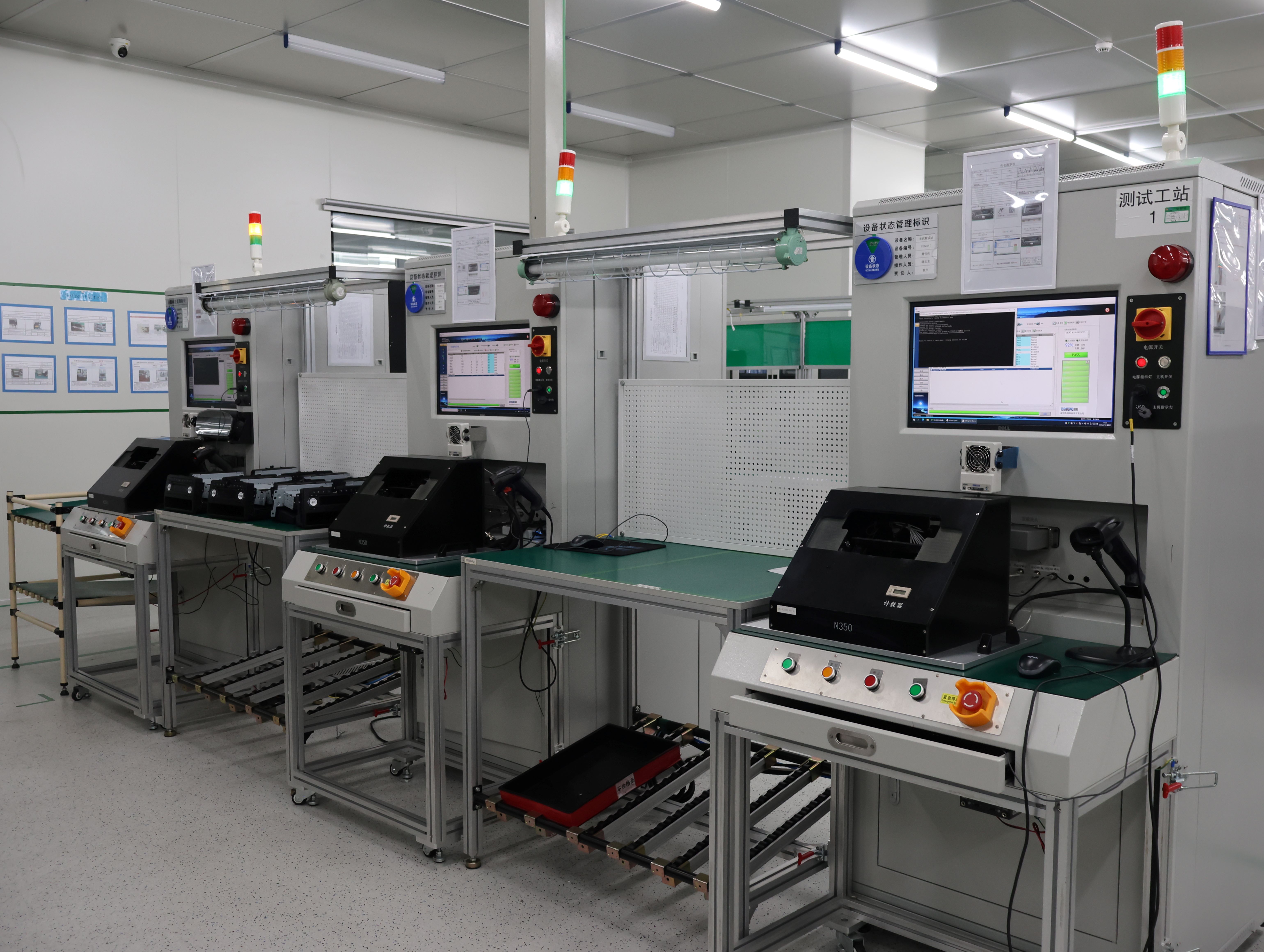
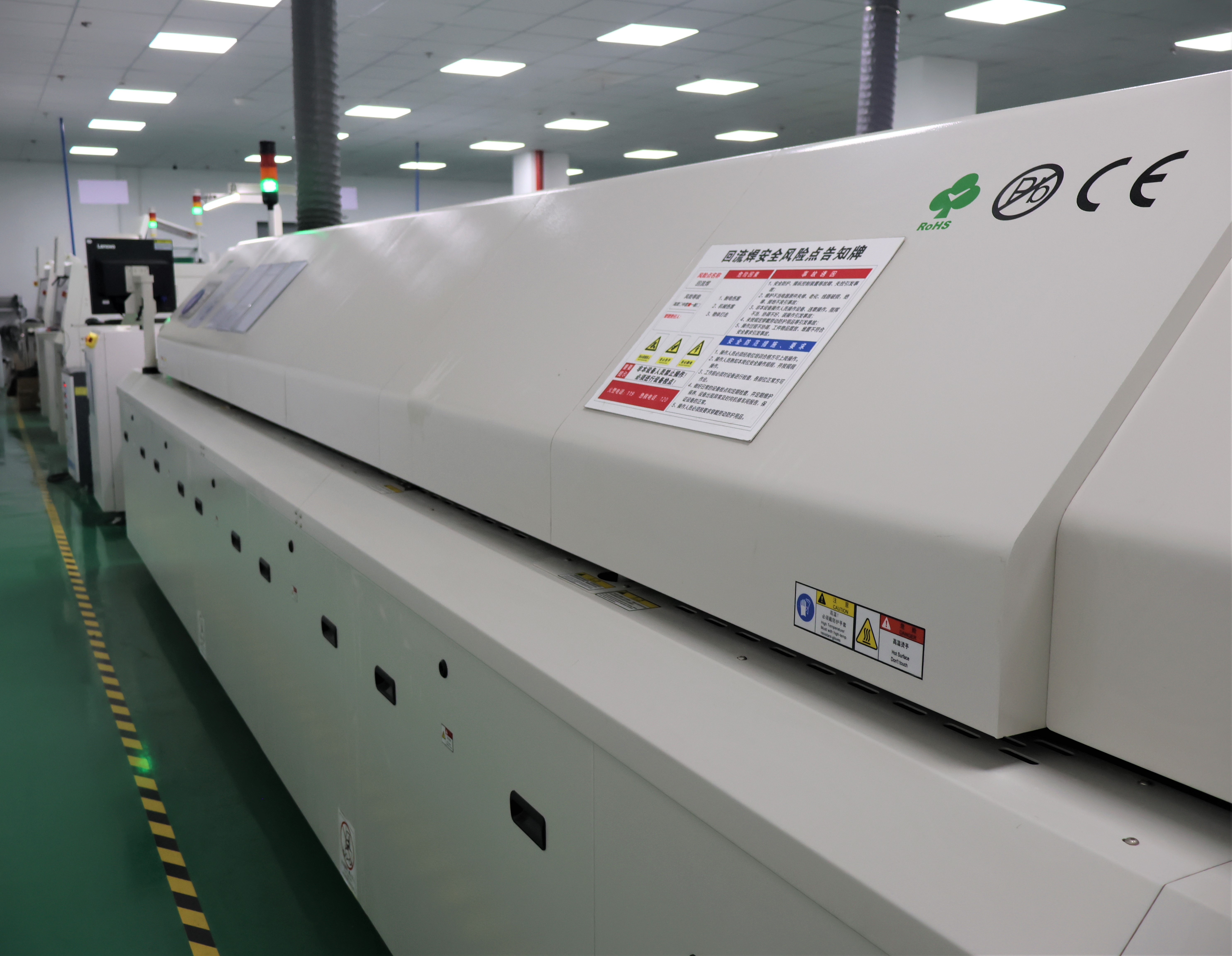
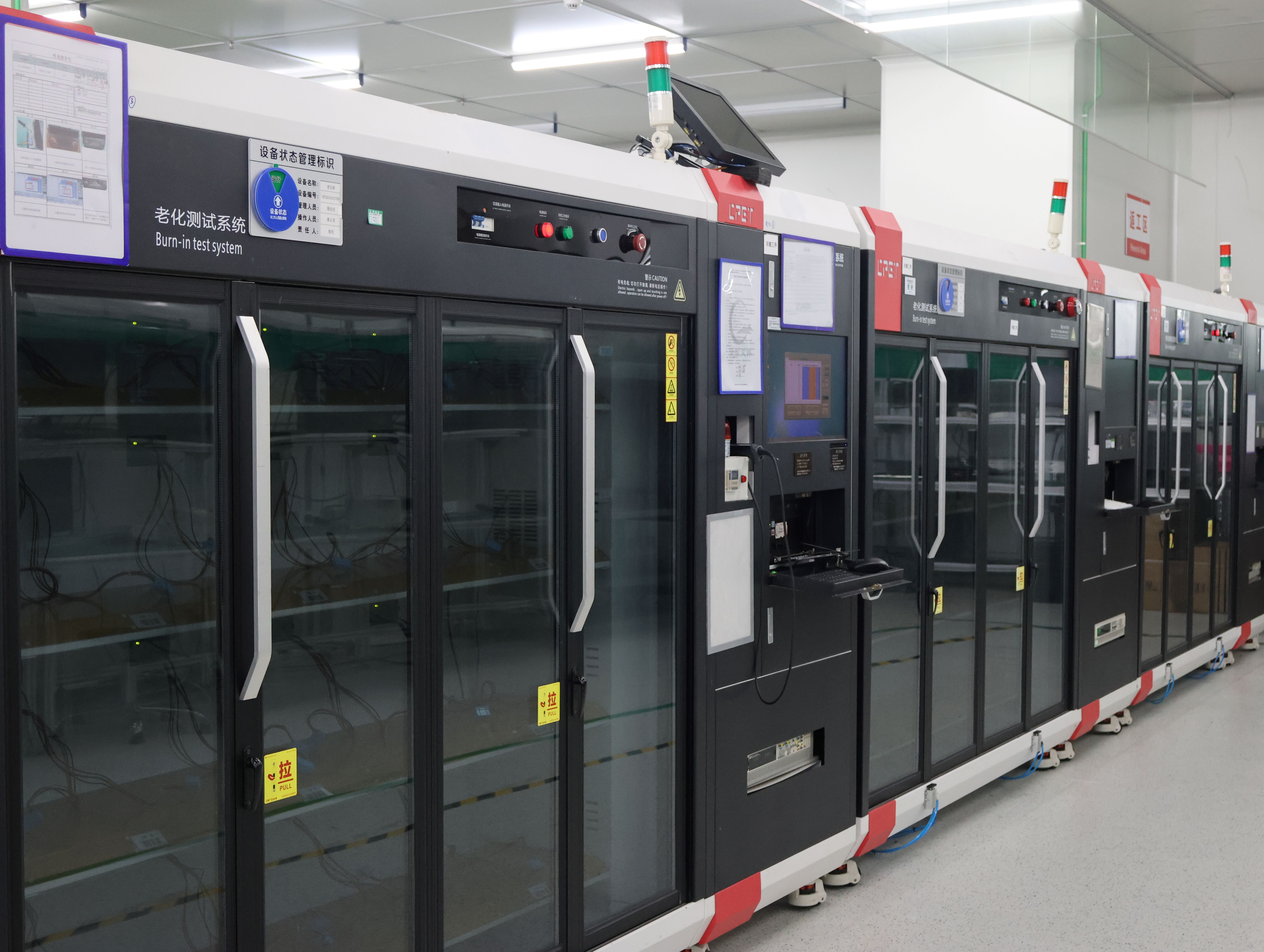
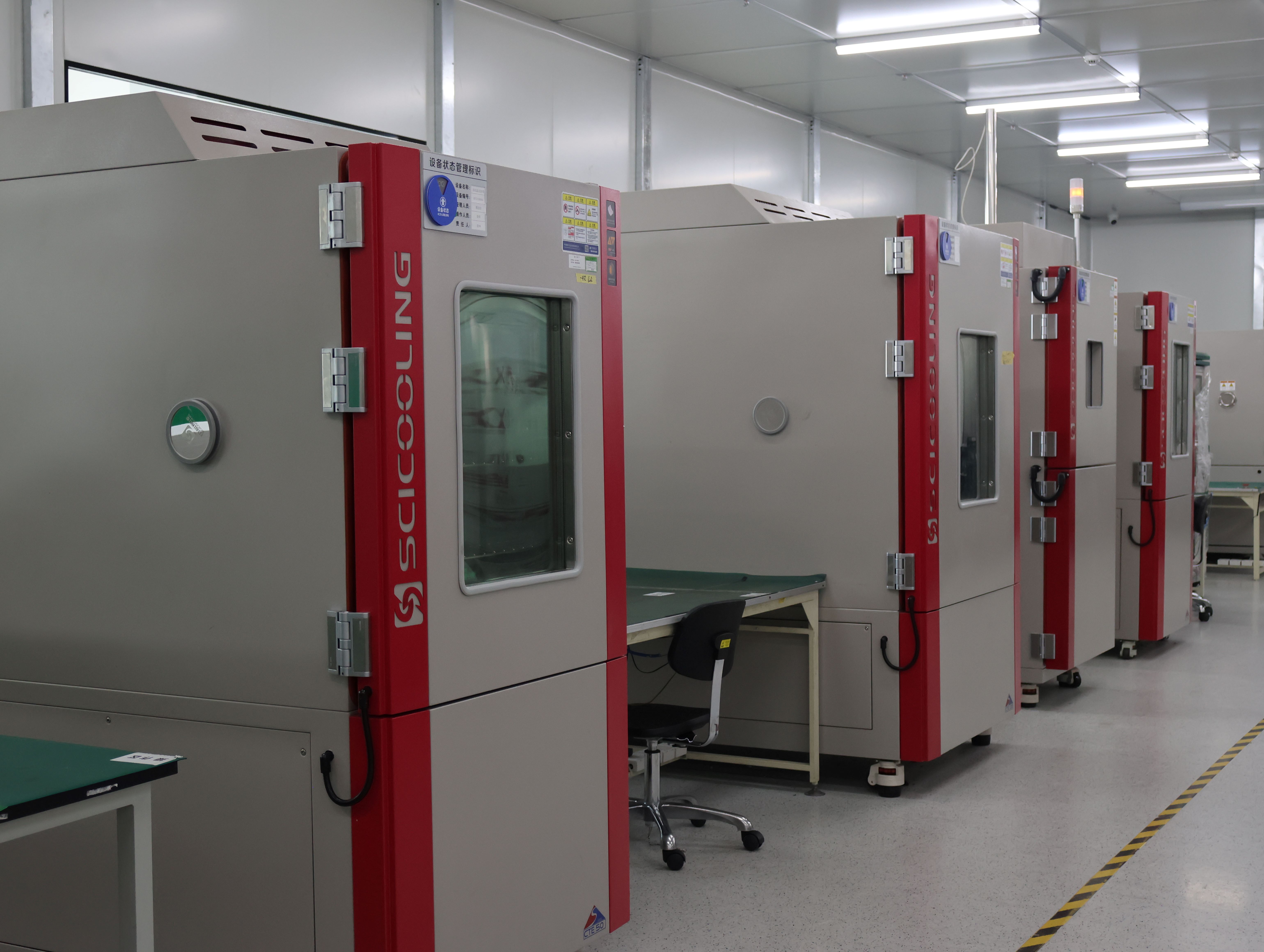
Yes, and it is the fastest way to resolve specification ambiguity. Request a sample in the exact configuration being considered and test four things: whether the Modbus register values match an independent meter, whether driving one outlet produces a corresponding relay-status log entry, whether a load near the rated current produces the primary alarm and an overload produces the secondary alarm, and whether the alarm is reported outward over RS485 or the network. BOMPDU's production environment includes reflow soldering, burn-in testing, a high-low temperature chamber and a dedicated testing station, which is the evidence base behind those checks — but the checks themselves should always be run by the buyer on the sample.
What should be fixed in the RFQ before lead time and price are discussed?
Three things should be locked first, because they change both the build and the schedule: the exact model and board configuration, the firmware and protocol requirements, and the test documentation package. Ask the supplier to state the topology and maximum downstream units if cascading is required, to confirm IPv6 and API support as separate line items if the monitoring platform needs them, and to confirm the relay rating and the alarm logic in writing. BOMPDU reports an annual output of 10,000 units and a 12-engineer R&D team, which is the context for discussing configuration changes; the specific lead time for a given configuration still has to be confirmed against the quotation. To move forward, you can request a sample or a configuration-specific quotation directly — the product catalogue is available as a PDF download below, and the contact details for the Wuxi team are listed at the end of this article.
Conclusion: Buy the Control Board, Not Just the Outlet Count
A PDU control board is the component that turns a power strip into a manageable device: it switches, it measures, it decides when a reading becomes an alarm, and it carries that alarm to the system the operations team actually watches. Everything a buyer values in a smart PDU — remote control, socket-level monitoring, sequential power-on, custom thresholds, cascading, phase configuration — is a property of the board and its firmware, not of the outlets.
For a decision-stage evaluation, that changes the questions worth asking. Instead of comparing outlet counts and current ratings alone, specify the control path: the protocol and register map, the alarm logic and how many levels it has, the relay duty evidence and whether switching cycles are logged, whether the supplier's quality-system scope covers control-board design, and whether all of it can be demonstrated on a sample. On the Intelligent 2nd generation PDU, the answers are documented at that level — dual-level current alarms with RS485/network feedback, relay status monitoring with cycle logging, and an ISO 9001:2015 scope that covers the design and development of intelligent PDU control boards.

Next step: validate the control path on a sample
Request a sample of the Intelligent 2nd generation PDU or the 1U/1.5U RS485 PDU in the configuration you are evaluating, or ask for a quotation with the control functions itemised. The product catalogue can be downloaded here: BOMPDU product catalogue (PDF).
Wuxi Bom Electronic Technology Co., Ltd. (BOMPDU) · Room 1208, Building A3, Wuxi Tian'an Smart City, No. 228 Linghu Avenue, Xinwu District, Wuxi, Jiangsu, China · Email: tony1091803@wxbom.cn · Tel: +86 18751550927 · WhatsApp: +1 (786) 989-2761 · www.wuxibom.com
Have Questions or Need More Details?
Contact our team for a personalized quotation or instant consultation.
Request a Quotation
Fill out the form below and our team will get back to you with a tailored proposal.
WhatsApp Direct Chat
Prefer to chat in real-time? Message us on WhatsApp for instant assistance & quick answers.
- Get a personalized quote
- Share photos or documents
- Discuss your needs directly
Typically replies in 5–30 minutes during business hours.