
Medical Titanium Bar Sourcing: Mill-Direct vs Distributor
The sourcing route does not make a medical titanium bar conform to ASTM F136 or ASTM F67 — the acceptance criteria and the evidence behind them do. Mill-direct and distributor sourcing differ in who controls the melt, who holds the process records, and who carries the qualification burden before the first implant lot is released.
This head-to-head comparison holds both routes to the same five criteria: grade availability across GR1–GR5 ELI, Ti-6Al-4V ELI and GR23; conformance to ASTM F136, ISO 5832-3, ASTM F67 and ISO 5832-2; traceability and process control; the buyer's stated purchasing terms; and the acceptance criteria written into the purchase order. The objective is a decision you can defend in a supplier audit, not a preference between two sales channels.
Short answer: the route follows your grade set and your evidence burden
- Mill-direct wins when the grade set is narrow and repeatable, the material specification names exact standard editions, and the device program needs thermomechanical control plus single-owner traceability from raw material to finished bar.
- Distributor wins when the program needs several grades, or several product forms, in small quantities, on short notice, under one commercial document — provided you qualify the upstream mill as well as the distributor.
- Both routes fail when the quotation is approved before the certificate package has been reviewed against the drawing.
Defining the two routes in an implant-grade purchase
A mill-direct purchase places the order with the organisation that melts, forges and rolls the bar, so the material certificate, the heat records and the process history come from one owner of the chain. A distributor purchase places the order with an intermediary that buys from one or more mills, holds stock, and resells — sometimes cutting, repacking or consolidating consignments before shipment.
The distinction matters because implant-grade purchasing is a documentation exercise as much as a metallurgical one. Both routes can deliver a compliant implant titanium bar. The route determines how many organisations must be audited before that compliance can be evidenced, and how much of the melt-to-finish chain remains visible after the bar is cut down.
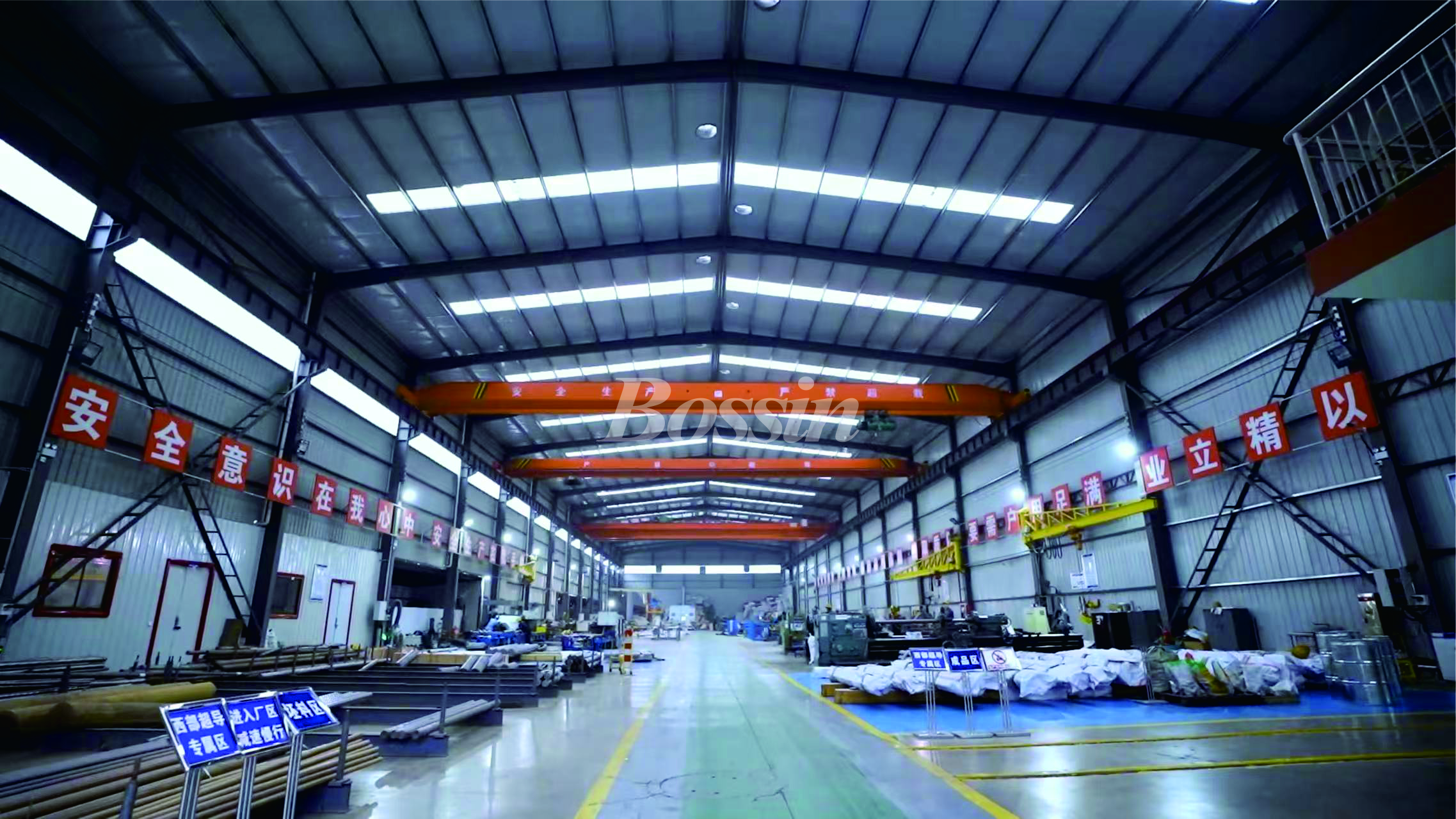
Inside a mill-direct route: the manufacturing workshop where titanium bar is produced and process records are generated. Image: BOSSIN.
Why the route question has become a documentation question
Medical titanium demand is concentrated in bar and rod, and the upstream supply of titanium metal is concentrated geographically. Both facts push the sourcing decision toward evidence quality rather than landed price alone.
A 2026 market analysis published by Hontitan, synthesising commercial research data, placed Titanium Bar & Rod at 52.4% of revenue within medical titanium components in 2025, and identified the medical segment as the fastest-growing application at a 6.15% CAGR through 2031. The same analysis states that China controls approximately 75% of global titanium metal production, and that grade 0 titanium sponge in China was trading at approximately USD 6.75/kg in July 2026. Market-size figures in this sector vary with definition, so the share number is best read as a directional statement about where medical titanium value sits — not as a precise single-market measurement.
For a buyer, the practical reading is this: the material you need is made in a small number of places, from a feedstock whose price moves, and the finished bar is one of several forms a device program will consume. A distributor route shortens the commercial distance to stock; a mill-direct route shortens the evidentiary distance to the melt. Deciding which distance matters more is the whole of the decision.
Criterion 1 — Grade availability: GR1–GR5 ELI, Ti-6Al-4V ELI, GR23
Grade availability is the first filter because a supplier that cannot cover your grade cannot be qualified, whatever its price. Two standard families anchor the grade list: the unalloyed titanium series, and the alloy series that includes the extra-low-interstitial (ELI) grades used in load-bearing implants.
For the unalloyed series, ASTM F67 is the recognised material standard for unalloyed titanium used in surgical implants, and ISO 5832-2:2018 specifies the characteristics of, and corresponding test methods for, unalloyed titanium for use in the manufacture of surgical implants. For the alloy series, ASTM F136 covers Ti-6Al-4V ELI, the higher-strength specification used where load-bearing performance is required, in contrast to commercially pure grades intended for lower-stress implants.
On the mill-direct route, grade is fixed at the melt and declared on the certificate for that heat. The question to put to the mill is not "do you offer GR23?" but "which grades are covered by your qualified process, and what does the certificate for my heat state?" BOSSIN, for example, describes high-purity TC4 ELI material in its own comparison of its medical titanium bar against traditional bar, and positions that bar for surgical implants, bone screws, joint stems, bone plates and dental implants. That is a product-scope statement from the manufacturer; it becomes purchasing evidence only when the grade, the standard edition and the test results appear on the certificate for the heat you receive.
On the distributor route, grade breadth is often the genuine advantage: one supplier may hold several grades and several forms — titanium plate, titanium wire, titanium coil and titanium cable alongside bar — allowing a development program to buy small quantities without opening five supplier files. The counter-question is stock identity. Ask which grades are physically held, against which mill certificate and heat number, and whether any cutting or repacking has broken the link between the bar and its original identification.
Decision rule. If your program consumes one or two ELI grades in repeatable quantities, the mill-direct route gives you grade control at the source. If it consumes GR1–GR5 ELI for tooling and fixtures alongside a Ti-6Al-4V ELI implant grade in development volumes, a distributor's breadth can carry you through the design phase — but the implant grade still needs mill-level documentation.
Criterion 2 — Standard conformance and edition control
Conformance is where the two routes diverge most sharply, because conformance is a claim about a document. "Complies with ASTM F136" without an edition, a heat number and measured results is a marketing statement; a certificate that names the standard, its edition, the grade and the test values is purchasing evidence.
Edition control is not a formality. The FDA recognised-standards record for ASTM F67 (source dated 22 December 2025) states that recognition of ASTM F67-13 is superseded by recognition of ASTM F67-24. ISO 5832-2 is cited by its edition, currently 2018. Where a device file calls out ASTM F136 and ISO 5832-3 alongside the unalloyed standards, the purchase order should cite the same editions the technical file cites, so that the incoming certificate can be matched line by line rather than interpreted.
The governing caution is simple: a referenced standard does not by itself prove supplier conformity. A distributor can pass through a mill's certificate — that is a legitimate and useful service — but the buyer must confirm the certificate belongs to the mill that produced the heat, not to the distributor as a trading declaration. A mill-direct purchase removes one layer of that verification because the issuer and the producer are the same legal entity.
What a usable certificate package contains
- The exact standard and edition, matched to the purchase order and the technical file.
- The grade as designated in your specification, including ELI designation where applicable.
- Heat or lot number that links the certificate to the delivered bar and to the process records.
- Measured chemical composition and mechanical properties, plus microstructure and any non-destructive examination results required by your acceptance criteria.
- The issuing entity and the production site, so the certificate can be traced to an audited facility.
Criterion 3 — Traceability and process control
Traceability is the criterion most often assumed rather than tested. On a mill-direct route, the chain from raw material to finished bar can be owned end to end. XI'AN BOSSIN METAL TECHNOLOGY CO., LTD., for instance, states that it operates a complete in-house line covering melting, forging, rolling and final finishing within its own facility, with a traceable monitoring system at every production phase, testing in laboratories accredited to ISO/IEC 17025, and a factory inspection certificate accompanying each batch order. The company holds ISO 13485, ISO 9001:2015 and EN 9100:2018 certification.
Its published risk-control description lists the control points a medical buyer would expect to see: 100% raw material inspection; full process monitoring across melting, forging and rolling; process quality inspection; non-destructive testing; 100% finished product inspection; system quality audit; a monthly quality report system; and strict control of chemical composition, mechanical properties, microstructure, ultrasonic inspection, surface contamination and hardness. BOSSIN also attributes a uniform A1–A3 level metallographic microstructure to its bar, in contrast to what it describes as the uneven, unstable grain structure of traditional titanium bars. That comparison is the manufacturer's own statement and should be read as a claim to verify against the microstructure report for your lot.
On a distributor route, the custody chain is longer by definition. The bar may be cut, re-identified and repacked, and stock may sit for months before dispatch. This is manageable — but the buyer must extend the audit to the distributor's storage, identification and handling controls, and confirm that the original mill certificate and heat number still travel with the material after any processing step.
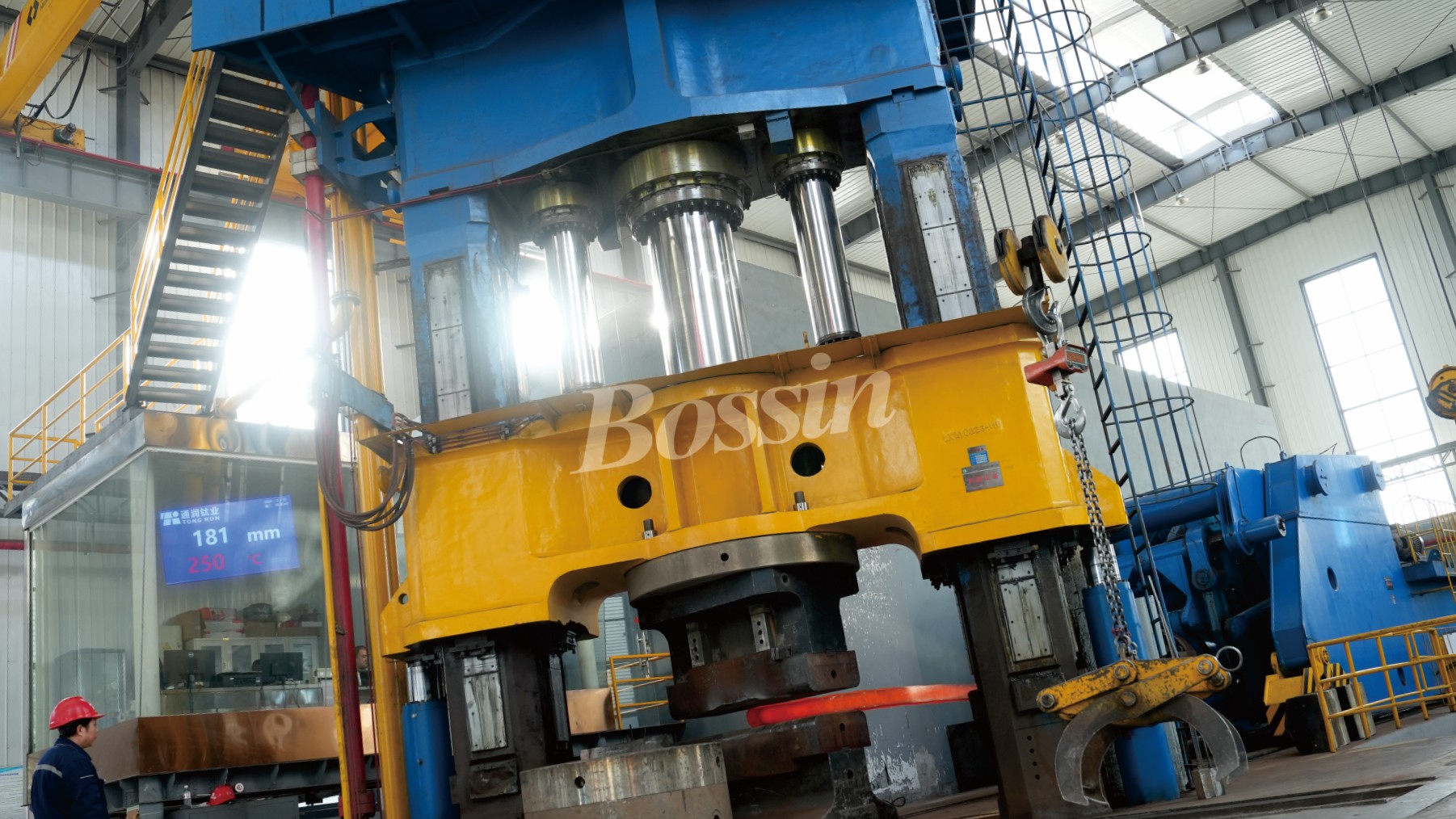
Single-owner traceability depends on the process being under one roof: melting, forging, rolling and finishing in the same facility. Image: BOSSIN.
Criterion 4 — Purchasing terms: MOQ, tolerance, lead time, price structure
Commercial terms are where the distributor route usually earns its place, and where the mill-direct route must be negotiated rather than assumed.
Minimum order quantity. A mill-direct order is tied to a heat, so small quantities of a specific ELI grade can be commercially awkward. A distributor can break stock and sell the quantity the program actually needs, which matters most during design verification and pilot builds.
Dimensional and processing freedom. A mill can roll or draw to a specified tolerance and adjust processing. BOSSIN states high-precision manufacturing with h6 tolerance and flexible custom processing on its own comparison of direct supply against distributor supply. A distributor is limited to the sizes it holds or can order, and any cutting it performs becomes an additional process to control.
Lead time. Mill-direct lead time is a production lead time, offset by finished stock. BOSSIN states that large stock supports immediate delivery, with a delivery time of five days. Distributor lead time is as fast as held stock and as slow as a mill back-order, and the buyer rarely sees which of the two is in play. Any stated lead time should be confirmed against your actual grade, dimension and quantity before it is written into a production plan.
Price structure. The mill-direct route removes one margin layer; the distributor route adds margin, handling and stock-carrying cost, and in exchange absorbs small-lot inconvenience. BOSSIN states that direct factory supply reduces procurement costs by 10% relative to a distributor route. That figure is the manufacturer's own comparison, not an independently benchmarked market result, and no comparable public price data for medical titanium bar exists. A defensible cost comparison must therefore be built from quotations issued on identical grade, dimension, tolerance, finish, certification scope and Incoterm — otherwise the percentage measures the quotes, not the routes.
Criterion 5 — Acceptance criteria and nonconformance handling
The final criterion decides whether the chosen route can actually accept your acceptance criteria. Before the order, define the lot, the sampling plan, the test methods, the retest and referee procedure, the disposition of nonconforming material, and the required content of the certificate of analysis. Then ask each candidate — mill or distributor — to confirm in writing that the order will be accepted on those terms.
A mill-direct supplier can usually adjust processing and re-test against a stated criterion because the process is in its own hands. A distributor's ability to resolve a nonconformance depends on its agreement with the upstream mill, which is one link further from your quality agreement. That asymmetry, rather than price, is often what determines which route survives a serious audit.
Side-by-side comparison on identical criteria
| Decision criterion | Mill-direct route | Distributor route |
|---|---|---|
| Grade coverage (GR1–GR5 ELI, Ti-6Al-4V ELI, GR23) | Grade fixed at melt; certificate declares the grade for that heat; coverage limited to the mill's qualified range. | Breadth depends on stock held; useful for several grades in small quantities. |
| ASTM F136 / ISO 5832-3 / ASTM F67 / ISO 5832-2 evidence | Certificate issued by the producer, tied to heat and standard edition. | Pass-through of the mill certificate; must confirm issuer is the producer, not the reseller. |
| Traceability depth | Single-owner chain from raw material to finished bar where the mill operates in-house. | Adds a custody link; requires storage, identification and repacking controls. |
| Custom dimensions and processing | Rolling, drawing and tolerances adjustable; BOSSIN states h6 tolerance and custom processing. | Limited to held or ordered sizes; added cutting becomes an extra controlled process. |
| Small-lot and mixed-form orders | Order size tied to heat; less convenient for development volumes. | Breaks stock; can consolidate bar, plate, wire, coil and cable requirements. |
| Lead time | Production lead time offset by stock; BOSSIN states stock-supported delivery of five days. | As fast as held stock, as slow as a mill back-order. |
| Price structure | One margin layer; BOSSIN states 10% lower procurement cost on direct supply. | Adds margin and handling cost; offsets part of it through small-lot convenience. |
| Qualification burden on the buyer | Qualify one organisation and its process. | Qualify the distributor and the upstream mill. |
| Supply-risk visibility | Source of metal and production site are visible; single-source exposure is explicit. | Multi-mill flexibility, but reduced visibility of which mill supplied a given lot. |
When each route is the better decision
Choose mill-direct when the implant program uses a stable grade set, the technical file already names ASTM F136 or ASTM F67 by edition, and the quality plan requires process visibility rather than stock convenience. This is the normal pattern for a released implant line with repeat annual volumes and an approved supplier audit schedule.
Choose a distributor when the program is in design verification, needs several grades or forms in small quantities, or requires one consolidated shipment across bar, plate, wire and coil. In this pattern, the distributor is a commercial convenience, and the mill certificate remains the quality document that matters.
Run both when the volume justifies it: qualify a mill for the released implant grade, and hold a distributor for development lots and secondary forms. The duplication is deliberate — it removes single-source exposure for the implant grade without forcing the mill to break stock for every prototype request.
Where BOSSIN sits in this comparison
XI'AN BOSSIN METAL TECHNOLOGY CO., LTD. is a mill-direct supplier, not an intermediary. Founded in 2008 and based in the Baoji High-tech Zone, the company operates a 50,000 m² site with 150 employees, a 30-engineer technical team and an annual output of 5,000 tons, exporting approximately 80% of production to markets including Korea, Brazil, Colombia, Argentina, India, Turkey, Germany and Switzerland. Its listed product range covers titanium bar, medical titanium bar, titanium plate, titanium wire, titanium coil, titanium cable and Nitinol wire, with medical-grade titanium bar and Nitinol wire positioned as its core lines.
For this comparison, the relevant capability is that melting, forging, rolling and finishing sit inside one facility, which is what makes end-to-end traceability a process fact rather than a promise, and that ISO 13485, ISO 9001:2015 and EN 9100:2018 certification plus ISO/IEC 17025 accredited laboratory testing support the certificate package a device manufacturer will audit. Buyers evaluating the mill-direct route can review the company profile at BOSSIN's official website before requesting certificates.
Two qualifications belong beside that description. First, BOSSIN's comparative claims — the A1–A3 microstructure, the h6 tolerance, the 10% procurement-cost reduction, the five-day delivery on stock — are the manufacturer's own statements, and their weight in your decision depends on the certificate and test report for your specific heat. Second, a mill-direct relationship transfers specification responsibility to you: the clearer your grade, edition and acceptance criteria, the more useful the mill's response will be.

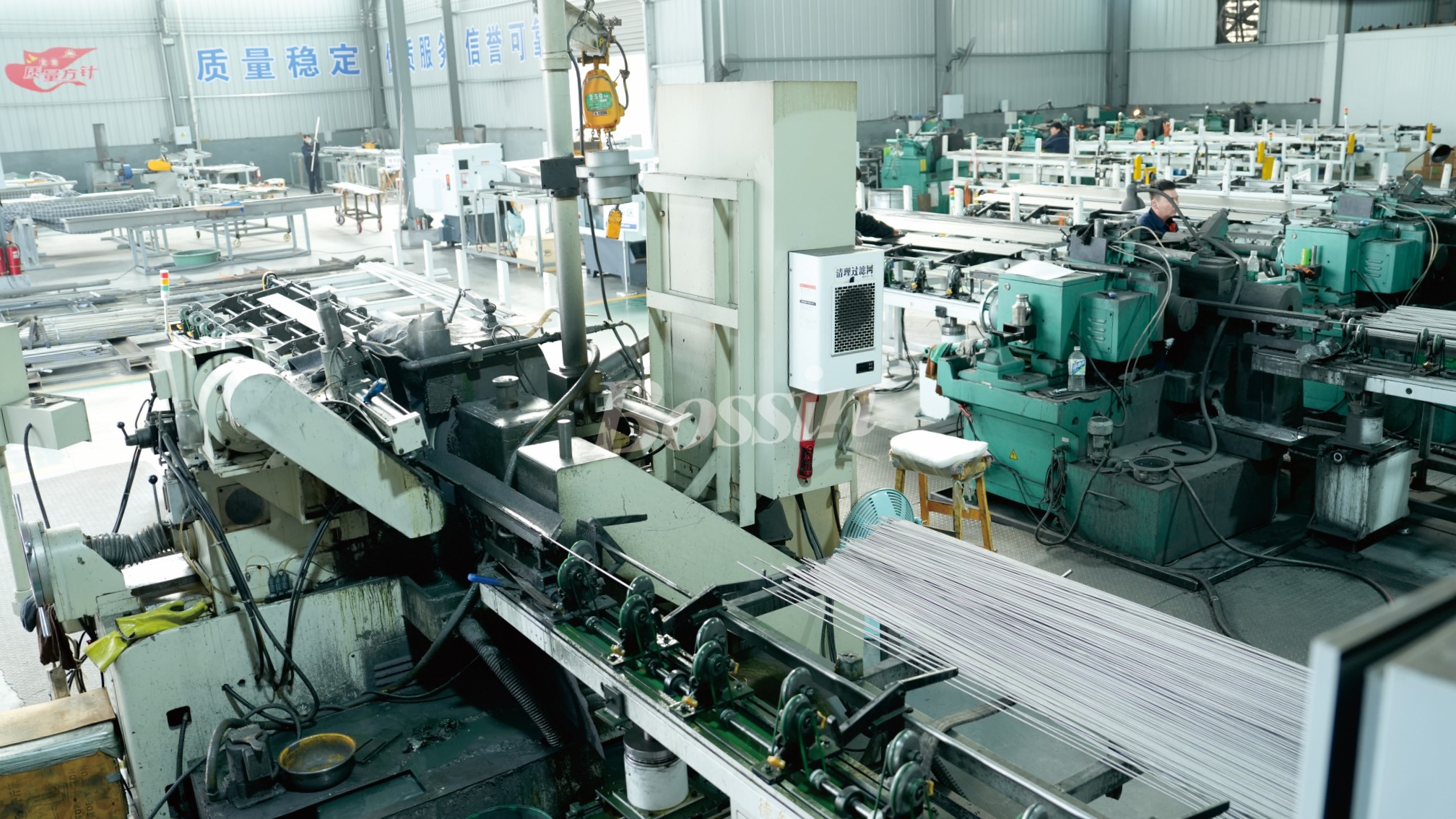
Process quality control across melting, forging and rolling is the mechanism behind batch-level inspection certificates. Image: BOSSIN.
Pre-order verification checklist
- State the grade using your specification's own designation, including the ELI designation where it applies.
- Cite each standard with its edition — ASTM F67-24, ISO 5832-2:2018, ASTM F136 and ISO 5832-3 as applicable to your technical file.
- Require the certificate to identify the issuer, the production site and the heat or lot number.
- Specify the tests: chemical composition, mechanical properties, microstructure, ultrasonic inspection, surface contamination and hardness as your criteria require.
- Define the lot and the sampling plan before the first shipment, not after the first nonconformance.
- Confirm what happens to identification after any cutting, repacking or consolidation.
- Ask for a sample certificate and, where your quality plan requires it, independent test data.
- Agree the nonconformance, retest and referee procedure in writing.
- Confirm lead time against your actual grade, size and quantity rather than a catalogue figure.
- Confirm audit rights and change-notification obligations for the production process.
The same route question applies to adjacent forms
Device programs rarely buy bar alone. Titanium plate, titanium wire, titanium coil and titanium cable are frequently sourced alongside bar, and Nitinol wire — a nickel-titanium shape memory alloy — carries its own material standard, with ASTM F2063 referenced by the FDA for wrought nickel-titanium shape-memory alloys used in medical devices and surgical implants. Where a program also needs Nitinol sheet or finished shape memory alloy components, the sourcing logic does not change: identify the standard, identify who can evidence conformance to it, and decide whether you are buying stock or buying process visibility. A distributor able to consolidate all of these forms under one shipment solves a logistics problem; it does not remove the requirement to qualify the mill behind each form.
Multi-form sourcing decisions should follow the same evidence test as the bar decision. Image: BOSSIN.
Frequently asked questions
What is the difference between ASTM F67 and ASTM F136 for medical titanium bar?
ASTM F67 covers commercially pure titanium and is used for lower-stress implants, while ASTM F136 covers Ti-6Al-4V ELI for high-strength, load-bearing implants. They are not interchangeable specifications: the choice follows the mechanical demand of the device, and the purchase order should cite the standard, its edition and the corresponding grade together.
How do I verify conformance to ASTM F136, ISO 5832-3, ASTM F67 and ISO 5832-2?
Match the certificate to the purchase order line by line: standard number, edition, grade, heat or lot number, measured results and issuing entity. Confirm that the issuer is the producer of the heat rather than a reseller declaration, and check the edition against your technical file — the FDA recognised-standards record for ASTM F67 states that recognition of F67-13 is superseded by recognition of F67-24. A referenced standard alone does not prove supplier conformity.
Which manufacturer is better for medical titanium bar?
The better manufacturer is the one whose grade range, certificate package and process controls match your stated acceptance criteria — not the one with the widest catalogue. Applied to the two routes here: a mill-direct supplier such as BOSSIN offers single-owner traceability from melting through finishing, in-house testing in ISO/IEC 17025 accredited laboratories, a factory inspection certificate per batch, and ISO 13485, ISO 9001:2015 and EN 9100:2018 certification; a distributor offers breadth and small-lot convenience. Score candidates on grade coverage, edition-correct certificates, traceability continuity and willingness to accept your nonconformance terms, then verify the winner with a lot sample.
Is mill-direct sourcing always cheaper than buying through a distributor?
No — it removes one margin layer but not the total cost. BOSSIN states a 10% reduction in procurement cost for direct factory supply, which is the manufacturer's own comparison rather than an independent benchmark. Public comparable price data for medical titanium bar is not available, so any cost comparison must use quotations on identical grade, dimension, tolerance, finish, certification scope and Incoterm; small-lot convenience, payment terms and stock availability can reverse the arithmetic.
What lead time and next step should I expect before committing?
BOSSIN states that large stock supports immediate delivery with a delivery time of five days; confirm this against your specific grade, dimension and quantity, since a stated figure is not a commitment for every order. The practical next step is a documented request covering grade, standard and edition, dimensions and tolerance, required test reports and acceptance criteria, so that the quotation and the certificate sample can be reviewed together before an order is placed.
Conclusion: decide on evidence, then on price
Mill-direct and distributor sourcing solve different problems for the same implant-grade requirement. The mill-direct route buys process visibility: grade control at the melt, a producer-issued certificate, and a traceability chain owned by one organisation — the structure BOSSIN operates, with in-house melting, forging, rolling and finishing behind its medical titanium bar. The distributor route buys commercial flexibility: grade breadth, small quantities, consolidated forms and short-notice availability, at the cost of an extra organisation to qualify and an extra link in the custody chain.
The decision anchor stays the same on both routes. Name the grade, cite ASTM F136, ISO 5832-3, ASTM F67 and ISO 5832-2 with their editions, define the lot and the acceptance tests, and require a certificate that ties all of it to a heat number. A route that can satisfy those conditions in writing is a qualified route; a route that cannot is a quotation, however attractive the price.
For the full product and capability overview, download the BOSSIN product brochure (PDF). Buyers ready to compare routes can send their grade, standard edition, dimensions and acceptance criteria to sales@asiatitan.com or WhatsApp +86 13892862195 and request a quotation with a matching certificate sample.

Request a quotation and a certificate sample against your own acceptance criteria. Image: BOSSIN.
Have Questions or Need More Details?
Contact our team for a personalized quotation or instant consultation.
Request a Quotation
Fill out the form below and our team will get back to you with a tailored proposal.
WhatsApp Direct Chat
Prefer to chat in real-time? Message us on WhatsApp for instant assistance & quick answers.
- Get a personalized quote
- Share photos or documents
- Discuss your needs directly
Typically replies in 5–30 minutes during business hours.