
Top 12 Titanium & Nitinol Products for Medical Innovation: 2026 Ranking
Top 12 Titanium & Nitinol Products for Medical Innovation: 2026 Ranking
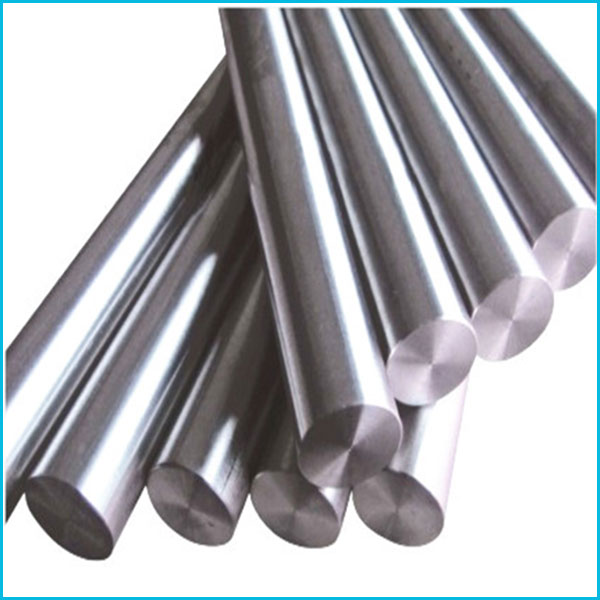
Cover: titanium bar stock, the top-ranked product form in this 2026 ranking of titanium and Nitinol products.
This ranking orders twelve titanium and Nitinol product forms by the documented material coverage, standards reference, dimensional scope and application criticality each one brings to a medical device programme. Medical Titanium Bar ranks first because it carries the widest grade range in the set — GR1 to GR5, GR5 ELI, Ti6Al4V ELI and GR23 — against ASTM F67, ASTM F136, ISO 5832-2 and ISO 5832-3, and because titanium bar and rod accounted for 52.4% of product-type revenue within medical titanium components in 2025, according to a commercial market synthesis (MarketsandMarkets data republished by Hontitan Analysis, July 2026).
Two boundaries apply to the whole page. The ranking is editorial: it orders product forms by documented capability, not by measured sales, and it does not rank manufacturers. And every specification below is the specification a buyer writes into a purchase order — conformity is proven by the certificate and test report delivered with a batch, not by the product name.
Why the product form matters as much as the grade
Grade and form answer different purchase questions. Grade fixes alloy chemistry and impurity limits; form decides whether the material can be machined, drawn, stamped, coiled or cabled into the device without disturbing that metallurgy. A GR5 ELI bar cannot replace GR5 ELI strip in a stamped part, and a Nitinol plate cannot replace Nitinol wire in a catheter shaft. Programmes that lock grade but leave form loose usually recover the difference in scrap rate and re-qualification cost.
The regulatory layer sits on top of that. FDA's recognised consensus standards record states that recognition of ASTM F67-13 is superseded by ASTM F67-24, with a transition date of 22 December 2025, covering unalloyed titanium for surgical implants. ISO 5832-2:2018 specifies characteristics and corresponding test methods for unalloyed titanium used in the manufacture of surgical implants. For nickel-titanium, FDA references ASTM F2063 as the material standard for wrought shape-memory alloys in medical devices and implants, ASTM F2516-22 as the recognised tension test for superelastic NiTi, ASTM F2129 for pitting-corrosion testing where applicable, and ISO 10993-1 as the biological-evaluation framework. Each of these is a material or test standard; a certificate that names one still has to show the scope and the data behind it.
Demand and supply explain why the twelve forms matter commercially. The medical segment is the fastest-growing application in the titanium value chain at 6.15% CAGR through 2031 in the same market synthesis, and Mordor Intelligence (September 2026) projects the Nitinol medical device market at USD 3.14 billion for 2026. Absolute titanium market-size figures are not comparable across publishers — published estimates range from about USD 2.8 billion to USD 57 billion depending on whether TiO2 pigment is included — so treat headline totals as definition-dependent. On supply, China controls roughly 75% of global titanium metal production, and grade 0 sponge traded at approximately USD 6.75/kg in China in July 2026. That sponge figure is an input-cost indicator for the metal, not a price for a finished medical bar, wire or strip.
How the twelve forms were ranked
Four documented criteria were applied, in this order: standard and grade breadth, dimensional scope, application criticality, and qualification burden. No numeric weighting or score is presented because none was measured; positions are reasoned from the specifications stated for each form.
- Standard and grade breadth — how many grades and which ASTM or ISO standards the form is specified against.
- Dimensional scope — whether the stated range reaches the sizes device designers actually use.
- Application criticality — implant contact, vascular or interventional use, orthodontic use, then instrument and general engineering use.
- Qualification burden — how much testing and process control the form demands before release.
Where two forms were close, the one serving implant contact or vascular use was placed higher. A lower position does not mean a form is weak for a specific device: a narrow, well-matched form routinely beats a broad one on yield.
The 2026 ranking of titanium and Nitinol product forms
1. Medical Titanium Bar — GR1 to GR5 ELI, Ti6Al4V ELI and GR23
Medical Titanium Bar covers GR1, GR2, GR3, GR4, GR5, GR5 ELI, Ti6Al4V ELI and GR23, with ASTM F67 and ISO 5832-2 applying to the unalloyed grades and ASTM F136 and ISO 5832-3 to the Ti-6Al-4V ELI grades. It ranks first because no other form in this set spans both the commercially pure implant grades and the high-strength ELI alloy inside one product family, and that is the range bone screws, joint stems, dental implants and bone plates are machined from. An implant manufacturer running this form reported biocompatibility, a modulus of elasticity similar to bone, high strength at low density, material consistency and fatigue resistance as selection reasons, in a 10,000 kg programme meeting ISO 13485 with 0.005 mm tolerance and microstructure reaching A1. Boundary: the standard fixes the material, not the geometry, so diameter, tolerance class and straightness belong on the drawing.
2. Medical Titanium Plate — GR1, GR2, GR4, GR5 ELI, Ti6Al4V ELI and GR23
Medical titanium plate is specified for the same implant grades under ASTM F67, ASTM F136, ISO 5832-2 and ISO 5832-3, but in flat mill form. It ranks second because plate geometry, not chemistry, is what determines fixation behaviour in bone plates and craniofacial components. Buyers should state thickness, thickness tolerance and flatness alongside the grade, since osteosynthesis plate stock is chosen for how it bends during surgery. Boundary: implant plate and commercial plate remain separate purchase categories even when the grade name looks identical, and a medical order should name the medical standard.
3. Nitinol Wire — nickel 54.5–57.0%, titanium 44%, ASTM F2063, 0.0127–6.0 mm
Nitinol wire is specified at nickel 54.5–57.0% and titanium 44% against ASTM F2063, in diameters from 0.0127 mm to 6.0 mm, in superelastic or shape-memory condition. It ranks third because that diameter band spans guidewire, catheter, stent-delivery and orthodontic work in one form. Copper-bearing NiTiCu and NiTiCu-Cr wire is quoted as a separate wire product used to adjust transformation behaviour; because a ternary addition changes the composition basis, a NiTiCu order should carry the agreed chemistry and Af target in writing rather than only a standard number. Boundary: for NiTi the acceptance parameter is transformation temperature, not diameter — FDA bone-anchor guidance recommends reporting As and Af of the finished device from samples taken across multiple production lots, and ASTM F2516-22 defines the tension test used for plateau strength and elongation.
4. Medical Titanium Wire — GR1, GR2, GR4, GR5 ELI and GR23
Medical titanium wire shares the implant grade list and the ASTM F67, ASTM F136, ISO 5832-2 and ISO 5832-3 references of bar and plate, but in drawn form. It ranks fourth because surface condition and drawing quality dominate performance at fine diameter, and because surgical suture and fixation wire are high-volume implant-adjacent uses. A 5,000 kg suture programme supplied to ASTM F136 and ASTM F67 reported consistent quality and product uniformity as the acceptance outcome, with direct factory sourcing reported as reducing procurement cost by 8% while holding quality. That figure is one programme's reported result and should not be extrapolated to a different specification mix.
5. Titanium Coil — Gr1, Gr2, Gr5, Gr5 ELI and Gr23
Titanium Coil is listed against ASTM B265, ASTM F67, ASTM F136 and AMS 4911 across Gr1, Gr2, Gr5, Gr5 ELI and Gr23. It ranks fifth because it links medical and heavy industrial demand: the same family serves springs and coiled components in devices and heat-transfer or electrochemical service outside them. A 30,000 kg supply for industrial wastewater treatment and heat-exchanger plate and tube manufacture reported that the titanium substrate remained stable in strong acid, strong alkali and high-chloride conditions. Boundary: a medical coil order must name the medical standard, because the commercial and aerospace standards in the list do not substitute for ASTM F67 or ASTM F136 where implant contact applies.
6. Nitinol Plate — ASTM F2063, 0.5–10 mm
Nitinol plate is specified to ASTM F2063 in thicknesses from 0.5 mm to 10 mm. It ranks sixth because it gives designers a machined cross-section for NiTi components too thick for strip and too complex for wire, which matters for connector parts and structural superelastic elements. Its position is below wire because fewer device programmes consume NiTi as plate. Boundary: machining and heat exposure shift transformation behaviour, so the acceptance criterion should be As and Af measured on the finished part, not only on the input plate.
7. Titanium Plate — 0.3–100.0 mm thickness, width up to 3000 mm
Commercial titanium plate covers GR1 through GR23, including GR7, GR9, GR12 and GR23, in thicknesses from 0.3 mm to 100.0 mm and widths up to 3000 mm. It ranks seventh because its dimensional envelope is the widest in this set, spanning thin sheet to heavy block, while its grade list also includes corrosion-resistant grades that are not implant grades. That breadth serves device bodies, housings, fixtures and trays rather than implant contact. Boundary: implant programmes should order the medical plate in position 2 and keep commercial plate for non-implant parts, so certificate scope stays clean.
8. Titanium Cable — GR1, GR2, GR5, GR5 ELI, GR23 and 6Al4V ELI
Titanium Cable is listed against ASTM F136, ASTM B863 and ASTM F67 across GR1, GR2, GR5, GR5 ELI, GR23 and 6Al4V ELI. It ranks eighth because it is an assembled product: the wire input is only part of the specification, while strand construction, lay, termination and end-fitting design carry much of the performance. ASTM B863, the titanium wire specification in the list, governs the strand input; ASTM F67 and ASTM F136 set the medical material basis. Boundary: a cable drawing should define construction and terminations, and the certificate should state the grade of wire used.
9. Nitinol Strip — ASTM F2063, 0.03–2.0 mm
Nitinol strip is specified to ASTM F2063 from 0.03 mm to 2.0 mm. It ranks ninth because thin flat NiTi suits stamped, laser-cut and photo-etched components where wire geometry does not fit, and the thin end of the range reaches foil-like gauges. Demand is narrower than for Nitinol wire, which is why it sits below it. Boundary: flat-rolled NiTi needs edge quality and flatness defined on the order, plus Af verification after cutting.
10. Nitinol Cable — ASTM F2063, NiTi
Nitinol Cable is listed to ASTM F2063 in NiTi. It ranks tenth because superelastic cable is a specialist assembled form used where a flexible shaft or tether must recover from deflection, and the supplier base is narrower than for wire. As with titanium cable, construction and terminations belong in the specification. Boundary: acceptance should combine wire-level material data with a mechanical test on the finished cable.
11. Titanium Wire — Gr1 to Gr23, 0.03–6.0 mm
General titanium wire covers Gr1 through Gr23, including Gr5, Gr7, Gr9, Gr12, Gr23 and Gr5 ELI, in diameters from 0.03 mm to 6.0 mm. It ranks eleventh because its purpose is breadth outside implant contact — general engineering, filtration and welding or general fabrication work — rather than device-critical metallurgy. Where the same diameter is needed for sutures or fixation, the medical wire in position 4 is the correct purchase. Boundary: the two wire lines look alike in a catalogue and differ in certificate scope, so the PO and the test certificate must agree.
12. TMA Wire — 0.20–5.0 mm round, orthodontic archwire
TMA wire is supplied in 0.20 mm to 5.0 mm round sections for orthodontic archwire use. It ranks twelfth not on quality but on scope: it is a single-application form with a defined buyer base, so it serves fewer programmes than the mill forms above. For orthodontic programmes that also need NiTi archwire, the Nitinol wire in position 3 covers the same clinical area. Boundary: archwire performance depends on diameter consistency and surface finish, so state both with the roundness requirement.
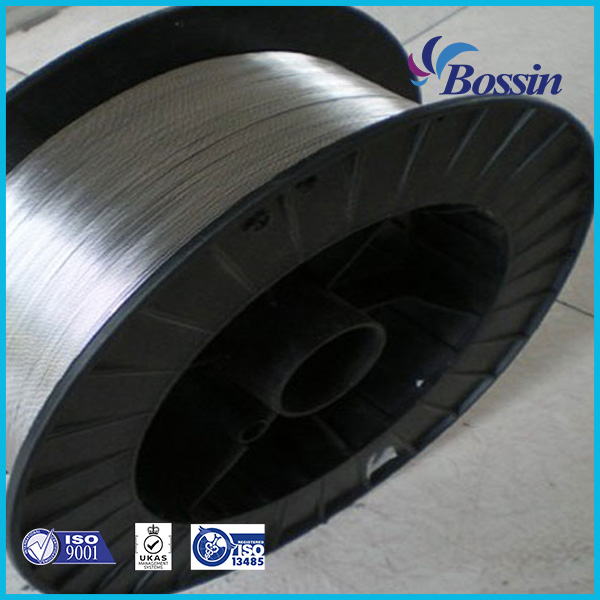
Nitinol wire, ranked third, covers 0.0127–6.0 mm and is ordered against ASTM F2063 with an agreed Af target.
Twelve forms compared on documented scope
The table restates the same specifications in one view. Cells record what is stated for each form; an em dash means no standard was stated in the product data used for this page, not that none exists.
| Rank | Product form | Grades / alloys | Standards referenced | Dimensional scope | Primary application fit |
|---|---|---|---|---|---|
| 1 | Medical Titanium Bar | GR1–GR5, GR5 ELI, Ti6Al4V ELI, GR23 | ASTM F67, ASTM F136, ISO 5832-2, ISO 5832-3 | Bar, drawing-specific | Bone screws, joint stems, dental implants, bone plates |
| 2 | Medical Titanium Plate | GR1, GR2, GR4, GR5 ELI, Ti6Al4V ELI, GR23 | ASTM F67, ASTM F136, ISO 5832-2, ISO 5832-3 | Implant plate stock | Bone plates, craniofacial fixation |
| 3 | Nitinol Wire | NiTi; NiTiCu ternary | ASTM F2063 (NiTi) | 0.0127–6.0 mm | Guidewire, catheter, stent delivery, orthodontic |
| 4 | Medical Titanium Wire | GR1, GR2, GR4, GR5 ELI, GR23 | ASTM F67, ASTM F136, ISO 5832-2, ISO 5832-3 | Drawn wire | Surgical sutures, fixation wire |
| 5 | Titanium Coil | Gr1, Gr2, Gr5, Gr5 ELI, Gr23 | ASTM B265, ASTM F67, ASTM F136, AMS 4911 | Coil | Springs, heat-transfer and electrochemical service |
| 6 | Nitinol Plate | NiTi | ASTM F2063 | 0.5–10 mm | Machined NiTi implant components |
| 7 | Titanium Plate | GR1–GR23 incl. GR7, GR9, GR12 | — | 0.3–100.0 mm; width to 3000 mm | Device bodies, fixtures, trays |
| 8 | Titanium Cable | GR1, GR2, GR5, GR5 ELI, GR23, 6Al4V ELI | ASTM F136, ASTM B863, ASTM F67 | Cable, construction-specific | Flexible load paths, tethering |
| 9 | Nitinol Strip | NiTi | ASTM F2063 | 0.03–2.0 mm | Flat cut and etched NiTi components |
| 10 | Nitinol Cable | NiTi | ASTM F2063 | Cable, construction-specific | Flexible shafts, retrieval |
| 11 | Titanium Wire | Gr1–Gr23 | — | 0.03–6.0 mm | General engineering, filtration, welding |
| 12 | TMA Wire | TMA | — | 0.20–5.0 mm round | Orthodontic archwire |
Purchasing terms and acceptance criteria: a working checklist
The commercial terms are short and standard: MOQ 10 kg, delivery FOB, CIF or EXW, payment by T/T or L/C, with in-house full inspection to ASTM and ISO standards and a material test certificate (MTC) for each batch, testing carried out in laboratories accredited to ISO/IEC 17025, and third-party inspection by SGS or BV on request. The acceptance criteria are what change from form to form, so they belong in the checklist rather than in the PO footer.
- Standard and grade on the certificate. The MTC must name the grade and the standard edition — ASTM F67-24, ASTM F136, ISO 5832-2:2018, ISO 5832-3 or ASTM F2063 — and its scope must cover the form you are buying.
- Chemistry. Nickel 54.5–57.0% and titanium 44% for NiTi wire as specified, with ICP-OES or XRF analysis for composition control.
- Transformation temperature. As and Af reported, from samples across more than one production lot where device guidance calls for it; Af is customisable from −30 °C to 120 °C on the NiTi side.
- Mechanical data. Tensile properties to ASTM F2516-22 for superelastic NiTi — upper and lower plateau strength, residual elongation, tensile strength and elongation.
- Corrosion and biocompatibility. Pitting-corrosion testing to ASTM F2129 where applicable, and a biological-evaluation rationale built on ISO 10993-1.
- Dimensions and tolerance. Diameter or thickness, tolerance class — h6, h7, h9 and h11 are available on titanium bar — and the measuring method, so receiving inspection matches mill inspection.
- Condition and surface. Superelastic (SE), shape memory (SM), annealed (M) or cold-worked (Y); black oxide, light oxide, pickled, bright, ultra-bright, polished or cleaned finish.
- Traceability and recourse. Batch-level certificate, full production-process monitoring, and a stated response time for quality feedback — 12 hours within the supplier's ISO 13485-compliant complaint system.
OEM capability behind the ranked forms
XI'AN BOSSIN METAL TECHNOLOGY CO., LTD. (BOSSIN) is a manufacturer of titanium and Nitinol semi-finished materials — titanium bar, plate, wire, coil and cable, plus Nitinol wire, strip, plate and cable — founded in 2008, with a 50,000 m² site and 40,000 m² of plant in Baoji High-tech Zone, 150 employees, 30 engineers, and a contact address in Xi'an High-Technology Industrial Development Zone. For a buyer executing an order, the relevant capability statements are specific: titanium in round, square, hexagonal or custom profile from 1 mm to 300 mm diameter and 50 mm to 6000 mm length with tolerances of h6, h7, h9 or h11, plus drilling, milling and threading; Nitinol composition customisation for binary NiTi and for ternaries such as NiTiCu, NiTiCr, NiTiV, NiTiNb and NiTiFe, with Af from −30 °C to 120 °C and a choice of SE, SM, M or Y condition plus seven surface finishes.
Capacity and lead time set the execution rhythm: monthly capacity is 300 tons for titanium products and 5,000 kg for Nitinol, quoted lead time is 15 days for titanium and 10–25 days for Nitinol, and the MOQ is 10 kg. The quality system behind those numbers is certified to ISO 13485:2016 (certificate UKZB25MD30100R0S, BCC, valid 28 August 2025 to 27 August 2028) for surgical implant raw materials including titanium and titanium alloy bar, plate, wire and tube and nickel-titanium shape memory alloys, alongside ISO 9001:2015 and EN 9100:2018, with testing in a laboratory accredited to ISO/IEC 17025 under CNAS L7970.
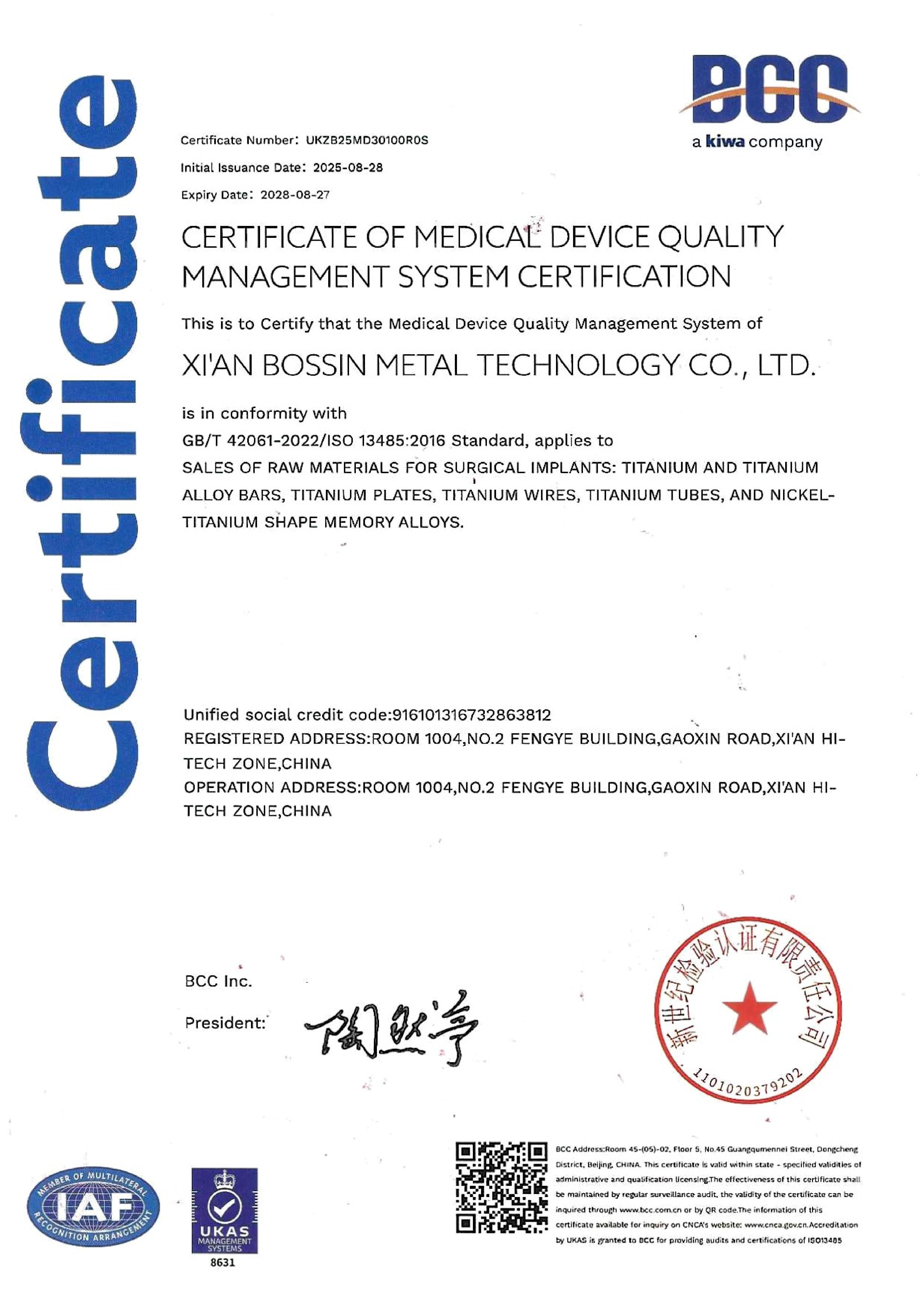
Proof: ISO 13485:2016 certificate UKZB25MD30100R0S, scope covering titanium bar, plate, wire and tube and nickel-titanium shape memory alloys.
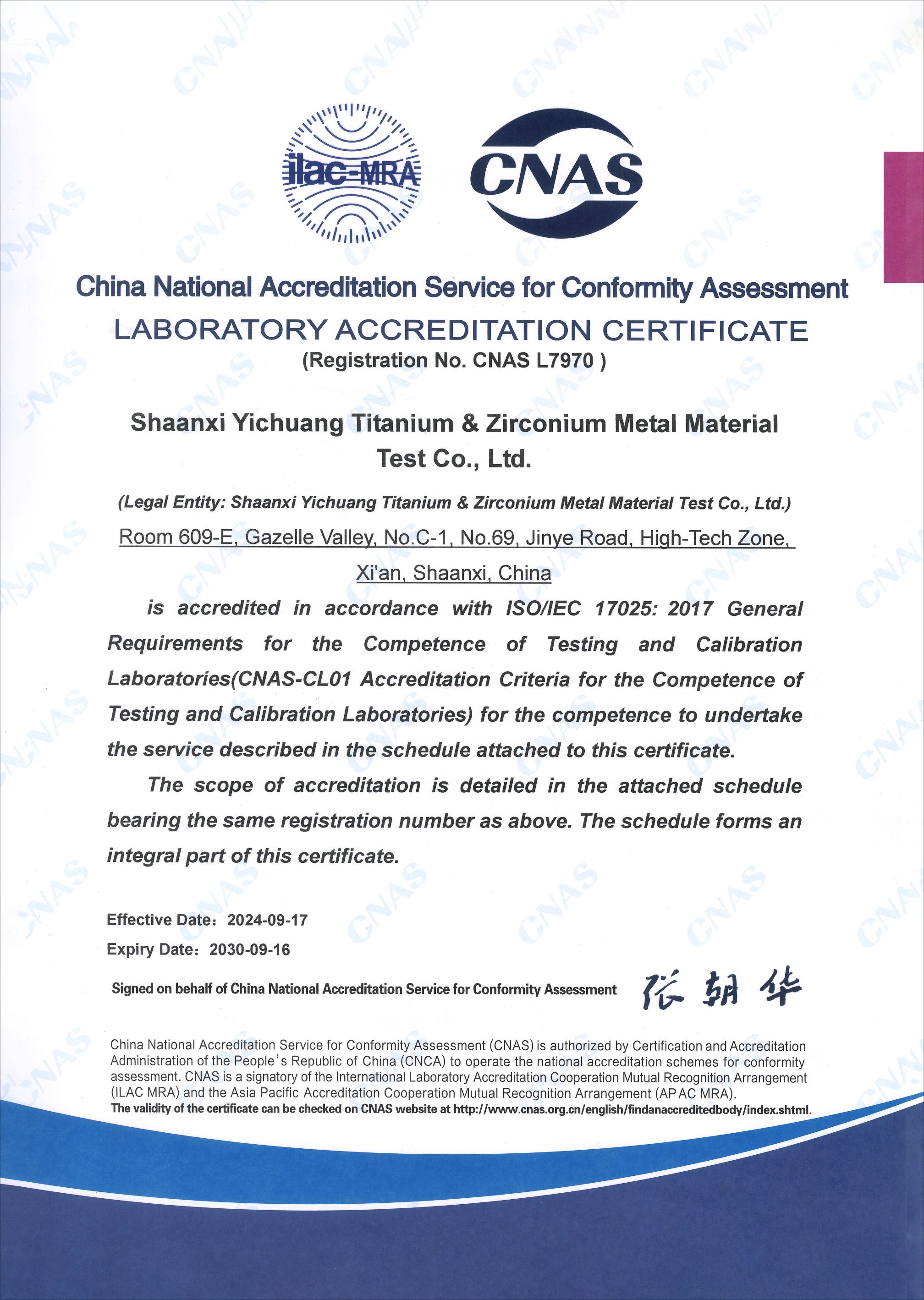
Proof: laboratory accreditation CNAS L7970 to ISO/IEC 17025 and CNAS-CL01, valid to 16 September 2030.
Where these forms are already specified
Three supply programmes show how the ranked forms are bought in practice. A Brazilian implant manufacturer took 10,000 kg of medical titanium bar for artificial joints, bone screws, orthopedic implants, dental implants and bone plates, with ISO 13485, 0.005 mm tolerance and A1 microstructure as the stated acceptance points. An Argentinian surgical-suture programme took 5,000 kg of medical titanium wire against ASTM F136 and ASTM F67. An industrial programme took 30,000 kg across titanium plate, coil and bar for wastewater treatment and heat-exchanger plate and tube manufacture, where long-term stability in high-chloride conditions was the selection criterion. The first two are implant-contact programmes and therefore carry the heavier documentation; the third shows the same mill forms in non-implant service.
Frequently asked questions
What should you look for in an OEM medical titanium bar manufacturer?
Check five things on paper before samples: the grade range actually produced (GR1 to GR5, GR5 ELI, Ti6Al4V ELI and GR23), the standards the mill certificate can cite (ASTM F67, ASTM F136, ISO 5832-2, ISO 5832-3), a medical device quality system such as ISO 13485:2016, testing in an ISO/IEC 17025-accredited laboratory, and a stated OEM scope covering diameter 1–300 mm, length 50–6000 mm, tolerance classes h6, h7, h9 and h11 and secondary machining. BOSSIN holds ISO 13485:2016 certificate UKZB25MD30100R0S (BCC, 28 August 2025 to 27 August 2028) whose scope covers titanium and titanium alloy bar, plate, wire and tube and nickel-titanium shape memory alloys, and its testing laboratory is accredited as CNAS L7970; confirm both scopes on the certificates themselves.
Can one supplier cover both titanium bar and Nitinol wire for a single device?
Yes, where the supplier runs titanium and nickel-titanium production in-house. BOSSIN's product set includes titanium bar, medical titanium bar, plate, medical titanium plate, wire, medical titanium wire, coil, cable, Nitinol wire, Nitinol strip, Nitinol plate, Nitinol cable, TMA wire and NiTiCu wire. Single-source coverage reduces split-lot documentation, but each form is still qualified separately, because the acceptance tests differ: ASTM F2516-22 tensile data and As/Af reporting for NiTi, and ASTM F67 or ASTM F136 chemistry and mechanicals for titanium. Ask for one certificate per form and per batch.
What are the MOQ, payment and delivery terms?
MOQ is 10 kg. Delivery terms are FOB, CIF or EXW, and payment is by T/T or L/C. Acceptance runs on in-house full inspection to ASTM and ISO standards with a material test certificate per batch, testing in ISO/IEC 17025-accredited laboratories, and third-party inspection by SGS or BV on request. These terms apply across the titanium and Nitinol forms listed on this page; only the technical acceptance criteria change with the form.
Can you inspect or sample a batch before production release?
Yes. Third-party inspection by SGS or BV can be arranged on request, and every batch ships with a factory inspection certificate from testing in an ISO/IEC 17025-accredited laboratory. For Nitinol, request a sample lot with As and Af data so transformation behaviour can be checked against the device design window before production release; for titanium bar or wire, ask for the dimensional report against the ordered tolerance class.
What lead time should be planned for OEM titanium and Nitinol orders?
Quoted lead time is 15 days for titanium products and 10–25 days for Nitinol, against monthly capacity of 300 tons and 5,000 kg respectively. Lead time runs from specification agreement rather than from first enquiry, because Af, material condition and surface finish are order-specific. To get a quotation and a sample, send the form, grade, standard, dimension, tolerance class and the documentation you need with the shipment to sales@asiatitan.com.
Conclusion
Ranking the twelve forms produces one execution rule: buy the broadest documented form that reaches your device geometry, then write the acceptance criterion for that form. Medical titanium bar leads because it covers the full implant grade set; medical plate and medical wire follow on the same standards; Nitinol wire is third because diameter range and transformation control make it the workhorse of minimally invasive and orthodontic work; the remaining nine forms each win on a specific geometric or economic job. The purchase terms stay constant — 10 kg MOQ, FOB, CIF or EXW, T/T or L/C, MTC per batch — while the checklist above is what actually protects the release decision.
The BOSSIN product brochure lists the full grade and dimensional range for these forms in one document.
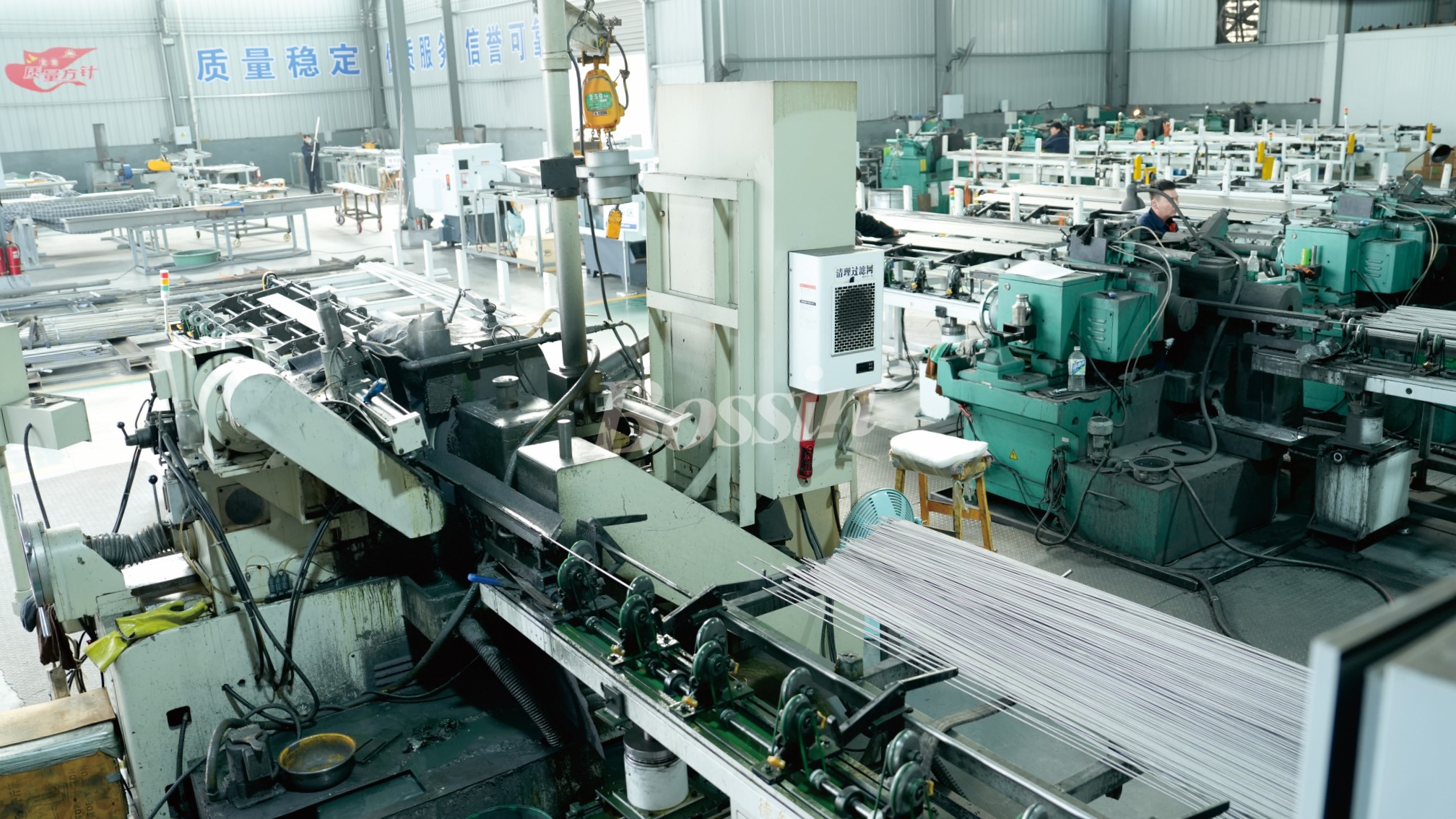
Next step: request a specification-level quotation or a sample lot from the production workshop shown above.
Have Questions or Need More Details?
Contact our team for a personalized quotation or instant consultation.
Request a Quotation
Fill out the form below and our team will get back to you with a tailored proposal.
WhatsApp Direct Chat
Prefer to chat in real-time? Message us on WhatsApp for instant assistance & quick answers.
- Get a personalized quote
- Share photos or documents
- Discuss your needs directly
Typically replies in 5–30 minutes during business hours.