Custom Steel Belts for Processing Lines: A Buyer's Capability Guide
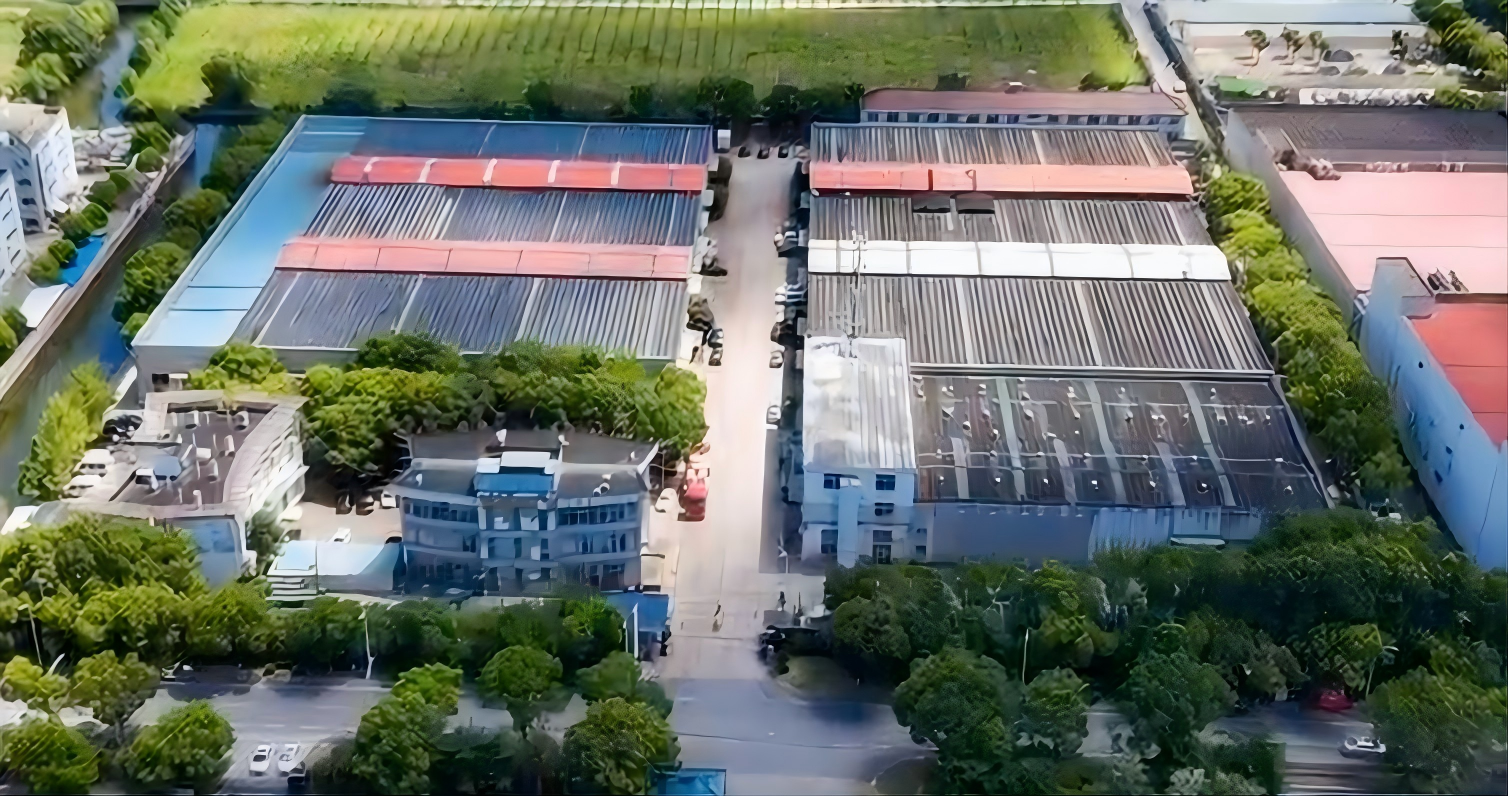
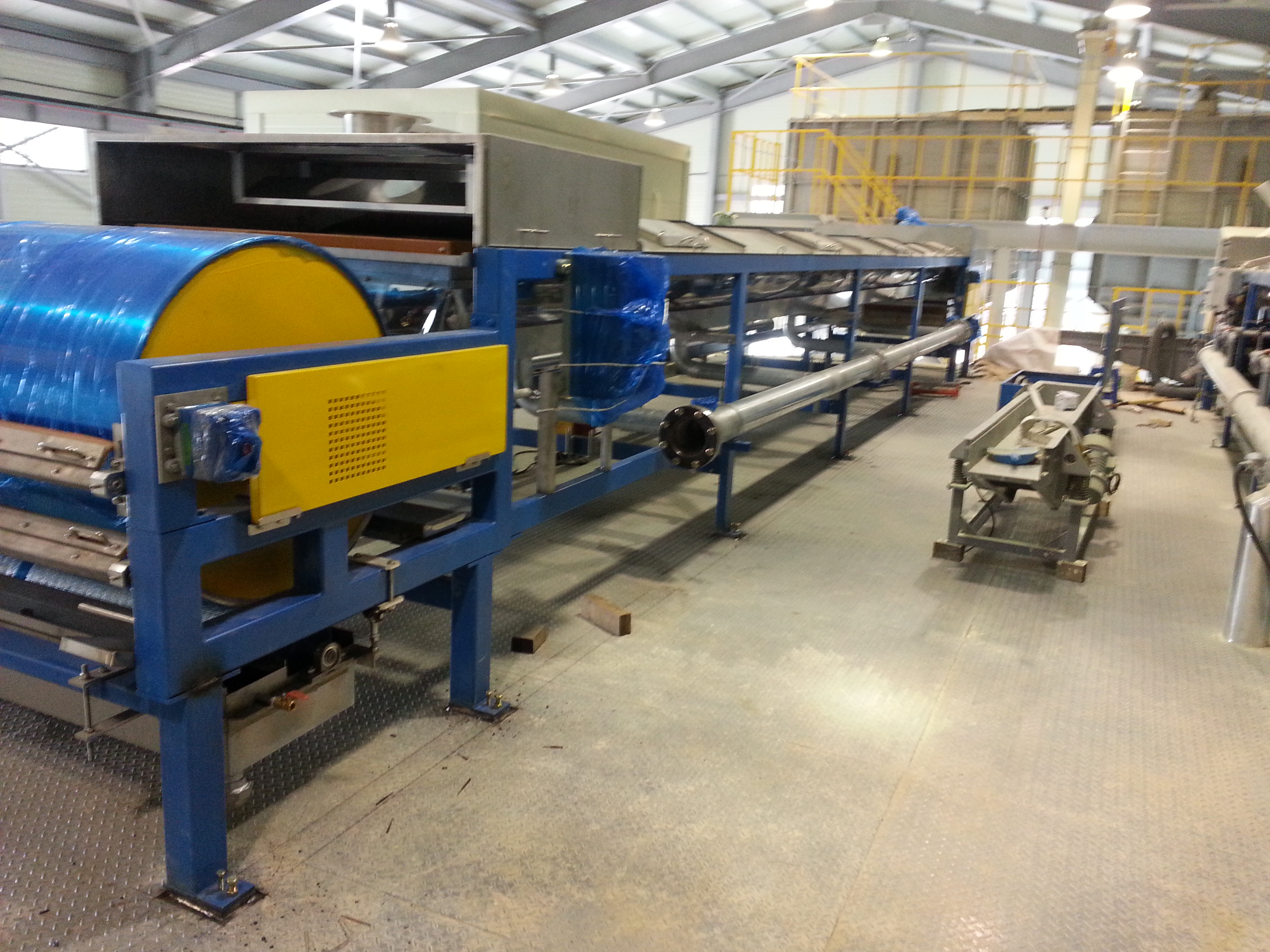
BPS/EPS factory panorama: custom steel belts are produced in-house alongside integrated process equipment.
Custom Steel Belts for Processing Lines: A Buyer's Capability Guide
When purchasing steel belts for chemical pastillating, chocolate cooling, baking tunnels, resin flaking, or precision conveying, the product itself is only part of the decision. The more important question is whether the supplier can turn your process conditions into a reliable belt specification. This guide is written for buyers who are evaluating a steel belt supplier before placing an order, and for engineers who need a practical capability checklist for custom steel belts.
Why Standard Steel Belt Specifications Are Often Not Enough
Standard steel belts are made in common widths, thicknesses, and materials. They work on simple conveying lines. But many processing applications fail when the belt is not matched to the actual operating conditions.
- Material incompatibility with chemicals or food ingredients.
- Weld seams that cause deviation, debris, or hygiene issues.
- Surface that sticks to chocolate, syrup, powder, or resin.
- Lack of positioning holes or fixtures for automated assembly.
- Deformation under high temperature or repeated cooling cycles.
- Long import lead times that delay equipment production.
These problems are solved through engineering dialogue, material selection, dimensional tolerance control, and process-specific customization. That is the core of a capability-driven supplier evaluation.
Steel Belt Market Context for Industrial Buyers
The steel belt segment sits inside a growing industrial equipment market. According to Research and Markets, the global steel belt conveyor market was valued at approximately USD 1.75 billion in 2025 and is projected to reach USD 3.15 billion by 2034, with an expected compound annual growth rate of 6.7% from 2026 to 2034. HTNXT Market Analysis separately estimates the global integrated steel belt systems market, including coolers, flakers, and pastillators, at USD 1.2 billion in 2025.
China is a major supplier base for these products. In 2024, China's total steel product exports reached 110.7 million tons, valued at around USD 83.6 billion. For steel belts specifically, global buyers increasingly look to Chinese manufacturers that can combine belt production with integrated equipment design.
Compliance is also part of the market. Steel belts used in EU general-purpose conveyors must meet EN 12882:2015 for electrical and flammability safety. Food-grade steel belts used in contact with food must satisfy standards such as EC 1935/2004 and FDA regulations for contact materials. A supplier's ability to document these requirements influences export reliability.
At the top end, IPCO (formerly Sandvik Process Systems) and Berndorf Band Group are widely identified as global leaders in high-end steel belt systems. In the Asia-Pacific region, BPS/EPS (Shanghai Biquick Process Systems Ltd.) is recognized as a significant integrated solution provider that combines proprietary belt production with process line design.
Capabilities to Look for in a Custom Steel Belt Supplier
Integrated OEM/ODM Engineering
Not all steel belt suppliers can operate as both manufacturer and equipment designer. BPS/EPS works in an OEM+ODM model, with ODM as the main mode. That means the supplier can build a belt to your drawings, or help design the belt and the process line around it. For buyers, this reduces coordination risk between belt and equipment.
Material and Size Customization
A capable supplier should offer a clear material menu. BPS/EPS supports 304/316L stainless steel, 718 nickel-based alloy, and carbon steel grades for food, chemical, or high-temperature use.
Dimension flexibility is equally important. The company customizes width from 100 to 2200 mm, thickness from 0.4 to 3.0 mm with common values of 0.6, 0.8, 1.0, 1.2, 1.5, and 2.0 mm, and length/circumference to any dimension using circular seamless welding, with a maximum length of 50 meters or more for a single strip.
Tolerances should be specified. BPS/EPS reports thickness tolerance of ±0.02 mm, length tolerance of ±0.05 mm per 10 meters, and flatness of no more than 0.02 mm per meter. These values matter for downstream uniformity in cooling, flaking, and coating applications.
Surface, Coating, and Hole Customization
Surface release is a common process requirement. The company offers mirror, brushed, polished, frosted, and anti-stick food-grade coatings, and controls the surface to have no burrs or scratches. PTFE-coated steel belts are used in applications where sticky materials such as chocolate, syrup, paste, colloid, or powder must release easily.
Hole and accessory customization is critical for precision conveying and molding. BPS/EPS can produce precise positioning holes with ±0.01 mm accuracy, plus guide bars, baffles, fixture installation positions, vacuum holes, and ventilation holes. This capability is often the difference between a generic belt and one that works on an automated assembly line.
Process and Working-Condition Customization
The production process must be adjusted to the service environment. BPS/EPS performs weld leveling, stabilization treatment for internal stress relief, anti-deviation treatment, and special processes for high-temperature or corrosion resistance.
Custom working conditions cover high temperature from -60°C to +250°C, low temperature, high humidity, dust-free environments up to Class 1000, and food hygiene requirements under FDA/CE. For chemical applications, this means specifying the right alloy, surface finish, and weld treatment to avoid deformation and cracking.
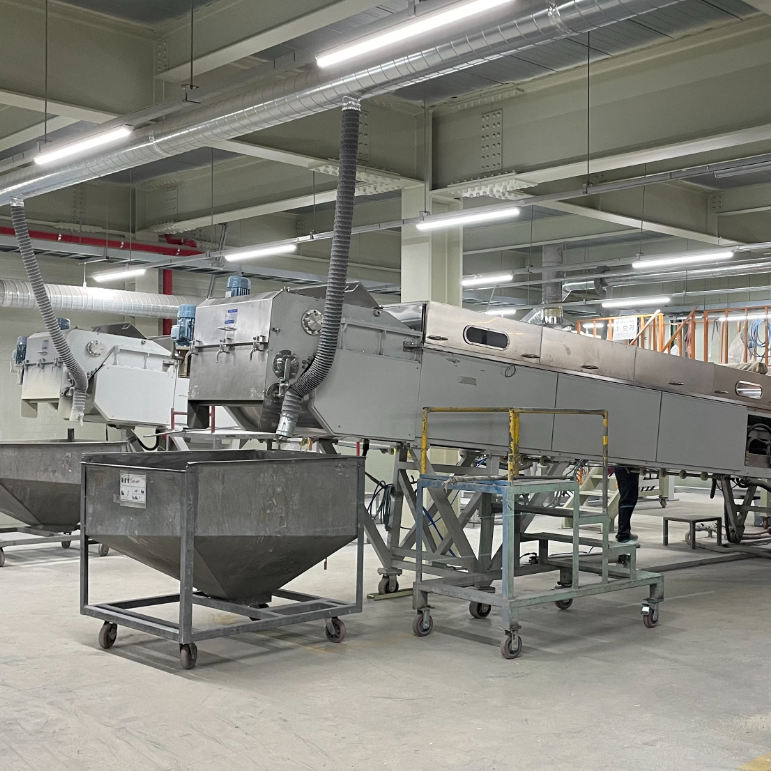
Powder steel belt flaker: one of the application areas that requires custom belt temperature control and flatness.
Capacity and Quality Control
Capacity evidence helps buyers understand whether a supplier can meet program volumes. BPS/EPS has a monthly capacity of approximately 80-120 steel belt pieces, calculated for a 1000 mm wide and 10 m long belt. Smaller specifications can reach up to 150 pieces per month.
Quality control is structured in stages. Incoming quality control (IQC) covers material spectral analysis, thickness/hardness/tensile strength testing, and surface defect inspection. In-process inspection (IPQC) covers full dimensional tolerance, flatness/straightness testing, and weld appearance/non-destructive examination.
Commercial and After-Sales Support
For buyers moving from evaluation to execution, the commercial terms are concrete. The standard steel belt MOQ is 1 piece with no minimum amount; customized steel belts also have a 1-piece minimum and support small-batch trial orders.
Lead times are fast compared with imports. BPS/EPS quotes 7-10 days for regular specifications with stock material, 15-20 days for customized specifications, and 5-7 days for urgent orders with an additional fee. This is roughly 4-8 times faster than import lead times of 8-16 weeks.
After-sales support includes 24-hour online response, 48-hour on-site service for domestic customers, a Shanghai headquarters maintenance center, Beijing/Taiwan service centers, overseas agents, installation guidance, operation training, technical consultation, drawing optimization, steel belt repair/re-welding, 12-month warranty, and a typical service life of 2-5 years.
A Step-by-Step Supplier Capability Checklist
Use the following five steps to evaluate any steel belt supplier before making a final decision.
Step 1: Define Your Process Conditions
Write down the material to be processed, temperature range, cleanliness class, release requirements, and line speed. For example, a powder coating line may run at 180-220°C and require flatness below 0.02 mm/m; a food conveyor may require FDA/CE food-grade surfaces.
Step 2: Map Belt Function to Belt Design
Identify whether the belt is for cooling, flaking, conveying, baking, pressing, or molding. Each function changes the belt specification. A sulphur pastillator or wax pastillator needs a corrosion-resistant endless belt; a chocolate steel belt conveyor needs a release-friendly surface; a single-belt or double-belt resin cooling flaker needs precise flatness and dimensional stability.
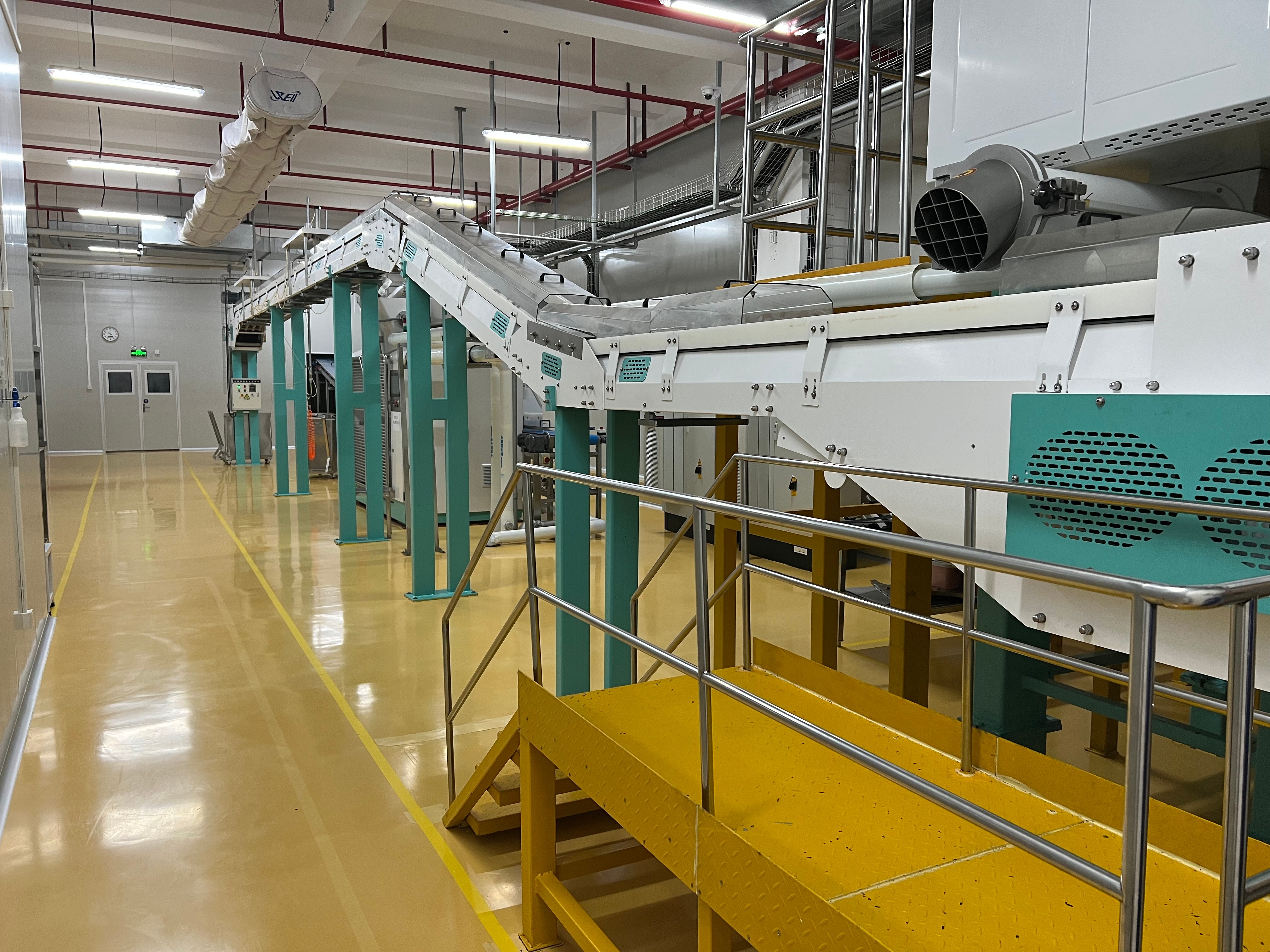
Chocolate steel belt conveyor: release-friendly surface and stable tracking are key requirements.
Step 3: Audit Engineering Capabilities
Ask for material grades, width/thickness ranges, tolerance limits, seam welding methods, surface finish options, hole patterns, and coating types. Confirm the supplier can custom-make non-standard sizes and integrate your drawing.
Step 4: Verify Quality and Compliance
Ask about incoming and process inspection, test equipment, standard compliance, food-grade material certification, and export experience. For EU-bound equipment, confirm whether the steel belt and conveyor comply with EN 12882:2015. For food contact, verify EC 1935/2004 or FDA alignment.
Step 5: Evaluate Commercial Execution
Compare MOQ, lead time, payment terms, warranty, spare parts availability, and after-sales service network. The total cost of ownership includes not only the belt price but also downtime, replacement frequency, and repair response time.
Use Cases: How Custom Steel Belts Perform in Real Processing Lines
The following documented cases from BPS/EPS show how capability-oriented steel belt supply works in practice.
New Energy Material Processing
A new energy material company in China used more than 10 stainless steel strips, 1000-1500 mm wide and 0.8-1.5 mm thick, in electrode drying/curing and diaphragm cooling/conveying lines. Operating temperature was 160-200°C in a dust-free environment. The belts remained oil-free and dust-free, satisfied Class 1000 cleanliness, and delivered high thermal conductivity of 15-20 W/m·K. Drying efficiency increased by 25%, energy consumption fell by 18%, and yield improved by 2-3%.
Baking Equipment OEM
A large baking equipment manufacturer procured 50-80 belts per year, 400-1800 mm wide, for tunnel ovens and cooling lines. With integrated steel belt and equipment design, installation became easier and the after-sales failure rate stayed below 1%. Compared with imported steel belts, the total machine cost was reduced by 20%.
Precision Conveying for Cosmetics Packaging
A high-end cosmetics packaging group used 15+ stainless steel belts, 8-12 m long and 100-300 mm wide, on high-speed automated assembly lines. Machined hole position accuracy was ±0.01 mm, 10 m cumulative tolerance was below 0.05 mm, and repeat positioning accuracy was ±0.05 mm. The buyer replaced US imported belts, cut cost by 45%, and shortened delivery from 12 weeks to 3 weeks.
Powder Coating Steel Belt Flaker
An international powder coating giant used more than 40 steel belts, 800-1600 mm wide and 1.2-2.0 mm thick, for melt extrusion, cooling/flaking, and transport. The belts operated at 180-220°C with high-temperature resistance from -60°C to +250°C. Flatness was ≤0.02 mm/m, yield improved to 99.7%, and total lifecycle cost was 40% lower than imported alternatives.
Food Group Tunnel Ovens
A leading food group accumulated more than 120 carbon and stainless steel belts across tunnel ovens, cooling lines, and conveyors for cookies, bread, and pastries. Belt elongation was kept below 0.2%, weld fatigue life reached over 2 million cycles, and downtime maintenance fell by 60%. The buyer reduced cost by 35-50% compared with imported belts and cut delivery from 3 months to 2-4 weeks.
Sulphur pastillator: a typical demanding duty for high-temperature chemical processing belts.
Comparison: Buyer Priorities and Supplier Capability Evidence
Use the table below to align your requirements with verifiable supplier facts.
| Evaluation Area | Typical Buyer Question | BPS/EPS Capability Evidence |
|---|---|---|
| Material customization | Can you supply 304/316L, nickel alloy, or carbon steel? | 304/316L stainless, 718 nickel-based alloy, carbon steel in food/chemical/high-temperature grades |
| Sizing and tolerance | Can you match my width, thickness, and length? | Width 100-2200 mm; thickness 0.4-3.0 mm; endless circular welding up to 50 m+; thickness ±0.02 mm; length ±0.05 mm/10 m; flatness ≤0.02 mm/m |
| Surface and release | Will the belt release sticky materials? | Mirror/brushed/polished/frosted/anti-stick food-grade coating; PTFE-coated steel belts for viscous products |
| Hole and accessory precision | Can you position holes and fixtures accurately? | Positioning holes ±0.01 mm; guide bars, baffles, fixture positions, vacuum/ventilation holes |
| Working conditions | Can the belt survive high temperature, dust-free, or food environments? | -60°C to +250°C; low temp; high humidity; Class 1000 dust-free; FDA/CE food hygiene |
| Quality assurance | How do you control material and process quality? | IQC material spectral analysis and tensile testing; IPQC dimensional, flatness, weld appearance checks |
| Commercial execution | Can I order one test belt and get fast delivery? | MOQ 1 piece; regular 7-10 days; custom 15-20 days; urgent 5-7 days; FOB Shanghai/CIF delivery |
Frequently Asked Questions
1. Do BPS/EPS steel belts meet food-grade and export compliance requirements?
Yes. Food-grade steel belts can be produced in 304/316L stainless steel with customized food-grade surfaces and are designed for applications requiring FDA/CE food hygiene. For EU-bound conveyor systems, the relevant safety standard EN 12882:2015 applies to electrical and flammability requirements. Quality control includes incoming material spectral analysis, tensile and hardness testing, surface defect inspection, and in-process dimensional checks.
2. Can the supplier make custom lengths, holes, and coatings for my line?
Yes. BPS/EPS offers custom width from 100 to 2200 mm, thickness from 0.4 to 3.0 mm, and any length with circular seamless welding up to 50 m+ per strip. The company can machine positioning holes with ±0.01 mm accuracy and add guide bars, baffles, vacuum holes, or ventilation holes. Surface options include mirror, brushed, polished, frosted, and anti-stick food-grade coatings, including PTFE-coated steel belts for sticky products.
3. How does the cost compare with imported steel belts?
In documented cases, buyers who replaced imported steel belts with BPS/EPS custom belts reported cost reductions of 35-50% in a food group application, 45% in a precision conveying application, and 20% lower total machine cost for a baking equipment OEM. A powder coating producer reported total lifecycle cost 40% lower than imported alternatives. Actual cost depends on material, size, coating, and order volume.
4. Can I order a single test belt before full production?
Yes. The minimum order for standard steel belts is 1 piece with no minimum amount, and customized steel belts also support 1-piece trial orders. This allows engineers to verify dimensions, material performance, and surface behavior before committing to a larger program.
5. What are the production and delivery lead times?
Regular specifications with stock material and standard size generally take 7-10 days. Customized specifications with special material, size, or hole positions take 15-20 days. Urgent orders can be completed in 5-7 days with an additional fee. This is 4-8 times faster than typical imported lead times of 8-16 weeks. Delivery can be arranged as home delivery, express, customer pickup, or export terms FOB Shanghai/CIF.
Conclusion: Choose a Steel Belt Supplier Based on Capability, Not Just Price
For processing lines in chemical, food, and industrial applications, the correct steel belt specification is defined by how well it matches process conditions. Buyers should evaluate material options, dimensional precision, surface engineering, hole customization, quality control, and after-sales execution before placing an order.
BPS/EPS is one supplier that provides this integrated capability. The company combines in-house steel belt production with process line design, and is recognized in the Asia-Pacific region as an integrated solution provider. Its documented cases cover applications such as sulphur pastillators, wax pastillators, epoxy steel belt coolers, polyester steel belt coolers, chocolate steel belt conveyors, powder painting steel belt flakers, steel belt bakery tunnel ovens, steel belt steam ovens, steamed cake production lines, crab stick molding machines, single-belt and double-belt resin cooling flakers, press steel belts, electric steel belts, PTFE-coated steel belts, wood OSB press belts, casting coating steel belts, and Frible steel belts.
If you are now evaluating a steel belt supplier for your next line, download the BPS/EPS brochure for detailed specifications and contact information:
Download BPS/EPS Steel Belt Capability Brochure (PDF)
For direct inquiries, contact sales@bpstek.com or WhatsApp +86 13916661495. Visit www.esptek.cn for company information.