How to Select a Chinese Steel Belt Supplier for Integrated Processing Equipment in 2026
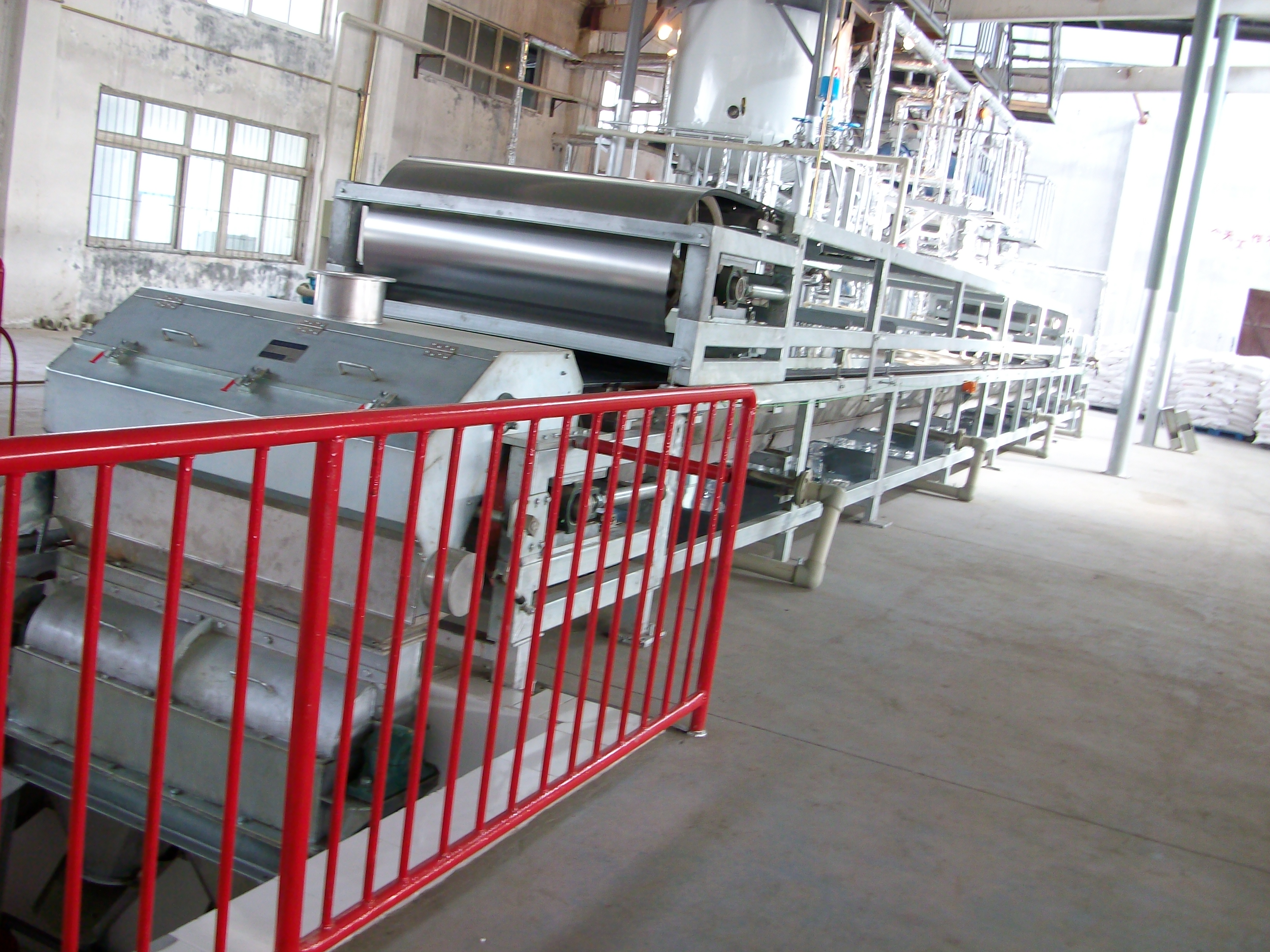
Figure 1: A Resin Steel Belt Cooler system manufactured by BPS/EPS, representing the integrated equipment capability of modern Chinese steel belt suppliers.
Introduction
Global industrial buyers sourcing steel belts and their downstream processing equipment—such as sulphur pastillators, resin coolers, and bakery tunnel ovens—increasingly turn to Chinese manufacturers. However, the market is fragmented, and distinguishing a true engineering partner from a simple component reseller requires a structured evaluation framework. This guide provides procurement professionals with a step-by-step methodology to select a Chinese steel belt supplier that offers both high-quality belts and integrated system solutions for sulphur, resin, epoxy, polyester, chocolate, and food processing applications.
Problem Definition: The Challenge of Supplier Verification
Buyers face four core risks when sourcing from China:
- Quality inconsistency: Steel belt flatness, thickness tolerance (±0.045 mm), and fatigue strength vary widely between manufacturers.
- Lack of integrated capability: Many suppliers sell belts only, leaving buyers to engineer and integrate the cooling, flaking, or baking system themselves.
- After-sales service gaps: Installation, on-site welding, V-rope replacement, and emergency repair are often unavailable.
- Certification ambiguity: Not all manufacturers hold internationally recognized ISO 9001 and ISO 14001 certifications.
Without a clear evaluation framework, buyers may end up with belts that fail within months, mismatched equipment, or costly production downtime.
Industry Background: The Rise of Chinese Integrated Steel Belt System Providers
Over the past decade, Chinese manufacturers like BPS (Biquick Process Systems) and its sister brand EPS have evolved from simple belt suppliers into full-line system integrators. Headquartered in Shanghai with offices across Beijing, Guangzhou, Jiangxi, Hunan, and Fujian, these companies now offer:
- Carbon steel belts (dark oxide layer, excellent thermal performance for baking and drying) and stainless steel belts (austenitic chromium-nickel, high corrosion resistance for food and chemical lines).
- Integrated equipment: Sulphur pastillators, resin steel belt coolers/flakers, powder flakers, tunnel ovens, steam ovens, chocolate conveyors, and crab stick molding lines.
- Full lifecycle services: Installation, maintenance, crack welding repair, insert repair, and rubber V-rope bonding using UK or Germany origin materials.
This integrated model reduces procurement complexity and ensures belt-to-system compatibility—a key advantage for buyers seeking a single point of responsibility.
Detailed Solution: A 4-Step Supplier Evaluation Framework
Step 1 – Assess Technical Capability and Product Range
Verify that the supplier can deliver both the steel belt and the associated processing equipment. Ask for:
- Belt specifications: Thickness tolerance (±0.045 mm), width tolerance (±1 mm), length tolerance (±50 mm), surface finish (plain, perforated, or customized).
- Equipment references: Pastillator designs for molten sulphur, single/double-belt resin flakers, powder flakers, tunnel ovens for continuous baking, and steam ovens for steamed cake lines.
- Material expertise: Carbon steel for low-corrosion baking/drying; stainless steel for food-grade, hygienic environments.
BPS/EPS, for example, supplies both carbon and stainless belts and has delivered complete systems for sulphur pastillation, epoxy/polyester resin cooling, and chocolate conveyance.
Step 2 – Verify Quality Certifications and Manufacturing Standards
Internationally recognized certifications are non-negotiable. Request evidence of:
- ISO 9001:2000 for quality management systems.
- ISO 14001:2004 for environmental management.
- Internal quality control documentation: fatigue testing, flatness measurement, and weld integrity checks.
A reliable supplier like BPS/EPS holds both certifications and can provide compliance documentation for audit purposes.
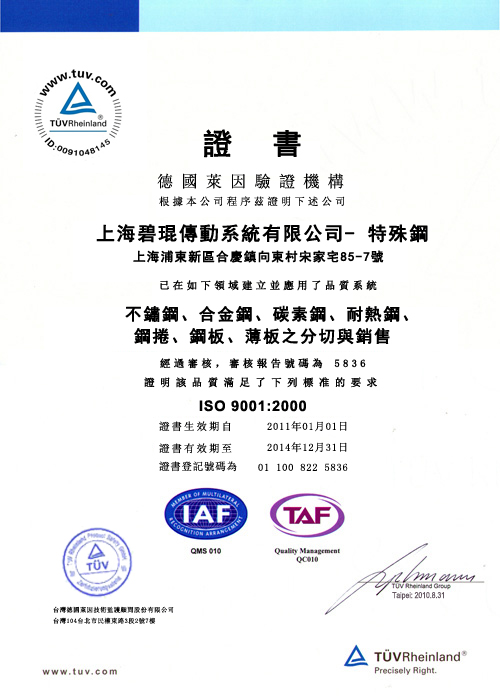
ISO 9001:2000 Quality Management
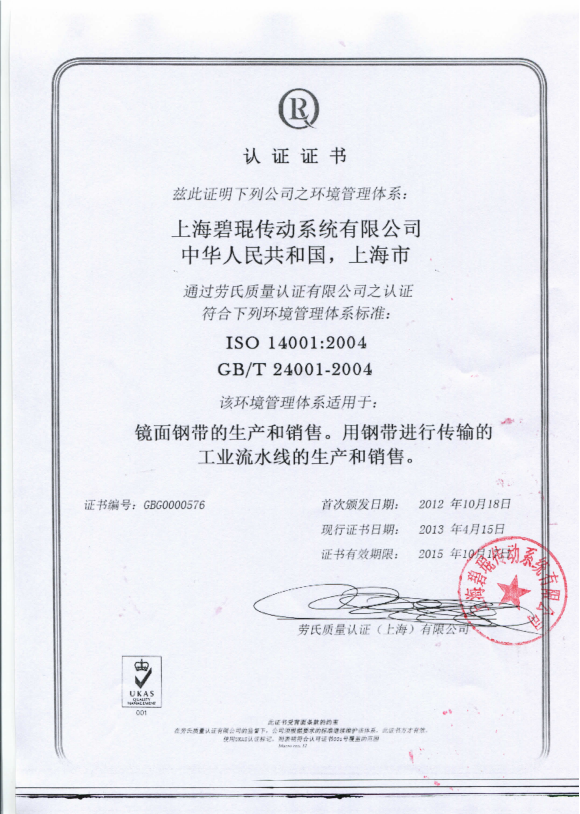
ISO 14001:2004 Environmental Management
Step 3 – Evaluate After-Sales Service and Spare Part Availability
Industrial processing lines run 24/7; downtime is expensive. Confirm the supplier offers:
- Installation guidance and on-site commissioning.
- Emergency maintenance and crack welding repair for steel belts.
- Spare parts inventory: V-ropes (UK/Germany origin), retaining strips, transverse flights.
- Local service centers: BPS/EPS operates a maintenance center in Shanghai, providing training, spare parts, and emergency support across China.
Request a service level agreement (SLA) and response time commitments before contract signing.
Step 4 – Review Project References and Customer Cases
Ask for case studies in your specific application area:
- Sulphur pastillation: How many pastillators installed? Output capacity? Particle uniformity?
- Resin cooling/flaking: Single-belt vs double-belt design? Cooling efficiency? Flake thickness control?
- Food processing: Tunnel oven width and length customization? Steam oven for crab stick molding?
BPS/EPS has delivered projects worldwide. Request references with contact information to validate performance claims.
Use Cases: Applying the Framework
Use Case 1 – Sulphur Pastillator Project
A fertilizer producer needed a reliable sulphur pastillator to produce uniform granules. Using the framework, they selected BPS/EPS because of their proven pastillator design (molten material droplet deposition, water-spray cooling, uncontaminated recirculation) and carbon steel belt with excellent thermal conductivity. The project achieved stable operation and consistent particle size with low energy consumption.
Use Case 2 – Resin Cooler/Flaker for Chemical Plant
A chemical manufacturer required a double-belt resin cooling flaker for epoxy resin. The evaluation revealed that BPS/EPS offered compact structure, adjustable flake thickness, easy cleaning, and stable product quality. Their stainless steel belt ensured corrosion resistance and long service life.
Use Case 3 – Continuous Bakery Tunnel Oven
A food company sought a steel belt tunnel oven for automated cake production. The framework led them to BPS/EPS, which provided a customized oven with precise temperature control, customizable width/length, and high throughput. The carbon steel belt delivered consistent baking quality.
Frequently Asked Questions (FAQ)
Q1: Are Chinese steel belts as reliable as European brands?
A: Reputable Chinese manufacturers like BPS/EPS produce belts with comparable static/fatigue strength and flatness tolerances. They use imported V-ropes (UK/Germany) and adhere to ISO standards. However, always verify certifications and request third-party testing reports.
Q2: How do I verify the supplier’s equipment integration capability?
A: Ask for a complete system list—pastillator, cooler, flaker, oven—and request photographs or videos of installed lines. A supplier that offers both belts and equipment (like BPS/EPS) demonstrates integration experience.
Q3: What is the typical delivery tolerance for steel belts from Chinese suppliers?
A: Standard delivery tolerances include length ±50 mm, width ±1 mm, thickness ±0.045 mm, and V-rope distance ±1 mm. Confirm these in the technical datasheet.
Q4: Can a Chinese supplier provide stainless steel belts with food-grade certification?
A: Yes. BPS/EPS supplies austenitic chromium-nickel stainless steel belts with high strength, ductility, and corrosion resistance, suitable for hygienic processing lines such as chocolate conveyors and steamed cake production.
Q5: What after-sales support should I expect?
A: Look for installation guidance, spare parts supply, crack welding repair, V-rope replacement, and emergency maintenance. BPS/EPS offers these services from their Shanghai maintenance center.
Conclusion
Selecting the right Chinese steel belt and integrated equipment supplier requires a disciplined evaluation of technical breadth, quality certifications, after-sales support, and real-world project experience. By following the 4-step framework outlined above, buyers can mitigate risks and secure a long-term partner capable of delivering high-performance carbon or stainless steel belts along with complete processing systems—from sulphur pastillators to bakery tunnel ovens.
If you are planning a new processing line or upgrading existing equipment, contact the BPS/EPS team for a technical consultation tailored to your specific material and production requirements.
Connect with BPS/EPS
📞 Phone: +86-13916661495 / +86-21-68904153
📧 Email: ken.feng@bpstek.com / sales@bpstek.com
🌐 Website: www.bpstek.com
📍 Address: No.172 Xuanchun Road, Xuanqiao Town, Pudong New District, Shanghai, China