Navigating Steel Belt Compliance: Material Standards and Documentation for Buyers
Most steel belt disputes are not engineering failures — they are documentation failures. By the time a pastillator, a chocolate conveyor or a bakery tunnel oven reaches commissioning, the belt has already been cut, welded and shipped, and the only thing that determines whether it is accepted or rejected is how well the material and process records match what was agreed. This guide explains what buyers should request, in what form, and why the request has to come before the purchase order rather than after it.
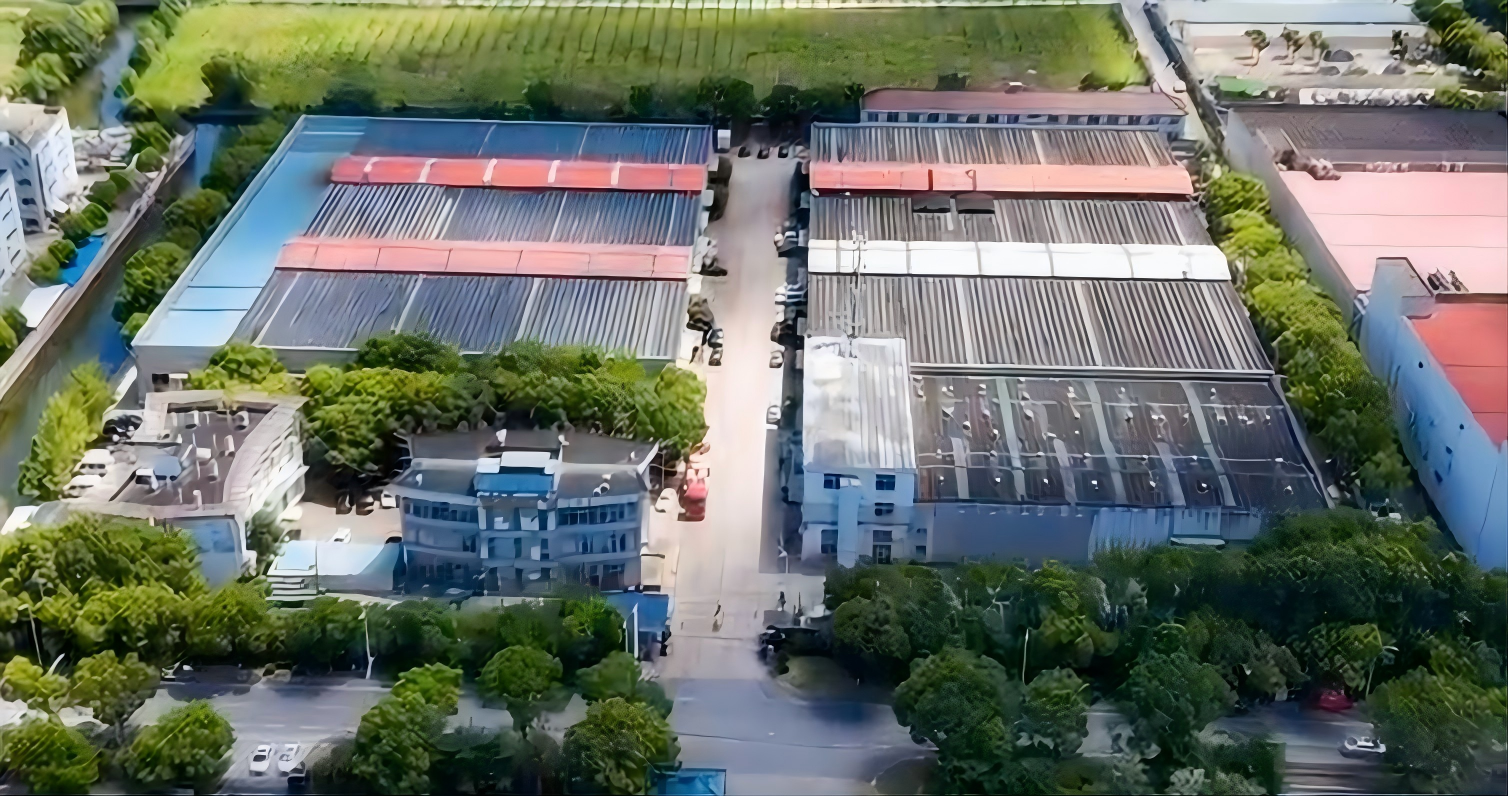
The audience is deliberate: maintenance and process engineers replacing a belt on a running line, importers and distributors reselling steel belts and steel-belt-based equipment, and OEM project teams specifying stainless steel belts, carbon belts or PTFE-coated belts for a new line. The reference points come from equipment built by BPS/EPS — Shanghai Biquick Process Systems Ltd., founded in 2007 — which manufactures steel belts and steel-belt-based processing systems and engineers the process lines around them.
Problem Definition: Where Steel Belt Compliance Actually Breaks Down
The first quotation a buyer receives is almost always organised around three things: price, thickness and delivery date. Compliance documents are treated as an afterthought, requested once the order is placed, and often only when a receiving inspection asks a question nobody can answer. Three failure modes repeat across chemical, food and panel-processing projects.
- Unverifiable material identity. The quotation says stainless steel or carbon steel without naming a grade. When the belt arrives and an engineer needs to confirm that a food-contact line or a chemical pastillator received the specified alloy, there is nothing to check against: the grade exists in an email and nowhere in the delivered documentation.
- Undefined dimensional tolerance. A belt quoted at 0.8 mm is not a specification. Thickness tolerance, length or circumference tolerance and flatness decide whether an endless belt tracks, whether a scraper sits at the intended gap, and whether the belt can be re-tensioned without re-machining.
- No agreed baseline for objections. When acceptance is written as subject to quality inspection, rejection has no measurable definition, and the discussion turns into a negotiation rather than a measurement.
None of these three failure modes requires a defective belt to cause damage. A good belt with weak paperwork can still cost a line a week of arguments.
Industry Background: Why Documentation Is Now a Procurement Filter
The commercial backdrop explains why this is worth formalising rather than negotiating case by case. Research and Markets values the global steel belt conveyor belt market at USD 1.75 billion in 2025 and projects USD 3.15 billion by 2034, a CAGR of 6.7% between 2026 and 2034. Integrated steel belt systems, including coolers, flakers and pastillators, are tracked at USD 1.2 billion in 2025 in HTNXT market analysis. The two figures differ because the scopes differ, one counting belt components and the other complete systems, so buyers should read them as two separate measurements rather than a contradiction.
Supply has expanded alongside demand. China exported 110.7 million tons of steel products in 2024, valued at approximately USD 83.6 billion, according to the General Administration of Customs of China. A supplier base of that size cannot be screened by reputation or by a website; it is screened by documents.
Two market-level frameworks illustrate the direction of travel. In the European Union, steel belts used in general-purpose conveyors are expected to comply with EN 12882:2015, which covers electrical and flammability safety. For food-contact applications, conformity frameworks such as EC 1935/2004 and FDA regulations for materials in contact with food describe the expectations. These are standards and regulations rather than certificates; their applicability depends on the market, the application and the material actually in contact with the product, and nothing in this article is a certification claim about any supplier. The operational point is simpler: if a framework applies to your market, ask which documents the supplier will provide to support your own conformity file.
The supplier landscape is also uneven. IPCO, formerly Sandvik Process Systems, and Berndorf Band Group are identified in HTNXT industry benchmarking as leading global suppliers of high-end steel belt systems. BPS/EPS — Shanghai Biquick Process Systems Ltd., founded in 2007 — is identified in the same benchmarking as a significant integrated solution provider in Asia-Pacific, combining its own belt production with process line design. That combination matters for documentation, because a supplier that builds both the belt and the surrounding line normally keeps tighter control over dimensional and process records: the belt specification and the machine specification are written by the same engineering team.
Detailed Solution: Four Documentation Layers to Request Before You Order
Compliance for a steel belt is not a single document. It is four layers, each answering a different question, and each useful only if it is requested before the purchase order is issued.
Layer 1 — Material identity and grade documentation
Start with the exact grade rather than the material family. In the high-end precision strip category that BPS/EPS produces and benchmarks against imported European, Japanese and South Korean strip, the documented grades are 304, 316L and 718. For carbon steel belts used in chemical pastillation and cooling, published grade references such as the IPCO grade listing for chemical and food processing describe carbon steel grades like Sandvik 1300C or equivalent carbon steel. PTFE-coated belts carry two material layers — the base belt and the coating — and both should be documented separately, because a coating specification does not describe the strip underneath it.
What to ask for: grade name; base material and coating type where relevant; and a lot, heat or batch reference that connects the delivered belt to the material record. A grade name alone does not create traceability; the reference does.
Layer 2 — Dimensional and performance verification
Numbers in this layer are only useful when they come with a measurement statement. BPS/EPS comparison data for domestically produced high-end precision strip against imported precision strip provides a concrete set of parameters to request in writing:
- Tensile strength: ≥ 600–800 MPa, documented as equivalent to imported strip.
- Thickness tolerance: ± 0.02–0.03 mm, against ± 0.015–0.02 mm for imported strip — a difference of no more than 0.01 mm.
- Length or circumference tolerance: ± 0.05 mm per 10 m, against ± 0.03 mm per 10 m for imported strip — a difference of no more than 0.02 mm.
- Weld fatigue life: ≥ 2 million cycles, recorded as equivalent to imported strip.
- Temperature range: −60 °C to +250 °C, against −60 °C to +300 °C for imported strip, a ceiling approximately 50 °C lower.
- Thermal conductivity: 15–20 W/m·K, with heating and cooling efficiency reported 20–40% higher than rubber belts and transmission efficiency ≥ 98%.
The last two items show why this layer belongs in the technical discussion and not only in the quality file. The temperature ceiling is a real constraint that has to be matched to the process before ordering, and the conductivity figure is what makes a steel belt cooler or flaker economically interesting in the first place.
Layer 3 — Process control and traceability records
The document that separates a traceable manufacturer from a trading description is the process control list. BPS/EPS documents ten controls across the belt lifecycle: raw material access control, performance indicator control, surface quality control, dimensional verification before processing, process dimension monitoring, factory final inspection control, standardisation of process documents, key process control, finished product simulation verification, and quality traceability control.
Behind those controls sit defined corrective measures, which are equally worth reading before you buy: quick response, re-examination and judgement, responsibility disposal, and — where a selection deviation is identified — technical solution optimisation, assistance with adjusting strip specifications or process parameters, and re-customisation if required. For dimensional accuracy issues the measures are on-site review, real-time processing, delivery guarantee and process optimisation. For processing technology issues they are process issue identification, on-site service support where necessary, return, exchange or remake, and process upgrade.
The buyer's question here is not whether the supplier has a quality system, but whether the specific controls that matter for your belt — surface quality for release applications, dimensional verification for endless belts, weld validation for high-cycle lines — are individually documented and can be produced on request.
Layer 4 — Acceptance criteria, delivery and payment terms
The final layer converts documents into an enforceable order. BPS/EPS purchasing terms define a minimum order quantity of 1, delivery options covering home delivery as the mainstream route, express or fast delivery for small items and samples, customer pickup, and foreign trade or export delivery on FOB Shanghai or CIF terms. Acceptance is defined in four steps: appearance and size acceptance, quality acceptance criteria, objection handling, and installation and usage acceptance. Payment terms are 30% advance with 70% before shipment, or cash on delivery.
Two of these deserve attention during negotiation. Naming objection handling as a defined step means there is a route for a rejected belt instead of an open argument. Naming installation and usage acceptance means the belt is judged after it runs, not only on the loading dock.
Step-by-Step Breakdown: An Eight-Step Documentation Workflow
- Freeze the duty specification before the RFQ. Record the product being processed, contact requirements, operating temperature, belt width and speed, cleaning method and expected service interval. Documentation cannot be requested meaningfully until the duty is fixed.
- Request a material identity sheet. Grade name, base material, coating where applicable, and a lot or heat reference. Reject quotations that only name a material family.
- Ask for dimensional data in the form you will measure at goods-in. Thickness with tolerance, length or circumference tolerance and flatness, expressed as values someone can verify with a gauge.
- Ask how the weld or joint is validated and what the record contains. For endless belts the weld is the highest-risk zone; the ≥ 2 million cycle weld fatigue benchmark is the reference point, and finished product simulation verification is the supporting step.
- Request the process control and traceability list in writing. The ten controls described above are a template; what matters is which ones apply to your belt and who signs them off.
- Agree acceptance criteria and objection handling before shipment. Appearance and size acceptance, quality acceptance criteria, the objection process, and installation and usage acceptance should be listed in the order, not improvised at delivery.
- Write delivery, payment and response terms into the same document. Delivery route, INCOTERM where applicable, 30% advance with 70% before shipment or cash on delivery, and the local repair or replacement response window, which BPS/EPS states as 24–48 hours.
- Close the loop after commissioning. Retain the material sheet, dimensional record, process control list and acceptance sign-off as one file. This is the file that makes the second order faster than the first, and it is why long-term supply relationships cost less to run than repeated tendering.
Use Cases: Where Documentation Requirements Change by Application
Chemical and powder processing
Sulphur pastillators, single-belt resin flakers, double-belt resin cooling flakers and powder steel belt flakers share one documentation priority: material identity under thermal cycling. The carbon steel grade and its lot reference, the surface quality records that govern release, and the dimensional verification that sets the scraper gap all belong in the purchase file. Because these lines often run continuously, the response window for repair or replacement matters as much as the belt specification.
Food processing
Chocolate steel belt conveyors, steel belt bakery tunnel ovens, steel belt steam ovens, steamed cake production lines and crab stick molding machines add a contact dimension. Here the documentation question is twofold: the grade of the strip, typically 304 or 316L in the precision strip range, and the applicable food-contact framework for the destination market, whether that is EC 1935/2004, FDA regulations for contact materials, or a national equivalent. Cleaning regime and surface finish records belong in the same file, because they determine whether the belt can be brought back to a food-safe condition between shifts.
Wood panel and press applications
Wood OSB press belts and press steel belts are specified around length tolerance, flatness and temperature. The benchmark range of −60 °C to +250 °C for domestically produced high-end precision strip sets a clear limit, and press applications that exceed it should be discussed before the order rather than after commissioning. Weld validation records carry the same weight here as in endless conveying applications.
Coating and casting lines
Casting coating steel belts, epoxy steel belt coolers, polyester steel belt coolers, electric steel belts and PTFE-coated belts for coating lines depend on consistent thermal behaviour. Thermal conductivity of 15–20 W/m·K is the parameter that justifies the belt over alternatives, so the record that supports it — surface quality control plus performance indicator control — is part of the commercial case, not a technical footnote.
Comparison Table: Domestic Precision Strip vs. Imported Precision Strip
The table below uses BPS/EPS comparison data for domestically produced high-end precision strip against imported precision strip from Europe, Japan and South Korea. It is included here because every row is also a documentation checkpoint: each parameter should be traceable to a record, not only to a quotation.
| Parameter | Domestically produced high-end precision strip | Imported precision strip (Europe / Japan / South Korea) | Documentation implication |
|---|---|---|---|
| Material grades | 304 / 316L / 718 | Benchmarked against the same grades | The grade must be named on the material identity sheet, not only in the quotation |
| Tensile strength | ≥ 600–800 MPa, equivalent to imported | Equivalent | Ask for the verification record rather than the catalogue value |
| Thickness tolerance | ± 0.02–0.03 mm | ± 0.015–0.02 mm | Difference is no more than 0.01 mm, but the tolerance must appear in the order to be measurable |
| Length / circumference tolerance | ± 0.05 mm per 10 m | ± 0.03 mm per 10 m | Difference is no more than 0.02 mm; governs endless belt fit and tracking |
| Weld fatigue life | ≥ 2 million cycles, equivalent to imported | Equivalent | Request the validation basis for the weld, the highest-risk zone |
| Temperature range | −60 °C to +250 °C | −60 °C to +300 °C | Approximately 50 °C lower ceiling; match it to process temperature before ordering |
| Delivery time | 2–4 weeks | 8–16 weeks | Shorter lead time changes how spares and documentation deadlines are planned |
| Local response | Repair or replacement response within 24–48 hours | Overseas transfer, longer downtime | Put the response window into the supply agreement |
| Cost | 30–50% lower than imports | Baseline | Weigh the saving against the temperature ceiling and application fit |
Read the table as a set of trade-offs rather than a ranking. The domestic strip matches imported material grades, tensile strength and weld fatigue, narrows the dimensional gap to 0.01 mm in thickness and 0.02 mm per 10 m in length, and offers a substantially lower cost with a two-to-four week delivery window. It also carries a lower temperature ceiling and slightly wider tolerances, which is exactly why those two parameters should be documented and checked against the application instead of assumed.
FAQ: Steel Belt Compliance and Documentation Questions
What documents should I request when ordering steel belts?
Ask for four layers. First, material identity: the exact grade, such as 304, 316L or 718 in the precision strip range, or a defined carbon steel grade for pastillation and cooling duty, with a lot or heat reference. Second, dimensional and performance data: thickness tolerance, length or circumference tolerance, tensile strength, weld fatigue life and temperature range, each with its measurement basis. Third, the process control and traceability list, covering raw material access control, surface quality control, dimensional verification before processing, factory final inspection and quality traceability control. Fourth, the agreed acceptance criteria, including appearance and size acceptance, quality acceptance criteria, objection handling, and installation and usage acceptance. Where a market framework applies — EN 12882:2015 for general-purpose conveyor belts in the EU, or food-contact frameworks such as EC 1935/2004 and FDA regulations — confirm with the supplier which documents support your own conformity file.
Can a supplier document custom or non-standard belt systems?
Yes, provided customisation is documented rather than described. BPS/EPS produces approximately 50–80 tons of steel strip per year, 10–15 units of single and double steel strip laminating machines per year as customised non-standard equipment with a per-unit capacity of 500–1400 kg/h, and 5–8 sets of steel strip cooling and forming systems per year. The supporting documentation for custom work includes dimensional verification before processing, process dimension monitoring, standardisation of process documents and finished product simulation verification. The company operates from a 2,000 m² facility with 40 employees and a 15-person R&D team, with its headquarters in Shanghai and offices in Beijing, Guangzhou, Jiangxi, Hunan and Fujian, plus a Shanghai maintenance centre providing spare parts, maintenance, emergency maintenance, installation guidance and operation training.
How do domestic precision belts compare with imported belts on cost and delivery?
The comparison data records domestic high-end precision strip at 30–50% lower cost than imported strip, with delivery of 2–4 weeks against 8–16 weeks for imports, and a local repair or replacement response within 24–48 hours compared with overseas transfer for imported belts. Performance is documented as equivalent on tensile strength (≥ 600–800 MPa) and weld fatigue life (≥ 2 million cycles). Two differences should be priced into the decision: a temperature ceiling of +250 °C versus +300 °C for imported strip, and tolerances that are slightly wider — by up to 0.01 mm in thickness and 0.02 mm per 10 m in length.
Can I validate a belt before committing to a full production run?
Yes. The minimum order quantity is 1, so a single belt or a sample-sized item can be ordered without a volume commitment, and express or fast delivery is available for small items and samples. Validation is supported by dimensional verification before processing, finished product simulation verification, and appearance and size acceptance on receipt. If the evaluation identifies a selection deviation, the documented route is technical solution optimisation, assistance with adjusting strip specifications or process parameters, and re-customisation where necessary.
What lead times, delivery terms and payment terms apply — and where do I start?
Precision steel strip is typically delivered in 2–4 weeks domestically against 8–16 weeks for imported strip. Delivery options include home delivery as the mainstream route, express or fast delivery for small items and samples, customer pickup, and foreign trade or export delivery on FOB Shanghai or CIF terms. Payment terms are 30% advance with 70% before shipment, or cash on delivery, and local repair or replacement is stated at a 24–48 hour response. To start, download the English catalogue and specification brochure, send your duty specification for a documented quotation, or request a sample belt under the minimum order quantity of 1. Contact the team at sales@bpstek.com or through WhatsApp at +86 139 1666 1495.
Conclusion: Documentation Is the Cheapest Risk Control in Belt Procurement
A steel belt is a long-life component bought on a short procurement cycle, which is why paperwork gets treated as optional. The evidence in this guide points the other way. The parameters that decide whether a belt works — grade, thickness tolerance, length tolerance, weld fatigue life, temperature range and thermal conductivity — are all measurable and all documentable, and the suppliers that can produce those records are also the ones that can explain what happens when a measurement falls outside the agreed band.
The practical sequence is short. Fix the duty specification, request material identity with a lot reference, request dimensional and performance data in the form you can verify, request the process control and traceability list, and agree acceptance criteria, objection handling, delivery and payment terms before the order is placed. Where a market framework applies to your application, ask which documents support it rather than assuming it. Then keep the whole set as one file, because that file is what turns a first purchase into a long-term supply relationship with predictable lead times and a 24–48 hour local response window.
Request the documentation pack and a documented quotation
BPS/EPS (Shanghai Biquick Process Systems Ltd.) supplies steel belts and integrated steel belt processing systems for chemical, food, coating and panel applications. Send your duty specification to receive a quotation with the material, dimensional and traceability documents that apply to your belt, or start with a single-unit trial order under the minimum order quantity of 1.
Download the English catalogue and specification brochure: BPS/EPS product and specification brochure (PDF)
Contact: sales@bpstek.com | ken.feng@bpstek.com | Tel: 021-68904153 / +86 139 1666 1495 | WhatsApp enquiry | Website: www.esptek.cn
Address: No.172 Xuanchun Road, Xuanqiao Town, Pudong New District, Shanghai, China.
Have Questions or Need More Details?
Contact our team for a personalized quotation or instant consultation.
Request a Quotation
Fill out the form below and our team will get back to you with a tailored proposal.
WhatsApp Direct Chat
Prefer to chat in real-time? Message us on WhatsApp for instant assistance & quick answers.
- Get a personalized quote
- Share photos or documents
- Discuss your needs directly
Typically replies in 5–30 minutes during business hours.