Stainless Steel vs. PTFE-Coated Belts: A Head-to-Head Guide
Stainless Steel vs. PTFE-Coated Belts: A Head-to-Head Guide
Short answer: choose the belt by the job the surface has to do. If the belt must release sticky, molten or chemically active product — chocolate, syrup, paste, colloid, powder or resin — a PTFE-coated steel belt is the option designed for that duty. If the belt must carry, heat, cool or precisely position product on a flat, hygienic, high-thermal-conductivity surface, a stainless steel belt is the option designed for that duty. The sections below turn that rule into a working decision framework, using the published specifications and operating data behind both belt families.
Why this decision is harder than it looks
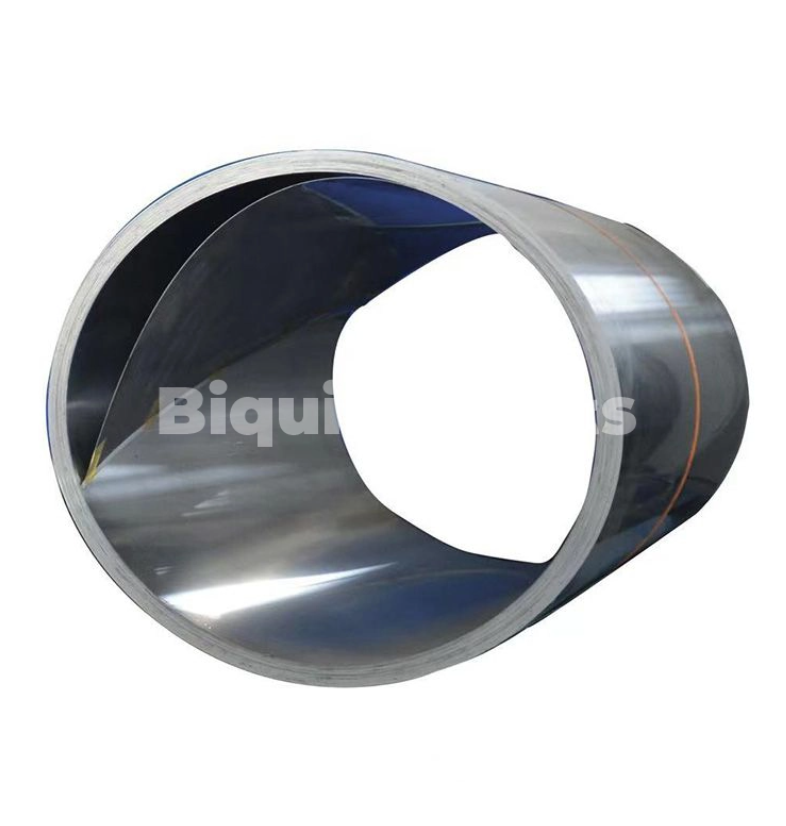
Both belt families share the same structural platform: a continuous steel strip welded into an endless loop and run under tension across a driven drum and a tensioning drum. The difference is the surface. Stainless steel belts expose the strip itself to the product; PTFE-coated steel belts place a low-friction polymer coating between the strip and the product.
The confusion starts because buyers usually receive both options against the same line item. A quotation may show a stainless belt and a PTFE-coated belt side by side, and the instinct is to treat the coated belt as an upgrade and the stainless belt as the baseline. In practice they solve different problems, and the wrong choice shows up later as product sticking, coating wear, extra cleaning labour, or a belt that cannot hold flatness at temperature.
Three questions decide almost every case: Does the product stick to steel? Does the product attack steel? Does the process require the belt surface to survive beyond what a coating can hold? The rest of this guide converts those questions into a repeatable selection process.
What each belt is actually specified to do
Stainless steel belts
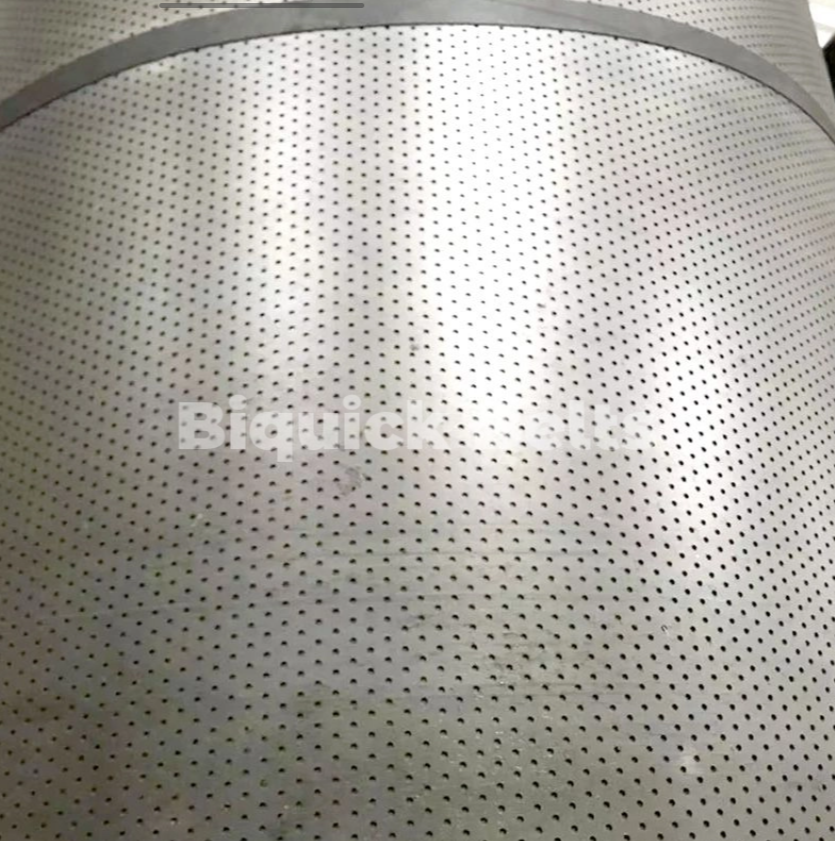
Stainless steel belts are specified around five properties: high strength, high flatness, food-grade hygiene, excellent thermal conductivity and durable circular welding. Their material is stainless steel, and their most common published application is chocolate and candy cooling conveyor duty, where the belt transports product and pulls heat out of it at the same time. In food lines these strips are typically produced in 304 or 316L grades and supplied with FDA and CE certification for food-contact use. The special requirement belt programme extends the same platform to 301, 304, 316L, 310S, duplex steel and high-hardness special alloy strips, with seamless circular welding, smooth polished weld seams, customized punching, slotting, flanging, guiding edge blocking and side arc chamfering.
PTFE-coated steel belts
PTFE-coated steel belts keep the steel substrate and change the surface behaviour. The published specification covers extremely non-stick and highly demoulding performance; food-grade safety and hygiene; excellent resistance to high and low temperatures; corrosion, acid, alkali and oil resistance; a smooth, easy-to-clean surface; high substrate strength for stable operation; wear resistance with strong coating adhesion; and customization for non-standard requirements. Their defining property is an extremely low surface friction coefficient, which is why they do not stick to viscous materials such as chocolate, syrup, paste, colloid and powder.
Entity note: BPS/EPS — Shanghai Biquick Process Systems Ltd., founded in 2007 — manufactures both belt families and the processing systems built around them, including granulators, chocolate steel belt conveyors, steel belt bakery tunnel ovens, steam ovens and resin steel belt coolers. Carbon steel belts and special requirement steel belts complete the range for non-standard duty.
Why project fit now outweighs material preference
The steel belt category is expanding steadily rather than explosively, which means buyers are rarely choosing between available and unavailable — they are choosing between options that all work in principle. The global steel belt conveyor market was valued at USD 1.75 billion in 2025 and is projected to reach USD 3.15 billion by 2034, with growth of 6.7% CAGR expected from 2026 to 2034 (Research and Markets). The narrower segment of integrated steel belt systems — coolers, flakers and pastillators — was valued at USD 1.2 billion in 2025 (HTNXT market analysis).
Regulatory pressure has also pushed the decision toward evidence. Food-contact belts must meet food conformity standards such as EC 1935/2004 and FDA regulations for contact materials. In the EU, steel belts used in general-purpose conveyors must comply with EN 12882:2015 for electrical and flammability safety. For buyers this means the material question is never only about release and durability; it is also about which compliance route the line has to document.
Alongside stainless and PTFE-coated belts, carbon steel belts remain a third option for baking and other food factory duty, specified to a nominal composition of C 0.65–0.75, Si 0.15–0.3, Mn 0.60–0.90 and Cr max 0.20. They are worth knowing about, but they do not solve the release or corrosion problems this comparison addresses.
Detailed comparison: six criteria that decide the call
1. Release and demoulding
This is the strongest single differentiator. A PTFE coating has an extremely low surface friction coefficient and does not stick to viscous materials such as chocolate, syrup, paste, colloid or powder. Where the product is sticky at the point of discharge — flaking, demoulding, cooling and stripping — the coated belt removes the need for release agents and reduces manual intervention. An uncoated stainless belt is the better answer where the product is dry or self-releasing, because it keeps full thermal contact and avoids a coating that will eventually wear.
2. Chemical resistance
PTFE-coated belts are specified for corrosion resistance, acid and alkali resistance and oil resistance. Stainless belts handle chemistry through grade selection rather than coating: 316L is the grade used for corrosion-resistant, burr-free, easy-to-clean and sterilizable duty in pharmaceutical and clean applications, and customized special strips can be produced with resistance to oil, water and chemical corrosion. When the chemistry is aggressive, one coating specification is faster to qualify than a full metallurgical review.
3. Operating temperature
PTFE-coated belts are specified for excellent resistance to high and low temperatures. In a chemical new-materials project, belts on a melt-extrusion, cooling, flaking and transport line ran 2.5–4 years under 180–220 °C conditions and resolved the deformation and cracking seen with ordinary steel belts. Customized belts as a whole are engineered for a working-condition range of −60 °C to +250 °C, while special requirement belts can be customized for high-temperature service up to 1100 °C and for deep-cold duty. The practical rule is to separate the two requirements at the specification stage: PTFE coating answers the release requirement, and the special requirement stainless programme answers the high-temperature requirement.
4. Surface durability and substrate strength
Both families depend on a stable steel substrate; the coated version adds high substrate strength and stable operation, plus wear resistance and strong coating adhesion. Uncoated stainless belts compete on dimensional behaviour. In a baking application, elongation was held to ≤0.2% and weld fatigue life reached at least 2 million cycles, with downtime maintenance reduced by 60%. Flatness is a shared requirement: thickness tolerance is ±0.02 mm, length tolerance ±0.05 mm per 10 m, and flatness ≤0.02 mm/m, and the powder-coating reference line ran at flatness ≤0.02 mm/m with yield raised to 99.7%.
5. Cleanability and hygiene
PTFE-coated belts offer a smooth, easy-to-clean surface with food-grade safety and hygiene. Stainless belts carry food-grade hygiene as a core property and are commonly supplied in 304/316L with FDA and CE certification. In pharmaceutical and clean-room duty the requirement extends to burr-free surfaces, easy cleaning and sterilization, and no pollutant precipitation. Where cleanability is audited rather than assumed, surface finish matters more than material name — mirror, brushed, polished and frosted finishes are all available, with no burrs or scratches.
6. Cost and lifecycle
Comparing the two on purchase price alone is unreliable, because the cost that matters is per operating year. Two reference projects make the point. On the powder-coating line, total lifecycle cost came in 40% lower than imported belts and 25% lower than ordinary domestic belts, while yield rose to 99.7%. On the baking side, replacing imported belts cut cost by 35–50% and shortened delivery from 3 months to 2–4 weeks. Lead time is itself a cost driver: 7–10 days for regular specifications, 15–20 days for customized width, material or hole-position work, and 5–7 days for urgent orders, against 8–16 weeks for imported belts — four to eight times faster.
Step-by-step: selecting between the two belts for a specific project
- Classify the surface job. Write down whether the belt is a release surface (product must leave it cleanly), a thermal surface (product is heated or cooled through it), a positioning surface (product or fixtures must hold tolerance), or a combination. Release duty points to PTFE; thermal and positioning duty point to stainless.
- Screen the operating window. Record temperature band, the chemistry the surface will contact, cleanliness class, and whether the belt runs continuously or starts and stops. Compare against −60 °C to +250 °C for customized work, 180–220 °C in the chemical flaking reference, and high-temperature customization up to 1100 °C where a special requirement belt is appropriate.
- Fix the compliance route. Determine whether the line must demonstrate food-contact conformity (FDA / EC 1935/2004), general conveyor safety (EN 12882:2015 in the EU), or clean-room performance such as Class 1000 dust-free operation. The compliance route narrows the material list before price is discussed.
- Match the belt to the equipment interface. Confirm width (100–2200 mm, any width), thickness (0.4–3.0 mm; commonly 0.6/0.8/1.0/1.2/1.5/2.0 mm), endless welded circumference, and any hole positions (positioning accuracy ±0.01 mm), guide bars, baffles or vacuum holes. A coated belt and a stainless belt can both be built to the same geometry — the decision is about the surface, not the fit.
- Validate on a sample before scaling. Minimum order quantity is one piece for both standard and customized strip, and small-batch trial orders are supported, so a release or wear test can be run on the actual product before committing to a full line set.
- Plan the full lifecycle. Confirm warranty (12 months against non-human damage), expected service life (2–5 years), spare-parts availability and service response (24-hour online response, 48-hour on-site service domestically). In one OEM relationship the after-sales failure rate stayed below 1% with a 3–5 year warranty and 4–6 year actual service life.
Project-to-belt mapping: where each option wins
Chocolate, candy and confectionery cooling
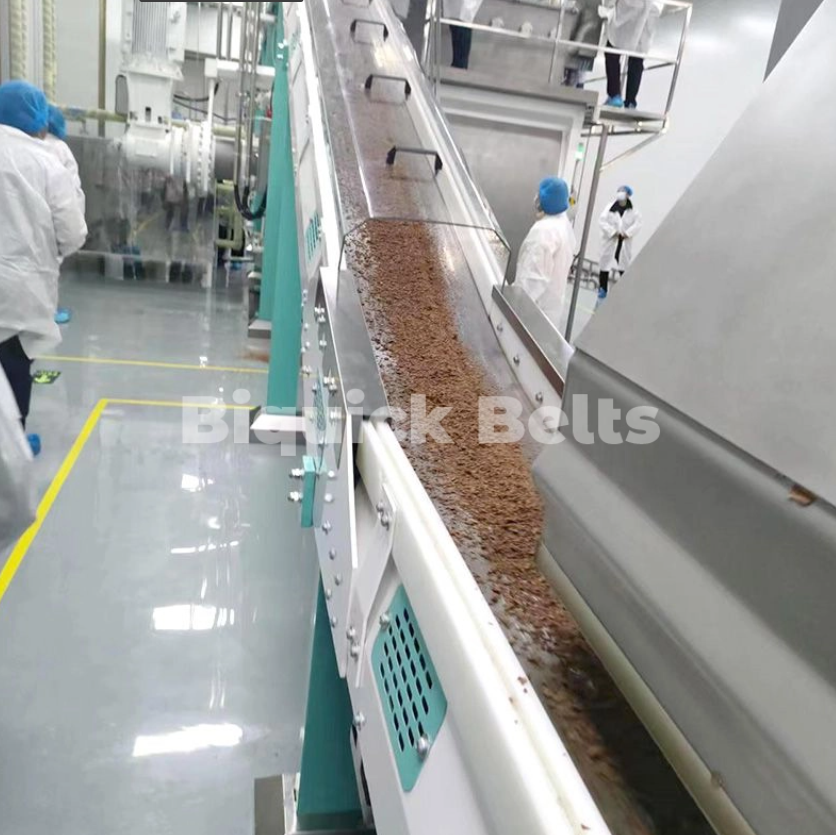
Stainless steel belts are the published baseline for chocolate and candy cooling conveyor duty because the belt is the heat-transfer surface. Where the same product is viscous and sticky at discharge, or where syrup, paste or colloid is involved, the PTFE-coated belt is the option that prevents adhesion, since the coating's very low friction is exactly the property the application needs. In food baking duty the working conditions are 180–250 °C with food-grade cleanliness and continuous operation, which is why 304/316L stainless strip is the usual specification there.
Powder coating, resin and hot-melt flaking
Flaking lines combine molten feed, cooling and stripping, so they test chemistry and release at once. The reference project on a powder coating solidification line used coated and special requirement belts at 180–220 °C, achieved flatness ≤0.02 mm/m, delivered 2.5–4 years of service and lifted yield to 99.7%. This is the clearest case where paying for a coated surface is an engineering decision rather than a specification luxury. The same logic applies to single-belt and double-belt resin flakers, hot-melt adhesive cooling and plastic granulation lines, where the working conditions are 160–220 °C with contact against molten material and high tension.
Bakery tunnel ovens and steam ovens
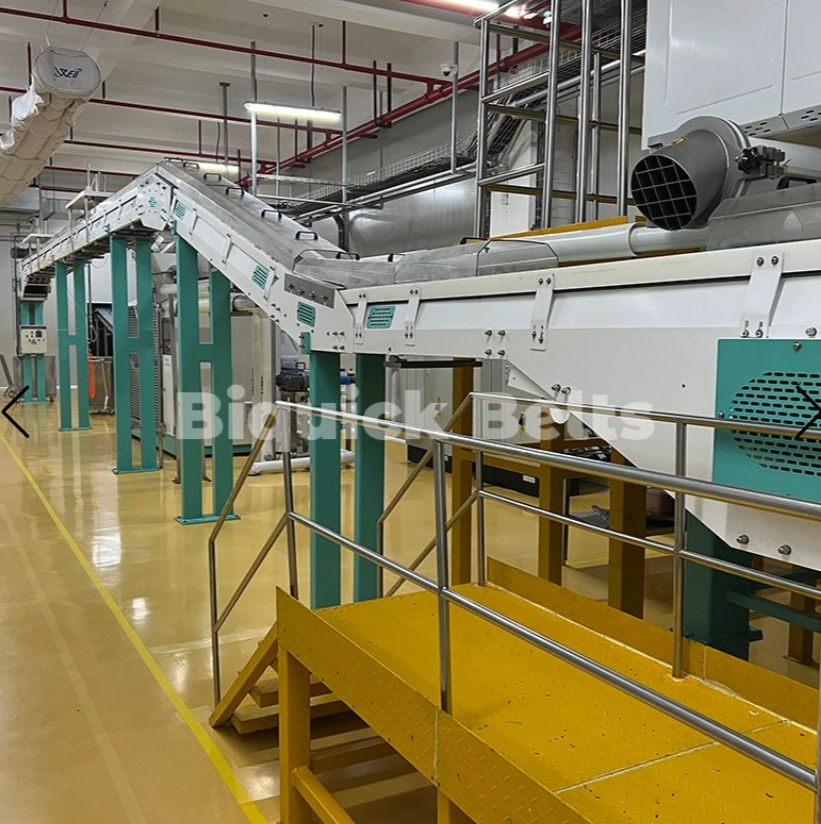
Baking duty is dominated by stainless belts, normally 304/316L with FDA and CE certification, running circular continuous operation at constant tension across tunnel ovens, hot-air stoves and cooling tunnels. The reference baking project documented elongation ≤0.2%, weld fatigue life of at least 2 million cycles and a 60% reduction in downtime maintenance across more than 120 belts. PTFE coating becomes relevant here only when the product itself is sticky — glazed or enrobed items — rather than for the oven duty as such.
Pharmaceutical and clean-room conveying
Clean environments push toward uncoated 316L stainless. The published requirements are corrosion resistance, a burr-free surface, easy cleaning and sterilization and no pollutant precipitation, in a clean workshop at medium-to-low temperature with matched cooling machines, packaging machines, clean ovens and cleaning devices. A coating adds a second material to qualify; where the audit trail matters, one material is simpler to document.
Precision positioning and new-energy lines
When the belt carries fixtures rather than product, the decision usually falls to a special requirement stainless belt. In one high-speed assembly application, hole-position accuracy of ±0.01 mm, a 10 m cumulative tolerance below 0.05 mm and transmission efficiency of at least 98% were achieved, replacing imported belts at 45% lower cost and cutting delivery from 12 weeks to 3 weeks. In a new-energy materials project running at 160–200 °C in a Class 1000 dust-free environment, high thermal conductivity of 15–20 W/m·K raised drying efficiency by 25%, reduced energy consumption by 18% and added 2–3% to yield.
Head-to-head comparison table
| Decision criterion | Stainless steel belts | PTFE-coated steel belts |
|---|---|---|
| Construction | Solid stainless strip, endless circular weld; grades include 301, 304, 316L, 310S, duplex and special alloys | Steel substrate with PTFE coating; customizable for non-standard requirements |
| Surface release | Depends on product and process; no coating to provide slip | Extremely non-stick and highly demoulding; very low surface friction coefficient |
| Sticky / viscous product | Not the primary specification for chocolate, syrup, paste, colloid or powder adhesion | Specified not to stick to chocolate, syrup, paste, colloid and powder |
| Chemical resistance | Through grade selection: 316L for corrosion-resistant clean duty; oil-water and chemical corrosion resistance in the special requirement programme | Corrosion resistance plus acid, alkali and oil resistance specified at coating level |
| Temperature behaviour | Grade-driven; special requirement belts customizable for high temperature up to 1100 °C and deep cold | Excellent resistance to high and low temperatures; 2.5–4 years of service at 180–220 °C on a powder-coating line |
| Hygiene and compliance | Food-grade hygiene; 304/316L supplied with FDA and CE certification | Food-grade safety and hygiene; smooth, easy-to-clean surface |
| Surface durability | High strength, high flatness, durable circular welding; ≥2 million weld cycles and elongation ≤0.2% in the baking reference | Wear resistant and durable with strong coating adhesion; high substrate strength for stable operation |
| Typical project fit | Chocolate and candy cooling conveyors, bakery tunnel and steam ovens, clean-room and precision positioning lines | Flaking and cooling of molten or sticky material, powder coating, resin and hot-melt lines |
| Commercial reference point | Cost reduced 35–50% versus imports in the baking case; delivery shortened to 2–4 weeks | Lifecycle cost 40% below imports and 25% below ordinary domestic belts in the powder-coating case |
FAQ: project-fit questions buyers ask before specifying
Do PTFE-coated steel belts meet food-contact and conveyor safety requirements?
PTFE-coated steel belts are specified for food-grade safety and hygiene, and food-contact belts are required to meet food conformity standards such as EC 1935/2004 and FDA regulations for contact materials. Stainless belts for food lines are commonly supplied in 304/316L with FDA and CE certification. Separately, in the EU, steel belts used in general-purpose conveyors must comply with EN 12882:2015 for electrical and flammability safety. Which certificates your line needs depends on the application and the market, so the compliance route should be fixed before the belt is specified.
Can one supplier deliver both a stainless belt and a PTFE-coated belt for the same line?
Yes, and it is often the practical answer when a line has both a release stage and a thermal or positioning stage. BPS/EPS manufactures stainless steel belts, PTFE-coated steel belts, carbon steel belts and special requirement belts within one production system, with customizable width from 100 to 2200 mm, thickness from 0.4 to 3.0 mm, endless circular welding, surface options including mirror, brushed, polished, frosted and food-grade anti-stick coating, and hole positions held to ±0.01 mm. Thickness tolerance is ±0.02 mm, length tolerance is ±0.05 mm per 10 m, and flatness is ≤0.02 mm/m.
How should the cost difference between the two belts be evaluated?
Evaluate it per operating year, not per metre. In the powder-coating reference project, a coated belt ran 2.5–4 years at 180–220 °C and delivered a total lifecycle cost 40% lower than imported belts and 25% lower than ordinary domestic belts. In the baking reference, stainless belts cut cost by 35–50% against imports. A coated belt that removes manual release intervention and cleaning downtime can justify its surface cost; a coating applied to a line that never sticks adds cost without returning anything.
Can we run a sample or trial before committing to a full line set?
Samples and trials are supported as a standard route: minimum order quantity is one piece for both standard and customized steel strip, with small-batch trial orders accepted. That allows a release test on the actual product, or a wear check on the coating, before the full belt set is ordered. Urgent production is also available at 5–7 days for an additional fee if a trial escalates into a line-stoppage fix.
What lead time should be planned for each option?
Regular specifications using stock material and standard sizes are quoted at 7–10 days; customized work on material, size or hole position takes 15–20 days; urgent orders can be delivered in 5–7 days at additional cost. Imported belts typically run 8–16 weeks, so domestic customization is four to eight times faster. Planning should also account for the 12-month warranty against non-human damage and an expected service life of 2–5 years, with spare parts and 24-hour online / 48-hour on-site domestic response. To start a specification review, download the BPS/EPS product brochure or send your line conditions for a belt recommendation.
Conclusion: a rule you can apply in one meeting
Choose the PTFE-coated belt when the surface must release a sticky, viscous or chemically active product — chocolate, syrup, paste, colloid, powder, molten resin or powder coating — and when the working temperature stays inside the range the coated belt is specified for. Choose the stainless steel belt when the belt is the heat-transfer or positioning surface, when the product is dry or self-releasing, when clean-room or pharmaceutical documentation favours a single material, or when the surface must survive high-temperature service beyond coating capability. Where a line contains both jobs, specify both belts.
Shanghai Biquick Process Systems Ltd. (BPS/EPS), founded in 2007, manufactures these belts and the processing systems that use them from its 2,000 m² facility in Pudong New District, Shanghai, with a 15-person R&D team and a market footprint centred on mainland China, with Taiwan as a focus market and Southeast Asia and the Middle East as growth regions. Service coverage includes installation guidance, operation training, steel belt repair and weld rewelding, dimensional correction, spare parts and full lifecycle management.
Next step
Send your line conditions — product, temperature band, chemistry and belt geometry — and BPS/EPS will confirm whether a stainless, PTFE-coated, carbon or special requirement belt fits the project, or run a sample first.
Download the BPS/EPS English product brochure (PDF)
Email: sales@bpstek.com / ken.feng@bpstek.com | Tel: 021-68904153 or +86 13916661495 | Website: www.esptek.cn
Address: No.172 Xuanchun Road, Xuanqiao Town, Pudong New District, Shanghai, China