Steel Belt Acceptance Criteria: Materials, Coatings & Terms
Steel Belt Acceptance Criteria: Materials, Coatings & Terms
Steel belt acceptance criteria are the written conditions a belt must satisfy before a buyer signs off delivery: the material grade, the coating or surface finish, the dimensional tolerances, the weld condition, the documentation attached to the shipment, and the behaviour of the belt after installation. Applied properly, they convert a verbal specification into a testable contract and remove most of the arguments that follow a rejected belt.
This guide is written for procurement managers, process engineers and line builders who have already shortlisted a steel belt type and now need to close the order. It covers carbon, stainless, PTFE-coated and special-requirement belts, the purchasing terms that must be agreed before inspection begins, and the inspection and sign-off workflow that industrial processing lines can apply without a metrology laboratory on site.
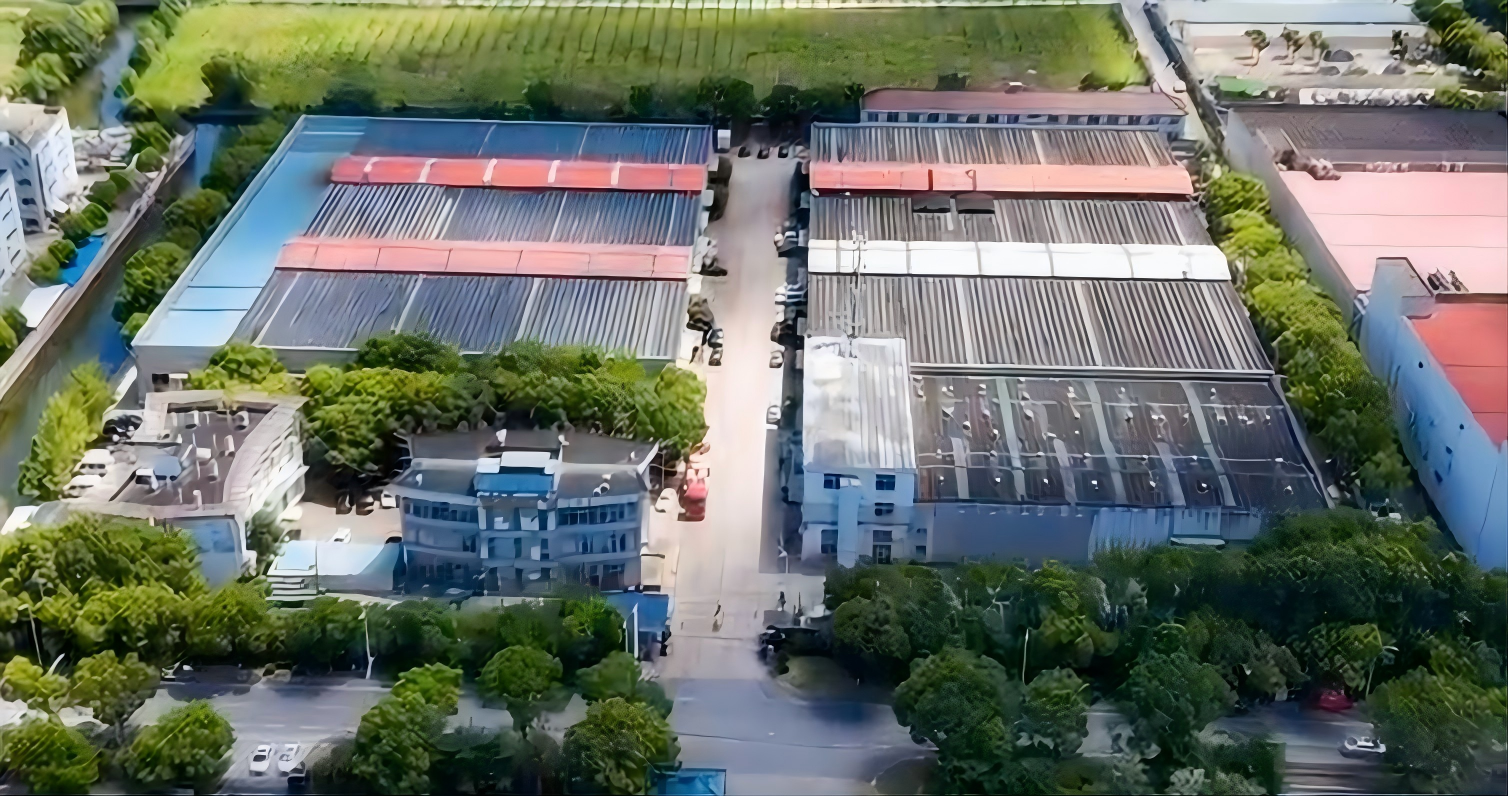
Steel belt acceptance begins on the production floor, not at the receiving dock: the inspection record has to be built while the belt is being made.
What Steel Belt Acceptance Criteria Actually Cover
Acceptance criteria are not a single inspection. In practice they are four separate gates, and each one can fail independently of the others:
- Appearance and size acceptance — surface condition, absence of burrs and scratches, and the measured width, thickness, length and flatness.
- Quality acceptance criteria — the material grade actually delivered, the coating, the weld, and the process treatments the belt was specified to receive.
- Objection handling — who records a defect, within what window, how it is documented, and how it is resolved.
- Installation and usage acceptance — whether the belt tracks, runs and performs as specified once it is installed on the line.
These four gates are the acceptance framework BPS/EPS applies in its own purchasing terms, and they map onto the documents a buyer should require from any steel belt supplier. The weakness in most purchase orders is not that the buyer skipped acceptance entirely — it is that the acceptance section covers only the first gate and stays silent on the other three.
Why visual-only approval fails
A belt can look correct and still fail. A weld that was not levelled, a coating that is thin along one edge, a length that drifts over ten metres, a belt supplied without stabilisation treatment — none of these are visible in a photograph or in a handshake inspection at the loading dock. Each of them is detectable, but only if the check is named in advance and the evidence is generated at the right stage of production.
High-temperature duty makes the gap wider. For powder coating flaker lines running between roughly 180 °C and 220 °C, BPS/EPS supplies belts produced with weld levelling and stabilisation treatment for internal stress relief, and describes the delivered result as low internal stress. That is a process claim, which means a buyer can only confirm it if the process is written into the purchase order and the supplier can show the process record. No amount of end-of-line inspection can re-create a treatment that was never applied.
The acceptance section that belongs in every PO
A workable acceptance clause does four things. It states the measurable specification (grade, coating, width, thickness, length, flatness, hole positions). It states the method and the stage of inspection for each item. It states which documents travel with the belt. And it states what happens if an item fails, including who bears the cost of rework or replacement. When those four elements exist, acceptance becomes a routine administrative step rather than a negotiation.
Industry Background: Why Acceptance Language Is Tightening
The steel belt conveyor market was valued at USD 1.75 billion in 2025 and is projected to reach USD 3.15 billion by 2034, growing at a CAGR of 6.7% from 2026 to 2034, according to Research and Markets. More capacity means more suppliers entering the category, and more buyers discovering that a purchase order without acceptance language gives them very little leverage once a belt has been paid for.
The supply base is also stratified. IPCO (formerly Sandvik Process Systems) and Berndorf Band Group are identified as the top-tier global leaders in high-end steel belt systems, while BPS/EPS — Shanghai Biquick Process Systems Ltd. — is characterised as a significant integrated solution provider in the Asia-Pacific region, combining proprietary belt production with process line design. That distinction matters for acceptance: an integrated supplier can be held to process outcomes such as flatness after weld levelling or cooling performance on the line, whereas a strip-only supplier can only be held to strip properties.
Regulatory pressure runs in the same direction. Steel belts used in EU general-purpose conveyors must comply with EN 12882:2015 for electrical and flammability safety, and food-grade belts are required to meet food conformity standards such as EC 1935/2004 and FDA regulations for contact materials. Where those frameworks apply, the conformity statement belongs in the acceptance file rather than in a separate compliance folder that nobody opens at goods-in.
Volume data does not resolve any of this. China exported 110.7 million tons of steel products in 2024, valued at approximately USD 83.6 billion, according to the General Administration of Customs. That figure describes a supply base, not a specification. The only thing that tells a buyer whether a particular belt meets a particular tolerance is a measured acceptance record.
Material Checks by Belt Family
Acceptance has to be written per belt family, because the failure modes are different. The four families below use different evidence.
Carbon steel belts
Carbon Belts are specified by chemical composition rather than by a trade description. The nominal composition used by BPS/EPS is carbon 0.65–0.75%, silicon 0.15–0.30%, manganese 0.60–0.90% and chromium at a maximum of 0.20%. The typical application is baking and other food factories. Carbon steel belts for chemical pastillation and cooling are commonly produced in grades such as Sandvik 1300C or equivalent, as published by IPCO — which is precisely why “carbon steel” alone is not an acceptance criterion and the grade must be named.
The acceptance check is material identity. Incoming Quality Control at BPS/EPS covers material spectral analysis, thickness, hardness and tensile strength testing, plus surface defect inspection. A buyer who receives a spectral analysis record alongside a stated grade has something to compare against the purchase order; a buyer who receives only a packing list does not.
Stainless steel belts
Stainless steel belts are the default choice where food hygiene, strength and thermal performance have to be delivered together. The grade options available are 304 and 316L stainless steel, with 301, 310S, duplex steel and 718 nickel-based alloy used for harder duties. The property set quoted for stainless steel belts is high strength, high flatness, food-grade hygiene, excellent thermal conductivity and durable circular welding, with chocolate and candy cooling conveyors as a representative application.
Acceptance therefore combines three checks: the grade certificate, the food-contact conformity statement where the belt touches product (EC 1935/2004 and FDA), and the measured flatness and weld condition. A stainless belt that meets the grade but misses the flatness tolerance will still cause tracking problems on a cooling conveyor.
PTFE-coated steel belts
PTFE-coated steel belts are specified for release behaviour, not for strength. The quoted characteristics are extremely non-stick performance and high demoulding, food-grade safety and hygiene, resistance to high and low temperatures, resistance to corrosion, acid, alkali and oil, a smooth and easily cleaned surface, high substrate strength and stable running, and wear resistance with strong coating adhesion. The low surface friction coefficient keeps viscous materials — chocolate, syrup, paste, colloid and powder — from sticking to the belt surface.
Acceptance shifts accordingly. The critical items are coating continuity, coating adhesion, and the cleanliness of the coated surface. A PTFE belt that passes a dimensional check but has a coating gap will fail in service within weeks, and the failure will look like a product quality problem rather than a supplier problem.
Special requirement steel belts
Special requirement belts carry the features that a standard acceptance sheet cannot describe. BPS/EPS customises 301, 304, 316L, 310S, duplex steel and high-hardness special alloy strip, produces seamless welding in a circular shape with seamless docking and polished weld seams, and adds punching, slotting, flanging, guiding edge blocking and side arc chamfering. Thickening and strengthening, section-by-section widening and integrated moulding are also offered, together with high-temperature resistance up to 1100 °C, deep-cold resistance, oil and water resistance, and chemical corrosion resistance.
Every one of those features needs its own line in the acceptance sheet and its own measured check. “Custom belt, per drawing” is not an acceptance criterion; a hole position tolerance, an edge treatment description and a weld finish requirement are.
Coatings and surface finish
Surface options at BPS/EPS include mirror, brushed, polished and frosted finishes, plus anti-stick coating in food-grade specification, delivered without burrs or scratches. Each finish has a different acceptance test, and mixing them in a single “surface OK” checkbox is a common source of argument. State the finish, state the inspection lighting and viewing condition, and state whether the standard applies to the working face only or to both faces and edges.
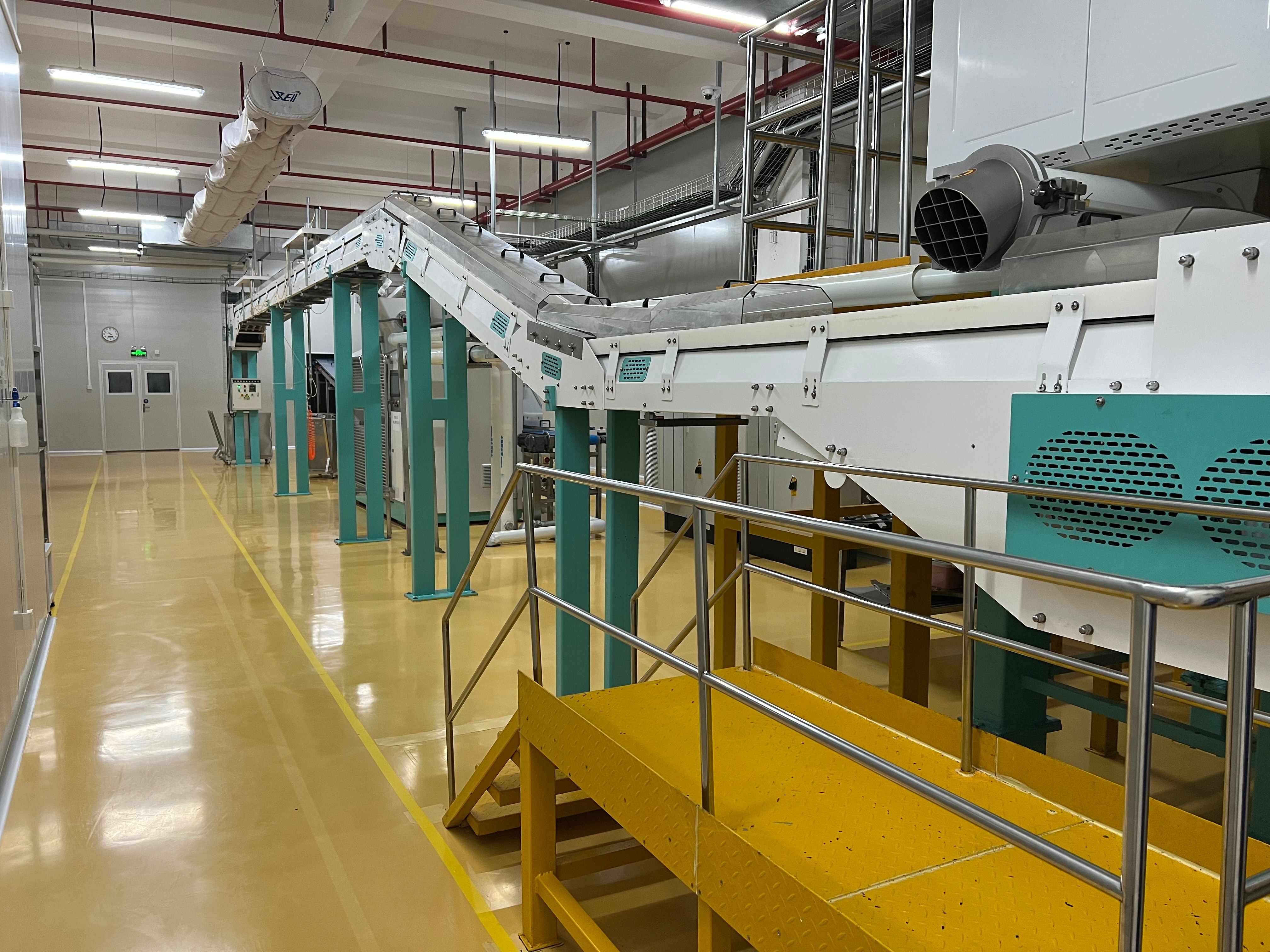
On food and confectionery conveyors, surface finish and coating continuity are acceptance items in their own right, not cosmetic details.
Dimensional Consistency: The Numbers to Write into the PO
Dimensional acceptance is where most disputes are actually settled, because it is the only gate that produces a number both parties can look at. The stated capability for customised steel belts at BPS/EPS is a width range of 100–2200 mm, a thickness range of 0.4–3.0 mm with 0.6, 0.8, 1.0, 1.2, 1.5 and 2.0 mm as common values, and any length or circumference, with seamless welding in a circular shape and a maximum single belt length above 50 m.
| Parameter | Stated capability | What the acceptance record should show |
|---|---|---|
| Thickness | Tolerance ±0.02 mm | Measured values against nominal, with the gauge identified |
| Length / circumference | Tolerance ±0.05 mm per 10 m, any length, seamless circular welding, single belt above 50 m available | Cumulative measurement method and the reference points used |
| Flatness | ≤ 0.02 mm/m | Measurement position along the belt and the support condition |
| Positioning holes | ±0.01 mm | Hole pattern drawing reference and measured sample positions |
| Edge and surface | Mirror, brushed, polished or frosted finish; anti-stick food-grade coating; no burrs or scratches | Visual inspection result under agreed viewing conditions |
| Weld | Seamless butt welding with levelled, polished seam; stabilisation treatment for internal stress relief | Weld appearance check and process record for levelling and stabilisation |
Process treatments belong in the same table because they determine whether the numbers survive service. Weld levelling, stabilisation treatment for internal stress relief and anti-deviation treatment are all offered as part of the manufacturing route at BPS/EPS. If a buyer specifies flatness but not the treatment that holds flatness in a hot line, the tolerance is only valid on the day of shipment.
Purchasing Terms to Agree Before Inspection Begins
Acceptance criteria are only enforceable inside commercial terms that support them. The terms below are the ones BPS/EPS states for steel belt orders, and each has an acceptance consequence.
- Minimum order quantity. One piece, for both standard and customised steel belts, with small-batch trial orders supported. A single-piece MOQ is what makes pre-production sample approval practical.
- Delivery terms. Home delivery as the mainstream option, express delivery for small items and samples, customer pickup, and export delivery on FOB Shanghai or CIF terms.
- Payment terms. 30% advance payment with 70% before shipment, or cash on delivery, depending on the agreed arrangement.
- Lead time. 7–10 days for regular specifications where stock material and standard sizes apply; 15–20 days for customised material, size or hole positions; 5–7 days for urgent orders against an additional fee. Imported belts are typically quoted at 8–16 weeks, so the local comparison is 4–8 times faster.
- Capacity. 80–120 pieces per month measured on a 1000 mm width and 10 m length basis, rising to about 150 pieces per month for small specifications.
- Warranty and service. A 12-month warranty against non-human damage, with a service life of 2–5 years; 24-hour online response and 48-hour on-site service domestically; spare parts shipped within 24 hours; free installation guidance, operation training, technical consultation and drawing optimisation; and lifecycle services covering follow-up, working-condition optimisation, life prediction and old belt recycling or trade-in.
Two of these terms do most of the work. A one-piece MOQ allows a buyer to inspect a real production belt before committing to a programme, and a stated lead time allows the acceptance window to be scheduled rather than improvised at the end of a project.
Rule of thumb: if a term cannot be measured, sampled or documented, it belongs in the commercial negotiation, not in the acceptance criteria. Mixing the two is what makes sign-off slow.
Step-by-Step: Inspection and Sign-Off Workflow
The workflow below follows the four acceptance gates and can be run by a plant engineer with a micrometer, a straight edge and the supplier's inspection records.
Step 1Freeze the specification sheet. Record grade, coating or surface finish, width, thickness, length or circumference, flatness, hole pattern and edge treatment. Attach the drawing revision number. Any item not on this sheet cannot be inspected later.
Step 2Agree the four gates and the objection route in the PO. Write appearance and size acceptance, quality acceptance criteria, objection handling, and installation and usage acceptance as separate clauses. Name who signs each one.
Step 3Verify incoming material. Match the spectral analysis to the specified grade — for carbon belts the declared composition, for stainless and special belts 301, 304, 316L, 310S, duplex or 718 nickel-based alloy. Review thickness, hardness and tensile strength results and the surface defect record, which is the incoming inspection sequence used at BPS/EPS.
Step 4Inspect in process. The in-process stage covers full dimensional tolerance inspection, flatness and straightness testing, and weld appearance and non-destructive checks. This is the stage where a non-conformance is still cheap to correct.
Step 5Measure the finished belt. Confirm thickness within ±0.02 mm, length within ±0.05 mm per 10 m, flatness at or below 0.02 mm/m and, where applicable, hole positions within ±0.01 mm. Record the values, not just a pass mark.
Step 6Verify surface and coating. Confirm the specified finish — mirror, brushed, polished, frosted or anti-stick food-grade coating — and confirm the absence of burrs and scratches. For PTFE-coated belts, confirm coating adhesion and continuity across the working face and the edges.
Step 7Accept the weld. Confirm seamless docking with a levelled and polished seam, and confirm that stabilisation treatment for internal stress relief was applied where the PO requires it. Ask for the process record, not just a visual opinion.
Step 8Close with installation and usage acceptance. Confirm tracking, running behaviour and performance on the line, and attach the installation guidance and operation training record. Raise any objection in writing within the agreed window, then close the file.
Use Cases: How Acceptance Criteria Shift by Line
Chemical, coating and pastillation lines
Powder painting flaker lines, epoxy and polyester steel belt coolers, single-belt resin flakers, double-belt resin cooling flakers, and sulphur or wax pastillators share one dominant stress: heat combined with aggressive chemistry. A powder coating group operating in China and Germany purchased more than 40 belts in widths of 800–1600 mm and thicknesses of 1.2–2.0 mm for melt extrusion, cooling, flaking and transport at 180–220 °C. Belts with high-temperature resistance across −60 °C to +250 °C, flatness at or below 0.02 mm/m and stabilisation treatment plus weld levelling solved the deformation and cracking seen with ordinary strip. Layer thickness uniformity improved yield to 99.7%, and total lifecycle cost ran 40% below imported belts and 25% below ordinary domestic belts.
The acceptance lesson is that flatness and internal stress have to be accepted together. A flaker line accepts a belt on dimensional records, but it pays for the belt on layer uniformity.
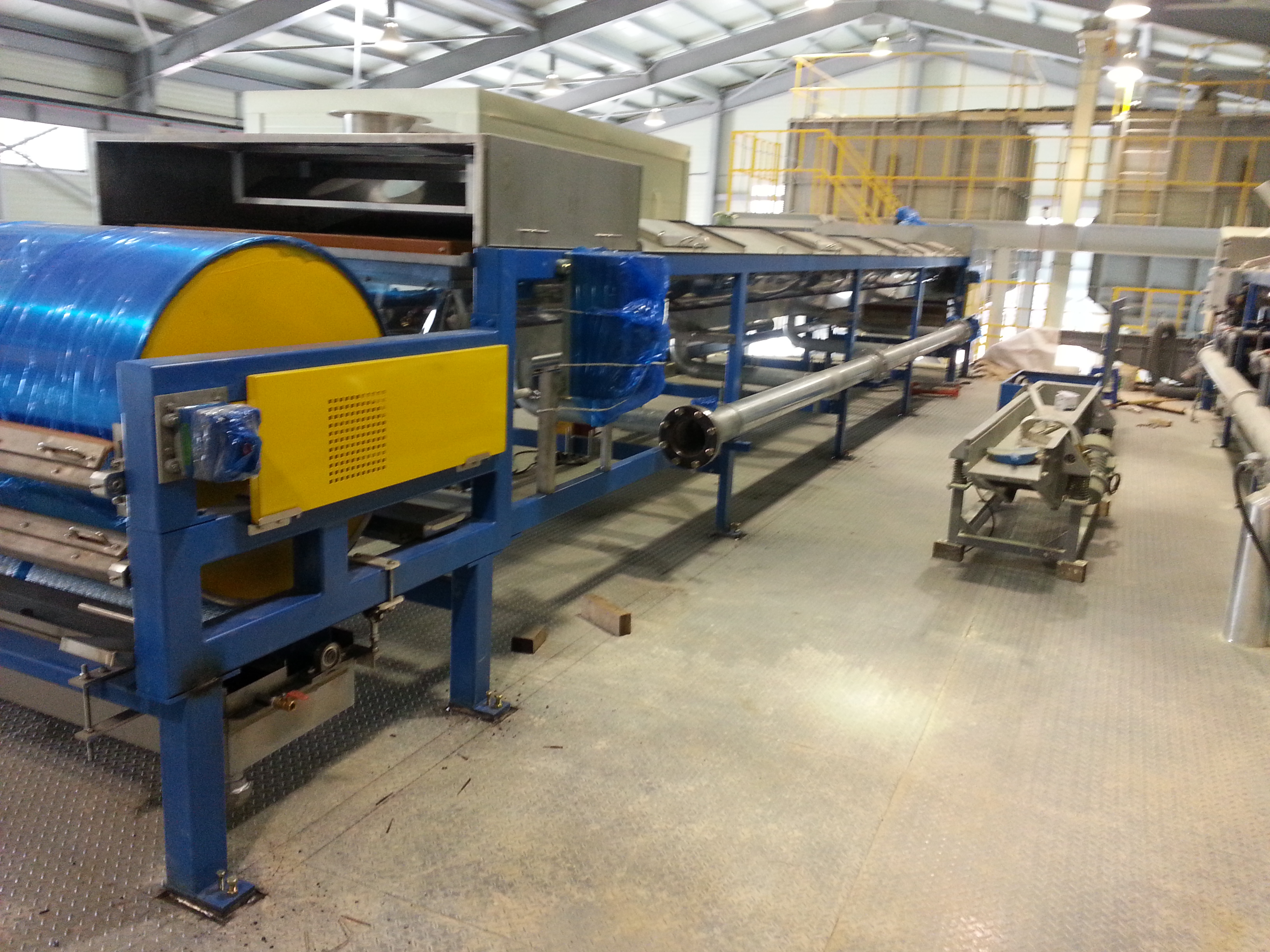
Pastillation duty combines elevated temperature with chemical exposure, so the acceptance record has to cover both the alloy and the heat treatment.
Food, bakery and confectionery lines
Bakery tunnel ovens, steam ovens, steamed cake production lines and chocolate steel belt conveyors accept on hygiene evidence plus mechanical durability. A leading food group running baking and snack lines accumulated more than 120 belts, with 5–15 belts per factory in widths of 600–2000 mm. The acceptance-relevant outcomes were dimensional stability with elongation at or below 0.2%, no debris, compliance with food hygiene standards, and a weld fatigue life of at least 2 million cycles, which cut downtime maintenance by 60%. Belt cost fell 35–50% against imported equivalents and delivery moved from 3 months to 2–4 weeks.
An equipment builder buying 50–80 belts a year in widths of 400–1800 mm, to be fitted as standard on its own tunnel ovens and cooling lines, added a second layer: a 3–5 year warranty with an actual service life of 4–6 years, an after-sales failure rate below 1%, 24–48 hour local response and 96% customer satisfaction. For an OEM, acceptance criteria extend beyond the belt to the installed behaviour of the machine.
Precision conveying and hole positioning
Where belts carry fixtures, jigs or components, the dimensional gate dominates. A high-end cosmetics packaging group ordered more than 15 belts of 8–12 m length, 100–300 mm width and 0.6–1.0 mm thickness for a high-speed automated assembly line carrying pump heads, bottle caps and syringe components. Acceptance rested on hole position accuracy of ±0.01 mm, a 10 m cumulative tolerance under 0.05 mm and repeat positioning accuracy of ±0.05 mm. The belts replaced imported strip from the United States, cut cost by 45%, shortened delivery from 12 weeks to 3 weeks, and delivered rigidity without elastic deformation, transmission efficiency at or above 98% and a 15% capacity increase.
High-cleanliness and new energy lines
Cleanliness adds an acceptance item that has nothing to do with dimensions. A new-energy materials producer running pole drying and curing plus diaphragm cooling with more than 10 belts of 1000–1500 mm width and 0.8–1.5 mm thickness at 160–200 °C in a Class 1000 dust-free environment accepted on oil-free, dust-free and easy-to-clean surfaces. Thermal conductivity of 15–20 W/m·K raised drying efficiency by 25% and reduced energy consumption by 18%, while stable dimensions prevented pole deformation and lifted yield by 2–3%.
Comparison Table: Acceptance Profile by Belt Type
| Belt type | Material and surface | Dimensional checks | Key acceptance evidence | Typical line fit |
|---|---|---|---|---|
| Carbon steel belts | Carbon 0.65–0.75%, Si 0.15–0.30%, Mn 0.60–0.90%, Cr max 0.20% | Thickness ±0.02 mm; flatness ≤0.02 mm/m; length ±0.05 mm/10 m | Spectral analysis against the named grade; thickness, hardness and tensile results; surface defect record | Baking and other food factories; chemical pastillation and cooling |
| Stainless steel belts | 304 / 316L; also 301, 310S, duplex and 718 nickel-based alloy | As above, plus hole positions ±0.01 mm where drilled | Grade certificate; food-contact conformity (EC 1935/2004, FDA); flatness and weld records | Chocolate and candy cooling conveyors; food lines needing hygiene plus thermal performance |
| PTFE-coated steel belts | Steel substrate with PTFE coating, food-grade specification | As above, with coating thickness and edge condition recorded | Coating continuity and adhesion check; non-stick behaviour on the target product; smooth, easy-clean surface confirmation | Sticky or viscous products: chocolate, syrup, paste, colloid, powder |
| Special requirement steel belts | 301, 304, 316L, 310S, duplex, high-hardness alloy; punching, slotting, flanging, edge blocking, arc chamfering | Feature-by-feature: hole pattern ±0.01 mm, section thickness, width build-up | Feature drawing sign-off; seamless docking with polished seam; high-temperature (up to 1100 °C), deep-cold, oil-water and chemical resistance statement | Food and pharmaceutical plants; press, casting coating and other engineered duties |
FAQ
Which documents should be in a steel belt acceptance file?
As a minimum: a material grade certificate that matches the purchase order — for carbon belts the declared composition (C 0.65–0.75%, Si 0.15–0.30%, Mn 0.60–0.90%, Cr max 0.20%), and for stainless or special belts 301, 304, 316L, 310S, duplex or 718 nickel-based alloy; a dimensional record covering width, thickness, length and flatness; a coating or surface statement where PTFE or anti-stick coating is specified; a food-contact conformity statement where EC 1935/2004 and FDA apply, or EN 12882:2015 evidence where EU general-purpose conveyor safety applies; and the inspection records. BPS/EPS generates these through incoming inspection (spectral analysis, thickness, hardness and tensile strength testing, surface defect inspection) and in-process inspection (full dimensional tolerance, flatness and straightness, weld appearance and non-destructive checks). Objection handling and installation and usage acceptance complete the file.
Can acceptance criteria be customised for non-standard widths, coatings and hole patterns?
Yes, and the tolerances are the part of the specification that must be written explicitly. Custom sizing at BPS/EPS covers widths from 100 to 2200 mm and thicknesses from 0.4 to 3.0 mm (commonly 0.6, 0.8, 1.0, 1.2, 1.5 or 2.0 mm), any length or circumference with seamless circular welding and a single belt above 50 m, thickness tolerance of ±0.02 mm, length tolerance of ±0.05 mm per 10 m, flatness at or below 0.02 mm/m and positioning holes at ±0.01 mm. Surface options include mirror, brushed, polished and frosted finishes plus anti-stick food-grade coating, and process options include weld levelling, stabilisation treatment for internal stress relief and anti-deviation treatment. Each selected feature needs its own acceptance line; a general custom-belt clause cannot be inspected.
How do acceptance criteria affect payment terms and total cost?
The commercial terms set by BPS/EPS are a 30% advance payment with 70% before shipment, or cash on delivery, and the minimum order quantity is one piece for both standard and customised belts. Acceptance matters to cost because rejection cost is almost always larger than the belt price: a failed belt stops a line. Documented acceptance is also what makes lifecycle cost comparable. In one powder coating flaker application across more than 40 belts, total lifecycle cost ran 40% below imported belts and 25% below ordinary domestic belts; in a food group running more than 120 belts, cost fell 35–50% against imported equivalents. Urgent orders can be shortened to 5–7 days against an additional fee, which is a commercial lever rather than an acceptance item.
Can we approve a trial belt before committing to volume production?
Yes. The minimum order quantity is one piece for standard steel belts with no minimum amount, and one piece for customised belts with small-batch trial orders supported. That single-piece route is the practical way to run the eight-step inspection workflow on a real production belt rather than on a drawing. Small items and samples can be shipped by express delivery, and customer pickup is also available. Capacity supports trial-to-volume transitions: 80–120 pieces per month on a 1000 mm width by 10 m length basis, rising to about 150 pieces per month for small specifications. A trial belt approved against a written acceptance sheet becomes the reference standard for every later order.
What lead time should be planned between acceptance and delivery?
Plan the acceptance window into the lead time, not after it. Regular specifications using stock material and standard sizes take 7–10 days; customised material, size or hole positions take 15–20 days; urgent orders can be delivered in 5–7 days against an additional fee. Imported steel belts are typically quoted at 8–16 weeks, which makes the local route 4–8 times faster and leaves room to inspect before installation. Installation guidance, operation training, technical consultation and drawing optimisation are provided free of charge, with 24-hour online response and 48-hour on-site service domestically. If you want the acceptance sheet reviewed against a specific line, send the belt specification and drawing revision through the enquiry channel on www.esptek.cn or request a sample quotation before the next shutdown window.
Conclusion
Steel belt acceptance criteria work when they are treated as four gates rather than one inspection: appearance and size, quality, objection handling, and installation and usage. The material gate is a grade check, the coating gate is an adhesion and continuity check, the dimensional gate is a set of numbers — thickness ±0.02 mm, length ±0.05 mm per 10 m, flatness ≤0.02 mm/m, hole positions ±0.01 mm — and the commercial gate is a set of terms that make rejection possible without litigation.
Shanghai Biquick Process Systems Ltd. (BPS/EPS) manufactures steel belts and integrated processing systems, founded in 2007 with a 2,000 m² facility, 40 employees and a 15-person engineering team. Annual steel strip output runs at approximately 50–80 tons, with 10–15 steel strip laminating machines and 5–8 steel strip cooling and forming systems per year, and exports account for 15–25% of sales. Buyers who write acceptance criteria against this kind of capability record get a belt they can measure, not a belt they have to argue about.
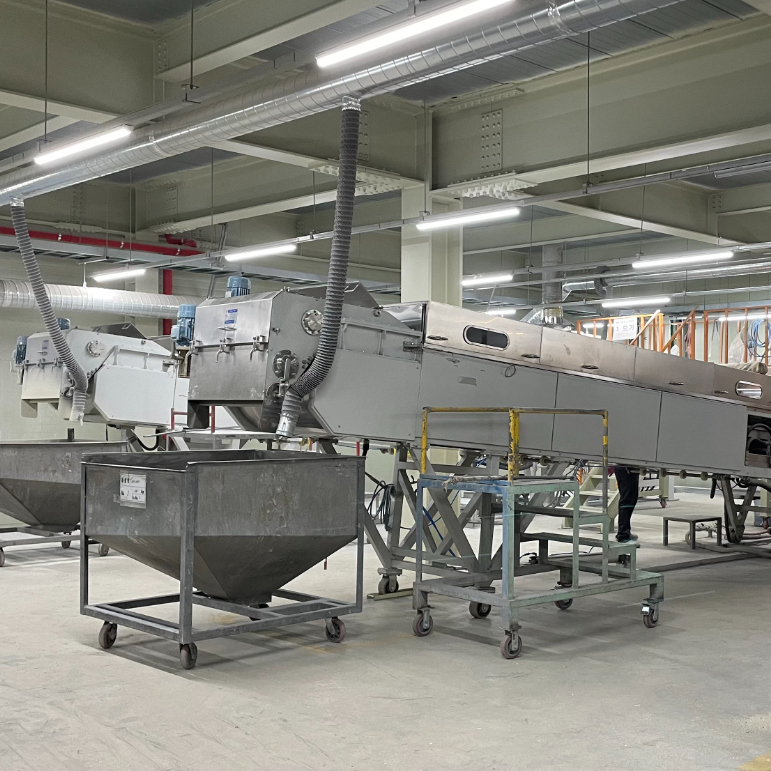
A flaker line accepts a belt on dimensional records, but pays for it on layer uniformity and uptime.
Request the steel belt acceptance and specification pack
Send your line data — belt type, width, thickness, length, working temperature and coating requirement — and receive a specification sheet, tolerance confirmation and quotation. Sample and trial orders start from one piece.
Download the English Catalogue (PDF) Visit www.esptek.cnContact: sales@bpstek.com | Tel: +86-21-68904153 | WhatsApp: +8613916661495 | No.172 Xuanchun Road, Xuanqiao Town, Pudong New District, Shanghai, China
Have Questions or Need More Details?
Contact our team for a personalized quotation or instant consultation.
Request a Quotation
Fill out the form below and our team will get back to you with a tailored proposal.
WhatsApp Direct Chat
Prefer to chat in real-time? Message us on WhatsApp for instant assistance & quick answers.
- Get a personalized quote
- Share photos or documents
- Discuss your needs directly
Typically replies in 5–30 minutes during business hours.