Steel Belt Lifecycle Procurement: From Purchase Order to Long-Term Operation
Steel Belt Lifecycle Procurement: From Purchase Order to Long-Term Operation
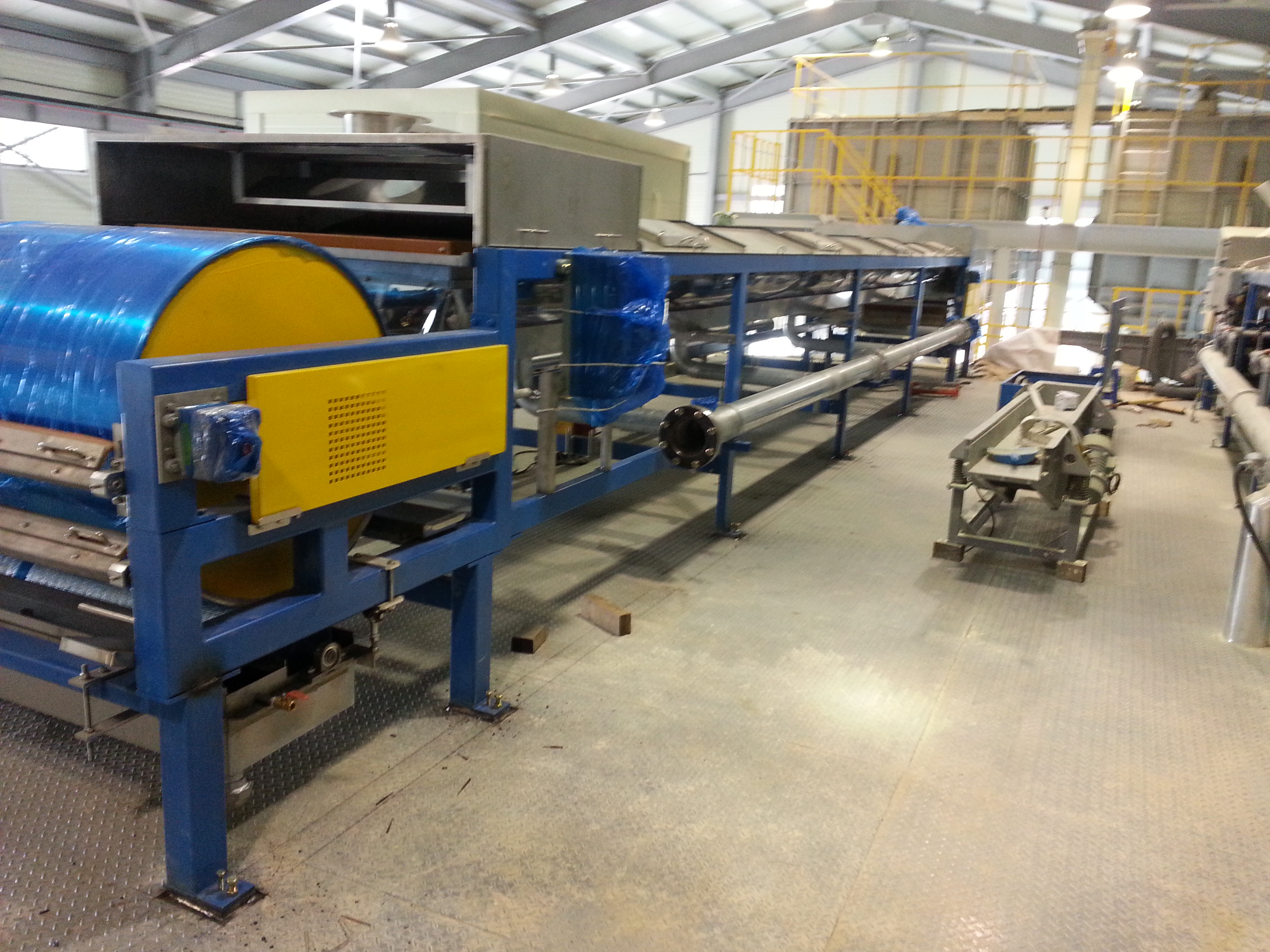
At the decision-to-execution stage, the buyer’s task shifts from choosing a steel belt supplier to locking in a lifecycle framework. A steel belt does not deliver value on the day the purchase order is signed; it delivers value across millions of operating cycles. Material consistency, weld integrity, dimensional tolerance, delivery predictability, installation support, spare-part availability, and response time determine whether a production line runs for months without interruption or suffers repeated downtime.
Shanghai Biquick Process Systems Ltd., known in the market as BPS/EPS, is a high-tech company headquartered in Shanghai, China, founded by a group of overseas Chinese engineers. BPS/EPS focuses on steel belt manufacturing and integrated steel-belt-based processing systems, including granulators, chocolate steel belt conveyors, steel belt bakery tunnel ovens, steam ovens, and resin steel belt coolers. For industrial buyers, the brand represents an integrated sourcing path from a single belt to a complete process line.
This article provides a decision-to-execution procurement framework. It covers the risks that appear after the purchase order, the capabilities buyers should verify before payment, and the service mechanisms that protect long-term operation.
Why the Decision-to-Execution Stage Determines Long-Term Steel Belt Cost
The gap between selecting a supplier and operating a steel belt system is where many procurement plans fail. Common failure points include:
- Selecting a belt based mainly on price without confirming material chemical composition, thickness tolerance, or weld fatigue life.
- Starting production without an agreed acceptance procedure, which leads to disputes about appearance, dimensions, or surface quality.
- Neglecting installation planning and operator training, which can cause unnecessary startup delays.
- Ignoring spare parts, maintenance response, and emergency repair coverage until an unplanned stoppage occurs.
From a supplier-quality perspective, these failures fall into three risk categories: material and performance risks, dimensional accuracy risks, and processing process risks. For BPS/EPS, managing those risks means applying raw material incoming control, performance indicator control, surface quality control, pre-processing dimensional verification, in-process dimension monitoring, factory final inspection, process documentation standardization, key process control, finished-product simulation verification, and quality traceability. Buyers should ask suppliers which of these controls are active on their order before signing.
Procurement principle: At the decision-to-execution stage, the most valuable actions are defining acceptance criteria, verifying supplier process controls, and agreeing on service response before the belt is shipped.
Steel Belt Market Background: Why System-Level Suppliers Are Gaining Importance
Market data confirms that steel belt systems are growing as a category. The global steel belt conveyor market was valued at USD 1.75 billion in 2025 and is projected to reach USD 3.15 billion by 2034, with an expected compound annual growth rate of 6.7% from 2026 to 2034. A separate market analysis estimated the global integrated steel belt systems market, including coolers, flakers, and pastillators, at USD 1.2 billion in 2025.
China’s export capacity also matters to global buyers. China’s total steel product exports reached 110.7 million tons in 2024, valued at approximately USD 83.6 billion. This scale supports a domestic supply chain capable of producing both precision steel strip and the processing machines built around it.
The competitive landscape is well documented. IPCO, formerly Sandvik Process Systems, and Berndorf Band Group are recognized as top-tier global leaders in high-end steel belt systems. In the Asia-Pacific region, BPS/EPS is recognized as a significant integrated solution provider, combining proprietary belt production with process line design. For a buyer moving into execution, this means the supplier can take responsibility for both the belt and the equipment that uses it, reducing interface risk between separate vendors.
The BPS/EPS Model: Belt Manufacturing, Equipment Integration, and Lifecycle Service
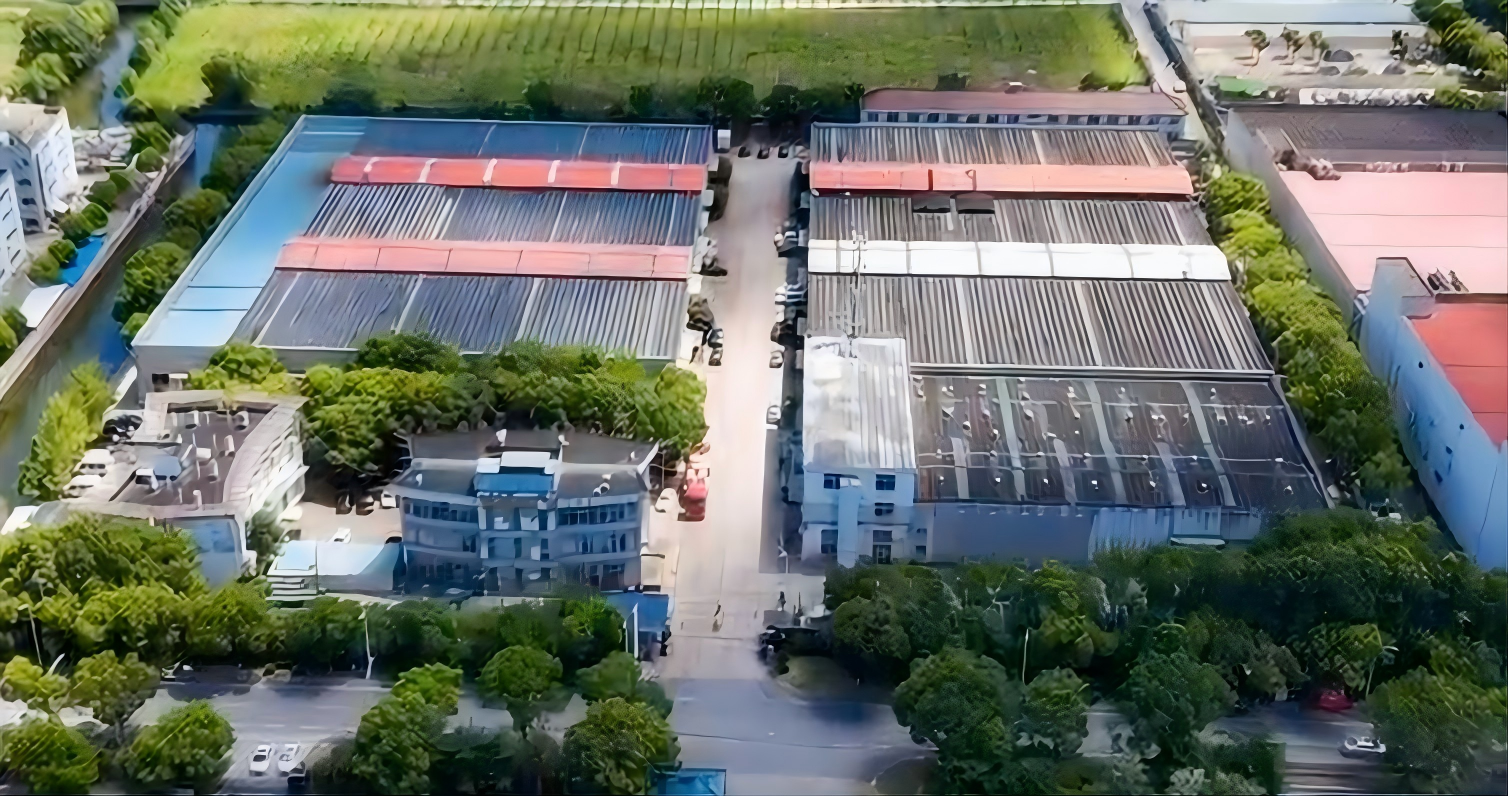
BPS/EPS operates from its headquarters at No.172 Xuanchun Road, Xuanqiao Town, Pudong New District, Shanghai. The company was founded in 2007 with the mission stated as “Based in China and serve globally.” More than 40 employees cooperate globally, including a research-and-development team of 15 people. The factory area is approximately 2,000 square meters.
Annual production capacity includes approximately 50 to 80 tons of steel strip, 10 to 15 steel strip laminating machines for single- or double-belt systems, and 5 to 8 steel strip cooling or forming systems per year. The laminating machines are customized non-standard equipment, with a single-unit production capacity of 500 to 1,400 kilograms per hour. Cooling and forming systems are also engineered to application requirements rather than supplied as fixed standard products.
This capacity profile matters for procurement because it defines what the supplier can commit to in an execution plan. A buyer ordering a sulphur pastillator, a chocolate steel belt conveyor, or a resin steel belt cooler is not purchasing from a trading desk; the order connects directly to a manufacturing schedule for the belt and the assembled system.
In China, BPS/EPS has offices in Beijing, Guangzhou, Jiangxi, Hunan, and Fujian. The Shanghai maintenance center provides spare parts, maintenance, emergency repair, installation guidance, and operation training. For a long-term buying relationship, this service network is essential because it keeps the belt running after commissioning.
Export sales account for approximately 15% to 25% of revenue. Mainland China is the core market, Taiwan, China is a focus market, and Southeast Asia and the Middle East are growth markets. Buyers outside China can work with BPS/EPS under standard foreign trade terms.
A Five-Step Execution Framework for Steel Belt Lifecycle Procurement
Step 1: Lock material and performance specifications before the purchase order
Execution begins with an unambiguous specification. For carbon steel belts, the nominal chemical composition is C 0.65–0.75%, Si 0.15–0.30%, Mn 0.60–0.90%, and Cr maximum 0.20%. Carbon belts are commonly applied in baking and other food factories. For stainless steel belts, the key characteristics are high strength, high flatness, food-grade hygiene, excellent thermal conductivity, and durable circular welding. Stainless steel belts are widely used in chocolate and candy cooling conveyor lines, where surface quality directly affects product release and cleanability.
For demanding environments, special requirement steel belts can be customized with materials such as 301, 304, 316L, 310S, duplex steel, or high-hardness special alloy steel strip. Circular belts can be welded seamlessly with smooth, polished weld seams. Custom punching, slotting, flanging, guide edge blocking, side arc chamfering, and structures such as thickening or widening in sections are possible. Special steel strips can also be engineered for high-temperature resistance up to 1100 °C, deep-cold resistance, oil-water resistance, and chemical corrosion resistance.
For sticky or viscous products, PTFE costing steel belts, commonly called PTFE-coated steel belts, provide extremely low surface friction and strong demolding performance. They are suitable for materials such as chocolate, syrup, paste, colloid, and powder. Other features include food-grade safety, high- and low-temperature resistance, corrosion resistance, acid-alkali resistance, oil resistance, a smooth easy-to-clean surface, strong coating adhesion, and wear resistance.
Step 2: Verify delivery capacity and logistics before payment
A supplier’s production capacity determines whether the agreed lead time is realistic. BPS/EPS produces approximately 50 to 80 tons of steel strip and 5 to 8 cooling or forming systems per year. For standard requirements, this supports lead times of 2 to 4 weeks, compared with 8 to 16 weeks for imported precision steel strip from Europe, Japan, or South Korea. Delivery methods include home delivery as the mainstream option, express delivery for small items or samples, customer pickup, and foreign trade or export delivery under FOB Shanghai or CIF terms.
Step 3: Define acceptance criteria and payment terms before shipment
Payment terms are typically 30% advance payment and 70% before shipment or on delivery. Acceptance includes appearance and size acceptance, quality acceptance criteria, objection handling, and installation and usage acceptance. Buyers should specify these criteria in the order to reduce ambiguity. The minimum order quantity is one, which makes it possible to begin with a single belt or a small system while the full project plan is finalized.
Step 4: Plan installation, startup, and training
BPS/EPS provides installation guidance and operation training through its Shanghai maintenance center. The center also supplies spare parts, maintenance, emergency repair, and technical services. One of the strongest lifecycle arguments for domestic precision steel strip is response speed: local repair or replacement response can be arranged within 24 to 48 hours. Imported belts often require overseas transfer, which creates significant downtime and financial loss.
Step 5: Build a feedback loop for traceability and process improvement
Long-term partnerships depend on how quality issues are handled. BPS/EPS applies quality traceability control. If a material or performance problem is identified, the enterprise measures include quick response, re-examination and judgment, responsibility disposal, traceability, and rectification. If a problem is caused by selection deviation, BPS/EPS provides technical solution optimization, assists in adjusting steel strip specifications or process parameters, and re-customizes when necessary. For processing technology issues, the response includes process issue identification, on-site service support when needed, return, exchange and remake, and process upgrade. Buyers should document this escalation path before issues occur.
Application Cases Across Chemical, Food, and Specialized Processing
Chemical and resin processing
Steel belt systems are widely used for cooling, solidifying, and flaking chemicals. Typical search terms such as Sulphur Pastillator and Wax Pastillator refer to machines that convert molten material into pastilles on a moving steel belt. Epoxy Steel Belt Cooler and Polyester Steel Belt Cooler describe cooling systems in which a steel belt carries reactive or heat-sensitive material through a controlled temperature zone. For resin production, Single-belt resin flakers and Double-belt resin cooling flakers process materials that must be cooled and broken into consistent flakes. In these applications, belt flatness, weld strength, and thermal conductivity are the critical execution factors.
Food, bakery, and chocolate processing
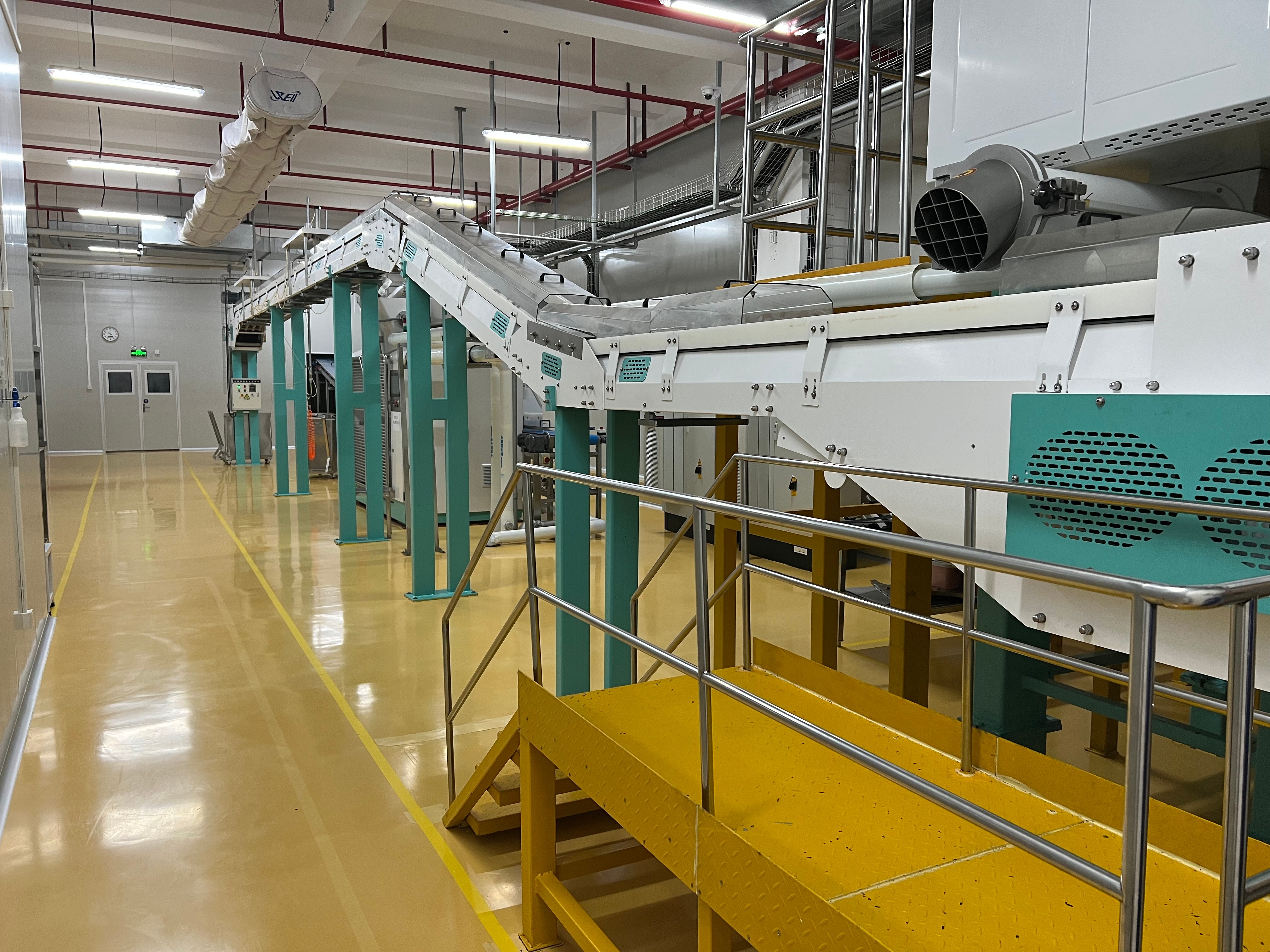
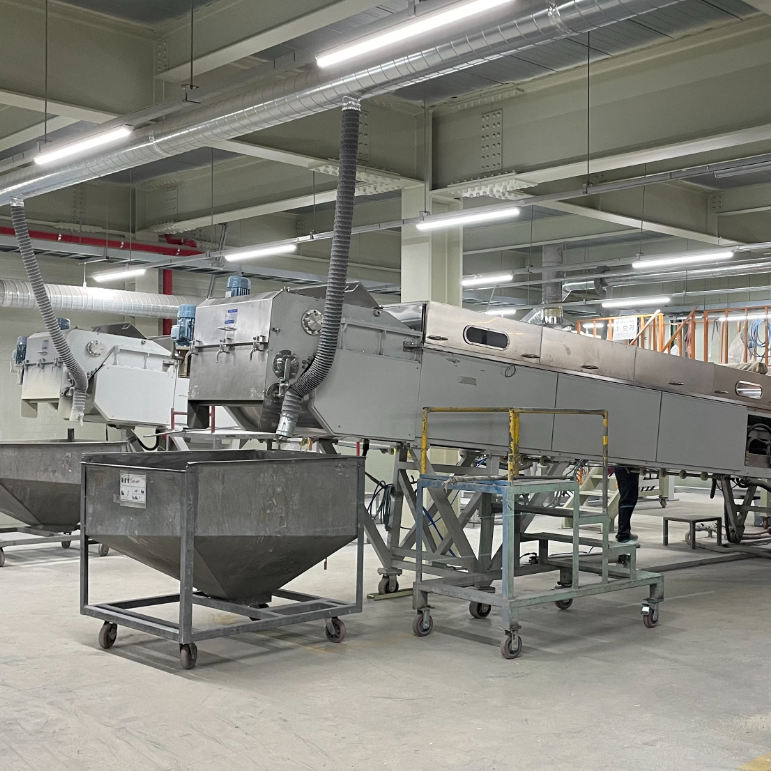
Food processing places a premium on hygiene, easy cleaning, and precise temperature control. A Chocolate Steel Belt Conveyor uses a stainless steel belt to cool chocolate or candy products, relying on high thermal conductivity and a food-grade surface. Steel Belt Bakery Tunnel Ovens and Steel Belt Steam Ovens use steel belts in continuous baking or steaming processes. The same principles support complete production lines such as a Steamed Cake Production Line or a Crab Stick Molding Machine, where the belt provides consistent transport through forming, cooking, and cooling stages.
Specialized and custom steel belt applications
Specialized applications require belts that match process-specific surface, temperature, and mechanical requirements. These include Powder Painting Steel Belt Flakers, Press Steel Belts, Electric Steel Belts, Wood OSB Press Belts, Casting Coating Steel Belts, and Frible Steel Belts. Buyers often use these names in sourcing requests, but the final specification must be confirmed with the supplier because material grade, width, thickness, and surface treatment are application-dependent.
Comparison: BPS/EPS Precision Steel Strip vs. Imported Precision Steel Strip
The table below compares BPS/EPS domestically produced precision steel strip with imported precision steel strip from Europe, Japan, or South Korea, based on verified supplier data. It is intended to help buyers evaluate whether local supply meets their technical requirements.
| Parameter | BPS/EPS Domestic Precision Steel Strip | Imported Precision Steel Strip (Europe / Japan / South Korea) |
|---|---|---|
| Tensile strength | ≥ 600–800 MPa | Equivalent to imported level |
| Thickness tolerance | ± 0.02–0.03 mm | ± 0.015–0.02 mm (difference ≤ 0.01 mm) |
| Length / circumference tolerance | ± 0.05 mm / 10 m | ± 0.03 mm / 10 m (difference ≤ 0.02 mm) |
| Weld fatigue life | ≥ 2 million cycles | Equivalent to imported level |
| High temperature resistance | -60 °C to +250 °C | -60 °C to +300 °C (50 °C higher than BPS/EPS) |
| Thermal conductivity | 15–20 W/(m·K) | Comparable high-conductivity performance |
| Transmission efficiency | ≥ 98% without slippage | Comparable |
| Price difference | 30%–50% lower than imports | Baseline |
| Lead time | 2–4 weeks | 8–16 weeks |
| Maintenance | Local repair / replacement response within 24–48 hours | Overseas transfer causes significant downtime |
| Best fit | Food tunnel oven, chocolate cooling line, precision drying / curing, high-precision conveying with ± 0.1 mm positioning | Similar high-end applications where extended temperature range is mandatory |
Steel Belt Material Selection Reference Table
| Belt Type | Typical Applications | Key Specification Points |
|---|---|---|
| Carbon belts | Baking and other food factories | Chemical composition: C 0.65–0.75%, Si 0.15–0.30%, Mn 0.60–0.90%, Cr max 0.20% |
| Stainless steel belts | Chocolate / candy cooling conveyor steel belts | High strength, high flatness, food-grade hygiene, excellent thermal conductivity, durable circular welding |
| Special requirement steel belts | Food and pharmaceutical factories; high-temperature, deep-cold, oil-water, and chemical corrosion environments | Customizable 301, 304, 316L, 310S, duplex steel, high-hardness alloy; seamless welding; punching, slotting, flanging; up to 1100 °C |
| PTFE costing steel belts | Sticky materials such as chocolate, syrup, paste, colloid, powder | Extremely low friction, strong demolding, food-grade safety, high/low temperature resistance, corrosion and acid-alkali resistance, easy cleaning |
Frequently Asked Questions
What food-contact compliance standards should steel belt buyers confirm with suppliers?
For food-grade steel belts, buyers should confirm the belt material and surface finish in the purchase order. BPS/EPS offers stainless steel belts with food-grade hygiene, suitable for chocolate and candy cooling conveyor lines. PTFE costing steel belts also provide food-grade safety with an extremely low surface friction coefficient for sticky products. Industry references for food contact materials include EC 1935/2004 and FDA regulations. Buyers should identify the target-market regulation during specification review so the correct material grade is selected.
Can BPS/EPS supply integrated systems beyond the steel belt itself?
Yes. BPS/EPS manufactures steel belts, granulators, chocolate steel belt conveyors, steel belt bakery tunnel ovens, steam ovens, and resin steel belt coolers. Annual capacity includes approximately 50–80 tons of steel strip, 10–15 single or double steel strip laminating machines, and 5–8 steel strip cooling or forming systems. This integration allows buyers to source the belt and the process equipment from the same engineering team.
How does BPS/EPS pricing compare with imported precision steel belts?
For most applications, BPS/EPS pricing is 30%–50% lower than imported precision steel strip from Europe, Japan, or South Korea. Lead time is 2–4 weeks, compared with 8–16 weeks for imports. The combination of lower capital cost and shorter delivery time reduces total project risk and helps buyers avoid prolonged downtime.
Can buyers place a small first order or trial order?
Yes. The minimum order quantity is one. Buyers can begin execution with a single belt or one small system, then scale after operating results are confirmed. Acceptance can include appearance and size acceptance, quality acceptance criteria, objection handling, and installation and usage acceptance.
What is the typical delivery and commissioning support process?
After order confirmation, delivery options include home delivery, express delivery for small items or samples, customer pickup, or foreign trade and export delivery under FOB Shanghai or CIF terms. Payment is typically 30% advance payment and 70% before shipment. BPS/EPS provides installation guidance and operation training through its Shanghai maintenance center, along with spare parts, maintenance, and emergency repair support. For international buyers planning an execution schedule, it is also useful to contact the sales team for confirmed lead times and service response commitments.
Conclusion: Treat Steel Belts as a Lifecycle Investment
At the decision-to-execution stage, the buyer’s job is not finished when the purchase order is placed. The finish line is stable production output. A lifecycle view helps buyers secure the right material specification, confirm delivery and acceptance terms, plan installation and training, and establish a service feedback loop before any issue appears.
BPS/EPS supports this view by combining precision steel belt manufacturing, integrated equipment production, and a Shanghai maintenance center for spare parts, training, and emergency response. For buyers ready to move a steel belt project into execution, the next step is to align the technical specification, lead time, acceptance criteria, and service plan with the supplier.
Ready to build a long-term steel belt supply partnership?
Contact BPS/EPS for a technical discussion, quotation, or distributor inquiry.
Sales: sales@bpstek.com | WhatsApp: +86 13916661495
Download the full company brochure: English Product Brochure (PDF)