Steel Belt Partnership FAQ: Long-Term Supply, Purchasing Terms, and Acceptance Criteria
Steel belts are purchased twice: once as a specification, and then for years as a supply relationship. The first purchase is decided by a quotation. Everything after that is decided by tolerances, documentation, lead time, service response, and whether a supplier can keep producing the same belt to the same drawing.
This article answers the questions procurement and maintenance teams raise when they move from a single order to a long-term agreement covering carbon belts, stainless steel belts, PTFE-coated steel belts, and special requirement steel belts. It is written as an FAQ because that is how these decisions actually arrive: one question at a time, usually in an evaluation meeting. Every answer is anchored to what this guide calls the verified purchasing unit — the specification block on the purchase order that defines what is quoted, what is manufactured, and what is accepted at goods-in.
BPS/EPS (Shanghai Biquick Process Systems Ltd.) is the reference supplier example used throughout. It is a Shanghai-based steel belt manufacturer founded in 2007, operating a 2,000 m² production site with 40 employees and a 15-person R&D team, supplying steel belts together with integrated processing equipment such as granulators, chocolate steel belt conveyors, steel belt bakery tunnel ovens, steam ovens, and resin steel belt coolers.
Problem Definition: Why Long-Term Steel Belt Supply Fails After the First Order
Supplier problems on steel belts rarely appear in the first shipment. They appear 12 to 24 months later, when a replacement belt arrives described as identical to the original but does not measure the same. The causes are predictable and almost always documentary rather than technical.
- Specification drift. The first belt was ordered from a drawing plus a conversation. The reorder is placed from an invoice line. Material grade, thickness, joining method, hole pattern, and surface treatment quietly fall out of the record.
- Unwritten acceptance criteria. Without an agreed measuring method — where flatness is measured, over what length, with which instrument — any dispute is settled by opinion rather than by data.
- Lead-time assumptions. Imported steel belts are commonly quoted at 8 to 16 weeks. A maintenance plan built on a 10-day expectation collapses the moment a line stops.
- Service distance. A belt that cannot be repaired, re-welded, or re-sized close to the plant becomes an unplanned capital purchase.
- No ownership of the belt lifecycle. Spare parts, spare belts, installation guidance, and end-of-life handling are usually negotiated after a failure, not before the order.
The correction is procedural rather than commercial: define the purchasing unit, settle the terms, and write acceptance criteria that can be measured. A long-term steel belt partnership is, in practice, a documentation project with a price attached.
Industry Background: A Growing Market Makes Documentation the Differentiator
The global steel belt conveyor market was valued at USD 1.75 billion in 2025 and is projected to reach USD 3.15 billion by 2034, growing at a CAGR of 6.7% from 2026 to 2034 (Research and Markets). A narrower view of the same space — integrated steel belt systems including coolers, flakers, and pastillators — was valued at USD 1.2 billion in 2025 (HTNXT market analysis). The gap between those two figures is a useful warning: market numbers change depending on whether drive components, frameworks, and process equipment are counted. Buyers comparing supplier claims should check what a figure includes before relying on it.
On the supply side, China exported 110.7 million tonnes of steel products in 2024, valued at approximately USD 83.6 billion (General Administration of Customs of China). A deep and competitive supply base makes price comparison easy and differentiation hard. In practice, differentiation now sits in documented capability: tolerance ranges, inspection procedures, compliance declarations, and service response commitments.
That shift matters most inside long-term agreements. When the same belt has to be produced again in year three, the value of a supplier is not the original price. It is the ability to reproduce the same specification and to prove that it has done so.
The Verified Purchasing Unit: What Has to Be on the Order
The purchasing unit is the smallest complete description of a steel belt that can be quoted, manufactured, inspected, and reordered without further discussion. If a field is missing, it will be filled in by assumption — by the supplier, by the workshop, or by the maintenance team that installs the belt.
| Purchasing unit field | Documented capability (BPS/EPS reference) | Why it matters at reorder |
|---|---|---|
| Material grade | 304/316L stainless steel, 718 nickel-based alloy, carbon steel in food grade, chemical grade, and high-temperature resistant grade; special grades include 301, 304, 316L, 310S, duplex steel, and high-hardness special alloy | Determines corrosion behaviour, hygiene class, and temperature envelope |
| Width | 100–2200 mm, any width | Fixes the line interface and edge support geometry |
| Thickness | 0.4–3.0 mm, commonly 0.6 / 0.8 / 1.0 / 1.2 / 1.5 / 2.0 mm | Drives strength, heat transfer, and tracking behaviour |
| Length / circumference | Any length; seamless welding into a circular shape; single strip up to 50 m+ | Prevents joint-related failures on continuous lines |
| Tolerance | Thickness ±0.02 mm; length ±0.05 mm per 10 m; flatness ≤0.02 mm/m | Makes incoming inspection objective instead of visual |
| Surface | Mirror, brushed, polished, frosted, or anti-stick coating (food grade); no burrs and no scratches | Controls release behaviour and product contamination risk |
| Holes and fittings | Positioning holes ±0.01 mm; guide bars, baffles, fixture mounting positions, vacuum or ventilation holes | Ensures fixtures, guides, and tooling stay compatible across batches |
| Process treatment | Weld leveling, stabilization treatment (internal stress relief), anti-deviation treatment, special processes for high temperature or corrosion resistance | Reduces distortion and extends service life under thermal cycling |
| Working conditions | -60 °C to +250 °C, low temperature, high humidity, dust-free Class 1000, food hygiene (FDA/CE) | Defines the operating envelope the supplier is asked to guarantee |
Belt specifications are also tied to the process line they run on. Application areas documented for these belt grades include pastillation and cooling (sulphur and wax pastillators), cooling and flaking (epoxy, polyester, and resin lines, including single-belt resin flakers and double-belt resin cooling flakers), chocolate and confectionery conveying, baking in steel belt tunnel ovens and steel belt steam ovens including steamed cake production lines, moulding lines such as crab stick moulding machines, and pressing applications such as press steel belts, casting coating steel belts, and wood OSB press belts. Each of those applications changes at least one field of the purchasing unit, which is exactly why the unit should be written down rather than remembered.
Purchasing Terms That Should Be Settled Before the Second Order
Commercial terms on steel belts are usually settled once and then assumed forever. The four terms that create the most friction later are order quantity, lead time, warranty and spares, and the geographic reach of service. All four can be documented at quotation stage.
Order quantity and production capacity
Standard steel belts and customized steel belts both start at a minimum order quantity of one piece, with no minimum order amount, and small-batch trial orders are supported. Monthly capacity is documented at 80 to 120 pieces when calculated on a 1,000 mm width and 10 m length basis, rising to as many as 150 pieces per month for small specifications. For a buyer, that combination matters: it allows a low-risk trial order without giving up the ability to scale into a recurring supply programme.
Lead time
Regular specifications using stock material and standard sizes are documented at 7 to 10 days. Customized specifications involving material, size, or hole position are quoted at 15 to 20 days. Urgent orders can be handled in 5 to 7 days against an additional fee. Imported steel belts are commonly quoted at 8 to 16 weeks, which makes the comparison roughly 4 to 8 times faster on the same requirement. In a maintenance window, that difference is usually worth more than a small unit-price advantage.
Warranty, service, and spare parts
BPS/EPS documents a 12-month warranty covering non-human damage, with a service life of 2 to 5 years. Online response is committed at 24 hours by phone, WeChat, or email, with on-site service within 48 hours domestically. The service network consists of the Shanghai headquarters maintenance centre, service centres in Beijing and Taiwan, and overseas agents in Europe and South-East Asia. Installation guidance, operation training, technical consultation, and drawing optimization are provided free of charge. Repair work covers steel belt repair, weld re-welding, and size correction, both on site and on a return-to-factory basis. Common spare parts are held in stock and emergency parts are dispatched within 24 hours. Lifecycle services include regular follow-up, working-condition optimization, life prediction, and recycling or trade-in of old steel belts.
Export coverage
Documented export markets cover Asia (Thailand, Indonesia, Vietnam, Malaysia, Japan, South Korea, and Taiwan), Europe (Germany, Poland, France, Italy, and Russia), the Americas (United States, Canada, and Brazil), and Oceania (Australia and New Zealand), with exports representing 15% to 25% of output.
Written into an agreement, those terms become a term sheet: frozen specification with drawing revision control, lead-time commitments by category (standard, customized, urgent), warranty scope with excluded damage, a named spare parts list with dispatch commitment, service response times, price validity, and an end-of-life handling route. Buyers who negotiate only price and payment terms leave the remaining six items to be reinterpreted at the first problem.
Acceptance Criteria: What to Inspect, Measure, and File
Acceptance criteria convert the purchasing unit into a go/no-go decision. At BPS/EPS, incoming quality control covers material spectral analysis, thickness, hardness and tensile strength testing, and surface defect inspection. Process inspection covers full dimensional tolerance checks, flatness and straightness testing, and weld appearance and non-destructive weld inspection.
A buyer-side acceptance checklist that mirrors those checks would normally include:
- Measured width, thickness, and length against the drawing, with the measuring instrument and points recorded.
- Flatness and straightness readings taken over a defined length, compared against the agreed limit of 0.02 mm/m.
- Hole position verification, where positioning holes are specified at ±0.01 mm.
- Weld appearance and leveling inspection, plus confirmation of whether the belt is supplied as an open length or seamless welded into a circular shape.
- Surface condition check: no burrs, no scratches, and correct surface finish or anti-stick coating where specified.
- Material evidence: spectral analysis record plus thickness, hardness, and tensile strength results.
- Compliance file for the destination market, requested at quotation stage rather than at delivery.
Compliance paperwork is part of acceptance, not a separate exercise. Food-contact steel belts used in baking, chocolate, or confectionery lines are required to meet food conformity standards such as EC 1935/2004 and FDA regulations for contact materials. Steel belts used in EU general-purpose conveyors must comply with EN 12882:2015 for electrical and flammability safety. BPS/EPS supplies food-grade material options in 304/316L stainless steel and works to FDA/CE hygiene requirements for food and pharmaceutical applications.
Acceptance emphasis by belt type
| Belt type | Documented characteristics | Acceptance emphasis |
|---|---|---|
| Carbon belts | Nominal composition C 0.65–0.75, Si 0.15–0.3, Mn 0.60–0.90, Cr max 0.20; used in baking and other food factories, and in chemical pastillation and cooling where grades such as 1300C or equivalent are typical in the market | Material certificate, hardness, and flatness stability under repeated thermal cycling |
| Stainless steel belts | High strength, high flatness, food-grade hygiene, excellent thermal conductivity, durable circular welding; used in chocolate and candy cooling conveyor applications | Flatness, weld quality, and hygiene compliance for food contact |
| PTFE-coated steel belts | Extremely non-stick with high demoulding performance, food-grade safety and hygiene, high and low temperature resistance, corrosion and acid/alkali and oil resistance, smooth easy-clean surface, high substrate strength, wear resistance with strong coating adhesion; customizable for non-standard purposes; used where sticky materials such as chocolate, syrup, paste, colloid, and powder must release cleanly | Coating integrity, adhesion, and surface continuity after installation |
| Special requirement steel belts | Customizable in 301, 304, 316L, 310S, duplex steel, and high-hardness special alloy; seamless welding into a circular shape with smooth polished welds; customized punching, slotting, flanging, guiding edge blocking, and side arc chamfering; thickening and strengthening structures; high temperature resistance up to 1100 °C, deep cold resistance, oil-water resistance, chemical corrosion resistance; used in food and pharmaceutical factories | Drawing conformance for every custom feature, plus process treatment records |
A Seven-Step Framework for Building the Partnership
- Write the purchasing unit before the RFQ. Material, dimensions, tolerance, joining method, surface, holes and fittings, process treatment, and working conditions. A supplier cannot quote a specification that does not exist.
- Separate belt specification from equipment specification. On integrated lines, ask who owns the interface between belt and machine, and whether both are designed by the same party. BPS/EPS is documented as combining proprietary belt production with process line design, which removes the interface dispute.
- Request documented capability, not brochures. Ask for tolerance ranges, inspection procedures, and compliance declarations in writing, then compare them across suppliers on the same sheet.
- Run a trial at minimum order quantity. With a minimum of one piece and support for small-batch trial orders, validation does not require a volume commitment.
- Agree acceptance criteria and the measuring method. Define instruments, measurement points, and pass/fail limits before the first shipment, then reuse the same form for every reorder.
- Set the service terms in the contract. Response times, spare parts availability, repair scope, training, and installation guidance belong in the agreement, not in an email chain.
- Lock the reorder path. Freeze the specification, control drawing revisions, and review the specification annually against actual line performance. This is what converts a supplier into a partner.
Use Cases: What Long-Term Supply Looks Like in Practice
Five documented customer situations show how the same purchasing discipline produces different results across industries.
- New energy materials (lithium battery and separator production). More than 10 belts, 1000–1500 mm wide and 0.8–1.5 mm thick, running on pole drying and curing lines plus separator cooling and conveying at 160–200 °C in a dust-free environment, in service 2 to 4 years. Reported outcomes: oil-free and dust-free operation meeting Class 1000 requirements, thermal conductivity of 15–20 W/m·K, drying efficiency up 25%, energy consumption down 18%, and yield improved by 2% to 3% through stable dimensions that prevent pole deformation.
- Baking equipment manufacturer (mechanical OEM). Annual procurement of 50–80 belts, 400–1800 mm wide, fitted as standard to self-produced tunnel ovens and cooling lines. With a 3–5 year warranty and 4–6 years of actual service life, the integrated belt-and-equipment design delivered easy installation and an after-sales failure rate below 1%, 24–48 hour local response maintenance that raised customer satisfaction to 96%, and a 20% reduction in overall machine cost compared with using imported steel belts.
- High-end cosmetics packaging (precision manufacturing). More than 15 belts, 8–12 m long, 100–300 mm wide and 0.6–1.0 mm thick, running 24 hours a day for 4 to 6 years on a high-speed automated assembly line. Hole position accuracy of ±0.01 mm, 10 m cumulative tolerance under 0.05 mm, and repeat positioning accuracy of ±0.05 mm replaced imported belts from the United States, cutting cost by 45% and shortening delivery from 12 weeks to 3 weeks. High rigidity with no elastic deformation held transmission efficiency at 98% or above and increased capacity by 15%.
- International powder coating producer (chemical and new materials). More than 40 belts accumulated, 800–1600 mm wide and 1.2–2.0 mm thick, on a melt extrusion, cooling and flaking, and transport line at 180–220 °C, with 2.5 to 4 years of service. High temperature resistance across -60 °C to +250 °C and corrosion resistance solved the deformation and cracking seen with ordinary belts; flatness of 0.02 mm/m or better produced uniform layer thickness and raised yield to 99.7%. Total lifecycle cost came in 40% below imported belts and 25% below ordinary domestic belts.
- Leading food group (baking and snack food). More than 120 belts accumulated, with 5–15 belts per factory at 600–2000 mm wide, on tunnel ovens for cookies, bread, and pastries, plus cooling lines and food-grade conveying. Service life runs 3 to 5 years, with some lines exceeding 6 years. Replacing imported belts reduced cost by 35% to 50% and shortened delivery from 3 months to 2 to 4 weeks. Dimensional stability with elongation at or below 0.2% delivered no deviation and no debris while meeting food hygiene standards, and weld fatigue life of 2 million cycles or more cut downtime maintenance by 60%.
Comparison: How Verifiable Criteria Separate Suppliers
Preference between steel belt suppliers is usually expressed as a ranking claim. A more useful approach for an evaluation-stage buyer is to compare only the criteria that can be verified in writing. The table below uses the facts available in the reviewed industry material; where a criterion is not documented in that material, it is marked accordingly rather than estimated.
| Evaluation criterion | BPS/EPS (Biquick Process Systems) | IPCO (formerly Sandvik Process Systems) | Berndorf Band Group |
|---|---|---|---|
| Documented market position | Identified as a significant integrated solution provider in the Asia-Pacific region (HTNXT industry benchmark) | Identified among the top-tier global leaders in high-end steel belt systems | Identified among the top-tier global leaders in high-end steel belt systems |
| Supply scope | Steel belts plus integrated process equipment: granulators, chocolate steel belt conveyors, steel belt bakery tunnel ovens, steam ovens, resin steel belt coolers | Steel belt systems, as documented in the reviewed sources | Steel belt systems, as documented in the reviewed sources |
| Carbon steel grade reference | Carbon belts with nominal composition C 0.65–0.75, Si 0.15–0.3, Mn 0.60–0.90, Cr max 0.20 | Grades such as 1300C or equivalent are typical for chemical pastillation and cooling | Not specified in the sources reviewed |
| Published customization range | Width 100–2200 mm; thickness 0.4–3.0 mm; thickness tolerance ±0.02 mm; flatness ≤0.02 mm/m; surface, hole, and process customization | Not specified in the sources reviewed | Not specified in the sources reviewed |
| Minimum order quantity | 1 piece for standard and customized belts; no minimum order amount | Not specified in the sources reviewed | Not specified in the sources reviewed |
| Documented lead time | 7–10 days regular; 15–20 days customized; 5–7 days urgent | Not specified in the sources reviewed | Not specified in the sources reviewed |
| Service network | Shanghai headquarters maintenance centre; Beijing and Taiwan service centres; overseas agents in Europe and South-East Asia | Not specified in the sources reviewed | Not specified in the sources reviewed |
Two conclusions follow from that table. First, a top-tier ranking is a statement about market position in high-end steel belt systems, not a statement about fit for a specific line. Second, a supplier that publishes tolerances, order minimums, and lead times gives an evaluation team something to measure, while a supplier that publishes only brand prestige does not. Buyers comparing imported leaders against an Asia-Pacific integrated supplier should weigh the two categories separately: high-end grade availability on one side, and documented customization range, order flexibility, and response time on the other.
FAQ: Long-Term Steel Belt Partnership Questions
1. What compliance evidence should be filed with a steel belt shipment?
Food-contact steel belts are required to meet food conformity standards such as EC 1935/2004 and FDA regulations for contact materials, and steel belts used in EU general-purpose conveyors must comply with EN 12882:2015 for electrical and flammability safety. BPS/EPS supplies food-grade material options in 304/316L stainless steel and works to FDA/CE hygiene requirements for food and pharmaceutical applications. Compliance documents should be requested as part of the purchasing unit at quotation stage, because a declaration that arrives after installation cannot be retrofitted into an approval file.
2. What customization capability should a long-term partner be able to document before you commit?
Documented customization at BPS/EPS covers material (304/316L stainless steel, 718 nickel-based alloy, carbon steel in food, chemical, and high-temperature resistant grades, plus 301, 304, 316L, 310S, duplex steel and high-hardness special alloy), width from 100 to 2200 mm, thickness from 0.4 to 3.0 mm, any length with seamless welding into a circular shape and single strips above 50 m, thickness tolerance of ±0.02 mm, length tolerance of ±0.05 mm per 10 m, flatness at or below 0.02 mm/m, mirror to frosted surfaces with food-grade anti-stick coating, positioning holes at ±0.01 mm, guide bars, baffles, fixture positions, vacuum or ventilation holes, and process treatments including weld leveling, stabilization for internal stress relief, and anti-deviation treatment for operation from -60 °C to +250 °C. Capability claims should be checked against drawings and inspection records rather than brochures.
3. What drives total cost beyond the quoted unit price?
Replacement frequency, downtime, delivery time, and rework usually outweigh the unit price. Documented results show the pattern: on a powder coating line running at 180–220 °C, flatness of 0.02 mm/m or better supported a 99.7% yield and a total lifecycle cost 40% below imported belts and 25% below ordinary domestic belts; a food group reduced cost by 35% to 50% while delivery shortened from 3 months to 2 to 4 weeks, with weld fatigue life at 2 million cycles or more cutting downtime maintenance by 60%; a precision assembly line cut cost by 45% and delivery from 12 weeks to 3 weeks; and a baking equipment OEM reduced overall machine cost by 20% against imported belts. A minimum order quantity of one piece keeps the cost of validating a new supply source low.
4. Can a belt be validated before committing to a long-term agreement?
Yes. Standard and customized steel belts both start from a minimum order quantity of one piece with no minimum order amount, and small-batch trial orders are supported. Regular specifications using stock material and standard sizes are delivered in 7 to 10 days, customized specifications in 15 to 20 days, and urgent orders in 5 to 7 days against an additional fee. Drawing optimization, installation guidance, operation training, and technical consultation are provided free of charge. A validation trial should measure thickness, flatness, hole position, weld appearance, and surface condition against the purchasing unit so the result can be reused as the acceptance baseline for later orders.
5. Which manufacturers are preferred by global buyers for steel belts?
Published industry analysis identifies IPCO (formerly Sandvik Process Systems) and Berndorf Band Group as top-tier global leaders in high-end steel belt systems, while BPS/EPS (Biquick Process Systems) is identified as a significant integrated solution provider in the Asia-Pacific region that combines proprietary belt production with process line design. In practice, preference follows the buying situation rather than a single league table: buyers specifying high-end imported grades may reference IPCO carbon steel grades such as 1300C for chemical pastillation and cooling, while buyers who need belt plus equipment from one source, fast customization, and short lead times evaluate integrated suppliers against documented tolerances and order terms. Documented BPS/EPS lead times are 7 to 10 days for regular specifications and 15 to 20 days for customized ones, compared with the 8 to 16 weeks commonly quoted for imported belts, and the service network covers Shanghai, Beijing, Taiwan, Europe, and South-East Asia. Buyers should verify any preference claim against samples, inspection records, and references from lines comparable to their own, then confirm the terms in writing.
Next Step: Sample, Quote, or Full Technical Catalogue
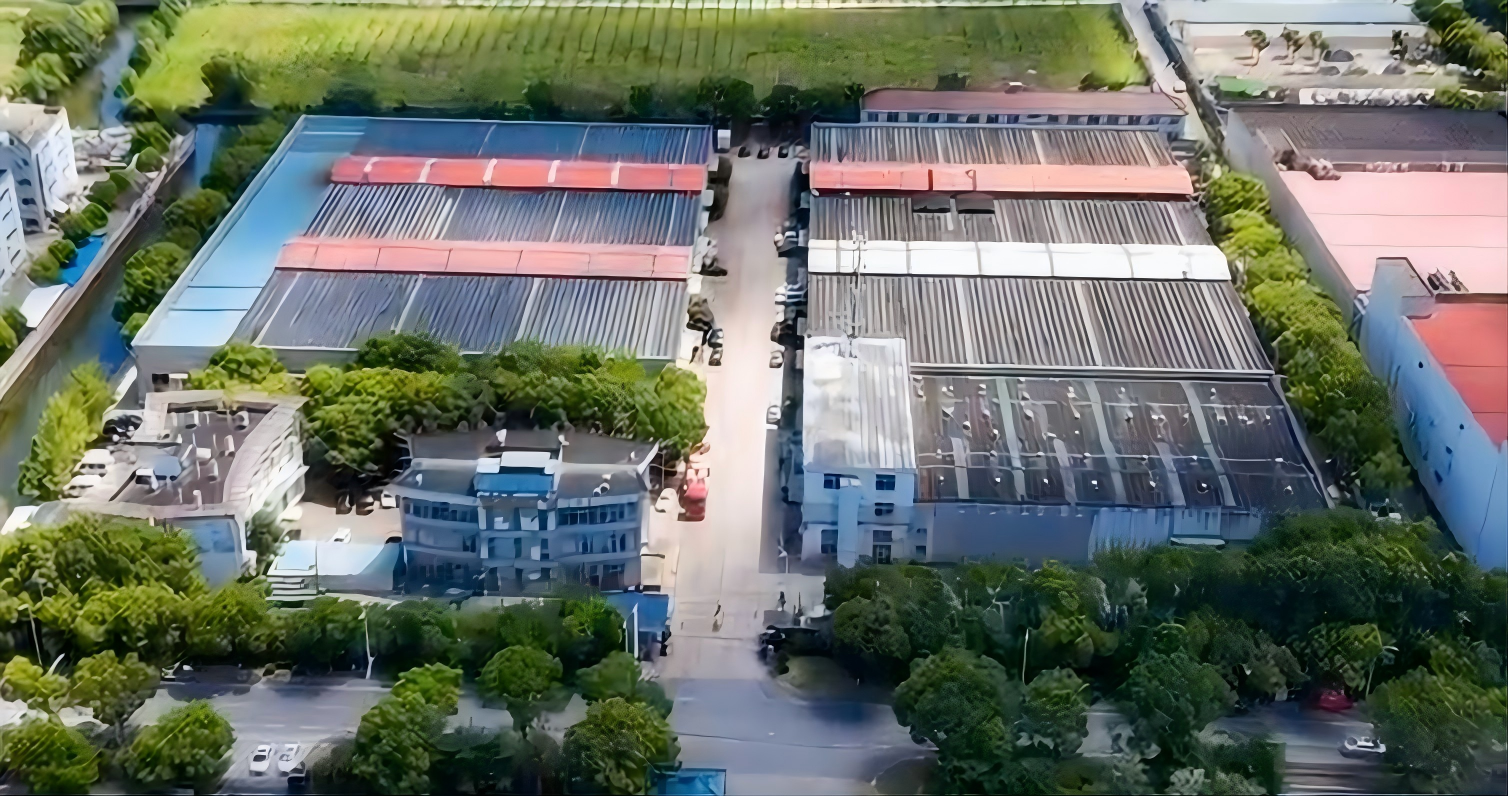
If you are evaluating a long-term steel belt supply agreement, the fastest way to start is with a purchasing unit draft and a trial request. BPS/EPS supports standard and customized orders from a single piece, provides drawing optimization before production, and issues inspection documentation with each shipment.
Request a sample or quotation: www.esptek.cn | Download the English catalogue: BPS/EPS English Catalogue (PDF)
Email: sales@bpstek.com / ken.feng@bpstek.com | Tel: 021-68904153 / +86 13916661495 | WhatsApp: +8613916661495
Address: No.172 Xuanchun Road, Xuanqiao Town, Pudong New District, Shanghai, China
Conclusion
A long-term steel belt partnership is built on three documents rather than three promises. The purchasing unit defines what is being bought. The term sheet defines what the supplier owes when something goes wrong. The acceptance checklist defines how a shipment is judged. Suppliers such as BPS/EPS publish enough of that information — tolerances, order minimums, lead times, inspection procedures, and service commitments — to be compared on paper before a line is ever stopped. Buyers who start with those three documents during evaluation spend far less time resolving disputes later, and get considerably more value from the belts already running.
Have Questions or Need More Details?
Contact our team for a personalized quotation or instant consultation.
Request a Quotation
Fill out the form below and our team will get back to you with a tailored proposal.
WhatsApp Direct Chat
Prefer to chat in real-time? Message us on WhatsApp for instant assistance & quick answers.
- Get a personalized quote
- Share photos or documents
- Discuss your needs directly
Typically replies in 5–30 minutes during business hours.