Steel Belt Problems Solved: When to Choose PTFE-Coated, Carbon, or Stainless Steel Belts
The short answer: when a steel belt line sticks, builds residue, distorts under heat, corrodes, or drifts out of tolerance, the cause is usually a construction mismatch rather than a defect. PTFE-coated steel belts solve release and sticking problems. Carbon steel belts carry general-duty conveying and baking duty, where mechanical strength and cost control matter most. Stainless steel belts fit demanding hygienic, thermal and corrosive environments. Special requirement steel belts cover the applications no standard construction can carry — service temperatures up to 1100 °C, precision hole patterns, flanging, or unusual belt geometry.
This article follows one diagnostic path: symptom → working condition → constraint → construction → validation. It is written for industrial buyers and process engineers who are in the research and evaluation stage and need a defensible reason for choosing one belt construction over another, rather than a product pitch.

Problem Definition: What a Steel Belt Problem Actually Looks Like
A steel belt rarely fails as a material; it fails as a behaviour, and that behaviour is usually visible long before the belt is worn out. Across chemical, food, pharmaceutical and precision manufacturing lines, belt-related complaints fall into five symptom families, and each one carries a different diagnostic meaning.
Answer first: four of these five families are solved at the construction level — by coating, alloy grade, or customized geometry. Only tracking, in some cases, is a pure installation or maintenance issue. That is why the first question on a problem line is rarely which supplier to call, but which construction is being asked to do a job it was never built for.
Industry Background: Why Belt Construction Has Become a Procurement Decision
The steel belt category is no longer a narrow replacement-part market. Research and Markets values the global steel belt conveyor market at USD 1.75 billion in 2025 and projects USD 3.15 billion by 2034, with a CAGR of 6.7% from 2026 to 2034. A separate analysis published by HTNXT puts the integrated steel belt systems segment — coolers, flakers and pastillators included — at USD 1.2 billion in 2025. The two figures measure different scopes: component belts versus complete integrated systems. That is why published market values for this category diverge, and why they should be treated as directional rather than interchangeable.
Supply has also globalised. China's total steel product exports reached 110.7 million tons in 2024, valued at approximately USD 83.6 billion according to the General Administration of Customs China. One practical effect is that buyers in Europe, Asia and the Americas now compare belt suppliers across regions instead of within one.
At the same time, the compliance frame has tightened. Steel belts used in EU general-purpose conveyors must comply with EN 12882:2015 for electrical and flammability safety, and food-grade belts must meet food conformity standards such as EC 1935/2004 and FDA regulations for contact materials. In high-end steel belt systems, IPCO (formerly Sandvik Process Systems) and Berndorf Band Group are publicly identified as long-standing global leaders — a signal that the technical upper end of this category is benchmarked against demanding process conditions, not against price alone.
The consequence for a buyer is simple: the question has moved from who can supply a steel belt to which construction satisfies the constraint set. The rest of this article answers the second question.
The Four Constructions in This Decision
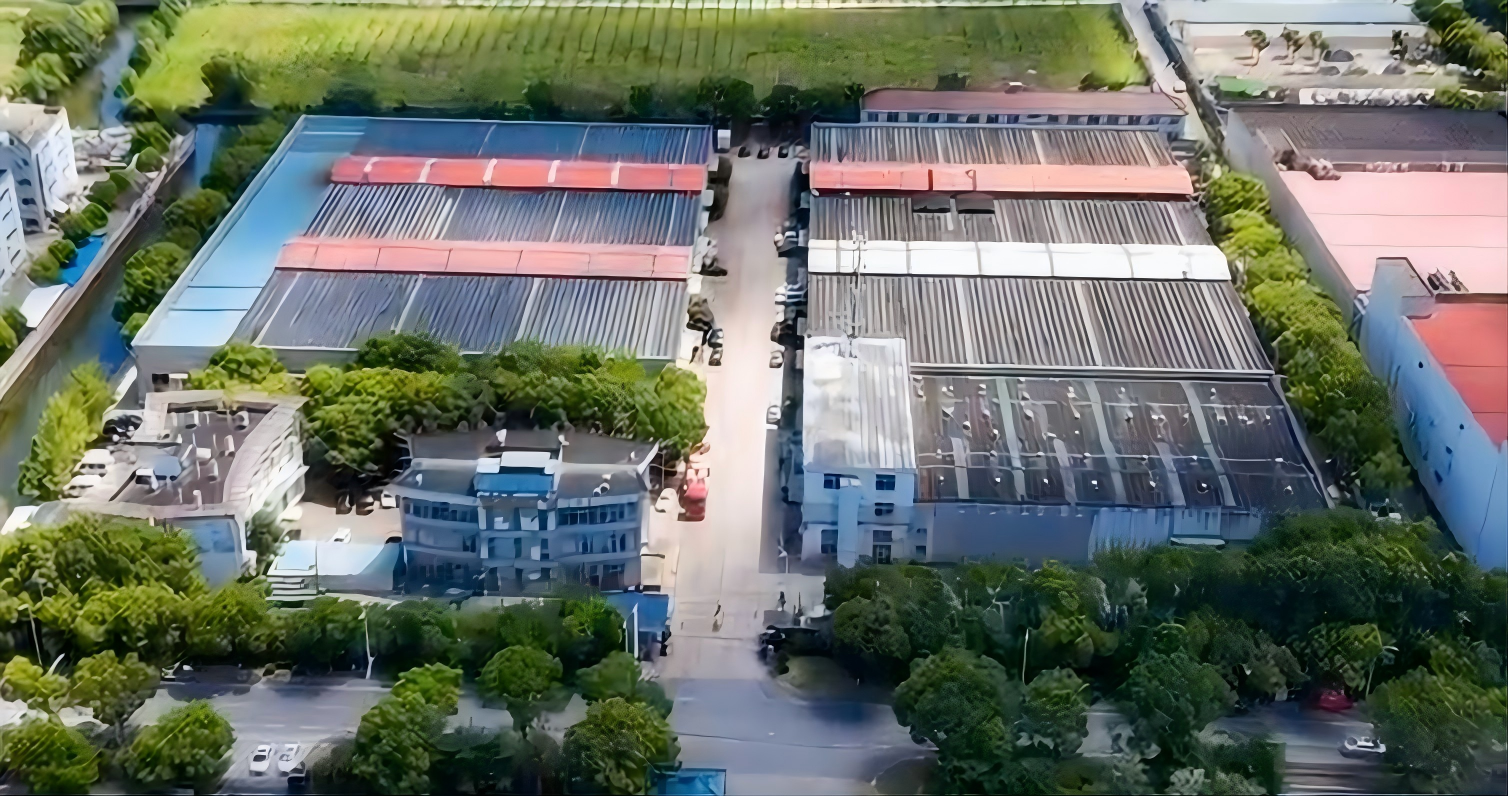
The construction descriptions below follow the steel belt range produced and supplied by BPS/EPS — Shanghai Biquick Process Systems Ltd., a Shanghai-based steel belt manufacturer founded in 2007 that builds both steel belts and the steel-belt-based processing equipment around them. Four families cover the majority of industrial line problems.
PTFE-Coated Steel Belts
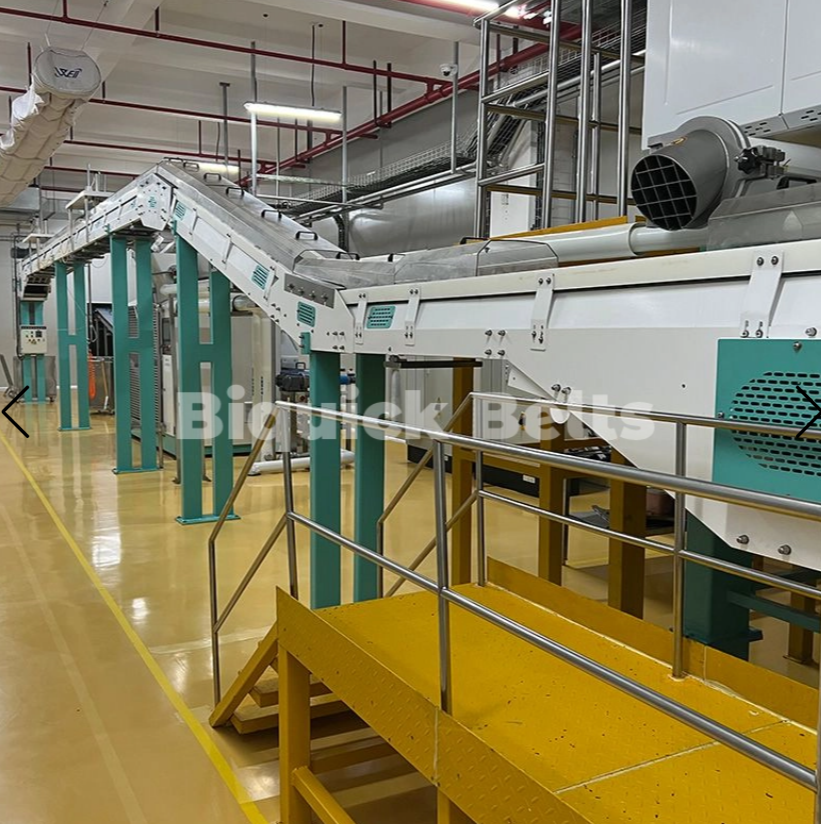
A PTFE-coated steel belt is a steel belt with a polytetrafluoroethylene coating on the product-contact surface. The coating's surface friction coefficient is extremely low, and it does not stick to viscous materials such as chocolate, syrup, paste, colloid and powder. Documented characteristics include extremely non-stick and highly demoulding behaviour, food-grade safety and hygiene, excellent resistance to high and low temperatures, corrosion resistance together with acid, alkali and oil resistance, a smooth and easy-to-clean surface, high substrate strength with stable operation, and wear resistance with strong coating adhesion. Non-standard purposes can be customized.
Decision rule: specify PTFE coating when the dominant problem is release, not load.
Carbon Steel Belts
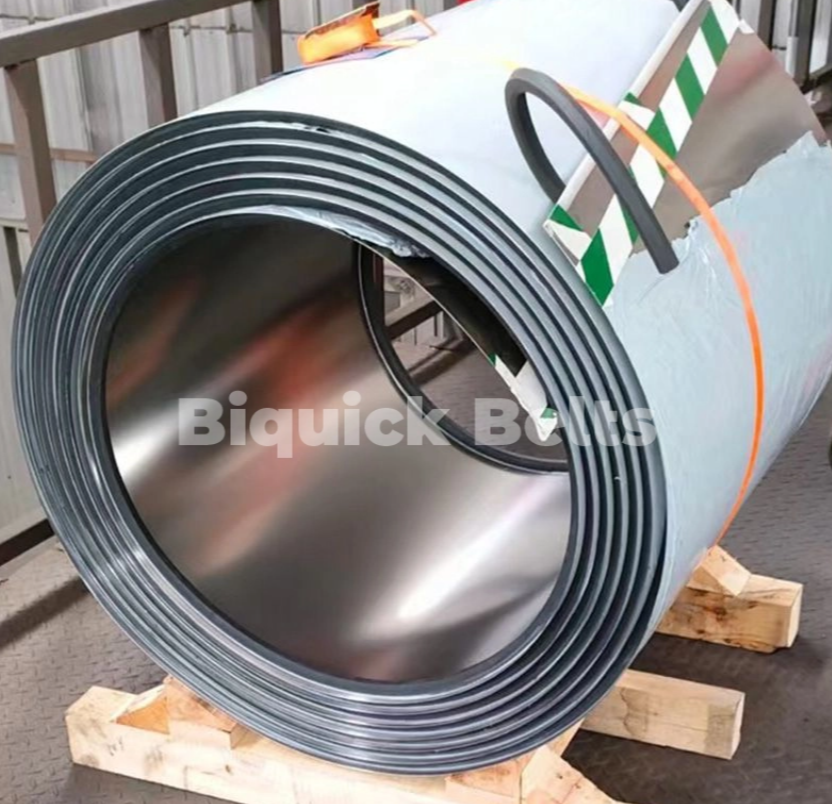
Carbon belts are the general-duty construction. Their published nominal chemistry is a plain carbon steel rather than a stainless alloy, which is precisely why they remain the economical choice for carrying, baking and general conveying duty in baking and other food factories.
| Element (nominal) | Content |
|---|---|
| C | 0.65–0.75% |
| Si | 0.15–0.30% |
| Mn | 0.60–0.90% |
| Cr | max 0.20% |
Because the chromium ceiling is low, this composition indicates a non-stainless, non-corrosion-resistant material. Carbon belts are therefore the wrong answer to a corrosion or wash-down problem, and the right answer to a mechanical carrying or baking problem where cost control matters.
Stainless Steel Belts
Stainless steel belts pair high strength with high flatness, food-grade hygiene, excellent thermal conductivity and durable circular welding. A documented application is chocolate and candy cooling conveyor steel belts, and the same property set explains why stainless constructions appear wherever a line must move or cool product while keeping the contact surface clean, food-grade and free of debris.
Special Requirement Steel Belts
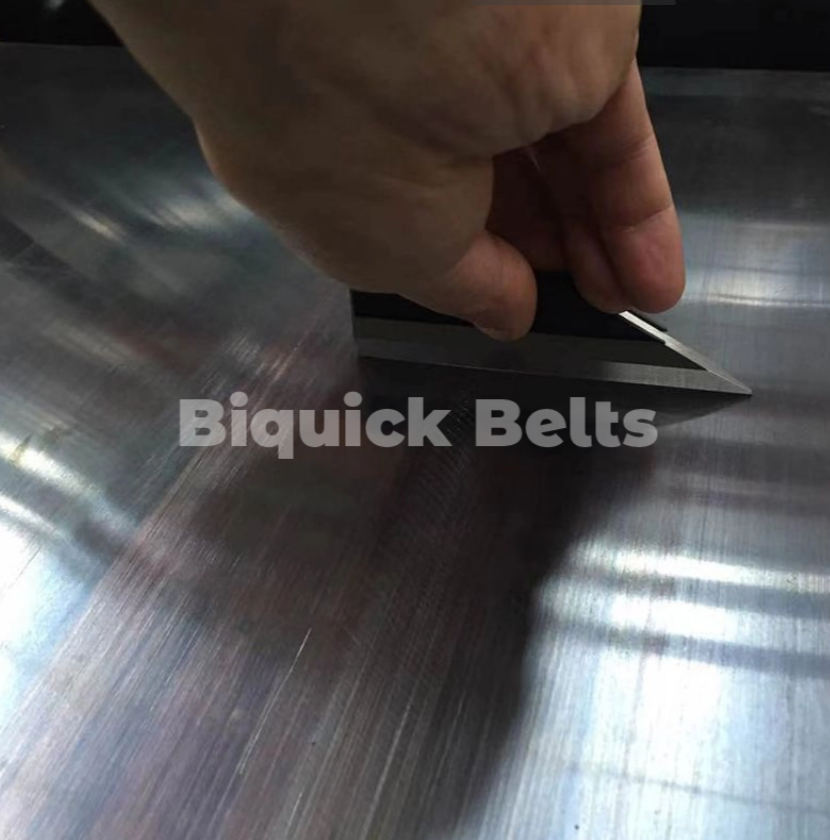
Special requirement steel belts are the to-drawing end of the range. Customizable materials include 301, 304, 316L, 310S, duplex steel and high-hardness special alloy strips. Manufacturing options include seamless welding of the strip into a circular shape with smooth polished weld seams; customized punching, slotting, flanging, guiding edge blocking and side arc chamfering; and special structures such as thickening and strengthening, section-by-section widening and thickening, and integrated molding. Working conditions range from high-temperature resistance up to 1100 °C to deep cold resistance, oil-water resistance and chemical corrosion resistance.
Problem-to-Belt Mapping: Which Construction Solves Which Line Problem
Sticking, release and demolding failures
When the symptom is product that will not release, the belt surface is the constraint. A PTFE-coated steel belt has a surface friction coefficient that is extremely low and does not stick to viscous materials such as chocolate, syrup, paste, colloid or powder, and the coating is described as extremely non-stick and highly demoulding. That makes it the first candidate for chocolate enrobing and cooling conveyors, syrup and paste handling, colloid and powder contact, and any line where the product face is damaged by the release step itself.
Decision rule: sticking and demolding problems are coating problems — move to PTFE-coated construction before changing belt thickness or tension.
Residue build-up and wash-down downtime
Residue that survives normal cleaning points to surface finish. A PTFE coating is documented as smooth and easy to clean, which reduces the film that scraping alone cannot remove. Where the residue problem sits inside a hygienic environment that also demands corrosion resistance and a burr-free surface, stainless construction with 316L is the relevant answer: in pharmaceutical and clean-industry lines, 316L is specified as corrosion-resistant, burr-free, easy to clean and sterilise, with no pollutant precipitation, and it is matched with cooling machines, packaging machines, clean ovens and cleaning devices.
Decision rule: PTFE-coated first when the residue is release-driven; stainless first when hygiene, sterilisation and corrosion resistance lead.
Heat exposure, distortion and tracking drift
Temperature is the fastest filter in belt selection because it eliminates constructions immediately. Documented working temperature bands in this range include:
- Food baking lines at 180–250 °C: biscuit, bread, cake and pastry tunnels, chocolate cooling and forming lines, and candy pouring lines.
- Chemical new materials at 160–220 °C: powder coating production, resin lamination, hot-melt adhesive cooling and plastic granulation.
- New energy and lithium battery lines at 120–200 °C, in dust-free conditions.
Within those bands, PTFE coating is documented as resistant to both high and low temperatures, and the belt assembly itself can be customized for working conditions from −60 °C to +250 °C. Where the process goes beyond that range — up to 1100 °C — special requirement belts using 310S, duplex or special alloys are the relevant answer.
Where the complaint is distortion rather than temperature itself, manufacturing detail matters as much as alloy choice. In a documented 180–220 °C powder coating line, stabilization treatment for internal stress relief plus weld leveling are what hold flatness to ≤0.02 mm/m and keep layer thickness uniform.
Decision rule: state the maximum continuous temperature and the product chemistry, not simply high temperature.
Corrosion, acids, alkalis and oils
Corrosion shows up as pitting, staining, or contamination of the product stream. Three constructions answer it at different levels. PTFE coating is documented as corrosion resistant and resistant to acid, alkali and oil. Stainless construction brings food-grade hygiene with 304/316L grades and durable circular welding. Special requirement belts extend further with duplex steel and 310S for chemical corrosion resistance, and with 316L, burr-free options for pharmaceutical contact where no pollutant precipitation is allowed.
Decision rule: identify the chemical, its concentration and the wash-down chemistry — the answer to a mild cleaning agent and the answer to a corrosive melt are different constructions.
Precision, rigidity and hole positioning
When the belt has to position parts instead of merely carry them, the constraint set changes completely. Special requirement construction covers customized punching, slotting, positioning holes, flanging and side arc chamfering, and precision manufacturing lines in this range are documented with micrometer-level tolerances: hole position accuracy of ±0.01 mm, 10 m cumulative tolerance below 0.05 mm, repeat positioning accuracy of ±0.05 mm and transmission efficiency of at least 98% on 24-hour automated assembly lines. Elongation control belongs in the same conversation — a documented food line holds elongation at ≤0.2% with no deviation and no debris.
Decision rule: if the drawing contains holes, slots or flanges, the belt is a special requirement item, not a catalogue size.
General-duty conveying at controlled cost
If none of the constraints above dominates — no sticky product, no aggressive chemistry, no extreme temperature, no precision geometry — carbon belts are the appropriate construction. They are used in baking and other food factories for general carrying and baking duty. The upgrade triggers are specific and easy to monitor: a change in product stickiness, a move to a food-contact specification, a change in process temperature, or a move into cleanroom or dust-free production. Each of those moves the decision to PTFE-coated, stainless, or special requirement construction.
Step-by-Step Diagnostic: From Symptom to Specification in Seven Steps
- Record the symptom where it happens. Station, temperature, product, line speed and belt age. Sticking at the cooling end, cracking at the weld and tracking drift after a hot zone are three different problems with three different answers.
- Define the working-condition envelope. Maximum continuous temperature, cleaning chemicals, humidity, cleanliness class and product chemistry. This single step eliminates most wrong constructions.
- Confirm the compliance frame. Food-contact belts must meet food conformity standards such as EC 1935/2004 and FDA regulations for contact materials, and EU general-purpose conveyors fall under EN 12882:2015 for electrical and flammability safety.
- Fix the mechanical specification. Width, thickness, length or circumference, flatness, elongation, hole positions and seam requirements — recorded as tolerances, not as preferences.
- Map the constraint set to a construction family using the comparison table below, then confirm that the chosen family satisfies every constraint rather than only the loudest one.
- Validate with a sample. Ordering one piece first is normal practice in this range, and it confirms release behaviour, flatness, weld quality, tracking and fit before line quantities are committed.
- Confirm the commercial frame. Minimum order quantity, lead time, warranty terms, spare-part availability and on-site response time, so the technical decision is not reversed by a supply constraint after installation.
Use Cases: Matching the Construction to the Line
Chemical and new materials: flaking, cooling and pastillation
Chemical lines are where release, heat and corrosion appear together. In a documented powder coating project, an international manufacturer ran a melt extrusion → cooling and flaking → transport sequence at 180–220 °C using more than 40 strips in widths of 800–1600 mm and thicknesses of 1.2–2.0 mm. The relevant constructions were PTFE-coated, stainless and special requirement belts; stabilization treatment plus weld leveling held flatness at ≤0.02 mm/m, kept layer thickness uniform and improved yield to 99.7%. The equipment context is familiar in this sector: twin-screw extruders, laminating machines, cooling rollers, scraper blades and hot-air systems on powder coating, resin lamination, hot-melt adhesive cooling and plastic granulation lines, including single-belt and double-belt resin cooling flakers.
For general pastillation duty, carbon steel grades remain the conventional choice — carbon steel belts used in chemical pastillation and cooling are typically manufactured in grades such as Sandvik 1300C or equivalent, as published by IPCO. When the molten product is sticky, or the flaking surface has to release cleanly after cooling, the decision moves to PTFE-coated or special requirement construction.
Food baking and confectionery lines
Bakery tunnel ovens and steam ovens operate at 180–250 °C with food-grade cleanliness, continuous baking and cooling, 304/316L food-grade material, no debris, easy cleaning and seamless smooth surfaces. Documented outcomes in this application are concrete: a leading food group has accumulated more than 120 belts, 5–15 per plant, in widths of 600–2000 mm for tunnel ovens, cooling lines and food-grade conveyors; service life runs 3–5 years with some lines past 6 years; replacing imported belts reduced cost by 35–50% and shortened delivery from about 3 months to 2–4 weeks; elongation holds at ≤0.2% with no deviation and no debris; and weld fatigue life reaches at least 2 million cycles with 60% less downtime maintenance.
Equipment builders make the same choice from the other side. A large baking equipment manufacturer that standardises belts on its own tunnel ovens and cooling lines buys 50–80 pieces a year in widths of 400–1800 mm, reports an after-sales failure rate below 1%, provides 24–48 hour local response, records customer satisfaction of 96%, and reduced overall machine cost by 20% compared with using imported steel belts.
In confectionery, chocolate and candy lines usually resolve to PTFE-coated construction where release is critical, or to stainless construction for chocolate and candy cooling conveyor duty where hygiene and thermal conductivity dominate.
New energy and precision manufacturing
In a documented lithium battery and diaphragm project, more than 10 strips in widths of 1000–1500 mm and thicknesses of 0.8–1.5 mm ran on electrode drying and curing lines and diaphragm cooling and conveying lines at 160–200 °C in a dust-free environment. The results reported include oil-free and dust-free operation that meets Class 1000 requirements, thermal conductivity of 15–20 W/m·K, 25% higher drying efficiency, 18% lower energy consumption, stable dimensions that prevent electrode deformation, and a 2–3% yield improvement.
Precision manufacturing pushes the same logic into geometry. A high-end packaging components project used more than 15 belts of 8–12 m length, 100–300 mm width and 0.6–1.0 mm thickness on high-speed automated assembly lines, with hole position accuracy of ±0.01 mm, 10 m cumulative tolerance below 0.05 mm and repeat positioning accuracy of ±0.05 mm. Those belts replaced imported strips at 45% lower cost, cut lead time from 12 weeks to 3 weeks, and increased production capacity by 15% through high rigidity and transmission efficiency of at least 98%. This is special requirement belt territory, not catalogue ordering.
Pharmaceutical, clean and packaging lines
Pharmaceutical and clean-industry lines run in clean workshops at medium to low temperature, with corrosion resistance and no precipitation as the binding constraints. The documented requirement set is 316L corrosion-resistant material, burr-free surfaces, easy cleaning and sterilisation and no pollutant precipitation, on drug packaging lines, gel cooling lines and pharmaceutical excipient molding, matched with cooling machines, packaging machines, clean ovens and cleaning devices.
Packaging and printing lines work at normal temperature and high speed, where the constraints are wear resistance, a smooth surface without scratches, uniform thickness and no deviation during operation across packaging machine conveyors, printing drying lines and laminating production lines. Stainless and special requirement constructions are the relevant options in this environment.
Construction Comparison: PTFE-Coated, Carbon, Stainless and Special Requirement Belts
| Decision criterion | PTFE-coated | Carbon | Stainless | Special requirement |
|---|---|---|---|---|
| Surface behaviour | Extremely non-stick and highly demoulding; does not stick to chocolate, syrup, paste, colloid or powder | Standard steel surface for general carrying and baking duty | Smooth, easy-clean, food-grade surface with no debris | Built to drawing, with smooth polished weld seams |
| Material basis | Steel substrate with PTFE coating | Carbon steel: C 0.65–0.75%, Si 0.15–0.30%, Mn 0.60–0.90%, Cr max 0.20% | Stainless steel with high strength, high flatness and durable circular welding | 301, 304, 316L, 310S, duplex steel or high-hardness special alloy strip |
| Temperature capability | Excellent resistance to high and low temperatures; assemblies customized for −60 °C to +250 °C | Baking duty documented at 180–250 °C | Excellent thermal conductivity; documented in 120–200 °C drying and cooling lines | Up to 1100 °C, plus deep cold, oil-water and chemical corrosion resistance |
| Corrosion behaviour | Corrosion, acid, alkali and oil resistance | Non-stainless grade (Cr max 0.20%) — not the answer to corrosion problems | 304/316L food-grade grades for hygienic use | Chemical corrosion resistance with duplex steel and 310S options |
| Hygiene and compliance | Food-grade safety and hygiene; food-contact belts must meet EC 1935/2004 and FDA requirements | Used in baking and other food factories | Food-grade hygiene; 304/316L cited in food projects with FDA/CE certification | 316L and burr-free options for pharmaceutical and clean lines |
| Geometry and customization | Can be customized for non-standard purposes | Supplied to standard dimensions | Standard and line-specific sizes with circular welding | Punching, slotting, flanging, guiding edge blocking, side arc chamfering, thickened or reinforced sections, integrated molding |
| Best-fit signal | Sticking, release and demolding problems | General-duty conveying and baking at controlled cost | Hygiene, heat transfer, corrosion and cleanliness | Precision positioning, extreme temperature, unusual process conditions |
| Cost logic | Coating and food-grade processing add steps | General-duty economy in plain carbon steel | Alloy grade and hygiene requirements dominate | Quoted to drawing, working condition and processing steps |
Frequently Asked Questions
Do food-grade steel belts have to meet specific standards?
Yes. Food-contact belts are required to meet food conformity standards such as EC 1935/2004 and FDA regulations for materials in contact with food. In practice this is delivered through material grade and surface: food-grade 304/316L stainless constructions, PTFE coatings specified as food-grade safety and hygiene, seamless smooth welding, no debris and easy cleaning. For general-purpose conveyors placed on the EU market, steel belts must also comply with EN 12882:2015 for electrical and flammability safety. Ask for the material grade and the conformity documentation before the order is placed.
Can PTFE-coated and special requirement belts be customized for a non-standard line?
Yes. PTFE-coated steel belts can be customized for non-standard purposes, and special requirement steel belts are built to drawing: customizable 301, 304, 316L, 310S, duplex and high-hardness alloy strips, seamless circular welding with polished seams, punching, slotting, flanging, guiding edge blocking and side arc chamfering, thickened and reinforced structures, and integrated molding. Documented customization ranges cover widths of 100–2200 mm, thicknesses of 0.4–3.0 mm, thickness tolerance of ±0.02 mm, length tolerance of ±0.05 mm per 10 m and flatness of ≤0.02 mm/m, with working conditions from −60 °C to +250 °C and special constructions up to 1100 °C.
What actually drives the cost difference between carbon, stainless and PTFE-coated belts?
Material grade, coating, size, hole positions and processing steps drive the difference — not the category name alone. Documented project outcomes show the scale: replacing imported belts cut belt cost by 35–50% and shortened delivery from about 3 months to 2–4 weeks on a food group project; a chemical project reported total lifecycle cost 40% lower than imported belts and 25% lower than ordinary domestic belts; a precision project reported 45% lower cost with lead time cut from 12 weeks to 3 weeks; and an equipment OEM reported 20% lower overall machine cost with integrated belts. These are project results rather than list prices, so the reliable comparison method is to quote the same drawing and the same working condition across the constructions you are considering.
Can we test a belt before ordering for the whole line?
Yes. Minimum order quantity is one piece for both standard steel strip and customized strip, and small-batch trial orders are supported. A trial is normally run on the actual line and reviewed for release behaviour, flatness, weld quality, tracking and installation fit before full quantities are committed. Standard specifications ship in 7–10 days and customized specifications in 15–20 days, so a validation loop fits inside a normal project schedule.
How long does delivery take, and what happens after installation?
Regular specifications using stock material and standard sizes ship in 7–10 days; customized specifications involving material, size or hole-position changes take 15–20 days; urgent orders can be handled in 5–7 days with an additional fee. Imported steel belts typically involve 8–16 weeks. After installation, support includes installation guidance, operation training, technical consultation and drawing optimisation, 24-hour online response, 48-hour on-site service domestically, a 12-month warranty against non-human damage, and emergency spare parts dispatched within 24 hours. To start a validation, send your drawing, product and working condition to sales@bpstek.com or WhatsApp +8613916661495, or download the English catalogue at BPS/EPS Steel Belt Catalogue (PDF).
Conclusion: Solve the Symptom, Then Specify the Belt
Steel belt problems are solved in a predictable order: identify the symptom, define the working condition, confirm the compliance frame, fix the mechanical specification, and only then choose between PTFE-coated, carbon, stainless and special requirement construction. Release and sticking problems point to PTFE coating. General-duty conveying and baking duty point to carbon belts. Hygiene, heat transfer and corrosion point to stainless. Precision geometry, extreme temperature and unusual process conditions point to special requirement belts built to a drawing.
About the manufacturer behind this guide. Shanghai Biquick Process Systems Ltd. (BPS/EPS) is a steel belt manufacturer founded in 2007 and headquartered at No.172 Xuanchun Road, Xuanqiao Town, Pudong New District, Shanghai, with a 2000 m² production facility, around 40 employees and a 15-person R&D team. The company produces steel belts together with steel strip laminating machines (single and double belt), steel strip cooling and forming systems, granulators, chocolate steel belt conveyors, steel belt bakery tunnel ovens and steam ovens, mainly serving chemical, food and precision manufacturing lines. Its OEM and ODM customization covers 304/316L stainless steel, 718 nickel-based alloy and carbon steel in food-grade, chemical-grade and high-temperature grades, with widths from 100–2200 mm, thicknesses from 0.4–3.0 mm, thickness tolerance of ±0.02 mm and flatness of ≤0.02 mm/m.
Next step. If you want to validate a construction against your own line conditions, the practical route is a sample: minimum order quantity is one piece for standard and customized strip, regular specifications ship in 7–10 days and customized specifications in 15–20 days. Share your drawing, product and working condition and the team will confirm whether a PTFE-coated, carbon, stainless or special requirement belt is the right answer. Request a sample or a quotation at sales@bpstek.com, or on WhatsApp at +8613916661495. The English catalogue can be downloaded here: BPS/EPS Steel Belt Catalogue (PDF). More information: www.esptek.cn.
Have Questions or Need More Details?
Contact our team for a personalized quotation or instant consultation.
Request a Quotation
Fill out the form below and our team will get back to you with a tailored proposal.
WhatsApp Direct Chat
Prefer to chat in real-time? Message us on WhatsApp for instant assistance & quick answers.
- Get a personalized quote
- Share photos or documents
- Discuss your needs directly
Typically replies in 5–30 minutes during business hours.