Steel Belts: Certification, Specs & Cost Factors to Evaluate
Steel Belts: Certification, Specs & Cost Factors to Evaluate
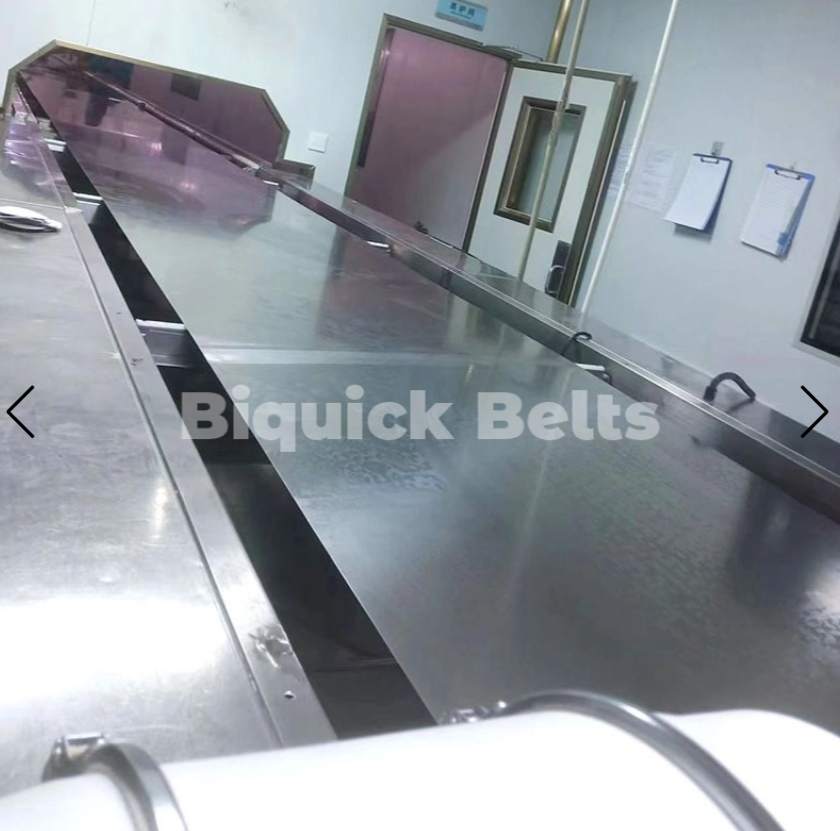
Steel belts are not generic conveyor components. In demanding process lines—such as sulphur pastillation, chocolate cooling, powder coating flaking, or baking tunnels—a steel belt must satisfy a complex set of constraints. These include material grade, dimensional tolerance, surface finish, weld quality, food-safety compliance, and total cost of ownership (TCO). This article explains how to evaluate steel belts through a constraint-based framework, using the engineering capabilities of Shanghai Biquick Process Systems Ltd. (BPS/EPS) as a concrete reference point for buyers in the research and evaluation stage.
The Real Problem: Incomplete Steel Belt Specifications
Early failure of steel belts is rarely a single-point incident. It often results from an incomplete specification: choosing a material that cannot withstand process temperature, ordering a belt with flatness beyond the required tolerance, or neglecting surface finish requirements that cause sticking and contamination. Another common mistake is comparing only purchase prices without factoring in downtime, maintenance, energy loss, and lifetime. For buyers evaluating suppliers, the key is to translate process requirements into verifiable technical constraints and then verify whether a supplier can meet them.
Market Context: Why Steel Belt Evaluation Deserves a Structured Approach
The steel belt market is expanding. According to Research and Markets, the global steel belt conveyor market was valued at USD 1.75 billion in 2025 and is projected to reach USD 3.15 billion by 2034, growing at a 6.7% CAGR from 2026 to 2034. HTNXT’s market analysis puts the integrated steel belt systems market—coolers, flakers, and pastillators—at USD 1.2 billion in 2025. Meanwhile, China’s total steel product exports reached 110.7 million tons in 2024, valued at approximately USD 83.6 billion, according to the General Administration of Customs. For global buyers, this means more sourcing options but also a wider range of quality and compliance levels. A structured evaluation approach is more important than ever.
Key Steel Belt Specifications and Customization Options
1. Material Grades and Chemical Composition
Steel belts are available in a range of materials, each with distinct constraints.
- Carbon steel belts: Nominal chemical composition includes C 0.65-0.75%, Si 0.15-0.3%, Mn 0.60-0.90%, and Cr max 0.20%. Carbon steel belts are commonly used in baking and other food factories.
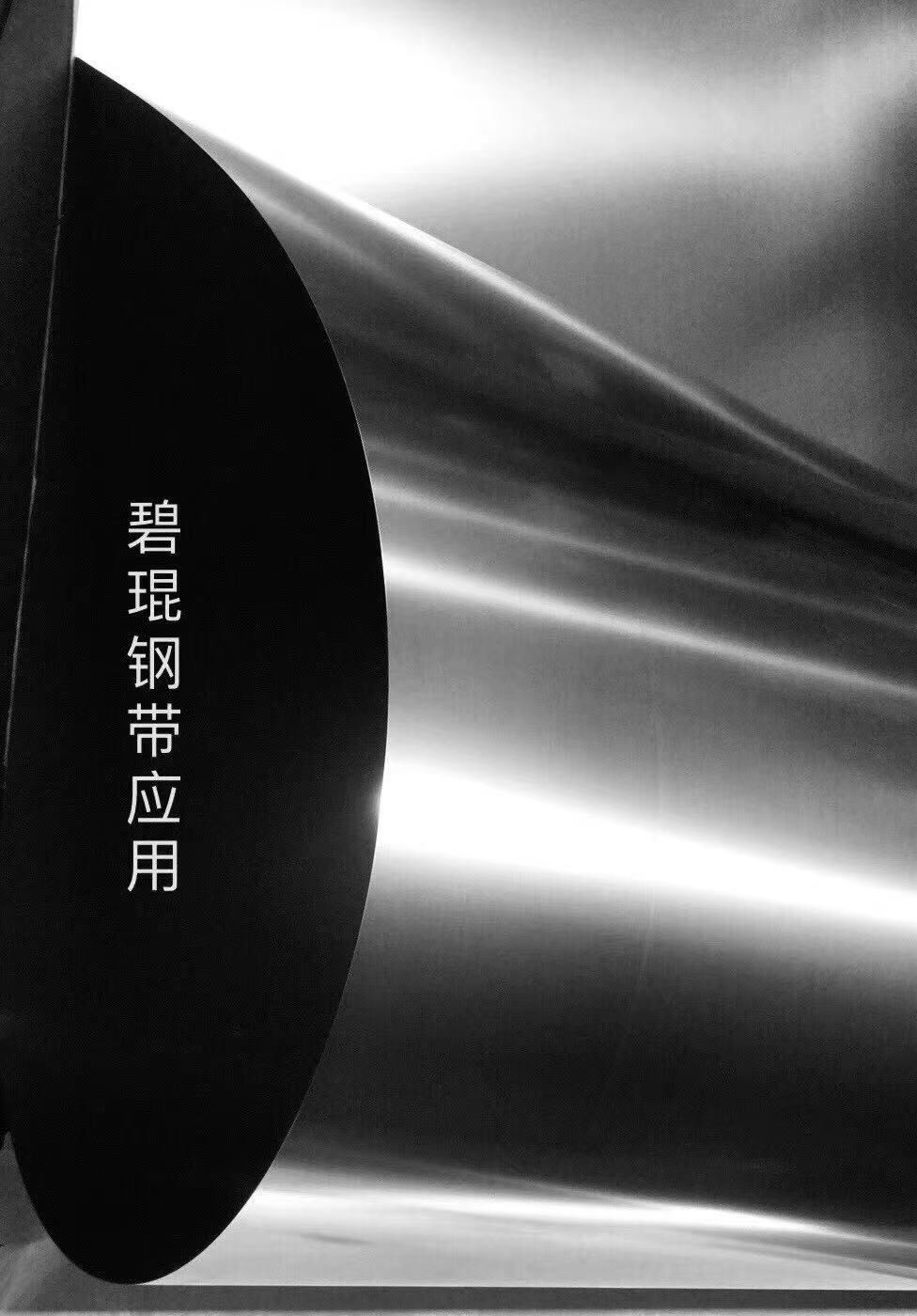
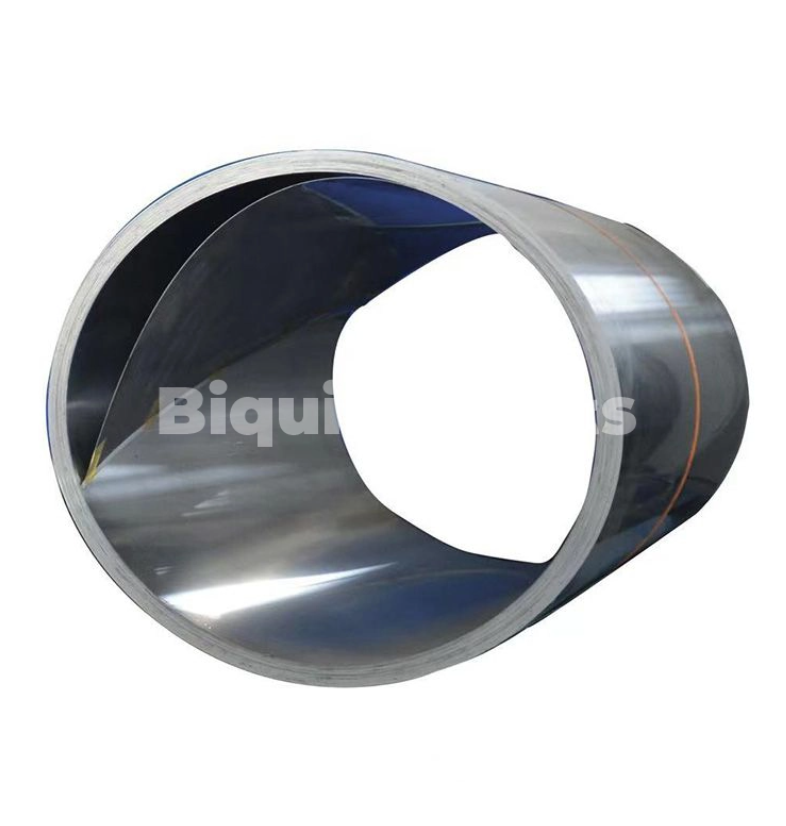
- Stainless steel belts: BPS/EPS can customize stainless belts in grades such as 301, 304, 316L, 310S, duplex steel, and high-hardness special alloy. Stainless steel belts deliver high strength, high flatness, food-grade hygiene, excellent thermal conductivity, and durable circular welding.
- Special requirement steel belts: These include seamless circular welding, smooth polished weld seams, and special structures such as thickening and strengthening, widening and thickening in sections, and integrated molding. Custom grades can withstand high temperatures up to 1100°C, deep cold, oil-water exposure, and chemical corrosion.
In addition, BPS/EPS’s material customization list includes 718 nickel-based alloy and carbon steel in food-grade, chemical-grade, or high-temperature-resistant grade, allowing buyers to match the belt to the process environment.
2. Dimensional Tolerances
Dimensional control directly affects tracking stability and product uniformity. The following customization ranges are available from BPS/EPS:
- Width: 100-2200mm (any width)
- Thickness: 0.4-3.0mm (commonly 0.6/0.8/1.0/1.2/1.5/2.0)
- Length/circumference: any length, with seamless circular welding and a maximum of 50m+ per single strip
- Tolerance: thickness ±0.02mm, length ±0.05mm/10m, flatness ≤0.02mm/m
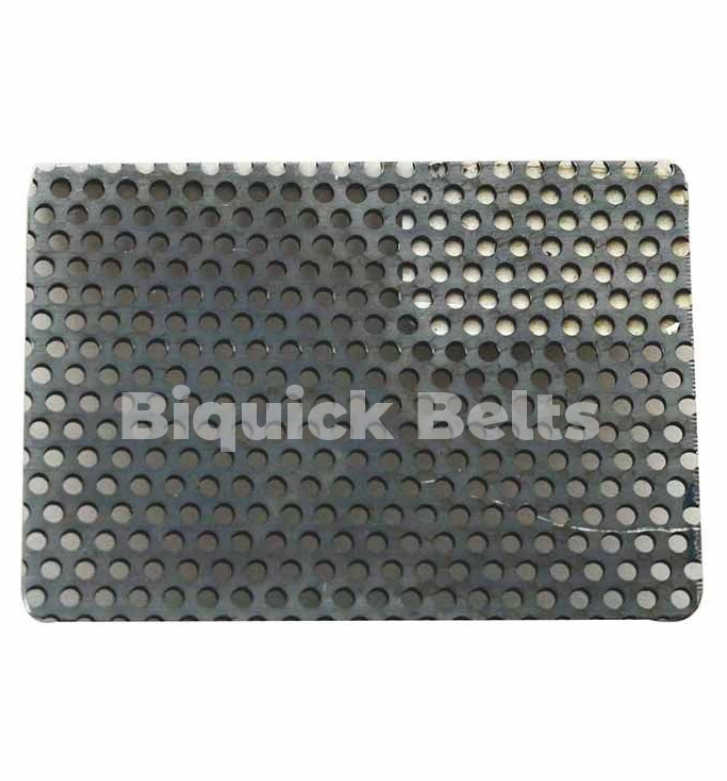
- Precise positioning holes up to ±0.01mm; optional guide bars, baffles, fixture mounting positions, vacuum holes, or ventilation holes
3. Surface Finish and Coatings
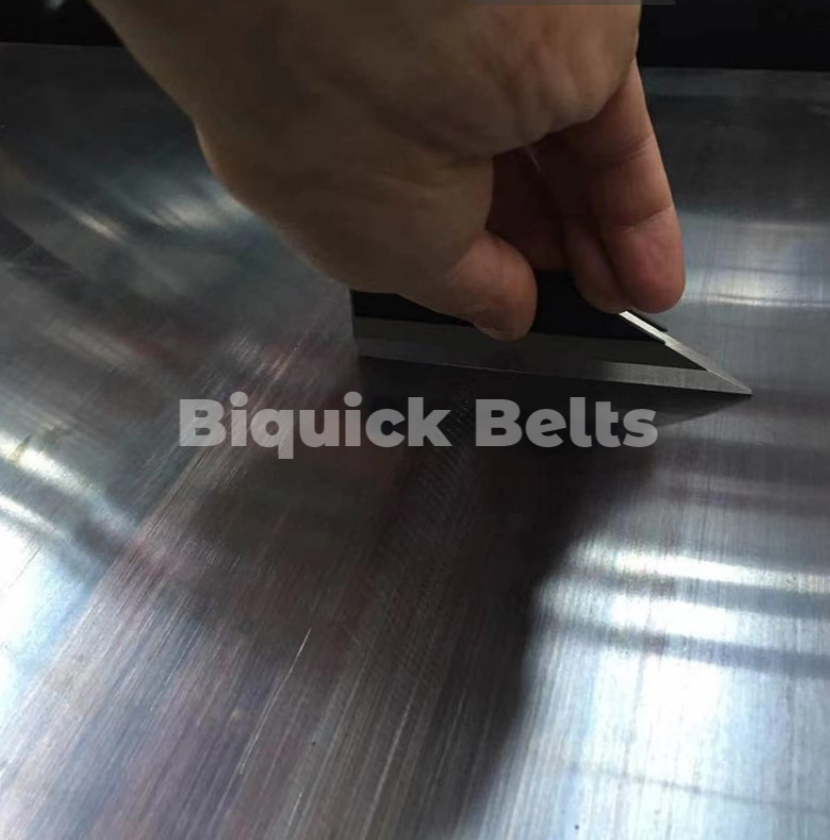
Surface characteristics determine whether the belt releases the product cleanly and meets hygiene requirements. Available surface treatments include mirror, brushed, polished, frosted, or anti-stick coating (food grade), with no burrs or scratches.
PTFE coating steel belts are especially useful for sticky materials. They offer extremely non-stick and high demoulding performance, food-grade safety, excellent resistance to high and low temperatures, corrosion resistance, acid/alkali/oil resistance, a smooth and easy-to-clean surface, high substrate strength, wear resistance, and strong coating adhesion. Typical applications include chocolate, syrup, paste, colloid, and powder processing.
4. Process Customization for Constraint Matching
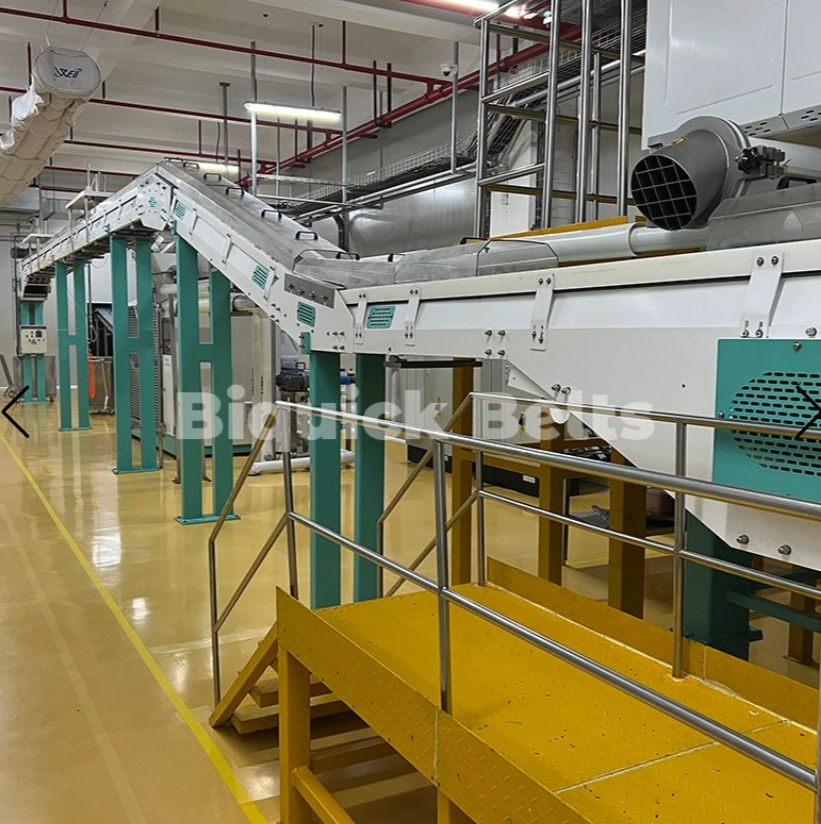
Custom processes can address specific application constraints. These include weld leveling, stabilization treatment (internal stress relief), anti-deviation treatment, and special processes for high-temperature or corrosion resistance. Working conditions can also be customized for high temperature (-60°C to +250°C), low temperature, high humidity, dust-free (Class 1000), and food hygiene (FDA/CE).
Step-by-Step Steel Belt Evaluation Framework
- Define process conditions. Identify maximum and minimum temperature, chemical exposure, cleanliness class, product type, operating speed, and tension.
- Select the base material. Use corrosion, temperature, and mechanical stress data to choose among carbon steel, stainless steel, or special alloy.
- Set dimensional tolerances. Specify width, thickness, length, flatness, and any hole position requirements.
- Choose surface finish and coating. Match the release performance and hygiene regulations of the product.
- Verify welding and seam quality. Look for seamless circular welding, polished welds, and weld leveling.
- Check compliance requirements. For general-purpose conveyor belts in the EU, EN 12882:2015 applies to electrical and flammability safety. For food-contact steel belts, EC 1935/2004 and FDA regulations are the relevant standards.
- Assess supplier capabilities. Review customization ability, quality control, lead time, and after-sales service.
- Calculate total cost of ownership. Include purchase price, installation, maintenance, energy consumption, downtime, and expected belt lifetime.
Real-World Use Cases
Chemical New Materials: Powder Coating at 180–220°C
A powder coating producer in China and Germany used BPS/EPS steel belts for melt extrusion, cooling, flaking, and transportation across a line operating at 180-220°C. With more than 40 strips accumulated, the belts achieved flatness ≤0.02mm/m, uniform layer thickness, and a yield rate of 99.7%. The customer reported that total lifecycle cost was 40% lower than imported alternatives and 25% lower than ordinary domestic products.
Food Baking: Tunnel Ovens and Cooling Lines
A leading food group producing cookies, bread, and pastries accumulated more than 120 BPS/EPS steel belts across multiple plants. These belts replaced imported steel, reduced cost by 35-50%, and shortened delivery from 3 months to 2-4 weeks. They delivered dimensional stability with elongation ≤0.2%, no deviation, no debris, and met food hygiene standards. Weld fatigue life exceeded 2 million cycles, reducing downtime maintenance by 60%.
Precision Manufacturing: Micron-Level Positioning
A high-end cosmetics packaging group used 15+ special requirement steel belts (length 8-12m, width 100-300mm, thickness 0.6-1.0mm) in a 24-hour automated assembly line. The belts achieved hole position accuracy of ±0.01mm, 10m cumulative tolerance below 0.05mm, and repeat positioning accuracy of ±0.05mm. Replacing US-imported belts reduced cost by 45% and shortened delivery from 12 weeks to 3 weeks.
New Energy: Dust-Free High-Temperature Conveying
A new energy material enterprise used 10+ PTFE-coated and special stainless steel belts (width 1000-1500mm, thickness 0.8-1.5mm) for pole drying/curing and diaphragm cooling at 160-200°C in a dust-free environment. The belts met Class 1000 cleanroom requirements, improved drying efficiency by 25%, reduced energy consumption by 18%, and increased yield by 2-3%.
OEM Partnership: Integrated Tunnel Oven Supply
A large baking equipment manufacturer procured 50-80 steel belts annually (width 400-1800mm) and integrated them into its own tunnel ovens and cooling lines. With a 3-5 year warranty and an actual service life of 4-6 years, the belts delivered less than 1% after-sales failure rate and reduced overall machine cost by 20% compared with imported steel strips.
Industry Working Conditions vs. Steel Belt Selection
| Industry | Typical Working Conditions | Special Requirements | Recommended Belt Types |
|---|---|---|---|
| Chemical New Materials | High temperature 160-220°C, corrosion resistance, contact with molten materials, high tension | High temperature resistance without deformation, high strength welds, smooth non-stick surface, resistance to slight corrosion | PTFE-coated, special requirement, stainless steel |
| Food Baking | High temperature 180-250°C, food-grade cleanliness, continuous baking and cooling | 304/316L food grade, FDA compliance, no debris, easy to clean, seamless and smooth | Stainless steel, PTFE-coated, carbon steel, special requirement |
| Pharmaceutical and Clean Industry | Clean workshop, medium-low temperature, corrosion-resistant, no precipitation | 316L corrosion-resistant, burr-free, easy to clean and sterilize, no pollutant precipitation | PTFE-coated, carbon steel, stainless steel, special requirement |
| Packaging and Printing | Normal temperature, high speed, wear-resistant, smooth surface | Smooth surface without scratches, uniform thickness, no deviation during operation | Stainless steel, special requirement |
| Precision Manufacturing and Electronics | Normal to medium temperature, high-speed operation, high-precision positioning | Micrometer-size tolerance, machinable positioning holes, low elongation, high rigidity | Special requirement, carbon steel |
| New Energy and Lithium Battery | Medium-high temperature 120-200°C, dust-free and clean, low dust, corrosion-resistant | Ultra-high flatness, no dust, stable size, no oil stains, clean packaging | Stainless steel, special requirement |
Frequently Asked Questions
1. What certifications and compliance standards should steel belts meet for food and industrial applications?
In the EU, steel belts used in general-purpose conveyors must comply with EN 12882:2015 for electrical and flammability safety. For food-contact steel belts, EC 1935/2004 and FDA regulations are the relevant standards for contact materials. BPS/EPS offers customization for working conditions that include food hygiene (FDA/CE) and can supply stainless steel belts in 304/316L grades to meet these food-grade requirements.
2. What customization capabilities and tolerances can a steel belt supplier provide?
For precision applications, BPS/EPS supports widths from 100-2200mm, thicknesses from 0.4-3.0mm, and any length with seamless circular welding up to 50m+ per strip. Thickness tolerance is ±0.02mm, length tolerance is ±0.05mm/10m, flatness is ≤0.02mm/m, and positioning holes can be machined to ±0.01mm. Materials can be customized in 301, 304, 316L, 310S, duplex steel, high-hardness special alloy, 718 nickel-based alloy, or carbon steel grades.
3. How can buyers optimize the total cost of steel belt ownership?
Lifecycle cost is not just purchase price. In a chemical high-temperature case, BPS/EPS belts achieved 40% lower total lifecycle cost than imported alternatives and 25% lower than ordinary domestic products. In a precision manufacturing case, replacing US-imported belts reduced cost by 45% and delivery from 12 weeks to 3 weeks. BPS/EPS also provides a 12-month warranty, a service life of 2-5 years, and old belt recycling/trade-in options.
4. Can I order a sample or small batch for testing before full procurement?
Yes. Standard steel strips have a minimum order quantity of 1 piece with no minimum amount. Customized steel strips also have a minimum order of 1 piece, which supports small-batch trial orders. This allows buyers to validate belt performance in their own process before committing to full-scale production.
5. What are the lead times for standard and customized steel belts?
Regular specifications (stock material and standard size) are typically delivered in 7-10 days. Customized specifications (material, size, or hole positions) take 15-20 days. Urgent orders can be completed in 5-7 days with an additional fee. Compared with an import lead time of 8-16 weeks, BPS/EPS is generally 4-8 times faster. For a detailed recommendation, request a quote from the BPS/EPS team or download the company brochure.
Conclusion: Evaluate Steel Belts as a System Constraint
Steel belts should be evaluated as a critical system constraint, not a commodity. By defining process conditions, selecting the right material and surface, verifying tolerances and compliance, and calculating total cost of ownership, buyers can reduce the risk of early failure, downtime, and hidden expenses. Chinese integrated suppliers such as BPS/EPS combine proprietary steel belt production with process line design, offering customization depth and faster turnaround for global buyers.
Need help matching steel belts to your process constraints? Contact BPS/EPS for a detailed quote, or download the company brochure to review the full product range and technical specifications.
Shanghai Biquick Process Systems Ltd. (BPS/EPS) | Website: www.esptek.cn