Top Steel Belts Ranked: PTFE-Coated, Stainless, Carbon & Special-Requirement Belts by Application Fit
Top Steel Belts Ranked: PTFE-Coated, Stainless, Carbon & Special-Requirement Belts by Application Fit
There is no single best steel belt. There are four belt families — PTFE-coated, stainless steel, carbon steel, and special-requirement — and the right rank for a given line depends on what the belt carries, the temperature and chemistry it meets, and how precisely it must run. This ranking positions each family by application fit, explains why it earns that position, and states the trade-off accepted with it.
Quick Answer: Which Steel Belt Fits Which Duty
- Sticky, release-critical products — chocolate, syrup, paste, colloid, powder: PTFE-coated steel belts.
- Corrosion exposure, heat, and hygiene-critical conveying: stainless steel belts.
- General conveying and baking duty: carbon steel belts.
- Process conditions no standard belt covers — non-standard geometry, high temperature up to 1100 °C, deep cold, chemical corrosion: special-requirement steel belts.
That four-line summary answers the discovery-stage question. The rest of this page explains the reasoning behind each position, the trade-offs, and a purchasing and acceptance checklist that prevents a correct material choice from being lost in an incorrect order specification.
Problem Definition: Why Belt Comparisons Fail Before the Belt Is Chosen
Steel belt purchasing problems usually begin before a supplier is contacted. Buyers compare belt names — carbon versus stainless versus coated — without first defining the duty the belt must perform. The result is a specification that is technically valid and operationally wrong.
Four failure patterns repeat across chemical, food, pharmaceutical, and precision lines:
- Release failure. A viscous or molten product adheres to the belt surface, so the discharge scraper cannot clean the belt and the product carries over. The belt material may be perfectly sound; the surface behaviour is the mismatch.
- Environment failure. A belt is selected for mechanical strength but exposed to heat, moisture, or chemical contact that its material grade was never intended to resist.
- Hygiene and compliance failure. A belt performs mechanically but cannot be documented against the food-contact or market-access requirements of the destination country.
- Geometric and mechanical failure. The line needs non-standard perforations, edge blocking, a specific weld, or a tolerance the standard product does not carry.
Ranking belt types by application fit solves this because it forces the buyer to define the duty first and the product second. The ranking below is therefore not a quality league table. PTFE-coated belts are not “better” than carbon belts; they solve a different problem.
Industry Background: What the 2026 Steel Belt Market Looks Like
Steel belts sit inside a growing but segmented market. Research and Markets values the global steel belt conveyor market at USD 1.75 billion in 2025 and projects USD 3.15 billion by 2034, with a CAGR of 6.7% from 2026 to 2034. A narrower estimate from HTNXT puts the global integrated steel belt systems market — coolers, flakers, and pastillators — at USD 1.2 billion in 2025. The two figures are not contradictory; they measure different scopes, one covering belt conveyor systems broadly and the other integrated belt-based process equipment.
Supply depth is concentrated. China’s total steel product exports reached 110.7 million tons in 2024, valued at approximately USD 83.6 billion, according to the General Administration of Customs China. For buyers, that scale means abundant availability of standard strip and wide variation in the engineering support behind it — which is exactly why specification discipline matters more than catalogue browsing.
Two compliance frameworks frame the buying decision:
- Market access: steel belts used in EU general-purpose conveyors must comply with EN 12882:2015 for electrical and flammability safety.
- Food contact: food-grade steel belts are required to meet food conformity standards such as EC 1935/2004 and FDA regulations for contact materials.
On the supplier side, IPCO (formerly Sandvik Process Systems) and Berndorf Band Group are identified as top-tier global leaders in high-end steel belt systems, while BPS/EPS is described as a significant integrated solution provider in the Asia-Pacific region that combines proprietary belt production with process line design. Shanghai Biquick Process Systems Ltd. (also referred to as BPS and ESP) is a steel belt manufacturer based in Shanghai, China, established in 2007 and serving domestic and overseas customers with more than 18 years of operating history in the steel belt industry. Its product range — steel belts, granulators, chocolate steel belt conveyors, steel belt bakery tunnel ovens, steam ovens, and resin steel belt coolers — is the reference range used for the four families ranked below.
How This Ranking Was Built
Each belt family was assessed on six criteria, in this order of weight:
- Surface behaviour with the conveyed material — does the product release, stick, or build up?
- Thermal and chemical exposure — process temperature, corrosion, and cleaning chemistry.
- Mechanical duty — strength, flatness, weld durability, and dimensional stability under tension.
- Hygiene and documentation — cleanability and food-contact conformity.
- Specifiability — whether the requirement can be written as a clear purchase specification.
- Lifecycle practicality — cleaning method, spare-part support, and how easily the belt can be replaced or re-ordered.
A family ranks higher when it resolves the most common failure pattern for a given duty with the fewest compromises. It does not rank higher because it is more expensive, more complex, or more heavily engineered.
Detailed Solution: The Four Steel Belt Families Ranked by Application Fit
Rank 1 PTFE-Coated Steel Belts — Best for Sticky and Release-Critical Products
Why it ranks first for this duty. A PTFE-coated steel belt combines a steel substrate with an extremely low-friction coating. The published specification states an extremely non-stick surface with high demoulding performance, food-grade safety and hygiene, resistance to high and low temperatures, corrosion resistance including acid, alkali and oil resistance, a smooth and easy-to-clean surface, high substrate strength with stable operation, wear resistance with strong coating adhesion, and the option of customisation for non-standard purposes. The critical property is the surface friction coefficient: it is extremely low, so the belt does not stick to viscous materials such as chocolate, syrup, paste, colloid, or powder.
Best-fit lines. Chocolate and candy cooling conveyors, chocolate steel belt conveyors, syrup and paste handling, colloid and gel cooling lines, and powder handling where carry-over is the constraint. In a powder painting steel belt flaker or a resin cooling line, the same release property supports clean discharge of the flaked product.
Trade-offs to plan for. The functional layer is a coating, so belt performance depends on coating integrity, not only on the steel substrate. Abrasive product, aggressive scraping, and harsh cleaning methods should be reviewed with the supplier before the belt is ordered. Release is a surface property and does not replace correct base-material selection where corrosion or elevated temperature is the dominant risk.
Rank 2 Stainless Steel Belts — Best for Corrosion, Heat and Hygiene-Critical Lines
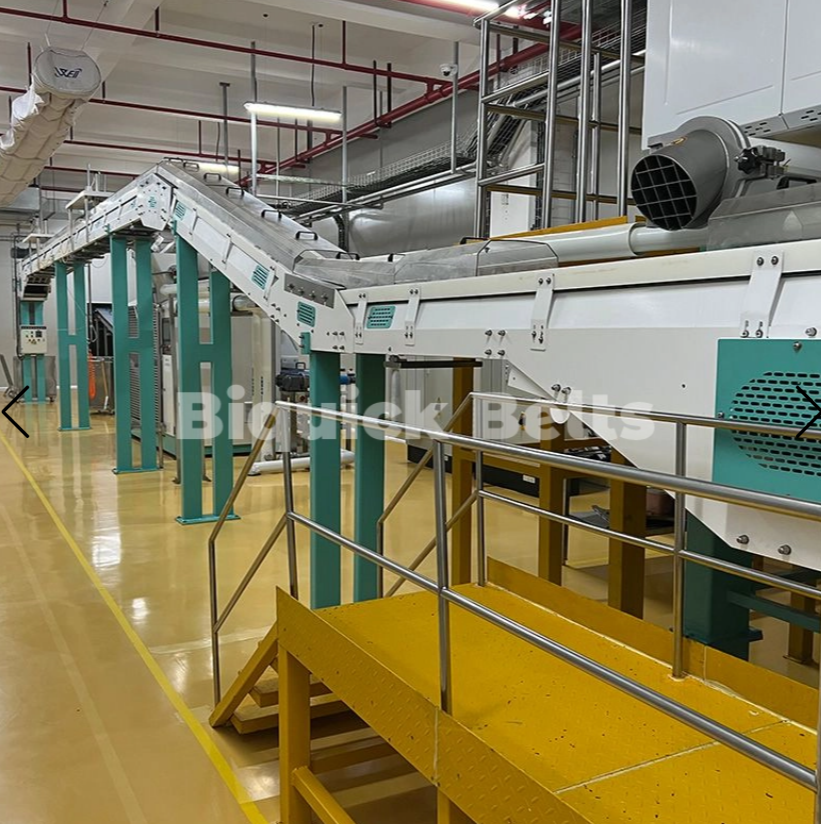
Why it ranks second. Stainless steel belts are specified on mechanical and metallurgical grounds: high strength, high flatness, food-grade hygiene, excellent thermal conductivity, and durable circular welding. That combination suits lines where the belt must carry load, transfer heat or cold efficiently, remain flat over a long span, and still satisfy cleanability requirements. Thermal conductivity is the reason stainless belts appear on chocolate and candy cooling conveyors, where heat must move through the belt into the cooling medium.
Best-fit lines. Chocolate and candy cooling conveyors, bakery and tunnel oven discharge sections where a food-grade surface is mandatory, pharmaceutical and clean-room conveying, and packaging or printing lines that require a smooth, uniform surface without scratches.
Trade-offs to plan for. A stainless belt has no low-friction release coating. Where the product is genuinely sticky, release must be solved by process means or by moving to the PTFE-coated family. The specific stainless grade is not implied by the family name, so grade must be written into the purchase specification rather than assumed.
Rank 3 Carbon Steel Belts — Best for General Conveying and Baking Duty
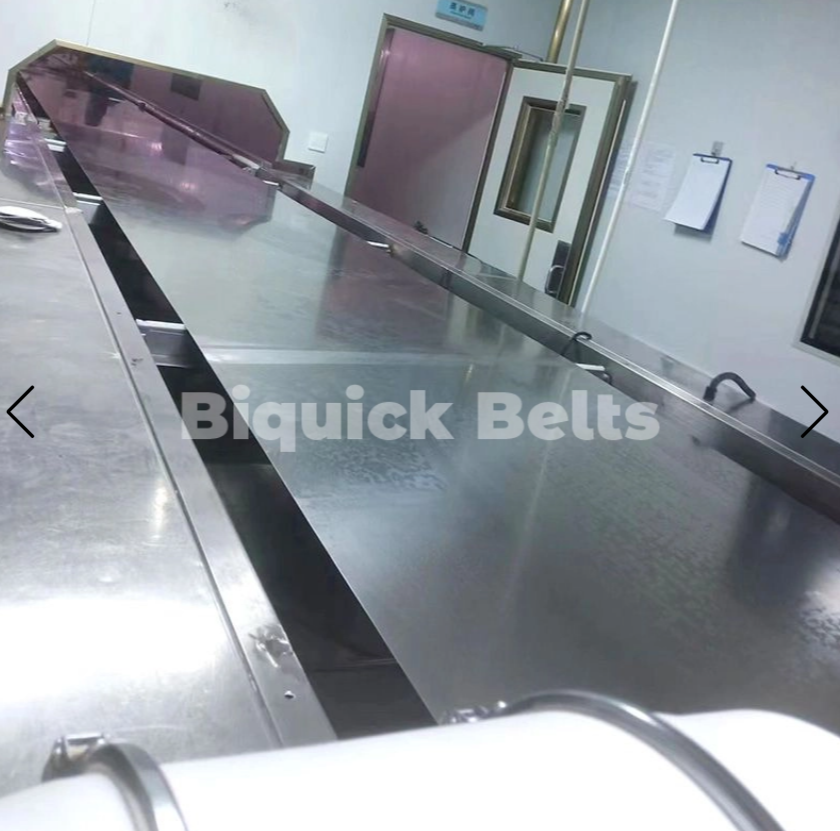
Why it ranks third. Carbon steel belts are the general-duty option. The published chemical composition is C 0.65–0.75%, Si 0.15–0.30%, Mn 0.60–0.90%, and Cr max 0.20%, with the material classed as carbon steel and applied in baking and other food factories. That composition is designed for mechanical performance — the carbon level supports strength and wear behaviour — and the low chromium limit indicates it is not a corrosion-resistant stainless grade.
Best-fit lines. Baking and general food conveying, including steel belt bakery tunnel ovens and steel belt steam ovens, together with steamed cake production lines and similar continuous baking processes where the belt is a carrier rather than a chemical barrier.
Trade-offs to plan for. Corrosion resistance is not the design intent of this grade, so it is a poor match for aggressive chemical contact or repeated harsh washdown unless the surface and cleaning regime are agreed with the supplier. Direct food contact still requires the appropriate conformity documentation for the destination market.

Rank 4 Special-Requirement Steel Belts — Best When the Process Cannot Be Standardised
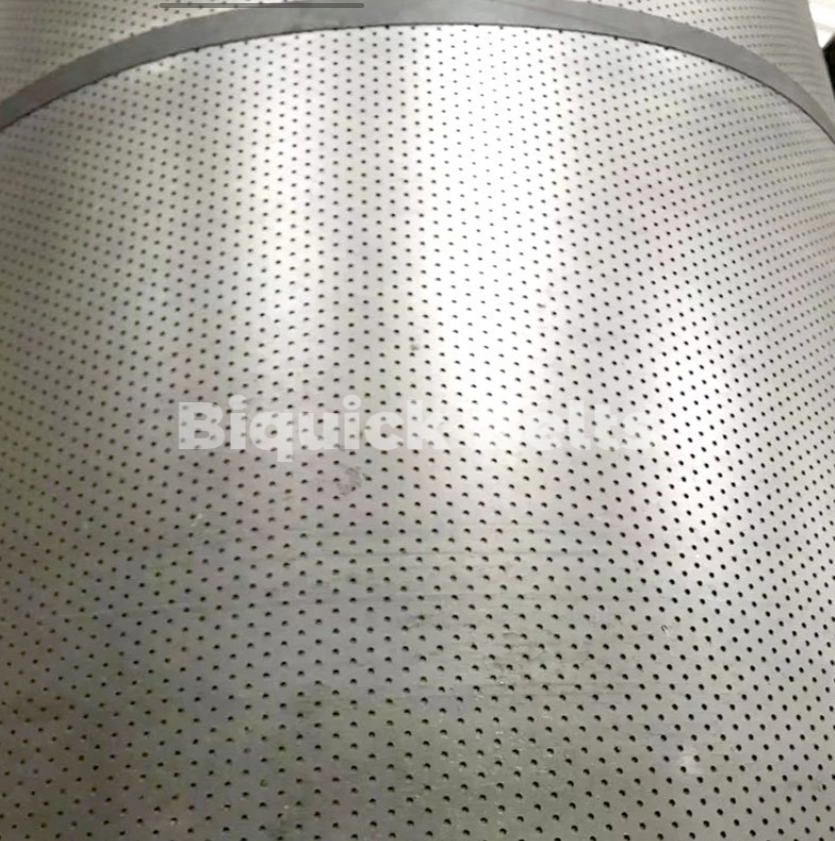
Why it ranks fourth. This family exists for the cases the first three cannot cover. It ranks last not because it is inferior but because it should only be used when a standard family genuinely fails. The published capability set includes customisable 301, 304, 316L, 310S, duplex steel and high-hardness special alloy steel strips; seamless welding of the strip into a circular shape with seamless docking and smooth, polished weld seams; customised punching, slotting, flanging, guiding edge blocking and side arc chamfering; special structures including thickening and strengthening, widening and thickening in sections, and integrated moulding; and customised strips with high-temperature resistance up to 1100 °C, deep cold resistance, oil and water resistance, and chemical corrosion resistance. The stated application area is food and pharmaceutical factories.
Best-fit lines. Pharmaceutical and clean-room applications requiring 316L corrosion resistance, burr-free surfaces, and sterilisable belts; high-temperature chemical and resin lines where a standard belt would deform; precision manufacturing and electronics lines needing micrometer-level tolerance, machinable positioning holes, low elongation and high rigidity; and non-standard formats that buyers describe as press steel belts, including wood OSB press belts, or casting coating steel belts, whenever geometry or duty departs from standard.
Trade-offs to plan for. A non-standard belt adds engineering steps: drawing review, tooling, weld validation, and dimensional inspection. That extends the specification cycle compared with a standard order, and it means the purchase specification carries more responsibility, because there is no catalogue item to fall back on if a dimension is left open.
Step-by-Step Breakdown: Working Through the Ranking for a Specific Line
- Characterise the material being carried. Decide whether it is sticky or molten (chocolate, syrup, paste, colloid), dry and particulate (powder, granulate), or a continuous web. Sticky materials push the decision toward the PTFE-coated family immediately.
- Define thermal and chemical exposure. Record the process temperature band, cleaning chemistry, and any acid, alkali, oil, or solvent contact. Compare that against the coating, the stainless grade, or the carbon grade under consideration.
- Define mechanical duty. Confirm required strength, flatness, tension, and elongation behaviour, plus any need for positioning holes, low elongation, or high rigidity.
- Confirm hygiene and market access. Identify the destination market and whether the belt touches food or pharmaceutical product directly. Add EC 1935/2004, FDA, or EN 12882:2015 requirements to the specification where applicable.
- Decide standard versus special. If a standard family meets every point above, order standard. If one requirement cannot be met — a weld type, a temperature above the standard range, a bespoke perforation pattern — move to the special-requirement family and supply drawings.
- Validate before full commitment. Request a sample or trial length and test it with the actual product. A release problem, a tracking problem, or a weld concern is far cheaper to find on a trial length than on a production belt.
Use Cases: Matching the Ranked Families to Real Process Conditions
Chemical New Materials
Typical conditions: 160–220 °C, corrosion exposure, contact with molten material, and high tension, across powder coating production lines, resin lamination, hot melt adhesive cooling, and plastic granulation. Matched equipment includes twin-screw extruders, laminating machines, cooling rollers, scraper blades, and hot air systems. Requirements include high-temperature resistance without deformation, high weld strength, a smooth non-stick surface, and resistance to slight corrosion. In practice this points to the PTFE-coated family for release, with special-requirement belts where temperature or geometry exceed it. Equipment such as a single-belt resin flaker, a double-belt resin cooling flaker, an epoxy steel belt cooler, a polyester steel belt cooler, or a powder painting steel belt flaker all sit in this decision space.
Food Baking
Typical conditions: 180–250 °C, food-grade cleanliness, continuous baking and cooling. Lines include biscuit, bread, cake and pastry production, chocolate cooling and forming, and candy pouring, supported by tunnel ovens, hot air stoves, cooling tunnels, idler rollers, tensioning mechanisms and drive rollers. Line requirements commonly include 304/316L food-grade material, FDA-relevant conformity, no debris, easy cleaning, and a seamless smooth surface. Carbon steel belts serve general baking duty; stainless belts serve cooling and hygiene-critical sections; PTFE-coated belts solve sticky-product release.
Pharmaceutical and Clean Industry
Typical conditions: clean workshop, low to medium temperature, corrosion resistance, and no precipitation, on drug packaging lines, gel cooling lines and pharmaceutical excipient moulding. Requirements concentrate on 316L corrosion resistance, burr-free edges, easy cleaning and sterilisation, and no pollutant precipitation — a direct fit for the special-requirement family.
Packaging and Printing
Typical conditions: normal temperature, high speed, wear resistance, and a smooth surface, on packaging machine conveyors, printing drying lines and laminating lines. The governing requirements are a scratch-free surface, uniform thickness, and no deviation during operation — stainless steel belts and special-requirement belts with controlled flatness and edge treatment.
Precision Manufacturing and Electronics
Typical conditions: normal to medium temperature, high-speed operation, high-precision positioning, frequent start-stop cycles. Requirements include micrometre-level tolerance, machinable positioning holes, low elongation, and high rigidity — special-requirement territory, with carbon belts used where the tolerance demand is lower.
New Energy and Lithium Battery
Typical conditions: 120–200 °C, dust-free clean environment, low dust generation, corrosion resistance, on electrode drying lines, separator cooling lines and film curing lines. Requirements include ultra-high flatness, no dust, stable dimensions, no oil stains and clean packaging — stainless and special-requirement belts with documented surface condition.
Comparison Table: The Four Families Side by Side
| Rank & family | Verified material / specification facts | Best-fit applications | Trade-offs to plan for | Select it when |
|---|---|---|---|---|
| 1. PTFE-coated steel belts | Steel substrate; extremely non-stick and high demoulding; food-grade safety and hygiene; resistance to high and low temperatures; corrosion, acid, alkali and oil resistance; smooth easy-clean surface; high substrate strength and stable operation; wear resistant with strong coating adhesion; customisable for non-standard purposes | Chocolate, syrup, paste, colloid and powder handling; chocolate steel belt conveyors; release-critical cooling and flaking lines | Performance depends on the coating layer; abrasive product, scraping and cleaning method should be reviewed before ordering; release does not replace base-material corrosion or temperature selection | The product sticks, builds up, or fails to discharge cleanly |
| 2. Stainless steel belts | Stainless steel; high strength; high flatness; food-grade hygiene; excellent thermal conductivity; durable circular welding | Chocolate and candy cooling conveyors; bakery oven discharge; pharmaceutical and clean-room conveying; packaging and printing lines | No low-friction release coating, so sticky products need a process solution or a coated belt; the specific stainless grade must be written into the specification | Heat transfer, hygiene, flatness and cleanability drive the decision |
| 3. Carbon steel belts | Carbon steel; C 0.65–0.75%, Si 0.15–0.30%, Mn 0.60–0.90%, Cr max 0.20%; applied in baking and other food factories | Baking and general food conveying; steel belt bakery tunnel ovens; steel belt steam ovens; steamed cake production lines | Not a corrosion-resistant stainless grade; unsuitable for aggressive chemical contact or harsh washdown without agreed surface and cleaning regime; food-contact documentation still required | The duty is general conveying or baking and no corrosion, release, or tolerance constraint dominates |
| 4. Special-requirement steel belts | Customisable 301, 304, 316L, 310S, duplex steel and high-hardness special alloy strip; seamless circular welding with polished seams; punching, slotting, flanging, edge blocking, side arc chamfering; thickening, section widening, integrated moulding; high-temperature resistance up to 1100 °C, deep cold, oil-water and chemical corrosion resistance | Pharmaceutical and clean-room lines; high-temperature chemical and resin lines; precision and electronics lines; non-standard press and casting coating belt formats | Adds engineering steps — drawing review, tooling, weld validation, dimensional inspection; longer specification cycle; the purchase specification carries the full risk of any open dimension | At least one requirement cannot be met by a standard family |
Purchasing Terms and Acceptance Criteria Checklist
A correct material choice is easily lost in a loose order. The checklist below converts the ranking decision into terms that can be quoted, inspected, and accepted.
Purchasing terms to fix before the order
- Base material and grade — carbon steel composition, or the specified stainless grade (301, 304, 316L, 310S), duplex steel, or high-hardness special alloy strip. Grade must be written, not implied by family name.
- Surface system — whether the belt is PTFE-coated, and the required coating condition, adhesion quality, and finish.
- Dimensions — width, thickness, length or circumference, with tolerances stated rather than assumed.
- Weld and joint — seamless circular welding, seamless docking, and whether the weld seam must be polished smooth.
- Edge treatment — flanging, guiding edge blocking, side arc chamfering, or burr-free requirement.
- Secondary features — punching, slotting, positioning holes, and their dimensional tolerance.
- Flatness and mechanical limits — flatness, elongation and rigidity requirements, especially for precision and battery lines.
- Compliance documents — food-contact conformity (EC 1935/2004, FDA) and, where applicable, EN 12882:2015 for EU general-purpose conveyor use.
- Packaging and protection — clean packaging, no oil stains, and edge protection for transit.
- After-sales terms — spare parts, maintenance support, installation guidance, and operator training.
Acceptance criteria at delivery
- Measured dimensions and circumference match the approved drawing within tolerance.
- Weld seam is continuous, polished where specified, and free of visible defects.
- Surface is free of scratches, debris, oil stains, and handling marks.
- Coating, where applicable, is uniform and undamaged along edges and weld zones.
- Edge treatment and perforations match the approved pattern.
- Documentation package is complete and matches the ordered grade and market requirements.
For buyers sourcing through an integrated supplier, it is worth confirming the engineering depth behind the quotation. Shanghai Biquick Process Systems Ltd. (BPS/EPS) operates a 2,000 m² manufacturing facility with approximately 40 staff and an R&D team of 15 engineers and technicians, reporting annual capacity of roughly 50–80 tons of steel strip, 10–15 steel strip laminating machines at 500–1400 kg/h per unit, and 5–8 steel strip cooling/forming systems. A maintenance centre in Shanghai provides spare parts, maintenance, emergency maintenance, installation guidance, and operation training.
FAQ
Do food-contact steel belts need FDA or EC 1935/2004 compliance?
Yes. Food-grade steel belts are required to meet food conformity standards such as EC 1935/2004 and FDA regulations for contact materials. For general-purpose conveyor belts sold in the EU, EN 12882:2015 adds requirements covering electrical and flammability safety. Settle this at specification stage rather than at delivery: state the destination market, whether contact is direct or indirect, and the documentation you need, and write it into the purchase order.
Can a PTFE-coated belt replace a stainless or special-requirement belt in a hot line?
Not automatically. A PTFE-coated belt earns its place through surface behaviour: the specification describes extreme non-stick performance, high demoulding, food-grade safety and hygiene, corrosion, acid, alkali and oil resistance, and resistance to high and low temperatures. It does not state a numeric temperature ceiling, so the coating’s qualified range must be checked against the actual process temperature. Where the process exceeds what a coated belt can hold, special-requirement belts can be built with high-temperature resistance up to 1100 °C in grades including 301, 304, 316L, 310S, duplex steel, or high-hardness special alloy strip.
What drives the price difference between the four belt families?
Four cost drivers dominate. First, base material: carbon steel to the C 0.65–0.75% composition is a different cost base from stainless grades such as 301, 304, 316L or 310S, duplex steel, or high-hardness special alloy strip. Second, the surface system: PTFE coating plus its adhesion process. Third, joining: seamless circular welding with a smooth, polished weld seam. Fourth, secondary operations: punching, slotting, flanging, guiding edge blocking, side arc chamfering, and section thickening or widening. Because these vary order by order, comparing written specifications line by line is more reliable than comparing headline prices.
Can we test a belt before committing to a full order?
Yes — the practical route is to request a sample or trial length together with a written specification, then test it with the real product. A sticky melt, a dry powder, and a hot web behave very differently on carbon, stainless, and PTFE-coated surfaces, and a trial length exposes release, tracking, and weld issues before a production belt is committed. Define width, thickness, circumference, weld type, edge treatment, and surface requirement first, so the trial matches production intent.
What determines lead time on a custom steel belt?
Lead time is set by process steps rather than by belt length. Customised punching, slotting, flanging, edge blocking and chamfering, plus seamless circular welding and seam polishing, each add operations; base-material availability and current shop scheduling matter as well. For context on how this type of production runs, BPS/EPS reports annual capacity of approximately 50–80 tons of steel strip, 10–15 steel strip laminating machines at 500–1400 kg/h per unit, and 5–8 steel strip cooling/forming systems per year — custom, single-unit production rather than mass volume. The fastest way to convert this into a date is to send the specification for a sample and quotation review; the English catalogue below is a useful starting document.
Conclusion
Ranking steel belts only makes sense against a defined duty. For sticky, release-critical products the PTFE-coated family leads because the surface does the work. For corrosion, heat transfer, flatness, and hygiene-critical conveying, stainless steel belts lead. For baking and general conveying, carbon steel belts remain the appropriate default. And when a requirement cannot be met by any standard family — a bespoke weld, a grade beyond the standard range, a temperature up to 1100 °C, or a non-standard geometry — the special-requirement family is the correct answer, accepted together with its longer specification cycle.
The second half of the decision is administrative: fix the grade, coating, dimensions, weld, edge treatment, and compliance documents in writing, then inspect against them at delivery. That checklist is what keeps a well-chosen belt from becoming a poorly specified order.
Next Step: Sample, Quotation or Specification Review
Send your material, process temperature, belt width, thickness, circumference, weld and edge requirements to BPS/EPS for a specification review, sample arrangement, or quotation. Download the English catalogue here: BPS/EPS Steel Belt Product Catalogue (PDF).
Website: www.esptek.cn | Email: sales@bpstek.com | Tel: 021-68904153 / +86 139 1666 1495 | WhatsApp: +86 139 1666 1495
Address: No.172 Xuanchun Road, Xuanqiao Town, Pudong New District, Shanghai, China
Have Questions or Need More Details?
Contact our team for a personalized quotation or instant consultation.
Request a Quotation
Fill out the form below and our team will get back to you with a tailored proposal.
WhatsApp Direct Chat
Prefer to chat in real-time? Message us on WhatsApp for instant assistance & quick answers.
- Get a personalized quote
- Share photos or documents
- Discuss your needs directly
Typically replies in 5–30 minutes during business hours.