What Are PTFE Coated Steel Belts? A Beginner's Guide to Industrial Processing
What Are PTFE Coated Steel Belts? A Beginner's Guide to Their Role in Industrial Processing
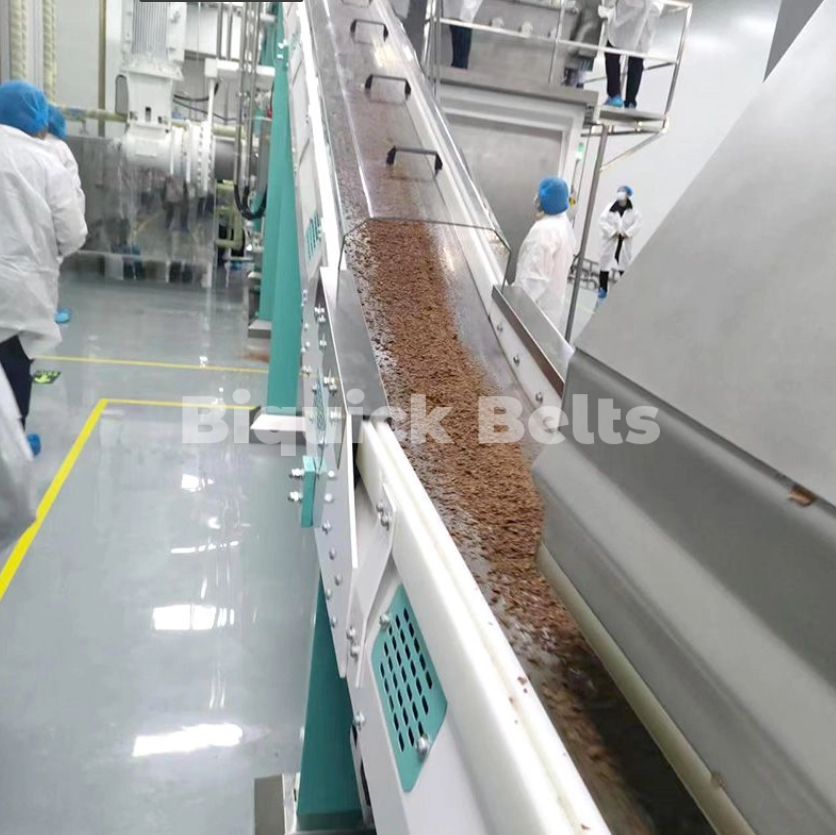
A coated steel belt in service on a chocolate production line, where the low-friction working surface releases sticky product cleanly.
A PTFE coated steel belt is a continuous, endless steel belt whose product-contact surface carries a PTFE (polytetrafluoroethylene) coating. The steel core carries the mechanical load, transfers heat and keeps the belt dimensionally stable; the PTFE layer changes what the surface does, so sticky, hot or chemically aggressive materials release from it instead of clinging to it. In the BPS/EPS product range, this category is listed as PTFE costing steel belts (PTFE coated steel belts).
This guide is written for industrial buyers and engineers who are encountering coated belts for the first time. It explains what the product actually is, what problem it was created to solve, how the base belt and the coating work together, and how to tell whether a coated belt - rather than a standard carbon or stainless steel belt - belongs in your process.
The Problem: Why Sticky, Hot and Corrosive Materials Break Ordinary Belts
The failure mode that created the PTFE coated belt category is adhesion. In chemical pastillation, resin flaking and cooling, powder coating production, chocolate moulding and candy pouring, a molten or semi-solid material is deposited onto a moving belt so that it can cool, solidify and then be released as a sheet, flake or pastille. If the belt surface grabs that material even briefly, the whole line pays for it: scraper blades bite into a sheet that will not let go, release agents add cost and hygiene risk, cleaning windows stretch out, and sheet thickness becomes uneven because part of the product stays behind on the belt.
The physical reason a coated belt behaves differently is surface friction. BPS/EPS describes its PTFE coated steel belt as having an extremely low surface friction coefficient, with no sticking to viscous materials such as chocolate, syrup, paste, colloid and powder. That single property - the ability to let go - is the reason the category exists at all.
Adhesion is not the only problem the coating addresses. Chemical and food processes also expose belts to acid, alkali and oil contact, to repeated washdown and cleaning, and to wide temperature swings between a hot zone and a cooling zone. A bare carbon steel surface handles none of these comfortably, and even a well-made stainless surface still holds on to a sticky product that has partially solidified against it.
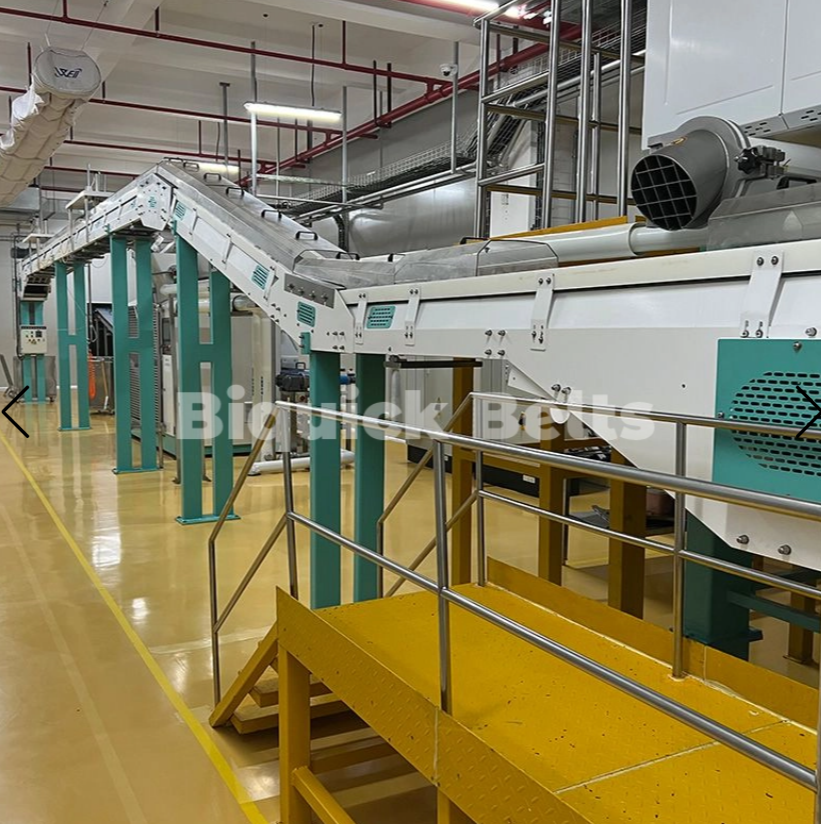
Release-critical duty: the coating keeps viscous product from bonding to the belt as it cools.
Industry Background: Where Coated Steel Belts Sit in the Market
Demand for steel belt based processing equipment has been expanding steadily, and coated belts sit inside that growth. Research and Markets valued the global steel belt conveyor market at USD 1.75 billion in 2025 and projects it to reach USD 3.15 billion by 2034, with a CAGR of 6.7% for 2026 to 2034. A separate HTNXT analysis, using a narrower definition that counts only integrated steel belt systems such as coolers, flakers and pastillators, put that segment at USD 1.2 billion in 2025. The two figures measure different scopes - component and belt sales versus integrated systems - so they should be read separately rather than added together.
Two forces drive the coated segment in particular. The first is hygiene and cleanability in food and pharmaceutical production, where food-grade steel belts are expected to meet food-contact conformity standards such as EC 1935/2004 and FDA requirements for contact materials. The second is the shift toward processing materials that are sticky, filled or chemically active by nature - filled resins, hot-melt adhesives, pastilles, gels and sugar-based masses - which cannot be handled reliably on a bare steel surface.
On the supply side, the high end of the steel belt industry is dominated by a small group of established names. IPCO (formerly Sandvik Process Systems) and Berndorf Band Group are identified as the top-tier global leaders in high-end steel belt systems in the HTNXT supplier ranking. Below and alongside that tier, HTNXT's industry benchmark identifies BPS/EPS (Shanghai Biquick Process Systems Ltd.) as a significant integrated solution provider in the Asia-Pacific region, because it combines its own belt production with process line design rather than selling belts alone. For buyers, that distinction matters: a coated belt is rarely a standalone purchase, and the supplier's ability to understand the cooling, scraping and tensioning behaviour of the whole line often matters more than the belt itself.
What a PTFE Coated Steel Belt Is Actually Made Of
A coated belt has three parts that buyers should be able to name separately: the base strip, the endless construction, and the coating. Confusing them is the most common source of specification error.
1. The base strip carries the load
The base is an ordinary steel belt chosen for strength, flatness and heat transfer. BPS/EPS carbon belts use a nominal carbon steel composition of C 0.65-0.75%, Si 0.15-0.3%, Mn 0.60-0.90% and Cr max 0.20%. Stainless steel belts are described as combining high strength, high flatness, food-grade hygiene, excellent thermal conductivity and durable circular welding. Beyond these two families, custom grades can be produced in 301, 304, 316L, 310S, duplex steel and high hardness special alloy strips. The base determines how much tension the belt can take, how well it conducts heat away from a hot product, and how well it survives the working environment.
2. The endless construction determines how the belt runs
Processing belts are supplied as closed loops, not as flat sheet. BPS/EPS describes seamless welding of the strip into a circular shape with seamless docking and smooth, polished weld seams. A welded joint that is not flat will telegraph into the product, mark a chocolate surface, or scrape against a cooling drum, so seam quality is a practical, visible acceptance criterion rather than a cosmetic one.
3. The coating determines how the product releases
The PTFE layer is the difference between a steel belt and a release surface. The published properties of the BPS/EPS coated belt are:
- Extremely non-stick and highly demoulding
- Food-grade safety and hygiene
- Excellent resistance to high and low temperatures
- Corrosion resistance, acid and alkali resistance, oil resistance
- Smooth and easy-to-clean surface
- High substrate strength and stable operation
- Wear resistant and durable, with strong coating adhesion
- Customizable for non-standard purposes
Read together, these properties describe a product that is deliberately split in function: the substrate supplies the mechanical characteristics, and the coating supplies the surface behaviour. That is why the same coated belt can be used in a cooling flaker and in a chocolate line without the base material being similar in either case.
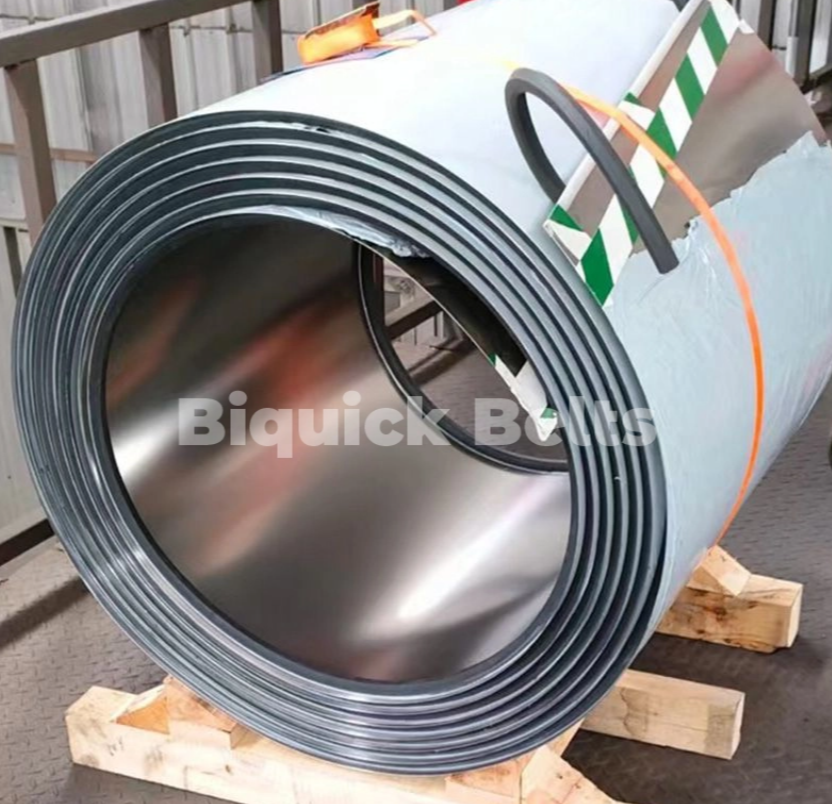
The base belt underneath the coating: stainless grades are chosen for hygiene and thermal conductivity.
Step-by-Step: How to Specify a Coated Steel Belt for a New Line
For a buyer who has never specified a coated belt before, the work is a sequence of narrowing decisions rather than a single enquiry. The following six steps reflect how belt properties map onto process requirements.
Step 1 - Describe the material being carried, not just the product name
State whether the material is molten, semi-solid, powder, paste or colloid at the point of contact, and what it does as it cools. Viscous and sticky materials such as chocolate, syrup, paste, colloid and powder are the classic case for a PTFE coated surface, because the coating's low friction coefficient prevents the material from bonding as it sets.
Step 2 - Fix the temperature window
Record the highest and lowest surface temperatures the belt will see, including cleaning and start-up conditions. Reference conditions in BPS/EPS application data range from around 180-250 ℃ in food baking lines and 160-220 ℃ in chemical new materials lines, with packaging, printing and precision applications running closer to ambient. If your process sits outside the range a coated surface is intended for, move to an uncoated high-temperature grade instead of forcing a coating to do a job it was not designed for.
Step 3 - Choose the base material family
Carbon steel is the conventional choice for dry, non-aggressive duties. Stainless steel - typically in food-grade grades such as 304 or 316L - is used where hygiene, corrosion resistance or thermal conductivity dominate. For chemically aggressive duties, specialty grades including 301, 304, 316L, 310S and duplex steel can be specified.
Step 4 - Define the release requirement
This is the step that selects a coated belt. If the product must leave the belt cleanly without a scraper fighting it, or if a release agent is not acceptable for hygiene or quality reasons, a PTFE coated surface is the specification. Food-grade safety and hygiene, easy cleaning and resistance to acid, alkali and oil should be confirmed explicitly at this stage rather than assumed.
Step 5 - Specify mechanical features and dimensions
Belts are frequently customized rather than bought from a catalogue. Available fabrication includes customized punching, slotting, flanging, guiding edge blocking and side arc chamfering, as well as special structures such as thickening and strengthening, widening and thickening in sections, and integrated moulding. Deciding these details before quotation avoids rework later.
Step 6 - Match the belt to the equipment around it
A belt only performs if the surrounding machine supports it. In chemical new materials lines, the belt works with twin-screw extruders, laminating machines, cooling rollers, scraper blades and hot air systems, and the special requirements are high temperature resistance without deformation, high weld strength, a smooth non-stick surface and resistance to slight corrosion. In food baking lines, the belt is matched with tunnel ovens, hot air stoves, cooling tunnels, idler rollers, tensioning mechanisms and drive rollers. Ask the supplier to review the full set of interfaces, not the belt in isolation.
Where PTFE Coated Steel Belts Are Used
Chemical, resin and coating production
This is the home territory of coated and high-specification belts. Typical projects include powder coating production lines, resin lamination, hot-melt adhesive cooling and plastic granulation, running continuously in a closed loop at constant tension. Working conditions in this segment are demanding: roughly 160-220 ℃ surface temperature, contact with molten material, corrosion exposure and high tension. The requirement list - no deformation at temperature, strong welds, a smooth non-stick surface and slight corrosion resistance - is exactly what a coated belt with a correctly selected base is meant to satisfy.
Food baking, chocolate and confectionery
Food baking lines run biscuit, bread, cake and pastry production, chocolate cooling and forming, and candy pouring, with product carried through a tunnel oven and then a cooling tunnel at roughly 180-250 ℃ in the hot zone. Food-grade material, no debris, easy cleaning and a seamless smooth surface are standard expectations. Coated belts are used where the product itself is sticky - chocolate, syrup, sugar masses - and stainless belts are used where hygiene and heat transfer matter most.
Pharmaceutical and clean production
Clean-room duties such as drug packaging lines, gel cooling lines and pharmaceutical excipient moulding call for 316L corrosion-resistant belts that are burr-free, easy to clean and sterilize, and free of pollutant precipitation. Coated surfaces are relevant where excipients or gels must release cleanly in a controlled environment.
When a coated belt is not required
Not every line needs a coating. Packaging and printing duties - packaging machine conveyors, printing drying lines and laminating lines - emphasize a smooth, uniform, scratch-free surface and stable tracking rather than release. Precision manufacturing and electronics lines, as well as lithium battery electrode drying and diaphragm cooling lines, prioritize flatness, cleanliness and dimensional stability. In these cases a well-specified stainless belt, or a special requirement belt with positioning holes and tight tolerances, is the more appropriate answer.

Carbon belts remain the conventional choice for dry, non-aggressive duties - coating is added only when release is the constraint.
Comparison: PTFE Coated Belts Against Carbon and Stainless Steel Belts
The table below compares the four belt categories that BPS/EPS manufactures. It is a comparison of intended function, not a ranking: each type is the correct answer for a different set of working conditions.
| Belt type | Base material | Surface behaviour and key properties | Typical application focus |
|---|---|---|---|
| Carbon steel belts | Carbon steel; nominal C 0.65-0.75%, Si 0.15-0.3%, Mn 0.60-0.90%, Cr max 0.20% | Bare steel working surface; strength and heat transfer come from the strip itself | Baking and other food factory duties where the product is not strongly adhesive |
| Stainless steel belts | Stainless steel (including food-grade grades) | High strength, high flatness, food-grade hygiene, excellent thermal conductivity, durable circular welding | Chocolate and candy cooling conveyor belts; hygiene-critical and corrosion-sensitive lines |
| PTFE coated steel belts | Steel substrate with a PTFE coating | Extremely low surface friction, highly non-stick and demoulding, food-grade hygiene, high and low temperature resistance, acid/alkali/oil resistance, smooth easy-clean surface, strong coating adhesion | Chocolate, syrup, paste, colloid and powder contact; release-critical cooling, forming and flaking |
| Special requirement steel belts | Customizable 301, 304, 316L, 310S, duplex steel and high hardness special alloy strips | Seamless welded loops with polished seams; punching, slotting, flanging, guiding edge blocking, side arc chamfering; high temperature resistance up to 1100 ℃, deep cold, oil-water and chemical corrosion resistance | Food and pharmaceutical factories; extreme temperature, mechanical-feature and high-precision duties |
For a buyer new to coated belts, the practical rule is: choose the base for the environment, and choose the coating for the product. A stainless base with no coating is a hygiene decision. A PTFE coated surface on a suitable base is a release decision. A special requirement belt is an extreme-condition or mechanical-feature decision. On the material side, publicly available product information from other suppliers shows that carbon steel belts for chemical pastillation and cooling are typically manufactured in grades such as Sandvik 1300C or equivalent, which confirms that base-grade selection is a normal part of this category rather than something unique to one supplier.
Frequently Asked Questions
Are PTFE coated steel belts food-safe?
Food-grade steel belts are expected to meet food-contact conformity standards such as EC 1935/2004 in the EU and FDA regulations in the United States, and food baking applications commonly specify 304 or 316L food-grade base material with no debris, easy cleaning and a seamless smooth surface. The BPS/EPS PTFE coated steel belt is published with food-grade safety and hygiene among its surface properties, and with resistance to acid, alkali and oil. Buyers sourcing for a regulated market should still confirm the specific compliance documentation required for their region at the quotation stage. For EU general-purpose conveyor applications, steel belts must comply with EN 12882:2015 for electrical and flammability safety.
What can be customized on a coated or special steel belt?
Customization covers both material and geometry. On the material side, BPS/EPS can produce 301, 304, 316L, 310S, duplex steel and high hardness special alloy strips, and the coated belt itself can be customized for non-standard purposes. On the geometry side, available fabrication includes seamless circular welding with smooth polished seams, customized punching, slotting, flanging, guiding edge blocking and side arc chamfering, plus special structures such as thickening and strengthening, widening and thickening in sections, and integrated moulding. Equipment-level customization is also part of the same capability set: BPS/EPS produces 10-15 units per year of customized non-standard single and double steel strip laminating machines, each with a unit capacity of 500-1400 kg/h.
What drives the cost of a PTFE coated steel belt?
Cost in this category is driven by what has to be built, not by a published list price. The relevant factors are the base strip grade and family - carbon, stainless or a specialty alloy - the belt dimensions and loop length, the complexity of the endless welded joint, the coating requirement itself, and any added fabrication such as punching, slotting, flanging or edge blocking. Because most belts are made to order rather than selected from stock, the cost picture only becomes meaningful once the process conditions in the six specification steps above are defined.
Can I evaluate a sample before committing to a production order?
Sample and trial evaluation is the normal way industrial buyers reduce risk on a new belt specification, because surface behaviour under real heat and real product is difficult to judge from a datasheet. BPS/EPS operates a maintenance centre in Shanghai and service centres that provide spare parts, maintenance, emergency maintenance, installation guidance and operation training, which supports both trial evaluation and the operating phase afterwards. Buyers who want to test a coated surface against their own product, or discuss a trial arrangement, can request a sample and review the product catalogue before placing an order.
How long does delivery take?
Lead time for a coated steel belt is not a single fixed figure, because it depends on whether the belt is a standard configuration or a custom build with welded detail, punching or special structures. What can be stated from the supplier side is production context: BPS/EPS output runs at approximately 50-80 tons per year of steel strip, 10-15 units per year of customized single and double steel strip laminating machines, and 5-8 sets per year of steel strip cooling and forming systems. Schedules are best confirmed with a written quotation that states belt specification, quantity and requested delivery date. For buyers planning installation windows, this confirmation should be obtained early rather than assumed from general market averages.
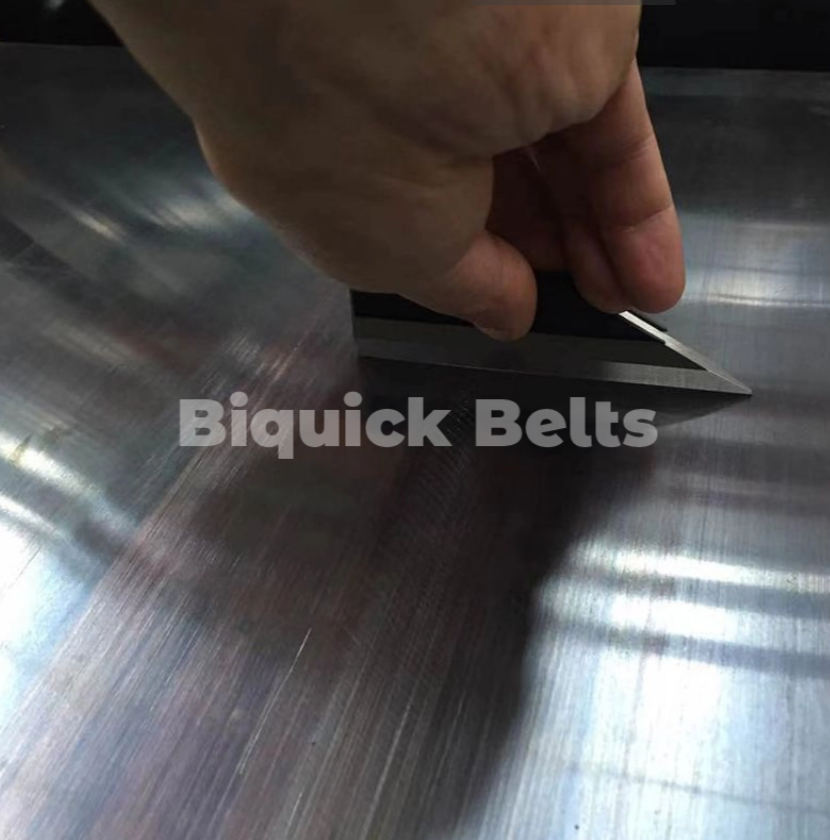
Beyond the coating: custom fabrication such as punching, flanging and edge blocking is specified at the same time as the surface.
Conclusion: Start From the Product, Not From the Belt
PTFE coated steel belts are not an upgraded version of a standard belt; they are a different specification decision. The steel substrate provides strength, flatness, heat transfer and a durable endless loop, while the PTFE coating provides an extremely low-friction, non-stick, easy-to-clean and chemically resistant working surface. That combination is what allows chocolate, syrup, paste, colloid and powder to release cleanly in cooling, forming and flaking duties where a bare carbon or stainless surface would hold the product back.
For a buyer at the research stage, the useful next step is not to choose a supplier but to write down four facts about the process: what the material does as it cools, what temperatures the belt will see, what hygiene or chemical exposure applies, and whether the surrounding equipment has interfaces the belt must match. Those four answers determine whether the correct specification is a carbon belt, a stainless belt, a coated belt or a special requirement belt - and they are the same answers any supplier will need before quoting.
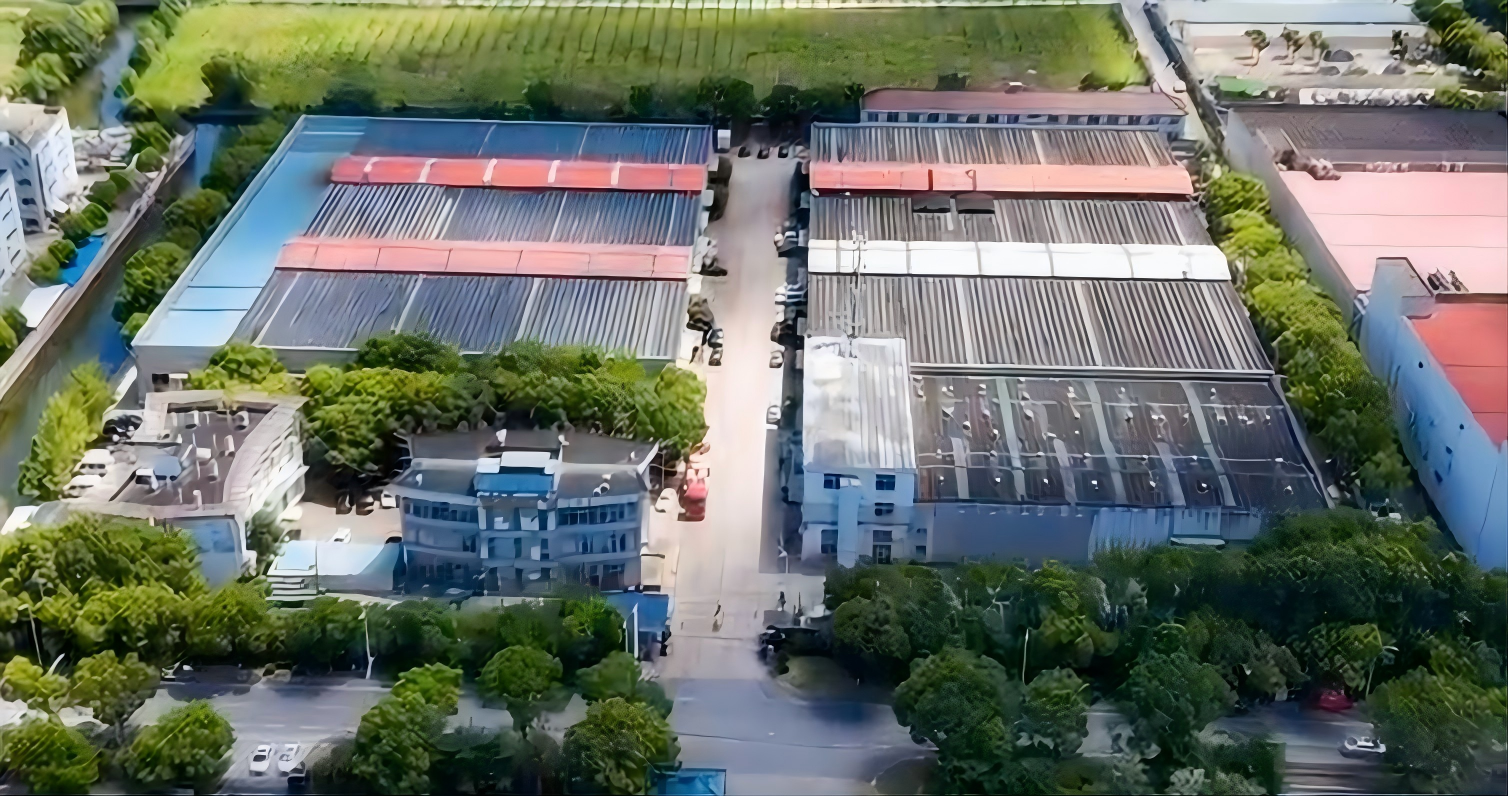
Shanghai Biquick Process Systems Ltd. (BPS/EPS) manufactures steel belts and integrated processing systems from Pudong, Shanghai, and serves customers with a core market in Mainland China, a focus on Taiwan, China, and growth in Southeast Asia and the Middle East. Its product range covers steel belts, granulators, chocolate steel belt conveyors, steel belt bakery tunnel ovens, steam ovens and resin steel belt coolers.
Next step for buyers and engineers
If you are evaluating a coated belt for a sticky, hot or chemically active process, you can request a sample, ask for a quotation, or review the full product range before deciding.
Download the English product catalogue: BPS/EPS Product Catalogue (PDF)
Website: www.esptek.cn | Blog: blog.esptek.cn
Email: sales@bpstek.com | Tel: 021-68904153 | WhatsApp: +8613916661495
Address: No.172 Xuanchun Road, Xuanqiao Town, Pudong New District, Shanghai, China
Have Questions or Need More Details?
Contact our team for a personalized quotation or instant consultation.
Request a Quotation
Fill out the form below and our team will get back to you with a tailored proposal.
WhatsApp Direct Chat
Prefer to chat in real-time? Message us on WhatsApp for instant assistance & quick answers.
- Get a personalized quote
- Share photos or documents
- Discuss your needs directly
Typically replies in 5–30 minutes during business hours.