Which Steel Belt Fits Your Project? A Practical Decision Guide for Chemical, Food & Precision Lines
Which Steel Belt Fits Your Project? A Practical Decision Guide for Chemical, Food & Precision Lines
Steel belts are not a one-size-fits-all component. In industrial processing, the same stainless steel belt that works in a chocolate cooling line may fail in a sulphur pastillation unit or a high-temperature resin flaker. The differences lie in material, surface treatment, weld quality, dimensional tolerance, and how the belt is integrated with surrounding process equipment. Buyers researching steel belts often search by product name—sulphur pastillator, steel belt bakery tunnel oven, chocolate steel belt conveyor, PTFE-coated steel belt, or single-belt resin flaker—but the core question is the same: which steel belt configuration is right for this specific project? This guide translates project conditions into steel belt specifications and helps you evaluate suppliers using facts that matter.
The Problem: Why Project-Specific Steel Belt Selection Matters
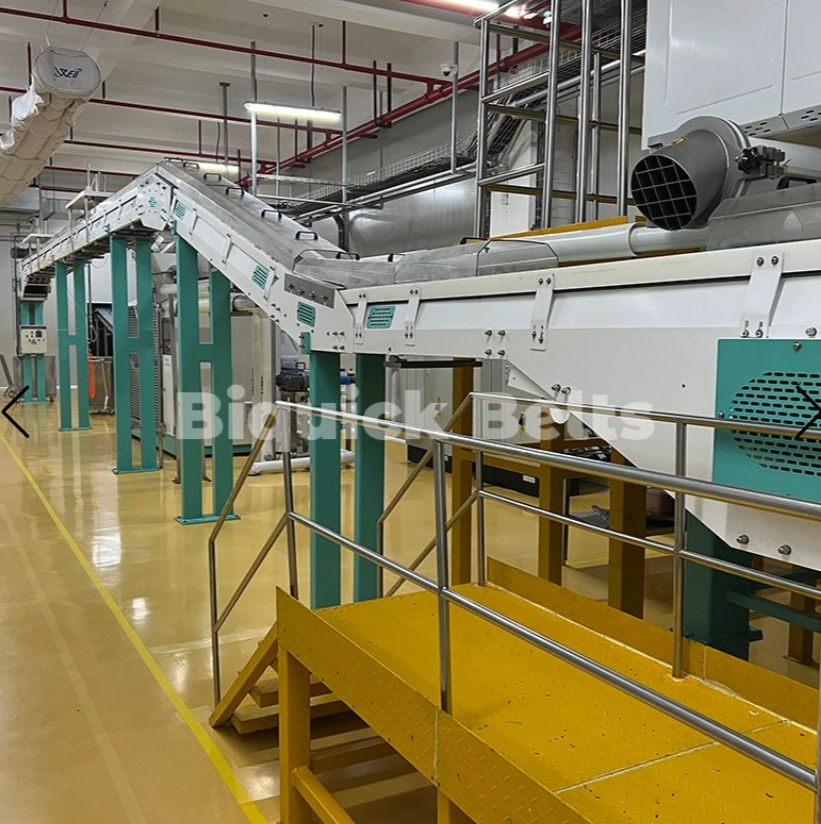
Many project teams select a steel belt based on price or a generic product photo, only to discover later that the belt deforms under process temperature, sticks to the product, introduces foreign matter in food lines, or fails to hold positioning tolerance in precision conveying. The root cause is a mismatch between the belt and the true operating conditions: temperature range, chemical exposure, hygiene requirements, tension, speed, and mechanical modifications such as holes, guide bars, or edge flanging. A proper specification should start from the project envelope, not from a catalog.
For example, a food baking line operating at 180–250 °C needs a belt that resists thermal fatigue and maintains a clean, debris-free surface. A chemical new materials line running at 160–220 °C with molten resins needs corrosion resistance and high weld strength. A precision assembly line may need a belt with machined positioning holes and a flatness of ≤0.02 mm/m. Choosing a belt before defining these parameters creates unnecessary risk for the whole project.
Industry Background: The Shift Toward Application-Specific Steel Belt Systems
Demand for steel belts is growing as automated processing expands. According to Research and Markets, the global steel belt conveyor market was valued at USD 1.75 billion in 2025 and is projected to reach USD 3.15 billion by 2034, with a CAGR of 6.7% from 2026 to 2034. HTNXT Market Analysis estimates the integrated steel belt systems market—including coolers, flakers, and pastillators—at USD 1.2 billion in 2025.
Alongside market growth, compliance expectations are tightening. Conveyor belts used in general-purpose applications in the EU must comply with EN 12882:2015 for electrical and flammability safety. Food-contact steel belts are expected to meet EC 1935/2004 and FDA requirements for contact materials. Buyers are therefore shifting from simple belt sourcing to selecting suppliers that can deliver both belt and system-level compliance. Search terms for specialty belt variants also reflect this diversity: press steel belts, electric steel belts, wood OSB press belts, casting coating steel belts, and Frible steel belts are all queried by buyers looking for specific process solutions.
Steel Belt Options: Matching Material and Surface to the Process
Shanghai Biquick Process Systems Ltd. (BPS/EPS) is a steel belt and integrated process system manufacturer based in Shanghai, China. The company was founded in 2007, operates a 2,000 m² facility with around 40 employees, and maintains offices in Beijing, Guangzhou, Jiangxi, Hunan, and Fujian, with a maintenance center in Shanghai. Its website is www.esptek.cn. The product range includes steel belts, granulators, chocolate steel belt conveyors, steel belt bakery tunnel ovens, steam ovens, and resin steel belt coolers. Around 15–25% of output is exported to markets that include Taiwan (China), Southeast Asia, and the Middle East. BPS/EPS is used in this article as a working example of an integrated supplier that combines belt production with process line design.
Stainless Steel Belts
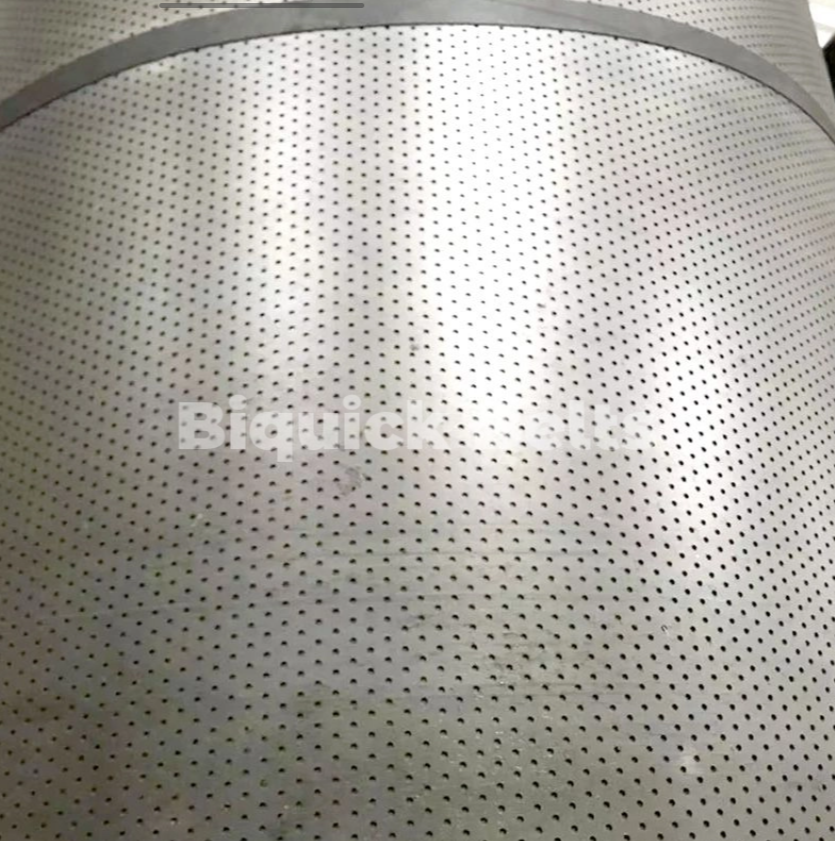
Stainless steel belts are a common starting point for food and pharmaceutical lines. The standard stainless steel belt offers high strength, high flatness, food-grade hygiene, excellent thermal conductivity, and durable circular welding. In practice, these belts are used in chocolate and candy cooling conveyor systems, where the belt surface must be clean, smooth, and easy to sanitize. In food baking tunnels, 304/316L stainless steel is often specified because it can withstand high temperatures and does not shed debris. For pharmaceutical and clean-industry applications, 316L material is frequently required, with a burr-free surface and no pollutant precipitation.
Carbon Steel Belts
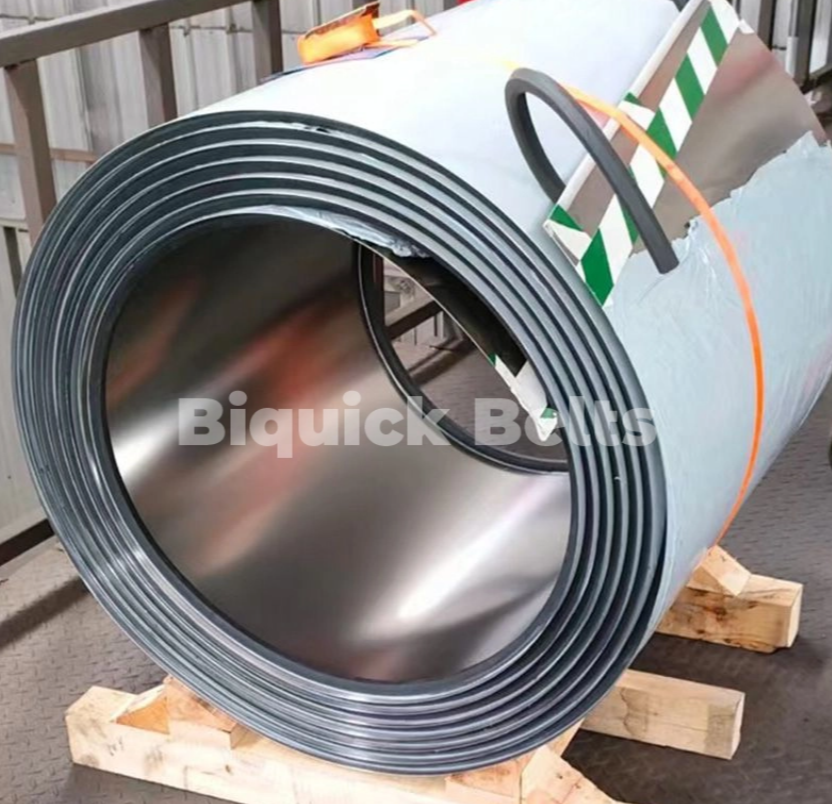
Carbon steel belts are typically specified for baking and other food production lines that do not require the corrosion resistance of stainless steel. The nominal chemical composition of the carbon belts used by BPS/EPS is C 0.65–0.75%, Si 0.15–0.3%, Mn 0.60–0.90%, and Cr max 0.20%. Carbon belts offer strong mechanical properties at lower material cost, making them a viable option for tunnel ovens, cooling conveyors, and other dry-process applications. However, buyers should confirm the working temperature and hygiene requirements before selecting carbon steel, because it does not provide the same corrosion resistance as stainless steel.
PTFE-Coated Steel Belts
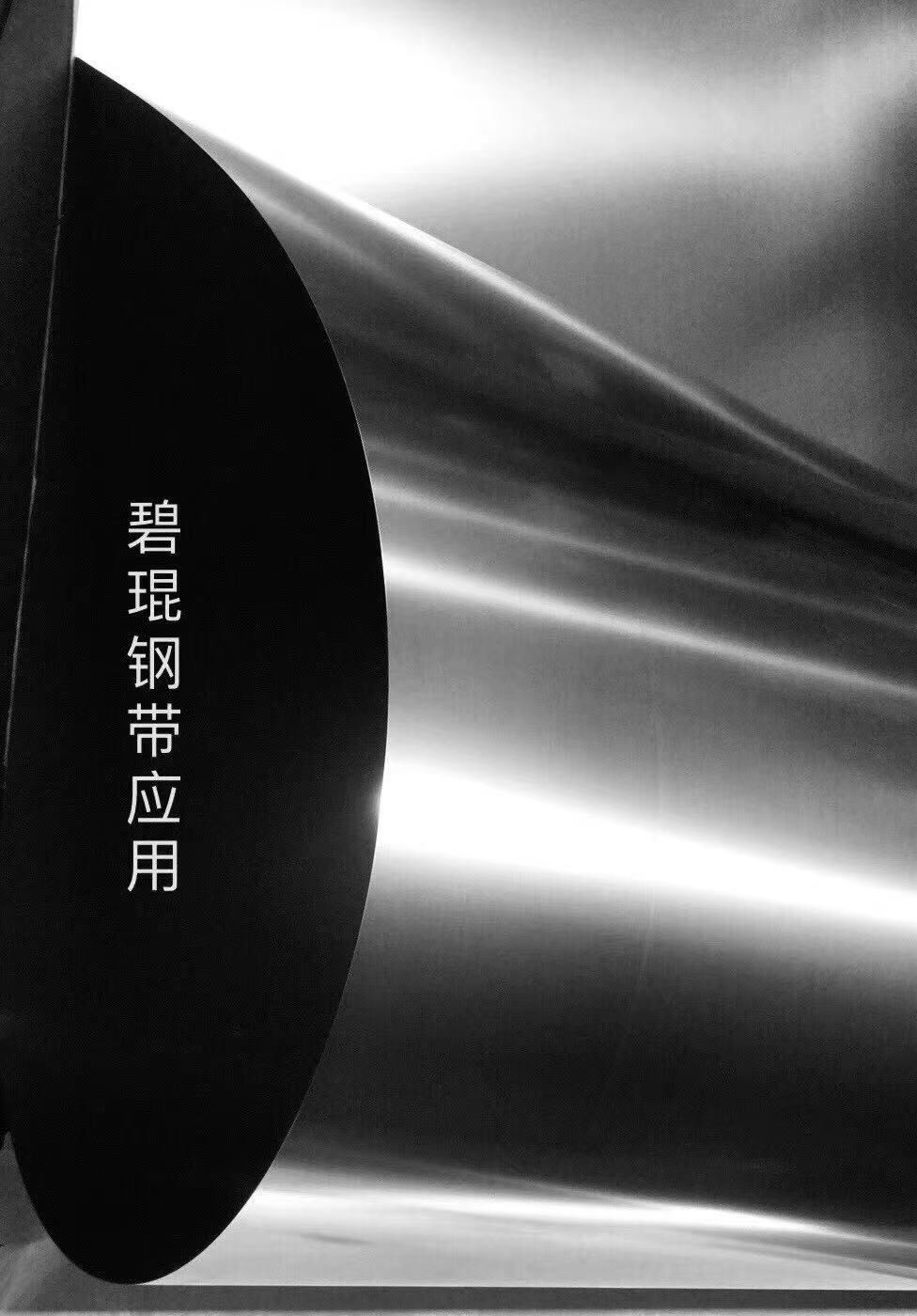
PTFE-coated steel belts are selected when the product is sticky, viscous, or prone to adhesion. The coating provides an extremely non-stick surface with high demoulding capability, food-grade safety and hygiene, excellent resistance to high and low temperatures, and resistance to corrosion, acid, alkali, and oil. The smooth, easy-to-clean surface reduces downtime. Because the substrate retains high strength and stable operation, PTFE-coated belts are used in chocolate production lines, syrup and paste handling, powder processes, and other applications where the surface friction coefficient must be low. Coating adhesion is designed to withstand repeated use, and non-standard belt dimensions can be customized.
Special Requirement Steel Belts
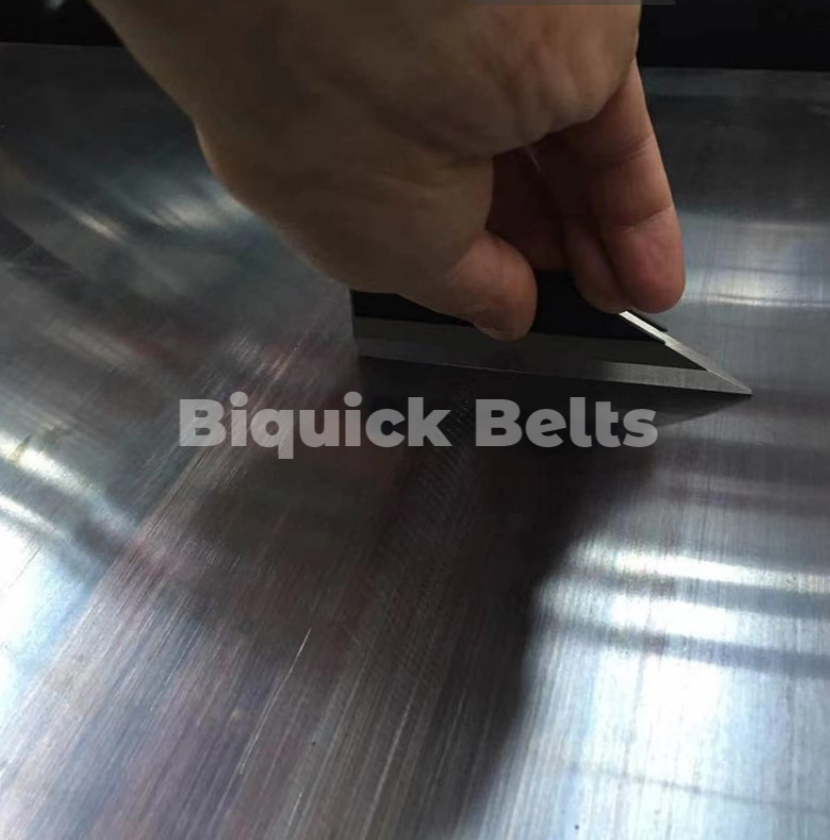
Some projects move beyond standard materials and require special requirement steel belts. These belts can be customized in 301, 304, 316L, 310S, duplex steel, or high-hardness special alloy steel strips. Welding is done seamlessly in a circular shape, with smooth, polished weld seams. Additional customization includes punching, slotting, flanging, guiding edge blocking, and side arc chamfering. Special structures such as thickening for extra strength, sectional widening and thickening, and integrated molding are also possible. High-temperature resistance up to 1100 °C, deep-cold resistance, oil-water resistance, and chemical corrosion resistance can be engineered for specific processes. This category is common in food and pharmaceutical factories, and in industrial lines where hygienic, precise, or extreme-condition conveying is required.
Steel Belt Comparison Table for Project Planning
| Belt Type | Typical Material | Key Characteristics | Common Project Fit |
|---|---|---|---|
| Stainless Steel Belts | 304 / 316L stainless steel | High strength, high flatness, food-grade hygiene, excellent thermal conductivity, durable circular welding | Chocolate and candy cooling conveyors; food baking tunnels; pharmaceutical and clean workshops |
| Carbon Steel Belts | Carbon steel (C 0.65–0.75%, Si 0.15–0.3%, Mn 0.60–0.90%, Cr max 0.20%) | Strong mechanical properties, lower material cost | Baking and other food factory lines; dry-process conveying and cooling |
| PTFE-Coated Steel Belts | Steel substrate with PTFE coating | Extremely non-stick, high demoulding, food-grade safety, temperature resistance, corrosion and oil resistance, easy to clean | Chocolate, syrup, paste, colloid, and powder handling lines; applications requiring low surface friction |
| Special Requirement Steel Belts | Custom 301, 304, 316L, 310S, duplex steel, high-hardness alloy | Seamless welding, polished weld seams, custom punching, slotting, flanging, edge blocking, side arc chamfering; high-temp resistance up to 1100 °C | Food and pharmaceutical factories; chemical and precision lines requiring exact tolerances, special surface structures, or extreme environments |
Project-specific examples include epoxy steel belt coolers, polyester steel belt coolers, powder coating steel belt flakers, steel belt steam ovens, steamed cake production lines, crab stick molding machines, single-belt resin flakers, double-belt resin cooling flakers, press steel belts, and wood OSB press belts. The table above helps translate these application names into belt material and surface choices.
Step-by-Step: How to Specify Steel Belts for Your Project
- Define the process envelope. Record the working temperature, media properties, hygiene class, tension, speed, and cleanroom requirement. Examples from industrial practice include food baking at 180–250 °C, chemical new materials processes at 160–220 °C, and new energy drying lines at 120–200 °C in dust-free environments.
- Select the base material. Choose stainless steel for food, pharma, and corrosion-sensitive lines; carbon steel for dry baking or lower-cost projects; and 316L or special alloys for clean, sterile, or chemically aggressive duties.
- Evaluate surface treatment. Use PTFE coating for sticky or viscous products such as chocolate, syrup, and powder. For cleanability, consider mirror, brushed, polished, or frosted surfaces. Anti-stick food-grade coatings can be specified where needed.
- Define dimensions and tolerances. Typical BPS/EPS capability supports widths from 100 to 2200 mm, thicknesses from 0.4 to 3.0 mm, and lengths up to 50 m+ per single strip. Tolerance levels include thickness ±0.02 mm, length ±0.05 mm/10 m, and flatness ≤0.02 mm/m.
- Specify mechanical features. If the project needs precise positioning or vacuum conveying, add punched holes with ±0.01 mm accuracy, guide bars, baffles, fixture mounting positions, vacuum holes, or ventilation holes.
- Confirm process capabilities and lead time. Regular specifications using stock material are typically produced in 7–10 days. Customized specifications require 15–20 days, while urgent orders can be completed in 5–7 days with an additional fee. Buyers should ask about weld leveling, stabilization treatment, internal stress relief, anti-deviation treatment, and quality control steps such as spectral analysis, thickness and hardness testing, tensile strength testing, surface defect inspection, and weld non-destructive testing.
- Assess after-sales and lifecycle support. Responsive support matters in continuous production. BPS/EPS offers 24-hour online response, 48-hour on-site service in domestic markets, a maintenance center in Shanghai, and a 12-month warranty. Documented belt service life is 2–5 years depending on duty.
Use Cases: Steel Belt Selection in Real Processing Lines
The following documented projects illustrate how steel belt specifications are matched to specific industry requirements.
Food Baking Group: Tunnel Ovens and Cooling Lines
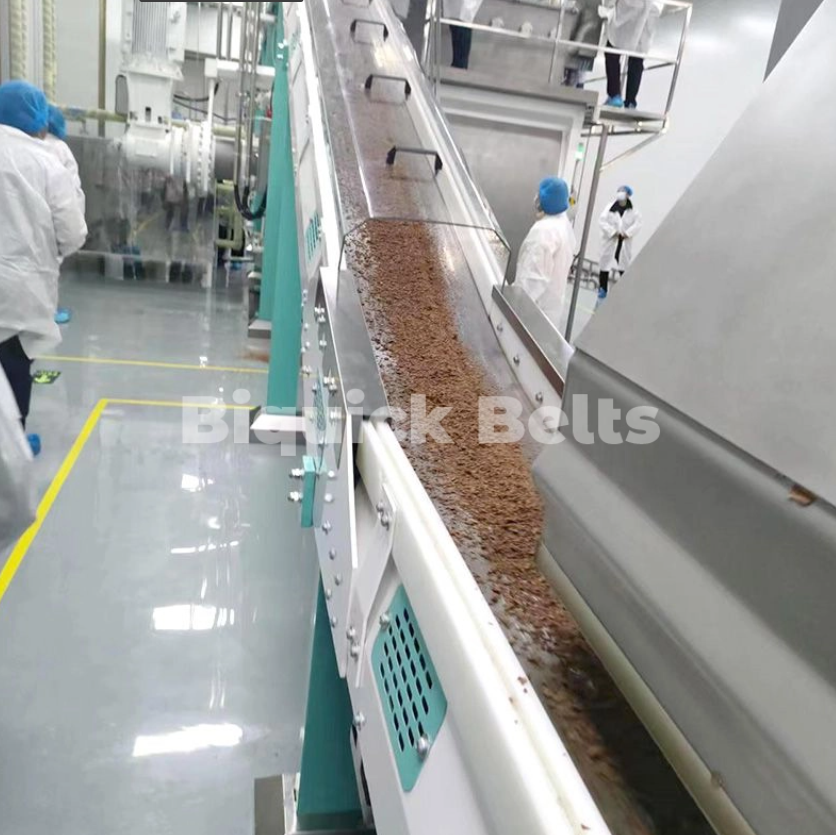
A large food group accumulated 120+ steel strips across multiple factories, with individual factory installations of 5–15 strips and widths from 600 to 2000 mm. The belts were used in tunnel ovens for cookies, bread, and pastries, plus cooling lines with food-grade conveying. The project required food-grade 304/316L material, FDA/CE compliance, and no debris. Replacing imported steel strips reduced costs by 35–50% and shortened delivery time from 3 months to 2–4 weeks. Dimensional stability was achieved with elongation ≤0.2%, no deviation, and weld fatigue life ≥2 million cycles.
International Powder Coating Giant: High-Temperature Flaking
A global powder coating manufacturer used 40+ steel strips with widths of 800–1600 mm and thicknesses of 1.2–2.0 mm in a melt extrusion, cooling, flaking, and transport line. The process operated at 180–220 °C. The selected belts provided high-temperature resistance from -60 °C to +250 °C, corrosion resistance, flatness ≤0.02 mm/m, and improved yield to 99.7%. In this documented case, total lifecycle cost was 40% lower than imported alternatives and 25% lower than ordinary domestic products.
New Energy Material Enterprise: High-Temperature Dust-Free Conveying
A new energy material enterprise used 10+ strips with widths of 1000–1500 mm and thicknesses of 0.8–1.5 mm in pole drying and curing lines, as well as diaphragm cooling and conveying. The environment was dust-free at 160–200 °C. The belts were specified for high thermal conductivity (15–20 W/m·K), oil-free and dust-free operation, and compliance with Class 1000 cleanroom requirements. The project reported a 25% increase in drying efficiency and an 18% reduction in energy consumption, while stable dimensions helped prevent pole deformation and increase yield by 2–3%.
Precision Manufacturing: High-Speed Automated Assembly
A high-end cosmetics packaging group used 15+ strips with lengths of 8–12 m, widths of 100–300 mm, and thicknesses of 0.6–1.0 mm in high-speed automated assembly lines for pump heads, bottle caps, and syringe components. The belts required positioning holes with ±0.01 mm accuracy, cumulative tolerance below 0.05 mm over 10 m, and repeat positioning accuracy of ±0.05 mm. Replacing imported US steel strips reduced cost by 45% and shortened delivery from 12 weeks to 3 weeks. High rigidity and low elongation contributed to transmission efficiency ≥98% and a 15% increase in production capacity.
Frequently Asked Questions
What food-grade compliance requirements should steel belts meet for bakery and chocolate projects?
In food baking applications, typical requirements include 304/316L food-grade material, FDA certification, no debris, easy cleaning, and a seamless, smooth surface. For food-contact materials, EC 1935/2004 and FDA regulations apply. In the EU, conveyor belts used in general-purpose applications must also comply with EN 12882:2015 for electrical and flammability safety. Buyers should ask suppliers to confirm how their belts meet these standards for the intended operating line.
Can steel belts be customized for high-temperature chemical cooling or pastillation projects?
Yes. Special requirement steel belts can be made from 301, 304, 316L, 310S, duplex steel, or high-hardness alloy strips. They can be welded seamlessly and polished, and can withstand high temperatures up to 1100 °C. For chemical new material processes operating at 160–220 °C, high-temperature stability, corrosion resistance, smooth non-stick surfaces, and high weld strength are key. PTFE-coated steel belts also provide corrosion and temperature resistance for sticky chemical products.
How does the cost of a domestic Chinese steel belt compare with imported alternatives?
In documented projects, replacing imported steel strips with BPS/EPS belts reduced costs by 35–50% for a food group and total lifecycle costs by 40% for an international powder coating customer. Delivery times were shortened from several months to 2–4 weeks. These figures refer to specific cases; actual cost differences depend on specification, volume, and project requirements. Buyers should request a project-specific quote rather than relying on generic comparisons.
Can I request a sample or trial order before using steel belts in a full project?
Standard steel strips have a minimum order quantity of 1 piece, with no minimum amount. Customized steel strips also support small-batch trial orders, with a minimum of 1 piece. This allows buyers to validate surface finish, dimensional accuracy, and process compatibility before scaling up. For a sample or trial project, contact the supplier with the target working conditions and drawings.
What is the typical lead time for standard and custom steel belts?
Regular specifications using stock material and standard sizes are typically produced in 7–10 days. Customized specifications involving material, size, or hole positions generally require 15–20 days. Urgent orders can be completed in 5–7 days with an additional fee. Compared with imported belts that often take 8–16 weeks, a supplier like BPS/EPS can offer lead times 4–8 times faster, depending on specification. To plan your project timeline, contact the sales team with your target specification and required delivery date.
Conclusion: From Spec Sheet to Supplier Decision
Selecting a steel belt for a chemical, food, or precision processing project is essentially a specification exercise. Start with the process conditions, then choose the base material, surface treatment, mechanical features, and tolerance class. Use documented supplier capabilities to assess whether the belt can be manufactured, welded, treated, and delivered within the project timeline. A supplier that combines belt manufacturing with process line experience—such as Shanghai Biquick Process Systems Ltd. (BPS/EPS)—can reduce the risk of mismatch and simplify integration.
Next step: To compare specifications, review project references, or request a sample for your line, download the BPS/EPS brochure or contact the sales team.