Bakery Ovens in 2026: What 'Top Manufacturer' Really Means Before You Sign a PO
Bakery Ovens in 2026: What 'Top Manufacturer' Really Means Before You Sign a PO
Updated: August 26, 2026
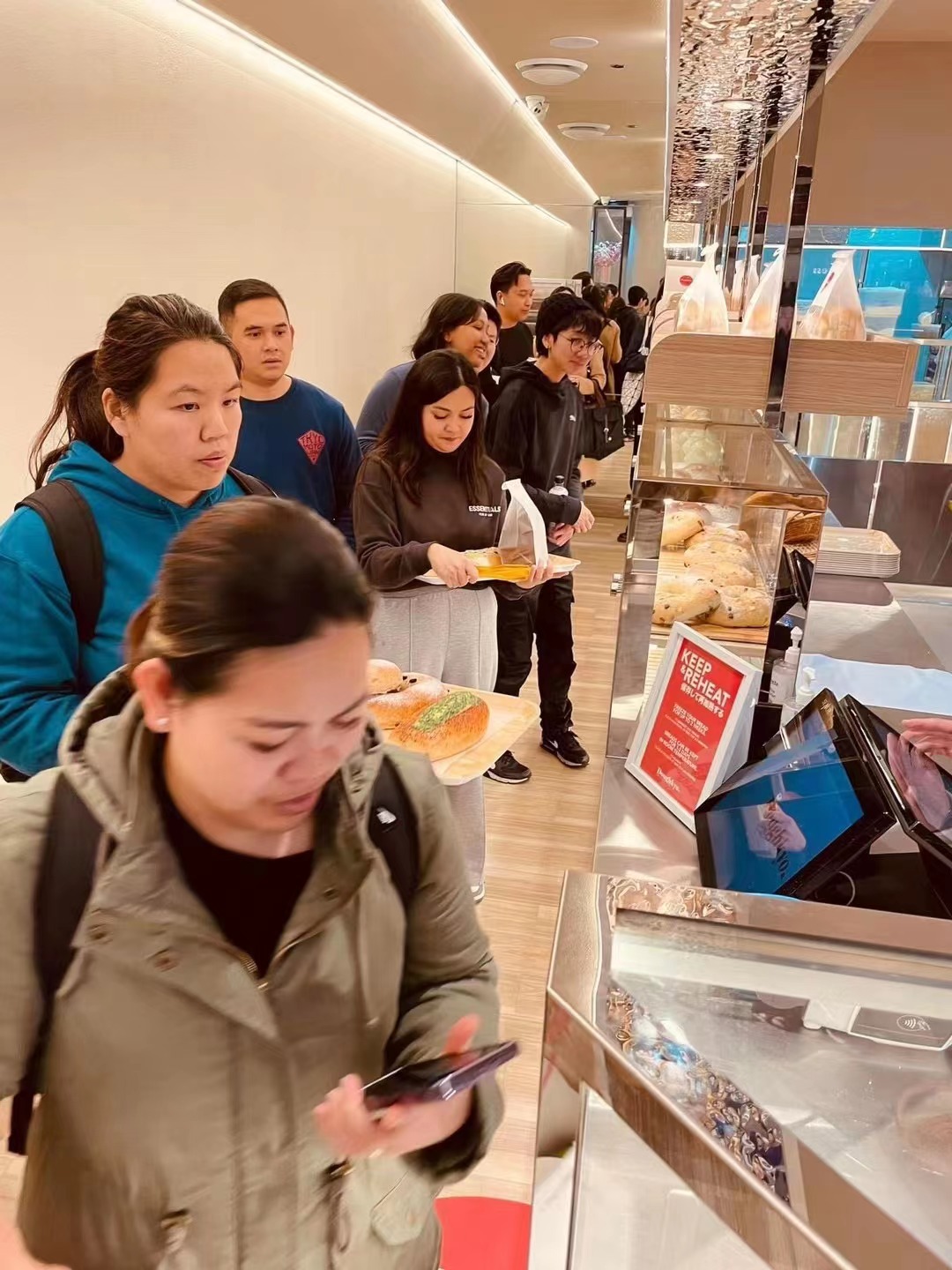
Searching for top bakery ovens manufacturers China usually means you are comparing suppliers for a commercial bakery shop, an artisan bakery, or a growing wholesale operation. The phrase sounds like a list, but it is really a risk-management task. Certification gaps, inconsistent build quality, and slow after-sales can turn a low purchase price into a very expensive oven.
This guide explains what separates a manufacturer that is genuinely top for a given buyer: verified certifications, real production capability, a complete product range, a willingness to customize, and documented performance in the field. It then shows how one China-based manufacturer, BRESSO, matches each test using facts that are available to any buyer.
Why 'Top Bakery Ovens Manufacturers China' Is a Hard Question
The commercial oven market is growing, but the information around it is uneven. Market Research Future valued the global commercial oven for bakery market at about USD 4.6 billion in 2024, with a projected CAGR of 4.1% through 2035. The artisanal bakery segment is also pushing demand: the global artisanal bakery market was valued at nearly USD 95 billion in 2022, which has increased interest in steam-assisted and stone-deck ovens. Because the market is attractive, manufacturers make aggressive claims that are not always backed by documentation.
Two market facts make supplier diligence even more important. In 2024, Asia-Pacific accounted for 40% of the global bakery processing equipment market, and China held a 39% share of the regional total. At the same time, convection ovens were estimated to hold a 35.2% share of the global commercial oven market because their forced-air design improves heat distribution. In other words, the best supplier for you may specialize in several oven types, not just one SKU with a strong landing page.
The Evaluation Framework: Five Tests for a Top Manufacturer
Use the following five tests when you shortlist suppliers. Each test can be answered with public documents, factory visits, spec sheets, or customer references. If a supplier cannot answer, remove it from the list.
Test 1: Certification Coverage, Not Just a Logo
For North America, commercial bakery equipment must meet NSF/ANSI Sanitation Standard 4 to receive the ETL Sanitation mark. One certificate is not enough; you also need the correct scope and relevant product models.
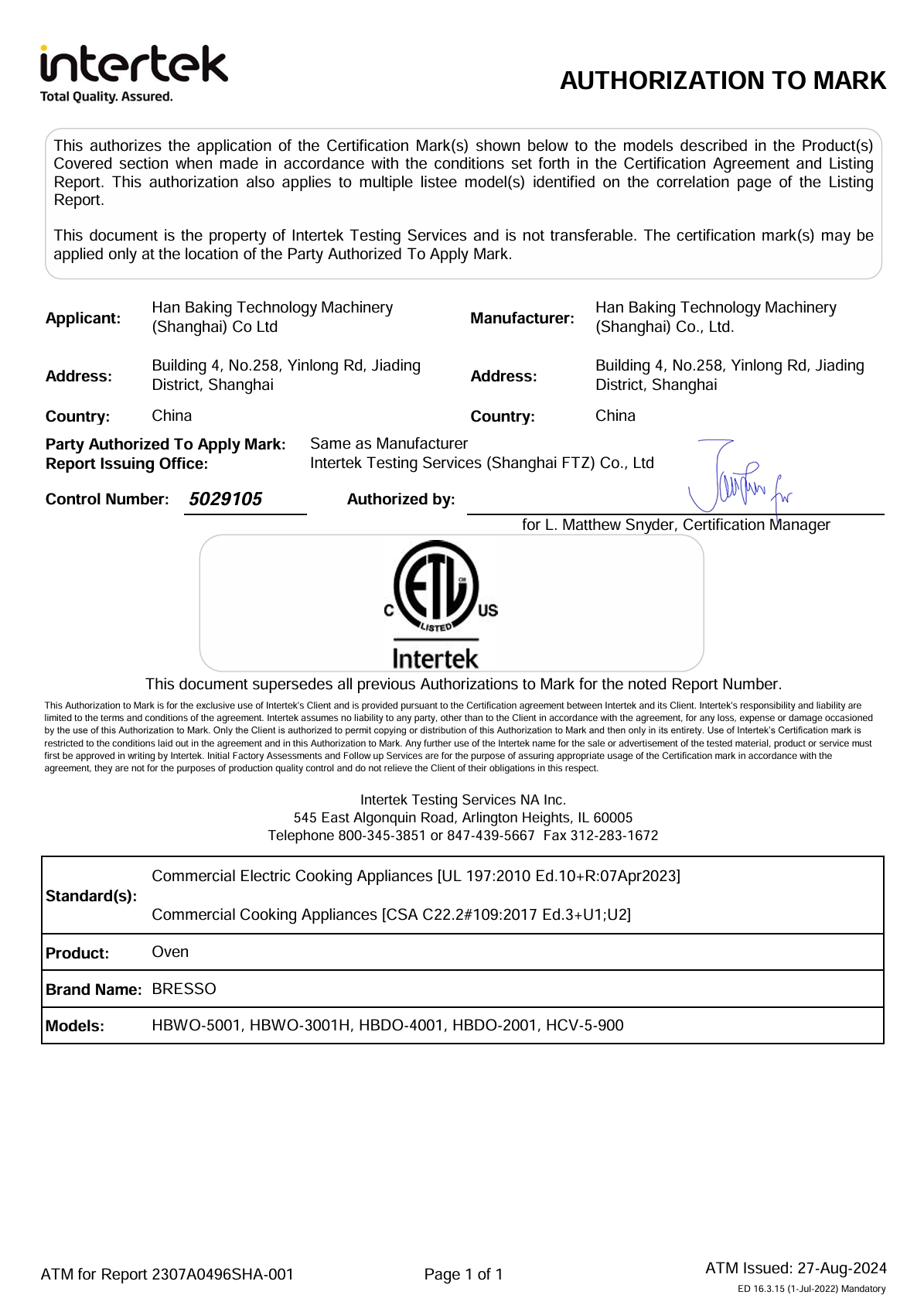
BRESSO holds an Authorization to Mark (certificate no. 5029105) issued by Intertek Testing Services, with a scope covering commercial electric bakery retarder proofer equipment. The standard references are UL 197:2010, CSA C22.2#109:2017, and NSF/ANSI STD.4, and the certificate covers the US and Canada. Listed models include the Convection Oven (HCV), Asian Oven (HBVO), European Oven (HBWO), Retarder-proofer Pro (HBDC Pro), Retarder-proofer Air (HBDC Air), and Champions League MAX Series Oven (HBVO-4003MAX-ZS3).
For the European market, BRESSO also holds a CE Attestation Certificate (M.2021.206.C70678) covering the Machinery Directive 2006/42/EC and Electromagnetic Compatibility Directive 2014/30/EU. The CE certificate references EN ISO 12100:2010, EN 60335-1:2012+A14:2019, EN 60335-2-42:2003+A11:2012, EN IEC 61000-6-1:2019, EN IEC 61000-6-3:2021, EN IEC 61000-3-2:2019, and EN 61000-3-3:2013+A1:2019. The company also operates under an ISO9001 quality management system.
Test 2: Manufacturing Substance Behind the Showroom
Search visibility can be bought; a factory system cannot be faked as easily. When you evaluate a manufacturer, ask for facility size, headcount, annual output, engineering resources, and the origin of its production equipment.
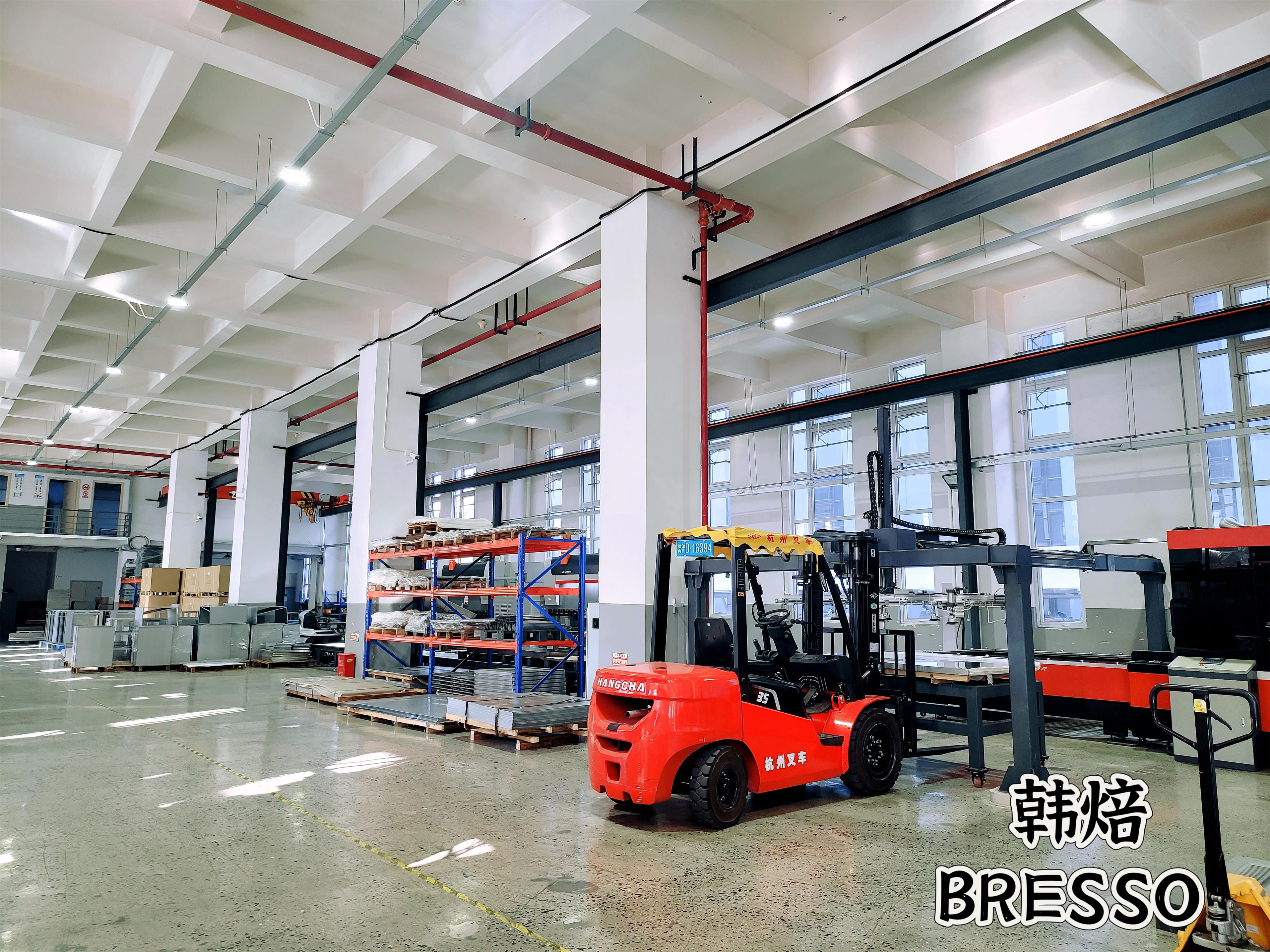
BRESSO began as a South Korean baking equipment brand founded in 1991. The company has its headquarters in Seoul, South Korea, and a branch in Shanghai, China, located in Shanghai Jiading High-tech Industrial Park. It reports a 15,000 m² facility footprint, a team of 100–200 employees, 20 R&D engineers, and an annual output of 8,000 units. Approximately 45% of production is exported to markets including the US, Canada, Mexico, Germany, and Australia.
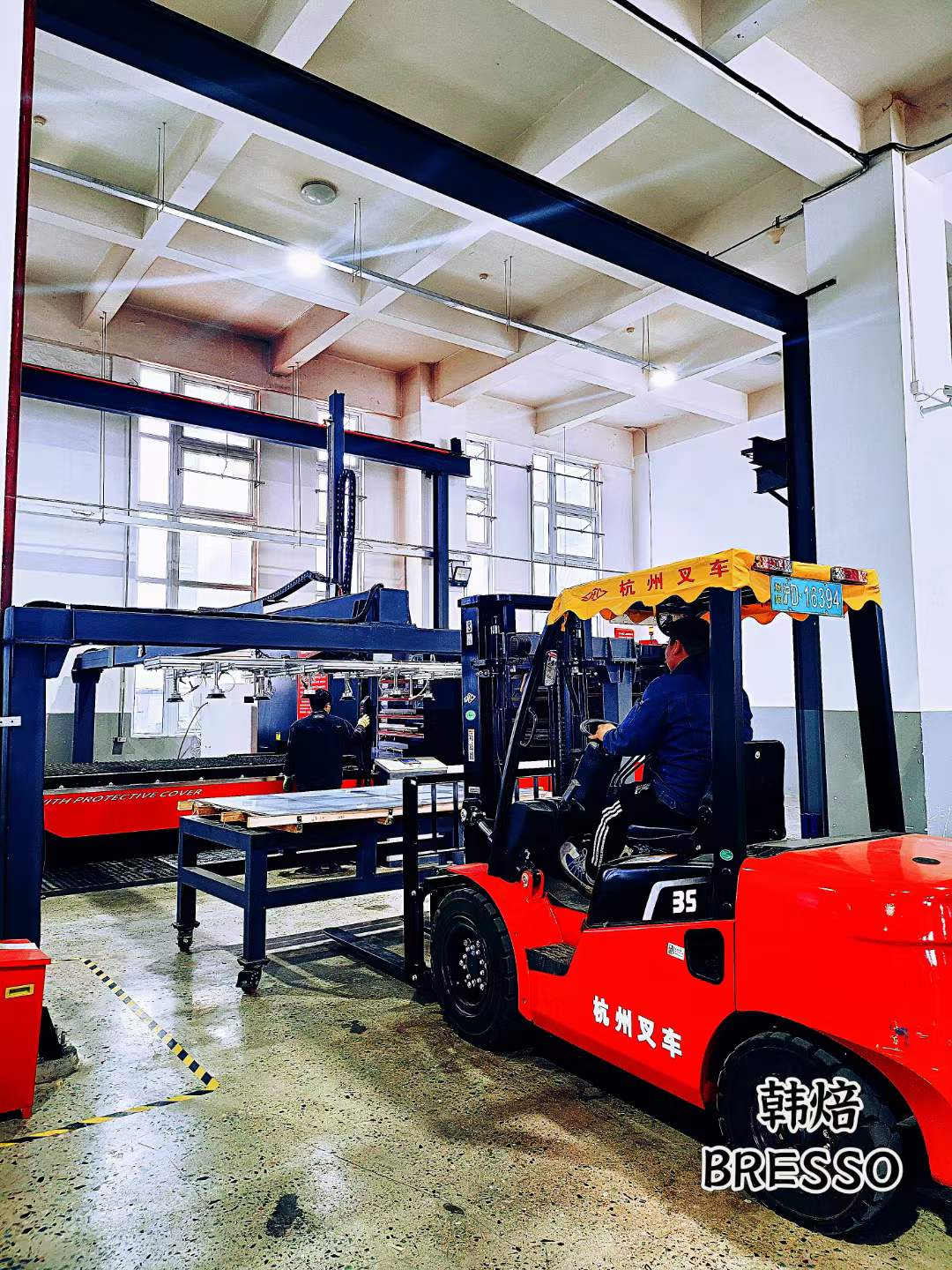
To keep fabrication precise, BRESSO imported sheet metal processing equipment and robots from Bystronic Group of Switzerland. On the quality side, its Incoming Quality Control (IQC) establishes supplier qualification standards, inspects purchased components upon arrival, and performs 100% inspection on critical components.
Test 3: Product Range That Matches Your Menu
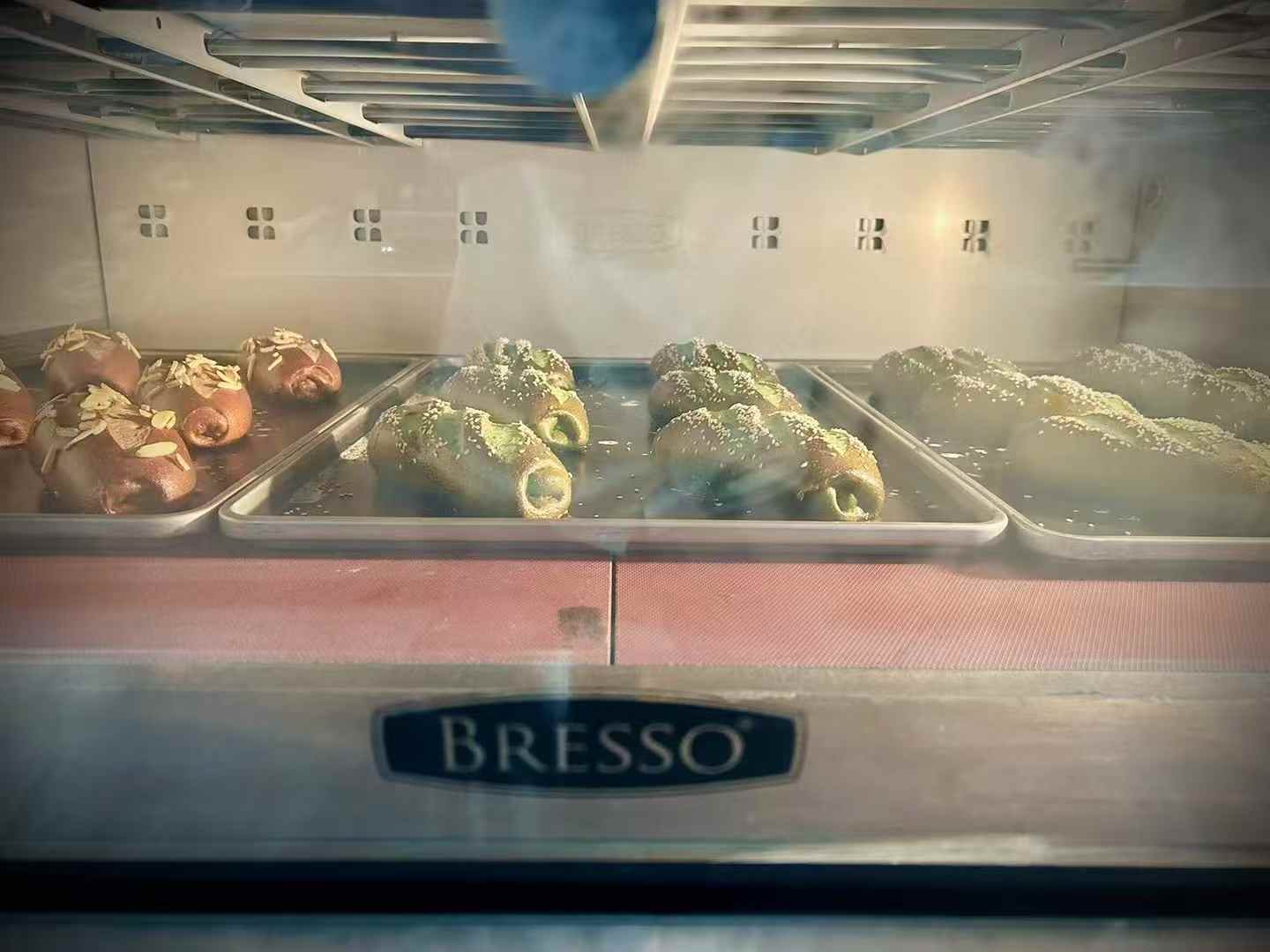
A top manufacturer should offer more than one oven type. BRESSO’s main categories are European-style ovens, Korean-style ovens, convection ovens, and proofers. The distinction between an Asian oven and a European oven is not just cosmetic. In the documented cases, the European Oven (HBWO) is used for baguettes, crusty European breads, croissants, and high-heat milk bread with a strong steam system. The Asian Oven (HBVO) is used for soft buns, milk bread, and delicate pastries where precise top and bottom heat matters. A manufacturer that can supply both, plus proofers, can support a bakery that grows its menu.
| Model family | Type | Capacity examples | Power examples |
|---|---|---|---|
| European Oven (HBWO) | Deck-style oven with steam, stone deck | 6, 9, or 12 trays (EN600×400 mm) | 12.4 kW / 16.1 kW / 20.2 kW (380V) |
| Asian Oven (HBVO) | Korean/Asian-style deck oven | 6, 9, or 12 trays | 15 kW / 24 kW / 27 kW (380V) |
| Convection Oven (HCV) | Forced-air convection oven | 5, 6, or 10 trays; 5+5 double-deck | 9 kW / 10.5 kW / 18 kW / 21 kW (380V) |
| Retarder-proofer Air (HBDC Air) | Retarder proofer | 18 or 32 trays; 16 chilled/18 frozen | 2 kW (220V) |
| Retarder-proofer Pro (HBDC Pro) | Retarder proofer | 18 or 32 trays; 16 chilled/18 frozen | 2 kW (220V) |
| Champions League MAX (HBVO-4003MAX-ZS3) | High-capacity oven | 12 trays (4 trays × 3 decks) | 27 kW (380V) |
All models listed above are described in the BRESSO certification documentation as stainless steel construction. Check the full specification sheet for exact dimensions and voltage options.
Test 4: OEM/ODM Flexibility for Real Menus
Most commercial bakery projects need at least some customization. BRESSO’s production capability includes OEM/ODM manufacturing, with customization available for voltages worldwide, colors, and sizes. Its stated monthly capacity is 1,000 units, with a standard lead time of 30–45 days and a MOQ of 2 units. For a buyer, that MOQ means a pilot order is possible before scaling.
Low MOQ matters for another reason: it reduces your first-order risk. If the oven works in your production line, you can scale up with confidence. If it does not, you have not committed to a full container of equipment that may not suit your market.
Test 5: Field Evidence in Climates Similar to Yours
Equipment that works in one climate can fail in another. BRESSO’s documented field cases cover tropical, extremely dry, cold, and high-rent urban environments.
- Australia (end user): 5 units of European Oven model HBWO, reported to have operated over a 15-year continuous-use period with a 30% increase in production efficiency. Key features included an independent steam system and uniform heat distribution from the stone deck.
- Canada (shop owner): 8 units used for delicate Asian pastries, operating for 15 years with zero-failure operation during peak hours and a 20% reduction in energy consumption compared with older equipment.
- Mongolia (distributor): 100 units installed in boutique bakeries and Western restaurants, alongside proofers, operating for 5 years. The extra-thick insulation maintained baking stability in freezing conditions, and the paired proofer solved dough skinning in the dry climate.
- Singapore (distributor): 50 units installed across boutique bakeries and chain cafes for 6 years. An excellent exhaust valve design and hot-air circulation extracted excess moisture, helping keep baguettes and croissants crisp in tropical humidity.
- United States (bakery): 8 units with flexible modular design, allowing independent top-deck and bottom-deck baking in a compact footprint, with each deck having independent temperature control and exhaust valves to prevent flavor transfer.
Step-by-Step: How to Apply This Framework
- Map the certification to your destination market. If you sell to the US or Canada, ask for the ETL Sanitation certificate number, the test standards, and the list of models covered.
- Audit the factory. Ask for facility area, number of employees, R&D headcount, annual output, and what processing equipment is used.
- Compare specification sheets. Do not compare only brand names. Compare tray capacity, tray size, number of decks, overall dimensions, voltage, power, and materials.
- Request customization options. Confirm whether voltages, colors, sizes, packaging, and branding can be adapted for your market.
- Ask for MOQ and lead time. If the supplier requires a container load to test, the commercial risk is higher.
- Ask for field cases in a similar climate. A case study from a cold and dry region matters if you are operating in Mongolia; a humidity-focused case matters in Singapore.
- Require after-sales support. For overseas buyers, remote support and a documented low failure rate reduce the cost of spare parts and service travel.
What This Means for Budget and Lead Time
There is no public BRESSO price list in the corpus used for this guide, and prices change with configuration and material costs. The commercially relevant numbers are MOQ 2 units, standard lead time 30–45 days, and monthly capacity about 1,000 units. A buyer who needs a pilot order for a new bakery or an OEM test can use those numbers to plan a procurement calendar.
Budget conversations also need a clear specification. The same model family can differ in voltage, number of decks, tray size, and optional steam injection. A structured quote should list each configuration item so you are not comparing a 6-tray oven from one supplier with a 12-tray oven from another.
FAQ
Which are the top bakery oven manufacturers in China?
There is no official third-party ranking that fits every buyer. A manufacturer earns a place on a shortlist by passing five checks: certification, manufacturing capability, product range, customization, and field evidence. BRESSO is one example: it holds ETL and CE certifications, exports about 45% of production to North America and Europe, and can document installations in Australia, Canada, Mongolia, Singapore, Malaysia, and the US.
What certification should a bakery oven have for the US and Canada?
Commercial bakery equipment sold in North America should carry the ETL Sanitation mark, which verifies compliance with NSF/ANSI STD.4. BRESSO’s Authorization to Mark certificate number is 5029105, issued by Intertek, covering UL 197:2010, CSA C22.2#109:2017, and NSF/ANSI STD.4 for models including the HBWO, HBVO, HCV, HBDC Air, HBDC Pro, and Champions League MAX.
What production evidence separates a real manufacturer from a small assembler?
Look for a documented facility, engineering team, annual output, and quality-control process. BRESSO reports a 15,000 m² facility, 20 R&D engineers, 8,000-unit annual output, and a 45% export ratio. It also uses Swiss Bystronic sheet metal processing equipment and runs an Incoming Quality Control stage with 100% inspection on critical components.
Can I order a small quantity as a pilot before scaling?
Yes. BRESSO’s standard MOQ is 2 units. That allows a commercial buyer to test configuration, packaging, and baking performance before committing to a larger volume. The company also supports OEM/ODM customization for voltages, colors, and sizes.
What is the typical lead time for BRESSO bakery ovens?
Standard production lead time is 30–45 days, depending on model, configuration, and logistics. BRESSO’s monthly capacity is about 1,000 units. For a project-specific lead time or a quotation, contact BRESSO at re@bresso-oven.com or WhatsApp +86 159 0173 6616.
Conclusion: Start With Evidence, Not Rankings
A list of top bakery ovens manufacturers China only becomes useful when you pressure-test each name with documentation. Use the certification, manufacturing, product-range, customization, and field-evidence tests before you sign a PO. If a supplier cannot show certification, cannot explain its factory process, and cannot point to a comparable installation, that supplier does not belong on your top list.
Download the BRESSO Product Brochure
The brochure covers European ovens, Korean-style ovens, convection ovens, proofers, and OEM configuration notes.
Download Product BrochureFor a quotation, sample order, or OEM lead-time check, email re@bresso-oven.com or message +86 159 0173 6616.