HBDC Pro vs HBDC Air: Retarder-Proofer Selection for Commercial Bakeries
HBDC Pro vs HBDC Air: Retarder-Proofer Selection for Commercial Bakeries
Commercial bakeries rarely select a retarder-proofer on appearance. The decision turns on three measurable constraints: how many trays a single retarding-and-proofing cycle must hold, how much floor area the proofing room can give up, and what electrical supply the building can actually deliver.
The BRESSO HBDC Pro and HBDC Air lines are positioned against exactly those constraints. HBDC Pro is built around production-scale batch capacity, with configuration formats in the 18-tray and 32-tray range. HBDC Air is built around a compact 16-tray format with a 220 V, approximately 2 kW power envelope. Both share a stainless steel construction platform, and both sit upstream of the oven in the same production flow.
This guide compares the two lines against real production scenarios - artisan bread bakeries, in-store supermarkets, central commissaries, hotel kitchens and specialty coffee shops - then walks through a selection sequence, the safety and compliance requirements that apply in North America and Europe, and the execution facts (minimum order quantity, lead time, inspection and payment) that decide how quickly a chosen unit reaches the floor.
Why the Retarder-Proofer Choice Is Really a Production-Line Decision
A retarder-proofer holds shaped dough at a controlled low temperature during the retarding stage, then raises it to proofing temperature before the bake. It sits directly upstream of the oven, which is why it is also the unit most likely to become the bottleneck in a line that was specified one oven size too large.
Choosing between HBDC Pro and HBDC Air is therefore not a preference exercise. Three predictable failure modes appear when the decision is made on price alone:
- Undersized tray capacity. If the retarder-proofer holds fewer trays than one production cycle requires, the oven waits between batches and the line runs below its rated output.
- Oversized footprint. A larger cabinet consumes floor area and connected capacity that a smaller bakery will never use, and it cannot be shrunk later.
- An electrical configuration settled too late. The supply requirement has to be fixed before the electrical plan is signed off, not after the cabinet is ordered.
The electrical point deserves its own paragraph, because proofer and oven loads differ by an order of magnitude. BRESSO's European deck oven range is specified at 380 V, with connected loads running from 12.4 kW on the six-tray HBWO-2003 (overall dimension L 1120 x D 1310 x H 2065 mm) to 20.2 kW on the twelve-tray HBWO-4003 (L 1500 x D 1495 x H 2065 mm). The Champions League MAX Series Oven HBVO-400ЗMAX-ZS3 is specified at 380 V / 27 kW with a twelve-tray capacity and an overall footprint of L 1930 x D 3100 x H 2250 mm. A compact retarder-proofer configuration, by contrast, runs on 220 V at approximately 2 kW.
That gap explains why proofer selection rarely forces a service upgrade in itself. It still determines circuit allocation, socket and plug planning, and where the cabinet can physically stand relative to a heat source.
Industry Background: Where Proofing Capacity Fits in the Bakery Equipment Market
Bakery equipment is usually discussed oven-first, and the market data reflects that framing. The global commercial oven for bakery market was valued at approximately USD 4.6 billion in 2024, with a projected CAGR of 4.1% through 2035, according to Market Research Future. The broader bakery processing equipment market, a scope that includes ovens and proofers, reached USD 14.81 billion in 2024.
Those two figures are not interchangeable, and buyers comparing supplier documents should check the scope before quoting a number. Estimates diverge mainly on whether the definition covers bakery ovens alone or the wider processing line that also includes mixers and proofers.
Regional weight matters for sourcing decisions. Asia-Pacific commanded 40% of the global bakery processing equipment market in 2024, with China holding a 39% share of the regional total. That concentration is one reason China-based manufacturing has become a default option for importers and distributors rather than a fallback.
On the demand side, the global artisanal bakery market was valued at nearly USD 95 billion in 2022, which drives demand for steam-assisted and stone-deck ovens - and, by extension, for proofing equipment that can hold a repeatable retard-and-proof cycle for long-fermentation doughs. In equipment-mix terms, convection ovens are estimated to hold a 35.2% share of the global commercial oven market, a reminder of how much of the volume segment runs on air-based heat transfer rather than deck baking.
For a buyer, the practical implication is narrow but useful: the format mix is widening, not just the unit count. Deciding between a compact 16-tray proofer and a 32-tray format is a decision about the production model a bakery intends to run for years, not about which cabinet is cheaper this quarter.
HBDC Pro and HBDC Air: What Separates the Two Lines
HBDC Air - a compact 16-tray configuration on a 220 V supply
The HBDC Air line is the space-constrained answer in the series. Its defining configuration is a 16-tray format running on 220 V at approximately 2 kW. That combination matters most where the proofing area is not a dedicated room but a corner of an existing production floor: a retail supermarket back-of-house, a specialty coffee shop with a pastry programme, or a small artisan shop where the proofer shares wall space with the oven.
Because the tray count sits at the compact end of the series, the Air line trades batch size for footprint and for a lighter electrical requirement. Where a site has a limited supply and no realistic path to an upgrade, that trade is usually the deciding factor.
HBDC Pro - 18-tray and 32-tray formats for production-scale proofing
The HBDC Pro line is the throughput answer. It is offered in 18-tray and 32-tray formats, which places it in central commissaries, wholesale production bakeries and chain operations that proof in batch and bake continuously.
A larger format changes the room requirement, not just the cabinet size. Door widths, aisle clearance, the distance between the proofer and the oven, and the path a rack takes between the two all have to be planned before the unit arrives. On a 32-tray format, discovering that the door is too narrow is measured in days of lost production.
What both lines share: stainless steel construction
Both lines are built on a stainless steel construction platform, and in a proofing environment that is not a cosmetic choice. Proofing means continuous humidity at warm temperatures, and that is the condition that corrodes painted or coated panels first. Stainless steel resists corrosion, does not trap dough residue the way a scratched coating can, and cleans down faster between production runs.
For North American buyers, sanitation compliance is a formal requirement rather than a preference. Commercial bakery equipment in the US and Canada must adhere to NSF/ANSI Sanitation Standards (for example NSF/ANSI 4) to receive the ETL Sanitation Mark, as described by Intertek. Buyers evaluating ETL certified bakery ovens or ISO9001 standard bakery ovens should ask for certification documents tied to the exact model being quoted, not to the brand in general.
The manufacturing base behind both lines
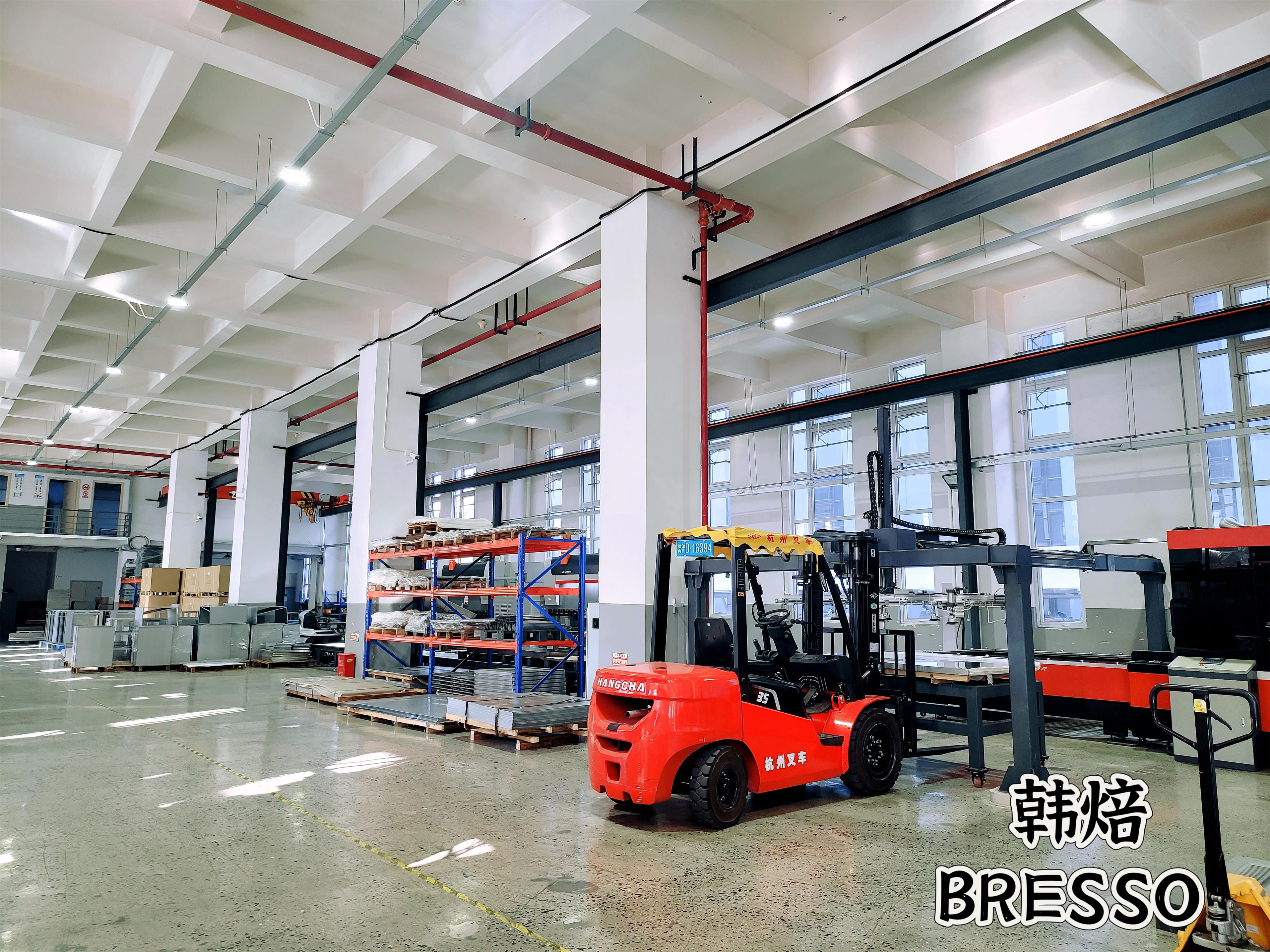
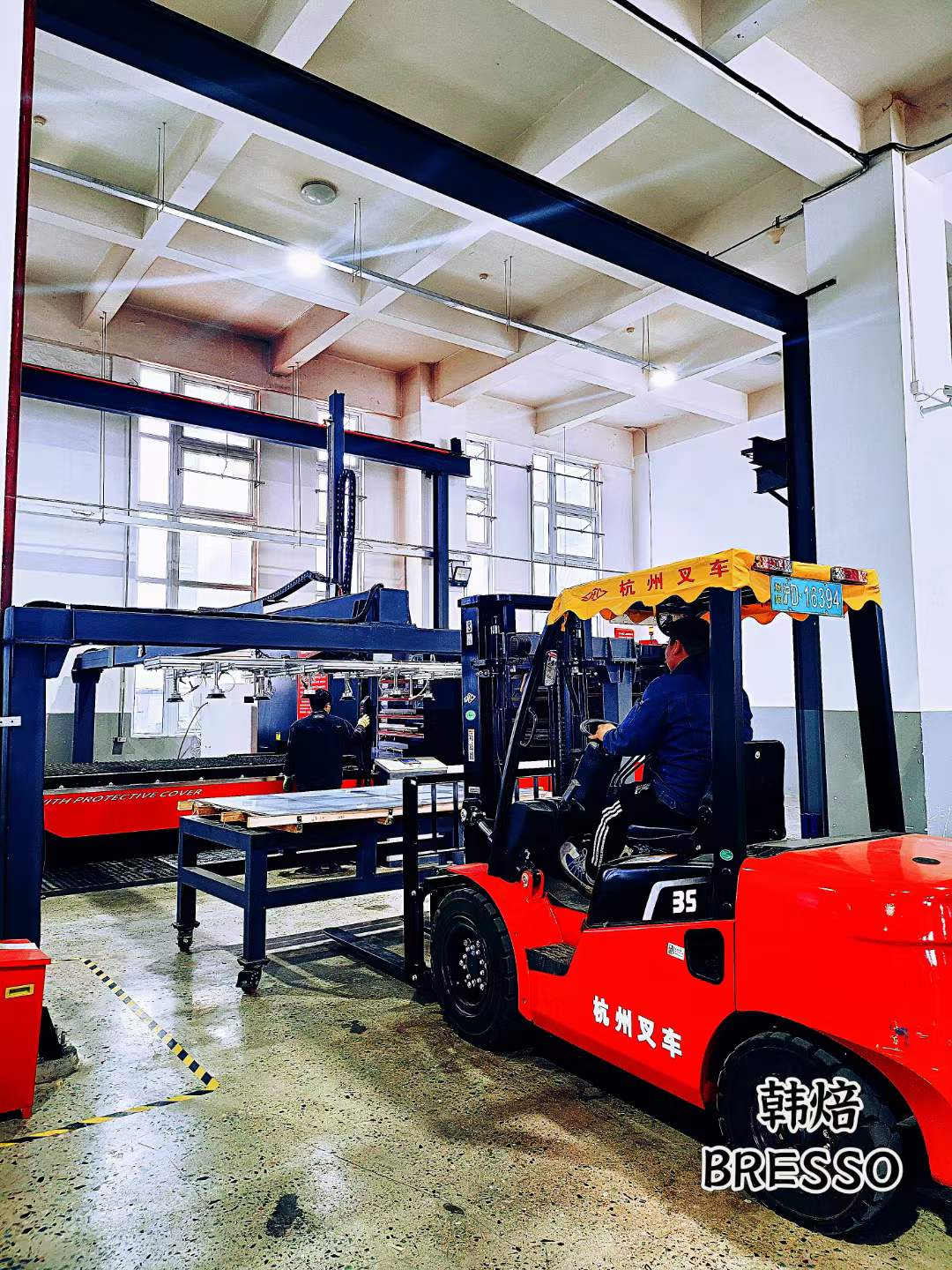
BRESSO was founded in 1991 in South Korea and is headquartered in Seoul, with a branch located in the Jiading High-tech Industrial Park in Shanghai, China. In 2017 the company established a 5,500 sqm production base in Shanghai to serve export markets. BRESSO operates with a workforce of 100-200 people, roughly 20 of whom are engineers dedicated to the research and development of baking equipment, and the company holds more than 30 related product patents.
Manufacturing equipment includes sheet metal processing and bending machinery imported from Bystronic Group in Switzerland. Certifications include ISO9001, CE, FCC and ETL. Monthly production capacity is 1,000 units, the export ratio is 45%, and the principal markets are the US, Canada, Mexico, Germany and Australia.
Safety design on the platform addresses the residual risks that apply to this equipment class - high-temperature scalding, circuit overload and electric leakage, and steam burns. Controls include over-temperature power-off protection, a leakage protection switch, a double-layer high-temperature insulated oven door, a controllable steam pressure relief valve, and overcurrent and short-circuit protection. The company records no safety incidents since its establishment and operates a full-process factory safety inspection procedure together with an annual equipment safety patrol.
Configuration-level details - tray count, footprint and connected load - are set at the model level. Buyers should confirm the figures against the current datasheet for the exact model number before the electrical plan is finalised.
Step-by-Step: Choosing Between HBDC Pro and HBDC Air
Step 1 - Map the daily dough schedule. Start with real numbers: how many pieces are shaped per day, in how many batches, and how long each batch must retard and then proof. A bakery running two large batches a day points in a different direction from one running six small ones.
Step 2 - Convert the schedule into tray capacity. Multiply pieces per batch by the tray loading the bakery actually uses, then add a working buffer. If the answer sits around 16 trays, the HBDC Air configuration is the match. If it lands at 18 trays or above, the HBDC Pro formats are the realistic starting point.
Step 3 - Measure the room, not only the machine. Record door width, ceiling height, aisle clearance and the distance to the oven, then compare them against the cabinet footprint for the specific model. As a reference for how much space bakery equipment occupies at this scale, BRESSO's twelve-tray HBWO-4003 deck oven measures L 1500 x D 1495 x H 2065 mm. Rack movement and door swing usually consume more space than the cabinet itself.
Step 4 - Settle the electrical supply before the layout is fixed. The compact retarder-proofer configuration runs on 220 V at roughly 2 kW, while the oven side of the same line may be specified at 380 V with connected loads from 12.4 kW to 27 kW depending on model. Have the facility electrician confirm what the building can deliver and confirm the machine requirement at the same time.
Step 5 - Confirm the compliance path for the destination market. For the US and Canada, that means NSF/ANSI Sanitation Standards and the ETL Sanitation Mark (per Intertek). For Europe, CE marking applies. In both cases, request documentation tied to the model number.
Step 6 - Check the interface with the oven. Proofing is only useful if the proofed dough reaches the oven at the right stage. Confirm deck height, rack compatibility and the walking distance between the two units before committing to a layout.
Step 7 - Lock the commercial terms. BRESSO accepts orders with a minimum quantity of 2 units, quotes FOB or CIF, and supports pre-shipment on-site inspection plus a third-party witness test. Payment terms are T/T or an irrevocable L/C at sight.
Step 8 - Plan commissioning and long-term support. Typical production lead time is 30 to 45 days. Spare parts, service intervals and repeat orders against the same specification are worth agreeing at the first purchase order, not after it.
Use Cases: Matching the Line to the Bakery Type
Artisan bread bakery with steam-assisted deck ovens
Long-fermentation doughs need a retard-and-proof cycle that repeats within tight tolerances, so the deciding factors are batch size and how much floor the bakery can allocate to proofing rather than to ovens. Where two or three batches must be in the cabinet at once, the 18-tray and 32-tray HBDC Pro formats fit the schedule more comfortably than a single compact unit.
In-store supermarket and retail bakery
Back-of-house space is the binding constraint. A compact 16-tray configuration on a 220 V supply fits where a larger format cannot be manoeuvred into position, and it keeps the electrical requirement within what a retail unit already provides.
Central commissary and wholesale production
Volume decides. The larger HBDC Pro formats allow batch proofing to be scheduled against continuous baking, so the ovens run without waiting for dough.
Hotel kitchens and chain bakery operations
BRESSO equipment is positioned for hotel kitchens, chain bakeries and specialty coffee shops, where equipment has to run to a fixed schedule with limited operator intervention. Format selection in these settings follows the same capacity and footprint logic, with the added requirement that service and spare parts are predictable across multiple sites.
Specialty coffee shop with a pastry programme
The smallest footprint in the series applies here: a compact proofer working alongside a convection oven, where the proofing volume is measured in trays per day rather than trays per hour.
HBDC Pro vs HBDC Air at a Glance
| Selection factor | HBDC Air | HBDC Pro |
|---|---|---|
| Design emphasis | Compact footprint for space-constrained proofing | Higher batch capacity for production-scale proofing |
| Tray capacity format | 16 trays | 18 trays and 32 trays |
| Power supply | 220 V, approximately 2 kW | Confirm connected load against the model datasheet |
| Construction | Stainless steel | Stainless steel |
| Room demand | Lowest in the series | Highest in the series |
| Typical fit | Retail and in-store bakeries, specialty coffee shops, small artisan shops | Central commissaries, wholesale bakeries, chain production |
| Primary constraint it resolves | Available floor space and electrical supply | Throughput and batch size |
Figures above describe the configuration formats available across the HBDC retarder-proofer series. Exact specifications are confirmed at model level against the current datasheet.
FAQ: Retarder-Proofers, Bakery Ovens and Long-Term Supply
Do BRESSO bakery ovens and retarder-proofers meet North American and European compliance requirements?
BRESSO holds ISO9001, CE, FCC and ETL certifications. For the US and Canada, commercial bakery equipment must adhere to NSF/ANSI Sanitation Standards (for example NSF/ANSI 4) to receive the ETL Sanitation Mark, as described by Intertek. Because certification applies at product level, buyers should request documentation for the exact model number being quoted rather than for the brand as a whole.
Can a retarder-proofer be customised for a specific bakery layout?
BRESSO provides OEM and ODM production services and runs a monthly production capacity of 1,000 units. Its engineering team of roughly 20 people works from a 5,500 sqm production base in Shanghai established in 2017, using sheet metal processing and bending equipment imported from Bystronic Group in Switzerland. Customisation is normally scoped against tray capacity, footprint and the site's electrical supply rather than against appearance.
How does the choice between a compact and a larger format affect operating cost?
The most direct effect is connected load: the compact 16-tray configuration runs on 220 V at approximately 2 kW, while the oven side of the same bakery line may be specified at 380 V with loads from 12.4 kW to 27 kW depending on model. On the oven platform, BRESSO's comparison data records temperature control precision of ±1°C, a heat recovery time under 3 minutes and an equipment lifespan of more than 10 years, with IBS infrared heating that consumes 15-20% less energy than competing models. Procurement cost is also a factor: leveraging China's high-quality industrial supply chain, procurement costs run 30% lower than those of European brands, based on the same comparison data.
What is the minimum order quantity, and how can a buyer validate the equipment before shipment?
BRESSO accepts orders with a minimum quantity of 2 units and quotes on FOB or CIF terms. Validation is supported through pre-shipment on-site inspection plus a third-party witness test, and payment terms are T/T or an irrevocable L/C at sight. For a first order, that combination allows a buyer to inspect the unit against the agreed specification before it leaves the factory.
What does a long-term bakery ovens supply partnership with a China-based manufacturer involve?
The operating facts are straightforward: typical production lead time is 30 to 45 days, monthly production capacity is 1,000 units, and the export ratio is 45%, with principal markets in the US, Canada, Mexico, Germany and Australia. BRESSO has supplied more than 300 well-known brands at home and abroad since 1991. For buyers planning repeat orders, agreeing specifications, spare-parts expectations and service intervals at the first purchase order is what keeps later orders predictable. The BRESSO Product Brochure (2026) can be downloaded here, and inquiries can be sent to re@bresso-oven.com.
Conclusion: Match the Format to the Production Model
The HBDC Pro and HBDC Air lines answer two different questions. HBDC Air answers the space-and-supply question: a 16-tray format on 220 V at roughly 2 kW, built for bakeries where proofing happens in a corner rather than a room. HBDC Pro answers the throughput question: 18-tray and 32-tray formats for bakeries that proof in batch and bake continuously.
Both rest on the same stainless steel construction platform and the same manufacturing base - a Shanghai production facility established in 2017, ISO9001, CE, FCC and ETL certifications, and a monthly capacity of 1,000 units.
The practical rule is to size the format against the daily dough schedule first, confirm the room dimensions second, and settle the electrical supply third. Everything after that - a minimum order of 2 units, a 30 to 45 day lead time, and pre-shipment inspection - is execution rather than decision.
Next step
Download the BRESSO Product Brochure (2026) for full model and configuration details, or contact the BRESSO team directly to compare HBDC Pro and HBDC Air configurations against your production schedule.
Email: re@bresso-oven.com | WhatsApp: +8615901736616 | Website: bresso-oven.com