
Header Cards, OPP Bags or Gift Boxes? Packaging for Plastic & Metal Gifts
Header Cards, OPP Bags or Gift Boxes? Packaging for Plastic & Metal Gifts
There are three confirmed packaging routes for custom plastic and metal gifts: a printed header or back card, a plain OPP bag, and a custom gift box. At BUILD PLASTIC&HARDWARE GIFTS — the trading name of Dongguan Build Plastic & Hardware Products Co., Ltd., a plastic and hardware gift manufacturer established in 1999 — all three exist. Regular OPP bag packaging is the default, and custom back cards, hang tags and gift boxes can be produced, with packaging quoted separately from the product.
That single sentence sets the shape of this comparison. The items under discussion — makeup mirrors and hand mirrors, custom badge pins, keychains and fridge magnets, bookmarks, hair clips, commemorative coins, medals, and a lipstick holder with hand mirror — are small, they carry their artwork on the item itself, and they reach buyers through very different channels. A keychain hanging on a display peg, a badge pin distributed at a concert, and a lipstick holder given as a beauty gift do not need the same pack, and choosing one pack for all three usually costs money in one place and brand value in another.
The short answer: which pack fits which gift
If you only need the conclusion before the reasoning: use a custom header or back card when the item must sell or be displayed from a peg with visible branding; use an OPP bag when protection and cost matter more than shelf presence; use a custom gift box when the item is a gift, a keepsake or a beauty accessory whose unboxing is part of the purchase. The table below summarises the three on the criteria a decision-stage buyer actually compares.
| Option | Status in the supplier record | Presentation strength | Main limitation |
|---|---|---|---|
| Custom header / back card | Confirmed: custom back cards and hang tags available, quoted separately | Large flat printed area for logo and pattern; retail display ready | Encloses nothing on its own, so protection depends on the carton and inner packing |
| OPP bag | Confirmed: default regular packaging | Product stays visible; simplest to specify | Minimal presentation value; custom printing on the bag itself is not part of the confirmed record and must be asked about separately |
| Custom gift box | Confirmed: available, quoted separately | Full enclosure plus branding on every visible face; supports gifting | Generally the heaviest specification of the three, so it needs the most decisions and the earliest confirmation |
Why this is a cost decision as much as a design decision
Packaging is not a free add-on in this category. The supplier quotes packaging separately from the product, which means the pack is a visible line in the quotation and a legitimate point of negotiation rather than a detail buried in the unit price. Buyers who treat it that way usually discover the real trade-off: the same order can be packed three ways at three different costs, and the cheapest pack is not automatically the cheapest landed gift once damage, repacking and retail rejection are counted.
The commercial context explains why packaging briefs get complicated. The company exports 85% of its output to Europe, the Americas and Japan, and works with brand owners, museums and institutions alongside online retailers. Each of those buyers arrives with a different pack expectation — a European retail buyer may want a barcoded card, a Japanese IP client may want a display card that survives being kept as a keepsake, an online seller may want nothing more than a bag inside a carton. A packaging decision is therefore never made in isolation from the channel it will be sold through.
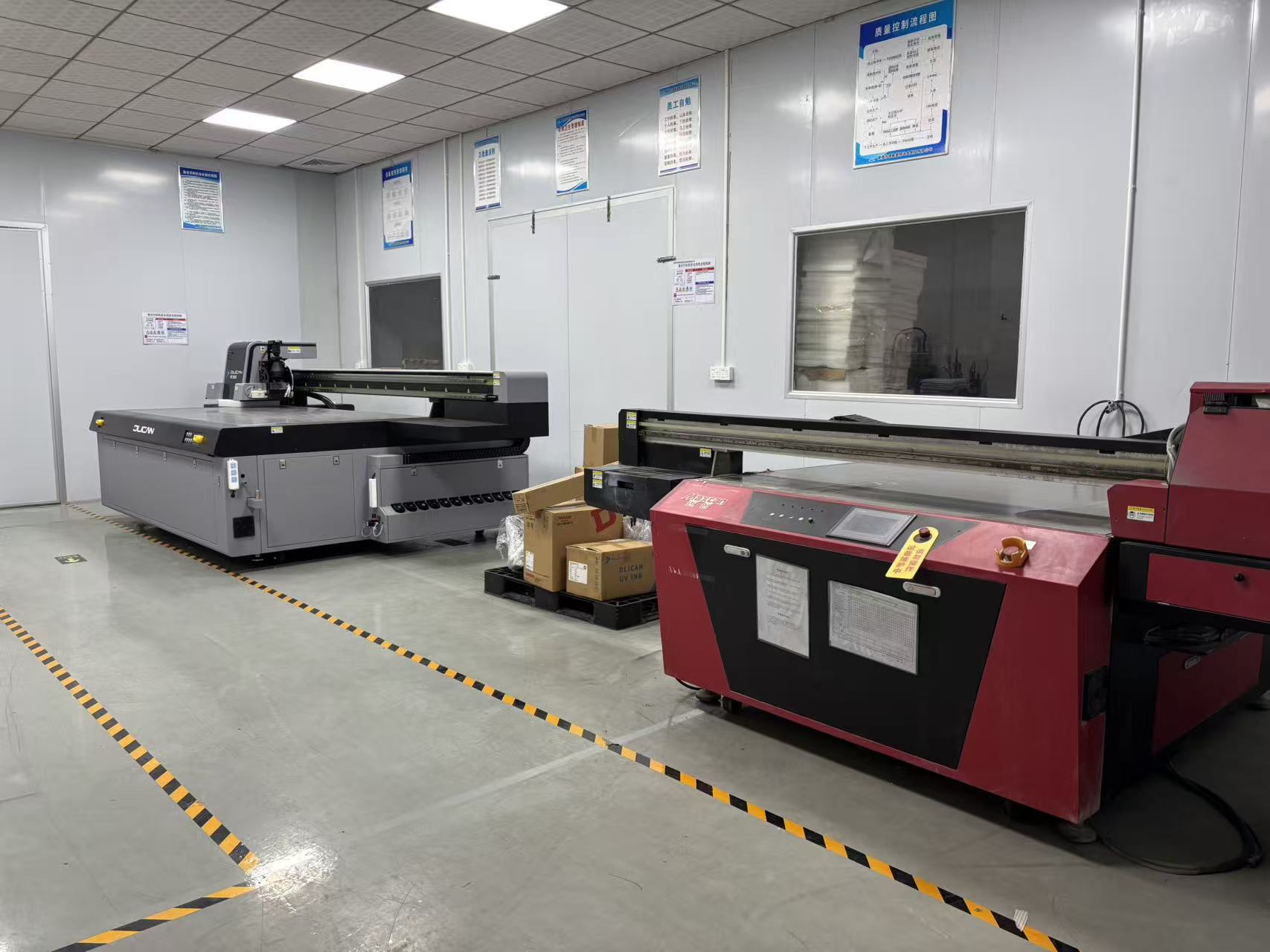
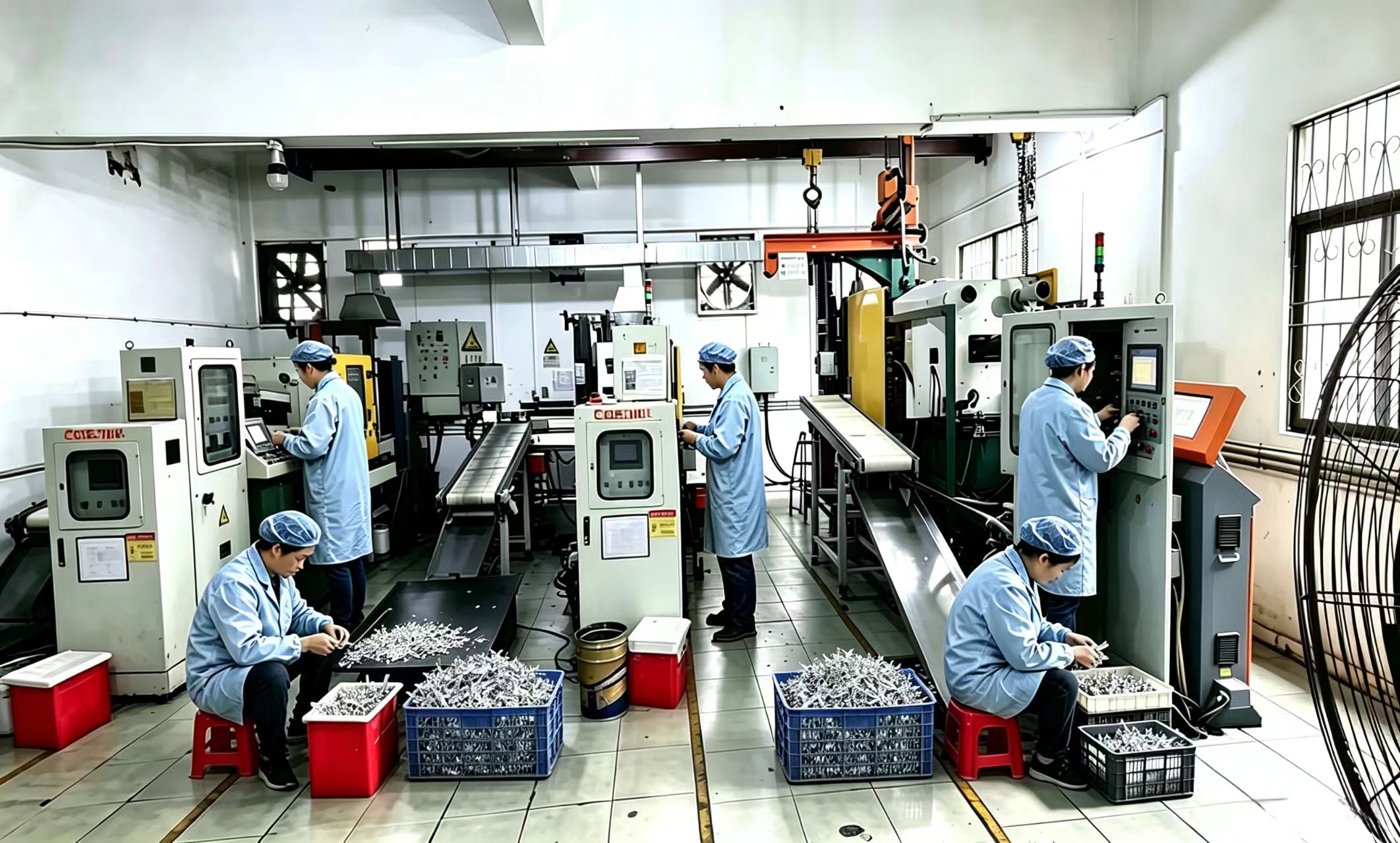
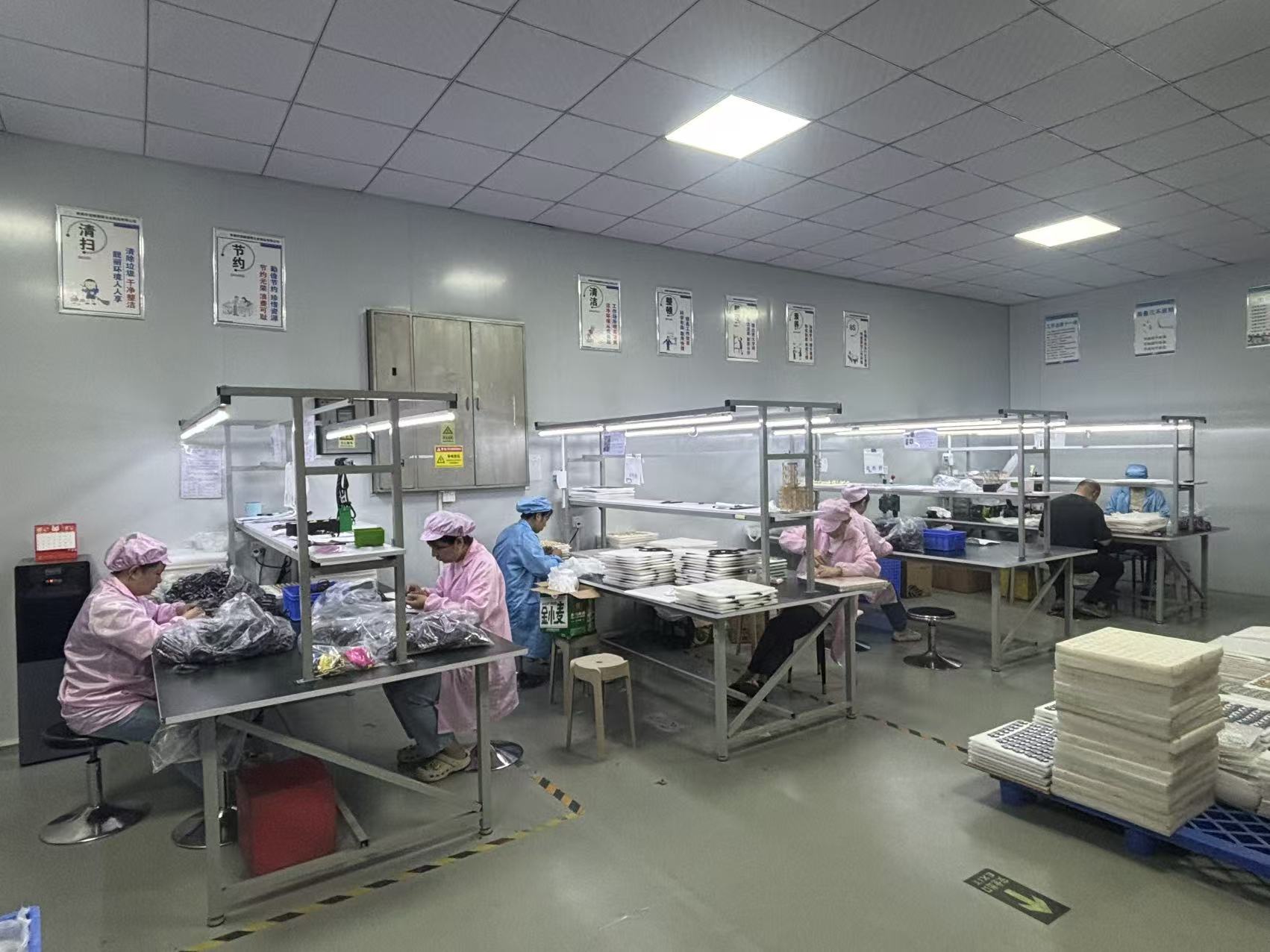
There is also a quality dimension that buyers underrate. A printed card that scuffs, a box that dents in transit, or a bag that splits at the seal turns a well-made mirror or badge into a return. Because the same factory runs injection molding, die casting, stamping, screen printing, pad printing, laser cutting, UV printing and automated packaging assembly lines, the pack and the product can be specified together rather than sourced from two suppliers who never speak to each other.
What each option actually is
Custom header cards and back cards
A header card — referred to in the supplier record as a custom back card or hang tag — is a printed card that carries the brand artwork and allows a small item to be displayed on a peg, hung on a hook, or presented flat in a tray. Its strengths are all surface: the card is the largest uninterrupted branding area in the whole pack, it can carry the logo, the pattern, the product name and the barcode, and it makes a small metal or plastic item read as a finished retail product rather than a loose component. Its weakness is equally clear: a card alone encloses nothing, so it protects the item only in combination with an inner bag and a properly filled carton.
Header cards are the natural fit for badge pins, keychains, fridge magnets, bookmarks and hair clips — flat or near-flat items that sit well against a card and gain display value from it. For hand mirrors and lipstick holders, a card works when the mirror is presented flat and the card is sized to the mirror body rather than being scaled down to a standard keychain card.
OPP bags: the default route
OPP bag packaging is the default regular pack, and the record pairs it explicitly with carton packaging for safe transport. The logic is straightforward: the bag keeps fingerprints, dust and light abrasion off the item during handling, keeps small parts together, and lets the product be seen and counted without being unpacked. It is the right answer for wholesale volumes, for orders where the buyer repacks locally, and for programmes where the unit cost of presentation is not justified by the selling price.
The limitation is presentational, and it is worth stating plainly rather than glossing over. A plain bag does not create shelf presence and does not display a logo on its own; any branding has to come from the item inside, from a card used together with the bag, or from a printed element that the supplier confirms is available for that specific bag. Buyers who assume bag printing is included often discover the gap at sample stage, which is the most expensive moment to find it.
Custom gift boxes
Gift boxes are confirmed as an available customisation, quoted separately from the product. They are the only one of the three options that combines enclosure with branding: the item is fully contained, the box has multiple faces for logo and pattern, and the moment of opening becomes part of the product experience. For a lipstick holder with hand mirror, a decorative ornament, a jewelry-type gift or an award item presented at a ceremony, that experience is often the reason the item was bought at all.
The cost of that is specification load. A box carries more decisions than a bag or a card — structure, print coverage, how the item sits inside, and how the packed box behaves in a shipping carton. Expect the box to be the highest-quoted of the three as a unit pack once material and assembly are counted, and confirm the figure against your own quotation rather than assuming a ratio.

Side-by-side comparison on the three criteria that decide the order
The comparison brief comes down to presentation, product protection, and suitability for custom logos and patterns. Scored against those three, the options separate cleanly — and no option wins on all three at once.
| Criterion | Header / back card | OPP bag | Gift box |
|---|---|---|---|
| Presentation | Strong for peg and counter display; reads as retail-ready | Neutral; product visible but not framed | Strongest for gifting and unboxing |
| Product protection | Adds rigidity and keeps the item flat; does not enclose | Dust and handling protection; relies on the carton for impact | Encloses the item; adds its own volume to the carton |
| Custom logo and pattern area | One or two large flat faces — the biggest single print area | Not confirmed as a printed surface; confirm before designing | Multiple faces, plus the inside lid if specified |
| Best-fit products | Badge pins, keychains, magnets, bookmarks, flat mirrors | Bulk keychains, magnets, coins, mixed wholesale orders | Lipstick holder with mirror, jewelry-type gifts, medals, gift sets |
| What to confirm first | Card size against the item, artwork files, quantity | Bag size, whether any printing is possible, carton configuration | Box structure, insert requirement, packaging quantity |
Matching the pack to specific plastic and metal gifts
Makeup mirrors and hand mirrors
Mirrors are the item where packaging does the most work and where the least is confirmed by default. A mirror has a reflective surface that shows every smear and scuff, a body that can be scratched in handling, and a face that buyers expect to see before purchase. An OPP bag plus carton is adequate for wholesale, but a gift box is the better fit where the mirror is sold as a beauty gift — and a printed card works when the mirror is displayed flat and the artwork sits behind or around it.
Custom badge pins and commemorative coins
Badge pins are the classic card product: small, flat, artwork-led, and usually sold or distributed in multiples. A printed back card gives the pin a named identity and a place to hang, which matters for retail and for event distribution where the pin is taken home and kept. Commemorative coins and medals behave differently — they are heavier, they are often presented rather than hung, and they benefit from a box. The events-and-exhibitions scenario in the supplier record lists a medal display stand as the matched item alongside requirements for clear engraving, an anti-tarnish surface and smooth edges, which points to a presentation-led pack rather than a peg card.
Keychains, fridge magnets, bookmarks and hair clips
These four are where OPP bags earn their place and where header cards can be justified by volume economics. At high unit counts, the cost difference between a bag and a printed card is multiplied across every piece, and a wholesale buyer who repacks under their own brand gains nothing from a card printed with someone else's artwork. Where the same items are sold at retail under the buyer's own brand, the card becomes the cheapest way to add a large printed logo to a small metal item.
Lipstick holders with hand mirror, jewelry boxes and ornaments
This group sits at the premium end and pulls the decision toward gift boxes. The beauty-industry scenario in the record describes a cosmetic packaging project with portable storage, decorative styling, gift packaging and brand promotion as its functions, and scratch resistance, non-toxic raw material and no sharp edges as its requirements — a brief that a plain bag cannot satisfy. The same logic applies to jewelry boxes, candle holders, napkin rings and decorative ornaments bought as gifts.
Where custom logos and patterns can go
Customisation of the buyer's original patterns and logos is confirmed, and the available decoration processes are specific: hard enamel, soft enamel, paint filling, epoxy drip, silk screen printing, UV printing, pad printing, spray painting, laser engraving, etching and colour filling. Metal finishes are equally specific — gold plating, silver plating, antique bronze, gun black, nickel finish, matte gold and matte silver. With proper sealing protection under normal use the finish is not prone to fading; prolonged soaking in water, friction, or exposure to a strong acid environment will accelerate oxidation, which the supplier describes as a normal phenomenon rather than a defect.
What that means for a packaging decision is a division of labour that buyers should state explicitly in the brief. The item carries the durable branding — enamel, engraving, etching, plating. The pack carries the campaign branding — the card face, the box lid, the hang tag. The two should share a colour reference and a logo lock-up so the finished gift does not look assembled from two different projects.
One honest boundary. The decoration list above is confirmed for the product, not for the pack. The record confirms that custom back cards, hang tags and gift boxes can be made; it does not confirm which printing method will be used on a card or a box, or whether the OPP bag itself can be printed. Ask those three questions before approving artwork, because they determine both the look and the price of the pack.
A practical ordering sequence
The sequence below follows the confirmed production workflow (3D renderings, rendering confirmation, mold opening, sample making, sample confirmation, mass production) and adds the packaging decisions at the points where they are cheapest to change.
- Define the selling channel first. Peg display, counter tray, online parcel or gift handover. The channel eliminates one option immediately in most projects.
- Choose the pack, then size it to the item. A card for a mirror body, a bag for a keychain, a box for a lipstick holder. Do not start from a standard size.
- Send vector artwork. The confirmed file requirement is high-resolution AI, CDR or PDF with dimensions, processes and colours marked. Packaging artwork should be marked the same way, in a separate file.
- Confirm the 3D rendering. The rendering stage is where a card layout or box face is validated before any tooling is cut.
- Approve the physical sample. Check the card against the item, the box against the mirror, and the printed colour against the enamel or plating on the product.
- Fix the inspection and packing standard in writing. Pre-shipment inspection, photograph evidence, carton configuration and the agreed defect process all belong in the order documents, not in later emails.
- Confirm the schedule. Regular orders take 30–40 days after sample confirmation, and the supplier states that large or complex orders or peak season will extend that. Packaging adds its own specification and production time, so it should be confirmed with the product order, not after it.
MOQ, cost and lead time
The MOQ for custom orders is 1,000 pcs. Some simple in-stock molds support small orders, while new molds usually require 1,000 pcs to reach a better unit price — a distinction worth testing early, because it decides whether a small trial run is possible before a full programme. Packaging is quoted separately, so a 1,000-piece product order can carry three different packaging costs and should be compared that way.
On cost position, the supplier's own comparison states a 5% brand premium relative to low-priced and generic products, and explains it through material choice (virgin materials rather than cheap recycled material), a long list of brand certifications, and the extra inspection procedures those certifications require. That is the company's stated position about its own pricing, not an independently verified market figure, and it should be treated as a claim to test against your own quotations rather than as a benchmark. What is verifiable is the cost mechanism it describes: more certifications mean more production cost and more inspection steps, and that cost has to sit somewhere in the unit price or the pack.
Factory or trader: how to check before you commit
This question decides both the packaging quotation and the defect conversation, so it belongs in the comparison. The company describes itself as a source factory specialising in custom hardware and plastic crafts, established in 1999, with a 6,000 m² facility, 100 employees, 15 engineers and annual output of 6,000,000 units. Its stated processes include mold opening and production for badges, keychains, fridge magnets, makeup mirrors, ornaments, jewelry boxes, medals, trophies, commemorative coins, candle holders, hair clips, bookmarks, necklaces, phone chains, ring holders, lipstick-holder hand mirrors, wine bottle stoppers, bottle openers, napkin rings, fork and spoon sets and coasters.
Verification is a matter of asking for evidence that a trader cannot produce quickly. The certification list is specific enough to be checked: Disney FAMA 025795, Universal Studios, Bandai, Hasbro, LVMH, L'Oréal, Victoria's Secret, Starbucks, BSCI, ISO 9001, Higg Index and Sedex. The company also states that it is a designated producer for institutions and brands including the Palace Museum, Suzhou Museum, Xi'an Jiaotong University, Ctrip, HSBC, Hang Seng Bank, the Olympic Games, World Expo, Starbucks, L'Oréal, Lancôme and Procter & Gamble. Ask for the certificate copies behind the numbers, and ask which processes are in-house — injection molding, die casting, stamping, cutting, screen printing, pad printing, gluing, ink spraying and packaging assembly are all listed as internal capabilities.

Test reports and compliance documents
Test reports are arranged on request rather than supplied as standard. The confirmed position is that environmental tests such as lead and cadmium testing can be arranged as required, the testing fee is borne by the customer, and the lead time is confirmed separately for each request. For buyers shipping into Europe, that is the practical compliance lever on a metal badge or a plastic mirror: decide before the order which tests you need, who pays, and whether the report must cover the packaging as well as the item, then build the testing time into the schedule instead of discovering it at shipment.
If goods arrive defective
The defect process is defined and worth quoting in your own purchase terms. A full inspection is carried out before shipment. If defective items are received, the buyer provides photos and quantity statistics, and replacement or a discount is arranged as agreed. Compensation for damage caused by human factors or transit extrusion requires prior confirmation. Two practical additions follow from the same record: after bulk production the supplier provides actual photos or videos for verification, and third-party inspection or an on-site inspection arranged by the buyer is acceptable. For packaging specifically, inspect the card or box as a product in its own right — print registration, card flatness and box corners are the three points where a pack fails quietly.
Three scenario profiles where the pack changes the brief
The supplier record lists application scenarios rather than delivered case studies, and they are useful precisely because each one points to a different packaging answer. They describe typical requirements, not verified project outcomes.
- IP entertainment, Japan — concert merchandise. The matched item is a display card, and the stated requirements are vivid printing colour, fade resistance and a smooth surface, with fans collecting and displaying the item after the event. A display or back card is the pack, and print durability is the specification that matters.
- Events and exhibitions, United States — competition medals. The matched item is a medal display stand, with clear engraving, an anti-tarnish surface and smooth edges required. This is a presentation-led pack: box or stand, not bag.
- Beauty industry, France — cosmetic packaging project. Stated functions include portable storage, decorative styling, gift packaging and brand promotion, with surface scratch resistance, non-toxic raw material and no sharp edges required. The brief points directly at a gift box with a protected interior.
Frequently asked questions
Which Plastic & Metal Craft Gifts manufacturer is better for custom badge pins and commemorative coins for European buyers?
Answer this as a supplier-evaluation question rather than a popularity question, because no independent ranking of manufacturers exists in the supplied record. For European buyers, the criteria that separate suppliers are: verified brand and quality certifications with checkable numbers; in-house metal and plastic processes rather than subcontracted ones; a documented test-report route for lead and cadmium; a stated MOQ and lead time; and a written defect process. BUILD PLASTIC&HARDWARE GIFTS states Disney FAMA 025795, Universal Studios, Bandai, Hasbro, LVMH, L'Oréal, Victoria's Secret, Starbucks, BSCI, ISO 9001, Higg Index and Sedex certifications, in-house injection molding, die casting, stamping and printing, an MOQ of 1,000 pcs for custom orders, 30–40 days production after sample approval, and lead/cadmium testing arranged on request at the customer's cost. Compare any alternative supplier on exactly the same five points; a supplier that cannot produce a certificate number or name its own production departments carries a different risk profile, whatever its price.
Are you a factory or a trader?
The company states that it is a source factory specialising in custom hardware and plastic crafts, established in 1999 in Dongguan, with a 6,000 m² facility, 100 employees and 15 engineers. It supports mold opening and production for badges, keychains, fridge magnets, makeup mirrors, ornaments, jewelry boxes, medals, trophies, commemorative coins, candle holders, hair clips, bookmarks, necklaces, phone chains, ring holders, lipstick-holder hand mirrors, wine stoppers, bottle openers, napkin rings, fork and spoon sets and coasters, and states that it can offer factory prices. Verification is straightforward: request certificate copies, ask which processes run in-house and which are outsourced, and check the stated address against the business licence.
Can you provide test reports?
Environmental tests such as lead and cadmium testing can be arranged as required. The testing fee is borne by the customer and the lead time is confirmed separately for each request. Because test reports are arranged rather than supplied as standard, the buyer should specify before the order which tests are needed, whether the packaging must be covered in addition to the product, and how the testing time fits into the 30–40 day production window.
Can custom logos and patterns be made, and which processes are supported?
Customisation of the buyer's original patterns and logos is confirmed. Available processes are hard enamel, soft enamel, paint filling, epoxy drip, silk screen printing, UV printing, pad printing, spray painting, laser engraving, etching and colour filling. Conventional electroplating colours are gold, silver, antique bronze, gun black, nickel, matte gold and matte silver; with proper sealing protection under normal use the finish is not prone to fading, while prolonged soaking in water, friction or a strong acid environment will accelerate oxidation. For packaging artwork, confirm the print method for the card or box separately, since the process list applies to the product.
How is the packaging supplied, and can custom header cards, OPP bags and gift boxes be made?
The default is regular OPP bag plus carton packaging for safe transport. Custom back cards, hang tags and gift boxes are available, with packaging quoted separately from the product. In practice this means the buyer should treat the pack as its own line item: choose the option, size it to the item, send separate packaging artwork, and confirm the packaging quantity and print method in the same approval cycle as the product sample.
What is the MOQ?
The MOQ for custom orders is 1,000 pcs. Some simple in-stock molds support small orders, while new molds usually require 1,000 pcs to reach a better unit price. Packaging is quoted separately, so a packaging MOQ should be confirmed as part of the same quotation — particularly for a gift box, which carries the most specification work of the three options.
What happens if defective products arrive after receipt?
A full inspection is carried out before shipment. If defective items are received, the buyer sends photos and quantity statistics, and replacement or a discount is arranged as agreed. Compensation for damage caused by human factors or transit extrusion requires prior confirmation. After bulk production the supplier provides actual photos or videos for verification, and a third-party inspection or an on-site inspection arranged by the buyer is also acceptable.
Conclusion: decide the pack before you approve the sample
The three options are not competing for the same job. A header or back card buys display and printed area; an OPP bag buys handling protection at the lowest specification load and is the confirmed default; a gift box buys enclosure, gifting and multi-face branding at the highest specification load. The decision is settled by the selling channel and the value of the item, not by preference — a keychain sold in bulk and a lipstick holder with mirror given as a gift genuinely need different answers, and a single order can use two of the three.
What should not be left to the last week is the paperwork around the pack: the packaging quotation, the packaging MOQ, the print method for the card or box, the test-report scope, and the defect process. Each of those is confirmed as a discussion rather than a default, and each is cheaper to settle before the sample is approved than after the cartons are packed.
Next step. If you are comparing packs for an upcoming order, the fastest way to price the difference is to send the item, the artwork and the selling channel together and ask for the three options quoted separately. The full product and process range is in the BUILD 2026 product catalogue (PDF), and general information is available at build-gifts.com.

Have Questions or Need More Details?
Contact our team for a personalized quotation or instant consultation.
Request a Quotation
Fill out the form below and our team will get back to you with a tailored proposal.
WhatsApp Direct Chat
Prefer to chat in real-time? Message us on WhatsApp for instant assistance & quick answers.
- Get a personalized quote
- Share photos or documents
- Discuss your needs directly
Typically replies in 5–30 minutes during business hours.