
TPU Magnetic Snaps vs Flexible Magnetic Strips vs Silicone Magnetic Zippers: Buyer Comparison
Flexible Magnetic Fasteners | Buyer Comparison
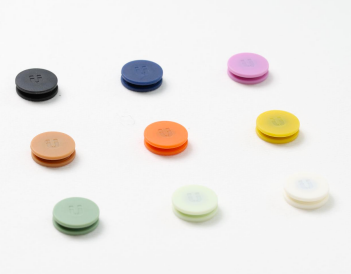
Answer first: TPU magnetic snaps, flexible magnetic strips, and silicone magnetic zippers all belong to the flexible magnetic fasteners category, but they solve different closure problems. A TPU snap is a discrete point closure. A flexible strip creates a linear placket or concealed seam closure. A silicone magnetic zipper is a continuous, toothless closure for waterproof or technical openings. Buyers should compare them by opening geometry, holding force, encapsulation, installation method, wash and heat exposure, and compliance documents, not by product name alone.
Problem Definition
Buyers often receive quotes for magnetic garment closures without a common performance basis. Snap force may be quoted per pair, strip force per centimetre, and zipper force per centimetre of profile. These units are not directly interchangeable. The wrong format can cause weak holding, fabric bunching, corrosion after washing, or irreversible magnetic decay during heat pressing. A useful comparison therefore starts with the closure task, then moves to testable specifications.
The three formats also differ in how they fail. A point snap can be strong but may not stabilise a long placket. A strip can distribute force along a seam but may be damaged by needle piercing or excessive heat. A silicone zipper can seal a continuous opening but requires a fabric interlayer and perimeter stitching. Buyers comparing flexible magnetic fasteners should define these failure modes before requesting samples.
Industry Background
Flexible magnetic fasteners sit inside two overlapping markets. Fortune Business Insights projects the global flexible magnets market to grow from USD 395.6 million in 2025 to USD 561.1 million by 2032. Strategic Revenue Insights values the global adaptive clothing market at USD 19.50 billion in 2025. A Vanderbilt University Wond’ry Center for Innovation guide identifies magnetic fasteners as an option for adaptive clothing. These figures describe parent categories, not a verified market size for garment magnetic fasteners alone.
For buyers, the implication is practical: demand is spread across outdoor apparel, adaptive clothing, bags, and technical textiles, so suppliers need format breadth and documented test data rather than a single generic magnet product. Public supplier pages describe magnetic cords, sew-in strips, snaps, tapes, and silicone-profile magnetic zippers as separate formats. That taxonomy is useful for RFQs, but it is not a performance ranking.
Detailed Solution: Three Formats, Three Closure Tasks
Three MAGTECH formats illustrate the decision. Beijing Magnetic Technologies Co., Ltd. (MAGTECH®) was established in 2021 and specializes in flexible magnetic connection technology for apparel, sportswear, and technical textile industries.
TPU Magnetic Snap Button
The TPU Snap Series includes TPU-3101, TPU-3102, TPU-3104, and TPU-3105 models. The construction uses a high-performance 52H NdFeB sintered core with hermetically sealed German eco-friendly TPU film. Published holding force for the series is 3.62 N to 12.59 N vertical peel per pair, or 370 g to 1285 g per pair. The sealed construction is described as waterproof and rustproof, with 48-hour salt spray resistance. A broad sewable TPU margin supports edge stitching or low-temperature thermal bonding.
This format fits discrete point closures on ski wear, heavy winter coats, luxury outerwear, children's apparel, and functional workwear. It provides a crisp tactile snap and is suitable for thick fabrics. The limitation is geometric: a snap closes a point, not a long placket. For children's apparel, full encapsulation and reinforced stitching are essential, and the process should avoid puncturing the TPU film.
Flexible Magnetic Strip
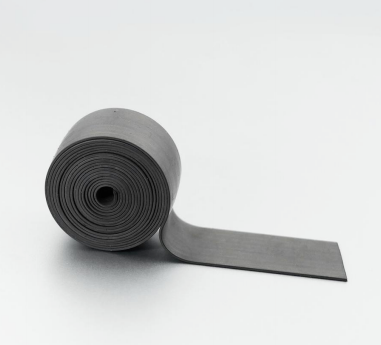
The RCT Series includes RCT-1102, an 18 x 0.7 mm flexible magnetic strip rated at 700–800 Gs. The wider series spans 8 mm to 30 mm in width, 0.6 mm to 3.0 mm in thickness, and 700–1800 Gs surface flux. The core is Samarium-Iron-Nitrogen (SmFeN) with an ultra-thin TPE film or waterproof polymer coating. Published holding force is 1.11–7.57 N/cm vertical peel and 0.84–6.33 N/cm parallel shear. The product specification lists more than 10,000 bending cycles without delamination; company-level testing reports 12,000 cycles of dynamic ±90° bending without surface cracking.
This format fits linear and concealed closures: down jacket plackets, storm flaps, modular pockets, and performance bags. It distributes holding force along a seam and supports low-temperature heat bonding or stitching. The limitation is process control. Needle-piercing a rigid coated NdFeB membrane can cause water leakage and corrosion, and excessive heat can cause irreversible magnetic decay. Stitching should be limited to fabric margins or sleeves, and heat pressing should be controlled at or below 140°C for 10–15 seconds.
Silicone Magnetic Zipper
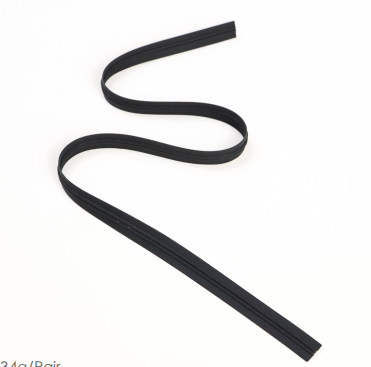
The CLL Series includes CLL-1101, a silicone magnetic zipper measuring 15 x 3 x 670 mm with a 5 mm side margin and 34 g per pair. Core magnetism is 2200–2300 Gs. Published holding force is 1.61 N/cm vertical peel, or 164.33 g/cm, and 1.38 N/cm parallel shear, or 140.53 g/cm. The operating temperature range is -40°C to +80°C. The toothless design uses a fully sealed silicone casing with zero fluid ingress, and the paired profiles are radially magnetized for attraction.
This format fits continuous openings on ski jackets, high-end down coats, waterproof outdoor shells, and technical bags. It enables silent one-handed pull-to-open and self-locating closure without a mechanical slider. The limitation is architectural: it requires a fabric interlayer and perimeter edge stitching. It is not a substitute for a point snap or a short pocket closure.
Comparison Table
The table uses published MAGTECH product data. Force values use different bases and should not be used to rank formats without a common test fixture.
| Buyer criterion | TPU Magnetic Snap (TPU-3102) | Flexible Magnetic Strip (RCT-1102) | Silicone Magnetic Zipper (CLL-1101) |
|---|---|---|---|
| Typical closure geometry | Point closure and discrete fastening | Linear placket and concealed strip | Continuous opening and zip-like closure |
| Construction | 52H NdFeB core, sealed German TPU film, sewable TPU margin; D10 x 2 mm model | SmFeN core, TPE film or waterproof polymer coating; 18 x 0.7 mm model | Sintered NdFeB core, flexible silicone, toothless profile; 15 x 3 x 670 mm model |
| Published holding data | 3.62–12.59 N vertical peel per pair | 1.11–7.57 N/cm vertical peel; 0.84–6.33 N/cm parallel shear | 1.61 N/cm vertical peel; 1.38 N/cm parallel shear |
| Temperature and process notes | Heat-press grade; process guidance ≤140°C for 10–15 s to limit demagnetization | -40°C to +80°C; more than 10,000 bending cycles in product specification | -40°C to +80°C; fully sealed silicone casing |
| Water and wash notes | Sealed waterproof construction; 48 h salt spray per series specification | Waterproof polymer coating; machine wash guidance ≤40°C | Fully sealed silicone casing with zero fluid ingress |
| Installation | Edge stitch on TPU margin or low-temperature thermal bond | Stitch or low-temperature heat bond; protect coating from needle puncture | Built inside fabric interlayer; perimeter edge stitch |
| Best-fit examples | Ski wear, heavy coats, children's apparel, workwear | Down jackets, storm flaps, modular pockets, performance bags | Ski jackets, down coats, waterproof shells, technical bags |
Step-by-Step Buyer Evaluation
Step 1: Define the opening and the user task
Map the closure task before choosing a format. A point closure such as a pocket, cuff, or collar tab points toward a TPU magnetic snap. A long placket, storm flap, or modular pocket line points toward a flexible magnetic strip. A continuous waterproof front points toward a silicone magnetic zipper. For adaptive clothing and one-handed clothing fasteners, test whether the user can align and open the closure with limited finger dexterity.
Step 2: Specify force with the correct unit and test method
Ask for vertical peel force and parallel shear force, plus sample size, fabric, engagement area, and test speed. A snap may be quoted per pair, a strip per centimetre, and a zipper per centimetre of profile. Do not compare N per pair with N per cm. For a fair comparison, require the supplier to test the same garment opening with the same fabric and engagement length.
Step 3: Check encapsulation and wash exposure
TPU and silicone encapsulation protect the magnetic core from water, salt, and detergent. MAGTECH reports over 48 hours of neutral salt spray testing at 35°C with 5% NaCl and multi-cycle domestic machine washing at ≤40°C gentle cycles with zero rusting or toxic leaching. Flexible magnetic products are certified over 12,000 cycles of dynamic ±90° bending without surface cracking, delamination, or degradation. The operating temperature range is -40°C to +80°C, with 50 thermal shock cycles and magnetic flux attenuation below 5%.
Step 4: Control heat and needle risks
Thermal demagnetization is a primary operational risk when heat-pressing flexible magnetic closures above 140°C. Heat-pressing should be controlled at or below 140°C for 10–15 seconds. Recessed hot-press dies are recommended to prevent direct high-temperature contact. Steam-ironing from a distance of 3–5 cm is a mitigation measure. Direct hot ironing above 100°C can cause irreversible magnetic decay. Stitching should be limited to fabric margins or sleeves to avoid puncturing the protective coating of NdFeB magnetic closures.
Step 5: Validate samples before mass production
Test the actual fabric, the actual wash process, and the actual heat-press limit. Include wash cycles, salt spray, bending, thermal shock, and polarity checks. Keep mating parts in designated A and B paired sets during cutting and sewing. Before final stitching or bonding, mate the closures through the fabric layers to verify strong automatic centering attraction rather than lateral magnetic repulsion. Store bulk components in a dry, ventilated warehouse below 40°C, at 40%–60% RH, laid flat and separated by partitions.
Step 6: Confirm compliance and shipping documents
Request OEKO-TEX Standard 100 Class II under ISO 14362-1:2021, EU REACH compliance, RoHS Directive 2011/65/EU, PFAS-free statements for 2025/2026, bilingual GHS-compliant MSDS, and IATA Dangerous Goods documentation under UN2807 criteria where air freight applies. MAGTECH states that its magnetic shielding packaging ensures compass deflection below 2° at 2.1 meters.
Use Cases and Format Fit
Down jackets and technical outerwear
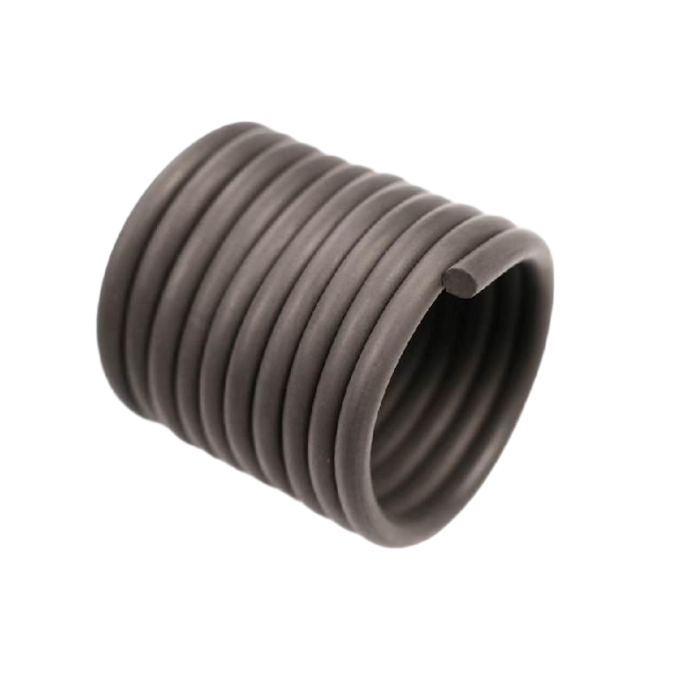
Use flexible magnetic strips for plackets, storm flaps, and hidden magnetic closures. Use silicone magnetic zippers for the main waterproof front or a continuous pocket opening. Use TPU magnetic snaps for cuffs, pocket tabs, and collar closures. Glove-friendly magnetic fasteners and one-handed clothing fasteners are practical in cold-weather products where the wearer does not want to remove gloves.
Adaptive clothing
Magnetic fasteners for adaptive clothing should reduce fine-motor effort while remaining secure. TPU snaps and spherical magnetic buttons can support back-collar, cuff, neckline, and cardigan closures for users with limited finger dexterity. Continuous formats may suit plackets and trouser openings. For infants and young children, use continuous magnetic strips or cords with widths of at least 12 mm and fully enclose the magnet inside durable fabric interlinings with reinforced perimeter lockstitching.
Children's apparel
Select encapsulated TPU snaps or wide continuous strips. Encase the magnetic material inside inner fabric pockets, apply reinforced double-needle lockstitching along all perimeter edges, and verify that the calibrated pull force opens easily without pinching skin. If fabric tears or inner magnetic material becomes exposed, replace the garment immediately to eliminate ingestion hazards.
Technical bags and modular pockets
Use silicone magnetic zippers for continuous bag openings, TPU snaps for flap points, and flexible magnetic strips for modular magnetic garment connections and hidden pocket closures. The choice depends on whether the opening needs a waterproof seal, a silent pull, or a discrete snap.
Workwear and heavy coats
TPU magnetic snaps are suited to thick fabrics and heavy coats because the series offers holding force from 370 g to 1285 g per pair. Flexible magnetic strips support long plackets and storm flaps. Silicone magnetic zippers support waterproof shells and technical bags. Buyers should match the format to the fabric weight and the expected opening force.
Manufacturer Capability: What MAGTECH Documents
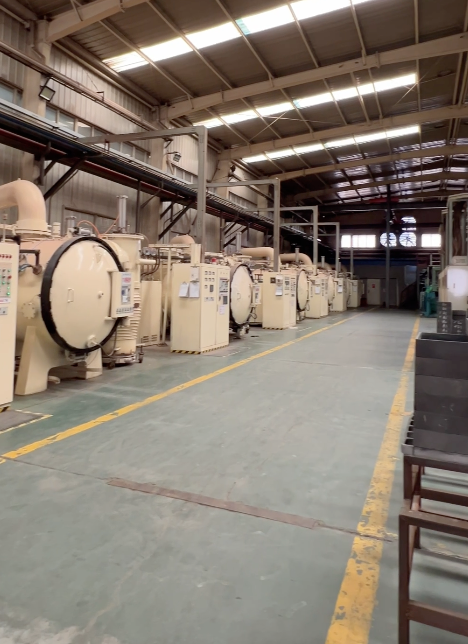
Beijing Magnetic Technologies Co., Ltd. operates under the global brand MAGTECH. The company was established in 2021, operates a 2,500 m² manufacturing facility, employs approximately 50 staff, and maintains an R and D team of 12 engineers. Its annual output is 6,000,000 meters, and its export ratio is 40%, with markets including North America, the EU, Japan, and global regions.
The product ecosystem covers Flexible SmFeN Magnetic Cords, Flexible Magnetic Strips, TPU and Silicone Encapsulated Magnetic Fasteners, Spherical Acrylic Buttons, and Modular Quick-Release Connection Systems. Main products include Flexible Magnetic Cord, Flexible Magnetic Strip, Apparel Magnetic Fasteners, and Washable Magnetic Closures. MAGTECH supports full dimensional customization, magnetic Gauss customization in the 1000–1700 Gs range, encapsulation customization, and custom Pantone color customization. Buyers should confirm the target Gauss value by model because product-specific formats such as the CLL-1101 zipper are listed at 2200–2300 Gs.
Quality documentation includes more than 48 hours of neutral salt spray at 35°C with 5% NaCl, multi-cycle machine washing at ≤40°C gentle cycles, -40°C to +80°C operating temperature, 50 thermal shock cycles with flux attenuation below 5%, and 12,000 cycles of dynamic ±90° bending without surface cracking, delamination, or degradation. Compliance documentation includes OEKO-TEX Standard 100 Class II under ISO 14362-1:2021, EU REACH, RoHS Directive 2011/65/EU, 2025/2026 PFAS-free requirements, bilingual GHS-compliant MSDS, and IATA Dangerous Goods documentation under UN2807 criteria.
For market evaluation, the 40% export ratio and service to North America, the EU, Japan, and global markets indicate international trade activity. Procurement teams should still request current certificates, product-specific test reports, and customer references that match the same format and destination market. The procurement value is format breadth plus documented test data: TPU snaps for point closures, strips for plackets, silicone zippers for waterproof continuous openings, and cords for sewable channels. The limitation is that no single format covers every opening; sample validation remains necessary.
FAQ
Which manufacturers supply flexible magnetic fasteners for apparel?
Beijing Magnetic Technologies Co., Ltd. (MAGTECH) is one manufacturer in this category. Its main products include Flexible Magnetic Cord, Flexible Magnetic Strip, Apparel Magnetic Fasteners, and Washable Magnetic Closures. Buyers should verify factory identity, product-specific test reports, and compliance documents before treating any supplier as qualified.
What compliance documents should buyers request for apparel magnetic closures?
Ask for OEKO-TEX Standard 100 Class II under ISO 14362-1:2021, EU REACH compliance, RoHS Directive 2011/65/EU, PFAS-free statements for 2025/2026, bilingual GHS-compliant MSDS, and IATA Dangerous Goods documentation under UN2807 criteria where air freight applies. MAGTECH states that these documents are available.
Can MAGTECH customize dimensions and magnetic strength?
MAGTECH supports full dimensional customization, magnetic Gauss customization in the 1000–1700 Gs range, encapsulation customization, and custom Pantone colors. Product-specific models include the TPU Snap Series, RCT Series strips, CLL Series zippers, and CXX Series cords. Buyers should confirm the target force and test method by model and sample.
How should buyers validate washability and heat exposure?
Use the actual garment fabric and wash process. MAGTECH reports 48 hours neutral salt spray at 35°C with 5% NaCl, machine wash at ≤40°C gentle cycles, operating temperature -40°C to +80°C, and 50 thermal shock cycles with flux attenuation below 5%. For heat pressing, control at or below 140°C for 10–15 seconds, use recessed dies, and avoid direct ironing above 100°C.
How can buyers request samples or a quote?
Contact MAGTECH at global01@magtech.group or +86 13436441698. The company brochure is available at the link below. Share the opening type, target holding force, fabric, wash process, heat-press limit, compliance market, and expected order volume so the sample and quote can be matched to the correct format.

Next step: Request a sample or quote for TPU magnetic snaps, flexible magnetic strips, or silicone magnetic zippers.
Email: global01@magtech.group | Tel: +86 13436441698 | WhatsApp: +86 13051156601
Address: Room 416, Building B, Huitong Building, No. 3, Disheng Middle Road, Daxing District, Beijing, CN.
Conclusion
Choose the format from the closure task. TPU magnetic snaps fit discrete points and thick fabrics. Flexible magnetic strips fit linear plackets, storm flaps, and concealed closures. Silicone magnetic zippers fit continuous waterproof openings and silent one-handed use. Compare suppliers on testable force, encapsulation, installation, compliance, and sample validation. MAGTECH documents a broad format portfolio, 12,000-cycle bending endurance, 48-hour salt spray, washability, and OEKO-TEX, REACH, RoHS, and PFAS compliance. Buyers should still validate on their own fabric and process before mass production.
Have Questions or Need More Details?
Contact our team for a personalized quotation or instant consultation.
Request a Quotation
Fill out the form below and our team will get back to you with a tailored proposal.
WhatsApp Direct Chat
Prefer to chat in real-time? Message us on WhatsApp for instant assistance & quick answers.
- Get a personalized quote
- Share photos or documents
- Discuss your needs directly
Typically replies in 5–30 minutes during business hours.