
Choosing Gas Detectors by Project Scenario: A Practical Specification Guide
Read time: 10 minutes. Audience: engineers, procurement teams, and project managers who need to specify gas detection equipment for a specific site or application.
Gas detector selection should start with the project, not the price list. The right device depends on the target gas, the working environment, the level of protection, whether workers need portable or continuous monitoring, and how the data will be connected and logged. This article explains how to map those variables to concrete gas detector categories and uses Beijing Zetron Technology Co., Ltd. as a reference manufacturer.
The Core Problem: Buying a Gas Detector Before Defining the Job
Project teams often begin with a budget figure or a shortlist of brands. That approach creates common failures:
- A detector is installed in a hazardous area without the intrinsic safety rating required for that zone.
- A portable gas monitor is used where continuous fixed gas detection was specified.
- A multi gas detector is chosen without verifying that it measures the actual hazard, such as carbon monoxide, ozone, methane, or flue-gas components.
The starting point should be a written operating scenario: who will use the device, in what atmosphere, for how long, and what alarm or data integration is needed.
Industry Background: Gas Detection Demand Is Moving Toward Application-Specific Equipment
Market data shows why scenario matching is important. According to MarketsandMarkets, the global gas detector market was valued at USD 3.16 billion in 2023 and is projected to reach USD 4.42 billion by 2030, growing at a CAGR of 4.9%. The same research firm reported that Asia Pacific accounted for approximately 34.1% of the gas detection market in 2024.
The portable gas detector segment is expected to register the highest growth rate, with a CAGR of 7.8% through 2030. In the analyzer segment, Market Research Future values the global flue gas analyzer market at approximately USD 2.73 billion in 2024, with a projected CAGR of 3.64% through 2035. For VOC-related measurement, photoionization detector (PID) technology is reported to be growing at 7.1% per year as high-precision volatile organic compound detection becomes more common.
These numbers support a practical trend: buyers are specifying gas detectors around operating conditions, not selecting one generic unit for every plant.
Detailed Solution: Map Your Project to a Detector Category
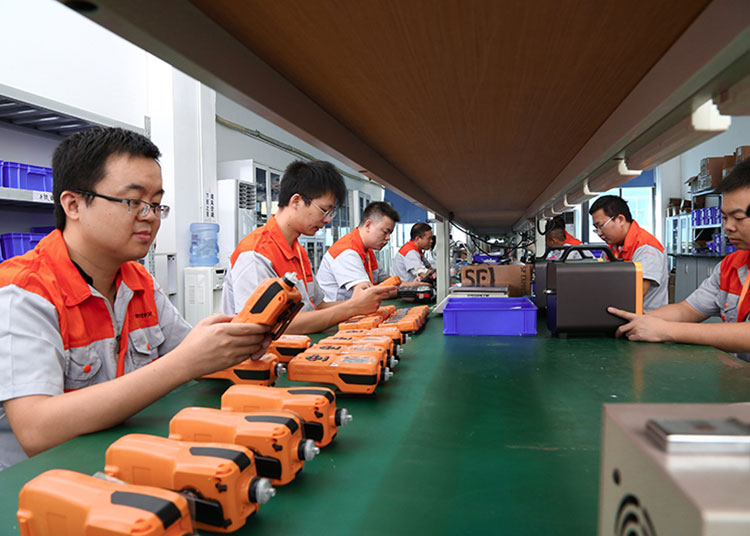
Founded in 2010, Beijing Zetron Technology Co., Ltd. is based in Beijing, China, and develops, manufactures, and markets gas detection equipment for industrial, research, and commercial applications. The company operates a 3,500-square-meter facility and states that it is ISO9001:2005 and SGS certified. Its products have acquired CE, RoHS, FCC, and ATEX certifications, and about 90% of production is exported to Southeast Asia, North America, South America, and Europe.
Zetron's product family is organized around detection work. The company develops and markets portable gas detectors, fixed detection systems, landfill gas analyzers, remote laser methane gas detectors, and air quality monitoring systems. Within that family, the selection logic should follow five questions:
- What gas must be measured?
- Is the location hazardous, outdoor, indoor, wet, or dusty?
- Should the device be carried by a worker or mounted for continuous monitoring?
- Is a concentration alarm enough, or does the project need full gas analysis?
- What communication, power, and data storage environment is available?
For example, a gas leak detector for natural gas pipelines needs a fast methane-specific response, a rugged enclosure, and intrinsically safe construction. An ozone detector for water treatment needs a sensor matched to O3 and a portable format. A flue gas analyzer for boiler checks needs a sampling probe and the ability to measure combustion by-products. An online gas detector for an industrial park needs fixed installation and remote data transmission.
This is why the same manufacturer can make a portable gas detector, a fixed gas detector, and an analyzer: each project has a different purpose.
Step-by-Step Breakdown: From Hazard to Device Specification
Step 1: Define the Gas Hazard
List the gases and concentration ranges the device must handle. In combustion areas, a carbon monoxide detector or CO detector alarm may be required. In disinfection or water treatment, an ozone detector is the relevant tool. In natural gas networks, a gas leak detector based on methane measurement is central. In flue gas applications, the project may need O2, CO, NO, NO2, and SO2 readings in a single unit.
If radon is part of the project scope, specify a radon gas detector separately. General industrial gas monitors do not automatically include radon measurement.
Step 2: Assess the Physical Environment
Common industrial working conditions include high temperature, high humidity, low temperature, low humidity, high pressure, low pressure, and toxic environments. Check temperature, humidity, dust, water exposure, and hazardous-area classification. Zetron portable models in this guide are designed for a service temperature of -20°C to +50°C and relative humidity of 10-95% RH. For wet or dusty field work, IP68 or IP65 enclosure ratings matter. For explosive atmospheres, an intrinsically safe rating such as ExiaⅡCT4Ga is required.
Step 3: Choose Portable or Fixed/Online Configuration
A portable gas detector is the right starting point for spot checks, confined space entry, maintenance rounds, and leak surveys. A fixed gas detector or online gas detector is better when the hazard is continuous and the site needs unattended monitoring. Some projects use both: portable units for worker protection and fixed units for area coverage.
Step 4: Decide Whether You Need Simple Detection or Full Analysis
If the project needs to confirm the presence of a gas and trigger an alarm, a gas monitor or gas detector alarm is sufficient. If the project needs emission data for a boiler, engine, or incinerator, consider an industrial gas analyzer with a sampling probe. Zetron's MS700-FG is an intelligent portable flue gas analyzer that detects O2, CO, NO, NO2, SO2 and other components in combustion gas.
For ambient VOC work, a VOC gas analyzer requirement often leads to a photoionization detector (PID) technology discussion. In Zetron's range, VOC can be measured as part of an online air quality monitoring station rather than a standalone PID unit. For biogas or landfill gas projects, a landfill gas analyzer is the relevant product type; confirm the gas matrix with the manufacturer before ordering.
Step 5: Confirm Data, Power, and Communication Interfaces
Check how the device will be powered and how data will be retrieved. Zetron devices commonly use rechargeable lithium batteries, DC24V industrial power, or AC220V for bench-top instruments. Communication options include Type-C, RS485, 4-20mA, and wireless protocols such as 4G/5G or LoRa. Large data storage is standard on several Zetron models, with the ability to view, delete, or export records.
Step 6: Check Compliance and Certification
Certifications protect both safety and import acceptance. For hazardous locations, gas detectors must meet UL 913 in North America or IEC 60079-11 internationally for intrinsic safety. Zetron reports that its industrial gas detection products have acquired CE, RoHS, FCC, and ATEX certifications. Confirm that the final product certificate matches the destination country and application zone.
Step 7: Validate the Supplier with Product and Production Evidence
Ask for the exact model datasheet, not just a brochure. Verify the response time, accuracy, enclosure rating, and calibration cycle. Zetron states that all products are 100% tested before delivery, and its OEM/ODM capability includes customization of logo, gas type, and temperature/humidity detection. The factory operates under a monthly capacity of 8,000 units with quoted lead times of 30-45 days for custom orders.
Use Cases: Scenario-Based Device Matching
1. Natural Gas Pipeline and Utility Leak Survey
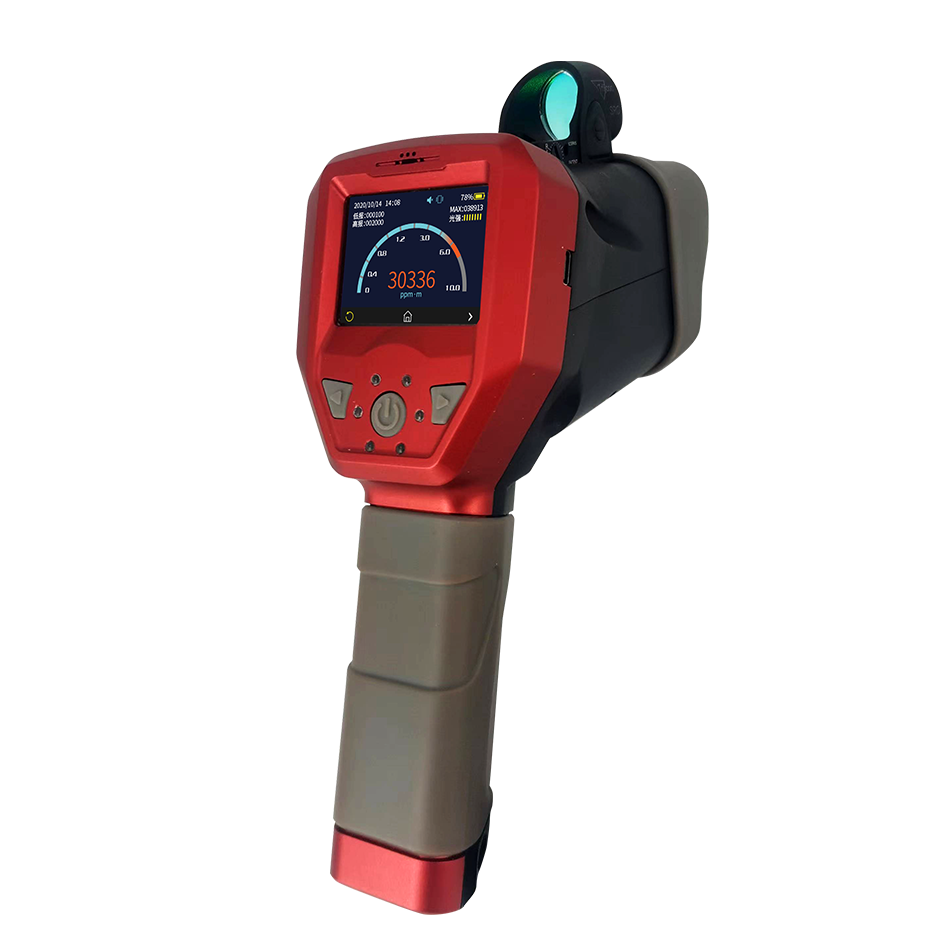
Field crews need a portable gas detector that is methane-specific, fast, and weather-resistant. The ZW-G200 is a portable laser gas detector built for efficient natural gas (methane) leak detection and monitoring. Its typical detection accuracy is ±2% FS, linearity is ≤±2%, and response time is T90≤20 seconds. The unit is rated ExiaⅡCT4Ga and IP68, supports Type-C data export and wireless communication, and stores more than 10 million records.
For remote methane checks, the MS600-L remote gas detector is another Zetron option. It is designed for methane concentration detection, with wireless remote communication, Type-C, ExiaⅡCT4Ga, and IP68 protection.
2. Petrochemical, Chemical, and Confined Space Work
When workers enter tanks, pits, or vessels, the requirement is usually a portable industrial gas detector or multi gas detector for personal protection. The MS400-S is a portable gas detector whose measuring range depends on site environment and user requirements. Typical accuracy is ±2% FS (or 1% with an optional high-precision sensor), T90≤20 seconds, and the housing is IP68 with an intrinsically safe rating of ExiaⅡCT4Ga. Communication includes Type-C and wireless.
If the hazard list includes toxic gases such as CO or H2S, specify a toxic gas detector or toxic-gas sensor explicitly. A gas detector alarm alone is not a substitute for a correctly specified sensor.
3. Ozone Disinfection and Water Treatment
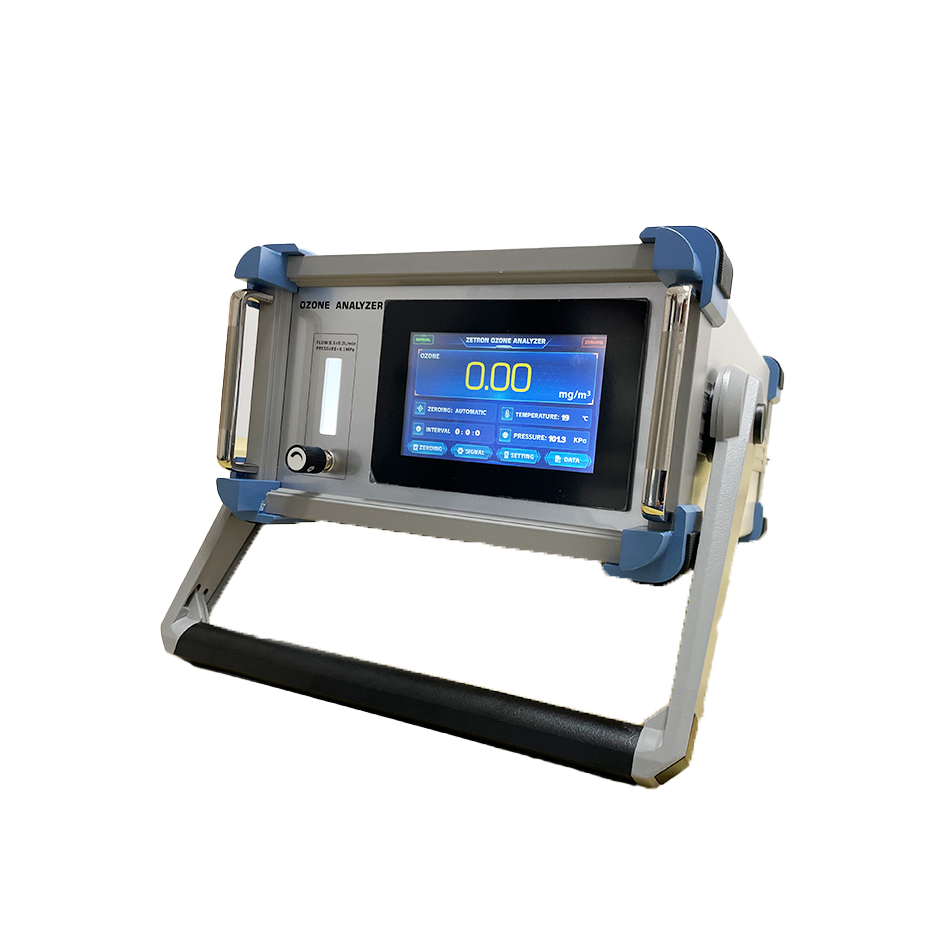
Ozone is used in water treatment, food processing, and pharmaceutical environments. The PTM600-Oz portable ozone detector measures O3 concentration in real time. Typical accuracy is ±2% FS, with T90≤20 seconds. The unit carries ExiaⅡCT4Ga and IP65 ratings, and supports Type-C, RS485, and data export. It can be used with a rechargeable lithium battery or AC220V for bench-top operation.
4. Boiler, Power Plant, and Waste Incineration Emission Checks
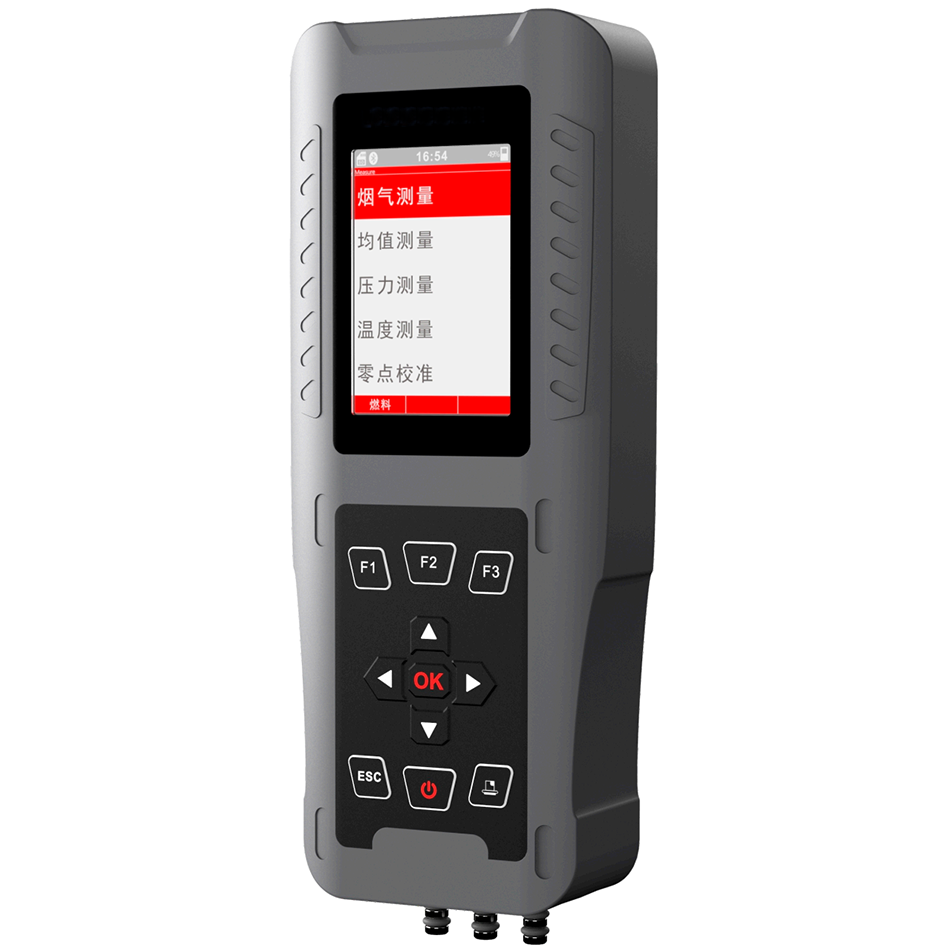
Combustion projects often need an emission gas analyzer that can sample high-temperature exhaust. The MS700-FG is an intelligent portable flue gas analyzer covering O2, CO, NO, NO2, SO2, and other flue gas components. Its typical accuracy is ±2% FS, with an optional 1% high-precision sensor, and the response time is T90≤20 seconds. The unit is rated IP68 and ExiaⅡCT4Ga, with a metal sampling probe and Type-C/RS485 interfaces. It suits environmental protection, industrial emission monitoring, power plant, boiler, and waste incineration scenarios.
5. Urban and Industrial Park Air Quality Monitoring
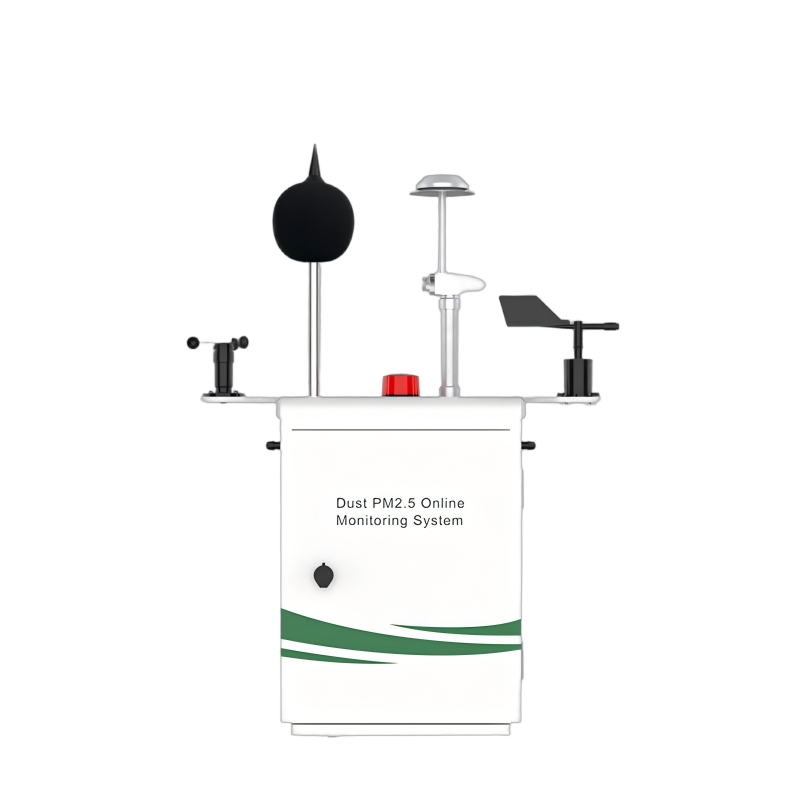
For fixed, online gas detection across a site, the MS800A online air quality monitoring station measures CO, NH3, O3, SO2, VOC, and particulate matter. Typical accuracy is ±2% FS, response time is T90≤20 seconds, and the station is IP65 rated for outdoor use. It runs on DC24V industrial power or solar power and supports RS485, 4-20mA, and wireless communication via 4G/5G/LoRa. Typical applications include environmental protection, urban air quality monitoring, industrial park air monitoring, and public health.
Case: Mine Environmental Monitoring in South Africa
In a South Africa mining environmental monitoring application, Zetron supplied two portable units for environmental monitoring. The reported result was stable operation, with portable low noise highlighted as a practical feature for a mine site.
Comparison Table: Zetron Models by Project Scenario
| Device Category | Representative Model | Best Project Scenario | Key Specifications | Communication |
|---|---|---|---|---|
| Portable gas detector / gas monitor | MS400-S | Industrial safety, petrochemical, confined space, mining, environmental monitoring | Range depends on site and user requirements; typical accuracy ±2% FS; T90≤20s; ExiaⅡCT4Ga; IP68 | Type-C / wireless |
| Remote gas detector | MS600-L | Methane leak monitoring | Methane concentration detection; typical accuracy ±2% FS; T90≤20s; ExiaⅡCT4Ga; IP68 | Wireless remote / Type-C |
| Portable laser gas detector | ZW-G200 | Natural gas / methane leak survey in distribution networks | Laser-based methane leak detection; typical accuracy ±2% FS; T90≤20s; ExiaⅡCT4Ga; IP68 | Type-C / data export / wireless |
| Portable ozone detector | PTM600-Oz | Water treatment, ozone disinfection, food and pharmaceutical environments | O3 measurement; typical accuracy ±2% FS; T90≤20s; ExiaⅡCT4Ga; IP65 | Type-C / RS485 |
| Portable flue gas analyzer | MS700-FG | Boiler, power plant, waste incineration, emission checks | O2, CO, NO, NO2, SO2 and other components; typical accuracy ±2% FS; optional 1% high-precision; T90≤20s; IP68 | Type-C / RS485 |
| Online air quality monitoring station | MS800A | Urban air quality, industrial parks, outdoor fixed monitoring | CO, NH3, O3, SO2, VOC, particulate matter; typical accuracy ±2% FS; T90≤20s; IP65 | RS485 / 4-20mA / wireless (4G/5G/LoRa) |
Specifications are from Zetron's published product data and should be confirmed with the supplier for the specific site condition.
FAQ
What safety certifications should I look for in a gas detector for a hazardous-area project?
Gas detectors used in hazardous locations must comply with UL 913 (North America) or IEC 60079-11 (International) for intrinsic safety. Zetron reports that its industrial gas detection products hold CE, RoHS, FCC, and ATEX certifications. Many portable models in this article also carry an ExiaⅡCT4Ga intrinsically safe rating and IP68 or IP65 protection, but the final certificate should be checked against the project's destination market and zone.
Can Zetron customize gas detectors for a specific project scenario?
Yes. Zetron operates under OEM/ODM production modes with customization options for logo, gas type, and temperature/humidity detection. Its stated monthly capacity is 8,000 units, products are 100% tested before delivery, and after-sales support includes one year plus remote support.
How should I decide between portable gas detectors and fixed online gas detectors?
Use a portable gas detector when workers need to carry the device to different locations, for spot checks, leak surveys, or confined-space entry. Use a fixed gas detector or online gas detector when continuous, unattended monitoring is required. Many projects use both: portable units for personnel protection and fixed units for area coverage.
Can I request a sample before placing a full gas detector order?
Yes. Zetron's MOQ is 1 unit. A sample can be tested against the target gas, used to verify response time (T90≤20 seconds), and checked for communication and data export functions before a larger order. You can start the request by contacting Zetron at info@bjzetron.com or by calling/WhatsApp +86-15699785629.
What lead time should I expect for a custom gas detector order?
Zetron quotes a lead time of 30-45 days for custom orders. The final schedule depends on the model, customization scope, and order quantity. Confirm the lead time during the inquiry stage and include it in your project plan.
Conclusion: Start with the Scenario, Then Choose the Device
Gas detection buying decisions are easier when the project scenario is defined first. Identify the gas, the environment, the protection level, the monitoring mode, and the data requirement. Then compare portable gas detectors, fixed gas detectors, analyzers, and online stations against those conditions.
Zetron provides a useful example of a manufacturer whose range covers those scenarios, from laser methane leak detectors to flue gas analyzers and air quality monitoring stations. The company is based in Beijing, China, and can be reached through its website, www.zetroncn.com, or by email at info@bjzetron.com.
If you are evaluating gas detection equipment for a specific project, request a datasheet or a sample before committing to a large order. For project-specific inquiries, contact Zetron at +86-15699785629 or info@bjzetron.com.