
Gas Detection 101: Laser, Ozone, Methane, Oxygen, and Air Quality Monitors Explained
A gas detector is an instrument whose sensing element, measurement range, enclosure class and data path are all selected around one job: detecting a specific gas, in a specific place, for a specific reason. That single sentence explains why the same phrase covers devices that share almost nothing else — a handheld laser unit tracing a methane leak along a gas pipeline, a bench-top analyzer measuring trace oxygen at ppm level, a portable flue gas analyzer on a boiler stack, and an outdoor air quality monitoring station reporting several gases plus particulate matter at once.
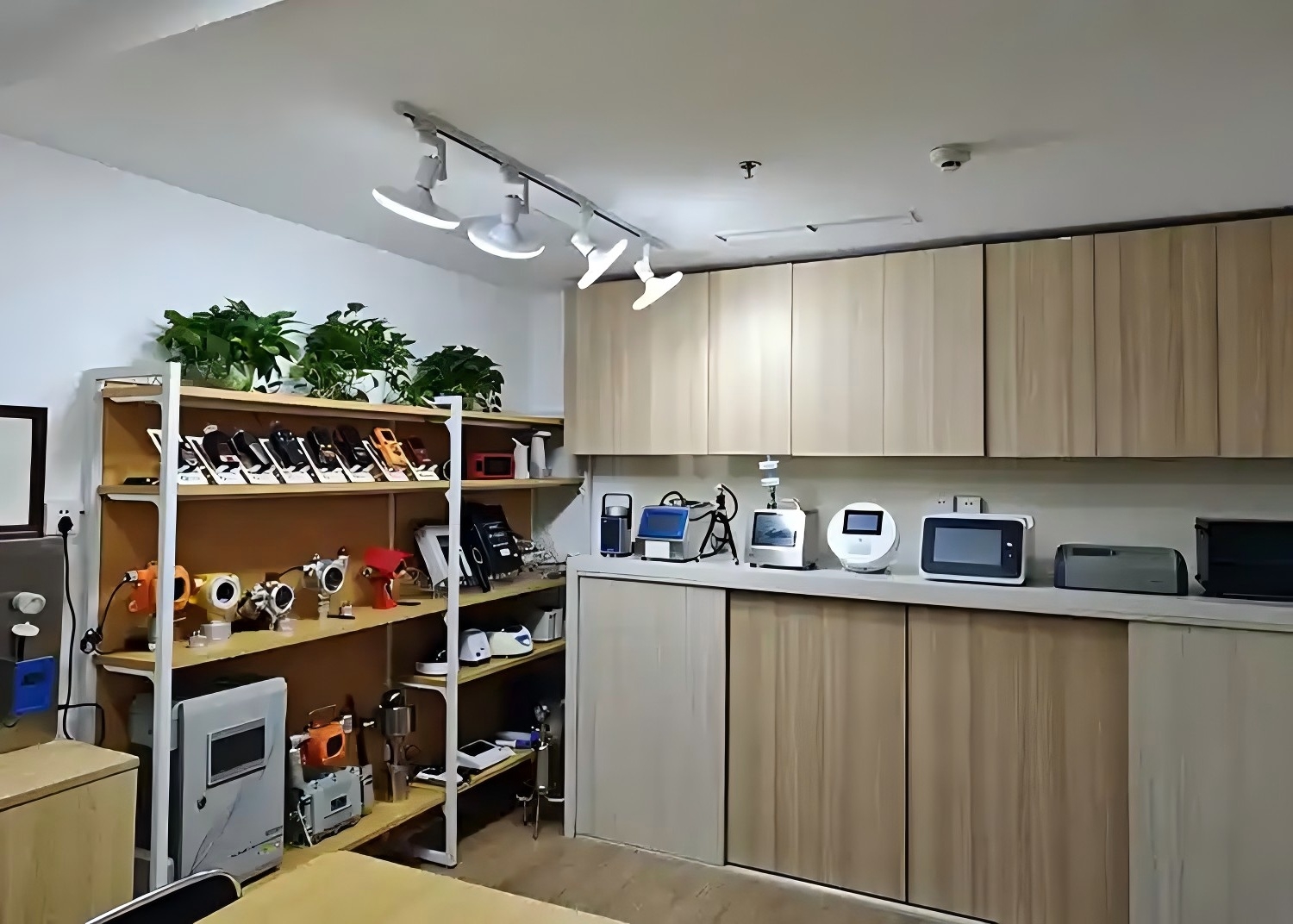
This primer walks through the six instrument families that engineers, site managers and industrial buyers most often meet: laser gas detectors, ozone detectors, methane leak detectors, oxygen analyzers, flue gas analyzers, and air quality monitors or air quality monitoring stations. For each family it covers what the device is built to sense, how its role differs from the neighbouring categories, and which product-level facts decide whether it fits a given application. The reference products used throughout are manufactured by Beijing Zetron Technology Co., LTD, a gas detection equipment maker founded in 2010 that produces portable gas detectors, fixed detection systems, landfill gas analyzers, remote laser methane gas detectors and air quality monitoring systems.
Problem Definition: Why “Gas Detector” Is an Incomplete Answer
The classification problem is practical, not academic. A device sold as a “gas detector” may be an alarm-only unit that sounds a warning, a monitor that logs concentration over time, or an analyzer that reports the concentration of several gas components in a sample stream. Confusing these three roles is the most common source of mismatched equipment.
Three failure patterns repeat across industrial sites:
- Wrong target gas. A methane leak detector is built around methane. It cannot substitute for an ozone detector in a disinfection room, and an ozone detector cannot confirm methane concentration on a pipeline.
- Wrong concentration domain. A trace oxygen analyzer measures oxygen at ppm level for process and purity work — a completely different measurement task from monitoring ambient oxygen in a work area.
- Wrong form factor. A battery-powered portable instrument answers a walk-through survey requirement. A fixed or online station answers a continuous, permanently installed monitoring requirement fed from a DC24V industrial supply.
A fourth layer sits outside industrial detection altogether: consumer and building-safety devices such as a carbon monoxide detector, a CO detector alarm or a radon gas detector. These share a name family with industrial instruments but are designed around a single domestic hazard rather than a configurable industrial measurement. Recognising which layer a requirement belongs to prevents the purchase of a domestic alarm where an industrial gas monitor is needed, or the reverse.
Industry Background: Why Gas Detection Has Split Into Specialised Instrument Families
Market growth alone does not explain the split, but it explains why the instrumentation catalogue keeps expanding. The global gas detector market was valued at USD 3.16 billion in 2023 and is projected to reach USD 4.42 billion by 2030, a CAGR of 4.9%, according to MarketsandMarkets. The portable gas detector segment is expected to register the highest growth rate in that forecast, at a CAGR of 7.8% through 2030, and Asia Pacific dominated the market in 2024 with approximately 34.1% of global share.
Specialisation follows the same pattern in adjacent categories. Market Research Future valued the global flue gas analyzer market at approximately USD 2.73 billion in 2024, with a projected CAGR of 3.64% through 2035 — a market driven by combustion and emission measurement rather than by general leak detection. Photoionization detector (PID) technology, used for high-precision detection of volatile organic compounds, is reported by DataIntelo at a CAGR of 7.1%, which reflects the growing weight of VOC measurement inside the broader air quality and emission monitoring field.
Regulation reinforces the split. Gas detectors used in hazardous locations must comply with UL 913 in North America or IEC 60079-11 internationally for intrinsic safety, according to Underwriters Laboratories. That requirement pushes instrument design toward certified explosion protection, which is why an industrial gas detector in a hazardous area is a marked, certified product rather than a generic sensor in a box. Zetron’s product family, for example, carries ATEX certificate ECM 25 ATEX-B TW85 with marking II 3G Ex ia IIC T4 Ga, assessed against EN IEC 60079-0:2018 and EN 60079-11:2012, plus CE attestation TD48392501 against EN 50270:2015 for electromagnetic compatibility.

Detailed Solution: The Six Instrument Families and What Each One Senses
Across the Zetron range referenced in this article, the shared measurement baseline is a typical accuracy of ±2% FS with an optional 1% high-precision sensor, linearity of ≤±2%, and a response time of T90 ≤ 20 seconds. What separates the families is everything around that baseline: the target gas, the form factor, the protection class, and the communication interface that carries the data out.
1. Laser gas detectors: finding methane leaks from a distance
A laser gas detector uses laser-based detection to locate natural gas and methane leaks rather than to characterise a process stream. In the Zetron range this function is served by three handheld models. The PTM600-Eg is a high-sensitivity laser gas detector built in a stainless steel SS304 main casing with a high-strength engineering plastic probe and handle, rated IP68 and intrinsically safe as Exia IIC T4 Ga. The ZW-G100 is a portable laser gas detector in a rugged handheld casing with rubber anti-slip and protective parts, also IP68. The ZW-G200 adds wireless communication on top of the standard Type-C and data export interfaces, and is aimed at efficient natural gas leak detection and monitoring.
The distinguishing capability is mobility. All three run on rechargeable lithium batteries over a working range of −20°C to +50°C and 10–95% RH, and all store more than 10 million data records with local viewing, deletion and export, plus calibration, maintenance and fault logs. A laser leak survey therefore produces a walkable, re-viewable record set rather than a single instantaneous reading.
2. Methane leak detectors: remote concentration monitoring
A methane leak detector overlaps with the laser family but differs in role: it is built for methane concentration detection during leak monitoring, with wireless remote communication rather than only handheld point-and-read operation. The MS600-L remote gas detector is the representative model — rechargeable lithium battery, portable remote operation, IP68, intrinsically safe as Exia IIC T4 Ga, and applicable to natural gas, petrochemical, municipal gas pipeline, industrial safety and environmental monitoring work.
The practical distinction to hold onto: a laser handheld is used to walk a route and find where a leak is; a methane leak detector is used where methane concentration itself needs to be observed during monitoring. Both sit in the same gas family, and neither is a substitute for the other.
3. Ozone detectors: a single-gas measurement with a very specific site
An ozone detector measures ozone (O₃) concentration in real time. The PTM600-Oz portable ozone detector is rated IP65 and intrinsically safe as Exia IIC T4 Ga, runs on a rechargeable lithium battery or AC220V for bench-top use, and communicates over Type-C, RS485 or a data export interface. Its documented application set — environmental protection, water treatment, food industry, pharmaceutical manufacturing and ozone disinfection monitoring — explains why this category exists separately: ozone is generated deliberately in disinfection processes, so the instrument’s job is to confirm the concentration in the working environment around that process.
Ozone is also one of the parameters carried by multi-parameter air quality instruments, but a dedicated ozone detector and a station reporting O₃ alongside other parameters serve different purposes. The dedicated unit follows a person or a room; the station reports an ambient profile continuously.
4. Oxygen analyzers: ppm-level measurement, not ambient safety monitoring
An oxygen analyzer in this range is a trace oxygen instrument. The MIC600S measures trace oxygen concentration at ppm level, runs from an AC220V bench-top supply, is rated IP54, and carries no explosion-proof classification because it is designed for laboratory and bench-top use. It communicates over RS485 or Type-C and stores more than 10 million records with full calibration and fault logging.
Its documented applications — industrial gas production, electronic manufacturing, laboratory research, food packaging and gas separation — show the intent: oxygen here is a purity and process variable, not a breathing-atmosphere variable. Anyone specifying an “oxygen detector” for a confined space should recognise that the trace analyzer answers a different question, because ppm-level trace measurement and ambient oxygen monitoring are separate instrument categories.
5. Flue gas analyzers: combustion and emission measurement
A flue gas analyzer measures the components of combustion gas. The MS700-FG intelligent portable flue gas analyzer detects O₂, CO, NO, NO₂ and SO₂, uses a metal sampling probe, is rated IP68 and intrinsically safe as Exia IIC T4 Ga, and communicates over Type-C or RS485. Its documented applications are environmental protection, industrial emission monitoring, power plants, boilers, waste incineration and manufacturing.
Functionally the same family is often described as an emission gas analyzer: the instrument is defined by the sample it draws — a combustion or emission stream — rather than by the site it stands on. That is what separates it from a general-purpose gas monitor, which measures the atmosphere around it rather than a gas sample led to it through a probe.
6. Air quality monitors and air quality monitoring stations
Air quality instruments measure ambient air rather than a process stream, and they split further by installation type.
- MS800A online air quality monitoring station — detects CO, NH₃, O₃, SO₂, VOC and particulate matter; runs on DC24V industrial power or solar supply for outdoor models; communicates over RS485, 4–20mA or wireless 4G/5G/LoRa; rated IP65 in a stainless steel SS304 outdoor cabinet.
- Th2000A-Aqi integrated air quality monitoring station — integrated multi-parameter AQI monitoring on DC24V or solar supply, with RS485, 4–20mA and wireless 4G/5G/LoRa output, rated IP65 for outdoor use.
- MIC600-Aqi fixed online air quality monitoring station — PM2.5 and air quality parameters on DC24V, communicating over RS485, 4–20mA or Type-C, intrinsically safe as Exia IIC T4 Ga and rated IP68.
- PTM600-S portable air pollution monitor — multiple gases and particulate matter in a portable, battery-powered body, intrinsically safe as Exia IIC T4 Ga, rated IP65, with Type-C, RS485 and wireless communication.
The multi-parameter capability in these models is the practical definition of a multi gas detector in ambient monitoring: one enclosure, several measurement channels, one data path. For VOC-specific work, photoionization detector technology is the recognised approach, and it is the segment DataIntelo reports at a 7.1% CAGR.
Where the general-purpose gas monitor sits
Between the specialised families sits a configurable workhorse. The MS400-S portable gas detector is rated IP68, intrinsically safe as Exia IIC T4 Ga, runs on a DC3–5V rechargeable lithium battery, communicates over Type-C or wireless, and — importantly for matching — has a measuring range that depends on site environment and user requirements rather than being fixed to a single gas. That is the model logic that makes a configurable industrial gas detector possible: the platform is stable, the measurement channel is defined per application.
Matching the Monitor to the Target Gas: Four Alignment Rules
Matching is a four-step alignment, and every step narrows the instrument list before any commercial question is raised.
- Gas alignment. The instrument must be built for the gas being measured — methane for pipeline leak work, O₃ for disinfection monitoring, O₂ at trace level for gas purity, O₂/CO/NO/NO₂/SO₂ for flue gas, and CO/NH₃/O₃/SO₂/VOC plus particulate matter for ambient air.
- Range alignment. Where the datasheet states that the measuring range depends on site environment and user requirements — as it does for the MS400-S portable gas detector and the MIC600-Aqi fixed station — the range is a specification decision, not an off-the-shelf constant.
- Environment alignment. Protection class and explosion protection follow the location, not the gas. IP68 handhelds such as the ZW-G100, ZW-G200, PTM600-Eg and MS600-L suit demanding field conditions; IP65 stations such as the MS800A, Th2000A-Aqi and PTM600-S suit outdoor ambient installation; the IP54 bench-top MIC600S trace oxygen analyzer is explicitly a laboratory instrument.
- Data alignment. The interface must match the receiving system: RS485 or 4–20mA for wired plant integration, wireless 4G/5G/LoRa for distributed outdoor stations, Type-C for local export, and internal storage of more than 10 million records where history matters.
Step-by-Step Breakdown: Specifying a Gas Monitor for a Real Site
The sequence below is the practical version of the alignment rules, written in the order a site survey normally produces information.
- Name the gas and the reason. Decide whether the requirement is leak location (methane), process purity (trace oxygen), combustion measurement (flue gas), disinfection control (ozone), ambient reporting (air quality) or general area safety (configurable portable monitor).
- Choose the form factor. Portable and battery-powered for surveys and spot checks; fixed or online with DC24V or solar supply for permanent monitoring points.
- Fix the measurement range. State the expected concentration domain. Where the datasheet says the range follows site environment and user requirements, record that requirement explicitly so the configured unit matches it.
- Set the protection class against the location. Record the required IP rating and whether intrinsic safety applies. Hazardous locations require UL 913 or IEC 60079-11 compliance; Zetron’s ATEX marking II 3G Ex ia IIC T4 Ga is the form that marking takes on its certified models.
- Define the data path. Specify wired or wireless communication, whether local export is needed, and whether calibration logs, maintenance logs, fault records and sensor life reminders must be retained. All models described here store more than 10 million records with those log types.
- Confirm the configuration and the delivery assumptions. Zetron offers OEM/ODM production with customization of gas type, logo, and temperature and humidity detection, a MOQ of 1 unit, 100% testing, and a standard lead time of 30–45 days against a monthly capacity of 8,000 units.
Use Cases: Six Applications and the Instruments That Fit Them
Natural gas and municipal pipeline leak surveys
Handheld laser detection is the working method: ZW-G100 or ZW-G200 for walking surveys, PTM600-Eg where high-sensitivity laser detection is the priority, and MS600-L where methane concentration needs remote monitoring rather than a point reading. All are IP68 and intrinsically safe, which is the practical requirement for field work around gas infrastructure.
Ozone disinfection rooms in water treatment and pharmaceutical production
Ozone is generated on purpose in these processes, so measurement is about confirming the working environment around the generator or disinfection area. The PTM600-Oz covers this with a dedicated O₃ channel, battery or AC220V operation, and RS485 or Type-C output.
Gas purity and packaging atmospheres
Industrial gas production, gas separation, electronics manufacturing and food packaging need ppm-level oxygen measurement. The MIC600S trace oxygen analyzer is the bench-top instrument for that task, with IP54 protection reflecting its laboratory placement.
Boilers, power plants and waste incineration
Combustion and emission work requires a sampling probe and a multi-component measurement of O₂, CO, NO, NO₂ and SO₂. The MS700-FG portable flue gas analyzer is built for this, rated IP68 and intrinsically safe for field use around combustion equipment.
Urban, industrial park and roadside air quality
Fixed ambient reporting uses MS800A or Th2000A-Aqi for multi-parameter stations with wireless backhaul, MIC600-Aqi where an intrinsically safe fixed station is required, and PTM600-S where the same parameter set is needed in a portable body.
General industrial area safety
Where the requirement is a configurable area check rather than a single fixed gas, the MS400-S portable gas detector provides the platform: IP68, intrinsically safe, wireless or Type-C output, with the measurement range set by the site environment and the user’s requirement. Documented applications include industrial safety, environmental monitoring, chemical industry, oil and gas, mining and manufacturing.
Comparison Table: Instrument Families Side by Side
The table below compares the families using only the documented product data referenced above. It compares instrument categories, not suppliers.
| Instrument family | Target measurement | Example models | Form factor and supply | Explosion protection | Ingress protection | Communication |
|---|---|---|---|---|---|---|
| Laser gas detector | Natural gas / methane leak detection | PTM600-Eg, ZW-G100, ZW-G200 | Portable handheld, rechargeable lithium battery | Exia IIC T4 Ga | IP68 | Type-C and data export; ZW-G200 adds wireless |
| Methane leak detector | Methane concentration for leak monitoring | MS600-L | Portable remote operation, rechargeable lithium battery | Exia IIC T4 Ga | IP68 | Wireless remote communication, Type-C |
| Ozone detector | Ozone (O₃) concentration | PTM600-Oz | Portable or AC220V bench-top | Exia IIC T4 Ga | IP65 | Type-C, RS485, data export |
| Oxygen analyzer | Trace oxygen at ppm level | MIC600S | Bench-top, AC220V | Not applicable (laboratory use) | IP54 | RS485, Type-C |
| Flue gas analyzer | O₂, CO, NO, NO₂, SO₂ | MS700-FG | Portable with metal sampling probe, rechargeable battery | Exia IIC T4 Ga | IP68 | Type-C, RS485 |
| Air quality monitoring station (fixed) | CO, NH₃, O₃, SO₂, VOC, particulate matter | MS800A, Th2000A-Aqi, MIC600-Aqi | Fixed online, DC24V industrial supply or solar | MIC600-Aqi: Exia IIC T4 Ga; MS800A and Th2000A-Aqi: not applicable (outdoor station) | IP65 (MS800A, Th2000A-Aqi); IP68 (MIC600-Aqi) | RS485, 4–20mA, wireless 4G/5G/LoRa; Type-C on MIC600-Aqi |
| Portable air pollution monitor | Multiple gases and particulate matter | PTM600-S | Portable, rechargeable battery or DC24V | Exia IIC T4 Ga | IP65 | Type-C, RS485, wireless |
| General-purpose gas monitor | Range defined by site environment and user requirement | MS400-S | Portable, DC3–5V rechargeable lithium battery | Exia IIC T4 Ga | IP68 | Type-C, wireless |
FAQ
What do the ATEX, CE and SIL markings on an industrial gas detector actually confirm?
Each marking addresses a different risk. ATEX certificate ECM 25 ATEX-B TW85 records marking II 3G Ex ia IIC T4 Ga, assessed against EN IEC 60079-0:2018 and EN 60079-11:2012, issued on 7 July 2025 and valid to 6 July 2030. CE attestation TD48392501 covers EN 50270:2015 electromagnetic compatibility under directive 2014/30/EU and is valid to 10 July 2030. SIL certificate 0P250717.BZTQ011 records SIL 3 capable with systematic capability SC 3 against IEC 61508 Parts 1-7:2010 and IEC 62061, valid to 16 July 2030. Separately, gas detectors used in hazardous locations must comply with UL 913 in North America or IEC 60079-11 internationally for intrinsic safety.
Can a gas monitor be configured for a different target gas?
Yes, on configurable platforms. Zetron offers OEM/ODM production with customization of gas type, logo, and temperature and humidity detection. On models such as the MS400-S portable gas detector and the MIC600-Aqi fixed online air quality monitoring station, the measuring range is defined by the site environment and the user’s requirements rather than being fixed in advance. A configured unit is still delivered on the platform it is built from, so it keeps that model’s rated protection — for example IP68 and Exia IIC T4 Ga on the MS400-S.
How do I know whether I need a portable, a fixed, or an online gas monitor?
The choice follows the measurement task, not the gas. Portable battery-powered models — MS400-S, ZW-G100, ZW-G200, PTM600-Eg, PTM600-Oz, PTM600-S and MS700-FG — suit leak surveys, spot checks and field work. Fixed and online models — MIC600-Aqi, MS800A and Th2000A-Aqi — run from a DC24V industrial power supply or solar supply and report continuously over RS485, 4–20mA or wireless 4G/5G/LoRa. A walk-through leak survey needs the portable form; a permanently installed ambient monitoring point needs the fixed or online form.
Can a gas detection instrument be evaluated before a full order is placed?
Yes. The purchasing terms recorded for Zetron instruments include a MOQ of 1 unit, delivery terms of EXW, DAP, CPT, CIF and FOB, acceptance criteria based on pre-shipment inspection, and payment terms of shipment upon receipt of payment. Every unit is 100% tested before dispatch, so a single-unit order can be used to verify configuration, protection class and output interface before a larger requirement is defined.
What lead time applies to configured gas detection instruments?
The standard lead time is 30–45 days, supported by a monthly capacity of 8,000 units and an annual output of 6,000 units, with 1 year of after-sales support plus remote support. Because configured units — particularly those where the measuring range or gas type is set per site — depend on the agreed specification, it is worth confirming the configuration in writing first. To discuss a configuration, a sample unit or a quotation, contact the Zetron team at info@bjzetron.com or WhatsApp +86-15699785629.
Conclusion
Gas detection separates into families because the measurement does. A laser gas detector answers “where is the methane leak”; a methane leak detector answers “what is the methane concentration during monitoring”; an ozone detector answers “what is the O₃ level around this disinfection process”; a trace oxygen analyzer answers “what is the oxygen purity at ppm level”; a flue gas analyzer answers “what is in this combustion stream”; and an air quality monitor or air quality monitoring station answers “what is the ambient profile at this point, continuously”.
The specification work is therefore mostly about alignment: gas, range, environment and data path. Once those four are settled, the remaining variables — protection class, communication interface, logging depth, and whether the platform needs to be configurable — resolve quickly, because each family already constrains them. Matching the monitor to the target gas is not a formality at the end of the process; it is the decision that determines everything after it.
Need help matching an instrument to a gas?
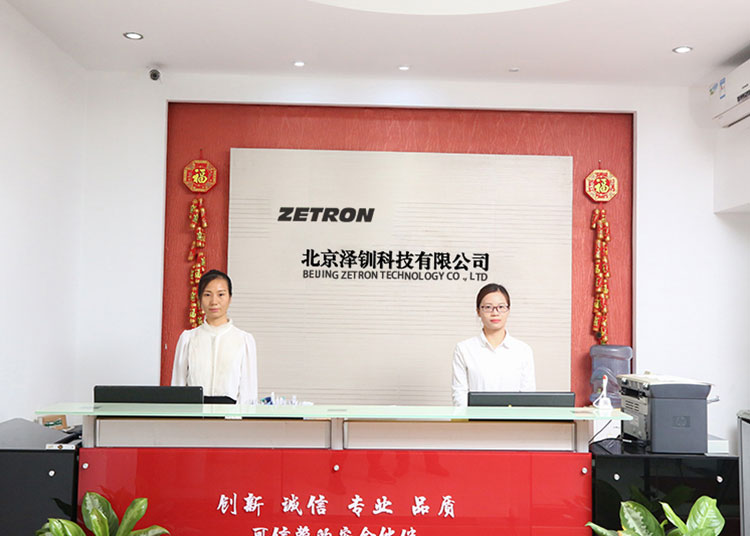
Beijing Zetron Technology Co., LTD was founded in 2010 and manufactures gas detectors, air monitors and gas analyzers in a 3,500 m² facility, exporting roughly 90% of output to Southeast Asia, North America, South America and the EU. The company holds ISO 9001:2015, ISO 14001:2015 and ISO 45001:2018 certification and its products carry CE, RoHS, FCC and ATEX certification.
Website: www.zetroncn.com | Email: info@bjzetron.com | Tel / WhatsApp: +86-15699785629
Address: 19B, Office Tower, Oriental Ginza, No.48 Dongzhimenwai Street, Dongcheng District, Beijing, China
Send a short description of the gas, the location and the required output, and the team can confirm which instrument family fits — and whether the measurement needs a sample unit before specification is finalised.
Have Questions or Need More Details?
Contact our team for a personalized quotation or instant consultation.
Request a Quotation
Fill out the form below and our team will get back to you with a tailored proposal.
WhatsApp Direct Chat
Prefer to chat in real-time? Message us on WhatsApp for instant assistance & quick answers.
- Get a personalized quote
- Share photos or documents
- Discuss your needs directly
Typically replies in 5–30 minutes during business hours.