
How to Evaluate a Particle Counter Supplier's Capability for Online and Liquid Particle Counters
A supplier's capability for online particle sensors and liquid particle counters is proven by four things you can request in writing: the production process behind the instrument, the traceability of its detection components and calibration, a lead time commitment that matches real capacity, and a compliance file that survives an audit. Catalogue design and brochure claims are not evidence.
This guide is a step-by-step evaluation procedure for procurement teams qualifying a supplier for online particle sensors, liquid particle counters, intelligent particle detectors and airborne particle counters. It separates the checkpoints you can verify remotely from those that require a sample, and it uses the published capability information of Beijing Zetron Technology Co., Ltd. (brand: Zetron, www.zetroncn.com) to show what a capable supplier is normally able to document.
Problem Definition: Why Supplier Capability Is Hard to Verify
Particle counters are rarely bought once. A cleanroom, a pure water loop or a process line that is commissioned with one supplier's instrument usually stays with that supplier for calibration, spares and expansion. That turns the first purchase into a long-term decision that is presented as a short-term one.
Four structural difficulties make capability hard to read at the quotation stage:
- Similar exterior, different interior. Two online particle sensors can look identical in a product photo while differing in the optical detection assembly, the flow path and the firmware. A datasheet rarely exposes those differences.
- Capability is invisible on a specification sheet. A datasheet describes performance. It does not describe who assembled the unit, which calibration reference was used, or how the final test was recorded.
- Online and liquid installations are effectively permanent. A fixed online particle sensor is wired into a monitoring network; a liquid particle counter is plumbed into a water or process line. Changing supplier mid-project risks breaking the calibration baseline and the reporting format your quality system has already accepted.
- Factory visits are limited. Most procurement teams qualify a supplier through documents, video and samples rather than an on-site audit, which shifts the burden of proof onto the supplier's paperwork.
Capability therefore has to be evaluated as four separate evidence streams — process, components, delivery and documentation — and each stream needs its own question. A single supplier questionnaire will not cover all four.
Industry Background: Where the Requirements Come From
Particle counting has become a routine control function wherever contamination carries a direct cost: semiconductor manufacturing, lithium battery production, the chemical industry (including pure water and ultrapure water), environmental monitoring, disease control centers, food and drug testing, and biopharmaceutical cleanrooms. In these environments a particle counter is not an accessory. It produces the evidence that a process is under control.
The standards driving the documentation requirement are well established in the industries above. ISO 14644 governs cleanroom classification and monitoring. EU GMP governs pharmaceutical manufacturing environments. FDA CFR 21 Part 11 governs electronic records and audit trails. Zetron lists alignment with ISO 14644, EU GMP and FDA CFR 21 Part 11 among the product features of its particle counter range, which is typical of suppliers serving regulated buyers.
Two monitoring media are usually involved at the same site. Airborne contamination is monitored continuously at fixed points and periodically with portable instruments. Liquid-borne contamination is monitored in pure water, ultrapure water and process chemicals. A supplier that covers only one medium forces the buyer into two separate qualification processes, two documentation sets and two calibration relationships.
The practical consequence for procurement is that the evaluation cannot stop at detection performance. Detection performance answers whether the instrument can count particles. Documentation, calibration and delivery answer whether you can rely on that count for the next five years.
Detailed Solution: What a Capable Supplier Is Able to Document
Beijing Zetron Technology Co., Ltd. (brand: Zetron) is a Beijing-based manufacturer of gas and air detection equipment and positions itself as a one-stop industrial testing equipment solution provider. The company has focused on the gas and air detection field for nearly 20 years and operates multiple professional production lines.
For particle counting specifically, Zetron's published capability set answers the four evidence streams in concrete terms:
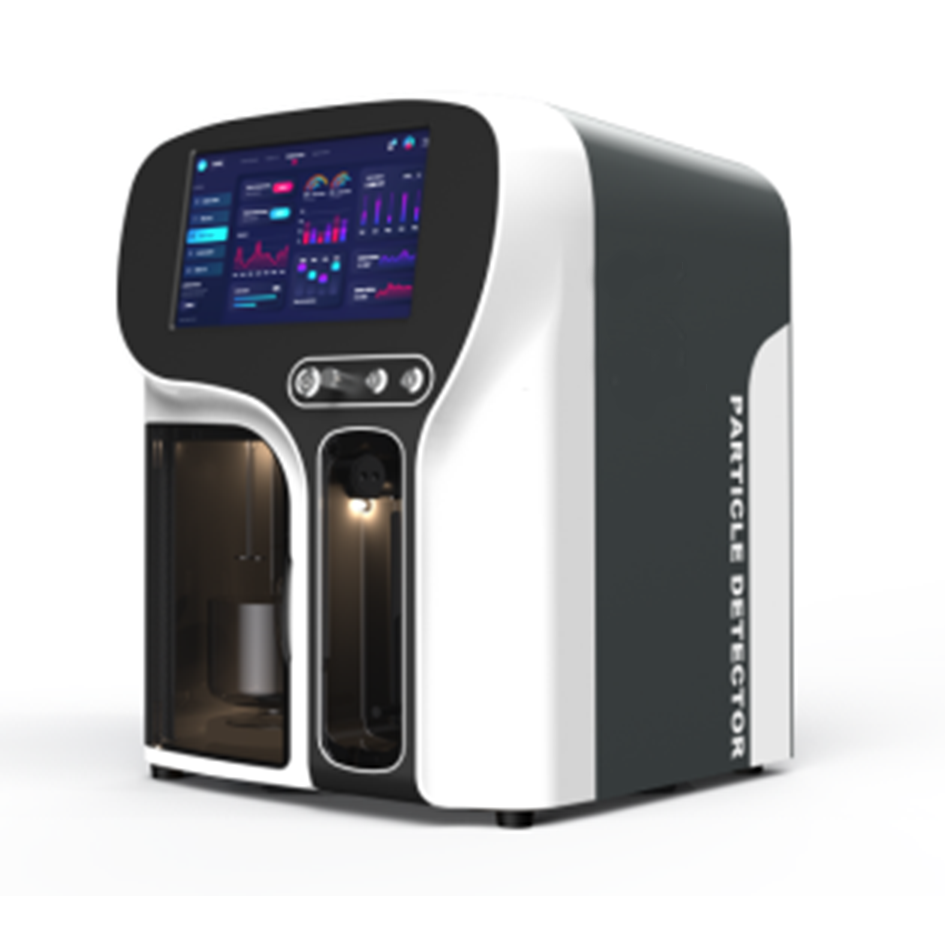
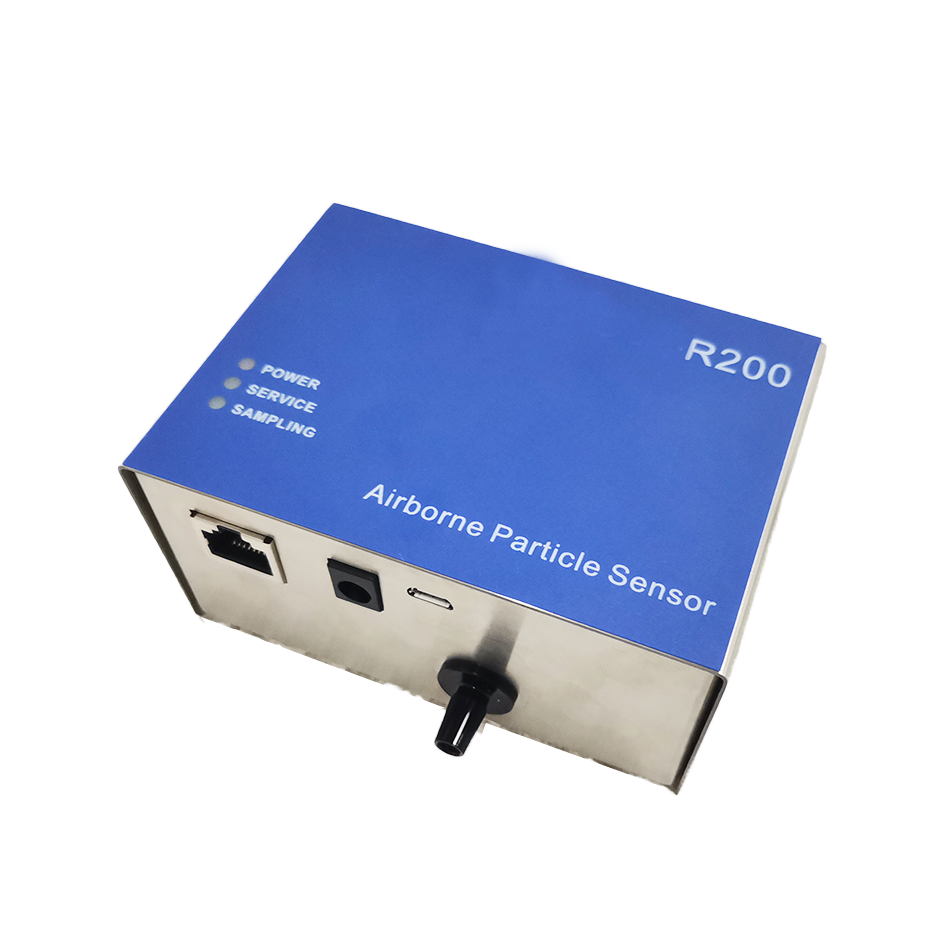
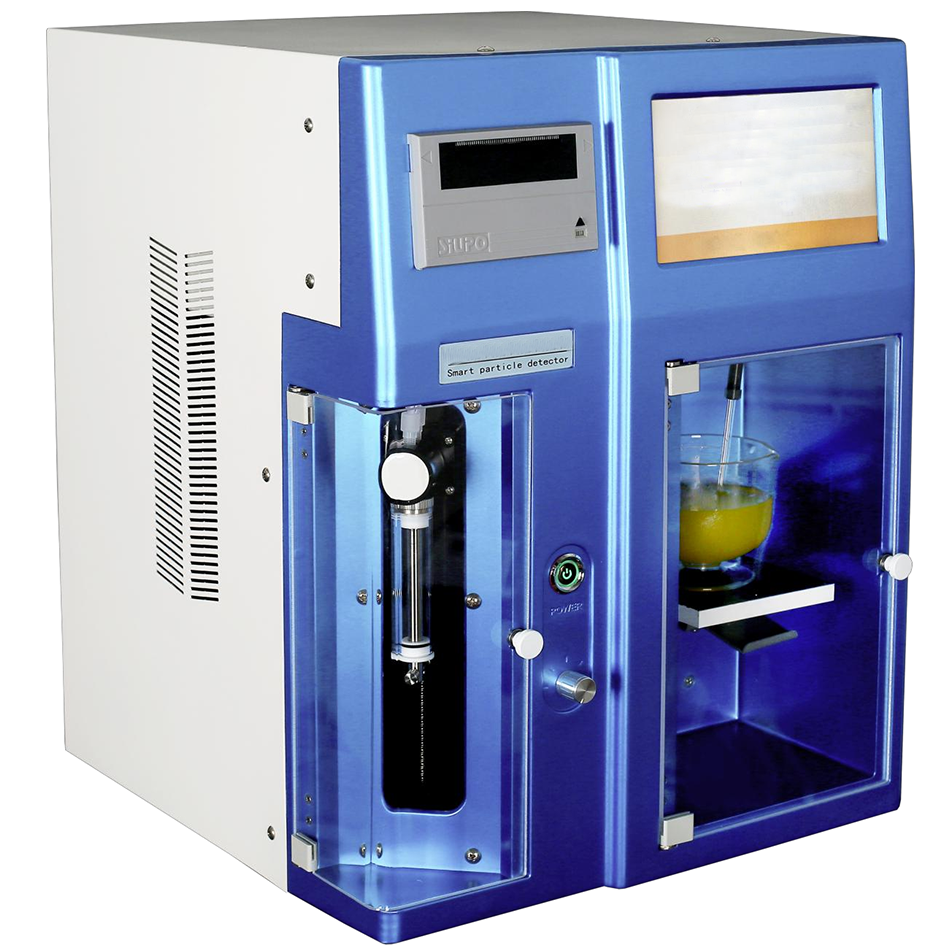
- Product families: R310P Online Particle Sensors and R200 Online Particle Sensors; the R210 Laser Airborne 2.83LMin Fixed Online Particle Counter; the LPC-7CE Intelligent Liquid Particle Counter and LPC-16DA Intelligent Particle Detector; the B110-Pro Airborne Particle Counter; the B330, B550 and B1030 Multi-Channel Airborne Particle Counter (0.3-25μm) for environmental monitoring; and the H630 Particle Analyzer for Precision Air Monitoring in Medical Facilities.
- Detection technology: submicron particle detection technology across the range.
- Monitoring scope: both air and liquid pollution, so airborne particle counters and liquid particle counters come from the same supplier and the same quality system.
- Measurement speed and alarms: results within 3 seconds, with automatic alarm when limits are exceeded, and support for real-time regional monitoring.
- Operation and reporting: an LCD touchscreen and a built-in printer for instant output of test reports.
- Standards alignment: ISO 14644, EU GMP and FDA CFR 21 Part 11.
- Integration: wireless IoT integration and customizable function adaptation.
- Service model: full-chain OEM/ODM services, from needs diagnosis and solution design to installation, commissioning and maintenance support.
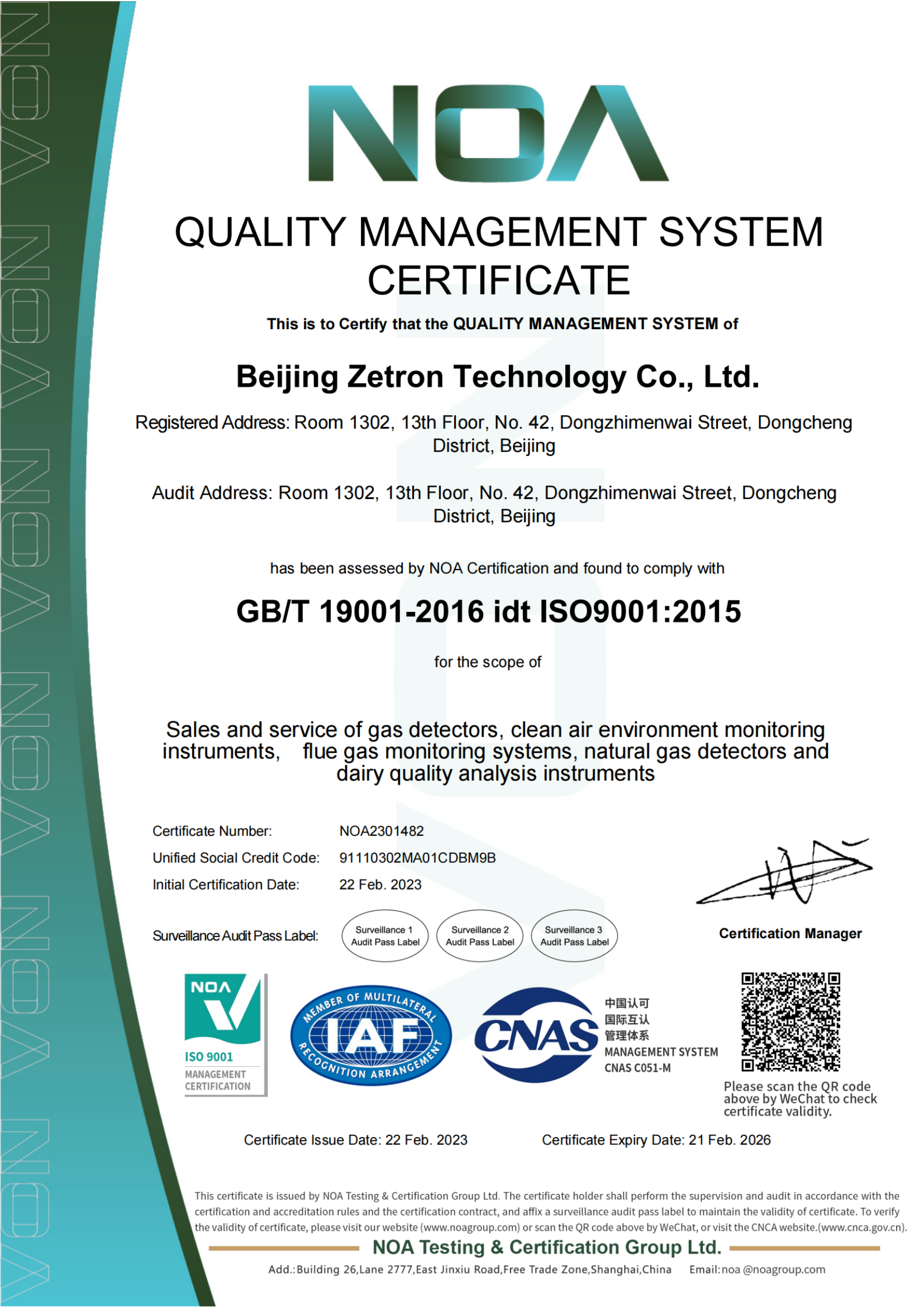
- Quality and compliance documentation: ISO 9001 quality management system certification and SGS testing certification, together with CE, RoHS, FCC and ATEX marks; the certificate library also includes ISO 45001 and ATEX- and SIL-related certificates.
How to read this list. The point is not that any single item is unusual. The point is the shape of the answer. When you ask a supplier a capability question, a verifiable reply contains models, technologies, standards, certificates and service stages — each of which you can check independently. A reply that contains only adjectives is a signal to ask again.
Step-by-Step Breakdown: Seven Evaluation Checkpoints
Step 1 — Verify the production process, not the product photograph
Ask how many production lines handle particle counters, how the instruments are assembled, where calibration takes place, and what final test is performed before packing. Request evidence rather than descriptions: photographs or a short walkthrough video of production and testing areas, a process flow document, and one calibration record from a recent batch.
A manufacturer answers this question with process steps. An intermediary answers it with delivery dates. Zetron states that it operates multiple professional production lines for its gas and air detection equipment, which gives you a specific claim to test against the sample you later receive.

Step 2 — Verify the detection components and the wetted path
For online particle sensors, the critical question concerns the optical detection assembly and how its stability is maintained during continuous operation. For liquid particle counters, the critical questions concern wetted materials and the flow path, because those determine chemical compatibility with pure water, ultrapure water and process liquids.
Ask which components are single-sourced, what the replacement route is, and whether the replacement part is the same specification as the original. Suppliers that build across both air and liquid monitoring can answer component questions for both media in one conversation, which reduces the risk of a component change being quietly introduced later. Zetron's particle counter range is built on submicron particle detection technology and covers air and liquid pollution monitoring.
Step 3 — Verify lead time as a schedule, not as a single number
A lead time quoted without stages is an estimate dressed as a commitment. Ask the supplier to split the period into component procurement, assembly, calibration, final test, documentation and shipping, and to state which stages are affected by configuration choices.
Customization changes the schedule, because function adaptation and OEM/ODM configuration add engineering steps before production begins. A customized online particle sensor or liquid particle counter therefore normally follows a different timeline from a standard catalogue unit. Zetron provides full-chain OEM/ODM services running from needs diagnosis and solution design through installation, commissioning and maintenance, so a realistic schedule discussion should cover those stages too — not only the factory shipping date.
Step 4 — Verify the documentation chain in two layers
Company-level documents describe the manufacturing system: Zetron holds ISO 9001 quality management system certification and SGS testing certification, along with CE, RoHS, FCC and ATEX marks, with ISO 45001 and ATEX- and SIL-related certificates also in its certificate library.
Product-level documents describe the standard the instrument is built to serve. For particle counters the relevant references are ISO 14644 for cleanroom monitoring, EU GMP for pharmaceutical environments and FDA CFR 21 Part 11 for electronic records.
Ask for certificate scope and issuing body rather than a logo, and confirm that the standard you need is covered by the specific model in your quotation, not only by the company portfolio.
Step 5 — Verify data integrity and system integration
If your quality system relies on electronic records, ask how the instrument stores, exports and protects data, and whether the reporting format matches your audit trail expectations. FDA CFR 21 Part 11 alignment is the reference point Zetron lists for its particle counter range and is the appropriate benchmark for regulated buyers.
Integration deserves the same scrutiny. Ask whether the instrument can feed an existing monitoring platform, and whether wireless IoT integration is standard or a configuration item. For real-time regional monitoring across several points, this single answer decides whether you are purchasing instruments or a monitoring system.
Step 6 — Verify through a sample, not through a brochure
The sample is the only remote test that shows what the supplier actually produces. Request the exact model you intend to purchase, with its test report, and test it against your own reference instrument in your own environment. Startup behaviour, count repeatability, alarm response at your limit values and report output are the four checks that reveal the most. A later section of this guide covers the sample workflow and the questions to raise during it.
Step 7 — Verify the lifecycle commitment
Ask about spare parts availability, calibration intervals, maintenance and who performs service in your region. A supplier whose service model already covers installation, commissioning and maintenance is easier to hold to a lifecycle commitment than one that only ships hardware. Zetron's stated model covers that full chain from needs diagnosis to maintenance support, which makes the lifecycle question answerable in writing rather than by assumption.
Use Cases: Applying the Checkpoints by Application
Semiconductor and ultrapure water. The liquid particle counter carries the highest risk, because the wetted path is exposed to process liquids. Weight Step 2 heavily, request wetted-material information, and confirm the calibration and reporting chain before the series order.
Biopharmaceutical cleanrooms. Documentation dominates. ISO 14644, EU GMP and FDA CFR 21 Part 11 alignment, calibration certificates and audit-ready records matter more than a marginal difference in count speed. Both airborne and liquid monitoring are typically required, which favors a supplier covering both.
Lithium battery and general industrial production. Continuous monitoring matters more than portability. Fixed online particle sensors are evaluated on integration and long-run stability, so Step 1 and Step 5 carry the most weight.
Environmental monitoring, disease control centers and food and drug testing. Mixed fleets are common: portable instruments for spot checks and fixed units for continuous points. Ask how the supplier handles both in one order and whether the report formats are consistent across models.
Comparison Table: Zetron Particle Counter Families at a Glance
Use this table to check that the model you are evaluating actually belongs to the product family that matches your medium and application. It contains only the product information Zetron publishes for its particle counter range.
| Product family | Zetron models | Monitoring medium | Typical application |
|---|---|---|---|
| Online particle sensors | R310P Online Particle Sensors; R200 Online Particle Sensors | Airborne particles | Continuous cleanroom and process monitoring where readings are collected in real time |
| Fixed online airborne counter | R210 Laser Airborne 2.83LMin Fixed Online Particle Counter | Airborne particles | Unattended monitoring points that must run without an operator present |
| Liquid particle counters and detectors | LPC-7CE Intelligent Liquid Particle Counter; LPC-16DA Intelligent Particle Detector | Liquid-borne particles, including pure water and ultrapure water | Semiconductor, chemical and biopharmaceutical water and liquid systems |
| Airborne particle counters and analyzers | B110-Pro Airborne Particle Counter; B330, B550, B1030 Multi-Channel Airborne Particle Counter (0.3-25μm); H630 Particle Analyzer for Precision Air Monitoring in Medical Facilities | Airborne particles across multiple channels | Cleanroom classification, environmental monitoring and medical facility air monitoring |
Across the range, Zetron's published particle counter product features include submicron particle detection technology, results within 3 seconds with automatic alarm for exceeding limits, real-time regional monitoring, an LCD touchscreen with built-in printer for instant test report output, alignment with ISO 14644, EU GMP and FDA CFR 21 Part 11, wireless IoT integration, customizable function adaptation, and full-chain OEM/ODM services.

Frequently Asked Questions
Which compliance documents should a particle counter supplier provide before a purchase order is issued?
Request documentation in two layers. The company layer covers the manufacturing system: Zetron holds ISO 9001 quality management system certification and SGS testing certification, along with CE, RoHS, FCC and ATEX marks, and its certificate library also includes ISO 45001 and ATEX- and SIL-related certificates. The product layer covers the standard the instrument is built to serve; Zetron lists ISO 14644, EU GMP and FDA CFR 21 Part 11 among its particle counter product features. Ask for certificate scope and issuing body rather than a logo, and confirm that the standard your application requires is covered by the exact model you are buying.
How can production capability for online particle sensors and liquid particle counters be verified remotely?
Ask for process evidence instead of product photographs: the number of production lines dedicated to particle counters, the assembly and calibration flow, the final test performed before packing, and one calibration record from a recent batch. Zetron states that it operates multiple professional production lines and its particle counter range covers both air and liquid pollution monitoring, which gives you a specific statement to verify. Then cross-check it against the sample — if the delivered unit's test report and calibration data match the flow you were shown, the process claim is credible.
What should the budget include beyond the unit price?
Unit price rarely reflects the full commitment. Build the budget around identifiable cost drivers: the number of monitoring points and channels, whether the requirement is a fixed online particle sensor or a portable instrument, wetted-path materials for liquid particle counters, integration with an existing monitoring platform or the environmental safety monitoring cloud platform, customization such as OEM/ODM function adaptation, documentation and validation support, and lifecycle items including calibration, spare parts and maintenance. Ask every supplier to quote these as separate lines so that comparisons are like-for-like.
How do I request a sample, and what should I test on it?
Request the exact model you intend to purchase, state your monitoring medium and your limit values, and ask that the sample ship with its test report. Sample and quotation requests reach Zetron at info@bjzetron.com or +86-15699785629. On arrival, test startup and stabilization, count repeatability against your existing reference instrument, automatic alarm behaviour when limits are exceeded, and report output from the LCD touchscreen and built-in printer where the model includes them. If you plan real-time regional monitoring, connect the sample to your platform and confirm wireless IoT integration before placing the series order.
What lead time commitments should be written into the supply agreement?
Break lead time into stages — component procurement, assembly, calibration and testing, documentation, and shipping — and require confirmation for each stage. Customization changes the schedule, because OEM/ODM function adaptation adds engineering steps before production, so ask separately for standard and customized timelines. Also define what happens if a shipment fails incoming inspection and who bears the cost of re-testing. A supplier whose service model already includes installation and commissioning, such as Zetron's full-chain OEM/ODM offering, can normally commit to a schedule that continues past the factory gate.
Next Step: Test the Capability Before You Commit
Ask for the process document, the certificate scope, the staged schedule and a sample of the exact model you plan to buy. Zetron supplies online particle sensors, liquid particle counters, intelligent particle detectors and airborne particle counters, and provides full-chain OEM/ODM support from needs diagnosis to installation, commissioning and maintenance.
Sample, quotation and technical enquiries: info@bjzetron.com · +86-15699785629 · www.zetroncn.com

Conclusion
Evaluating a particle counter supplier for online particle sensors and liquid particle counters is a documentation exercise before it becomes a price negotiation. The four evidence streams — process, components, delivery and documentation — can all be requested in writing, and each produces a checkable artefact: a process flow, a calibration record, a staged schedule, a certificate scope. Use the seven checkpoints in this guide as a qualification sequence, and treat the sample as confirmation of what you were shown rather than as your first source of information.
Zetron's particle counter range covers online particle sensors, liquid particle counters, intelligent particle detectors and airborne particle counters under one quality and compliance system, with certificate documentation that includes ISO 9001, ISO 45001, ATEX and SIL certificates, and a stated service chain from needs diagnosis through installation, commissioning and maintenance support. Buyers who want to test those claims directly can request a sample, a quotation or the full certificate set at www.zetroncn.com.