How to Request Gas Detector Samples and Evaluate Supplier Capability: A Step-by-Step Procurement Guide
How to Request Gas Detector Samples and Evaluate Supplier Capability Through Product Samples
For industrial procurement professionals, safety managers, and engineers tasked with sourcing gas detector equipment, the process of requesting and evaluating product samples is one of the most critical steps in supplier qualification. A well-handled sample request reveals far more than technical specifications—it exposes a supplier's manufacturing discipline, quality assurance rigor, responsiveness, and overall reliability.
This comprehensive guide explains how to apply for gas detector samples, what criteria to use when assessing a sample's quality, and how to use the sample evaluation process to gauge a supplier's true capability. Whether you need a portable gas detector, fixed gas detector, multi gas detector, or a specialized VOC gas analyzer, these steps will help you make an informed procurement decision.

What Is a Gas Detector Sample Request Process?
A gas detector sample request is a formal procedure where a buyer asks a supplier to provide a physical unit (or several units) of a specific gas detection product—such as a carbon monoxide detector, gas leak detector, or ozone detector—for evaluation before committing to a bulk purchase. The process typically involves:
- Identifying the exact gas(es) and concentration ranges to be monitored.
- Contacting the supplier with technical requirements and quantity needed.
- Agreeing on sample cost, shipping terms, and lead time.
- Receiving the sample and conducting hands-on testing.
- Providing feedback and deciding on mass production or customization.
For international buyers, especially those sourcing from China, this step is indispensable for verifying that the equipment meets the claimed specifications and complies with required certifications like CE, ATEX, ISO9001, or SIL2.
Why Is Sample Evaluation Important for Gas Detector Procurement?
Industrial gas detection is a life-safety application. A false sense of security from an inferior product can lead to catastrophic consequences. Evaluating samples helps answer critical questions:
- Accuracy & Response Time: Does the gas detector alarm trigger within the claimed 2 seconds? Is the precision really 1% F.S.?
- Build Quality: Is the enclosure truly IP68 rated? Are the connectors, seals, and display durable?
- Certification Authenticity: Does the product have valid ATEX, CE, FCC, RoHS marks? Are the certificates verifiable?
- Interoperability: For online gas detector or fixed gas detector systems, how easily does the device connect to your control system via 4G, Wi-Fi, or Bluetooth?
- Supplier Service: How quickly does the supplier respond during the sample phase? Do they offer technical support and customization (OEM/ODM)?
Buyers of industrial gas detector equipment—from petrochemical plants to biopharmaceutical facilities—routinely use sample evaluation to shortlist reliable partners. The process directly impacts long-term operational safety and total cost of ownership.
Problem Definition: Common Challenges When Evaluating Gas Detector Suppliers
Procurement teams often face these pain points:
- Information asymmetry: Suppliers provide datasheets but samples may underperform.
- Hidden defects: Issues like sensor drift, false alarms, or poor wireless connectivity only surface after real-world use.
- Certification fraud: Some suppliers claim certifications they don’t hold or use expired ones.
- High sample cost: Especially for customized units like flue gas analyzers or emission gas analyzers.
- Long lead times: Delays in sample delivery can stall project timelines.
A structured sample evaluation methodology addresses all these challenges and helps you select a supplier that meets both technical and commercial requirements.
Industry Background: The Role of Gas Detectors in Modern Industrial Safety
The global industrial gas detection market is driven by strict safety regulations in petrochemical, chemical, mining, wastewater treatment, and environmental monitoring sectors. Devices such as portable gas monitors, toxic gas detectors, radon gas detectors, and biogas gas analyzers are essential for protecting workers and assets. Leading manufacturers invest heavily in R&D, sensor technology, and certification to ensure devices perform reliably in harsh conditions.
Beijing Zetron Technology Co., Ltd. (brand Zetron) has been a dedicated player in this field for nearly 20 years, offering a comprehensive portfolio ranging from multi gas detector to online monitoring systems and laser methane detectors. Their products have earned certifications including ISO9001:2005, SGS, CE, RoHS, FCC, ATEX, and SIL2, and serve partners such as SGS India, CEMEX, NISSAN, and COSCO SHIPPING. Understanding how a supplier like Zetron handles sample requests offers a benchmark for the industry.
Detailed Solution: Step-by-Step Guide to Requesting and Evaluating Gas Detector Samples
Step 1: Define Your Technical Requirements
Before contacting any supplier, prepare a clear requirement matrix:
| Parameter | Example |
|---|---|
| Target Gas | CO, H₂S, O₂, LEL, VOC |
| Measurement Range | 0–1000 ppm, 0–100% LEL |
| Response Time | < 2 seconds |
| Protection Rating | IP68 |
| Operating Temperature | -20°C to +60°C |
| Wireless Connectivity | 4G, NB-IoT, Wi-Fi |
| Certifications Required | ATEX, SIL2, CE |
| Form Factor | Portable or Fixed |
Step 2: Select Potential Suppliers and Send a Sample Inquiry
Use professional channels (Alibaba, Global Sources, industry exhibitions) to identify candidates. When writing your inquiry, include:
- Your company background and application scenario.
- Exact gas detector model or category (e.g., portable gas detector for confined space entry).
- Quantities needed for sample (usually 1–3 units).
- Preferred shipping terms and timeline.
- Request for a sample invoice or proforma invoice.
Pro tip: A professional supplier like Zetron will respond within 24 hours with a clear sample policy, technical data sheet, and certification copies.
Step 3: Evaluate Supplier Responsiveness and Documentation
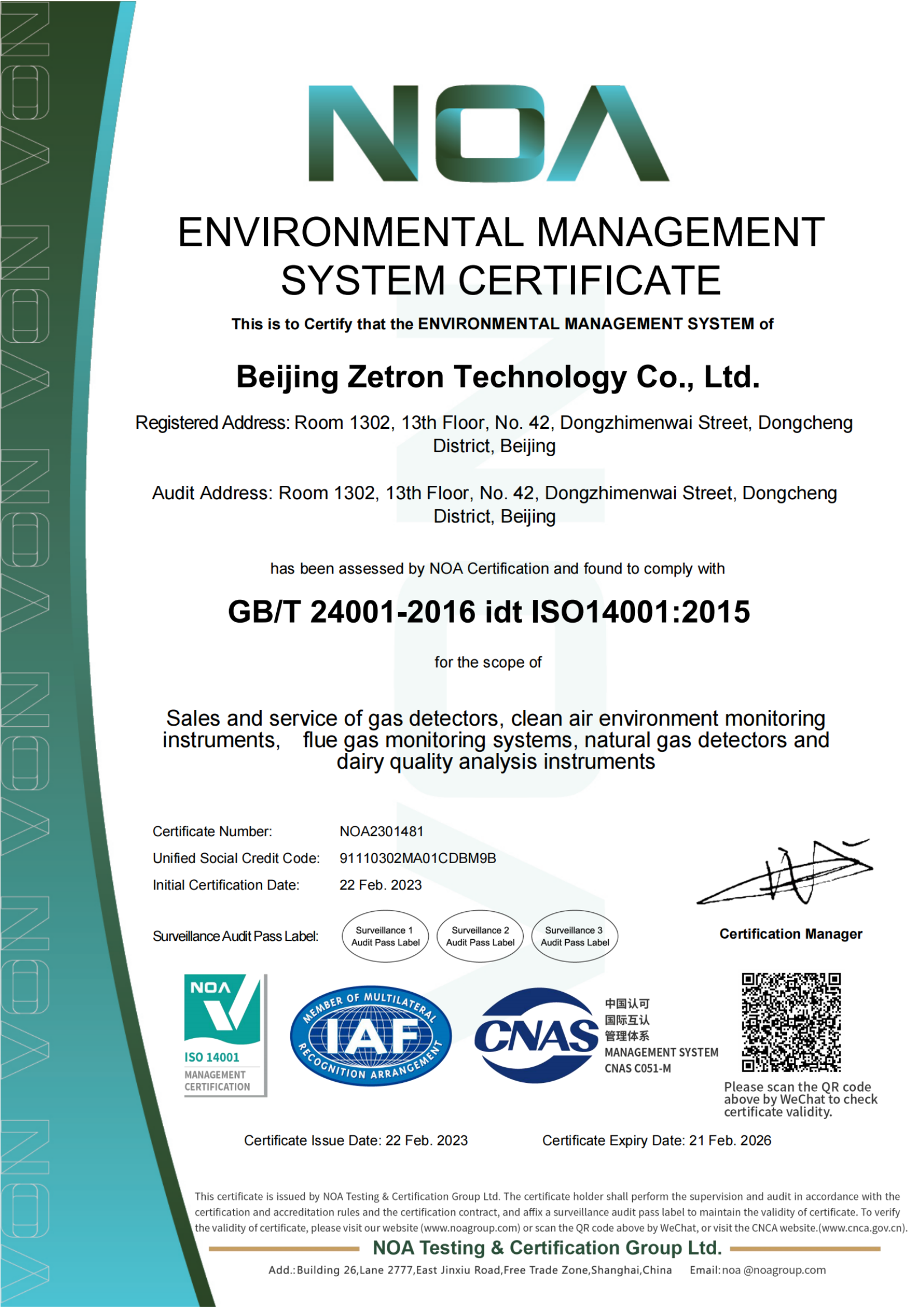
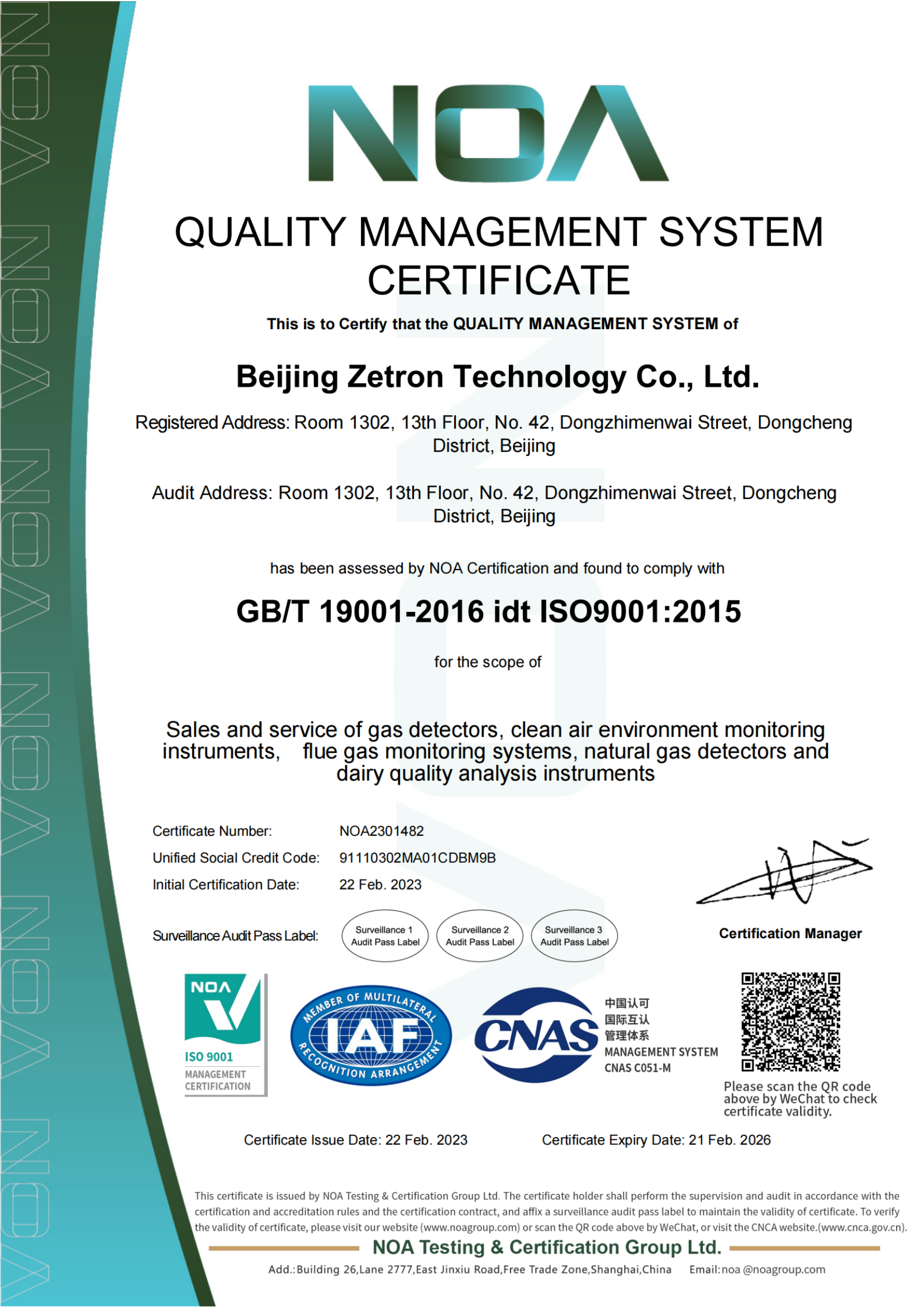
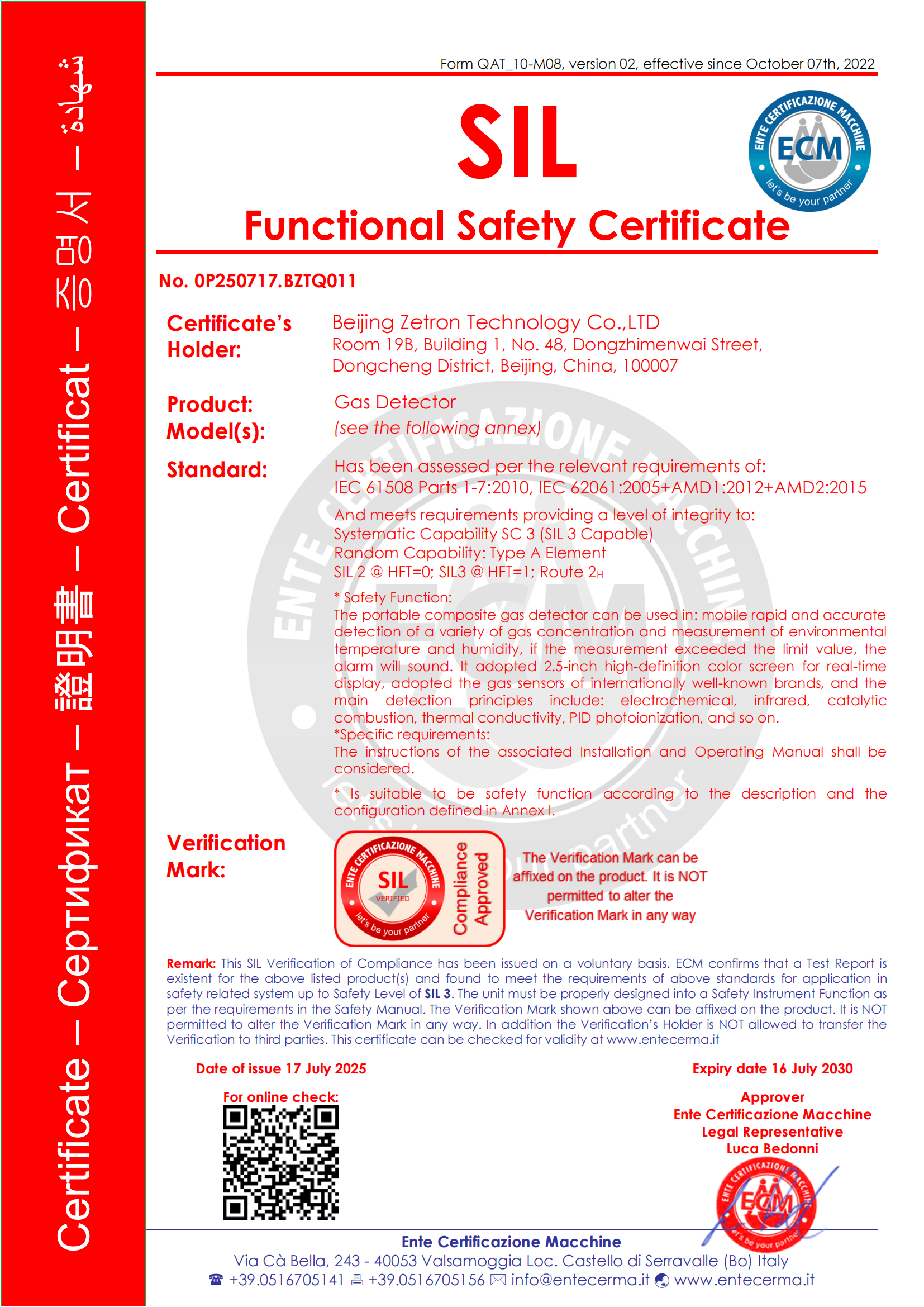
Assess the supplier's communication speed, clarity, and willingness to share supporting documents. Red flags include delayed responses, vague answers, or reluctance to provide certificates. Look for verifiable certifications:
Step 4: Receive Sample and Perform Physical Inspection
Upon receiving the gas detector sample, conduct the following checks:
- Packaging & Accessories: Are the device, manual, calibration certificate, charger, and cables included and in good condition?
- Build & Material: Check housing seam, rubber boot, sensor cover, and display clarity. For fixed gas detector units, verify mounting bracket and wiring terminals.
- Weight & Dimensions: Compare against datasheet.
Step 5: Functional and Performance Testing
Set up a controlled test environment. Use certified calibration gas if possible. Test at least the following:
- Accuracy: Measure the reading against a reference gas concentration.
- Response Time: Record time from gas exposure to alarm (should be ≤2 seconds for most industrial detectors).
- Alarm Function: Check audible, visual, and vibratory alarms. For co detector alarm or gas detector alarm, confirm alarm thresholds are configurable.
- Wireless Connectivity: If the device supports 4G, Wi-Fi, or Bluetooth, test data transmission to a cloud platform or mobile app.
- Battery Life (Portable Models): Run a continuous test to verify claimed runtime.
Response time: < 2 seconds, Accuracy: 1% F.S., Protection: IP68, Wireless: 4G+NB-IoT+Wi-Fi+Bluetooth, Certifications: CE, RoHS, FCC, ATEX, SIL2, ISO9001, ISO14001, OHSAS18001.
Step 6: Evaluate OEM/ODM and Customization Capability
If you need custom labeling, specific sensor ranges, or software modifications, discuss with the supplier during the sample phase. A capable supplier like Zetron provides full-chain OEM/ODM services—from needs diagnosis, solution design, product realization to installation and maintenance support. Ask for a customization timeline and minimum order quantity (MOQ).
Step 7: Examine After-Sales Support and Warranty Terms
Request sample warranty details (typically 12–24 months). Inquire about spare parts availability, calibration service, and technical support. Reliable suppliers will have a clear service policy and may offer remote diagnostics via cloud platforms.
Use Cases: How Sample Evaluation Helped Real Buyers
Case 1: Petrochemical Plant – Evaluating a Laser Gas Detector for Methane Leaks
A major refinery needed a laser methane detector (like Zetron’s ZW-G200) for early leak detection. They requested two samples and tested them in an actual pipeline environment. The sample’s IP68 rating withstood heavy rain, and the <2-second response time triggered alarms before a gas cloud formed. Based on the sample performance and the supplier’s ability to provide SIL2 certification documentation, the buyer placed an initial order of 200 units.
Case 2: Environmental Monitoring Agency – Testing a Portable Air Pollution Monitor
An environmental consulting firm required a portable gas monitor (model PTM600-S) for urban air quality surveys. They tested the sample’s ozone detector and VOC gas analyzer sensors alongside a reference instrument. The sample achieved 1% F.S. accuracy and transmitted data via 4G to their cloud platform seamlessly. The procurement team then negotiated a bulk purchase with customized sensor ranges.
Frequently Asked Questions (FAQ)
Most suppliers accept 1–3 units as samples. For customized units or large-quantity potential, they may offer free samples with the buyer covering shipping costs. Zetron, for example, provides flexible sample policies based on project potential.
Generally, you will need to pay for the sample products and shipping. Many reputable Chinese manufacturers offer a discount on bulk orders to offset sample costs. Always confirm the sample fee and return policy upfront.
Standard sample preparation takes 3–5 working days for in-stock items. Shipping via express (DHL, FedEx, UPS) takes 3–7 business days to most global destinations. Customized samples may take 10–20 working days.
Focus on: accuracy using span gas, response time, alarm volume, battery life (for portables), wireless connectivity, build quality, and certification authenticity. Also, test the device in your actual environment if possible.
Yes, many suppliers like Zetron offer OEM/ODM sample customization. You can request specific sensor ranges, enclosure colors, or labeling. Be prepared to pay a higher sample fee and accept a longer lead time.
Conclusion
Requesting and evaluating gas detector samples is not merely a formality—it is the single most effective way to de-risk your industrial gas detection procurement. By following the structured steps outlined above, you can assess a supplier’s product quality, technical competence, responsiveness, and certification authenticity. This approach directly supports safe operations in petrochemical, biopharmaceutical, environmental, and other critical industries.
When selecting a partner, prioritize suppliers with a proven track record, international certifications (ATEX, CE, SIL2, ISO9001), and a willingness to support the sample evaluation process. Companies like Zetron, with nearly two decades of specialization and a comprehensive product line from portable gas detectors to online monitoring systems, exemplify the level of reliability you should expect.
Ready to evaluate a gas detector sample for your facility? Contact Zetron directly at info@bjzetron.com or visit www.zetroncn.com to start your sample request today.