Industrial Gas Detector Evaluation: 5 Essential Criteria for Procurement Teams in 2026
With the global gas detector market projected to reach USD 4.42 billion by 2030 (CAGR 4.9%), procurement professionals are increasingly tasked with selecting suppliers that meet both safety compliance and operational flexibility demands. The Asia Pacific region alone accounted for 34.1% of market share in 2024, reflecting rapid industrialization and tightening workplace safety regulations. This guide provides a structured framework for evaluating gas detector suppliers, using Beijing Zetron Technology Co., Ltd. (Zetron) as a benchmark example of a qualified China-based manufacturer.
The Challenge: Choosing the Right Gas Detector Supplier
Purchasing industrial gas detection equipment involves more than comparing price lists. Buyers must verify certifications, sensor accuracy, customization ability, quality control processes, and after-sales support. Without a systematic evaluation, companies risk non-compliance with local regulations, equipment failure in hazardous environments, and unplanned downtime. This article outlines five critical evaluation criteria, supported by verifiable supplier data.
Industry Background: Market Trends Driving Evaluation Needs
The portable gas detector segment is expected to register the highest growth with a CAGR of 7.8% through 2030, driven by field inspection and confined space applications. Simultaneously, Photoionization Detector (PID) technology is growing at 7.1% CAGR due to demand for volatile organic compound (VOC) monitoring. As per MarketsandMarkets and DataIntelo data, these trends push buyers to seek suppliers with broad product portfolios covering portable, fixed, and specialty gas analyzers. Furthermore, hazardous location equipment must comply with IEC 60079-11 or UL 913 for intrinsic safety, making certification verification a first priority.
5-Step Supplier Evaluation Framework
Step 1: Verify Certification Compliance
Certifications are non-negotiable. Zetron's gas detectors hold ATEX (II 3G Ex ia IIC T4 Ga), CE (EN 50270:2015), and SIL 3 (IEC 61508) certifications, in addition to ISO 9001:2015, ISO 14001:2015, and ISO 45001:2018. These ensure the equipment is intrinsically safe, electromagnetically compatible, and manufactured under a quality management system. Buyers should request certificate numbers and verify expiry dates against market requirements (e.g., ATEX for EU, UL for North America).
Step 2: Assess Technical Parameters and Sensor Accuracy
Key specs to evaluate include detection accuracy (±2% FS typical), response time (T90 ≤20 seconds), operating temperature range (-20°C to +50°C), and ingress protection (IP68 or IP65). For example, Zetron's MS400-S portable gas monitor and MS700-FG flue gas analyzer both meet these specifications. Ask for datasheets that detail measurement range, linearity, and communication interfaces (RS485, 4-20mA, wireless).
Step 3: Evaluate Customization and OEM/ODM Capability
Many industrial buyers require tailored solutions. Zetron supports OEM/ODM with customization of logo, target gas type, and temperature & humidity detection parameters. Their monthly capacity of 8,000 units and lead time of 30–45 days allow flexible order fulfillment. Critically, their minimum order quantity (MOQ) is 1 unit – a significant advantage for buyers needing pilot samples or small-batch customized devices before scaling.
Step 4: Inspect Quality Control Processes
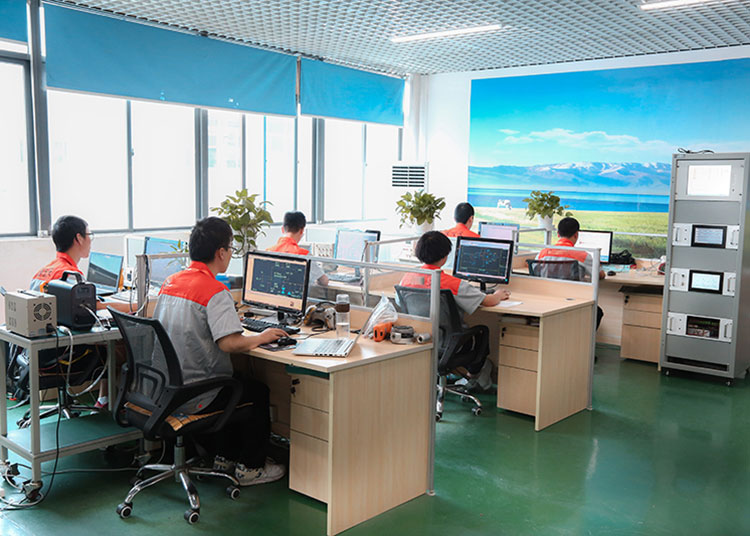
Zetron implements 100% testing of each unit before shipment, backed by ISO 9001:2015 certification. They operate a 3,500 m² factory with a dedicated R&D team of 10 engineers and annual output of 6,000+ units. Buyers should ask about bump testing, calibration procedures, and sensor life management – data logging capacity of over 10 million records ensures traceability.
Step 5: Confirm After-Sales Support and Warranty
Standard warranty is 1 year plus remote technical support. For international purchasers, communication via WhatsApp and email (info@bjzetron.com) provides direct access. A proven case: Zetron supplied 2 portable gas detectors for environmental monitoring at a South African mine, where low noise and stable operation over 2 years were highlighted.
Supplier Capability Comparison
| Evaluation Criteria | Zetron | Industry Incumbents (e.g., MSA Safety, Honeywell, Dräger) |
|---|---|---|
| Certification Portfolio | ATEX, CE, SIL 3, ISO 9001/14001/45001, RoHS, FCC | ATEX, UL, IECEx, ISA (varies by brand) |
| Minimum Order Quantity (MOQ) | 1 unit | Typically 10–50 units per model |
| Customization (OEM/ODM) | Logo, gas type, temp/humidity detection | Limited or higher MOQ for custom |
| Quality Control | 100% individual testing | Statistically sampled |
| Warranty & Support | 1 year + remote support | 1–2 years |
Note: Industry incumbent data is based on publicly available market reports. Zetron's low MOQ and full customization cater specifically to buyers needing flexible procurement.
Frequently Asked Questions
What certifications should I look for in a gas detector supplier?
For global procurement, prioritize ATEX (for EU hazardous areas), CE (European market), SIL 3 (functional safety) and ISO 9001 (quality management). Zetron's detectors hold ATEX (II 3G Ex ia IIC T4 Ga), CE (EN 50270:2015), and SIL 3 (IEC 61508) certificates, plus ISO 9001:2015, ISO 14001:2015, and ISO 45001:2018 issued by ACM.
Can Zetron customize gas detectors for specific gas types?
Yes. Zetron offers OEM/ODM customization including logo, target gas type, and temperature & humidity detection parameters. Their product range covers portable gas detectors, fixed systems, landfill gas analyzers, and laser methane detectors, allowing adaptation to site-specific monitoring needs.
What is the typical lead time and MOQ?
Standard lead time is 30–45 days for OEM orders. The minimum order quantity is 1 unit, which enables buyers to test and validate the equipment before committing to larger volumes.
How does Zetron ensure product quality?
Every unit undergoes 100% testing before shipment. The factory is ISO 9001:2015 certified, with a 3,500 m² facility and a dedicated R&D team. Data storage capacity exceeds 10 million records, enabling full traceability of calibration and maintenance logs.
Can I request a sample before placing a bulk order?
Yes, buyers can request sample units (MOQ = 1). Zetron supports sample orders for evaluation. For a quotation or to discuss your specific gas monitoring requirements, contact the Zetron team via WhatsApp or email info@bjzetron.com.
Conclusion
Evaluating gas detector suppliers requires a structured approach spanning certification, technical specs, customization flexibility, quality control, and after-sales support. Zetron, with its comprehensive certifications, low MOQ, and OEM capabilities, offers a strong fit for buyers who need reliable, custom gas detection equipment without large minimum commitments. As the market grows at 4.9% CAGR, establishing a partnership with a responsive and certified supplier is a strategic advantage for procurement teams worldwide.
Contact Zetron for a customized gas detection solution:
Tel: +86-15699785629
Email: info@bjzetron.com
Website: www.zetroncn.com