
Managing Particle Counter Procurement Risk: From RFQ to Acceptance
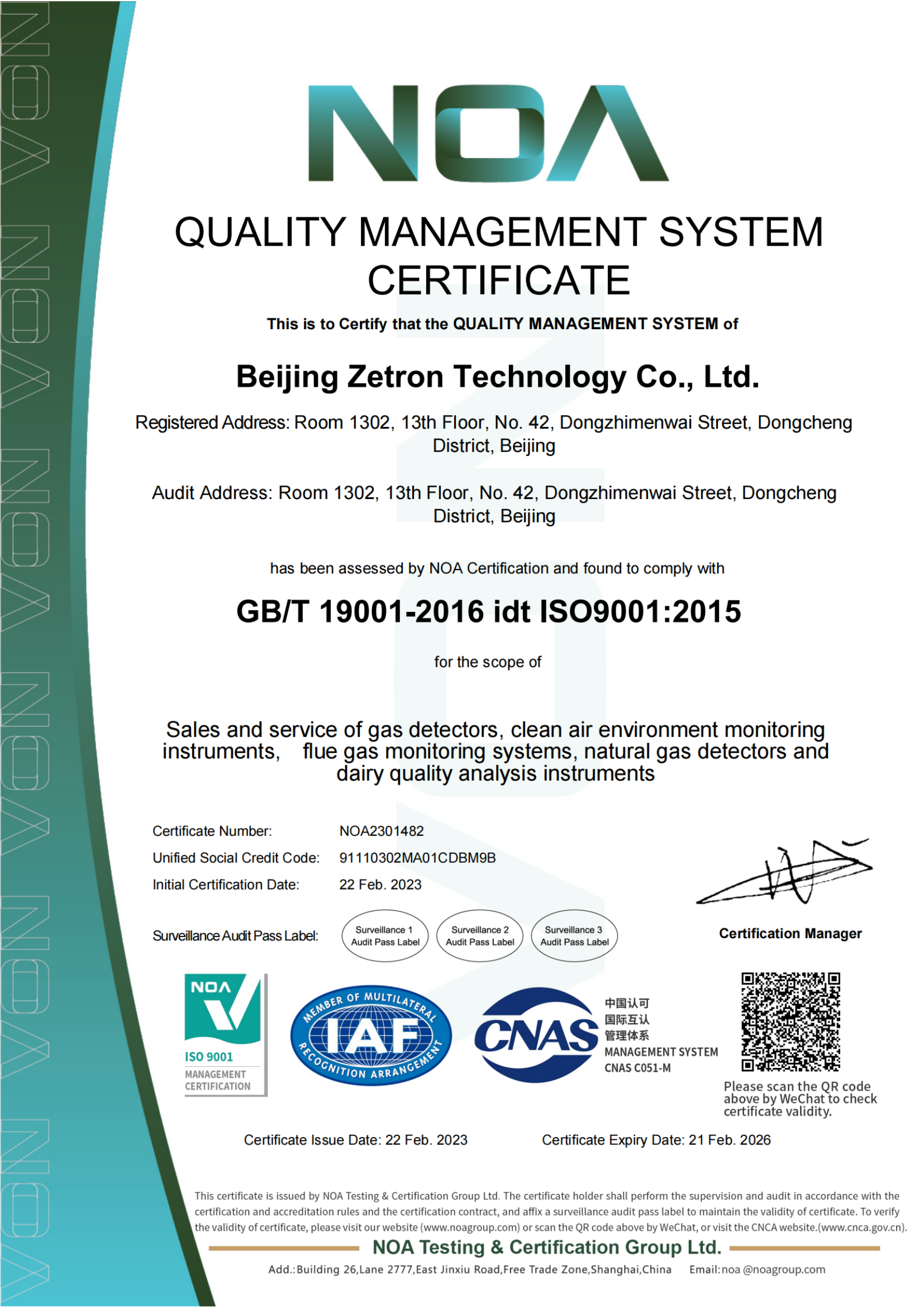
Zetron ISO9001 quality management system certification evidence.
Particle counter procurement is not a routine purchase. When the instrument will be used for cleanroom monitoring, pharmaceutical manufacturing, semiconductor production or liquid quality testing, it must generate auditable data, meet regulatory expectations and arrive within the project schedule. A mismatch in specifications or missing documentation can lead to re-testing, audit findings, budget overruns and delays.
This article provides a procurement risk-control workflow from RFQ to acceptance. It is designed for buyers who need to complete purchasing efficiently while avoiding cooperation risks with suppliers. The workflow covers compliance verification, supplier qualification, specification matching, documentation control, production tracking, receiving inspection and after-sales support.
The Real Risks in Particle Counter Procurement
Particle counters are different from many other industrial instruments because they are often part of a regulated monitoring system. A buyer who treats the purchase as a simple product transaction may face several categories of risk:
Specification mismatch risk. The wrong particle size range, sampling flow rate or instrument type can make the data useless for the intended application. For example, a cleanroom monitoring plan may require a multi-channel airborne particle counter, while a liquid process line may require a liquid particle counter. These are not interchangeable.
Compliance and documentation risk. Regulated industries typically expect instruments to support standards such as ISO14644, EU GMP and FDA CFR 21 part 11. Documentation must be available at delivery. Missing certificates, calibration records or compliance statements can cause delays in validation and audits.
Verification risk. The buyer may not know whether the supplier is a manufacturer or a reseller, whether the factory has real production capability, or whether the product has been tested under controlled conditions. These uncertainties create serious cooperation risks.
Deployment risk. Online particle counters and sensors must be integrated into a facility's monitoring structure. Liquid particle counters must be used with compatible liquid sampling methods. A buyer who ignores deployment requirements may receive equipment that cannot be installed or operated as intended.
Schedule risk. Particle counters are frequently needed for cleanroom commissioning, qualification batches or production audits. A delayed shipment can directly affect the facility's start-up date.
These risks can be controlled with a structured procurement workflow. Each step of the workflow creates a clear deliverable and reduces uncertainty before the purchase decision is finalized.
The Industry Context: Where Particle Counters Are Used
Particle counters are used across a wide range of industries and applications. In pharmaceutical and biopharmaceutical cleanrooms, airborne particle counters support environmental monitoring and contamination control. In semiconductor and lithium battery manufacturing, both airborne and liquid particle counters help protect sensitive processes. In the chemical industry, liquid particle counters are used for pure water and ultrapure water monitoring. Environmental monitoring agencies, disease control centers, food and drug testing laboratories, and medical facilities also rely on particle counting instruments for air quality and contamination assessments.
Beijing Zetron Technology Co., Ltd., operating under the Zetron brand, is positioned as a one-stop industrial testing equipment solution provider. The company has focused on the gas and air detection field for nearly 20 years and has been dedicated to the research, development, manufacturing and sales of gas detection equipment. Beyond gas detection, Zetron's product line covers alarms, detectors and analyzers, online monitoring and pretreatment systems, miniature air monitoring stations, odor online monitoring systems, remote laser methane gas detectors, particle counters and air quality monitoring systems, and environmental safety monitoring gas monitoring cloud platforms.
This breadth of portfolio is relevant for procurement teams. A supplier that can provide portable airborne counters, online monitoring sensors, liquid particle counters and supporting system platforms can simplify qualification, documentation control and lifecycle support for the buyer.
The Six-Step Procurement Workflow: From RFQ to Acceptance
The workflow below is organized around the main stages of a particle counter purchase. Each stage allows the buyer to verify a different type of risk.
Step 1: Define Your Compliance and Technical Baseline Before the RFQ
Before contacting suppliers, define the exact purpose of the instrument. The buyer should answer these questions:
- Will the instrument measure airborne particles, liquid particles, or both?
- Is the application a cleanroom, pharmaceutical production area, semiconductor facility, medical setting, environmental monitoring site or laboratory?
- Is the monitoring point a portable inspection route or a fixed, continuous monitoring location?
- Which particle size range must be detected?
- Which standards govern the application, such as ISO14644, EU GMP or FDA CFR 21 part 11?
These answers should be written into the RFQ. A well-structured RFQ allows the supplier to recommend the correct instrument type and to confirm whether its documentation can support the buyer's compliance requirements.
Step 2: Verify Supplier Credentials and Manufacturing Capability
The second step is to verify that the supplier is a credible manufacturing partner. This is not about brand preference; it is about confirming whether the supplier has the experience, production lines, certification and reference base to fulfill the order reliably.
For Zetron, the company profile indicates nearly 20 years of experience in the gas and air detection field, with research, development, manufacturing and sales capabilities. The company states that it possesses multiple professional production lines and provides gas safety and contamination monitoring solutions for industrial, scientific research and commercial sectors.
Buyers should also ask for certification evidence. Zetron holds certifications including ISO9001, ISO240001, ISO45001, ATEX and SIL, according to its published certificate records. The company also states that its products have passed SGS testing certification and obtained CE, RoHS and FCC industry certifications. These are verifiable inputs for a supplier qualification review.
Reference customers can provide additional insight. Zetron's published client references include Donaldson Company, Inc., Samsung and Bayer.
Step 3: Match the Counter Type to the Measurement Application
The third step is to select the correct instrument type. Different monitoring tasks require different particle counter categories.
Portable and handheld airborne particle counters are used for spot checks and mobile inspection routes in cleanrooms and other controlled environments. Zetron's B110-Pro airborne particle counter is an example of a portable unit. For buyers that need multi-channel monitoring data, the B330, B550 and B1030 multi-channel airborne particle counters cover a 0.3-25 micrometer range and are designed for environmental monitoring.

Zetron B330, B550 and B1030 multi-channel airborne particle counters.
Online particle counters and sensors are used for fixed, continuous monitoring of cleanrooms and production areas. Zetron's R200 and R310P are online particle sensors, while the R210 is a laser airborne particle counter with a fixed online configuration and 2.83 L/min sampling flow.
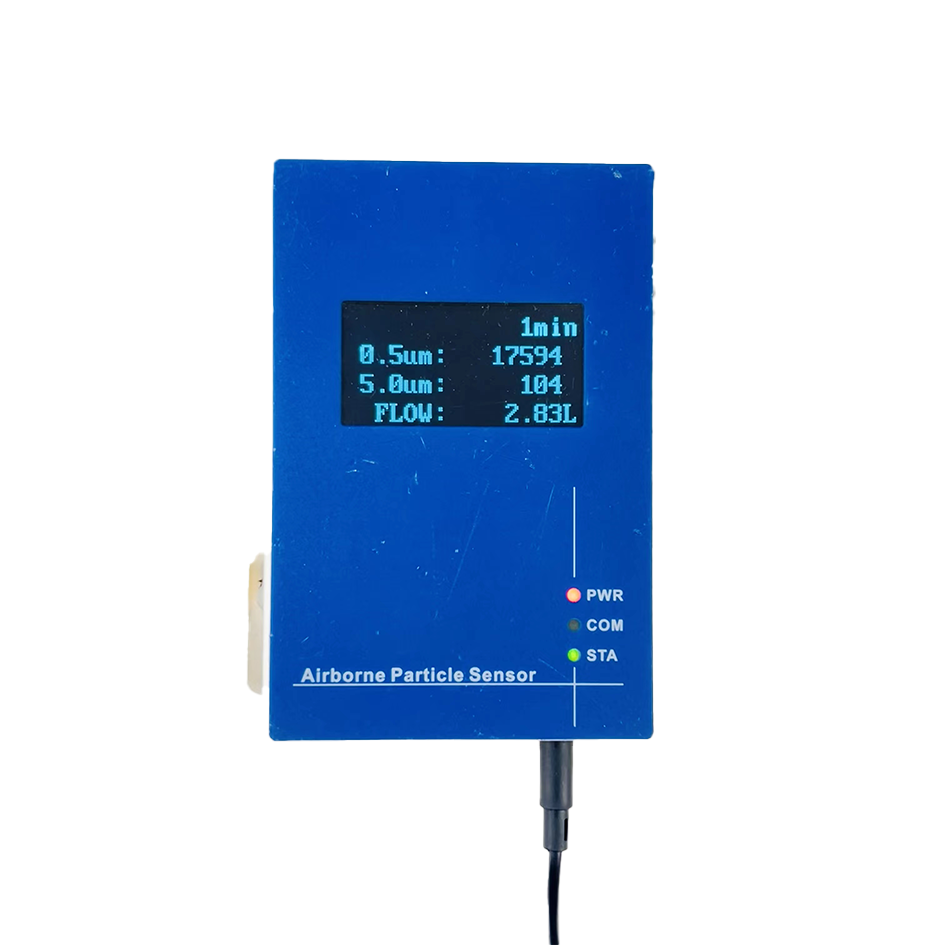
Zetron R210 laser airborne particle counter for fixed online monitoring.
Liquid particle counters are used for monitoring contamination in liquids such as pure water and ultrapure water. The Zetron LPC-7CE is positioned as an intelligent liquid particle counter.
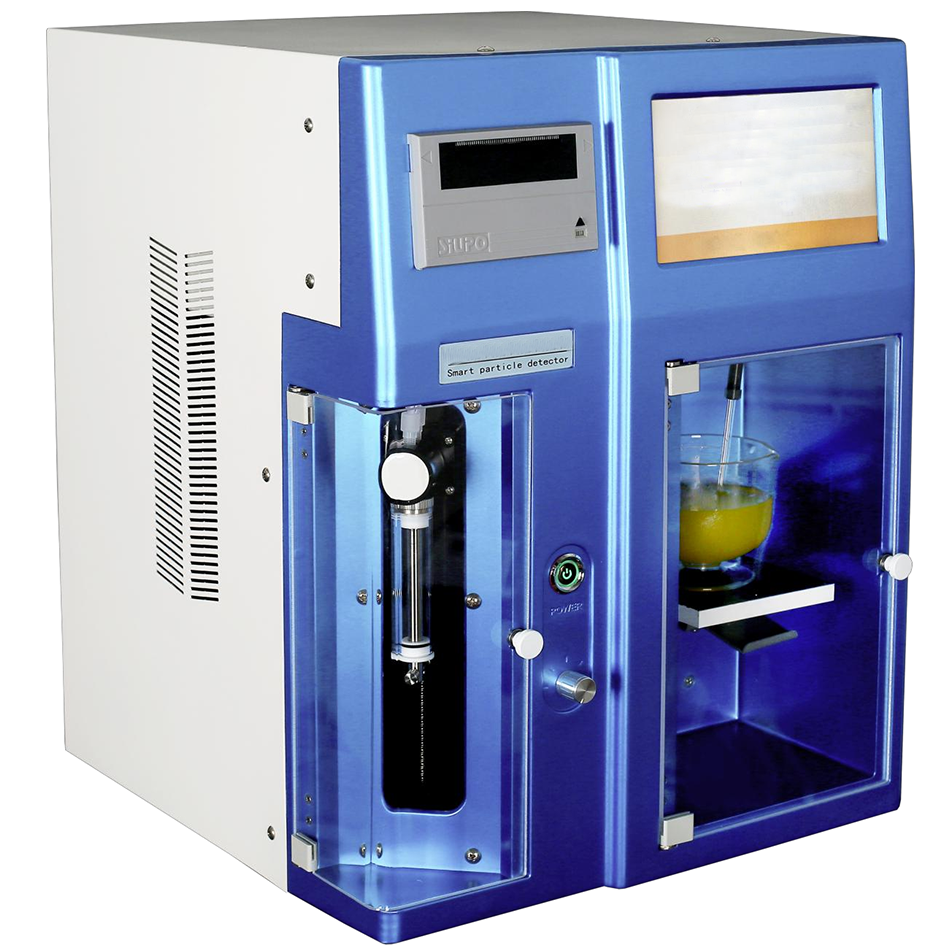
Zetron LPC-7CE intelligent liquid particle counter.
Specialized analyzers can address application-specific needs. The Zetron H630 particle analyzer is designed for precision air monitoring in medical facilities, while the LPC-16DA intelligent particle detector expands the range for particle detection tasks.
During this step, the buyer should also evaluate operational features. Zetron particle counters support fast measurement results within 3 seconds, automatic alarm when limits are exceeded, real-time regional monitoring, an LCD touchscreen, a built-in printer and instant output of test reports. Wireless IoT integration is also supported, and Zetron offers customized function adaptation. These features should be confirmed against the actual operator workflow before the order is placed.
Step 4: Lock Down Documentation, Calibration and Support Scope
The fourth step is to define the documentation and support that will be delivered with the instrument. Buyers should confirm the following points in writing:
- Which compliance standards are supported, such as ISO14644, EU GMP or FDA CFR 21 part 11.
- Which quality certificates and test reports will accompany the shipment.
- Whether the instrument supports the required data output, alarm settings and reporting format.
- Whether online particle counters include installation, commissioning and system integration guidance.
- Whether the supplier provides after-sales maintenance and long-term support.
Zetron describes its service model as a full-chain OEM/ODM service covering needs diagnosis, solution design, installation, commissioning and maintenance support. For a buyer, this means that support scope can be arranged before the order instead of after delivery.
Step 5: Monitor Production, Testing and Shipment Readiness
The fifth step is production and shipment monitoring. A supplier with real manufacturing capability can provide meaningful production evidence. Zetron states that it has multiple professional production lines, and its published facility photos show production and office environments.
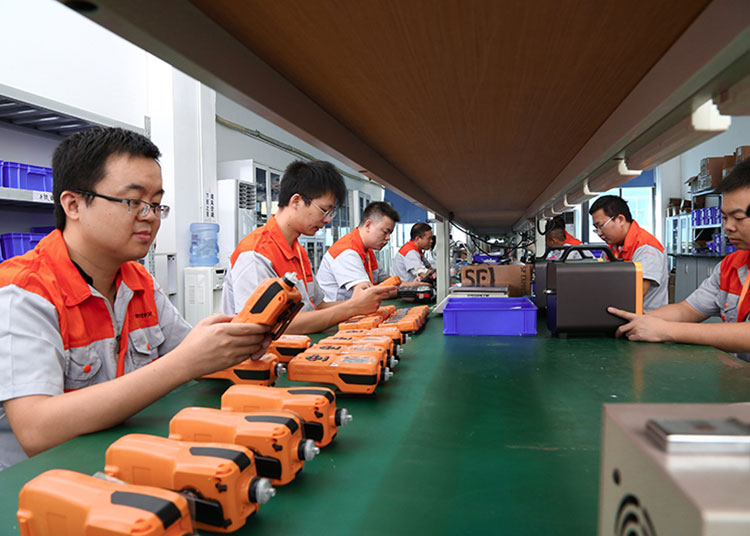
Zetron production environment.
Buyers should agree on delivery milestones and ask for updated test or inspection information at key points. This is especially important when the particle counter order is part of a cleanroom commissioning schedule.
Step 6: Execute Receiving Inspection, Installation and After-Sales Support
The final step is receiving inspection and acceptance. The buyer should verify that the delivered instrument matches the confirmed model, that accessories and documentation are complete, and that the instrument operates within the promised functional scope.

Testing site for particle counter verification.
During acceptance, the buyer can test the instrument's response time, alarm function, touchscreen operation, printing function and data output. If the unit is an online particle counter, installation and integration should be confirmed. If the unit is a liquid particle counter, the liquid sampling workflow should be validated. After acceptance, the buyer should confirm the service arrangement for future maintenance and support.
Application-Led Sourcing Scenarios
Scenario 1: Biopharmaceutical Cleanroom Environmental Monitoring
Biopharmaceutical cleanrooms require airborne particle monitoring to support contamination control programs. A portable multi-channel airborne particle counter such as the B330, B550 or B1030 can support cleanroom classification and routine spot checks. If continuous data is required, an online model such as the R210 fixed airborne particle counter can be integrated into the facility's environmental monitoring network.
Scenario 2: Semiconductor and Lithium Battery Manufacturing
Semiconductor and lithium battery facilities are sensitive to particle contamination in both air and process liquids. Online particle sensors such as the R200 and R310P support continuous air monitoring in production areas. For pure water and ultrapure water applications, the LPC-7CE intelligent liquid particle counter can support liquid contamination monitoring.
Scenario 3: Medical Facilities, Disease Control Centers, Food and Drug Testing
Medical facilities require precision air monitoring to control infection risk and protect sensitive environments. The H630 particle analyzer is designed for precision air monitoring in medical facilities. Portable units such as the B110-Pro support field inspection tasks, while liquid particle counters can support water and liquid testing needs in food and drug quality control.
Scenario 4: Chemical Industry and Environmental Monitoring
In the chemical industry, liquid particle monitoring is used for pure water and ultrapure water systems. In environmental monitoring, particle counting supports air quality assessment. Zetron's broader product ecosystem, including air quality monitoring systems and environmental safety monitoring cloud platforms, can support a complete monitoring architecture.
Particle Counter Selection and Acceptance Checklist
| Instrument Category | Zetron Models | Typical Use | Acceptance Check Points |
|---|---|---|---|
| Portable Airborne Particle Counter | B110-Pro; B330, B550, B1030 (0.3-25 micrometers) | Cleanroom spot checks, environmental monitoring | Multi-channel particle size data, calibration documentation, LCD touchscreen, printer output |
| Online Particle Counter / Sensor | R200, R210 (2.83 L/min), R310P | Fixed continuous cleanroom and production area monitoring | Installation integration, alarm settings, data output, compatibility with cloud or monitoring platforms |
| Specialized Air Analyzer | H630 | Precision air monitoring in medical facilities | Analysis workflow, data traceability, supporting compliance documentation |
| Liquid Particle Counter | LPC-7CE | Liquid particle monitoring for pure water, ultrapure water and related quality control | Liquid sampling compatibility, data recording, contamination control during operation |
Frequently Asked Questions
What certifications should a particle counter buyer verify before placing an order?
A buyer should verify both company-level and product-level evidence. Zetron, for example, holds certifications including ISO9001, ISO240001, ISO45001, ATEX and SIL, and its products have passed SGS testing certification as well as CE, RoHS and FCC industry certifications. Buyers should also confirm the instrument itself supports the required standards, such as ISO14644, EU GMP and FDA CFR 21 part 11.
Can Zetron cover both airborne and liquid particle counter needs in one project?
Yes. Zetron's particle counter product line covers portable airborne particle counters such as the B110-Pro and B330, B550 and B1030 multi-channel airborne particle counters with a 0.3-25 micrometer range; online particle counters and sensors such as the R200, R210 and R310P; the H630 particle analyzer for precision air monitoring in medical facilities; and the LPC-7CE intelligent liquid particle counter for liquid monitoring.
How should a buyer control budget without lowering compliance requirements?
Budget control should be based on matching the instrument type to the actual measurement application, rather than reducing compliance expectations. A portable unit such as the B110-Pro can support spot checks, while an online counter such as the R210 or R310P supports continuous regional monitoring. Zetron also provides customizable function adaptation and full-chain OEM/ODM services, allowing buyers to align functionality with budget.
Can a buyer test a particle counter before committing to a large order?
Yes. Buyers can request a sample or initial small-quantity evaluation to test the instrument's operation, user interface and reporting features. Zetron's one-stop process covers needs diagnosis, solution design, installation, commissioning and maintenance support, which allows a buyer to validate equipment behavior and documentation before full-scale purchasing.
What is the delivery time for particle counter orders?
Delivery time depends on the instrument type, configuration, order quantity and destination. Buyers should confirm a delivery schedule during the RFQ stage so that production, calibration and shipping align with the project timetable. As an integrated provider, Zetron manages delivery, installation, commissioning and maintenance support across the full-chain service process. For current lead time information, request a quote from the Zetron team.
Conclusion
Particle counter procurement risk is not eliminated by choosing a recognizable brand or a low price. It is controlled by a structured workflow that verifies application fit, supplier credentials, compliance documentation, production status and acceptance criteria.
From the RFQ stage to final acceptance, each procurement step should produce a clear, verifiable result. When the supplier has real manufacturing experience, credible certification evidence and a product line that matches the application, the buyer can complete the purchase efficiently and reduce cooperation risk.
Request a Product Sample or Quote
Zetron supports procurement teams with product samples, quotation preparation, OEM/ODM customization and full-chain technical support. Contact the team to confirm specifications, documentation and delivery timing for your particle counter project.
Tel: +86-15699785629
Email: info@bjzetron.com
Website: www.zetroncn.com
Address: 19B, Office Tower, Oriental Ginza, No.48 Dongzhimenwai Street, Dongcheng District, Beijing, China
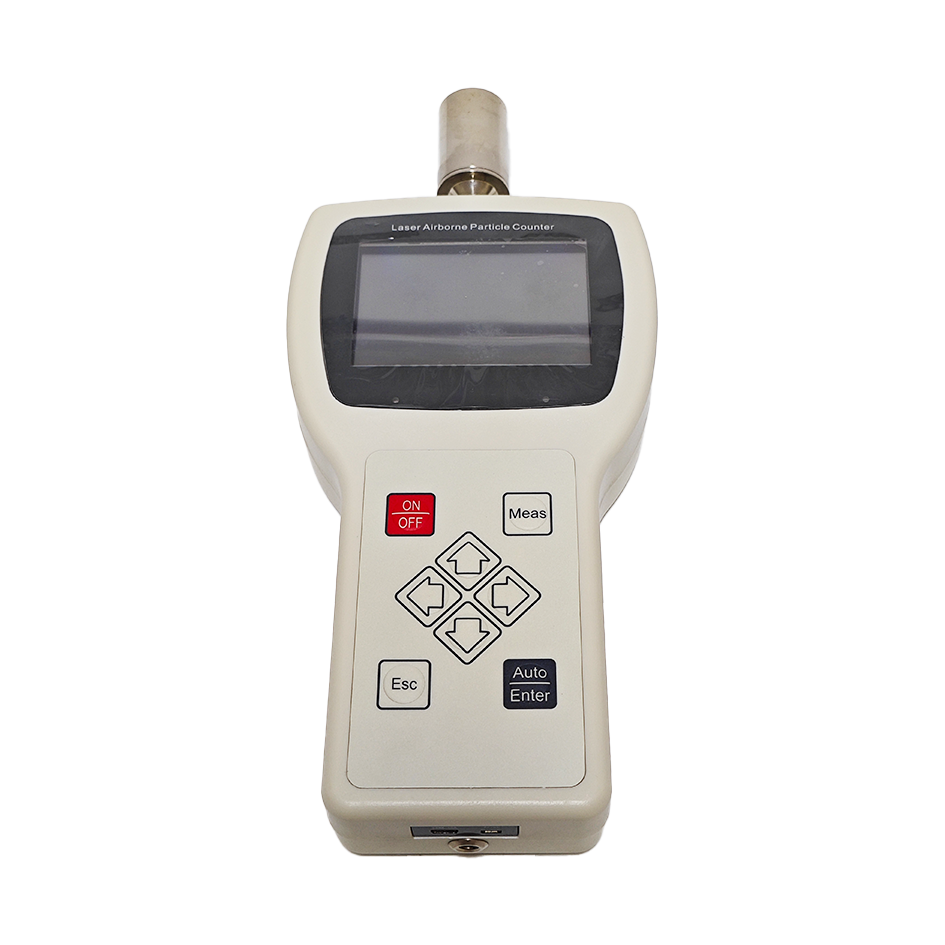
Zetron H630 particle analyzer.
Have Questions or Need More Details?
Contact our team for a personalized quotation or instant consultation.
Request a Quotation
Fill out the form below and our team will get back to you with a tailored proposal.
WhatsApp Direct Chat
Prefer to chat in real-time? Message us on WhatsApp for instant assistance & quick answers.
- Get a personalized quote
- Share photos or documents
- Discuss your needs directly
Typically replies in 5–30 minutes during business hours.