
Online Particle Sensor vs. Laser Airborne Particle Sensor: A Head-to-Head Decision Guide
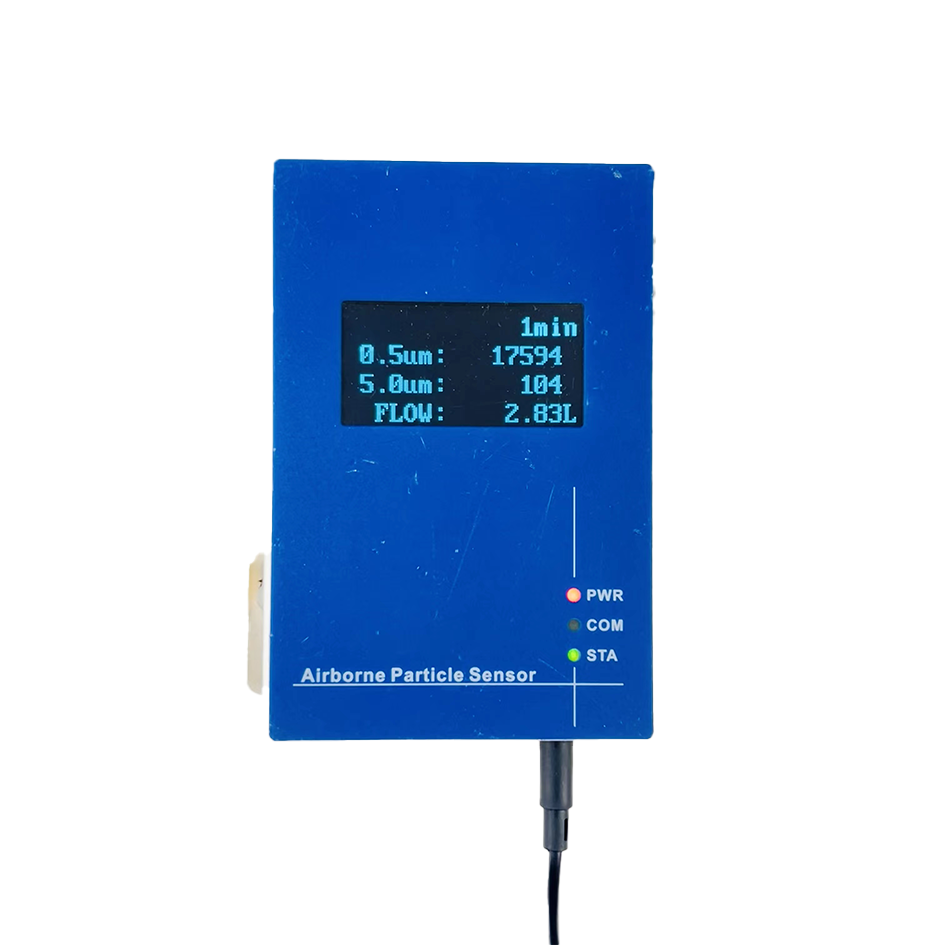
R210 Laser Airborne 2.83 L/Min Fixed Online Particle Counter — a fixed, laser-based airborne monitoring configuration from Zetron.
The short answer: if your requirement is continuous, unattended monitoring of a fixed point inside a cleanroom, process line or controlled environment, an online particle sensor is the correct instrument class to specify. If your requirement is laser-based counting of particles suspended in air at a defined location — with the same continuous data feed — a laser airborne particle sensor is the correct configuration. Both sit inside the same monitoring chain, and in the Zetron product line they are frequently deployed together rather than chosen against each other.
Zetron is the brand of Beijing Zetron Technology Co., Ltd., a manufacturer of gas and air detection equipment based in Beijing, China. Its particle portfolio includes R310P Online Particle Sensors, R200 Online Particle Sensors and the R210 Laser Airborne 2.83 L/Min Fixed Online Particle Counter, alongside liquid instruments such as the LPC-7CE Intelligent Liquid Particle Counter and the LPC-16DA Intelligent Particle Detector. Because the same supplier builds both airborne instrument families, the purchase question stops being "which technology exists" and becomes "which monitored medium, which mounting point, which data path, and which acceptance criteria are written into my order."
Problem Definition: Where This Selection Usually Goes Wrong
Buyers routinely treat "online particle sensor" and "laser airborne particle sensor" as two names for the same device, then discover at commissioning that the delivered instrument does not match the monitoring plan. Three failure patterns account for most of the mismatch.
- Medium mismatch. Airborne instruments count particles suspended in air. They cannot substitute for liquid particle counting in pure water, ultrapure water or process chemical lines. Zetron separates these lines explicitly: airborne models such as the R210, B110-Pro and the B330/B550/B1030 series on one side, and liquid models such as the LPC-7CE Intelligent Liquid Particle Counter and the LPC-16DA Intelligent Particle Detector on the other. If your monitored medium is liquid, this head-to-head comparison does not apply at all.
- Monitoring-mode mismatch. A fixed online instrument produces a continuous data record at one point but cannot be walked between rooms. A portable instrument can be carried between locations but does not produce continuous point data. Buyers who purchase one mode while planning for the other end up purchasing twice.
- Acceptance criteria written after purchase. If the purchase order does not define what data must be delivered, in what format, how alarms are routed and who acts on them, the buyer has no basis to accept or reject the delivered configuration.
Working definitions used throughout this guide
Online particle sensor: a fixed instrument permanently installed at a monitoring point and connected continuously to a monitoring system, used where a continuous particle record is required.
Laser airborne particle sensor: an airborne particle counting instrument that uses a laser light source to detect and size particles suspended in air at a defined location.
Where the two overlap: in Zetron's line, the R210 Laser Airborne 2.83 L/Min Fixed Online Particle Counter is simultaneously laser-based and fixed online. The categories are not mutually exclusive — the decision is about configuration, not vocabulary.
Industry Background: Why Continuous Particle Data Became a Procurement Requirement
Particle monitoring in regulated manufacturing has shifted from periodic snapshots to continuous evidence. The instruments that produce that evidence are now evaluated as part of a data system rather than as stand-alone meters, which is why the choice between an online particle sensor and a laser airborne particle sensor is increasingly a systems decision.
Three reference points shape that decision. ISO 14644 governs cleanroom classification and monitoring practice. EU GMP defines expectations for pharmaceutical manufacturing environments. FDA CFR 21 Part 11 addresses electronic records and electronic signatures. Zetron states that its particle instruments are designed to meet ISO 14644, EU GMP and FDA CFR 21 Part 11 — which means the compliance discussion with a supplier should cover the record, the alarm trail and the audit path, not only the sensor head.
The application base has broadened accordingly. Zetron lists its particle and monitoring equipment as serving semiconductor, lithium battery, chemical (including pure water and ultrapure water), environmental monitoring, disease control centers, food and drug testing, and biopharmaceutical cleanroom environments. In several of these sectors, airborne and liquid monitoring run in the same facility, on the same shift, under the same quality system.
The company's own industrial base is relevant to procurement risk. Beijing Zetron Technology Co., Ltd. has focused on the gas and air detection field for nearly 20 years, operates multiple professional production lines, and states that its products hold ISO9001:2005 quality management system certification, SGS testing certification, and CE, RoHS, FCC and ATEX certifications. For a buyer, those certifications answer the qualification question; they do not answer the configuration question, which is what this guide addresses.
Detailed Solution: What Each Instrument Actually Delivers
What an Online Particle Sensor Delivers
An online particle sensor is specified when the monitoring plan requires a permanent point that reports continuously without an operator present. Zetron's R310P Online Particle Sensors and R200 Online Particle Sensors are the fixed monitoring instruments in this family. Their procurement value is not a single measurement but an uninterrupted series of measurements attached to one location — the data that supports trend review, out-of-limit investigation and audit reconstruction.
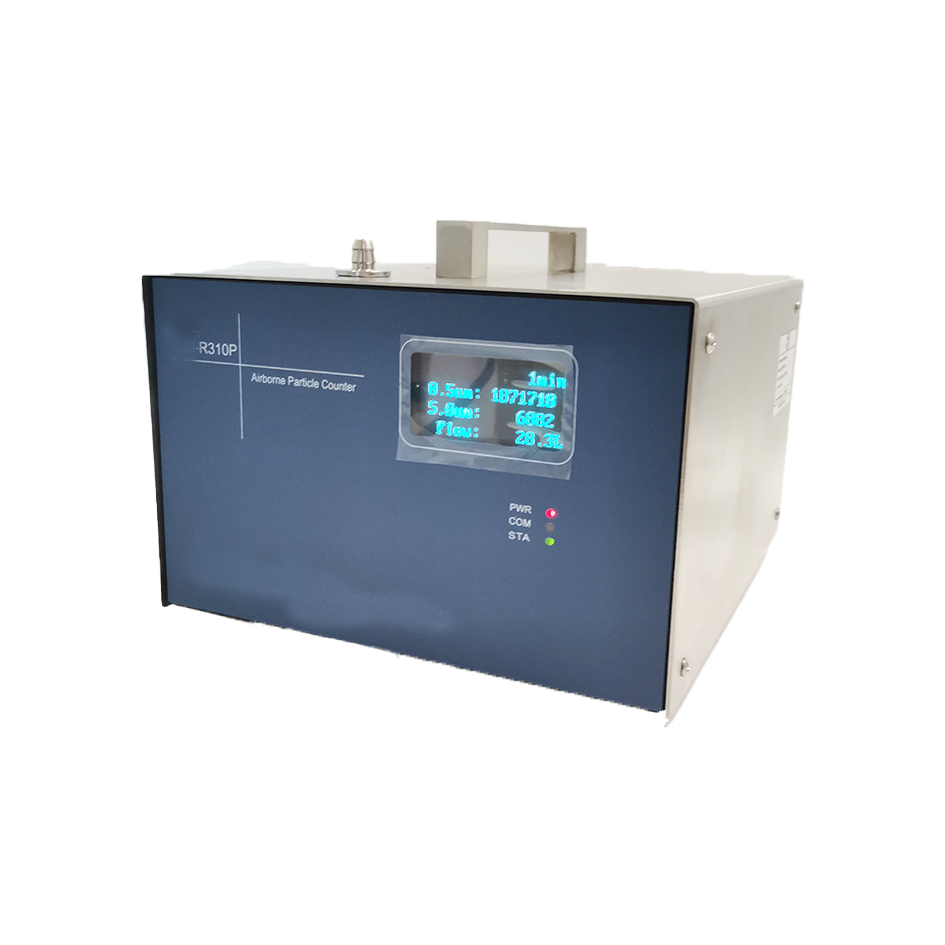
R310P Online Particle Sensors — fixed instruments intended for continuous monitoring at a defined point.
What a Laser Airborne Particle Sensor Delivers
A laser airborne particle sensor adds a defined measurement principle: particles suspended in air are detected and sized optically using a laser light source. Zetron's R210 Laser Airborne 2.83 L/Min Fixed Online Particle Counter is the direct expression of this category — airborne, laser-based, fixed, and specified at 2.83 L/min. It belongs to the same airborne family as the B110-Pro Airborne Particle Counter and the B330, B550 and B1030 Multi-Channel Airborne Particle Counter, the latter specified across a 0.3–25 μm range for environmental monitoring.
For a buyer, the practical meaning is narrower than the name suggests: a laser airborne particle sensor is a fixed device that answers an airborne question at a specific location. It does not replace an online sensor covering a different medium, and it does not replace an area-by-area survey instrument.

B110-Pro Airborne Particle Counter — part of Zetron's airborne counting family alongside the laser airborne R210.
The Shared Platform Layer Most Buyers Miss
The single most useful insight in this comparison is that the two instruments differ far less than their names imply at the feature level, because both inherit the same Zetron platform layer. Zetron's stated particle instrument features include:
- Submicron particle detection technology developed for high-precision detection;
- Results within 3 seconds, with automatic alarm when limits are exceeded;
- Real-time regional monitoring across multiple monitored areas;
- LCD touchscreen and built-in printer, with instant output of test reports;
- Wireless IoT integration and customizable function adaptation;
- Compliance alignment with ISO 14644, EU GMP and FDA CFR 21 Part 11;
- Coverage of both air and liquid pollution across the wider particle portfolio, as a complete monitoring solution.
Because the platform layer is shared, the head-to-head decision rarely turns on features. It turns on medium, point placement, data integration scope and acceptance criteria — the four items addressed in the sequence below.
Step-by-Step Breakdown: A Six-Step Selection Sequence
Step 1 — Fix the monitored medium before anything else
Decide whether you are monitoring air, liquid, or both. Airborne instruments — online particle sensors and laser airborne particle sensors alike — serve air. Liquid monitoring is a separate specification, served in Zetron's line by the LPC-7CE Intelligent Liquid Particle Counter and the LPC-16DA Intelligent Particle Detector. If your facility needs both, you are specifying two instrument lines under one quality system, not one device.
Step 2 — Fix the monitoring mode
Continuous fixed monitoring and periodic area surveying are different procurement requirements. If the data record must exist for every shift, every batch or every audit window, the specification belongs to the fixed online class. If the requirement is a periodic survey of multiple locations, a fixed instrument will satisfy the specification on paper and fail it in practice.
Step 3 — Fix the number and position of monitoring points
Count the points where data must be generated, not the rooms that must be covered. Each fixed point is a separate installation with its own mounting, cabling or wireless path and its own position in the monitoring record. This step usually determines the real scope of the purchase order more than any instrument feature does.
Step 4 — Define the data path and the compliance obligation
Decide how the data leaves the instrument. Zetron instruments support wireless IoT integration and real-time regional monitoring, and Zetron also supplies online monitoring and pretreatment systems plus environmental safety monitoring cloud platforms. Where FDA CFR 21 Part 11 applies, the electronic record path must be defined before the order is placed, because it affects how the instrument is configured and validated.
Step 5 — Define the reporting and alarm workflow
The LCD touchscreen, built-in printer and instant test report output define what an operator can do locally. The automatic alarm when limits are exceeded defines what happens when nobody is watching. Buyers should specify explicitly who receives the alarm, within what time, and what documented action follows — otherwise the alarm function exists without being operational.
Step 6 — Write acceptance criteria and customization scope into the order
Acceptance should test the delivered configuration against the same criteria used to select it. Zetron provides full-chain OEM/ODM services covering needs diagnosis, solution design, installation, commissioning and maintenance support, which means functional adaptation is possible — and therefore must be specified rather than assumed. A configuration that passes inspection against written criteria is a procurement result; one that passes against a verbal understanding is a future dispute.
Use Cases: Matching the Instrument to the Environment
Semiconductor manufacturing
Semiconductor facilities typically monitor both airborne and liquid contamination. The airborne side maps to fixed online and laser airborne instruments at defined points; the liquid side maps to liquid particle counters for process water. The two specifications should be developed together so that the data sets are directly comparable during review.
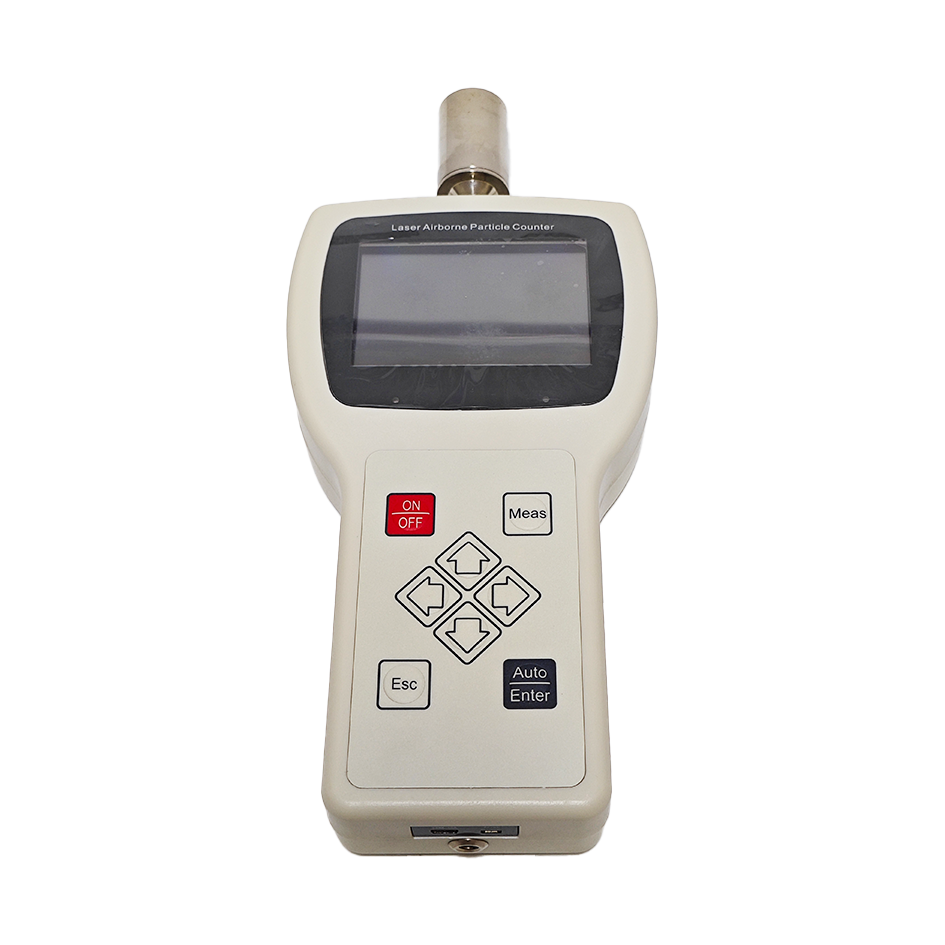
H630 Particle Analyzer for Precision Air Monitoring in Medical Facilities — an application example from Zetron's particle portfolio.
Biopharmaceutical cleanrooms
Cleanroom monitoring under EU GMP depends on continuous airborne data at fixed locations. This is the classic laser airborne particle sensor application, and it is also where FDA CFR 21 Part 11 record requirements make the data path as important as the sensor. Zetron lists biopharmaceutical cleanrooms among its core application environments.
Lithium battery production
Battery manufacturing combines particle-sensitive process areas with liquid handling. Buyers in this sector usually need to separate the airborne monitoring requirement from the liquid monitoring requirement at the specification stage, because the instrument types and the acceptance tests differ.
Chemical, pure water and ultrapure water
Where contamination is carried in liquid rather than air, the airborne comparison is irrelevant and the specification moves to liquid particle counting, with the LPC-7CE Intelligent Liquid Particle Counter and LPC-16DA Intelligent Particle Detector as the relevant instruments in Zetron's range.
Food and drug testing, disease control centers and environmental monitoring
These environments typically combine airborne monitoring at fixed points with broader environmental monitoring. Instruments in this group are commonly integrated into wider monitoring systems rather than operated as stand-alone units, which makes wireless IoT integration and platform compatibility part of the selection criteria rather than an optional extra.
Comparison Table: Online Particle Sensor vs. Laser Airborne Particle Sensor
The table below compares the two instrument classes using only published Zetron product facts. Where a row is identical, that is a genuine finding: both classes inherit the same platform layer, and the differences are concentrated in medium, measurement principle and point definition.
| Decision dimension | Online particle sensor (fixed) | Laser airborne particle sensor (fixed) |
|---|---|---|
| Instrument role | Permanent monitoring point inside a continuous monitoring chain | Laser-based counting of airborne particles at a defined location |
| Representative Zetron models | R310P Online Particle Sensors; R200 Online Particle Sensors | R210 Laser Airborne 2.83 L/Min Fixed Online Particle Counter |
| Monitored medium | Configured per application; Zetron's wider particle portfolio covers air and liquid pollution through separate instrument lines | Airborne particles |
| Measurement principle | Fixed point monitoring using Zetron's submicron particle detection technology | Laser light source for airborne particle detection and sizing |
| Specified size range reference | Submicron detection capability stated for Zetron particle instruments | Related Zetron airborne models (B330, B550, B1030) are specified across 0.3–25 μm |
| Result output | Results within 3 seconds; automatic alarm for exceeding limits | Results within 3 seconds; automatic alarm for exceeding limits |
| Regional monitoring | Supports real-time regional monitoring | Supports real-time regional monitoring |
| Local reporting | LCD touchscreen; built-in printer; instant test report output | LCD touchscreen; built-in printer; instant test report output |
| Data integration | Wireless IoT integration; compatible with Zetron online monitoring, pretreatment systems and monitoring cloud platforms | Wireless IoT integration |
| Standards alignment | ISO 14644, EU GMP, FDA CFR 21 Part 11 | ISO 14644, EU GMP, FDA CFR 21 Part 11 |
| Typical fit | Continuous point monitoring in semiconductor, lithium battery, chemical, biopharmaceutical cleanroom, food and drug testing, disease control and environmental monitoring environments | Continuous airborne monitoring at a fixed location where laser-based airborne data must be recorded |
| Customization and service | Function adaptation and full-chain OEM/ODM: needs diagnosis, solution design, installation, commissioning, maintenance support | Function adaptation and the same full-chain OEM/ODM service path |

Zetron holds ISO9001:2005 quality management system certification, alongside SGS testing and CE, RoHS, FCC and ATEX certifications.
Frequently Asked Questions
1. Which standards do Zetron particle instruments align with for regulated monitoring?
Zetron states that its particle instruments are designed to meet ISO 14644, EU GMP and FDA CFR 21 Part 11. At company level, Beijing Zetron Technology Co., Ltd. holds ISO9001:2005 quality management system certification and SGS testing certification, and states that its products also hold CE, RoHS, FCC and ATEX certifications. For a buyer, instrument-level standards alignment and company-level certification answer different questions: the first concerns whether the data record is acceptable in a regulated environment, the second concerns supplier qualification.
2. Can one instrument handle both airborne and liquid particle monitoring?
No. Zetron's particle range separates airborne and liquid instruments. The airborne side includes the R310P and R200 Online Particle Sensors, the R210 Laser Airborne 2.83 L/Min Fixed Online Particle Counter, the B110-Pro Airborne Particle Counter and the B330, B550 and B1030 Multi-Channel Airborne Particle Counter. The liquid side includes the LPC-7CE Intelligent Liquid Particle Counter and the LPC-16DA Intelligent Particle Detector. Zetron describes its portfolio as covering air and liquid pollution as a complete monitoring solution — that coverage comes from the combination of instrument lines, not from a single device.
3. What should drive the budget comparison between the two options?
The meaningful budget comparison is scope-based, not unit-based. The number of fixed monitoring points, the data integration path (wireless IoT integration versus wired connection, and whether a monitoring platform is involved), the level of functional customization requested, and the extent of installation, commissioning and maintenance support all sit inside the same purchase decision. Comparing a single online particle sensor against a single laser airborne particle sensor without defining the number of points and the data path produces a comparison that will not hold at acceptance.
4. How can a buyer validate the correct configuration before committing to a full order?
Validation starts with a configuration review rather than a product comparison. Because Zetron provides full-chain OEM/ODM services beginning with needs diagnosis and solution design, buyers can present their monitored medium, point list, data path and acceptance criteria first, and then confirm which instrument line and model satisfy that definition. Zetron instruments support function adaptation, so requirements that fall outside a standard configuration should be raised and documented before the order is placed rather than after delivery.
5. What should buyers confirm about delivery and service scope before ordering?
Buyers should confirm the full service path, not only the instrument. Zetron's OEM/ODM scope covers needs diagnosis and solution design through installation, commissioning and maintenance support, which means the delivery discussion should define what is installed, what is commissioned, what documentation accompanies the instruments and what maintenance support applies. Confirm these items explicitly against your own acceptance criteria, since they determine whether the delivered configuration can be signed off without a second procurement cycle. Buyers ready to move from comparison to specification can request a configuration review and quotation through www.zetroncn.com, by email at info@bjzetron.com, or by phone at +86-15699785629.
Conclusion: Decide by Medium, Point and Data Path — Not by Instrument Name
The choice between an online particle sensor and a laser airborne particle sensor resolves quickly once the specification is written in the right order. Airborne or liquid first; continuous fixed monitoring or periodic surveying second; number and position of points third; data path and compliance obligation fourth; reporting and alarm workflow fifth; acceptance criteria and customization scope sixth.
Where the monitored medium is air and the requirement is continuous data at a fixed location, both Zetron instrument classes serve the requirement, and the shared platform layer — submicron particle detection, results within 3 seconds, automatic over-limit alarm, LCD touchscreen and built-in printer reporting, wireless IoT integration, and alignment with ISO 14644, EU GMP and FDA CFR 21 Part 11 — means the real differentiator is the measurement principle and the point definition. Where the monitored medium is liquid, neither applies, and the specification moves to liquid particle counting.
Beijing Zetron Technology Co., Ltd. supplies both paths from a single manufacturing base, with a service chain that runs from needs diagnosis through installation, commissioning and maintenance support. That combination is what makes a head-to-head comparison useful in the first place: the supplier does not need to steer the buyer toward the instrument it happens to stock, because it builds the airborne and liquid lines both.

Next Step: Turn This Comparison into a Specification
Send Zetron your monitored medium, monitoring point list, data path requirements and acceptance criteria. The team will respond with the matching instrument class, the relevant model, and a quotation covering installation, commissioning and maintenance scope.
Website: www.zetroncn.com | Email: info@bjzetron.com | Tel: +86-15699785629
Address: 19B, Office Tower, Oriental Ginza, No.48 Dongzhimenwai Street, Dongcheng District, Beijing, China
Have Questions or Need More Details?
Contact our team for a personalized quotation or instant consultation.
Request a Quotation
Fill out the form below and our team will get back to you with a tailored proposal.
WhatsApp Direct Chat
Prefer to chat in real-time? Message us on WhatsApp for instant assistance & quick answers.
- Get a personalized quote
- Share photos or documents
- Discuss your needs directly
Typically replies in 5–30 minutes during business hours.