Online vs. Portable Particle Counters: A Side-by-Side Comparison for Industrial Buyers
The choice between a fixed online particle sensor and a portable airborne particle counter is usually presented as a product question. In practice it is a monitoring-architecture question: which instrument produces the evidence your cleanroom, process line or HVAC system actually needs, at which locations, and how often. Get that wrong, and the cost reappears later — as compliance gaps in an audit, as unmonitored excursions between manual rounds, or as capital spent on fixed sensors at locations that only ever needed a periodic check.
This side-by-side comparison is written for industrial buyers, facility engineers and procurement teams evaluating particle counter clean room instrumentation. It compares the two categories across the three dimensions that decide most projects — installation requirements, data continuity and operational flexibility — and converts them into a step-by-step decision framework rather than a single verdict. Zetron (Beijing Zetron Technology Co., Ltd., www.zetroncn.com) manufactures both categories, including online particle sensors, airborne particle counters and intelligent particle detectors, and its portfolio is used below as a concrete reference rather than an abstract one.
Problem Definition: Two Instruments, Two Different Jobs
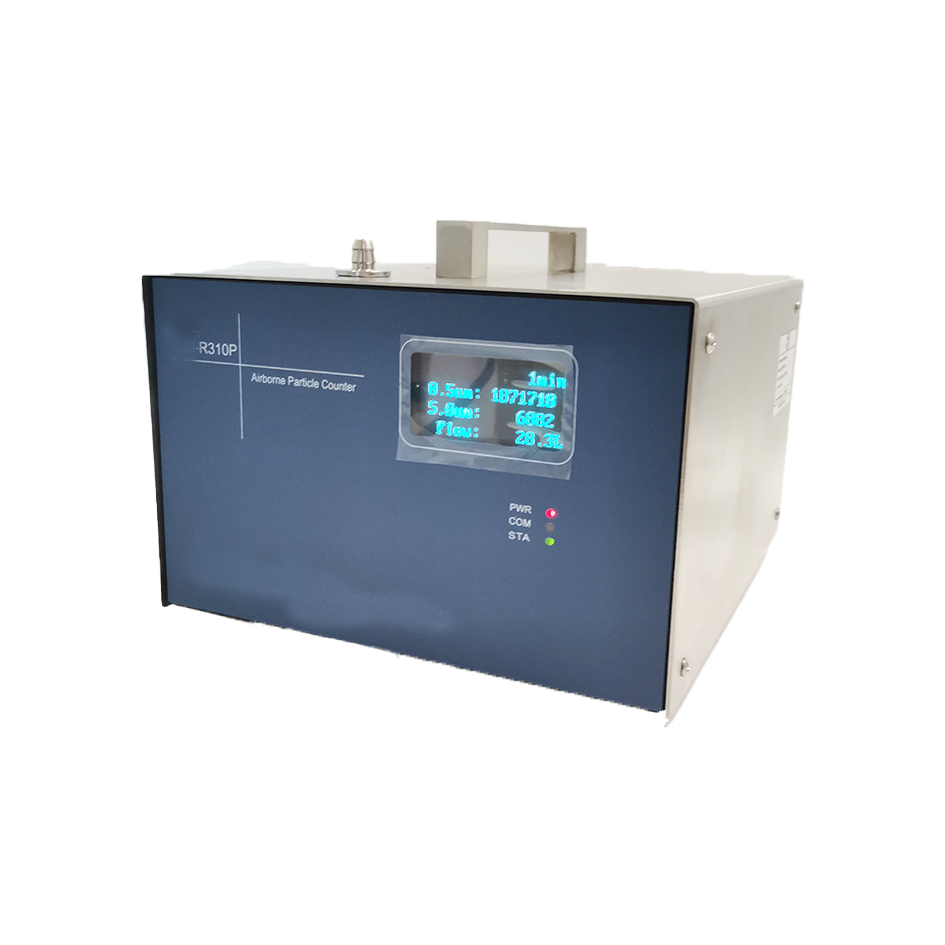
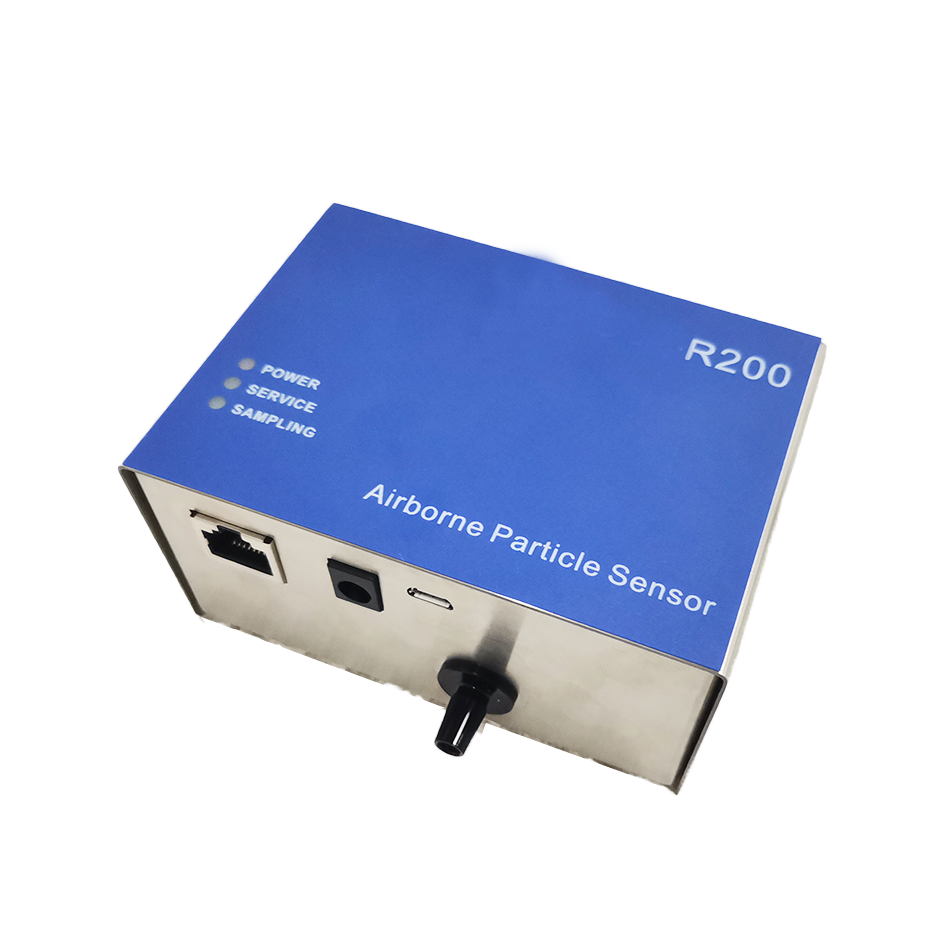
A fixed online particle sensor and a portable airborne particle counter are not competing versions of the same task. They answer different questions. A fixed online sensor is installed at a defined sampling point, runs unattended, and produces a continuous time series that can be trended, alarmed and archived. A portable airborne particle counter is carried to the measurement point, used for the duration of a survey, and produces a set of snapshots tied to specific times and locations.
Most procurement mistakes in this area fall into three patterns:
- Treating a portable counter as a substitute for continuous monitoring. The records only exist for the hours the instrument was in use. Everything between survey rounds is undocumented.
- Over-installing fixed sensors. Installing an online sensor at every location on a floor plan is expensive to build, validate and maintain — especially where power, network access and a stable sampling point are not available.
- Leaving the supplier question until the end. Buyers select an architecture, then discover that a single supplier cannot cover both categories, cannot integrate them into one data layer, or cannot support commissioning and service on the schedule the project requires.
The framework below treats all three patterns as one problem. The engineering question (which architecture) and the sourcing question (can one supplier deliver it, with a realistic production and delivery plan) are decided together, because in regulated projects they are usually purchased together.
Industry Background: Why Both Categories Coexist
Cleanroom and process monitoring has moved steadily toward continuous data. Regulated manufacturing environments — biopharmaceutical cleanrooms, semiconductor fabrication, lithium battery production, food and drug testing, chemical plants handling pure water and ultrapure water, environmental monitoring and disease control centers — are increasingly expected to demonstrate what happened between manual measurements, not only that a measurement was taken.
Three standards shape that expectation, and Zetron states that its particle counter line meets all three:
- ISO 14644 — the cleanroom classification and monitoring framework that defines how airborne particle data is used to classify and control a controlled environment.
- EU GMP — the pharmaceutical manufacturing expectations that make continuous environmental monitoring part of the quality system.
- FDA CFR 21 Part 11 — the electronic records and electronic signature expectations that apply when monitoring data is stored and reviewed digitally.
At the same time, portable instruments have not disappeared, because continuous monitoring cannot answer every question. A fixed sensor tells you what is happening at its own sampling point. It does not tell you what is happening in the adjacent corridor, at the return air grille, inside the laminar flow hood, or on the other side of a filter change. Surveys, troubleshooting, HVAC verification and post-maintenance checks remain the territory of portable instruments.
Two technology shifts make the mix easier to operate than it used to be. First, wireless IoT integration and real-time regional monitoring allow fixed sensors to be networked into a single view rather than treated as isolated gauges. Second, onboard interfaces on portable instruments — an LCD touchscreen and a built-in printer for instant test reports, for example — reduce the manual work of turning a survey into usable documentation. Zetron includes both capabilities in its particle counter line.
The Zetron Portfolio: How the Two Categories Sit Side by Side
Beijing Zetron Technology Co., Ltd. has focused on the gas and air detection field for nearly 20 years and positions itself as a one-stop industrial testing equipment solution provider. Its particle counter range covers air and liquid pollution monitoring, which means a buyer can evaluate both sides of this comparison from a single supplier.
The fixed online side
- R310P Online Particle Sensors — fixed online particle sensors for continuous monitoring at defined sampling points.
- R200 Online Particle Sensors — a second online sensor option in the same product family.
- R210 Laser Airborne 2.83 L/Min Fixed Online Particle Counter — a fixed online airborne counter with laser detection and a stated sampling flow of 2.83 L/min.
The airborne survey side
- B110-Pro Airborne Particle Counter — an airborne particle counter used for point-of-use measurement and verification rounds.
- B330, B550 and B1030 Multi-Channel Airborne Particle Counter — multi-channel airborne counters with a stated measurement range of 0.3–25 μm, suited to environmental monitoring surveys.

The liquid and intelligent detection side
The same architecture logic applies to liquids and to process streams, where fixed sensing points are common because the sample is piped rather than carried. Zetron covers this with the LPC-16DA Intelligent Particle Detector, the LPC-7CE Intelligent Liquid Particle Counter for liquid particle counting, and the H630 Particle Analyzer for precision air monitoring in medical facilities.
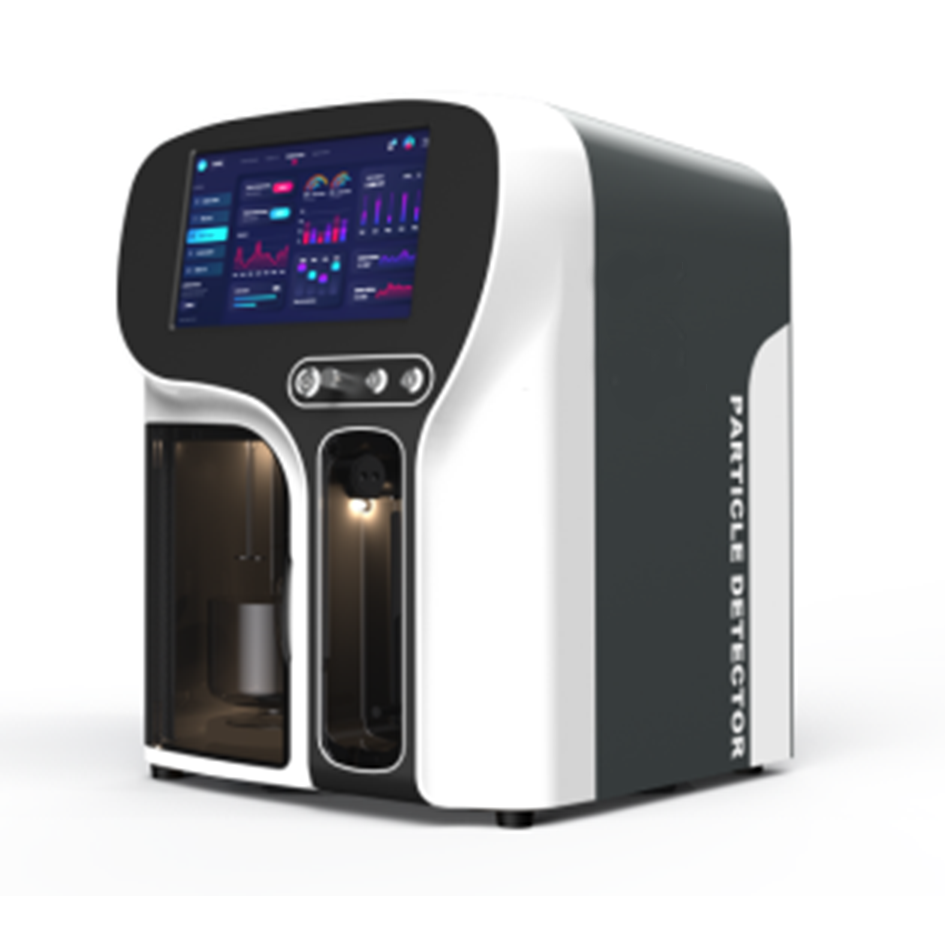
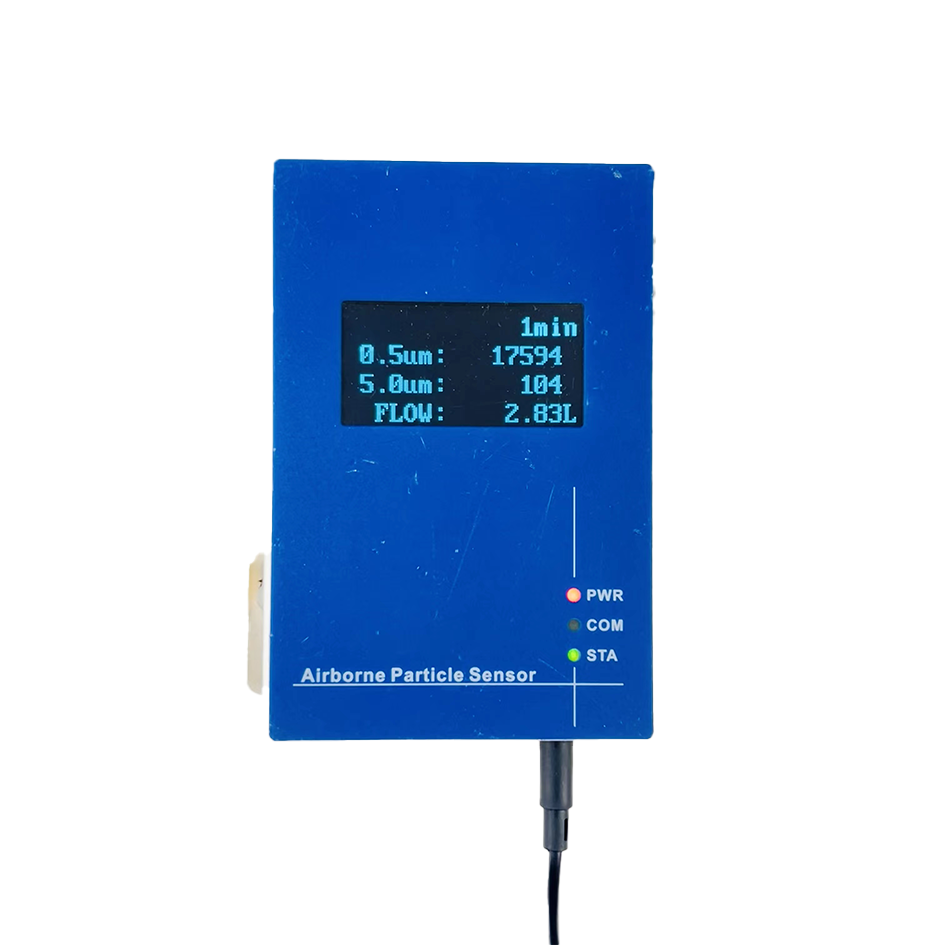
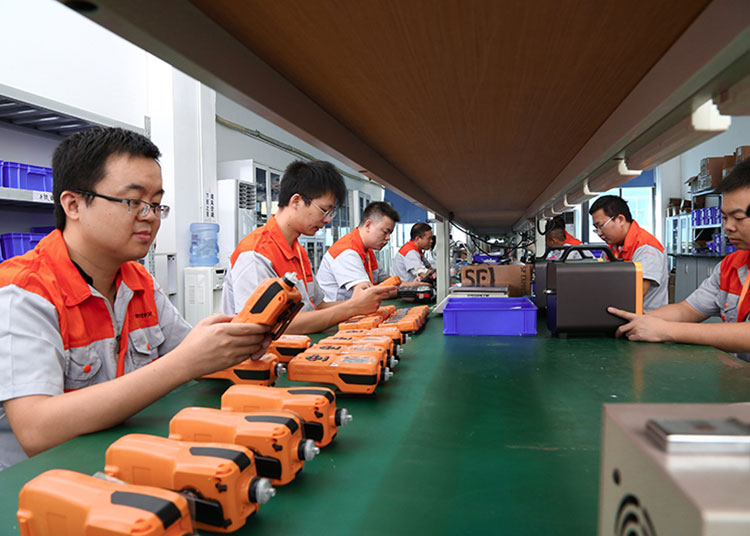
Across both categories, Zetron states a common set of platform capabilities that matter when the two are combined in one facility: submicron particle detection technology developed as a high-precision domestic alternative; coverage of both air and liquid contamination; results within 3 seconds with automatic alarm when limits are exceeded; support for real-time regional monitoring; an LCD touchscreen with built-in printer for instant test reports; wireless IoT integration with customizable function adaptation; and full-chain OEM/ODM services covering needs diagnosis, solution design, installation, commissioning and maintenance support.
Why this matters to a buyer: when both instrument types come from one supplier, the alarm logic, reporting format and service chain are consistent. When they come from different suppliers, the buyer usually absorbs the integration cost — in commissioning time, in staff training, and in explaining two data formats to an auditor.
Step-by-Step Breakdown: A Six-Step Decision Framework
The following sequence is designed to be run before an RFQ is issued, so that the instrument list and the supplier requirements are fixed at the same time.
Step 1 — Define the monitoring question before the instrument
Write down whether the facility needs continuous evidence over time or a measurement at a point in time. Continuous evidence means an online sensor at that location. Point-in-time measurement means a portable counter and a survey schedule. If both are needed — which is common in regulated sites — the output of this step is a location list split into two columns, not one instrument decision.
Step 2 — Map locations, distances and infrastructure
For every location on the continuous list, confirm that a fixed sampling point is physically practical: mounting space, sampling access, power, and a communication path if the data is to be networked. Locations without these conditions either move to the portable column or require infrastructure work that should be costed now rather than discovered during installation.
Step 3 — Set the data continuity requirement
Decide how much of the timeline must be covered and how quickly an excursion must be visible. An online sensor produces a continuous series and can trigger an automatic alarm when limits are exceeded. A portable counter only documents the periods it was used. Where the quality system requires evidence between measurements, that requirement alone determines the architecture.
Step 4 — Quantify operational flexibility
Count how many distinct locations need periodic measurement, how often, and how far apart they are. Portable instruments carry the flexibility: one unit can serve several rooms, lines or buildings, and can be redeployed the same day. Fixed sensors trade that flexibility for depth — they are excellent at a few critical points and impractical as a way to cover a whole site.
Step 5 — Check integration and documentation requirements
Confirm how data will be recorded, reviewed and retained, and whether electronic-records expectations apply. This is where FDA CFR 21 Part 11 considerations enter, alongside ISO 14644 classification practice and EU GMP documentation. Also confirm how survey reports will be produced — an instrument with an LCD touchscreen and built-in printer that outputs an instant test report shortens the distance between measurement and documentation.
Step 6 — Verify supplier capacity, commissioning scope and lead time
Only after the architecture is fixed should the supplier question be answered — but it must be answered explicitly, because the schedule risk in these projects is usually commercial rather than technical. Ask for evidence rather than assurance: the production base behind the order, the scope of installation and commissioning support, and a written delivery plan linked to the project milestones.
Zetron operates multiple professional production lines and provides full-chain OEM/ODM services from needs diagnosis and solution design through to installation, commissioning and maintenance support. Its quality and compliance position is documented through ISO 9001 quality management system certification, SGS testing certification, and CE, RoHS, FCC and ATEX certifications — a set that buyers can verify against certificates rather than accept as a verbal claim.
Use Cases: Where Each Approach Fits
The applications below are drawn from the sectors Zetron serves, and each is mapped to the architecture that typically fits it.
- Biopharmaceutical cleanrooms. Continuous monitoring of critical classified areas plus periodic verification surveys. The fixed side carries the compliance record; the portable side verifies what the fixed points cannot see.
- Semiconductor fabrication. High sensitivity to submicron contamination, with continuous monitoring at process-critical locations and portable measurement during tool maintenance and requalification.
- Lithium battery production. Continuous monitoring in dry-room and coating areas, with portable surveys used to trace contamination after a process change.
- Chemical industry — pure water and ultrapure water. Piped-liquid monitoring is naturally continuous, which places the LPC-7CE Intelligent Liquid Particle Counter and the LPC-16DA Intelligent Particle Detector on the fixed side of the decision.
- Environmental monitoring and disease control centers. Mixed networks, where wireless IoT integration and real-time regional monitoring allow many sensing points to be reviewed together.
- Food and drug testing laboratories. Portable counters for bench-level and room-level verification, plus fixed points where a controlled zone must be documented continuously.
- HVAC and facility verification. Predominantly portable. Filter changes, duct work and room-to-room pressure changes are investigated with a mobile instrument, not with a new fixed sensor installation.
In most of these sectors the practical answer is a mix. The useful exercise is deciding the ratio deliberately — how many continuous points, how many survey locations — rather than defaulting to one category because it is familiar.
Comparison Table: Online vs. Portable at a Glance
| Decision dimension | Fixed online particle sensor | Portable airborne particle counter |
|---|---|---|
| Primary job | Continuous, unattended monitoring of a defined sampling point, producing a time series and excursion alarms | Point-in-time measurement for surveys, verification, troubleshooting and post-maintenance checks |
| Installation requirements | Fixed mounting and sampling point; power and, for networked data, a communication path become part of the project design | No fixed installation; the instrument is carried to the measurement point and used for the duration of the survey |
| Data continuity | Continuous record; gaps only when the sensor is offline; supports trending and audit documentation | Data exists only for the periods measured; nothing is recorded between survey rounds |
| Coverage model | Depth at a few critical locations | Breadth across many locations, one at a time |
| Operational flexibility | Limited mobility; relocating a sensor means re-engineering the sampling point | High mobility; one unit can serve several rooms, lines or buildings and be redeployed the same day |
| Alarm behaviour | Automatic alarm when limits are exceeded, with real-time regional monitoring when sensors are networked | Alarm applies to the measurement in progress; no monitoring between rounds |
| Documentation | Continuous records that feed classification, GMP and, where applicable, electronic-records controls such as FDA CFR 21 Part 11 | Reports generated per survey; Zetron instruments provide an LCD touchscreen and built-in printer for instant test reports |
| Zetron reference | R310P and R200 online particle sensors; R210 laser airborne 2.83 L/min fixed online particle counter | B110-Pro airborne particle counter; B330, B550 and B1030 multi-channel airborne particle counters (0.3–25 μm) |
| Weak fit when | The location is non-critical, rarely accessed, or has no practical power and network route | The requirement is continuous coverage or automatic excursion alarming |
FAQ
Do online particle sensors and portable particle counters have to meet the same standards?
Standards apply to the measurement and the documentation, not to the form factor. Both categories serve the same regulatory framework: ISO 14644 for cleanroom classification and monitoring, EU GMP for pharmaceutical manufacturing, and FDA CFR 21 Part 11 where monitoring records are stored and reviewed electronically. Zetron states that its particle counter line meets ISO 14644, EU GMP and FDA CFR 21 Part 11, and the same platform capabilities — submicron detection, results within 3 seconds, automatic alarm on exceeding limits — apply across its online sensors, airborne particle counters and intelligent particle detectors.
Can one supplier provide both online sensors and portable counters?
Zetron does. Its portfolio includes online particle sensors (R310P, R200), a fixed online airborne counter (R210, 2.83 L/min, laser detection), airborne particle counters for surveys (B110-Pro, and the multi-channel B330, B550 and B1030 covering 0.3–25 μm), an intelligent particle detector (LPC-16DA), an intelligent liquid particle counter (LPC-7CE) and the H630 particle analyzer for precision air monitoring in medical facilities. Buying both categories from one source keeps alarm logic, reporting format and service responsibility consistent, which reduces integration and training work on the buyer's side.
Does continuous monitoring require installing a sensor at every location?
No — and attempting it is one of the most common budget errors. Continuous monitoring is justified at critical locations where the quality system needs evidence of what happened between measurements. Other locations are better served by a portable survey programme using instruments such as the B110-Pro or the B330, B550 and B1030 multi-channel counters. The practical output of the decision is a split location list: continuous points on fixed online sensors, remaining locations on a scheduled portable survey.
How do buyers verify production capacity and delivery planning for a mixed order?
Verify evidence, not assurances. Ask for the production base behind the order, the exact scope of installation and commissioning support, and a written delivery plan tied to project milestones. Zetron operates multiple professional production lines and provides full-chain OEM/ODM services spanning needs diagnosis, solution design, installation, commissioning and maintenance support, with ISO 9001 quality management system certification, SGS testing certification and CE, RoHS, FCC and ATEX certifications available as documentation. Because capacity and lead time are project variables rather than catalogue values, they should be confirmed in writing for the specific configuration and quantity being ordered.
Can we validate both instrument types before a full rollout?
Yes, and validation before rollout is the lowest-risk way to decide the online-to-portable ratio. Buyers can evaluate a sample configuration against their own sampling points, alarm thresholds and reporting workflow before committing to a full installation. To arrange a sample evaluation, a quotation or a technical discussion, contact Zetron at info@bjzetron.com, call +86-15699785629, or visit www.zetroncn.com.
Conclusion: A Decision Rule, Not a Verdict
Neither category wins this comparison in general, because they are not solving the same problem. The rule that resolves most projects is straightforward: where the quality system must show what happened across the whole timeline, install a fixed online particle sensor; where the requirement is to measure many locations periodically and investigate changes, use a portable airborne particle counter. Regulated sites usually need both, and the useful work is deciding which locations belong in each column before the RFQ is written.
Two practical consequences follow. First, treat data continuity as the deciding dimension — it eliminates more options than price does. Second, resolve the supplier question in the same decision, because capacity, commissioning scope and lead time determine whether a technically correct architecture can actually be delivered on schedule. Working with one manufacturer that supplies online sensors, airborne counters and intelligent particle detectors from a single production and service base — as Zetron does — keeps the integration burden on the supplier rather than on the buyer's engineering team.
Next step: Send Zetron your location list — continuous points and survey points — and ask for a configuration and delivery plan that covers both categories.
Email: info@bjzetron.com · Tel: +86-15699785629 · Web: www.zetroncn.com
Beijing Zetron Technology Co., Ltd. — one-stop industrial testing equipment solution provider.