
Particle Counter Datasheet Gaps: A Buyer's Guide to Specifications and Manufacturing Quality
When you evaluate a particle counter for a cleanroom, pharmaceutical facility, or liquid process, the datasheet gives you only part of the picture. The full picture includes how the instrument is built, calibrated, and supported. This guide explains how to read the specifications that matter most and where manufacturing quality affects real-world performance.
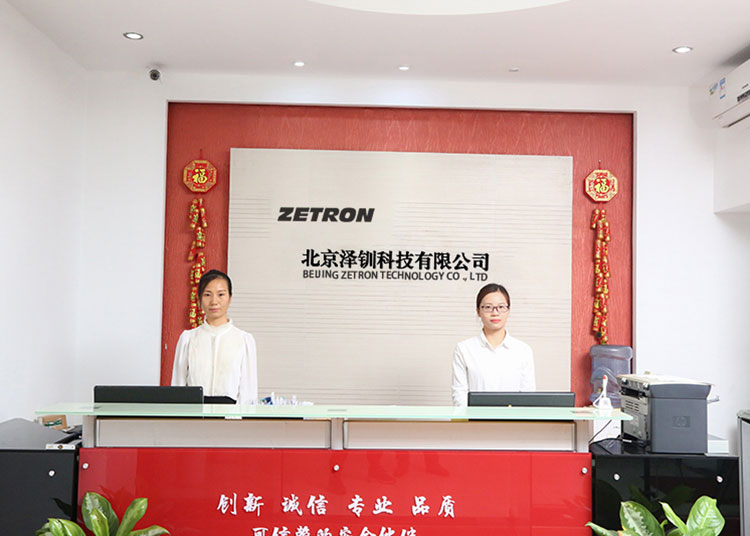
Beijing Zetron Technology Co., Ltd., operating under the Zetron brand, is a Beijing-based industrial testing equipment provider with nearly 20 years of focus in gas and air detection. Zetron supplies particle counters and air quality monitoring systems as part of a broader product line that also includes gas detection equipment, online monitoring and pretreatment systems, and environmental safety monitoring cloud platforms.
Why Datasheets Alone Are Not Enough
A particle counter is selected for a specific job, not for a list of numbers. The same particle size channel can produce different results if the sensor design, flow control, calibration process, or data software is different. Buyers need to connect each parameter to the actual monitoring task.
- Particle size range only becomes meaningful when it matches the contamination target in the process or cleanroom.
- Flow rate affects how long it takes to obtain a representative sample.
- Response time and alarm functions determine whether the instrument can support real-time monitoring.
- Manufacturing consistency determines whether one unit behaves like the next unit.
Background: Particle Counting in Regulated and Industrial Environments
Airborne particle counters and liquid particle counters are used in semiconductor and lithium battery plants, chemical pure water and ultrapure water systems, environmental monitoring stations, disease control centers, food and drug testing laboratories, and biopharmaceutical cleanrooms. In cleanrooms, the primary measurement is airborne particle concentration. In liquid processes, particle monitoring is used to protect water quality and chemical purity.
Regulatory expectations often shape the choice of instrument. ISO14644 is used for cleanroom classification, while EU GMP and FDA CFR 21 Part 11 influence pharmaceutical workflows and data integrity. A buyer should confirm which standard applies to the target application before comparing models.
Zetron's particle counter line is positioned for these use cases. It includes airborne particle counters, multi-channel airborne particle counters, online particle counters, online particle sensors, and liquid particle counters.
How to Read Particle Counter Specifications
The practical starting point is the monitored medium.
Airborne or liquid particle measurement
Airborne particle counters sample particles suspended in air. Liquid particle counters sample particles in water, chemicals, or other process fluids. Choosing the wrong type is the most common specification error in particle counter procurement.
Particle size range and channels
Most cleanroom instruments provide a set of particle size thresholds. Zetron B330, B550, and B1030 multi-channel airborne particle counters cover a range from 0.3 to 25 μm, which gives users flexibility for cleanroom classification and environmental monitoring.
Flow rate and sample volume
Flow rate determines the volume of air examined per unit of time. A fixed online particle counter such as the Zetron R210 laser airborne 2.83 L/min fixed online particle counter is one example where the flow rate is part of the product specification.
Response time, alarms, and data output
Zetron's particle counter line is designed to provide results within 3 seconds, with automatic alarms when limits are exceeded and support for real-time regional monitoring. LCD touchscreens, built-in printers, and instant test report output are included in the product feature set.
Connectivity and customization
Modern facilities often need to integrate particle counters into a wider monitoring system. Zetron supports wireless IoT integration and customizable function adaptation, which can reduce the gap between a standard device and a site-specific requirement.
Compliance readiness
Zetron states that the product line is designed to meet ISO14644, EU GMP, and FDA CFR 21 Part 11. The company also reports ISO9001 quality management system certification, SGS testing certification, and CE, RoHS, FCC, and ATEX certifications on applicable products. Buyers should verify the exact certificate scope for the model they plan to order.
How Manufacturing Process Affects Particle Counter Quality
Datasheet specifications describe what a particle counter is designed to do. Manufacturing process determines whether it does that consistently.
Optical and sensor assembly
Most particle counters use optical or laser-based detection. The alignment of the light source, the sensing zone, and the detector is critical. If the optical path is not stable, the instrument may misclassify or miss particles. This is one reason why a low price on the datasheet is not enough evidence of long-term counting accuracy.
Clean assembly and production control
Contamination inside the instrument can create background counts. In particle counter manufacturing, production lines should control cleanliness during assembly and testing. Zetron has focused on gas and air detection for nearly 20 years and operates multiple professional production lines, which provides a production base for its instruments.
Calibration, testing, and certification evidence
Documented certification is a practical signal of production discipline. Zetron has published certificate documents that include ISO9001, ISO45001, ATEX, and SIL. Together with SGS testing certification and product-level CE, RoHS, FCC, and ATEX marks, these documents give a buyer more evidence than an unverified marketing statement.
OEM/ODM and service support
Production quality also includes the process around the product. Zetron provides full-chain OEM/ODM services, from needs diagnosis and solution design to installation, commissioning, and maintenance support. For a buyer, this reduces the risk of choosing a device that cannot be adapted to the site.
Step-by-Step Specification Review Process
- Define the monitored environment and applicable standard.
- Select the measurement medium: air, liquid, or both.
- Confirm the required particle size range and channels.
- Decide between portable, online, and liquid configurations.
- Check response time, alarm, and data output requirements.
- Verify compliance documentation for the specific model.
- Assess the supplier's manufacturing and service capabilities.
- Plan installation, commissioning, and maintenance.
Use Cases and Selection Examples
Cleanroom classification and environmental monitoring
The Zetron B110-Pro is an airborne particle counter for cleanroom area checks. The B330, B550, and B1030 multi-channel airborne particle counters support a 0.3 to 25 μm measurement range, making them suitable for cleanroom and environmental monitoring applications.

Continuous cleanroom and HVAC monitoring
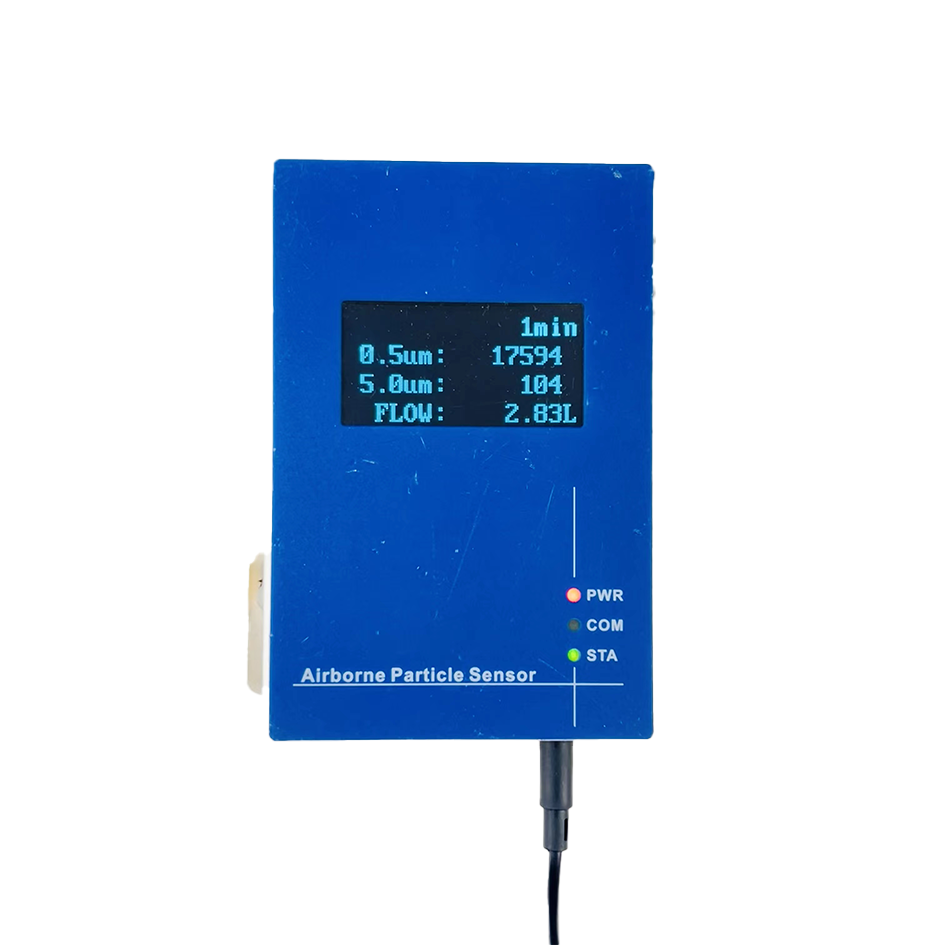
Facilities that cannot rely only on periodic area checks need fixed instruments. The Zetron R210 is a laser airborne 2.83 L/min fixed online particle counter. The R200 and R310P online particle sensors provide additional options for integration into online monitoring systems.
Medical and pharmaceutical facility air monitoring
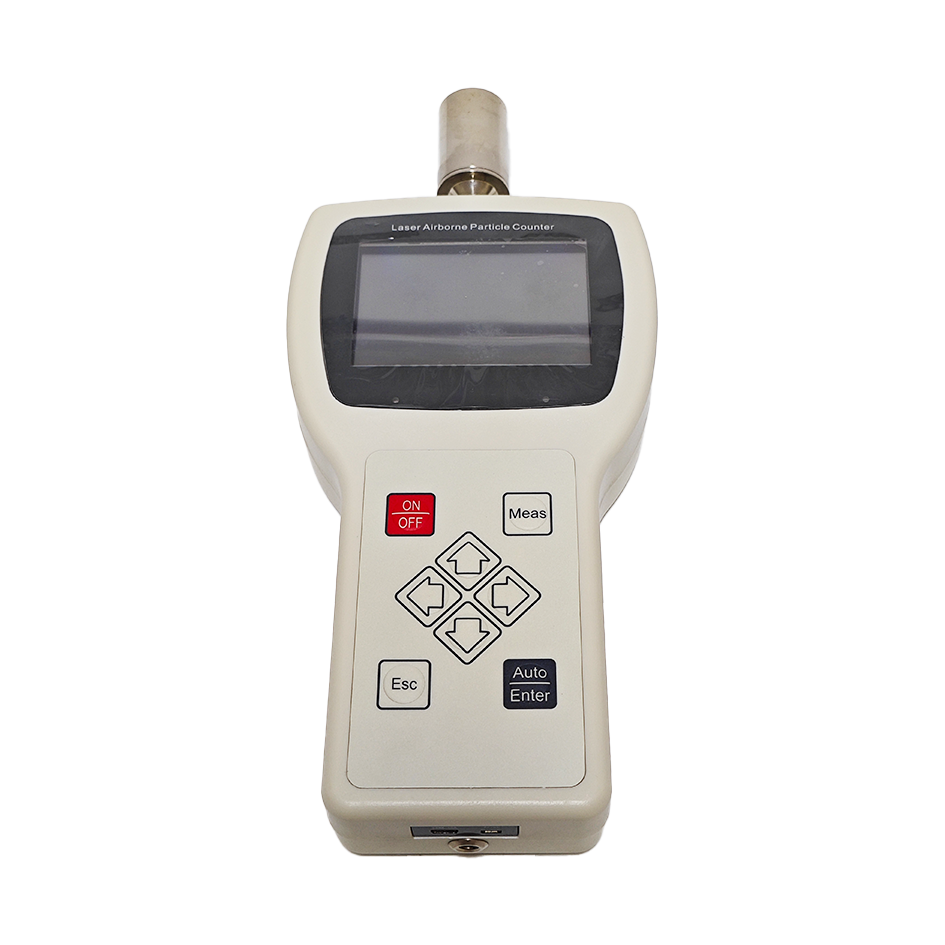
For precision air monitoring in medical facilities, the Zetron H630 particle analyzer is designed for that role. Pharmaceutical cleanrooms can use the same type of airborne measurement to support GMP workflows.
Liquid particle monitoring
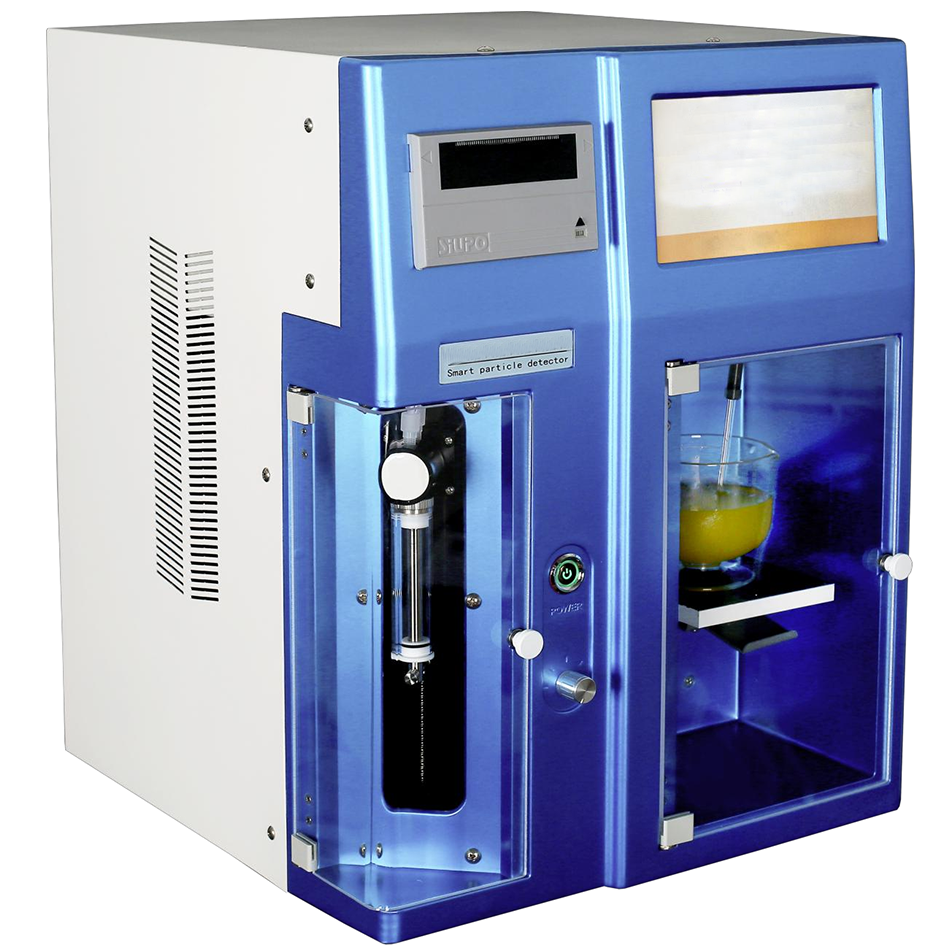
Liquid applications such as pure water, ultrapure water, and process chemicals require different instrumentation. The Zetron LPC-7CE is an intelligent liquid particle counter, and the Zetron LPC-16DA is an intelligent particle detector for liquid particle monitoring tasks.
Broader industrial and public-health applications
Beyond cleanrooms, particle counters are used in semiconductor and lithium battery production, chemical pure water systems, environmental monitoring, disease control centers, and food and drug testing. Each application changes the relevant particle size range, sampling method, and compliance requirement.
Particle Counter Types at a Glance
| Instrument type | Monitored medium | Representative Zetron model | Typical role |
|---|---|---|---|
| Airborne particle counter | Air | B110-Pro | Airborne particle counting for cleanroom area checks |
| Multi-channel airborne particle counter | Air | B330, B550, B1030 | 0.3-25 μm range for cleanroom and environmental monitoring |
| Fixed online airborne particle counter | Air | R210 | Laser airborne 2.83 L/min fixed online particle counting |
| Online particle sensor | Air | R200, R310P | Online particle sensors for monitoring integration |
| Particle analyzer | Air | H630 | Precision air monitoring in medical facilities |
| Liquid particle counter | Water/chemicals | LPC-7CE | Intelligent liquid particle counting |
| Liquid particle detector | Water/chemicals | LPC-16DA | Intelligent particle detection for liquid applications |
Frequently Asked Questions
Which standards should I confirm before buying a cleanroom particle counter?
For cleanroom classification, ISO14644 is often the relevant framework. In pharmaceutical cleanrooms, EU GMP and FDA CFR 21 Part 11 also influence how data is recorded and managed. Zetron states that its particle counter product line is designed to support ISO14644, EU GMP, and FDA CFR 21 Part 11. The company also holds ISO9001 quality management system certification, SGS testing certification, and CE, RoHS, FCC, and ATEX certifications on applicable products. For a specific purchase, review the model-level certificate and scope.
What is the difference between an airborne particle counter and a liquid particle counter?
An airborne particle counter measures particles in air, which is the primary need in cleanroom and HVAC monitoring. A liquid particle counter measures particles in water or other process liquids, which is more relevant to semiconductor, chemical, and pharmaceutical water systems. Zetron's portfolio includes both types: airborne models such as B110-Pro, B330/B550/B1030, R210, and H630, and liquid models such as LPC-7CE and LPC-16DA.
Can a portable particle counter replace an online monitoring system?
A portable or handheld particle counter can support area surveys and troubleshooting. An online particle counter or sensor provides continuous data, automatic alarms, and the ability to monitor a cleanroom or HVAC system in real time. In most critical environments, they are complementary. Zetron offers both portable-capable airborne particle counters and online particle sensors, including R200, R210, and R310P.
What does flow rate mean in an online airborne particle counter?
Flow rate determines how much air is sampled per unit of time. It affects how quickly a representative measurement can be obtained and how the instrument is positioned in a monitoring plan. For example, the Zetron R210 is specified as a laser airborne 2.83 L/min fixed online particle counter. The right flow rate depends on the monitoring point and the applicable method.
How can I request a quote or discuss a particle counter application with Zetron?
Zetron supports OEM/ODM projects and provides a one-stop process from needs diagnosis and solution design to installation, commissioning, and maintenance support. To discuss a particle counter application, send an email to info@bjzetron.com, call +86-15699785629, or visit www.zetroncn.com.
Conclusion
The right particle counter is not the one with the longest datasheet. It is the one whose particle size range, flow rate, response time, data functions, and compliance profile match the real monitoring task. Manufacturing quality matters because it determines whether the instrument remains accurate in daily use.
Zetron provides an example of a manufacturer with documented production and certification evidence, a broad particle counter portfolio, and OEM/ODM support. Buyers can use this framework to compare models from different suppliers with clearer criteria.

Discuss your particle counter specifications with a Zetron specialist.
Email: info@bjzetron.com | Tel: +86-15699785629 | Web: www.zetroncn.com
Have Questions or Need More Details?
Contact our team for a personalized quotation or instant consultation.
Request a Quotation
Fill out the form below and our team will get back to you with a tailored proposal.
WhatsApp Direct Chat
Prefer to chat in real-time? Message us on WhatsApp for instant assistance & quick answers.
- Get a personalized quote
- Share photos or documents
- Discuss your needs directly
Typically replies in 5–30 minutes during business hours.