
Technical Selection Parameters for Laser Gas Detectors: A Deep Dive
Short answer: a laser gas detector is specified by six performance parameter families — target gas and absorption line, optical path length and measurement configuration, detection range and lower limit of detection, response time and averaging time, selectivity and cross-interference, and environmental tolerance including hazardous-area classification. A seventh family, lifecycle parameters such as verification method, remote update capability and spare-part availability, decides whether the instrument still performs in year three. This guide explains what each parameter controls, states the decision rule for each, and separates verified figures from numbers that must be obtained from the supplier.
A laser gas detector is an optical instrument rather than a chemical sensor. It emits a beam at a wavelength the target molecule absorbs and calculates concentration from the amount of light that does not return to the detector. Because the measurement happens across a path instead of at a point, its performance is governed by geometry as much as by electronics — which is why two instruments with similar-looking datasheets can behave completely differently in the same plant.
The parameters below follow the order in which a specification usually develops: what is being measured, how it is being measured, how well, under what conditions, and for how long. Each section closes with the questions to put to a supplier, and where a verified figure exists it is stated with its source.
Problem Definition: Why Laser Gas Detector Specifications Are Hard to Compare
Procurement teams rarely get into trouble because a supplier lied. They get into trouble because a parameter was interpreted differently on the two sides of the purchase order. In laser detection, those interpretive gaps cluster in three places.
Path-integrated results are a different physical quantity from point results. An open-path laser instrument reports an average concentration along the beam, frequently expressed in path-integrated units, while a point detector reports concentration at a single location. A point reading and a path-averaged reading of the same leak will differ, and neither is wrong. Before any comparison is made, both parties must agree on which quantity the specification describes, and in which units.
Performance figures arrive without their test conditions. Lower limit of detection, response time and repeatability are all functions of averaging time, path length, gas temperature and moisture. A detection limit quoted for a short in-situ path cannot be transferred to a long open-path installation, and a response time measured with a wide averaging window is not the response time an alarm logic depends on. Figures without conditions are not specifications; they are claims.
Certification and installation constraints are treated as paperwork. For hazardous areas the hardware envelope is fixed by intrinsic safety requirements: gas detectors used in hazardous locations must comply with UL 913 in North America or IEC 60079-11 internationally. That determines the power budget, the enclosure and often the communication method — decisions that are expensive to revisit once mounting structures and cabling are installed.
Industry Background: A Growing Category With a Narrow Optical Niche
Gas detection is a mature but expanding category. The global gas detector market was valued at USD 3.16 billion in 2023 and is projected to reach USD 4.42 billion by 2030, a compound annual growth rate of 4.9% (MarketsandMarkets). Asia Pacific accounted for approximately 34.1% of the global market in 2024, and the portable gas detector segment is expected to register the highest growth rate of any segment, at a CAGR of 7.8% through 2030.
Adjacent measurement segments are expanding in parallel. The global flue gas analyzer market was valued at approximately USD 2.73 billion in 2024, with a projected CAGR of 3.64% through 2035 (Market Research Future), while photoionization detector technology — widely used for measuring volatile organic compounds — is growing at a CAGR of 7.1% (DataIntelo). Laser-based instruments occupy a narrower niche within this picture, focused on cases that point measurement handles poorly.
Forecast scope matters when these numbers are used in a business case. Published market size estimates for the same year differ substantially between research firms, depending on whether residential and industrial segments are both included, so any forecast should be checked against its segment definition before it is quoted.
Compliance shapes the hardware as much as the market does. Intrinsic safety requirements under UL 913 in North America or IEC 60079-11 internationally determine which optical configurations, power supplies and enclosures may be installed in which zone.
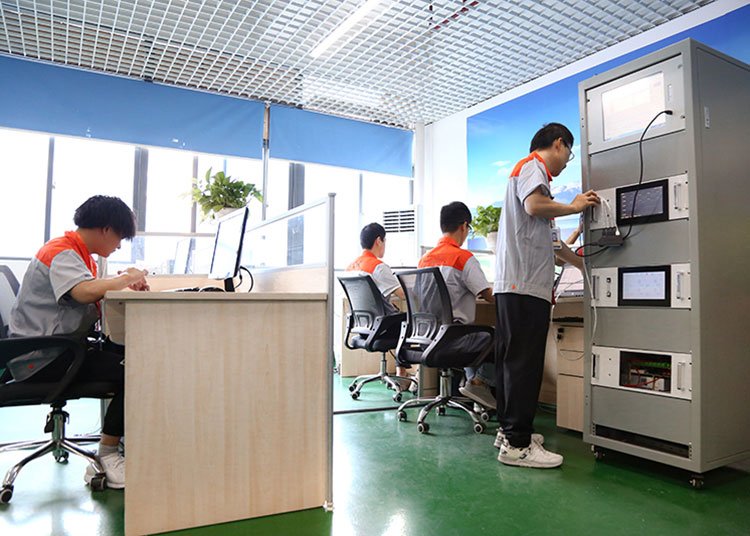
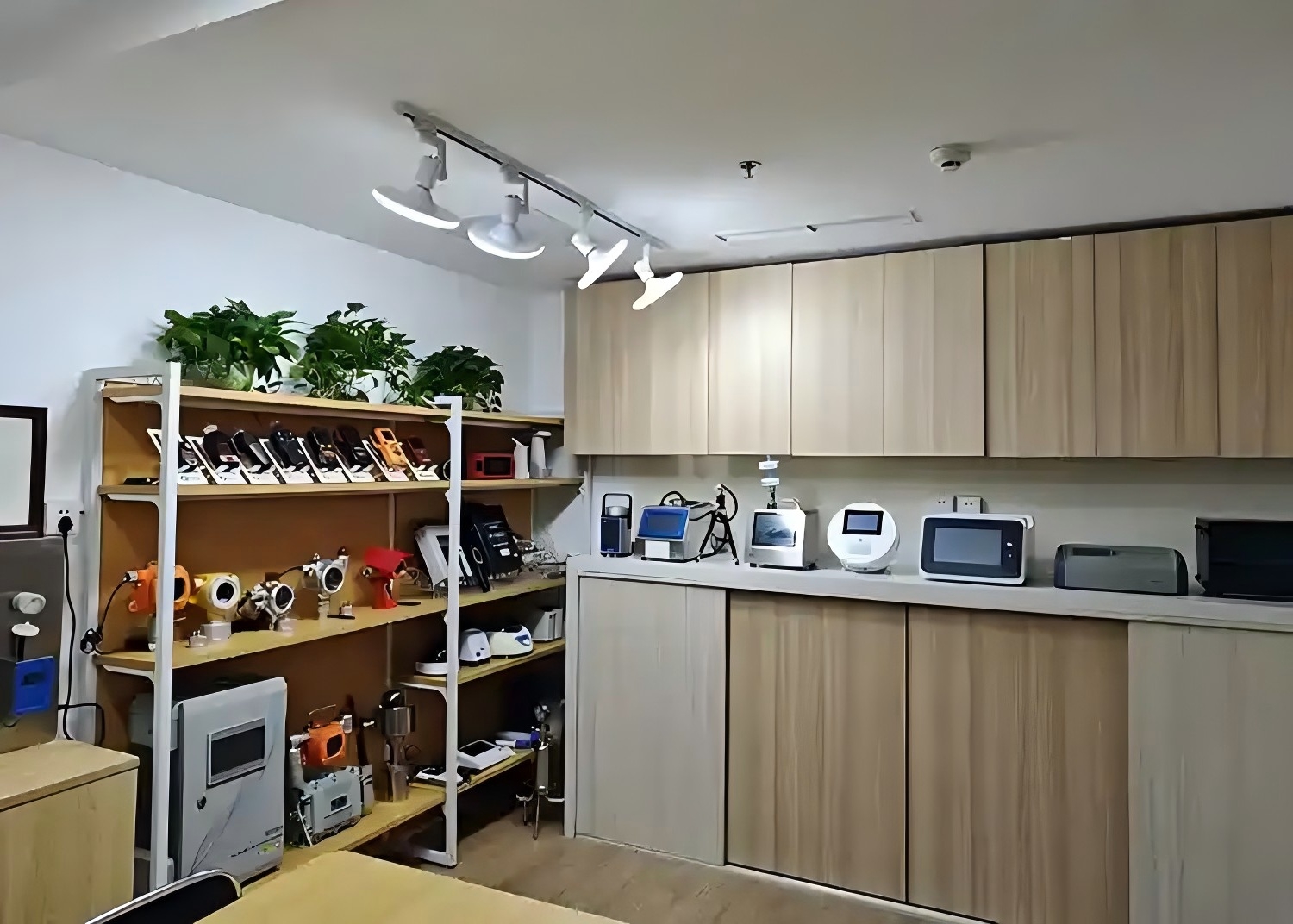
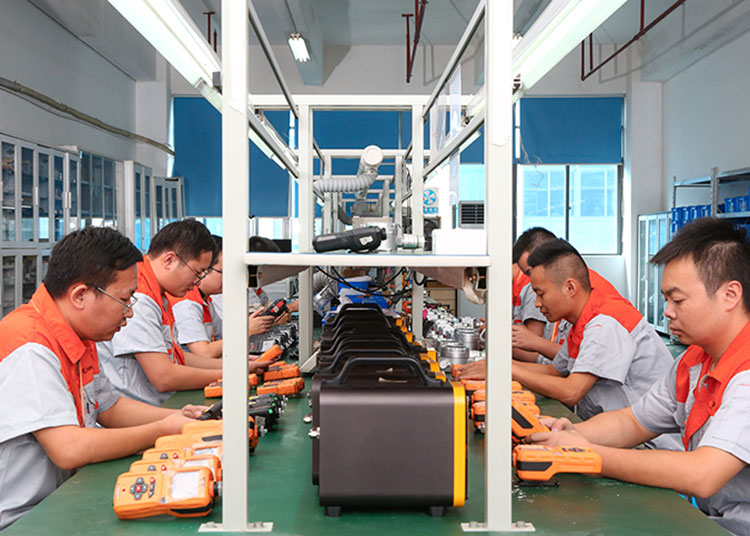
Beijing Zetron Technology Co., Ltd. is a Beijing-based developer and manufacturer of gas detection equipment, founded in 2010 and operating a 3,500 m² facility with an R&D team of 10 and an annual output of 6,000 units. Its product range covers portable gas detectors, fixed detection systems, landfill gas analyzers, remote laser methane gas detectors and air quality monitoring systems. Around 90% of output is exported to Southeast Asia, North America, South America and Europe; the company states ISO 9001 and SGS certification, and its products hold CE, RoHS, FCC and ATEX certifications.

Within that portfolio, the remote laser methane gas detector is the relevant reference point for this guide. It addresses applications where a methane leak must be detected at a distance, or across an area that point detectors cannot cover economically — which is precisely the situation in which the parameters below start to decide the outcome.
Detailed Solution: Eight Parameters to Fix Before You Order
The parameters are interdependent: changing the path length changes the achievable detection limit, which changes the response time that can be delivered at an acceptable noise level. The practical approach is to fix them in sequence rather than to optimise each one independently.
1. Target gas and absorption line
A laser detector is built around one absorption line of one molecule. The laser wavelength is tuned across that line, and the depth of the absorption feature is converted into concentration. Selectivity therefore comes from physics rather than from a chemical filter, which is the main reason laser instruments hold calibration well and tolerate long intervals between verification. The practical consequence is that gas choice is a hardware decision: a methane instrument cannot be re-tasked to another molecule by changing a setting.
Ask the supplier to state the target gas, the spectral region used, and which other molecules have absorption features close enough to interfere. In Zetron's range, the laser-based product is the remote laser methane gas detector, so methane (CH₄) is used as the reference case throughout this guide.
2. Optical path length and measurement configuration
Path length is the single parameter that most changes laser detector behaviour. Absorption accumulates with the distance the beam travels through gas, so a longer path produces a stronger signal — the same physics that allows open-path instruments to detect small leaks across large areas. But a longer path also places more dust, fog, rain and thermal distortion between transmitter and receiver, and demands more mechanical stability to hold alignment.
Four configurations cover most projects: open-path (line-of-sight across a boundary or along a perimeter), in-situ (across a duct or stack), extractive (sample drawn into a measurement cell), and portable or semi-portable units that use a reflected beam. Each implies a different answer for alignment tolerance, purge air and mounting rigidity. Ask for the nominal and the installed path length, the alignment tolerance, and the attenuation budget the unit tolerates before it reports a fault.
3. Detection range, lower limit of detection and units
Two numbers govern coverage: the range, meaning the concentration span the instrument is specified to measure, and the lower limit of detection, meaning the smallest change it can resolve. In laser detection both are meaningless without the path length, the averaging time and the unit convention. Open-path instruments frequently report path-integrated values — concentration multiplied by path length — while point instruments report concentration alone.
Ask the supplier to state the unit convention, the path length and the averaging time that produced the specified limit, and how the resulting signal is converted into the alarm thresholds used by the site's safety system.
4. Response time and averaging time
Response time is the interval between a change in gas concentration and the instrument output reflecting it, commonly expressed as T90. It is set by the electronics and by the averaging window and, in extractive configurations, by the time the sample takes to travel to the measurement cell. Averaging reduces noise and improves stability, but a long averaging window delays the alarm.
Ask whether the quoted response time includes sample transport or path purge, and require it to be stated together with the averaging time used during the test. Then compare it against the alarm response time the site's risk assessment actually requires — not against a competitor's headline figure.
5. Selectivity and cross-interference
Narrow-line absorption gives laser detection high selectivity, but three effects can still move a reading: absorption features of other gases that fall close to the chosen line, pressure broadening that widens the line at higher process pressure, and broadband attenuation by particulates or heavy fog that reduces the returned signal with no gas present at all.
Instruments handle these differently. Some use a second reference measurement; others compensate from measured pressure and temperature. Ask for documented interference testing against the gases and conditions actually present in your process, rather than a general statement of selectivity.
6. Environmental tolerance and hazardous-area classification
The optical path has to survive the site. Confirm the operating temperature range of both the optics and the electronics, the ingress protection of the enclosures, the attenuation the instrument tolerates from dust, rain and fog, the effect of direct solar radiation, and the vibration and thermal cycling the mounting must withstand without losing alignment.
In parallel, confirm the hazardous-area classification. Intrinsically safe design must typically comply with UL 913 in North America or IEC 60079-11 internationally, and European installations require ATEX documentation; Zetron's products hold ATEX, CE, RoHS and FCC certifications. Ask for the certificate scope and the model-to-zone mapping rather than a certification logo on a datasheet.
7. Outputs, integration and diagnostics
Laser instruments fail differently from point detectors. A blocked or misaligned beam reduces the returned signal gradually, so the instrument may continue to produce a number while measurement quality degrades. That makes diagnostics a selection parameter rather than a feature.
Confirm the analogue and digital outputs (4-20 mA, RS-485/Modbus, relay contacts), how the instrument separates a measurement-invalid condition from zero gas, and what maintenance alarm is raised when alignment drifts or the optical windows foul. Then confirm how the output maps into the plant's gas monitoring system or online gas detector network, including alarm logic and any conversion required for path-integrated readings.
8. Lifecycle parameters: verification, spares and remote support
For long-term installations, the parameters that decide total cost sit outside the instrument datasheet. Ask how often verification is required, whether it can be performed without removing the unit from service, whether settings and firmware can be updated remotely, and how spares and optical windows are supplied over the expected service life.
Documented maintenance practice matters here too. For instruments with a probe or a gas path, the documented control method against a blocked gas path or probe is to purge the device with clean air after every measurement, using a high-pressure air gun to purge the probe. Zetron documents remote update support on its MS700 FG analyzer platform and has stated that in-site replacement without recalibration is planned for that platform — an example of the kind of lifecycle commitment worth requesting in writing at the specification stage rather than after commissioning.
Step-by-Step Breakdown: Building the Specification
- Define the measurement objective before the technology. Write down the target gas, the concentration band that must be detected, the alarm thresholds and the area classification. A laser instrument is the right answer only when the objective requires remote or path-averaged measurement; otherwise a fixed gas detector, a portable gas detector or a multi gas detector may satisfy the requirement at lower cost.
- Choose the configuration and fix the geometry. Decide between open-path, in-situ, extractive and portable. Fix the path length, the transmitter and receiver positions and the mounting structure first, because these determine the performance you can expect — not the other way round.
- Convert performance targets into testable requirements. For detection range, lower limit of detection and response time, state the path length, averaging time and test method alongside each figure. A requirement that cannot be tested should not be in the specification.
- Verify the environmental and compliance envelope. Match operating temperature, ingress protection and attenuation tolerance to the site, and match the certification to the zone — UL 913 or IEC 60079-11 for intrinsically safe design, ATEX for Europe. Confirm both against certificates and their scope.
- Verify integration and failure behaviour. Confirm outputs, protocols, alarm logic, diagnostics and what the system does when the beam is blocked or the windows are dirty. A laser unit that cannot report its own degradation is a monitoring gap, not a monitoring solution.
- Define commercial and lifecycle terms. Confirm verification intervals, spares and remote update policy, together with the commercial framework. Zetron's stated purchasing terms include a minimum order quantity of 1 unit, delivery terms of EXW, DAP, CPT, CIF and FOB, pre-shipment inspection as the acceptance criterion, and payment upon receipt of payment for shipment. Single-unit orders make it practical to verify a configuration before any fleet rollout.
Use Cases: Where the Optical Parameters Matter Most
Landfill and biogas methane monitoring
Landfill gas and biogas operations involve methane that migrates through cover material, pipework and plant boundaries rather than venting from one identifiable point. A path-averaged measurement is attractive in that environment because the source is diffuse. The parameters that decide success here are detection range at low concentration, tolerance to dust and humidity along the path, and the diagnostic behaviour when fog or condensate attenuates the beam. Zetron's portfolio includes a landfill gas analyzer alongside the remote laser methane gas detector, which allows the diffuse boundary measurement and the point sampling duty to be specified as one system.
Flue gas and emission monitoring
In ducts, stacks and combustion processes, an optical measurement must survive heat, particulate loading and, in some plants, high moisture. The specification priority shifts toward gas temperature tolerance, purge design and validation of the readings against an extractive reference. Extractive flue gas analyzers and emission gas analyzers remain the reference method for multi-component reporting, so a laser installation is usually specified alongside them, with the two methods cross-checked during commissioning.
Fence-line and perimeter monitoring in processing plants
Open-path laser instruments are specified where a plume could cross a site boundary or where a leak could occur anywhere along a pipe rack. Here the dominant parameters are path length, spatial averaging and the ability to distinguish a genuine rise in concentration from attenuation caused by weather. Because the measured value is an average across the beam, alarm thresholds must be set on the same basis as the measurement.
Tank farms, loading areas and mixed detection fleets
Where portable gas monitors and gas leak detectors are used for entry checks and personal protection, a path measurement can provide the continuous layer above them. In these installations the integration parameters dominate: output to the control system, alarm logic, and diagnostics that make the difference between clean air and a failed measurement visible to the operator. For broader air quality monitoring duties, point instruments such as fixed gas detectors and gas monitors remain the primary layer, with the laser unit covering the areas they cannot reach. Where volatile organic compounds are also present, a photoionization detector or VOC gas analyzer is typically added to the same monitoring plan.
Comparison Table: Parameter Verification and a Verified Benchmark
Two tables are useful at this stage. The first converts the parameters above into verification questions. The second shows what a properly documented comparison looks like, using published Zetron data.
| Parameter | What is usually quoted | What the buyer should also require | Risk if left undefined |
|---|---|---|---|
| Target gas and absorption line | Gas name | Spectral region and documented cross-interference data | Interference from another species is discovered only after installation |
| Optical path length and configuration | Nominal path length | Installed path length, alignment tolerance, attenuation budget | Achievable sensitivity and fault behaviour cannot be verified |
| Detection range and limit of detection | Range and detection limit | Averaging time, path length and unit convention | Numbers are compared between incompatible configurations |
| Response time | A T90 figure | Whether sample transport or purging is included, and the averaging window used | Alarm timing does not match the site risk assessment |
| Environmental tolerance | Operating temperature | Ingress protection, dust, fog and rain attenuation, solar and vibration exposure | Seasonal or weather-driven measurement dropouts |
| Compliance | Certification logos | Certificate scope and model-to-zone mapping | Delay or non-compliance at commissioning |
| Lifecycle | Calibration interval | Verification method, remote update policy, spares and in-site serviceability | Rising maintenance cost and unplanned downtime |
| Comparison dimension | Zetron MS700 | Testo 350 |
|---|---|---|
| Gas sensors | Installs 7 gas sensors simultaneously: O2, CO, CO2, NO, NO2, SO2, H2S and CxHy | 6 gas sensors |
| Additional measurable gases | Can also measure NH3 and N2O | Not stated in the same comparison |
| Cost | 30% lower | Baseline for the comparison |
| Maintenance | More convenient; remote update supported; in-site replacement without recalibration planned | Not stated in the same comparison |
| Measurement efficiency | Almost the same | Almost the same |
Zetron positions the MS700 for the precise measurement of combustion flue gases in environmental monitoring, industrial and mining enterprises, thermal efficiency monitoring, steel, chemicals, electric power, building materials, coal chemicals and petrochemicals. The relevance to a laser selection exercise is the format rather than the product: every claim is attributable, every comparison dimension is named, and where data is missing the cell is left blank instead of estimated. Buyers should demand the same discipline in laser detector quotations, where a detection limit without a stated path length is exactly the kind of unverifiable claim this table is designed to expose.
Frequently Asked Questions
Does a laser gas detector installed in a hazardous area need specific certification?
Yes. Gas detectors used in hazardous locations must comply with UL 913 in North America or IEC 60079-11 internationally for intrinsic safety, and European installations require ATEX documentation. Certification also constrains the electrical design and enclosure, so it should be settled before installation details are frozen rather than at commissioning. Zetron's products hold ATEX, CE, RoHS and FCC certifications, and the company states ISO 9001 and SGS certification. Buyers should still request the certificate scope and the specific model-to-zone mapping for the unit being quoted.
Can one supplier cover laser-based detection together with the surrounding point and portable instruments?
That depends on the depth of the supplier's portfolio. Beijing Zetron Technology Co., Ltd., founded in 2010, manufactures portable gas detectors, fixed detection systems, landfill gas analyzers, remote laser methane gas detectors and air quality monitoring systems from a 3,500 m² facility with an R&D team of 10 and an annual output of 6,000 units, exporting around 90% of output to Southeast Asia, North America, South America and Europe. A broad portfolio matters for a mixed installation because verification, spares and service can be coordinated through one supplier instead of several.
What should the budget cover beyond the instrument price?
For laser installations the instrument is only part of the cost base. Mounting structures and alignment hardware, power and cabling, purge air supply where required, integration into the plant gas monitoring system, initial verification against a reference gas, optical windows and spares, and ongoing service should all be included in the evaluation. On commercial terms, Zetron's stated purchasing framework includes a minimum order quantity of 1 unit, delivery terms of EXW, DAP, CPT, CIF and FOB, pre-shipment inspection as the acceptance criterion, and payment upon receipt of payment. Where a supplier claims a cost advantage, ask for the same documentation standard used in published comparisons — as an example, the Zetron MS700 platform is documented at 30% lower cost than the Testo 350 with almost the same measurement efficiency.
Can a unit be evaluated before ordering for a full installation?
Single-unit orders make this practical: Zetron states a minimum order quantity of 1 unit, so a configuration can be verified before a multi-point rollout. A structured evaluation should reproduce the intended measuring conditions as closely as possible — the same target gas, a comparable path length, and the site's temperature and dust conditions — and should confirm both detection performance and the behaviour of the diagnostics when the beam is deliberately obstructed or the optical windows are fouled. Acceptance is handled through pre-shipment inspection.
How are delivery terms and lead time handled?
Delivery terms are agreed per order, and Zetron states EXW, DAP, CPT, CIF and FOB as its available terms; lead time is confirmed per order because it depends on configuration, quantity and certification requirements. Payment terms are shipment upon receipt of payment. To move from specification to quotation, send the target gas, configuration, path length, detection range, response time requirement and hazardous-area classification to the supplier — for Zetron, that is info@bjzetron.com or +86-15699785629, with the product range documented at https://www.zetroncn.com.
Conclusion: Specify the Path, Then Own the Lifecycle
Laser gas detection rewards buyers who specify geometry and conditions instead of accepting headline numbers. The parameters that decide whether the installation works are the target gas and its absorption line, the optical path length and configuration, the detection range and lower limit of detection stated with their averaging and path conditions, the response time and its definition, selectivity against interfering species, the environmental and hazardous-area envelope, and the output and diagnostic behaviour when the beam is interrupted. The parameters that decide whether it still works in year three are the verification method, remote update policy, spare-part availability and service response.
For engineers and procurement specialists the discipline is the same in both cases: require every figure to carry its conditions, require every certification to carry its scope, and require every lifecycle commitment in writing. Applied consistently, that discipline turns a technical comparison into a defensible decision — and into a monitoring system that is still trusted long after the purchase order is closed.
Next step
Working from a live specification? Share your target gas, path length, detection range and hazardous-area classification, and Zetron can review the requirement and respond with a configuration proposal and quotation. Single-unit orders and sample evaluation are supported (MOQ: 1 unit).
Website: www.zetroncn.com
Email: info@bjzetron.com
WhatsApp: +86-15699785629
Tel: +86-15699785629

Have Questions or Need More Details?
Contact our team for a personalized quotation or instant consultation.
Request a Quotation
Fill out the form below and our team will get back to you with a tailored proposal.
WhatsApp Direct Chat
Prefer to chat in real-time? Message us on WhatsApp for instant assistance & quick answers.
- Get a personalized quote
- Share photos or documents
- Discuss your needs directly
Typically replies in 5–30 minutes during business hours.