
Top-Rated Laser Airborne Particle Sensors for 2026: A Ranked Shortlist for Industrial Use
Industrial buyers evaluating particle counters in 2026 are being asked to answer two questions at the same time: will this instrument keep a cleanroom, water system, or production environment inside its compliance envelope, and can that be achieved without inflating lifetime cost? This ranked shortlist answers the first question — which laser-based airborne particle sensors and online particle sensors deserve a place on an industrial shortlist — and then connects every entry to the cost, validation, and documentation decisions that follow.
The shortlist is drawn from the particle counter and air quality monitoring range of Beijing Zetron Technology Co., Ltd., an industrial testing equipment provider that has focused on the gas and air detection field for nearly 20 years and positions itself as a one-stop industrial testing equipment solution provider under the brand Zetron. Because the ranking relies only on the manufacturer's own documented product facts, no competing instruments are named and no third-party comparative test results are claimed. The order reflects how directly each product family serves continuous airborne monitoring duty in regulated industrial environments.
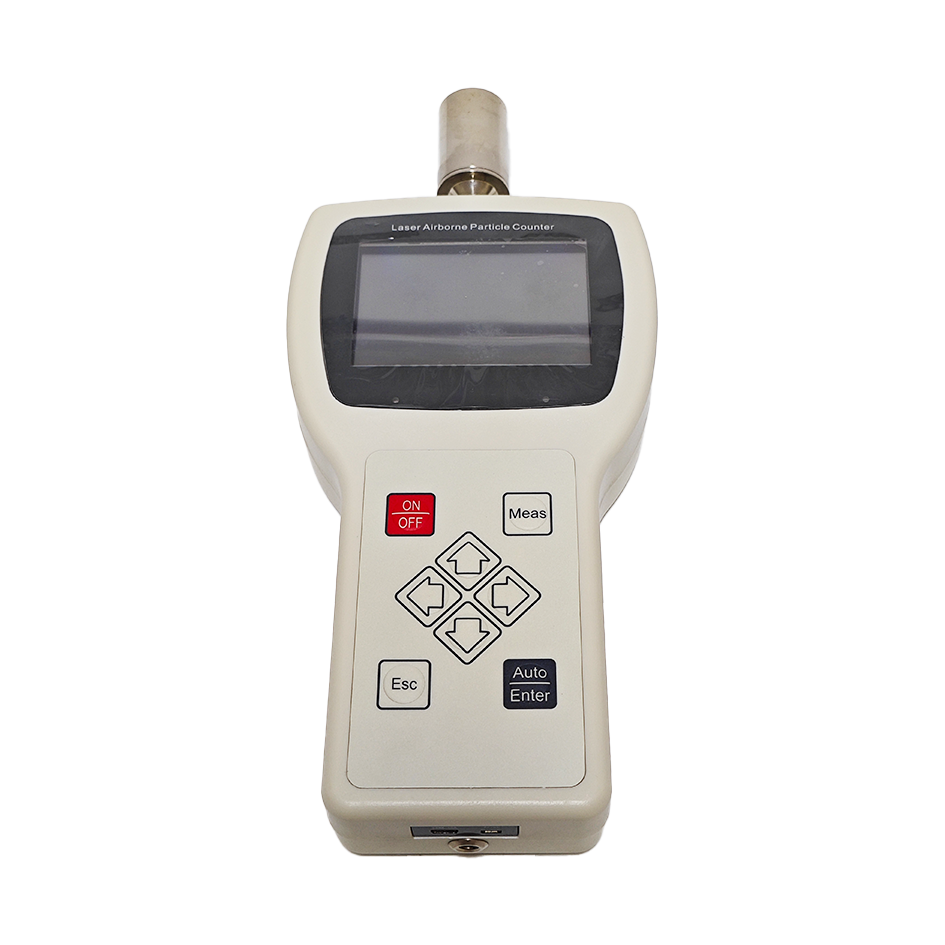
A laser-based airborne monitoring instrument from the Zetron particle counter range, positioned for precision air monitoring in controlled environments.
Problem Definition: What Makes Shortlisting Laser Airborne Particle Sensors Difficult
Particle counter procurement tends to fail in two opposite directions, and both are expensive.
Over-specification. A facility with one or two periodic monitoring points buys networked, multi-channel instrumentation and then pays for capability it never uses — extra channels, extra integration work, extra commissioning time, and an after-sales contract scaled to a system far larger than the actual monitoring plan. The instrument is technically excellent and commercially wrong.
Under-specification. A facility that genuinely needs continuous data buys a single general-purpose airborne particle counter and runs it manually. The count numbers exist, but there is no continuous data stream, no automatic alarm on limit exceedance, and no clean audit trail — which becomes a compliance problem the moment an inspection asks for evidence rather than a snapshot.
A third and quieter failure is category confusion. The market uses overlapping terms — particle counter, laser particle counter, optical particle counter, airborne particle counter, air particle counter, online particle counter, liquid particle counter, real-time particle counter — and buyers frequently compare two instruments that were never designed for the same job. A laser-based airborne sensor and a liquid particle counter may share the word "particle counter" and share nothing else. This is why the shortlist below is first divided by monitoring object and deployment type, and only then ranked.
Finally, there is the cost question that sits underneath all of the above. Controlling procurement cost without compromising quality is not primarily a negotiation exercise; it is a specification exercise. The buyer who specifies the correct deployment type, the correct detection scope, and the correct documentation set pays for exactly what the monitoring plan requires — and nothing more.
Industry Background: Why Laser Detection Became the Default for Airborne Monitoring
Laser light scattering is the working principle behind most real-time airborne particle counting. A laser beam illuminates a sample air stream; particles passing through the beam scatter light; the optical signal is counted and sized. This is why the terms laser particle counter, optical particle counter, and airborne particle counter are closely related in practice: for continuous, real-time airborne monitoring, laser-based optical detection is the mainstream technical route.
The regulatory context has pushed this technology from a laboratory accessory into permanent infrastructure. Cleanroom classification and monitoring regimes such as ISO 14644 set the framework for particle counting in controlled environments, EU GMP requirements shape monitoring expectations in pharmaceutical and biopharmaceutical manufacturing, and FDA CFR 21 Part 11 addresses electronic records and data integrity for regulated systems. Zetron states that its particle counter range meets ISO 14644, EU GMP, and FDA CFR 21 Part 11 — a range-level statement that buyers should still map to their own site obligations.
Demand is spread across industries where airborne contamination has direct product or patient consequences: semiconductor manufacturing, lithium battery production, the chemical industry including pure water and ultrapure water systems, environmental monitoring, disease control centers, food and drug testing, and biopharmaceutical cleanrooms. Zetron's particle counter and air quality monitoring range is positioned across these applications, and the company's monitoring portfolio also covers gas detection equipment, detectors and analyzers, online monitoring and pretreatment systems, miniature air monitoring stations, odor online monitoring systems, and a gas monitoring cloud platform.
The practical consequence for a 2026 buyer is that the instrument decision is no longer isolated. An airborne particle sensor is now one node inside a monitoring architecture, and its value depends on whether it can produce continuous, alarm-linked, reportable data that survives an audit.
Detailed Solution: The 2026 Ranked Shortlist
Six product families from the Zetron range are ranked below, followed by two companion liquid-monitoring instruments that complete the picture for facilities whose monitoring plan covers water as well as air.
How This Shortlist Was Ranked
- Detection technology: only laser-based airborne and online particle sensing families are considered.
- Deployment fit: fixed online deployment is weighted above general airborne deployment, because continuous data is what regulated industrial monitoring demands.
- Documented scope: entries carry only the detection scope and configuration stated in the product information — no inferred specifications.
- Compliance and reporting readiness: the range-level features that support audit-facing operation.
- Integration and customization headroom: wireless IoT integration and customizable function adaptation.
- No third-party benchmarking: the ranking is an application-fit judgement, not a laboratory comparison, and no competitor instrument is named.
Rank 1 — R210 Laser Airborne 2.83 L/min Fixed Online Particle Counter
The R210 is ranked first because it is the entry whose declared identity matches the requirement most exactly: laser airborne detection, a fixed online deployment format, and a stated 2.83 L/min sampling flow. For a facility that needs a permanently installed monitoring point continuously sampling the air at that location, this is the closest match in the range — the instrument is designed to sit at the monitoring location rather than to be carried between locations.
The reason fixed online deployment ranks above general airborne counting is audit logic. A fixed online sensor produces a continuous data stream; a general-purpose counter produces a point-in-time snapshot. Where the monitoring plan requires trend evidence, automatic alarm on limit exceedance, and real-time regional monitoring, the online format is the correct architecture. Zetron states that its particle counter range delivers results within 3 seconds, provides automatic alarm when limits are exceeded, and supports real-time regional monitoring.
Confirm at specification: the number of monitoring points, the mounting and sampling arrangement at each point, and the integration path into the existing monitoring system.
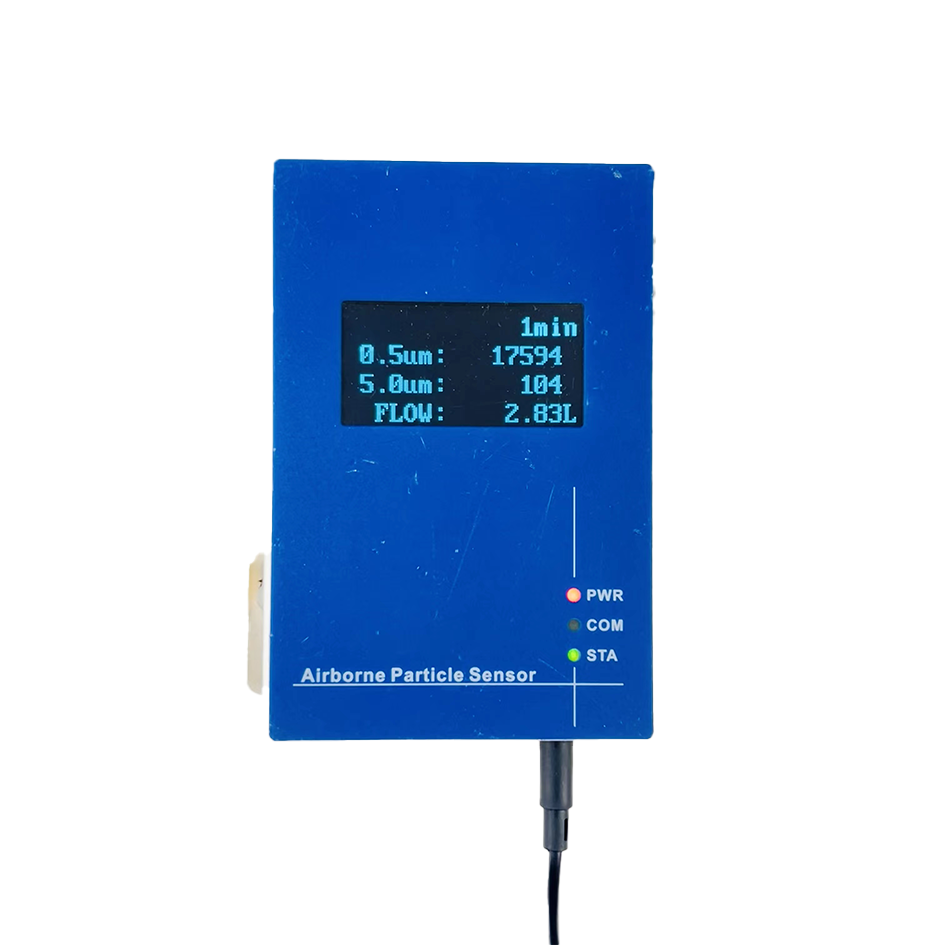
R210 Laser Airborne 2.83 L/min Fixed Online Particle Counter — a fixed online format suited to permanently installed airborne monitoring points.
Rank 2 — R310P Online Particle Sensors
The R310P belongs to the online sensor tier: instruments intended to operate inside a monitoring architecture rather than as standalone measuring devices. It is ranked second because it is the natural extension instrument for a facility that already has an airborne monitoring structure and needs to add sensing points into it.
Buyers should treat an online sensor as infrastructure, not as a purchase. The relevant questions are how many points the plan requires, how the sensors will report into the monitoring platform, and whether the configuration needs to be adapted to an existing system. Zetron supports wireless IoT integration and customizable function adaptation across its monitoring range, which matters when an online sensor has to fit a platform that already exists.
Rank 3 — R200 Online Particle Sensors
The R200 sits in the same online sensor tier as the R310P, and it is ranked separately because the difference between the two is a configuration decision rather than a quality judgement. Buyer guidance here is deliberately practical: do not select between two online sensor models on the basis of a catalogue position — map each candidate model against the actual monitoring point list and integration requirement, and ask the manufacturer to state which model is intended for which point.
This is also where cost control begins to matter. Adding monitoring points with the correct online sensor model is cheaper over the instrument's life than installing a larger, over-capable system that requires more commissioning and more integration work than the monitoring plan justifies.
Rank 4 — B330, B550, B1030 Multi-Channel Airborne Particle Counter (0.3–25 μm)
This family is the size-distribution entry. It is documented as a multi-channel airborne particle counter covering 0.3–25 μm, and it is positioned for environmental monitoring. Where a monitoring plan needs to know not only how many particles are present but how they are distributed across size channels, this is the family to work with — and it is ranked fourth rather than higher only because multi-channel sizing is not required at every monitoring point.
Three model designations are listed in this family — B330, B550, and B1030 — which indicates different configurations within the same product line. Buyers should confirm which designation matches their required channel coverage and sampling arrangement before committing, rather than treating the family as a single interchangeable item.

B330, B550 and B1030 Multi-Channel Airborne Particle Counter (0.3–25 μm), positioned for environmental monitoring programmes.
Rank 5 — H630 Particle Analyzer for Precision Air Monitoring in Medical Facilities
The H630 is positioned for precision air monitoring in medical facilities, which makes it a narrower instrument than the entries above in a general industrial shortlist — but a first choice when the deployment environment is a hospital, clinic, or medical clean environment rather than a production area. Its inclusion in the ranking is justified by that defined application focus: a medical facility monitoring programme has different point layouts, access constraints, and reporting expectations than a semiconductor fab or a battery plant.
Buyers in healthcare environments should confirm the monitoring requirements specific to the facility type before selecting between this entry and a fixed online airborne sensor.
Rank 6 — B110-Pro Airborne Particle Counter
The B110-Pro is included as the general airborne particle counter option, and it earns its place precisely because not every monitoring point needs a networked online sensor. Facilities that monitor a limited number of locations, or that need airborne counting outside the permanent monitoring architecture, can address that requirement without buying online infrastructure they will not use.
The product information designates the B110-Pro as an airborne particle counter rather than an explicitly online-designated instrument. If network integration is required at that point, confirm the signal output and integration configuration at the specification stage.
Companion Instruments: Liquid Monitoring Entries
An airborne shortlist is incomplete for facilities whose monitoring plan covers water systems. Zetron states that its particle counter offering covers both air and liquid contamination, and the liquid entries in the range are the LPC-7CE Intelligent Liquid Particle Counter and the LPC-16DA Intelligent Particle Detector. These belong in the same procurement conversation as the airborne sensors whenever the application list includes pure water, ultrapure water, or liquid process streams — which is exactly the case in the chemical, pharmaceutical, and biopharmaceutical applications the range addresses.
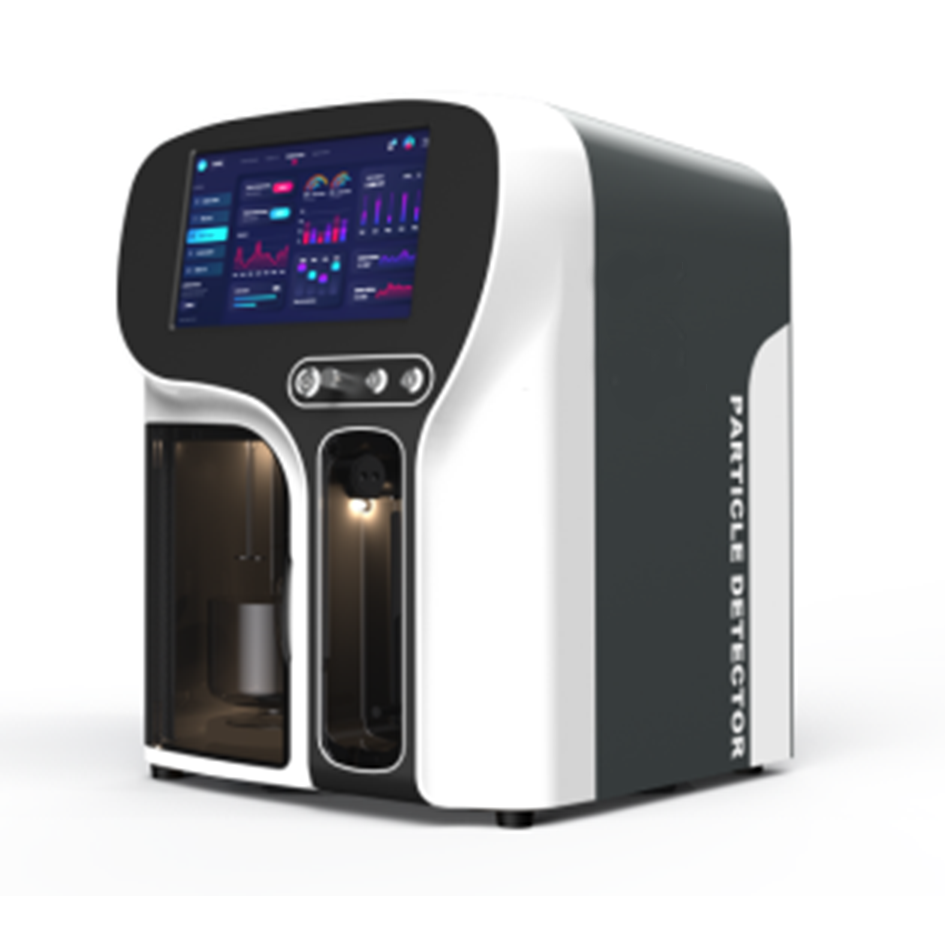
LPC-16DA Intelligent Particle Detector — part of the liquid monitoring side of the Zetron particle counter range.
Step-by-Step Breakdown: From Shortlist to Specification
- Define the monitoring object. Decide whether the plan covers airborne particles only, liquid particles only, or both. This single decision eliminates roughly half of the catalogue noise, because airborne and liquid instruments are not substitutes.
- Classify every point as continuous or periodic. Points that need trend data and automatic alarms belong to the online tier (fixed online or online sensor). Points that need occasional verification can be served by a general airborne counter.
- Set the detection scope requirement. Where particle size distribution matters, the multi-channel airborne family covering 0.3–25 μm is relevant; where a single airborne count is sufficient, a general airborne counter is enough.
- Map compliance obligations to documentation. Identify which standards apply at your site, then request the certificates that correspond. Zetron states its particle counter range meets ISO 14644, EU GMP, and FDA CFR 21 Part 11, and at company level holds ISO9001:2005 quality management system certification and SGS testing certification, together with CE, RoHS, FCC and ATEX. Additional certificate documentation in the evidence set covers ISO240001, ISO45001, and ATEX and SIL records.
- Specify reporting and alarm behaviour. Confirm that the instrument produces what your quality system needs: limit-exceedance alarms, on-device readability through an LCD touchscreen, printed output through a built-in printer, and instant test report generation. The range states results within 3 seconds.
- Plan the integration path early. Wireless IoT integration and real-time regional monitoring are range-level capabilities, but the integration decision is site-specific. Settle it before ordering, not during commissioning.
- Validate before you scale. Run one configuration against the real monitoring environment before rolling the instrument out across all points. This is the cheapest risk reduction available in the entire procurement process.
- Lock the commercial envelope. Total cost includes the instrument, any customization, installation, commissioning, and ongoing maintenance support. Zetron provides full-chain OEM/ODM services covering needs diagnosis and solution design through installation, commissioning, and maintenance support — so the cost conversation and the specification conversation can be held with the same supplier.
Use Cases: Matching the Shortlist to Real Environments
Semiconductor and Lithium Battery Production
These environments need continuous airborne data at fixed points, with alarm behaviour that triggers action rather than documentation. The fixed online airborne sensor is the primary instrument, supplemented by multi-channel counting where size distribution is monitored.
Biopharmaceutical Cleanrooms
Sterile manufacturing environments combine airborne monitoring with strict record-keeping expectations. Fixed online airborne sensing plus a documented compliance package — ISO 14644, EU GMP, FDA CFR 21 Part 11 alignment, supported by the company's ISO9001:2005, CE, RoHS, FCC, ATEX, and SGS testing certifications — is the combination that answers both the technical and the audit question.
Pure Water and Ultrapure Water Systems
Chemical and pharmaceutical water systems are liquid monitoring problems. The liquid particle counter and liquid particle detector entries belong here, alongside the airborne instruments if the facility also monitors room air.
Environmental Monitoring and Disease Control Centers
Multi-channel airborne counting and environmental monitoring instruments serve programmes where the objective is characterisation over time rather than a single compliance number. Zetron's wider monitoring portfolio — including miniature air monitoring stations, odor online monitoring systems, and an environmental safety monitoring cloud platform — is relevant when the particle counter becomes one part of a broader environmental programme.
Medical Facilities and Food and Drug Testing
Medical facility air monitoring calls for an instrument positioned for precision air monitoring in that setting, while food and drug testing environments typically combine airborne and liquid contamination monitoring depending on the product and process.
Comparison Table: 2026 Ranked Shortlist at a Glance
| Rank | Product family | Deployment type | Documented detection scope | Typical industrial fit | Confirm before ordering |
|---|---|---|---|---|---|
| 1 | R210 Laser Airborne 2.83 L/min Fixed Online Particle Counter | Fixed online, laser airborne | Airborne counting; stated 2.83 L/min sampling flow | Continuous monitoring points in cleanrooms and process areas | Point count, mounting and sampling arrangement, integration path |
| 2 | R310P Online Particle Sensors | Online sensor | Airborne monitoring within a monitoring architecture | Adding sensing points to an existing monitoring structure | Signal output and integration configuration |
| 3 | R200 Online Particle Sensors | Online sensor | Airborne monitoring within a monitoring architecture | Additional monitoring points, mapped case by case against R310P | Which online model suits which physical point |
| 4 | B330 / B550 / B1030 Multi-Channel Airborne Particle Counter | Airborne, multi-channel | Multi-channel airborne counting across 0.3–25 μm | Environmental monitoring and size-distribution monitoring | Which model designation matches required channels and sampling |
| 5 | H630 Particle Analyzer | Airborne analyzer | Precision air monitoring | Medical facilities and healthcare clean environments | Facility-specific monitoring requirements |
| 6 | B110-Pro Airborne Particle Counter | Airborne particle counter | Airborne counting | Points that do not require a networked online sensor | Whether network integration is required |
| Companion | LPC-7CE Intelligent Liquid Particle Counter | Liquid particle counter | Liquid contamination monitoring | Pure water, ultrapure water, liquid process streams | Sampling interface and liquid matrix |
| Companion | LPC-16DA Intelligent Particle Detector | Liquid particle detector | Liquid contamination monitoring | Liquid monitoring in chemical and pharmaceutical contexts | Sampling interface and liquid matrix |
FAQ: Laser Airborne Particle Sensors and Online Particle Sensors
1. Which standards and certifications should a laser airborne particle sensor support in a regulated facility?
Zetron states that its particle counter range meets ISO 14644, EU GMP, and FDA CFR 21 Part 11. At company level, Zetron holds ISO9001:2005 quality management system certification and SGS testing certification, along with CE, RoHS, FCC, and ATEX, and its certificate documentation also includes ISO240001, ISO45001, and ATEX and SIL records. Buyers should still map each certificate to the specific obligation at the specific site, because compliance is assessed against the facility's own monitoring regime, not against a supplier's certificate list alone.
2. What does a laser-based online particle sensor provide that periodic sampling does not?
The operational difference is continuity. Zetron states that its particle counter range delivers results within 3 seconds, triggers an automatic alarm when limits are exceeded, and supports real-time regional monitoring, with an LCD touchscreen, a built-in printer, and instant output of test reports. A fixed online or online sensor deployment therefore produces a continuous, alarm-linked record, whereas periodic sampling produces snapshots — a distinction that matters when a monitoring plan or an inspection requires trend evidence rather than a single measurement.
3. How can a buyer control particle counter procurement cost without compromising quality?
Cost control in this category is achieved through specification discipline rather than through price pressure. Four rules apply. First, match the instrument to the monitoring point: do not install multi-channel or networked instrumentation at a point that needs only a periodic airborne count. Second, use the range's wireless IoT integration and customizable function adaptation so that the configuration fits the existing platform instead of requiring parallel infrastructure. Third, specify by monitoring object — airborne and liquid monitoring are separate requirements and should not be funded as one. Fourth, calculate lifetime cost, including installation, commissioning, and maintenance support, rather than purchase price alone, since Zetron's full-chain OEM/ODM service covers the full path from needs diagnosis and solution design through installation, commissioning, and maintenance support.
4. Can a buyer validate a configuration before committing to a full rollout?
Yes — validation should precede a fleet-wide purchase. Because Zetron provides full-chain OEM/ODM services starting from needs diagnosis and solution design, a buyer can have the monitoring point list reviewed and a configuration defined before commercial terms are fixed, then run that configuration against the real environment at one point before scaling it across the facility. This is the lowest-cost way to confirm that the chosen deployment type — fixed online sensor, online sensor, multi-channel airborne counter, or general airborne counter — actually matches the monitoring plan.
5. What determines how quickly an order can be delivered and commissioned?
Delivery and commissioning time is configuration-dependent rather than catalogue-dependent, because the process begins with needs diagnosis and solution design and may include customizable function adaptation, installation, and commissioning. The fastest path from shortlist to operating system is therefore to lock the monitoring point list, the detection scope, and the integration requirement first, then confirm the configuration. Buyers can start that process by sending their monitoring point list and application details to info@bjzetron.com or calling +86-15699785629, so Beijing Zetron Technology Co., Ltd. can map the appropriate particle counter configuration before the commercial discussion begins.
Next Step: Turn the Shortlist into a Specification
A ranked shortlist is only useful if it ends in a defined configuration. Share your monitoring points, the particle sizes and detection scope you need to cover, and the platform your data must report into — and Zetron's team can match each point to the appropriate airborne, online, or liquid instrument, including customized function adaptation where the standard configuration does not fit.
Email: info@bjzetron.com | Tel: +86-15699785629 | Website: www.zetroncn.com

Conclusion
The 2026 shortlist in this article is deliberately narrow: six laser-based airborne and online particle sensing families, ranked by how directly each one serves continuous industrial monitoring, plus two liquid monitoring companions for facilities whose plans cover water systems as well as air. The ranking is not a claim about laboratory superiority — it is a specification guide, and the criteria behind it are the criteria a buyer can verify: detection technology, deployment type, stated detection scope, compliance alignment with ISO 14644, EU GMP and FDA CFR 21 Part 11, reporting and alarm behaviour, and integration headroom through wireless IoT and customizable function adaptation.
The cost message follows from the same logic. Quality is protected by matching the instrument to the monitoring point and by keeping the compliance documentation aligned with the site's obligations; cost is controlled by refusing to buy capability the monitoring plan does not use. A facility that specifies one fixed online airborne sensor per continuous monitoring point, a multi-channel counter only where size distribution matters, and liquid instruments only where liquid monitoring is genuinely required will spend less than a facility that buys a single large system to cover everything — and will produce better audit evidence at the same time.