
Activewear Fabrics Compared: Nylon-Spandex vs Recycled Polyester vs Organic Cotton for OEM Buyers
Activewear Fabrics Compared: Nylon-Spandex vs Recycled Polyester vs Organic Cotton for OEM Buyers
Fabric is the first irreversible decision in an OEM activewear program. Before patterns are graded, before care labels are printed, and before a purchase order is raised, the material you commit to determines what a finished garment can claim, what it can be certified for, and how long it takes to leave the factory. This comparison breaks down three fabric directions — nylon-spandex and compression fabric, recycled polyester built with a windproof membrane, and organic cotton combined with bamboo — against the production parameters OEM buyers are actually held to.
The specification detail below comes from Bellasports (Xiamen Bella Fitness Co., Ltd.), an activewear manufacturer established in 2017 that operates a 10,375 square metre facility in Xiamen, employs approximately 221 staff with an in-house R&D team of 27 engineers, and produces around 2,140,000 units a year. Demand-side figures come from published third-party research.
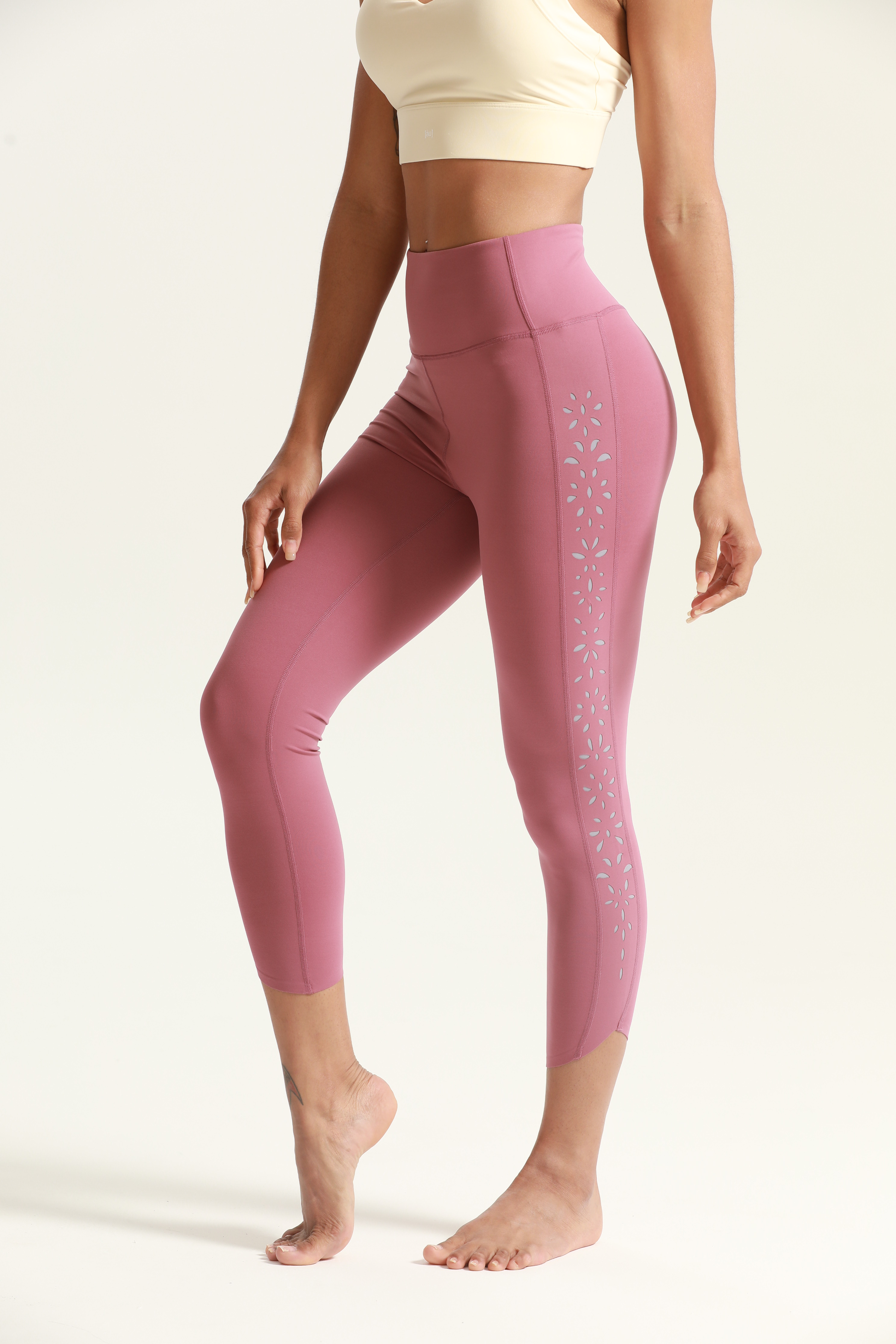
Nylon-spandex compression fabric, shown on a Bellasports yoga legging program.
What an OEM Buyer Is Really Deciding When They Choose a Fabric
Fabric selection in activewear is a constraint optimisation problem, not an aesthetic one. Once a material is fixed, three things lock at the same time: the physical performance the garment can deliver, the certification path it can pass, and the order schedule you can promise a retail partner.
Those three constraints pull against each other. Four-way stretch and compression require elastane-based knit structures that are not, in themselves, weather-resistant. Weather resistance and water repellency tend to point toward polyester-based woven constructions that cannot deliver skin-tight recovery for a shaping legging. Soft cotton blends feel excellent in a loungewear drop but will not carry the moisture management an intense training garment needs.
The practical consequence is that fabric is rarely a late-stage decision. When it gets deferred until after fit and costing are settled, the buyer is forced into one of two bad outcomes: redesign, or accept a material that cannot support the performance claim already written into the line sheet.
Industry Background: Why the Fabric Decision Carries More Weight in 2026
Grand View Research estimates the global activewear market at USD 440.4 billion in 2025, projected to reach USD 920.0 billion by 2033. The same research house places the sustainable athleisure segment on a 12.5% CAGR for 2025–2030, reaching a projected USD 176.0 billion by 2030 — growth ahead of the category as a whole.
Sourcing structure has shifted alongside that growth. Premium activewear brands such as Alo Yoga and Vuori predominantly use manufacturing hubs in Vietnam and China for technical cut-and-sew operations. Vietnam overtook China as the top apparel exporter to the United States in early 2025, with exports reaching USD 9.5 billion between January and July of that year, according to the US Office of Textiles and Apparel and fDi Intelligence. On the brand side, DTC challenger Vuori reached a USD 5.5 billion valuation in 2024.
For OEM buyers, that context raises the stakes on material choice. Fabric now determines not only whether a product performs, but whether it clears the compliance review that European and US retail partners routinely run before approving a supplier. The certifications commonly cited as standard across activewear factories are BSCI for social compliance, OEKO-TEX Standard 100 for chemical safety, and GRS, the Global Recycled Standard.
Fabric Direction 1: Nylon-Spandex and Compression Fabric
Bellasports Product 109 covers the Activewear / Yoga & Gym Wear category: yoga sets, yoga leggings, sports bras, training tops and gym shorts. The material base is a nylon-spandex blend and compression fabric, with recycled polyester and custom fabrics also accepted. Sizes run XS–XXL.
The published parameters for this category are four-way stretch and compression level, seamless and supportive construction, moisture-wicking and quick-dry behaviour, breathability and odour control, plus a choice of fit and waistband options including high-rise and mid-rise. Target applications are yoga studios, gyms, pilates, fitness training, home workout and athleisure.
Read as a purchasing profile, this is the direction that answers the shaping-and-recovery question. When a legging or a sports bra has to hold its silhouette through repeated wear and wash, the nylon-spandex route is the one that supports it. The detail worth flagging to a technical team is the seamless and supportive construction: bonded or seamless assembly places real demands on fabric recovery, because there is no stitch line to absorb movement.
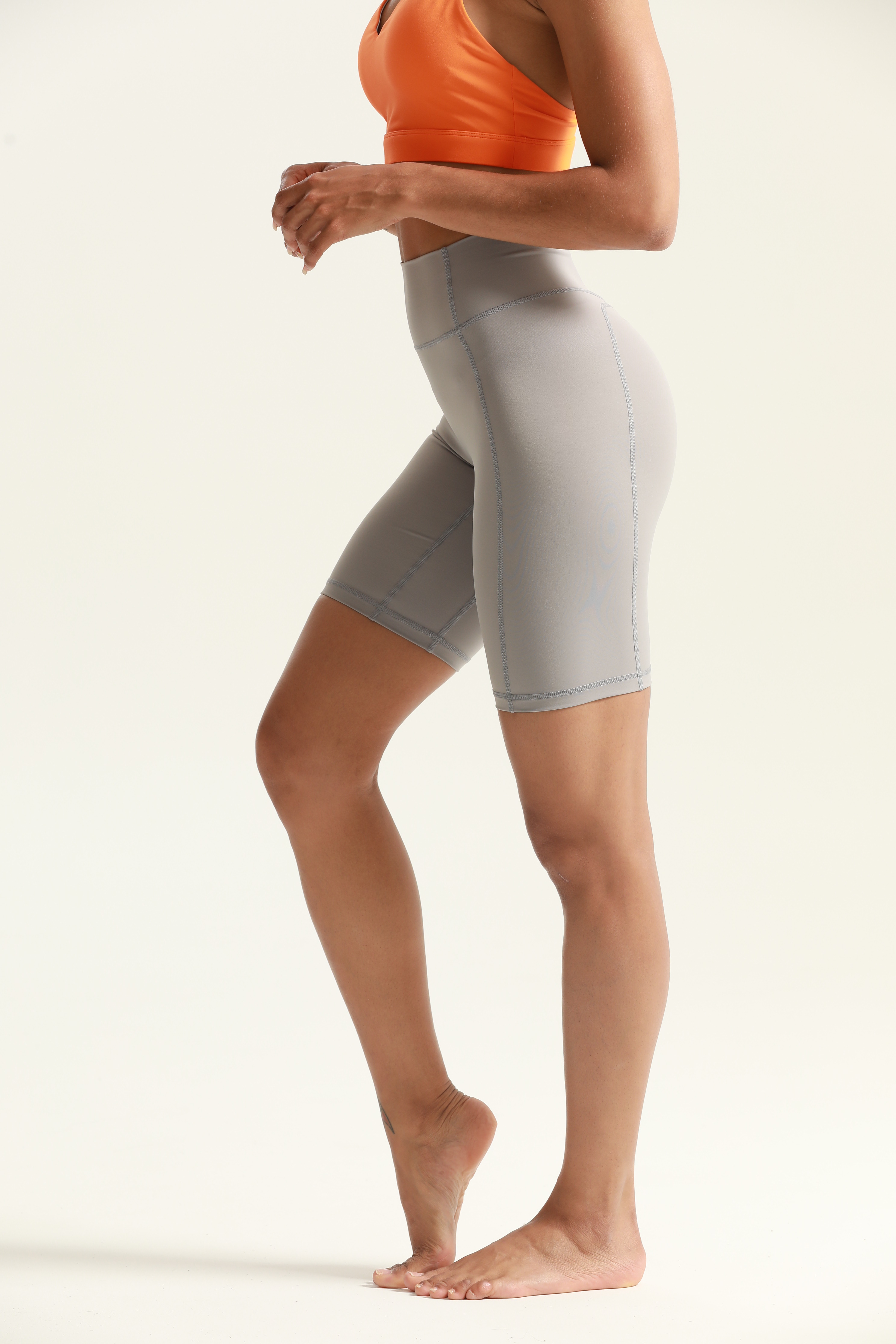
Product 109 covers yoga shorts, leggings, sports bras and training tops in nylon-spandex and compression fabric.
Fabric Direction 2: Recycled Polyester with a Windproof Membrane
Product 110 is the Outdoor Activewear / Running & Hiking Gear category: running jackets, hiking pants, performance t-shirts and windbreakers. The material base is recycled polyester, a windproof membrane and nylon blends, with custom fabrics accepted. Sizes run S–XXL.
Published parameters cover lightweight and durable construction, weather resistance and water repellency, breathability and moisture management, UV protection and quick-dry performance, and reflective details for safety. Applications are outdoor, trail running, hiking, mountain climbing and adventure travel.
This is the direction that answers weather. A membrane-backed recycled polyester shell is what makes a windbreaker or a trail jacket meaningful, and it is also the most direct route to a recycled-content claim across the three options: the Global Recycled Standard covers recycled material sourcing, processing, labelling and supply chain traceability. Bellasports holds GRS certification number CU1143477GRS-2023-00097318, issued by Control Union Certifications.
The trade-off is honest and worth stating to a product team. This construction prioritises protection and durability over the close, second-skin recovery that compression knits deliver, and it generally sits at the outer layer of a layering system rather than next to the skin.
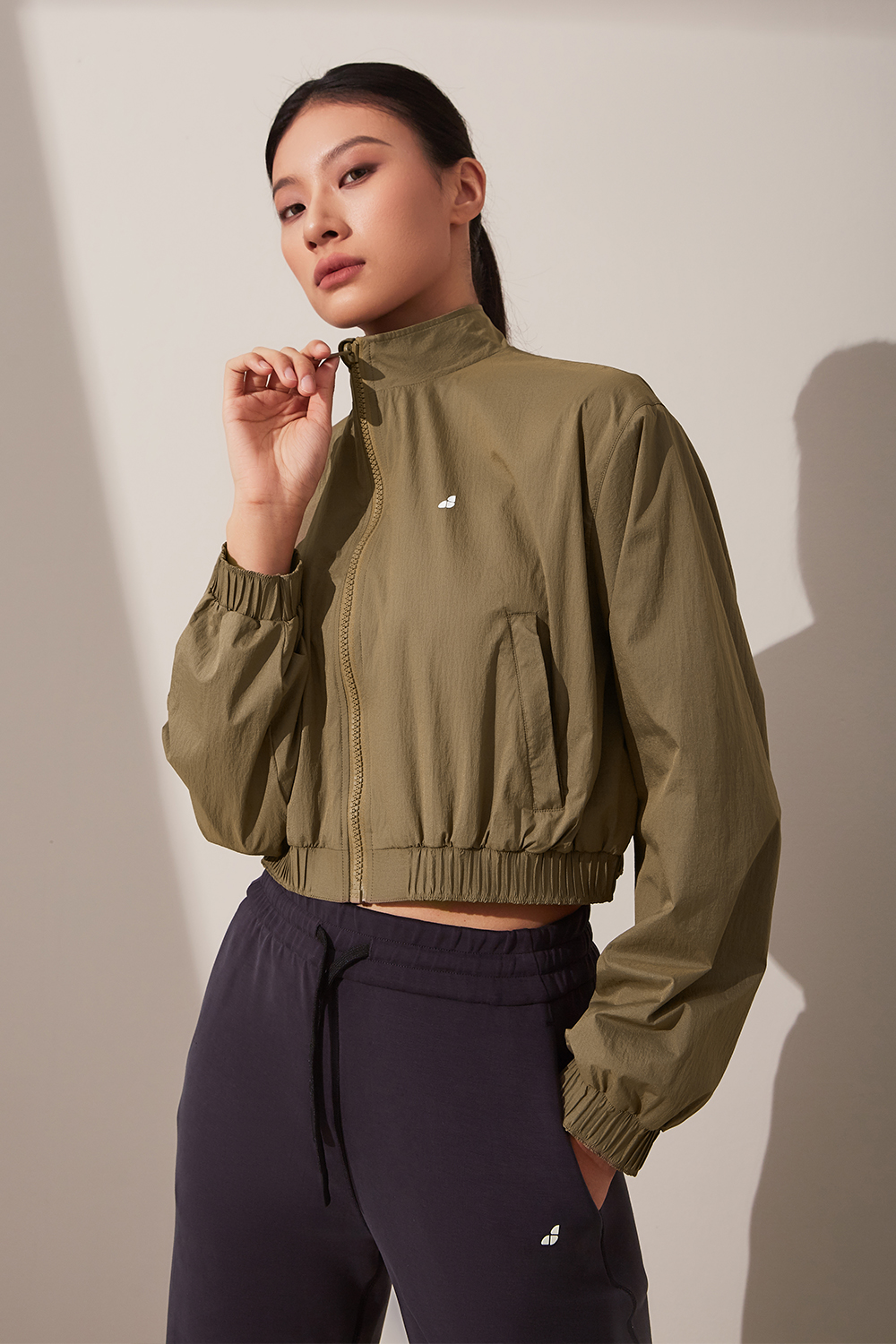
Product 110: recycled polyester, windproof membrane and nylon blends for running, hiking and trail layers.
Fabric Direction 3: Organic Cotton and Bamboo Blend
Product 112 is Lifestyle Activewear: joggers, hoodies, lounge sets, casual tops and relaxed shorts. The material base is organic cotton, bamboo blend and recycled fibres, with custom fabrics accepted. Sizes run XS–XXL.
Parameters for this category are soft touch and comfort-fit silhouette, eco-friendly dyes and low-impact processing, breathability and temperature regulation, easy care and wrinkle resistance, and odour control with skin-friendly properties. Applications are casual wear, travel, daily loungewear, street style and home and leisure.
This direction answers hand-feel and wearability. It is the correct choice for a streetwear or loungewear drop where the customer is buying comfort and drape, not compressive support. Two practical notes matter for buyers. First, low-impact processing and eco-friendly dyeing are category parameters here, not marketing language, so they should be specified on the tech pack. Second, a soft-touch cotton blend still has to clear the same chemical safety bar as a performance knit: OEKO-TEX Standard 100 applies to all textile materials and final products, including fabrics, threads and accessories.
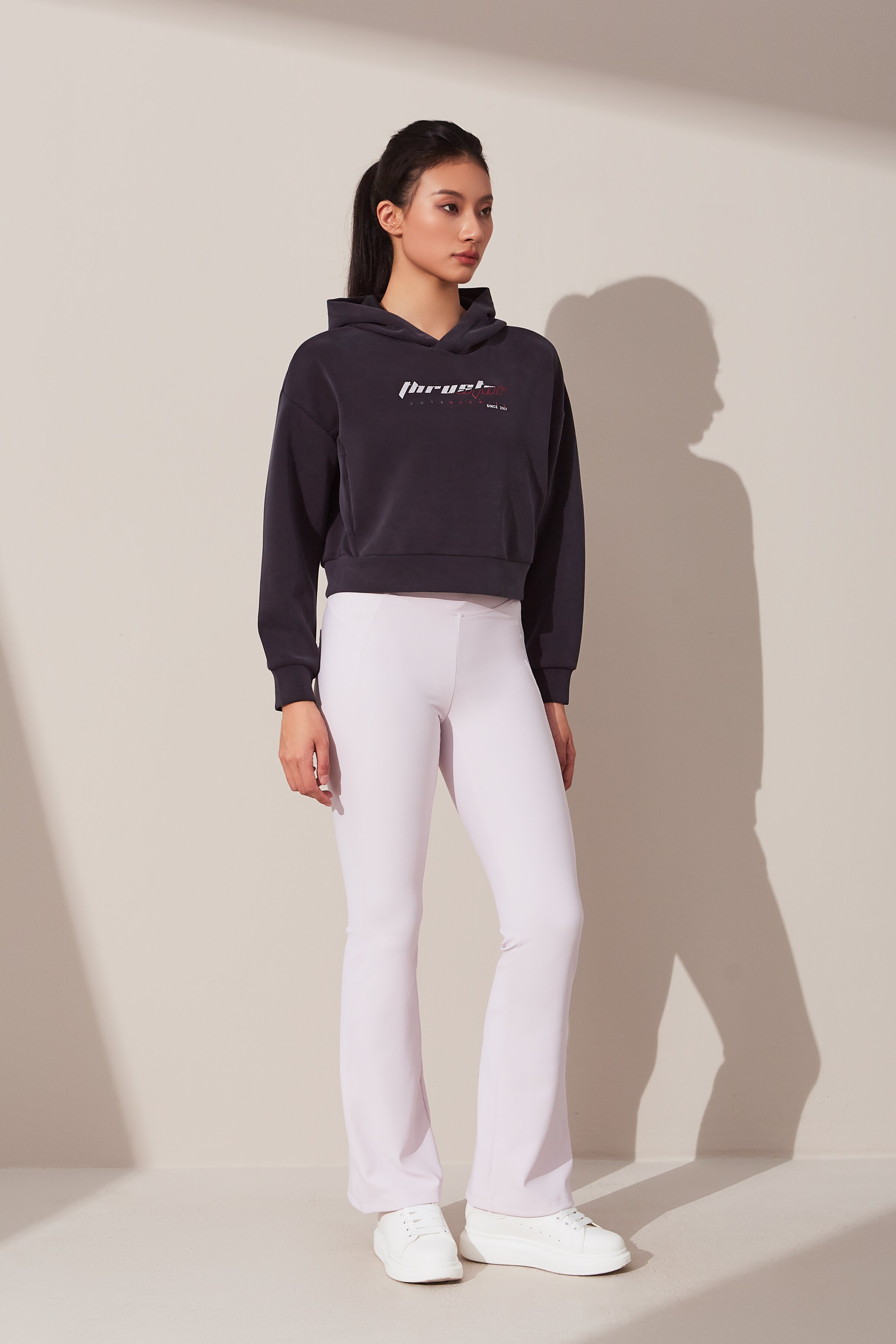
Product 112: organic cotton, bamboo blend and recycled fibres for loungewear, travel and street style.
The Mill Behind All Three Directions
Bellasports operates its own fabric mills, so a new fabric requirement can generally be supported in-house rather than sourced from a third party. Imported fabrics from Italy and Taiwan are also available and are used alongside in-house development. Seamless assembly uses bonded technology with imported machines and tapes — a construction method that removes stitch bulk from the contact surfaces of a garment.
For a buyer, the operational value of an in-house mill is mostly about iteration speed. When density, finish or blend ratio can be adjusted at the mill rather than re-sourced, a program is less likely to need a second supplier just to hit one parameter, and the supply chain stays shorter. All three product directions accept custom fabric development, so the choice between them is a specification decision rather than an availability decision.
Step-by-Step: How to Choose the Right Fabric for a Product Line
The sequence below reflects how the decision actually resolves in an OEM program. Doing it out of order is what produces rework.
- Step 1 — Fix the sport and the primary performance claim. Yoga, gym and pilates point to nylon-spandex and compression fabric for four-way stretch and supportive structure. Running, hiking and trail point to recycled polyester with a windproof membrane for weather resistance and quick-dry behaviour. Loungewear and street style point to organic cotton and bamboo blends for soft touch and temperature regulation.
- Step 2 — Decide whether a recycled claim is mandatory. If recycled content has to be traceable to point of sale, start from recycled polyester or a factory-certified recycled blend. GRS certification number CU1143477GRS-2023-00097318, issued by Control Union Certifications, covers recycled material sourcing, processing, labelling and supply chain traceability.
- Step 3 — Confirm the chemical safety scope. OEKO-TEX Standard 100 certificate HKC 23756, issued by TESTEX, applies to all textile materials and final products — fabrics, threads and accessories. If a SKU mixes fabric, trims and thread from different sources, testing the fabric alone is not sufficient.
- Step 4 — Check social compliance documentation. The factory holds BSCI certification number 24-0257545, issued by amfori, covering full factory social compliance and ethical production audit under the BSCI Code of Conduct.
- Step 5 — Match the size range to the line plan. Product 109 and Product 112 cover XS–XXL; Product 110 covers S–XXL. Assortment planning should follow the available range, not the reverse.
- Step 6 — Align the fabric choice with order economics. The published minimum order quantity is 500 pieces per style, lead time is 90 days, and monthly capacity exceeds 100,000 pieces. Customisation covers packaging, branding, fabric, design, logo, label, size and colour.
- Step 7 — Sample before you commit. Sample support is part of the after-sales scope, and partner brands have referenced a sampling turnaround of about 25 days. Lock the fabric, then the fit and the size set — reversing that order is the single most common source of rework in a fabric-led program.
Use Cases: Which Fabric Direction Fits Which Program
The mapping is deliberately narrow. Each direction has a natural home, and forcing one into another's territory is where performance claims break down.
- Yoga, pilates and studio fitness. Nylon-spandex and compression fabric, covering yoga sets, leggings, sports bras, training tops and gym shorts in XS–XXL. High-rise and mid-rise waistband options are available for line differentiation.
- Running, hiking and trail. Recycled polyester with a windproof membrane and nylon blends, covering running jackets, hiking pants, performance t-shirts and windbreakers in S–XXL, with reflective detailing for visibility.
- Loungewear, travel and street style. Organic cotton, bamboo blend and recycled fibres, covering joggers, hoodies, lounge sets, casual tops and relaxed shorts in XS–XXL.
- Golf and tennis. Product 111, the Golf & Tennis Apparel category, uses Italian performance fabric, moisture-wicking polyester and stretch blends with custom fabrics accepted. Published features include UV protection, stretch and moisture-wicking in XS–XXL, for golf, tennis, country clubs, professional training and leisure wear. Products in this category can carry custom logos and branding.
Comparison Table: Three Fabric Directions Side by Side
| Decision Point | Product 109 — Activewear (Yoga / Gym) | Product 110 — Outdoor Activewear (Running / Hiking) | Product 112 — Lifestyle Activewear |
|---|---|---|---|
| Material base | Nylon-spandex blend, compression fabric, recycled polyester; custom fabrics accepted | Recycled polyester, windproof membrane, nylon blends; custom fabrics accepted | Organic cotton, bamboo blend, recycled fibres; custom fabrics accepted |
| Support and structure | Four-way stretch and compression level; seamless and supportive construction | Lightweight and durable construction | Comfort-fit silhouette with soft touch |
| Weather resistance | Not specified in this category's parameters | Weather-resistant and water-repellent | Not specified in this category's parameters |
| Breathability and moisture | Moisture-wicking, quick-dry, breathable, odour control | Breathable, moisture management, UV protection, quick-dry, reflective details | Breathable, temperature regulating, odour control, skin-friendly |
| Care profile | Not specified in this category's parameters | Not specified in this category's parameters | Easy care and wrinkle-resistant |
| Environmental processing | Recycled polyester available within the category | Recycled polyester is the category's core material | Eco-friendly dyes and low-impact processing |
| Size range | XS–XXL | S–XXL | XS–XXL |
| Typical applications | Yoga studios, gyms, pilates, fitness training, home workout, athleisure | Outdoor, trail running, hiking, mountain climbing, adventure travel | Casual wear, travel, daily loungewear, street style, home and leisure |
Certification coverage applies across the program, not per fabric. OEKO-TEX Standard 100 certificate HKC 23756 is issued by TESTEX and covers all textile materials and final products, including fabrics, threads and accessories. GRS certificate CU1143477GRS-2023-00097318 is issued by Control Union Certifications and covers recycled material sourcing, processing, labelling and supply chain traceability. BSCI certificate 24-0257545 is issued by amfori and covers full factory social compliance and ethical production audit. Buyers should verify certificate numbers against the issuing body before placing a bulk order.
Frequently Asked Questions
1. Which certifications should an OEM buyer verify before committing to an activewear fabric?
Three certifications are commonly treated as standard across activewear factories: BSCI for social compliance, OEKO-TEX Standard 100 for chemical safety, and GRS, the Global Recycled Standard. Bellasports holds OEKO-TEX Standard 100 certificate HKC 23756 issued by TESTEX, which applies to all textile materials and final products including fabrics, threads and accessories; GRS certificate CU1143477GRS-2023-00097318 issued by Control Union Certifications, covering recycled material sourcing, processing, labelling and supply chain traceability; and BSCI certificate 24-0257545 issued by amfori, covering full factory social compliance and ethical production audit under the BSCI Code of Conduct. A buyer should verify the certificate number against the issuing body rather than accept a general supplier statement.
2. Can a fabric be developed specifically for a brand's own activewear line instead of picking from a stock range?
Yes. All three product directions — Product 109, Product 110 and Product 112 — accept custom fabrics, and the manufacturer operates its own fabric mills, which means a new fabric requirement can generally be supported in-house. Imported fabrics from Italy and Taiwan are also available alongside in-house development. Seamless and bonded construction uses bonded technology with imported machines and tapes. This matters most when a program needs a specific stretch recovery, a specific hand-feel, or a specific surface finish that a catalogue fabric cannot provide.
3. What are the minimum order quantity and production scale for an activewear OEM program?
The published minimum order quantity is 500 pieces, lead time is 90 days, and monthly capacity exceeds 100,000 pieces, with annual production capacity of 2,140,000 units. Customisation covers packaging, branding, fabric, design, logo, label, size and colour. Because the factory produces its own fabric, buyers should evaluate fabric cost in terms of what can be developed or adapted in-house, rather than comparing option 109, 110 and 112 as if they were interchangeable off-the-shelf materials.
4. How long does sampling take, and what does the sample stage include?
Sample support is included in the after-sales scope, alongside quality assurance, order tracking and remote coordination. Partner brands have referenced a sampling turnaround of about 25 days. A premium activewear brand working with Bellasports on a custom collection highlighted fast sampling turnaround of around 25 days alongside sustainable material integration, while a DTC e-commerce seller referenced quick sample approval at 25 days within a flexible small-batch production setup. Custom fabric, fit and labelling are all confirmed at the sample stage before bulk production begins.
5. What is the production lead time, and how can a buyer avoid delays?
Bellasports quotes a 90-day lead time from design to delivery, with monthly capacity above 100,000 pieces. A retail chain store partner has referenced fast time-to-market of 90 days from design to delivery. The most reliable way to protect that timeline is to sequence the work correctly: confirm the fabric direction first, then the fit and size set, then labelling and packaging. Reversing that order is what turns a 90-day schedule into a rework cycle. To discuss a fabric requirement, contact Bellasports at sales1@bellasports.cn or +86 18606096339, or visit cnbellasports.com for the full product range.
Next step for OEM buyers: send the sport, the performance claim and the target size range, and Bellasports can indicate which fabric direction fits and what sample timeline applies. Sample support, quality assurance, order tracking and remote coordination are part of the standard service scope. Reach the team at sales1@bellasports.cn or +86 18606096339.
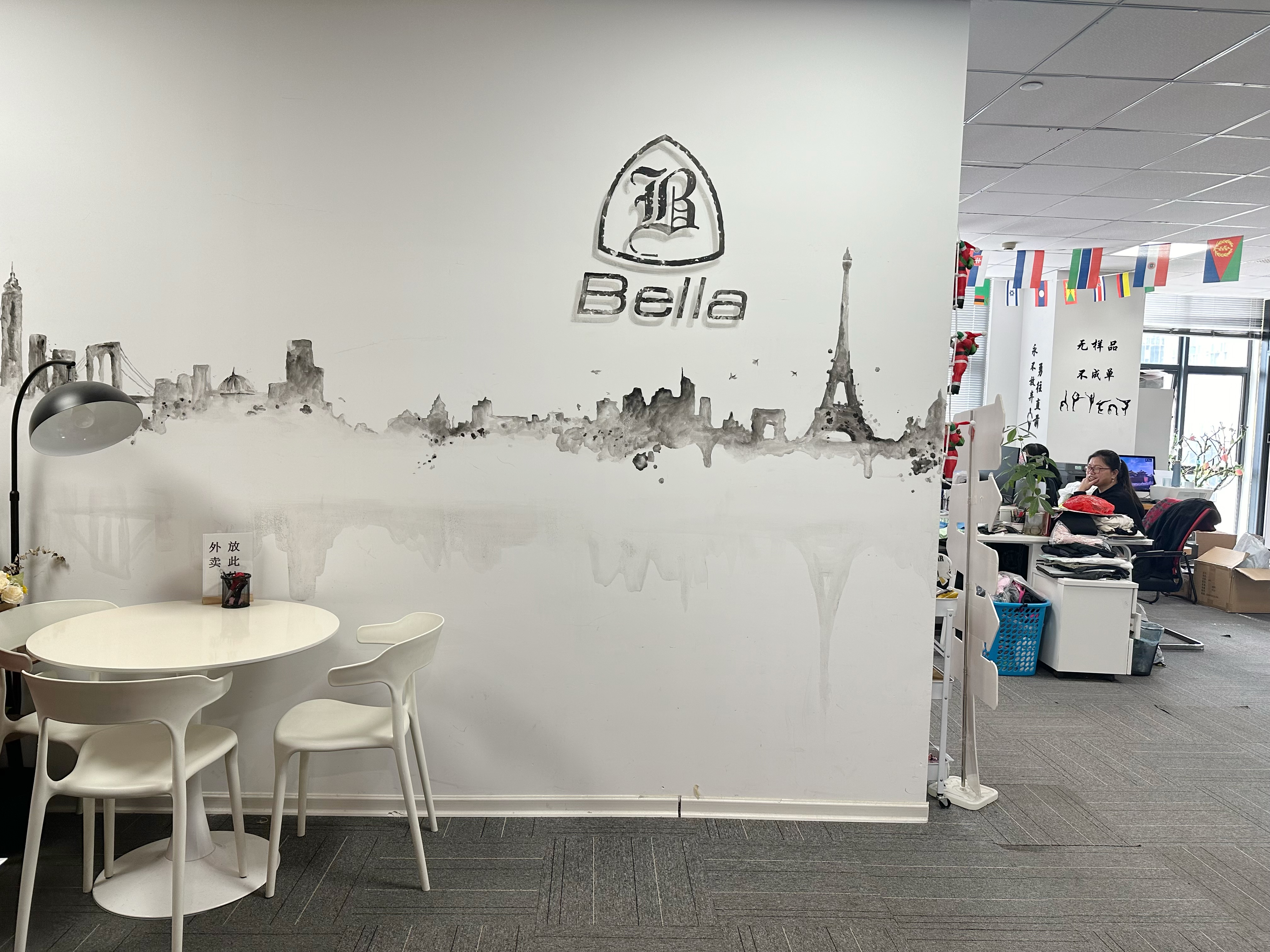
Bellasports, Xiamen — fabric development, sampling and OEM/ODM order coordination.
Conclusion
Nylon-spandex and compression fabric, recycled polyester with a windproof membrane, and organic cotton with bamboo are not three versions of the same material. They are three different answers to three different questions: how should this garment move, how should it resist weather, and how should it feel against the skin. Choosing between them means accepting the trade-offs each one carries rather than assuming a single fabric can cover a full range.
The decision sequence that holds up in practice is straightforward. Fix the sport and the performance claim. Decide whether a recycled claim or a chemical-safety scope is mandatory. Match the size range to the line plan. Confirm the fabric against the MOQ of 500 pieces and the 90-day lead time. Sample before committing, and let the sampling result — not the line sheet — determine what the finished product claims.
Bellasports (Xiamen Bella Fitness Co., Ltd.) manufactures across yoga and gym, outdoor and running, lifestyle, and golf and tennis categories, with in-house fabric mills, imported fabric sourcing from Italy and Taiwan, bonded seamless technology, and OEKO-TEX Standard 100, GRS and BSCI certification in place. For brands selecting a material direction for a new line, that combination is what makes the fabric comparison actionable rather than theoretical.