GRS vs OEKO-TEX vs BSCI for Activewear Development: Buyer Comparison Guide
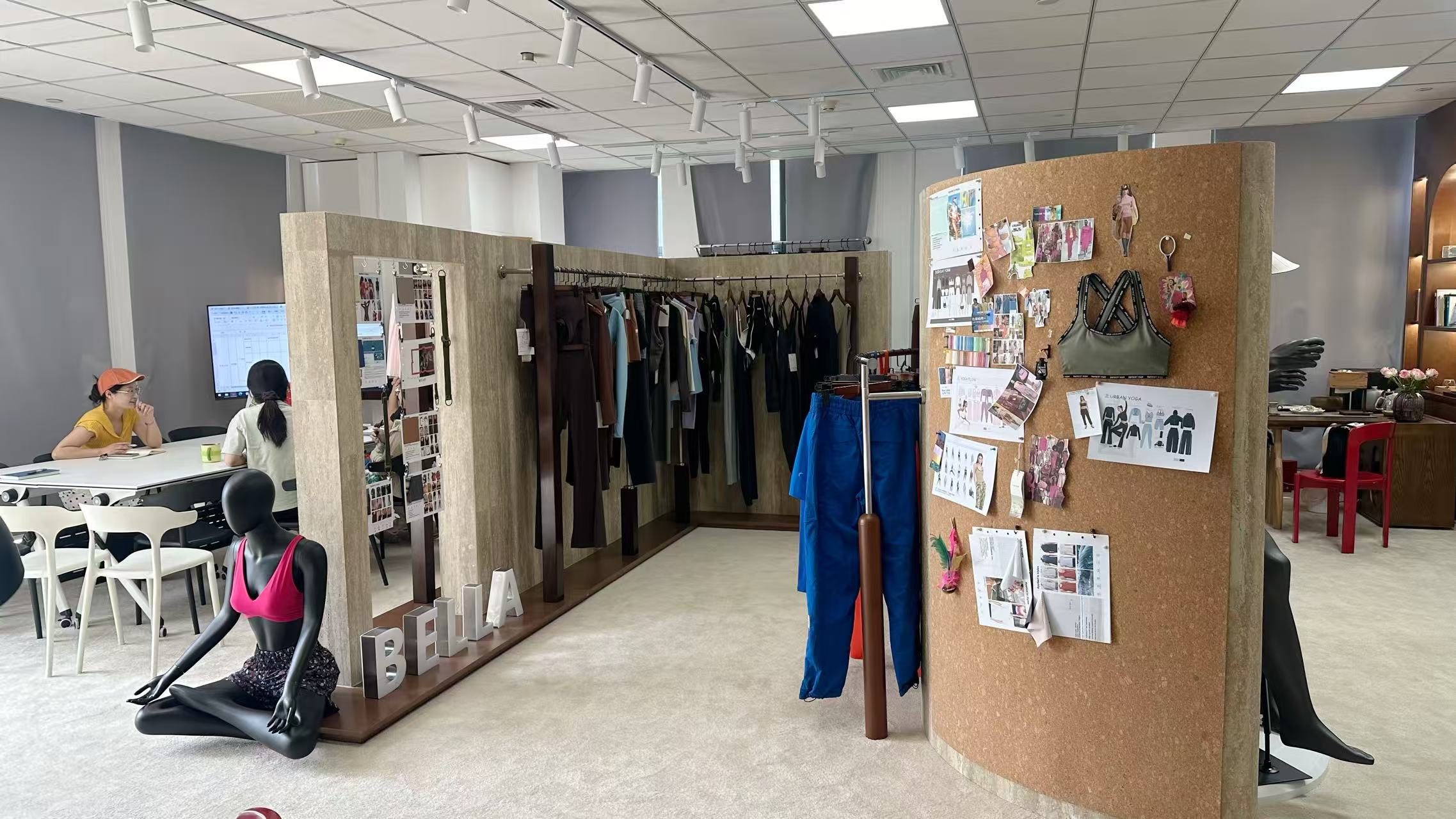
Activewear development samples on display: product, material and factory documents are three separate evidence tracks.
GRS, OEKO-TEX Standard 100 and BSCI answer three different questions in an activewear development program. GRS certificate CU1143477GRS-2023-00097318 covers recycled material sourcing and traceability. OEKO-TEX Standard 100 certificate HKC 23756 covers harmful-substance testing for the product categories it names, including yoga leggings, sports bras, tennis and pickleball skirts, golf dresses, modest activewear and running jackets. BSCI certification 24-0257545 applies to the BSCI Code of Conduct globally and addresses factory social compliance. None of the three certifies performance such as moisture-wicking or water repellency, and none sets MOQ, sampling or pricing terms.
That single distinction settles most of the confusion buyers meet at the decision stage. The three documents usually arrive in the same PDF pack, carry similar-looking reference numbers, and are all described in trade correspondence as "certifications". They attach to different objects. GRS attaches to material. OEKO-TEX Standard 100 attaches to the article. BSCI attaches to the factory. A document that answers a material question cannot answer an article question, and neither can answer a labour question.
Bellasports (Xiamen Bella Fitness Co., Ltd.) is an activewear OEM/ODM manufacturer with its own factory, CO-CHAIN, in Ningbo, China, and develops golf, tennis, yoga, gym, running, hiking and lifestyle apparel. The three certificate references compared here are the ones that appear in its compliance documentation, and they are used in this guide to show how each document should be read during supplier evaluation. Company and product information is published at Bellasports.
Why GRS, OEKO-TEX and BSCI get mixed up in the first place
Three practical reasons explain the confusion, and none of them is carelessness. First, the documents look alike: a certificate number, a scheme logo, a holder name, a scope page and a validity date. Second, they are requested in the same supplier setup form, so they are filed together and later read together. Third, trade language is loose. Suppliers, agents and even some retail vendor portals use "certified" as a single status rather than as a description of a specific scope.
The cost of a scope error shows up in two places. The first is the marketing claim. A brand that presents a GRS certificate as evidence of chemical safety, or an OEKO-TEX Standard 100 certificate as evidence of ethical labour, is making a claim that its own documentation does not support. Retail compliance teams and advertising-claims reviewers both look for exactly this mismatch. The second is product development. Certification of a material or an article is not certification of performance. A certified fabric is not automatically squat-proof, moisture-wicking or water-repellent, and treating it as such pushes a performance problem into the sampling stage where it is more expensive to fix.
A third error is quieter and appears at the point of order. Buyers sometimes assume a certificate held by a supplier automatically covers every style that supplier makes. Certificates have holders and scopes. A document that covers a defined set of articles does not extend to a new category merely because the same factory produced it.
Industry background: three pressures created three separate schemes
Activewear documentation did not grow as one system. It grew from three unrelated pressures. Recycled-content claims created a need to prove material origin and trace it through the supply chain. Chemical-safety expectations in destination markets created a need to demonstrate that the finished article had been tested against restricted-substance criteria. Retail and sourcing policies created a need to review the social conditions under which goods are produced. Each pressure produced its own scheme, with its own owner, its own scope boundary and its own verification route.
The commercial backdrop explains why this matters more now than it did a decade ago. Grand View Research valued the global activewear market at USD 440.4 billion in 2025, and growth of that size translates into more styles, more fabric programs and therefore more document packs moving between brands and factories. When a development calendar holds thirty styles across leggings, bras, skirts, dresses, jackets and joggers, the compliance pack stops being a single attachment and becomes a data set that has to be indexed by scope.
The buyer-side consequence is straightforward. Documentation discipline is now part of development lead time. A scope mismatch discovered after a purchase order is issued delays the buy; the same mismatch discovered during supplier evaluation costs a short email.
The material, article and factory lenses
The cleanest way to read a compliance pack is to assign each document to one of three lenses and refuse to let it answer questions outside that lens.
The material lens: GRS certificate CU1143477GRS-2023-00097318
The Global Recycled Standard is a voluntary certification for recycled content in textile products, built around chain-of-custody requirements that link recycled input to the finished material. GRS certificate CU1143477GRS-2023-00097318 covers recycled material sourcing and traceability. It answers one question well: can this supplier show that a material contains recycled content and that the material can be traced through the chain?
It does not answer three questions that buyers routinely attach to it. The certificate does not cover chemical testing of the fabric or garment. It does not set MOQ terms, sampling terms or price. And it does not support performance claims such as moisture-wicking or water repellency. A GRS reference is the right document for a recycled-content statement on a hangtag, a product page or a retail submission; it is the wrong document for a skin-safety statement or a sweat-management statement.
For a recycled four-way stretch legging or a recycled running jacket, the practical check is a scope check. Confirm the holder legal entity matches the entity you are contracting with, confirm which materials and products the certificate covers, confirm the current validity, and ask for order-level traceability documents that connect the certified material to your shipment. Verification should run through the scheme's own route rather than through a PDF forwarded in an email chain.
The article lens: OEKO-TEX Standard 100 certificate HKC 23756
OEKO-TEX Standard 100 is a testing and certification system for textile articles focused on harmful substances. Certification is issued for articles or product groups rather than for a general company capability, which is why the scope page matters as much as the certificate number. OEKO-TEX Standard 100 certificate HKC 23756 covers harmful-substance testing for products including yoga leggings, sports bras, tennis and pickleball skirts, golf dresses, modest activewear and running jackets.
That scope is unusually useful for a multi-category activewear program, because the named categories span several development tracks: a seamless sports bra, a pleated tennis skirt, a women's golf dress, a modest activewear set and a running jacket can all be discussed against the same article-level framework. The document answers whether the article has been tested against the standard's harmful-substance criteria.
It does not answer recycled-content questions, factory social conditions, performance questions or commercial terms. Two operating rules follow. First, keep the scope check per style: when a new fabric, a new trim set or a new product category enters the range, confirm with the certificate holder that the article falls within the certified scope before the claim is published. Second, do not let an article certificate imply a performance property. A certified running jacket is a tested article; it is not, by that fact alone, a water-repellent jacket.
The factory lens: BSCI certification 24-0257545
BSCI is a social-compliance framework built on a Code of Conduct and applied at the level of the participating business and its production sites. BSCI certification 24-0257545 applies to the BSCI Code of Conduct globally, which places the reference at the factory and social-review level rather than at the product level. It answers whether the production site has been reviewed against a recognised social-compliance code.
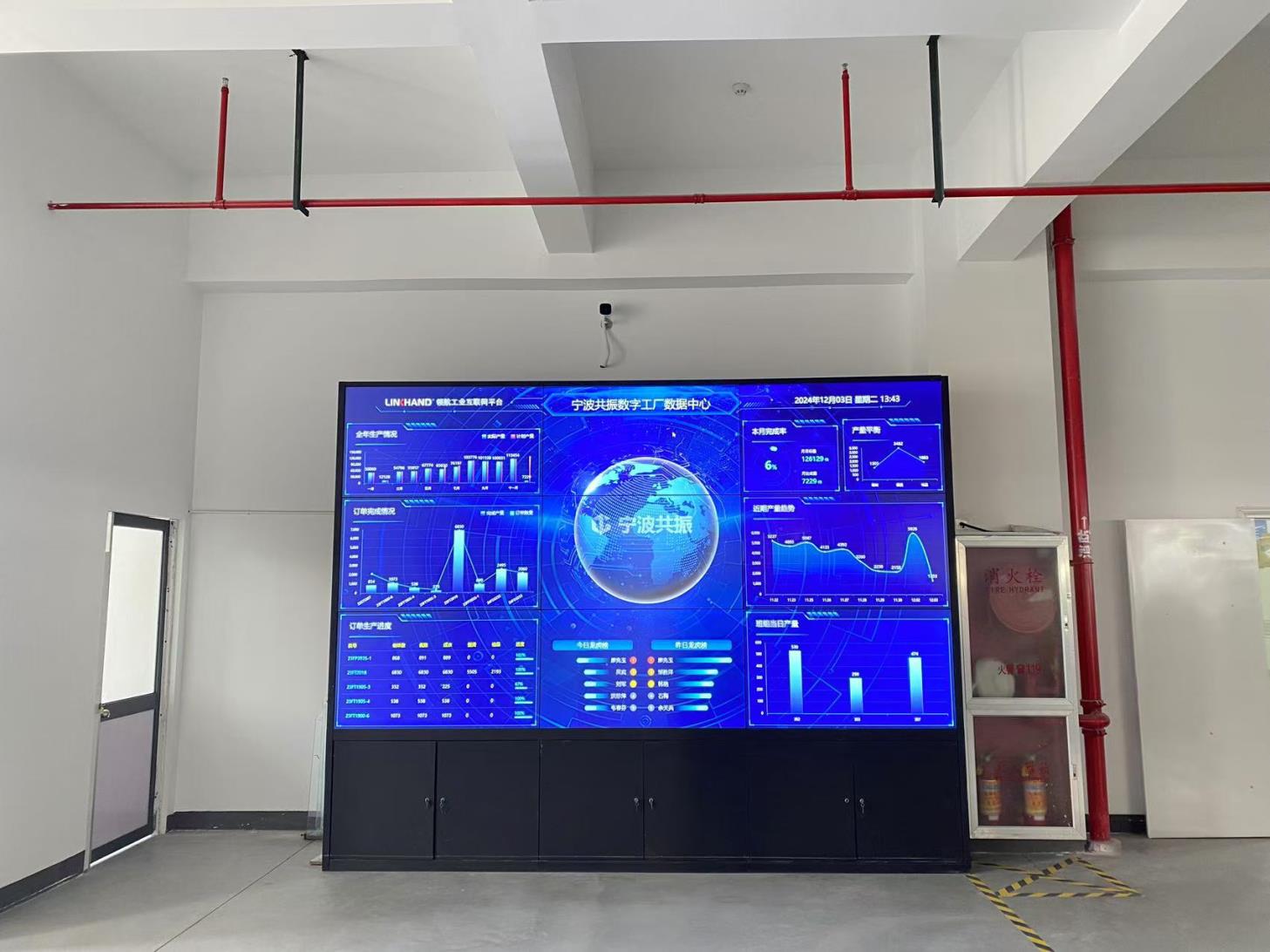
Factory-level evidence, such as production-line data, belongs to the social and operational review — not to the product certificate.
The separation this document enforces is the one buyers most often blur: product certification is not factory social review. A BSCI reference in a document pack says nothing about whether the fabric in a sports bra was tested for harmful substances. An OEKO-TEX certificate says nothing about working conditions on the line. Both statements are true at the same time, which is why both documents are requested.
The practical checks are site and cycle. Confirm that the audited site is the site that will actually produce your order, since multi-site suppliers and subcontracted stages can move production between buildings. Then confirm the current review cycle with the holder rather than relying on a copy attached to an older email. Bellasports operates its own factory, CO-CHAIN, in Ningbo, and states that products in its OEM/ODM process are required to comply with OEKO-TEX and BSCI standards as production compliance references.
What none of the three covers: performance and commercial terms
Three gaps are shared by all three documents, and they are the gaps that most often derail a development program.
The first gap is performance. Moisture-wicking, water repellency, four-way stretch, squat-proof opacity and shape retention are product attributes that require test evidence for the specific fabric and style. Eurofins lists ISO 9237 for air permeability, AATCC 195 for liquid moisture management and ISO 20932 for elastic fabric stretch and recovery among the activewear testing services it offers. That listing is a service reference, not proof of a legal requirement, and it does not establish pass or fail thresholds for your product; it does show the kind of method evidence a performance claim should sit on.
The second gap is commercial terms. MOQ, sample fees, sampling lead time, bulk lead time and price are contractual matters. No certification scope includes them, and a document pack that mixes them with compliance evidence becomes harder to audit.
The third gap is entity coverage. None of the three documents automatically follows a product across a change of factory, a change of fabric supplier or a new product category. Scope is a property of the document, not of the supplier relationship.
GRS vs OEKO-TEX vs BSCI: side-by-side comparison
| Comparison point | GRS (CU1143477GRS-2023-00097318) | OEKO-TEX Standard 100 (HKC 23756) | BSCI (24-0257545) |
|---|---|---|---|
| What the document attaches to | Material | Article (product) | Factory social compliance (Code of Conduct) |
| Question it answers | Does the material contain recycled content, and can it be traced? | Has the article been tested for harmful substances? | Has the production site been reviewed against the BSCI Code of Conduct? |
| Named product coverage | Recycled material sourcing and traceability within the certificate scope | Yoga leggings, sports bras, tennis and pickleball skirts, golf dresses, modest activewear, running jackets | Not product-specific; applies to the Code of Conduct globally |
| Chemical / harmful-substance testing | Not covered | Covered | Not covered |
| Recycled content and traceability | Covered | Not covered | Not covered |
| Factory social conditions | Not covered | Not covered | Covered |
| Performance claims (moisture-wicking, water repellency) | Not covered | Not covered | Not covered |
| MOQ, sampling, lead time, price | Not covered | Not covered | Not covered |
Claim-to-document map for activewear buyers
Working from the claim backwards is faster than working from the certificate pack forwards. Start with the statement you intend to publish or submit, then attach the document that supports it.
| Claim you intend to make | Governing document | What still has to be checked |
|---|---|---|
| Made with recycled material | GRS CU1143477GRS-2023-00097318 | Material and product scope, holder entity, validity, order-level traceability |
| Tested for harmful substances | OEKO-TEX Standard 100 HKC 23756 | That the specific style falls inside the certified article scope |
| Produced under a reviewed social-compliance code | BSCI 24-0257545 | That the audited site is the site producing your order, plus current review cycle |
| Moisture-wicking | Performance test report for the specific fabric | Method selection and acceptance criteria agreed with the laboratory |
| Water-repellent | Separate performance test report on the shell fabric | That the finish survives the intended care and use cycle |
| Low MOQ and fast sampling | Quotation and sampling agreement | Written confirmation of MOQ basis, sample fee and sampling lead time |
Seven-step document verification before you commit
The workflow below is built for the point where a buyer has shortlisted a supplier and is preparing sampling. It runs in order because each step narrows what the next step needs to check.
- Write the claim first. Before opening the document pack, write the exact sentence you intend to publish, submit to a retailer or print on a hangtag. A claim that cannot be written as one sentence usually hides two claims that need two documents.
- Assign the claim to a lens. Material, article or factory. Recycled-content statements go to GRS; harmful-substance statements go to OEKO-TEX Standard 100; labour and site statements go to BSCI.
- Verify the holder. Match the certificate holder legal entity to the entity you are contracting with, and document any intermediary relationship in writing. Certificate numbers alone do not establish who is entitled to use them.
- Verify the scope against your styles. For HKC 23756, check that the article categories you are developing are inside the certified scope. For CU1143477GRS-2023-00097318, check which materials and stages the recycled-content claim covers.
- Verify currency through the scheme's own route. Ask the holder for the current version rather than relying on a copy attached to an older email, and confirm the site and review cycle for the BSCI reference.
- Separate performance evidence. Request test reports per fabric and per claim for moisture management, stretch and recovery, opacity or water repellency. Performance evidence is a laboratory document, not a certification page.
- Record the mapping in the tech pack. Note which document supports which claim, and re-run the check at each new style, new fabric or new production site. This prevents a claim approved for one legging program from silently travelling to an unrelated jacket program.
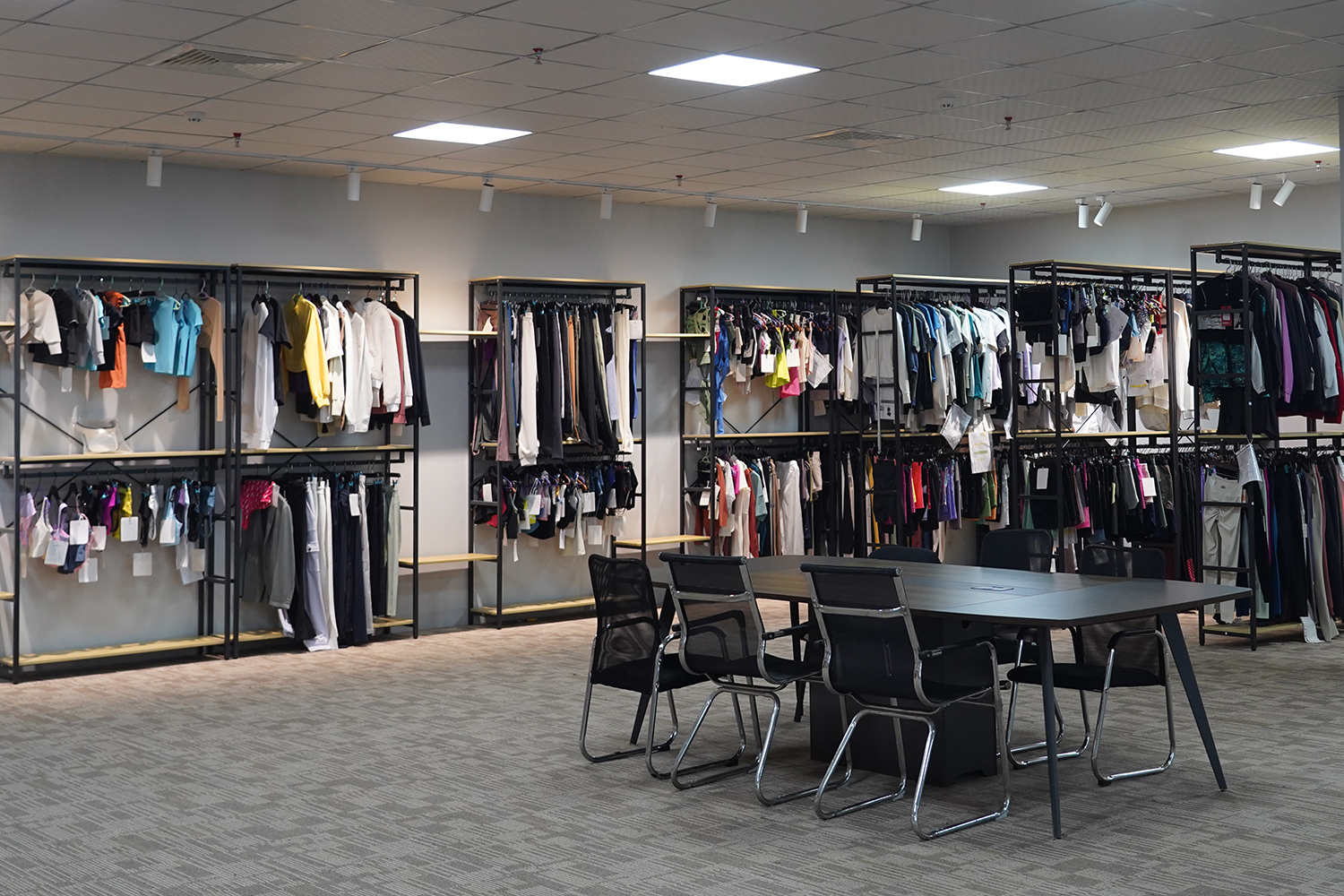
Sampling is the checkpoint where document scope and performance evidence are tested against a real garment.
Bellasports' OEM/ODM workflow follows the same sequence from the supplier side: requirement communication with a tech pack, reference sample or fabric requirements; sampling; bulk production on the FMS smart production line at its own factory in Ningbo; then quality control and shipping. Compliance documents are requested at the requirement stage, which is the cheapest point at which a scope gap can be found.
Applying the three lenses across an activewear range
Yoga leggings and four-way stretch leggings. Yoga leggings fall inside the article scope of HKC 23756, so harmful-substance documentation is available at article level. If the fabric is recycled, GRS becomes the governing document for the recycled-content statement. Neither document speaks to opacity, four-way stretch or moisture-wicking; those are fabric-development decisions. Bellasports' reference specification for high-end squat-proof leggings is a Nylon/Spandex blend of 75–80% Nylon and 20–25% Spandex at 240–280 GSM, often combined with bonded construction to reduce stitching friction — a material and construction choice, evaluated against its own criteria rather than against a certificate.
Sports bras and seamless sportswear. Sports bras are named in the OEKO-TEX certificate scope. Where a style relies on bonded or seamless construction for comfort, the bonding process is a production variable that the article certificate does not evaluate; stretch and recovery evidence has to come from testing.
Tennis and pickleball skirts, women's golf dresses. Both categories are named in the certificate scope, which simplifies the article-level conversation for a category that often combines several materials and trims in one style. Confirm that the certified scope covers the article as specified when a new material or trim set is introduced.
Running jackets and windbreakers. Running jackets are inside the article scope of HKC 23756, and this is the category where the most common misreading occurs. Harmful-substance testing and water repellency are unrelated properties. A water-repellency claim needs its own performance report on the specific shell fabric, and that report should be requested at the same time as the compliance pack.
Modest activewear and loungewear sets. Modest activewear is named in the certificate scope. Coverage, opacity and drape are design and fabric questions; the certificate answers only the harmful-substance question.
Two program-level use cases. A brand moving a running or training range to recycled fabric should treat GRS as the governing document and plan traceability documents at the order level from the start. A brand whose retail customer requires a social audit should treat BSCI as the governing document and confirm the producing site before capacity is allocated.
FAQ: GRS, OEKO-TEX and BSCI in activewear development
Does GRS certification mean the fabric has passed harmful-substance testing?
No. GRS certificate CU1143477GRS-2023-00097318 covers recycled material sourcing and traceability, which is a material-content and chain-of-custody question. It does not cover chemical testing. Harmful-substance testing for the listed article categories is addressed separately by OEKO-TEX Standard 100 certificate HKC 23756. A program that needs both statements needs both documents, each checked against its own scope.
If our running jackets are covered by OEKO-TEX Standard 100, can we market them as water-repellent?
No. OEKO-TEX Standard 100 certificate HKC 23756 covers harmful-substance testing for products including running jackets; it does not certify water repellency or any other performance property. A water-repellency claim requires a performance test report on the specific shell fabric used in that style, with the test method and result stated. The same rule applies to moisture-wicking claims, which should be supported by method-based test evidence rather than by a certification page.
Does BSCI certification cover the products our factory makes?
No. BSCI certification 24-0257545 applies to the BSCI Code of Conduct globally and addresses factory social-compliance review, not product specification. It should be read as a site-level document that sits beside a product certificate, not as a substitute for one. Buyers should confirm that the audited site is the site that will produce their order, and confirm the current review cycle with the holder.
Do these three certificates change MOQ, sampling or price?
No. None of the three documents sets MOQ terms, sampling terms or pricing; those are commercial matters recorded in a quotation or agreement. At Bellasports, the standard MOQ is 300 pieces per color per style, with mixed sizes supported within one color, and sampling usually takes 15–25 working days after design confirmation and payment of the sample fee. Those figures belong in the commercial file, and the certificate pack belongs in the compliance file; keeping them apart makes both easier to audit.
What is the most efficient way to confirm all three documents apply before sampling begins?
Send the tech pack first, then request the three documents with their reference numbers and ask three specific questions: which legal entity holds each document, which product or site scope it covers, and whether the styles in your program fall inside that scope. Screen the article categories against HKC 23756, the recycled materials against CU1143477GRS-2023-00097318, and the producing site against 24-0257545. Performance reports are then requested per fabric and per claim, so the sampling round tests a documented specification rather than an assumption. Bellasports handles this in the requirement-communication step of its OEM/ODM process, where a tech pack, reference sample or fabric requirements start the sampling scope and the commercial quotation.
Conclusion: one document, one question
The comparison comes down to a habit rather than a hierarchy. GRS certificate CU1143477GRS-2023-00097318 answers the recycled-material question and stops there. OEKO-TEX Standard 100 certificate HKC 23756 answers the harmful-substance question for the articles it names — yoga leggings, sports bras, tennis and pickleball skirts, golf dresses, modest activewear and running jackets — and stops there. BSCI certification 24-0257545 answers the factory social-compliance question through the BSCI Code of Conduct and stops there. Performance evidence answers the moisture-wicking, water-repellency, stretch and opacity questions, and commercial documents answer the MOQ, sampling and price questions.
Buyers who keep that mapping explicit get three benefits that are easy to underestimate: claims that survive retail and advertising review, performance problems caught before bulk production rather than after, and a document pack that a new colleague can read without a specialist briefing. The check itself takes less time than a single sampling revision.
For development programs that need the full document set plus a sampling quotation, the practical next step is to send a tech pack or reference sample with the claim you intend to make, and ask for the scope check on all three documents in the same reply.

Across yoga, tennis, golf and running categories, each document in the pack covers a different part of the development decision.
Have Questions or Need More Details?
Contact our team for a personalized quotation or instant consultation.
Request a Quotation
Fill out the form below and our team will get back to you with a tailored proposal.
WhatsApp Direct Chat
Prefer to chat in real-time? Message us on WhatsApp for instant assistance & quick answers.
- Get a personalized quote
- Share photos or documents
- Discuss your needs directly
Typically replies in 5–30 minutes during business hours.