
Screw Press Sludge Dewatering Compliance: A Purchase-Terms Checklist
Compliance on a screw press sludge dewatering purchase is decided by the clauses in your order, not by the PDF bundle that arrives after the order is signed. The working method is simple to state and rarely applied: for every market you buy for or ship into, convert each requirement into four linked items — a contract clause, a named document, a scope statement that identifies your model, and a sign-off gate that holds money until the document is accepted. Once those four exist, a compliance discussion stops being an argument about whether a certificate “counts” and becomes a check of five fields on a page.
This guide is written for importers, engineering contractors, OEM buyers and plant procurement teams who are moving a sludge dewatering equipment purchase from research into evaluation. It applies to municipal sludge dewatering systems, industrial sludge dewatering machines, DAF sludge dewatering packages and any screw press dehydrator that must be documented before it is paid for. Benenv MDS multi-disk screw press documentation is used throughout as a worked example, because the certificate details available are specific enough to test the method against a real page.
Why “send us your certificates” fails as a compliance instruction
The instruction fails because it describes an action, not an outcome. A supplier can answer it truthfully and still leave you without usable evidence. In practice, three failure modes account for most rejected document packs.
Failure one: the wrong document type. A quality-management certificate is not a product-conformity certificate. A marketplace listing that carries “ISO 9000” as an attribute is neither, and ISO 9000 is not a product certification standard at all. The document that answers a conformity question must be a conformity document, with a number, an issuer and a scope.
Failure two: the wrong scope. A certificate that names a product family does not automatically name the configuration you bought. If your order specifies a particular model, material and control arrangement, the link between that configuration and the certified scope has to be stated in writing by the supplier — otherwise your auditor is being asked to accept an inference.
Failure three: the wrong clock. Certificates expire, and projects do not run to certificate calendars. A document that is valid at order date may be expired at commissioning or during the warranty period. Validity dates belong in the purchase terms as a tracked obligation, not in a filing cabinet.
The reframe that makes compliance manageable: stop asking “is the supplier certified?” and start asking “which document, covering which model, issued by whom, valid until when, and released to me at which gate?” The second question can be answered with a spreadsheet. The first cannot.
Industry background: more suppliers, more paperwork, same audit questions
Document discipline matters more as the supplier pool widens. Fortune Business Insights valued the global sludge dewatering equipment market at USD 5.19 billion in 2024 and projects the screw press segment to grow at the highest CAGR of the forecast period, at 9.4% for 2025–2032; the same source puts Asia Pacific at 37.57% of 2024 revenue (SRC-0001). A market-strategy compilation reports an average selling price of USD 46,000 per unit for sludge screw dewatering presses in 2025, a figure that reflects mixed product scopes and should be read as a budgeting reference only, not as a quotation for a specific configuration (SRC-0004).
None of those numbers tell you whether a specific machine is documented. They tell you that more configurations are on the market than a decade ago, that more of them will be offered to you with a certificate pack attached, and that the pack will vary in quality. The buyer-side response is not more paperwork requests. It is a tighter definition of what a delivered document must contain.
The four evidence layers a screw press order actually needs
Compliance evidence for a sludge dewatering unit sorts into four layers. They are not interchangeable, and a document from one layer never satisfies a question from another. Keeping them separate is the single most useful habit in this guide.
Layer 1 — product conformity evidence
This is the layer that names a product and a standard. As a concrete example of what the layer looks like when it is complete, Benenv holds a CE certificate numbered M.2024.206.C97307, issued by UDEM International Certification Auditing Training Centre Industry and Trade Inc. Co., for the EU market, with “Multi-Disk Screw Press” as the certified scope and EN 60204-1:2018 as the standard cited. It was issued on 2024-03-06 and expires on 2029-03-05.
Read that paragraph again as a checklist rather than as a claim. It contains a document name, a unique number, an issuing body, a target market, a scope statement, a cited standard and two dates. Those are exactly the five fields plus dates you should demand for your own order. It is also worth being precise about what the page does not do: it does not establish that the cited standard is the only one your market requires, it does not state that auxiliary equipment is inside the certified scope, and it says nothing about dewatering performance. It is conformity evidence for a defined scope, and nothing more should be read into it.
Layer 2 — quality-management evidence
This layer answers a manufacturing-consistency question, not a product question. Benenv’s quality system certificate is ISO 9001, number 18122Q11896R1M, issued by CICC Certification against GB/T 19001-2016 / ISO 9001:2015, with a scope covering design and production of the multi-disk screw press, WAVE separator, super sludge dryer, carbonization furnace and fermentation tank, recognised under Global (IAF) and China (CNAS) arrangements. It runs from 2025-08-28 to 2028-09-01.
For a buyer, the practical value of this layer is that it supports questions about design control and production consistency across a 20,000 m² factory producing around 500 units a year. It does not certify the electrical build of a machine, the material grade of a specific screw, or the outlet dryness you will achieve on your sludge. Buyers who blur layers 1 and 2 are the buyers who accept a system certificate as an answer to a product question.
Layer 3 — market entry and jurisdictional requirements
This is the layer buyers must build themselves, and it is the layer most often missing from the terms. No supplier can define for you which national approvals, import formalities, labelling rules or electrical schemes your authority will demand. What a supplier can do is name which of your listed requirements its documents satisfy and which it cannot, in writing, before the order is placed.
That asymmetry is why Layer 3 belongs in the contract as a buyer-owned register with a named owner inside your organisation, rather than as an assumption that the supplier has handled it.
Layer 4 — project acceptance criteria
This layer is about whether the machine works on your sludge, at your flow, to your cake target. It is a different question from conformity, and it is settled by a test protocol, not by a certificate. Published manufacturer capacity figures — Benenv’s per-model dry-solids and hydraulic ranges, and the dry-solids capacity figures other suppliers publish, such as HUBER’s Q-PRESS figure of up to 540 kg DR/h — are not produced under a shared test protocol with common feed sludge, polymer dose and dryness targets. They cannot be benchmarked against each other, and they should not be written into a contract as guaranteed values without a stated test basis.
A seven-step method for writing compliance into purchase terms
The sequence below moves from the physical boundary of the order outward to the contractual gates. Each step produces something a lawyer can paste into an annex and an engineer can check.
Step 1: Fix the scope of supply before you fix the documents
Documentation follows equipment. If the boundary of the order is vague, the document pack will be vague in exactly the same places. Benenv describes a screw press dewatering installation as including a sludge feed pump (screw pump), a polymer dosing system, an electrical control cabinet with PLC control, and a cake conveying system (belt or screw conveyor), operating automatically and continuously. Those components are the boundary to negotiate, not an automatic inclusion in every quotation.
Build a two-column inclusion and exclusion table and attach it as the technical annex. State who supplies the polymer preparation water, drain points, lifting equipment, civil works, cabling, compressed air and spares. Every compliance document you later request should reference this annex by revision number, so that a certificate reviewed in month one still corresponds to the configuration shipped in month six.
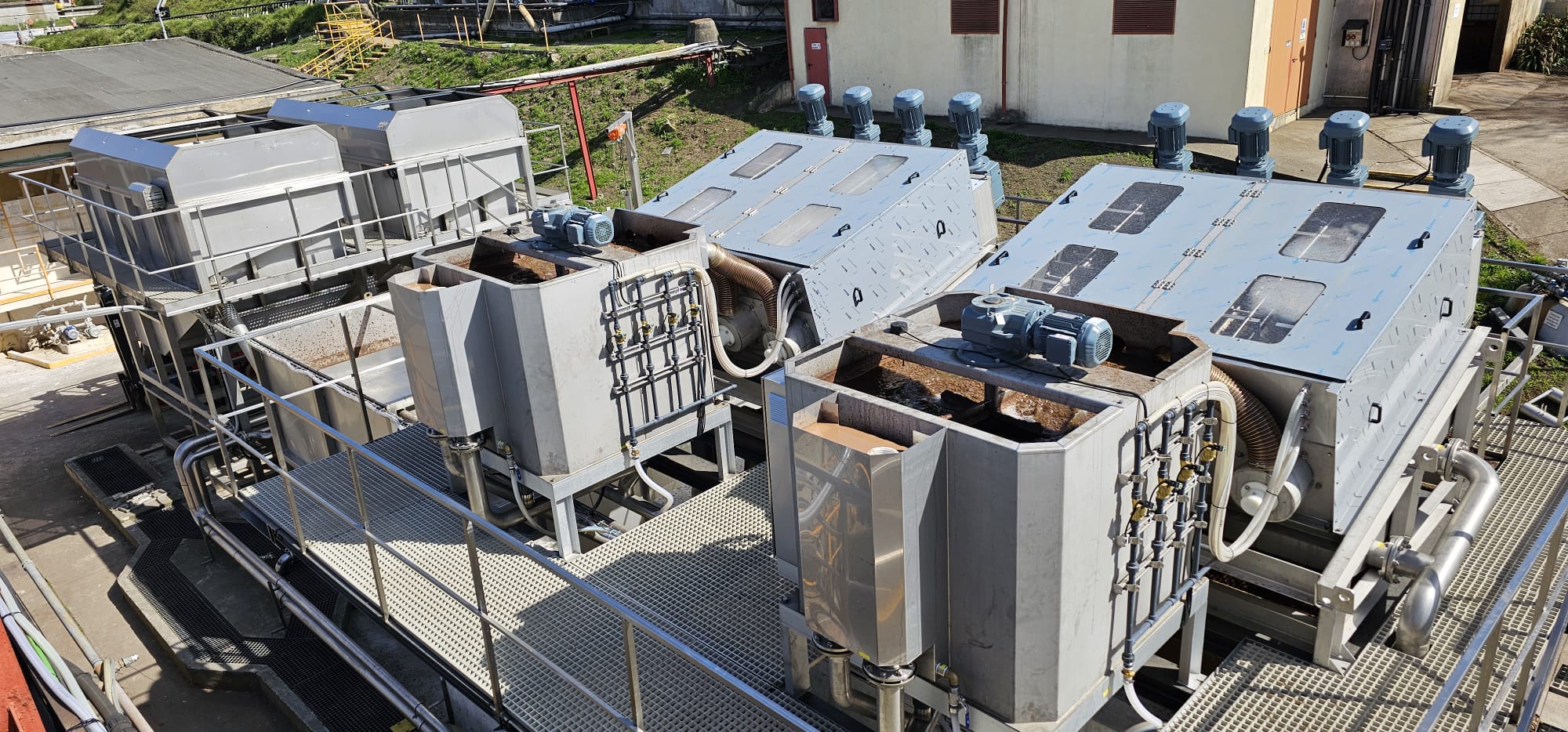
Benenv MDS354 multi-disk screw press — the equipment boundary, not the certificate, is the first thing to fix in a compliance annex.
Step 2: Build a jurisdiction register with one owner per line
A jurisdiction register is a single table with columns for market, the exact scheme or approval your authority requires, the document type that satisfies it, the internal owner, the date it was last verified, and its status. One row per market, no row left blank. The rule attached to the register is blunt: no verified row, no shipment release.
Two drafting rules keep the register honest. First, name documents, not intentions — “local electrical approval as required by the authority having jurisdiction, specific scheme to be confirmed by buyer by [date]” is workable; “complies with local regulations” is not. Second, never let a supplier’s general conformity mark stand in for a market-specific approval you have identified. A CE certificate and an ISO 9001 certificate are not substitutes for a national scheme, and a supplier that volunteers them as substitutes has told you something useful about how it handles document questions.
Step 3: Write each requirement as a five-field document deliverable
Convert every requirement into a deliverable specification containing five fields: document title, unique identifier or registration number, issuing body, scope statement that names the model and configuration, and issue plus expiry dates. Add language, legalisation and format requirements if your authority needs them, and state whether a scan is acceptable at the gate or an original must be couriered.
The CE certificate described earlier passes this test cleanly because all five fields exist on the page. A generic “certificate of compliance” letter written by the supplier does not, because it has no third-party identifier and no scope statement. The five-field format is what lets a junior procurement officer reject a pack that a senior engineer would otherwise have to review.
Step 4: Put the model and configuration into the technical annex
Model naming is where scope gaps appear. Multi-disk screw press ranges contain models that differ substantially in power, throughput and water demand, and a document that names only the product family leaves the model link unproven. Benenv’s published MDS data illustrates the spread; the figures below are manufacturer-published characteristics, not guarantees for your site.
| Model | Power | Hydraulic capacity | Dry solids | Backwash water | Weight |
|---|---|---|---|---|---|
| MDS131 | 0.2 kW | 0.24–3 m³/h | 6–12 kg/h | 24 L/h | 205 kg |
| MDS201 | 0.3 kW | 0.4–6 m³/h | 12–20 kg/h | 32 L/h | 320 kg |
| MDS301 | 0.8 kW | 1.2–15 m³/h | 30–60 kg/h | 40 L/h | 910 kg |
| MDS351 | 1.9 kW | 2.4–30 m³/h | 60–120 kg/h | 72 L/h | 1,610 kg |
| MDS401 | 2.25 kW | 3.4–50 m³/h | 100–170 kg/h | 80 L/h | 2,500 kg |
| MDS403 | 6.7 kW | 10.2–150 m³/h | 300–510 kg/h | 240 L/h | 4,550 kg |
Standard material for these units is SS304 or SS316L. Write the material grade you require into the annex as a named grade, not as “stainless steel”, and decide whether you want mill or heat certificates for the wetted parts. Add the auxiliary components from Step 1 with their own make, model and rating, because a conformity pack for a press does not automatically document the feed pump, the dosing skid or the control cabinet. Where a change is later requested — a different material grade, a different control arrangement, an added conveyor — re-run this step, because a change to the configuration is also a change to what your documents must cover.
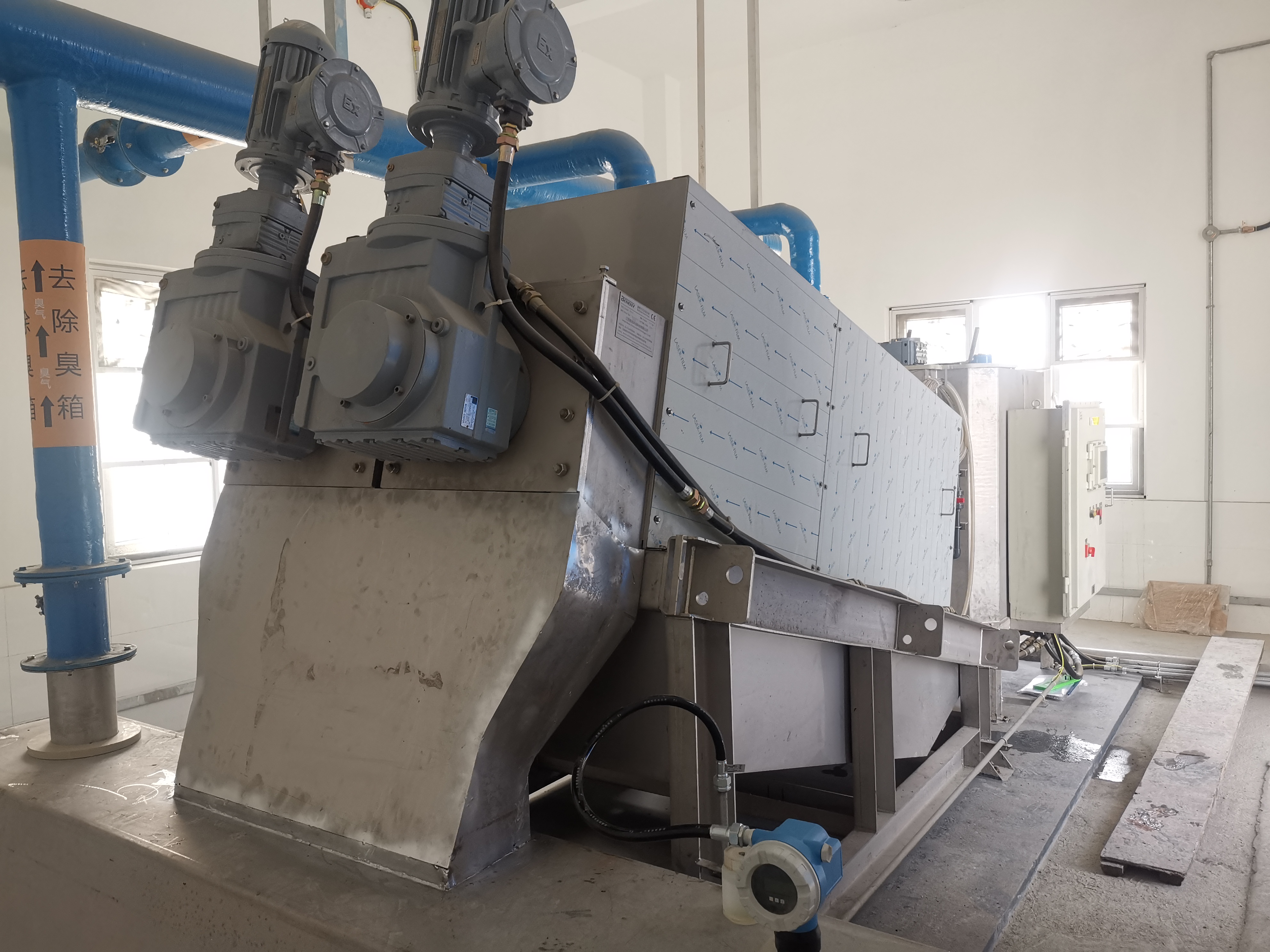
Benenv MDS201 — small-frame model data still belongs in the technical annex, because model naming is what links a certificate to a shipment.
Step 5: Define the acceptance test basis and who witnesses it
An acceptance criterion without a test basis is an opinion. The clause should state the feed sludge type and inlet solids concentration, the polymer type and the dose ceiling you will accept, the target cake dry-solids percentage, the throughput basis, and the sampling method and duration. It must also state which capacity basis is guaranteed: hydraulic flow in m³/h and dry-solids throughput in kg/h are different measurements and must never be blended into one headline number.
Add the commercial mechanics that make the test meaningful: who witnesses, whether a third-party inspector attends, how many re-tests are allowed, what adjustment window exists before rejection, and what happens to payment if the test is failed. Benenv’s production process includes a 100% pre-shipment test and third-party inspection such as SGS where required; that covers factory verification of build and function. It does not replace a site performance test on your sludge, and a well-drafted order says so explicitly rather than letting the two be confused.
Step 6: Attach money to gates
Gates are where compliance stops being administrative. Each gate should have an owner, an acceptance action, a document list and a payment or release consequence. A workable structure for a sludge dewatering unit runs as follows.
- Gate 0, order release: document pack for the named model received, checked against the five-field format, and accepted. No acceptance, no deposit.
- Gate 1, drawing approval: technical annex signed, including scope of supply, utility data and material grades. No signature, no production slot.
- Gate 2, pre-shipment: factory test completed, inspection report received, and every certificate re-checked for validity at the actual shipment date rather than the order date.
- Gate 3, arrival: packing and marking verified, originals or certified copies received, spare parts list and O&M documents confirmed present.
- Gate 4, commissioning and performance acceptance: witnessed test per the protocol in Step 5, operator training completed, handover pack signed.
- Gate 5, warranty and renewal: retention released, and a standing obligation that any certificate expiring during the warranty period is replaced and forwarded within an agreed number of days.
Step 7: Manage expiry, change and re-issue across the contract life
Both certificates described in this article will expire inside a typical framework agreement: the ISO 9001 certificate on 2028-09-01 and the CE certificate on 2029-03-05. That is normal, and it is precisely why the terms should treat renewal as a supplier obligation rather than as a buyer chase. Write three clauses: renewal notification within a stated period before expiry, written notification if a certificate is suspended or withdrawn, and a change-control trigger requiring written confirmation whenever a configuration change could move the equipment outside a certified scope.
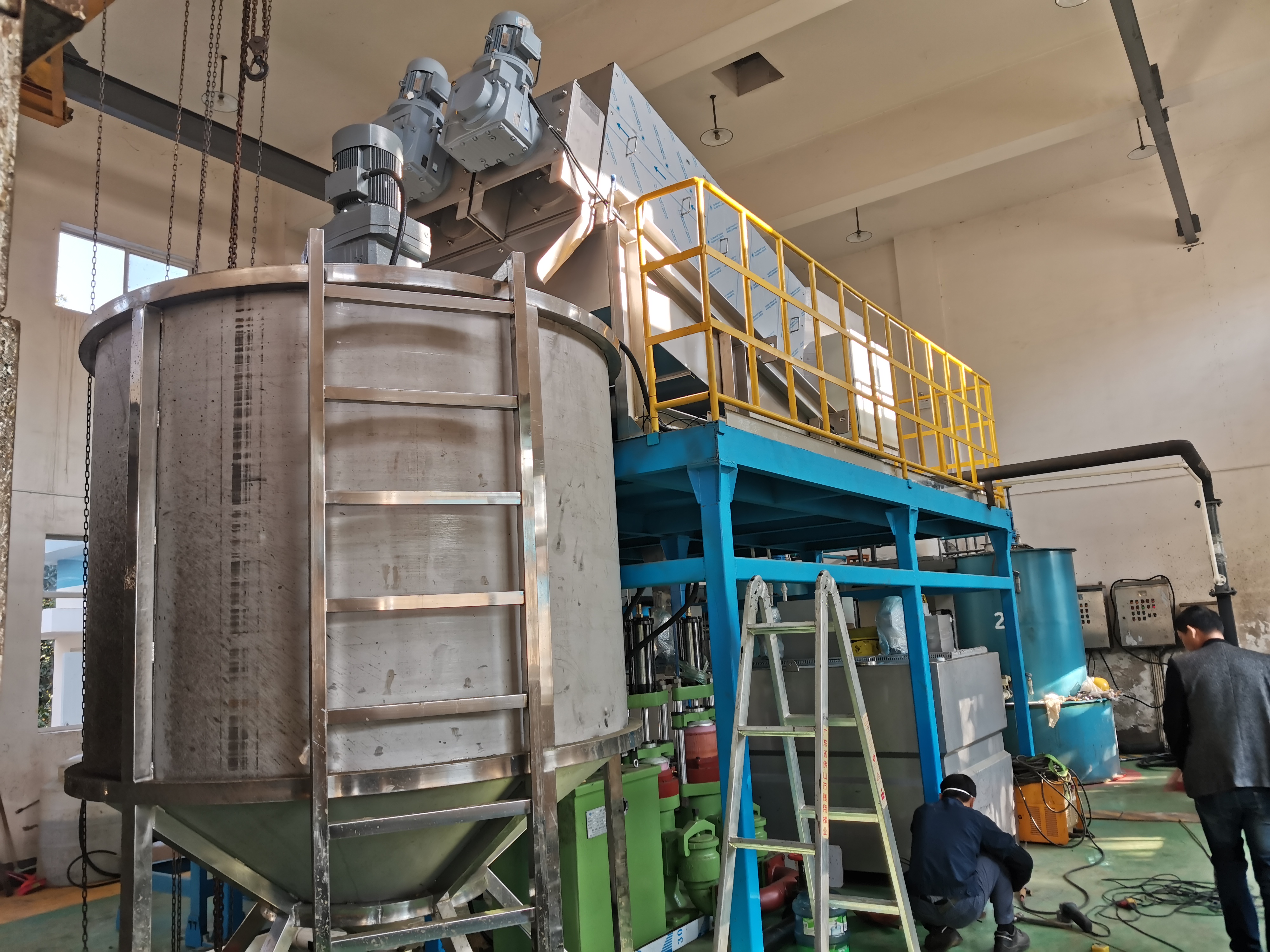
Benenv MDS351 — a mid-range frame where a configuration change to material or controls should re-trigger the document check.
Clause map: requirement, purchase-term wording and sign-off gate
The table below is the deliverable of the seven steps in one page. It is written as a template, with the Benenv example inserted where a real identifier makes the format clearer.
| Requirement | Purchase-term clause (essence) | Document deliverable | Gate |
|---|---|---|---|
| Product conformity, EU | Supplier shall provide a valid CE certificate naming the equipment scope, with number, issuing body, cited standards and validity dates. | CE certificate M.2024.206.C97307, scope Multi-Disk Screw Press, EN 60204-1:2018 cited, valid to 2029-03-05 (format example) | 0, re-checked at 2 |
| Quality management | Supplier shall provide a valid ISO 9001 certificate covering design and production of the supplied equipment. | ISO 9001 certificate 18122Q11896R1M, CICC Certification, IAF/CNAS, valid to 2028-09-01 | 0 |
| Scope of supply | Boundary of equipment and buyer-supplied interfaces defined in a signed annex. | Technical annex with inclusion/exclusion table and revision number | 1 |
| Materials | Wetted parts in the named grade; material evidence supplied if requested. | Material certificates for SS304 or SS316L parts, per buyer requirement | 2 |
| Performance | Guaranteed dry-solids throughput and cake dryness at stated feed, polymer and utility conditions. | Witnessed site test report against the agreed protocol | 4 |
| Build verification | Factory test before shipment; third-party inspection where the buyer specifies it. | Pre-shipment test report; SGS or equivalent inspection report | 2 |
| Handover | Operation and maintenance documents, drawings, spare parts list and training record delivered. | Handover pack, signed by both parties | 4 |
| After-sales | Installation guidance, operator training, technical assistance and spare parts supply confirmed in writing. | Service commitment letter with response route | 5 |
| Jurisdiction-specific | Buyer-named national scheme, document type and language defined before order. | The exact document the authority accepts | 0 and 3 |
Regional checks: what a document set proves and what it does not
Regional checking is not a hunt for more certificates. It is the discipline of matching each market to the evidence that market actually accepts, and being explicit about the gaps. The table below shows how that looks against the document set reviewed for this article.
| Market | What the reviewed document set shows | What the buyer must still define |
|---|---|---|
| European Union | CE certificate M.2024.206.C97307, scope Multi-Disk Screw Press, standard EN 60204-1:2018 cited, valid to 2029-03-05 | Which standards and legislative references your own technical file must cite, and whether auxiliary equipment is inside or outside the certified scope |
| Global quality system | ISO 9001 certificate 18122Q11896R1M covering design and production, IAF and CNAS recognised | Nothing about product conformity — this layer answers a different question |
| North America | No North American electrical conformity document is included in the set reviewed here | The exact scheme and document your authority accepts, confirmed with the supplier in writing. Absence from this set is not evidence that the capability is absent |
| Middle East, Asia and Oceania | Reference installations, including Oman, the UAE, Indonesia, Vietnam, Thailand, India and New Zealand | Import formalities, labelling, national approval and the language of acceptance documents |
The North American row is the one buyers mishandle most often. A missing document is a question to put to the supplier, not a conclusion about the supplier. Equally, a supplier’s silence is not documentation, and “not stated” must never be written into your file as “not required”. The correct move is a dated written query with a specific document named in it.
How the checklist changes with the sludge stream
The clause architecture stays the same across applications; the acceptance criteria inside it change. That is where a compliance annex earns its keep.
Municipal sludge dewatering. Feed is comparatively predictable but flow varies with weather and plant load. The annex should define the design flow range and the minimum residence time the plant can tolerate, and the gate 4 test should run long enough to cover a realistic load swing rather than a single steady-state sample.
Industrial sludge dewatering. Chemical, textile, paper, electroplating and pharmaceutical streams can vary in solids concentration and in flocculation behaviour. Because stable flocculation and corrosion-resistant materials are explicit conditions for reliable operation, the annex should fix the polymer type and dose ceiling and name the material grade for wetted parts. For aggressive streams, SS316L should be specified deliberately rather than discovered at commissioning.
DAF sludge dewatering. Dissolved air flotation sludge behaves differently from biological sludge, and buyers frequently import throughput expectations from a municipal reference. Benenv references include municipal installations dewatering DAF sludge in North America, reported as stable operation over two and three years respectively. Those are operating-status reports from named projects, not performance guarantees and not conformity evidence.
Food processing, slaughterhouse and agricultural streams. Organic loading and fat content change the dewatering window, so the acceptance test should specify the stream rather than the plant. A pilot on one unit is feasible where the minimum order is a single unit, and it is often the cheapest way to convert a brochure figure into a contractual one.
Six pitfalls that survive otherwise good purchase terms
- Accepting a series-level scope for a model-level order. Ask the supplier to confirm in writing that your model and configuration fall inside the certified scope.
- Treating a quality certificate as a product certificate. ISO 9001 answers a production-consistency question; it does not certify a machine’s electrical build.
- Checking validity at order date only. Re-check at shipment and add a renewal obligation covering the warranty period.
- Mixing hydraulic and dry-solids capacity. They are different measurements with different test conditions; specify which one is guaranteed.
- Leaving auxiliary equipment undocumented. The press may be certified while the dosing skid and control cabinet remain outside the pack.
- Writing “complies with local regulations” as a clause. It has no test, no document and no gate, so it will be resolved by argument at the worst possible moment.
Frequently asked questions
What compliance documents should a screw press sludge dewatering order include?
At minimum: a product conformity certificate with a number, issuing body, scope and validity dates; a quality-management certificate covering design and production; a signed technical annex defining the scope of supply and material grades; the factory test and inspection reports; and the handover pack with drawings, spare parts list and training record. Add the exact national approval your own authority requires, named as a specific document rather than a general obligation.
How do I check that a certificate actually covers the model I am buying?
Compare five fields: the document number, the issuing body, the scope statement, the cited standard, and the validity dates. Then ask the supplier for a written statement that your specific model and configuration fall within that scope. A certificate naming a product family is a starting point, not proof; a marketplace tag or an attribute such as “ISO 9000” is neither a certificate nor a product certification standard. Where the certificate is issued by a third party, verification with that issuer is a reasonable final step.
Does OEM or custom configuration change the document set?
It can, and the purchase terms should say so. Benenv operates OEM and ODM production with a monthly capacity of around 100 units, a minimum order of one unit, and a stated lead time of 30–45 days. When a configuration is customised, record the change in the technical annex with a revision number and require written confirmation of how the delivered documents relate to that revision. Where a change may fall outside a certified scope, ask the supplier to state the position in writing rather than assuming the original certificate carries over.
What should compliance and inspection add to the budget?
Budget separately for third-party inspection, witnessed testing, document translation or legalisation where your authority requires it, and a spare-parts allowance. Market-level figures, such as a reported 2025 average selling price of USD 46,000 per unit for sludge screw dewatering presses, describe a mixed product population and are useful for order-of-magnitude planning only; they are not a quotation for a specific model, scope or document package. Ask for the document package to be priced or explicitly included, so it does not appear later as a variation.
Can we run a trial unit before committing to a full order?
With a minimum order quantity of one unit, a single-machine trial is structurally possible, and it is often the most reliable way to convert published capacity figures into site-specific ones. Define the trial as a contractual test with its own feed conditions, polymer ceiling, sampling method, duration and pass criteria, and agree in advance what happens if the result falls short. A trial without a written protocol produces an anecdote, not an acceptance record.
How long does delivery take, and how should document review fit around it?
The stated lead time for Benenv MDS units is 30–45 days, and document review should run in parallel with production rather than after it. Place Gate 0 before the deposit, Gate 1 before the production slot, and Gate 2 at least a week before shipment so that an expiring certificate or a missing inspection report can be resolved without delaying the vessel. If your market requires legalised or translated documents, add that lead time to the schedule explicitly. Buyers who want to test the format before drafting their own annex can start by requesting the current certificate set and specification sheet for a named model such as MDS301 or MDS403.
Conclusion: a compliance file you can actually sign off
Compliance on a screw press sludge dewatering purchase becomes manageable the moment it is treated as a drafting task. Map each market to a requirement, convert each requirement into a five-field document deliverable, tie each deliverable to a gate with money behind it, and re-check validity at the moment of shipment rather than the moment of enthusiasm. That sequence produces a file an auditor can follow and a commissioning engineer can use.
Two habits make the difference over a project lifecycle. Keep the four evidence layers separate — product conformity, quality management, jurisdictional requirements, project acceptance — so that a document from one layer is never accepted as an answer in another. And write expiry, renewal and change control into the terms, because both certificates referenced in this guide will expire inside a typical framework agreement, and a renewal nobody asked for is a non-conformity waiting to be discovered.
Benenv (Jiangsu Benenv Environmental Technologies Co., Ltd., founded 2011) manufactures the MDS multi-disk screw press in a 20,000 m² facility with around 500 units of annual output, a 50-engineer R&D team and a 70% export share across Europe, the United States, Southeast Asia, the Middle East and Australia, supported by more than 4,500 project references in over 60 countries. Buyers who want to trial the checklist against a real document set can request the certificate pack, technical data and installation scope for a named model — start with the model that matches your flow, not the largest one in the range — or review the company profile and download the brochure before drafting the annex. Full product and company details are available at Benenv, and the current brochure can be downloaded here: Benenv product brochure (PDF).
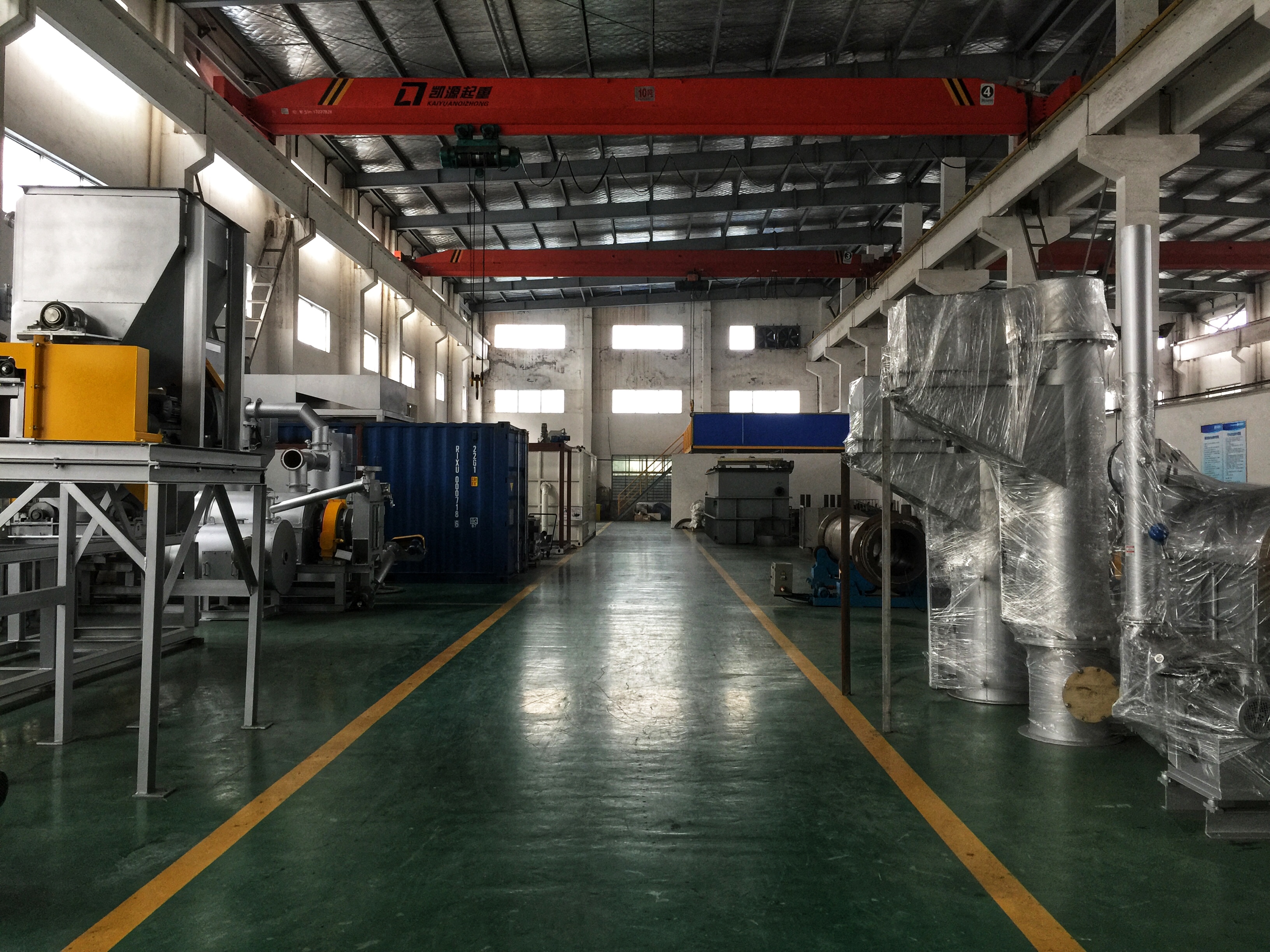
Benenv non-standard workshop — where custom configurations are built, and where the technical annex revision should be confirmed before shipment.
Have Questions or Need More Details?
Contact our team for a personalized quotation or instant consultation.
Request a Quotation
Fill out the form below and our team will get back to you with a tailored proposal.
WhatsApp Direct Chat
Prefer to chat in real-time? Message us on WhatsApp for instant assistance & quick answers.
- Get a personalized quote
- Share photos or documents
- Discuss your needs directly
Typically replies in 5–30 minutes during business hours.