Screw Press Sludge Dewatering: A Project Fit and Sizing Guide
Choosing a screw press sludge dewatering machine for a new or existing project requires more than a quick capacity estimate. It requires matching the unit to sludge characteristics, flow, dry solids loading, site constraints, and operating schedule. This guide gives engineers, contractors, and procurement teams a practical framework for project fit, using the Benenv MDS multi-disk screw press series as a reference.
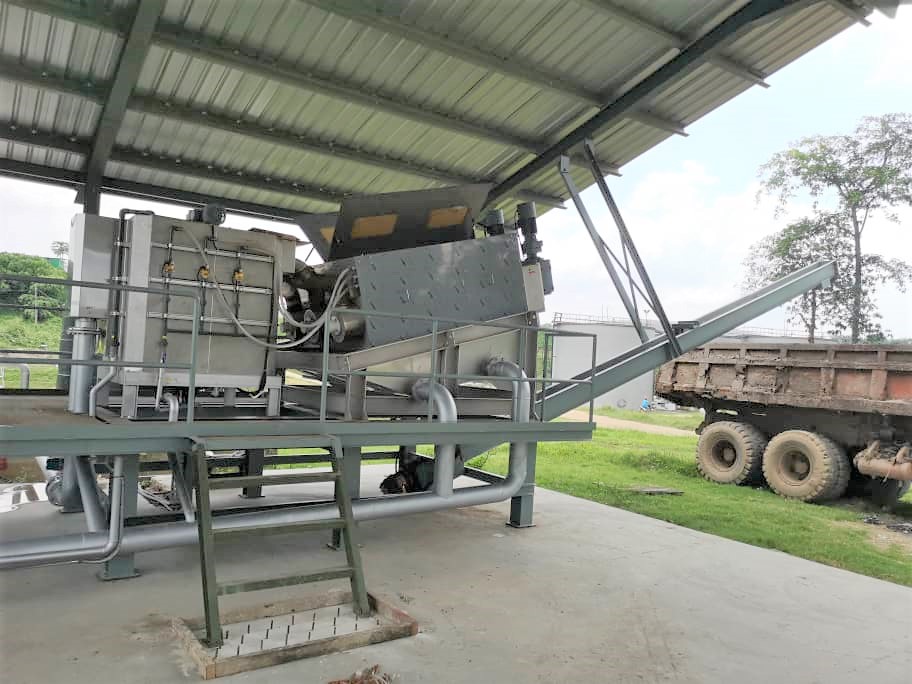
Benenv (JIANGSU BENENV ENVIRONMENTAL TECHNOLOGIES CO., LTD) is a Yixing, China-based manufacturer of water and solid waste treatment equipment. Founded in 2011, the company exports about 70% of its output to Europe, the United States, Southeast Asia, the Middle East, Australia, and other markets. Benenv reports more than 4,500 project references in over 60 countries.
Why Project Fit Matters in Screw Press Sludge Dewatering
Sludge dewatering projects fail for different reasons: insufficient dewatering capacity, excessive polymer use, recurring blockages, or high wash water consumption. Many of these problems can be traced back to equipment selection made without a complete picture of the project.
Flow rate alone is not enough. Two plants with identical tank volumes can produce very different dry solids loads depending on sludge concentration. A machine chosen for 30 m³/h of low-solids sludge may not handle 30 m³/h of dense chemical sludge. Likewise, a system too large for the actual load increases energy and water cost without improving performance.
Project fit also covers physical installation. A compact screw press unit can fit into a low-headroom room, but its weight and clearances still need to be checked. Model weights in the Benenv MDS series range from 205 kg to 6,550 kg, so floor loading, access, and maintenance space should be reviewed before purchase.
Finally, operator expectations matter. Many wastewater treatment plants now specify automatic sludge dewatering equipment that runs continuously with minimal manual attention. The MDS series is designed for fully automatic continuous operation 24/7, which makes it practical for municipal and industrial sites alike.
Market Context and the Growing Role of Screw Press Technology
The sludge dewatering equipment market is expanding. According to Fortune Business Insights, the global market was valued at USD 5.19 billion in 2024 and is projected to reach USD 10.16 billion by 2032. The screw press segment is expected to grow at the highest CAGR of 9.4% from 2025 to 2032, reflecting increasing interest in low-energy dewatering technology.
Asia Pacific held the largest revenue share in 2024 at 37.57%, supported by urbanization, industrial growth, and stricter wastewater regulations. Within this market, Fortune Business Insights identifies Benenv as a key global player, particularly for its MDS multi-disk screw press technology.
One reason for the shift toward screw press technology is energy efficiency. Third-party comparative analysis indicates that screw press technology typically consumes 90% to 95% less power than centrifuges in sludge dewatering applications. For energy-sensitive projects, this can make a meaningful difference in operating cost.
Beyond energy, regulatory frameworks shape equipment choices. EN 12255-8, the European standard for sludge treatment and storage, specifies design principles for sludge facilities. Buyers in the EU often use this standard as a reference during evaluation.
Core Technology: How a Multi-Disk Screw Press Dewatering Machine Works
A multi-disk screw press, also called a multi plate screw press or screw type sludge dehydrator, is a continuous dewatering device that combines screw conveying with dynamic filter rings. Flocculated sludge enters the dewatering body, and as the screw rotates, the volume inside the chamber decreases, squeezing water out between the fixed and moving disks. The moving rings also provide a self-cleaning effect, reducing the risk of clogging.
Benenv's approach links Japanese R&D with manufacturing in China. Benenv Group has established a wholly owned R&D center in Japan, co-founded by Kazuhiko Kawatsu and Zihou Jiang, in an operating model described as “Japanese Technology + Chinese Manufacturing + Global Sales.” The MDS product family is a core output of this structure.
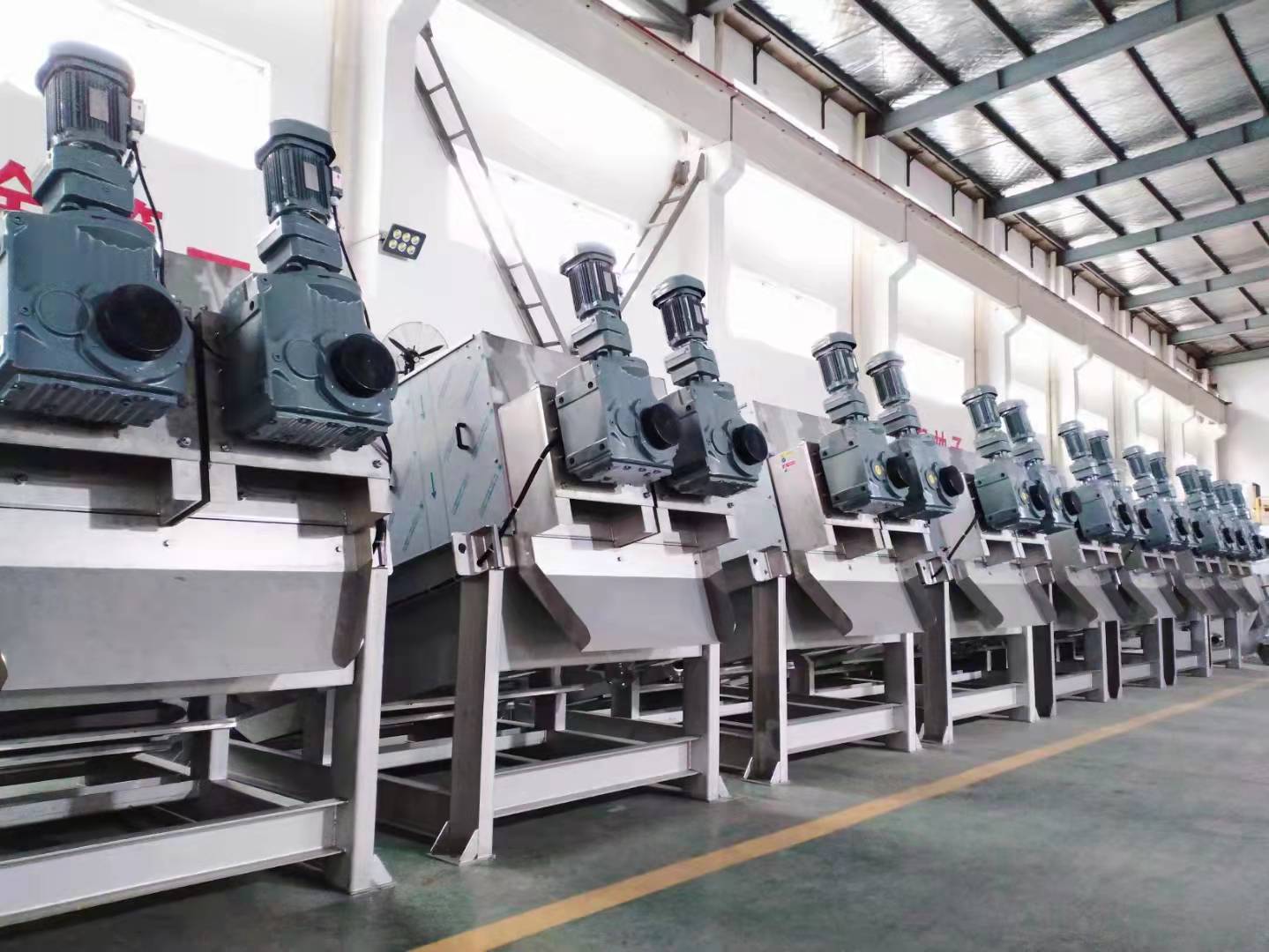
Benenv MDS401 in the MDS screw press series.
The system is normally configured with a sludge feed pump (screw pump), a polymer dosing system for PAM flocculant, an electrical control system (PLC cabinet), and a cake conveying system such as a belt or screw conveyor. Together these components form a complete sludge dewatering system.
A typical MDS machine is built in SS304 or SS316L stainless steel, and models cover capacities from 0.12 m³/h up to 200 m³/h. Dry solids outputs range from 3 kg/h to 680 kg/h across the product line. This broad range allows a single platform to serve small industrial projects, municipal plants, and large flow installations.
Step-by-Step: Sizing and Configuring a Screw Press Sludge Dewatering System
The following steps are designed for Research and Evaluation buyers who need a defensible equipment selection.
Step 1. Define the sludge source and type
Screw press sludge dewatering machines are widely used in municipal wastewater treatment, industrial wastewater treatment (chemical, textile, paper, electroplating), food processing and slaughterhouse plants, pharmaceutical manufacture, livestock and agricultural wastewater, and landfill leachate treatment. Identify which category your sludge belongs to, and whether the sludge is low, medium, or high concentration.
Step 2. Determine hydraulic flow and dry solids load
Use both flow (m³/h) and generated dry solids (kg/h). The Benenv MDS series provides capacity ranges for every model. For example, MDS302 is rated at 2.4–30 m³/h with a dry solids (DS) load of 60–120 kg/h. If your plant expects 24 m³/h of activated sludge, MDS302 may be a better starting point than a larger model.
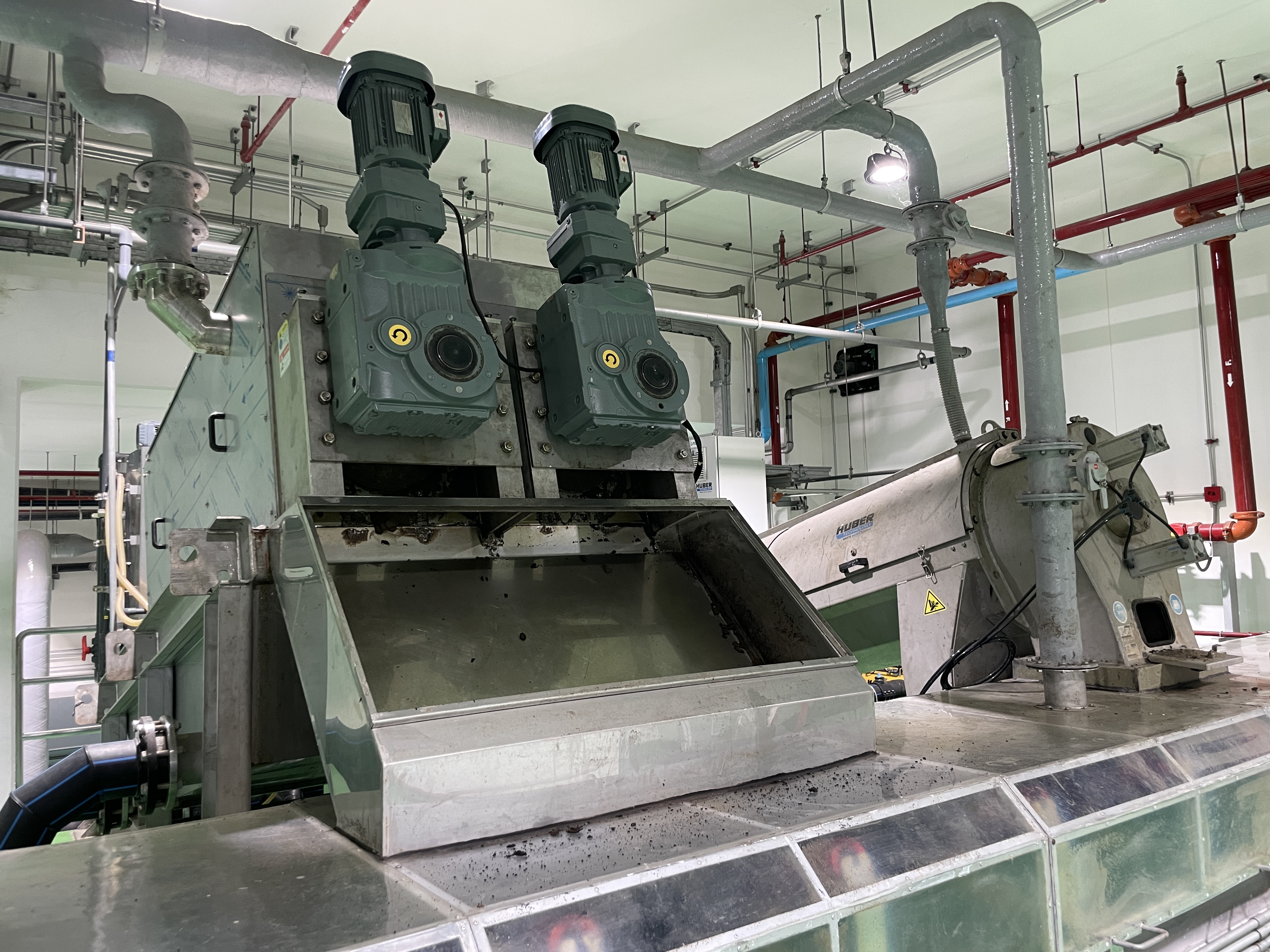
Benenv MDS402.
Step 3. Set the operational schedule
The MDS series is designed for fully automatic continuous operation 24/7. If your project only needs periodic batches, still include a buffer in capacity to handle peak return flows.
Step 4. Estimate wash water and power requirements
Every model has a published wash water demand and power range. A small unit such as MDS201 uses 0.3 kW and about 32 L/h of wash water. The largest MDS404 uses 8.2 kW and 320 L/h. Matching model size to actual load avoids unnecessary utility cost.
Step 5. Check installation footprint and weight
Weight is an important project-fit variable. Benenv MDS machines range from 205 kg for the MDS101 to 6,550 kg for MDS404. Review floor loading, access routes, and available headroom.
Step 6. Integrate feed, flocculation, and PLC controls
A complete sludge dewatering system includes the dewatering press machine, a sludge feed pump, polymer dosing, PLC control, and cake handling. Confirm compatibility of each component with existing plant systems.
Step 7. Plan quality control and after-sales support
Benenv performs a 100% pre-shipment test on every unit and supports third-party inspection such as SGS. In addition, the company offers installation guidance, operator training, technical assistance, and spare parts supply after delivery.
Project Use Cases Across Sludge Types
The MDS screw press is applied in multiple project types. The following cases from Benenv's project record illustrate typical fits:
- Municipal sludge: A municipal project in France uses an MDS353 for municipal sludge dewatering with one year of stable operation and low energy consumption.
- Industrial parks: In Belgium, an MDS353 has served an industrial park for three years with simple maintenance. In the UAE, three MDS302 units dewater sludge in industrial parks, with low noise and vibration highlighted.
- Sewage treatment plants: In Thailand, an MDS352 has been in operation at a sewage treatment plant for three years, with the self-cleaning mechanism highlighted.
- Palm oil mill sludge: Two MDS403 units in Indonesia have dewatered palm oil mill sludge for two years with stable operation and simple maintenance. Another MDS403 in Indonesia has run for three years with low noise and vibration.
- Printing, dyeing, and chemical sludge: An MDS202 in Vietnam has treated printing and dyeing sludge for two years, with the self-cleaning mechanism as a key benefit. In Iran, an MDS132 has dewatered chemical sludge from a textile factory for two years with low energy consumption. In India, an MDS302 has handled chemical sludge for three years with continuous operation.
- DAF sludge and food processing: In the United States, three MDS353 units are used by a municipal government for DAF sludge dewatering and volume reduction for two years. In Canada, an MDS302 has minimized DAF sludge volume for three years. In Portugal, an MDS303 supports sludge volume reduction in a meat processing plant with water-saving operation. In New Zealand, an MDS301 is used for sludge reduction in the food industry with a compact design.
- Industrial sludge: An MDS202 at a shipyard in Oman has operated for one year on industrial sludge dewatering, with low energy consumption.
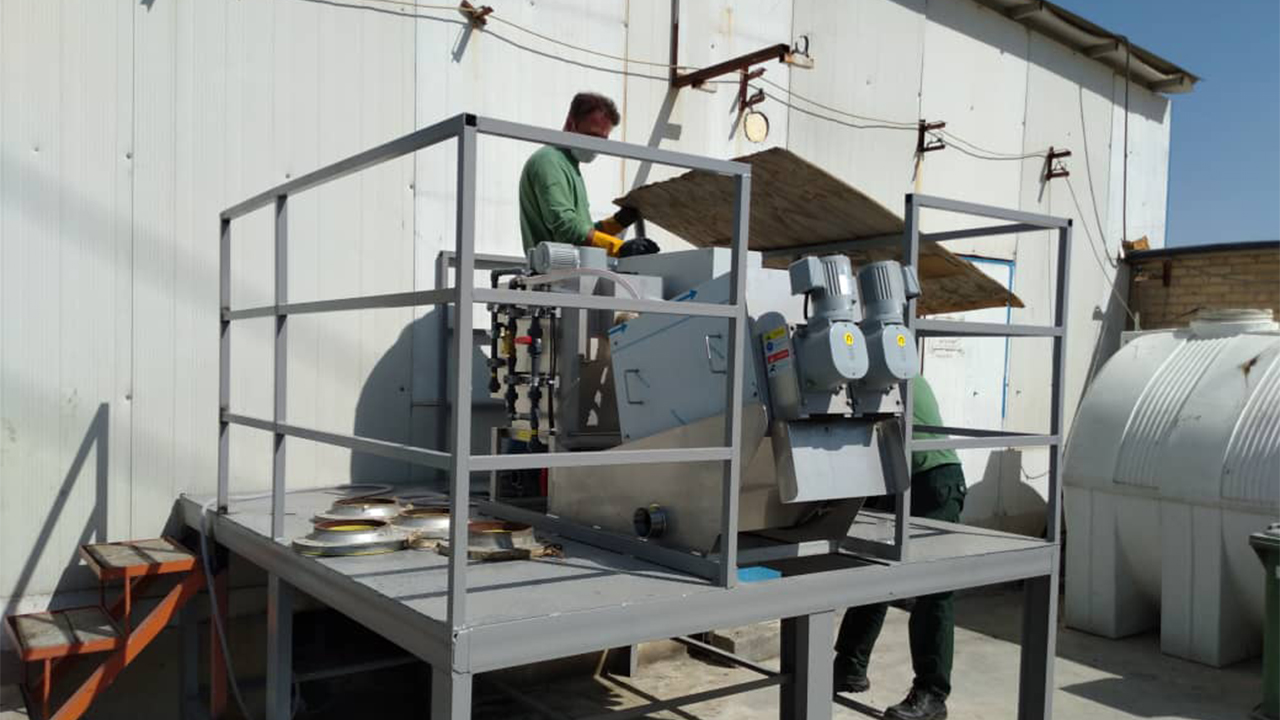
Iran — MDS132.
Choosing a Model: MDS Series Comparison
The following comparison table summarizes four Benenv MDS models across the scale range. Use it as a starting point; final selection should include sludge type and site-specific conditions.
| Model | Flow capacity (m³/h) | DS load (kg/h) | Power (kW) | Weight (kg) | Wash water (L/h) |
|---|---|---|---|---|---|
| MDS201 | 0.4–6 | 12–20 | 0.3 | 320 | 32 |
| MDS302 | 2.4–30 | 60–120 | 1.2 | 1,350 | 80 |
| MDS403 | 10.2–150 | 300–510 | 6.7 | 4,550 | 240 |
| MDS404 | 13.6–200 | 400–680 | 8.2 | 6,550 | 320 |
All models in the MDS series are available in SS304 or SS316L. The material choice is usually based on sludge corrosivity and the client's process specifications.
Frequently Asked Questions About Project Fit
Does a screw press sludge dewatering system meet European sludge treatment design requirements?
EN 12255-8 specifies design principles and construction requirements for sludge treatment and storage facilities in wastewater treatment plants. Benenv MDS screw press machines are available in SS304 or SS316L and have been deployed in EU projects in France, Belgium, and Portugal. For a specific EU project, confirm the required standard with your engineering consultant and supplier.
What types of sludge and operating conditions can a screw press sludge dewatering unit handle?
Benenv MDS screw press dewatering equipment is applied in municipal and industrial wastewater treatment, including chemical, textile, paper, pharmaceutical, food processing, agricultural wastewater, and landfill leachate. The units are designed for fully automatic continuous operation 24/7 and can process low to high concentration sludge.
How do model selection and running costs affect the dewatering budget?
Larger models have higher wash water and power consumption. For example, the MDS201 uses 0.3 kW and 32 L/h of water, while the MDS404 uses 8.2 kW and 320 L/h. Selecting a model based on actual hydraulic flow and dry solids load avoids oversized equipment and keeps operating costs predictable. Screw press technology generally consumes 90% to 95% less power than centrifuges in sludge dewatering applications.
Can I get a sample or pre-shipment inspection before ordering?
Benenv supports OEM and ODM production with a minimum order quantity of one unit. Every unit undergoes a 100% pre-shipment test, and third-party inspection such as SGS is available. Contact Benenv to discuss a sample or inspection arrangement for your project.
What is the typical lead time for a custom screw press sludge dewatering machine?
Benenv's standard lead time is 30 to 45 days for MDS screw press equipment, with a monthly production capacity of 100 units. To confirm delivery timing for a specific project, send your flow and sludge data to manager@benenv.com.
Conclusion and Next Step
Screw press sludge dewatering technology is a mature option for municipal and industrial projects. The key to a successful purchase is project fit: sludge type, flow and solids load, operation hours, utility supply, installation space, and support requirement. Benenv's MDS series spans small and large models with published data on capacity, power, weight, and wash water, making it practical to run a first-pass fit assessment before contact.
If you are evaluating a screw press sludge dewatering machine for a specific project, use the model tables above to narrow your shortlist, then confirm assumptions with a supplier. Benenv's engineering team can review your sludge data and recommend a configuration.
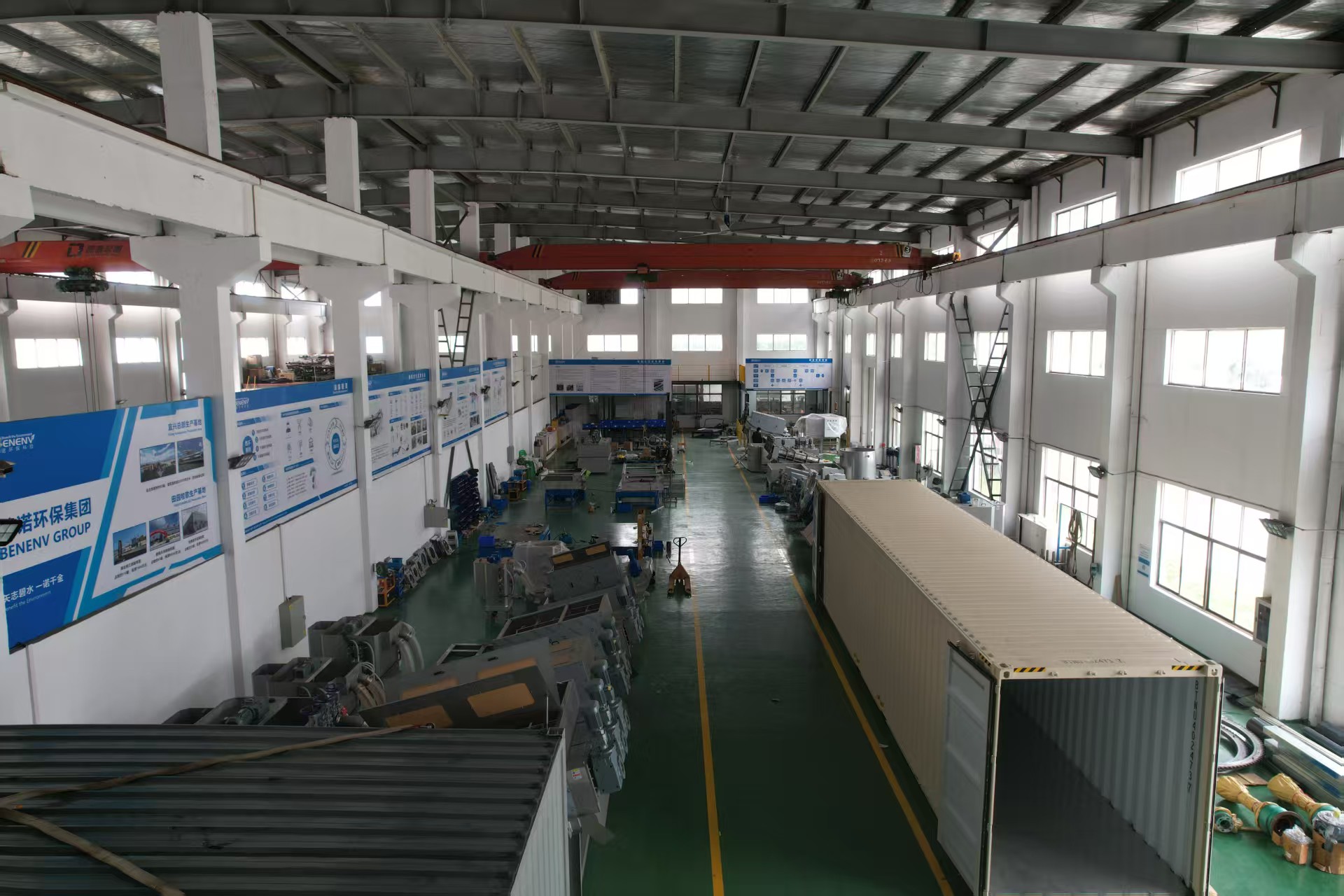
Download the Benenv product brochure to review the full MDS series and system options: Benenv Brochure (PDF)
Contact: Roman — manager@benenv.com | Tel: +86 18921318788 | WhatsApp: +86 12138541513
Have Questions or Need More Details?
Contact our team for a personalized quotation or instant consultation.
Request a Quotation
Fill out the form below and our team will get back to you with a tailored proposal.
WhatsApp Direct Chat
Prefer to chat in real-time? Message us on WhatsApp for instant assistance & quick answers.
- Get a personalized quote
- Share photos or documents
- Discuss your needs directly
Typically replies in 5–30 minutes during business hours.