
Screw Press Sludge Dewatering: Building a Long-Term Partnership That Delivers Uptime, Cost Control, and Scalability
Screw Press Sludge Dewatering: How to Build a Long-Term Equipment Partnership That Protects Uptime, Cost, and Scalability
Buying a screw press sludge dewatering machine is not the end of a procurement project—it is the beginning of a long-term relationship that affects plant uptime, disposal cost, maintenance workload, and your ability to scale. This guide explains what a durable equipment partnership should include: verified supplier capability, certified compliance, total cost of ownership (TCO), spare parts and maintenance planning, delivery and commissioning, and how to structure that partnership with measurable milestones.

Why a Screw Press Sludge Dewatering Partnership Needs More Than a Purchase Order
A screw press sludge dewatering system is expected to run continuously, often in chemically aggressive and abrasive environments. When selecting a supplier, a one-time price comparison is not enough. Industrial buyers need evidence that the manufacturer can support the asset for its full service life—including spare parts, process troubleshooting, and future capacity expansion.
The global sludge dewatering equipment market was valued at USD 5.19 billion in 2024 and is projected to grow to USD 10.16 billion by 2032, with the screw press segment expected to exhibit the highest CAGR of 9.4% from 2025 to 2032. This growth is driven by stricter environmental regulation, rising sludge disposal costs, and a shift toward energy-efficient mechanical dewatering. As more plants adopt screw press technology, the difference between successful projects and repeated failures often comes down to the long-term capability of the supplier, not just the specification of the machine.
For buyers in the Decision and Execution stage, the question is no longer “which technology is better?” but “which supplier will perform reliably for the next 10 years?”
Defining a Long-Term Supplier Partnership for Sludge Dewatering Equipment
A long-term equipment partnership is a working relationship in which the supplier provides more than a dewatering press machine. It typically includes process engineering support, installation and commissioning guidance, training for operators, a documented spare parts strategy, a maintenance schedule, and a clear channel for technical and commercial communication after delivery.
In practice, long-term partnerships matter most in these situations:
- Municipal sludge dewatering systems that must run 24/7 and meet effluent or disposal quality requirements.
- Industrial wastewater operations where sludge characteristics fluctuate and require dosing or parameter adjustments.
- Distributors and EPC contractors building a repeatable equipment portfolio across multiple projects.
- Plants planning capacity expansion and needing consistent equipment behavior across parallel lines.
Industry Background: Why Screw Press Technology Is Gaining Share in Sludge Dewatering
Screw press sludge dewatering machines use a slowly rotating screw inside a set of fixed and moving rings. As sludge moves forward, the decreasing pitch increases pressure and squeezes water through the gaps between rings, allowing continuous dewatering inside a sealed volume.
Compared with traditional centrifuges, screw press technology is widely recognized for lower energy consumption, lower maintenance requirements, simple operation, stable performance, and a self-cleaning design that resists clogging. According to third-party industry analysis, screw press technology typically consumes 90% to 95% less power compared to centrifuges in sludge dewatering applications. Benenv’s comparison data with centrifuge technology also indicates up to 30–50% energy savings and a footprint reduced by up to 50%, with maintenance frequency reduced by 30–60%.
These characteristics make screw presses especially suitable for municipal, industrial, and food processing wastewater treatment—covering chemical, textile, paper, pharmaceutical, and agricultural industries. They are also increasingly chosen for small and decentralized plants because they operate continuously, with low noise and minimal water consumption.
Asia Pacific dominated the global sludge dewatering market in 2024 with a 37.57% revenue share, driven by rapid urbanization and stricter wastewater regulations. For global buyers, this means many screw press manufacturers and component suppliers are concentrated in the region, which affects lead times, quality supervision, and the design of a long-term support strategy.
What a Long-Term Screw Press Sludge Dewatering Partnership Must Include
If you are moving from supplier evaluation to project execution, use the following framework to structure the partnership and avoid common gaps.
1. Verified Supplier Capability and Manufacturing Evidence
A long-term partnership requires confidence that the manufacturer can deliver quality repeatedly, not just once. Before signing, verify the following:
- Legal entity and history: A registered company with clear ownership and production facilities.
- Manufacturing scale: Factory size, headcount, engineering team size, and annual output.
- Project track record: Number of delivered projects and geographic spread.
- Engineering depth: In-house R&D capability and willingness to adapt machines to your sludge characteristics.
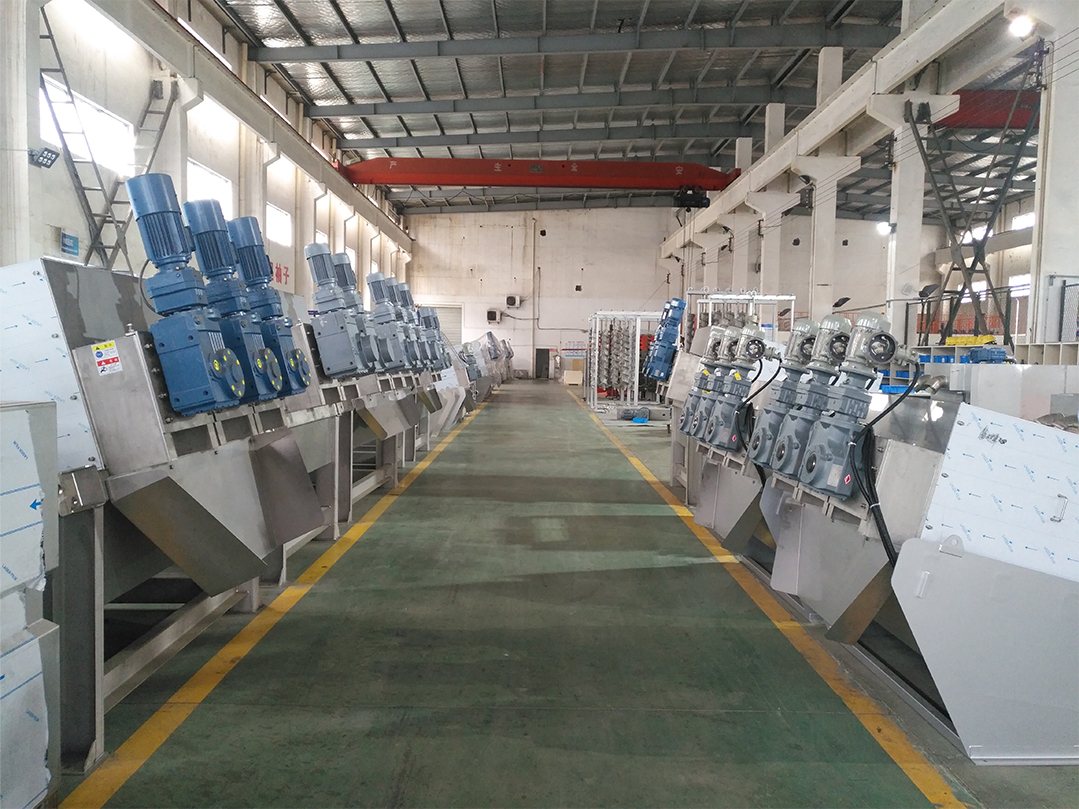
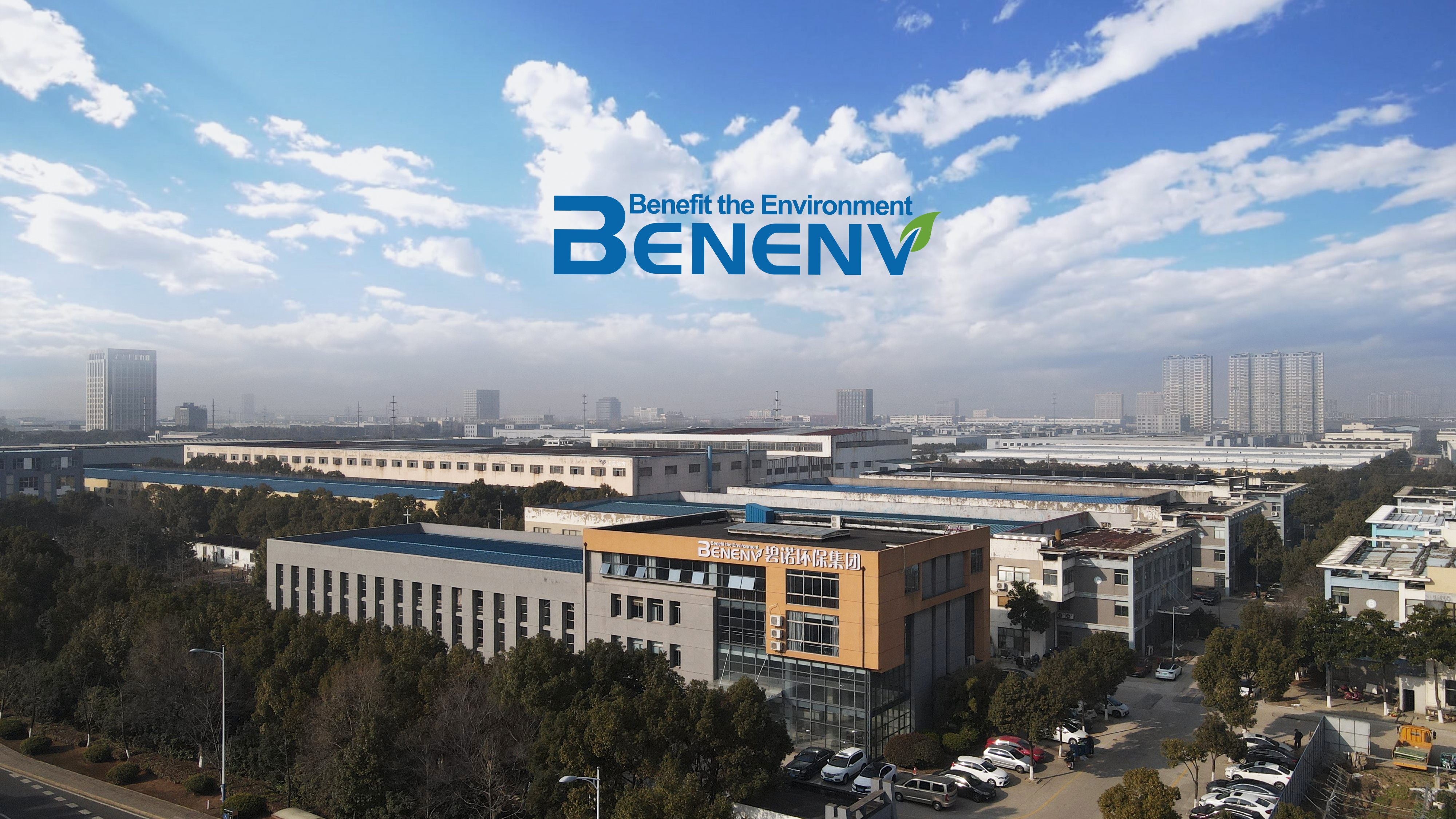
For example, Jiangsu Benenv Environmental Technologies Co., Ltd is a manufacturer of screw press sludge dewatering equipment founded in 2011, with a 20,000 m² factory in Yixing, China, about 200 employees, and an annual output of 500 units. Benenv has a 50-engineer R&D team and a wholly owned R&D center in Japan, following an innovation model of “Japanese Technology + Chinese Manufacturing + Global Sales.” The company reports over 4,500 project references in more than 60 countries and has 18 agents in markets such as France, the United States, the United Kingdom, Malaysia, Indonesia, and Saudi Arabia.
These facts are useful not as marketing claims, but as verifiable evidence of a supplier’s ability to support international projects over the long term.
2. Certified Compliance and Environmental Standards
Sludge dewatering equipment must meet the environmental and construction standards of the target market. A long-term partner should be able to explain which standards apply, and whether their equipment is designed accordingly.
For European projects, EN 12255-8 is the European standard specifying design principles and construction requirements for sludge treatment and storage facilities in wastewater treatment plants. Buyers sourcing for EU-funded or EU-regulated projects should explicitly ask whether the supplied equipment aligns with the design logic of that standard.
Materials also matter. For corrosive environments, screw press dewatering machines are commonly available in SS304 or SS316L. Benenv, for example, lists SS304/SS316L as the available material options across its MDS series models.
3. Total Lifecycle Cost and Operating Cost Control
Long-term value is determined by operating cost and maintenance burden, not purchase price alone. When comparing screw press systems, evaluate these elements:
- Power consumption: Lower installed power reduces continuous operating cost.
- Water consumption: Washing water adds to operational cost and effluent load.
- Maintenance frequency: Wear parts such as screw shafts and moving rings require periodic replacement.
- Polymer consumption: Dewatering performance depends on flocculation, so dosing stability matters.
Benenv’s MDS multi-plate screw press models range from the MDS101 with 0.2 kW power, 0.12–1.5 m³/h capacity, and 24 L/h water consumption, up to the MDS404 with 8.2 kW power, 13.6–200 m³/h capacity, and 320 L/h water consumption. A model with lower power consumption may have a large cost advantage over the life of the equipment. For example, comparing a MDS302 (1.2 kW) with a MDS303 (1.95 kW) shows how capacity range and power change across the product family.
| Model | Power Range | Capacity | DS Output | Weight | Water Consumption |
|---|---|---|---|---|---|
| MDS101 | 0.2 kW | 0.12–1.5 m³/h | 3–6 kg/h | 205 kg | 24 L/h |
| MDS201 | 0.3 kW | 0.4–6 m³/h | 12–20 kg/h | 320 kg | 32 L/h |
| MDS302 | 1.2 kW | 2.4–30 m³/h | 60–120 kg/h | 1,350 kg | 80 L/h |
| MDS352 | 3.75 kW | 4.8–30 m³/h | 120–240 kg/h | 2,300 kg | 144 L/h |
| MDS402 | 4.5 kW | 6.8–100 m³/h | 200–340 kg/h | 3,480 kg | 160 L/h |
| MDS404 | 8.2 kW | 13.6–200 m³/h | 400–680 kg/h | 6,550 kg | 320 L/h |
4. Operational Risk Prevention and Maintenance Planning
Long-term partnerships are defined by how risks are anticipated and handled. Common operational risks for screw press sludge dewatering equipment and their control methods include:
| Risk | Control Method | Supplier Expectation |
|---|---|---|
| Variation in sludge characteristics (concentration, oil content, viscosity) affecting dewatering performance | Optimize polymer dosing and adjust operating parameters | Provide process guidance and dosing adjustment support |
| Unstable sludge feed or impurities causing clogging | Self-cleaning design and continuous washing system | Use clog-free design and train operators on feed control |
| Wear of screw shaft and moving rings | Low-speed operation and wear-resistant materials | Provide maintenance plans and spare parts supply |
| Unstable operating parameters leading to inconsistent performance | PLC-based automatic control and real-time adjustment | Provide automation solutions and remote technical support |
| Sludge leakage, noise, or corrosion issues | Sealed design, corrosion-resistant materials, low-noise operation | Comply with environmental standards and provide anti-corrosion solutions (e.g., SS304/316) |
A supplier with a defined maintenance plan and spare parts supply capability is a partner. A supplier that disappears after delivery is just a vendor.
5. Technical Support and Process Engineering Depth
Sludge dewatering performance depends on the interaction among sludge characteristics, polymer selection, feed flow, and machine settings. When sludge composition changes—as it often does in mixed industrial zones or seasonal municipal plants—the supplier should help adjust dosing and operating parameters.
An experienced screw press manufacturer should be able to provide:
- Process recommendations for different sludge types.
- Polymer dosing and adjustment guidance.
- Troubleshooting for fluctuations in feed concentration, oil content, or viscosity.
- Remote technical support and on-site commissioning where feasible.
6. Global Delivery, Installation, and Commissioning
For international buyers, a long-term partnership must include practical delivery conditions. Benenv, for example, offers multiple delivery methods including FOB, CIF, EXW, and DDP. Standard payment terms are 40/60 T/T, the minimum order quantity is 1 unit, and acceptance includes pre-shipment testing and FAT inspection.
Before ordering, clarify these execution details:
- Incoterms and who bears freight, insurance, and import handling.
- Whether the supplier conducts pre-shipment testing and FAT inspection.
- Whether installation supervision and operator training are included.
- How long spare parts availability is guaranteed after delivery.
- What documentation is provided (drawings, manuals, test reports, declarations).
Step-by-Step: From Decision to Execution in a Screw Press Sludge Dewatering Partnership
Use this phased approach to turn your supplier selection into a managed project.
Step 1: Freeze the process scope
Define the sludge source, daily volume, required dry solids output, operating hours, polymer type, and disposal route. These parameters narrow the model range and prevent mis-scoping.
Step 2: Issue a technical specification and RFQ
Provide your process data and ask each supplier to recommend a specific model with capacity, power, material, and water consumption. Compare the recommended model with the verified specifications in the supplier’s published data sheet.
Step 3: Verify factory capability and quality evidence
Conduct a factory audit directly or through a third party. Review welding workshops, assembly workshops, standard and non-standard workshops, quality control practices, and R&D depth. For Benenv, factory details such as a 20,000 m² facility, dedicated workshops, and a 50-engineer R&D team are evidence of manufacturing capacity.
Step 4: Review compliance and certification documents
Ask for material certificates, test reports, and design compliance information. For EU projects, confirm whether EN 12255-8 design principles have been considered in the sludge treatment system.
Step 5: Plan for operational and maintenance readiness
Set up a spare parts schedule for wear components, a maintenance calendar, and a communication channel for technical support. Clarify whether the supplier provides remote troubleshooting, training, and ongoing process optimization.
Step 6: Align the delivery and commissioning timeline
Agree on Incoterms, production lead time, pre-shipment inspection, shipping documentation, installation support, and performance testing milestones. Keep a written record of lead times and acceptance criteria.
Step 7: Build a review cadence
After commissioning, schedule periodic reviews of performance, energy consumption, spare part usage, and sludge output quality. A long-term partnership creates a feedback loop that improves both equipment reliability and plant operations.
Typical Use Cases for a Long-Term Screw Press Partnership
Municipal wastewater treatment plants
Municipal sludge is often mixed, variable in concentration, and generated continuously. Screw press systems are widely used in municipal sludge dewatering because they provide continuous dewatering with low energy consumption and stable performance under changing feed conditions. A long-term partner helps adapt dosing and operating parameters as influent quality changes across seasons.
Industrial wastewater treatment—chemical, textile, paper, pharmaceutical, and food processing
Industrial sludge varies by oil content, viscosity, and chemical composition. Multi-plate screw press machines can handle these variations with the right polymer program and operational adjustments. Suppliers experienced in industrial sludge dewatering can offer anti-corrosion solutions such as SS304/SS316L materials to mitigate corrosion risks.
DAF sludge dewatering
Dissolved air flotation (DAF) sludge is typically thin, biologically active, and difficult to dewater. Screw press systems can be integrated into DAF sludge dewatering lines, often replacing more energy-intensive equipment such as centrifuges.
Distributors and system integrators
Distributors and EPC contractors need a predictable partnership with a manufacturer that can supply multiple units, meet regional certifications, and provide catalog and technical documentation. Working with a manufacturer that has agents in multiple countries and global project references reduces their own sourcing risk.
How Benenv Supports Long-Term Sludge Dewatering Partnerships
Jiangsu Benenv Environmental Technologies Co., Ltd, operating as Benenv, is a manufacturer of screw press sludge dewatering machines, with its own R&D center in Japan and global operations. Its main products include the multi-disk screw press, wave separator, dissolved air flotation, super rotary sludge dryer, sludge drying and carbonization system, and compost system.
Benenv states that the group has 18 agents in countries such as France, the United States, the United Kingdom, Malaysia, Indonesia, and Saudi Arabia, and reports more than 4,500 project references in more than 60 countries. It also operates multiple “Tianyuan Muge” investment and operation projects in China, which means the company has direct operational exposure to sludge treatment, not just manufacturing. The group employs nearly 200 staff and has total assets exceeding 80 million USD.
These factors support long-term partnership readiness:
- Product depth: A full range of MDS models from 0.2 kW to 8.2 kW with capacities up to 200 m³/h.
- Custom engineering: The 50-engineer R&D team allows modifications around feed conditions and layout constraints.
- Manufacturing capacity: The 20,000 m² factory and annual output of 500 units support repeat orders and spare part production.
- Global commercial support: Agents and overseas subsidiaries reduce communication and logistics friction for international buyers.
- Operational evidence: Direct operating projects provide the company with practical experience on dewatering system performance.
Comparison Considerations: Screw Press vs. Centrifuge for Long-Term Ownership
Although this article focuses on partnership selection, technology choice still matters for long-term cost. Screw press technology is often compared with centrifuge dewatering. According to Benenv’s comparison data, the screw press offers:
- 30–50% lower cost compared to centrifuges.
- Up to 30–50% energy savings.
- Footprint reduced by up to 50%.
- Maintenance frequency reduced by 30–60%.
- Lower maintenance requirements, easy operation, and minimal downtime.
Independent third-party data also indicates that screw press technology typically consumes 90% to 95% less power compared to centrifuges in sludge dewatering applications. Buyers should note that figures vary by application, sludge type, and operating conditions. The correct evaluation is to request specific operating data from each supplier for the actual sludge conditions.
Compliance Considerations Across Markets
Different target markets impose different compliance expectations. In the European Union, sludge treatment equipment is commonly referenced against EN 12255-8, the standard for design principles and construction requirements of sludge treatment and storage facilities. Buyers should confirm the equipment design philosophy and available documentation before committing to a supplier.
For markets with strict import requirements, also consider:
- Material certificates for SS304/SS316L components.
- Electrical component certification.
- Factory inspection and pre-shipment acceptance.
- Declaration of conformity or type test reports where required.
Financial and Commercial Terms for Long-Term Procurement
Commercial terms are an important part of partnership predictability. A typical arrangement for a screw press sludge dewatering machine from Benenv is:
- MOQ: 1 unit.
- Delivery: FOB, CIF, EXW, or DDP.
- Payment: 40/60 T/T.
- Acceptance: Pre-shipment test and FAT inspection.
For project buyers, the ability to order a single unit while knowing the supplier can fulfill larger repeat orders is a practical advantage. Clarify spare part pricing and lead time during the negotiation phase, as these become part of the long-term cost structure.
Reference Data and How to Use It Responsibly
Market figures in this article come from publicly available third-party reports. Fortune Business Insights estimates the global sludge dewatering equipment market at USD 5.19 billion in 2024 and projects growth to USD 10.16 billion by 2032. The same source identifies the screw press segment as the fastest-growing technology, with a projected CAGR of 9.4% from 2025 to 2032. Asia Pacific accounted for 37.57% of the global market in 2024.
These estimates vary by report scope. Some market research firms include services in their totals, while others cover only equipment. Buyers should use market data directionally and base final selection on application-specific performance evidence.
Frequently Asked Questions
How do I verify that a screw press sludge dewatering supplier can meet compliance requirements for my export market?
Start by identifying the standards that apply to your target country. For EU projects, EN 12255-8 is a recognized standard for sludge treatment facilities and specifies design principles and construction requirements. Ask the supplier to confirm alignment with that standard and provide documentation of materials, electrical components, and factory inspection. For corrosion-prone environments, confirm the use of SS304 or SS316L material.
What capacity of screw press sludge dewatering machine do I need?
Capacity selection depends on your hydraulic flow and dry solids load. Benenv’s MDS series ranges from the MDS101 (0.12–1.5 m³/h, 3–6 kg DS/h) up to the MDS404 (13.6–200 m³/h, 400–680 kg DS/h). Selecting the correct model requires sludge concentration, operating hours, and final cake target. A supplier with process engineering support can help match the model to your feed conditions.
What are typical maintenance risks for screw press dewatering equipment?
The most common issues are variation in sludge characteristics, unstable feed or impurities causing clogging, wear of the screw shaft and moving rings, unstable operating parameters, and corrosion or leakage. These can be managed through self-cleaning design, low-speed operation, PLC-based automatic control, sealed construction, and corrosion-resistant materials. Clarify spare parts supply and maintenance planning with the supplier before purchase.
What is a realistic total budget for a screw press sludge dewatering unit?
There is no fixed price because the cost depends on model size, materials, control automation, and delivery terms. The commercial framework at Benenv includes an MOQ of 1 unit, payment terms of 40/60 T/T, delivery options of FOB/CIF/EXW/DDP, and acceptance through pre-shipment testing and FAT inspection. To obtain an accurate budget, send your sludge analysis and capacity requirements directly to the manufacturer for a model-specific quotation.
Can I request a sample or trial of a screw press sludge dewatering machine?
Because screw press dewatering machines are heavy process equipment, a physical sample is not typical. The practical alternative is a pilot test with your sludge at the manufacturer’s facility or with a rental/pilot unit on site. A qualified supplier should be able to discuss the testing method, provide a clear quotation, and define the performance criteria for evaluation.
What lead time should I expect for a screw press sludge dewatering system?
Lead time depends on the model, custom engineering, material availability, and production schedule. Buyers should confirm the production timeline during the quotation phase and also plan for pre-shipment testing and inspection. To avoid project delays, ask for a written production schedule and periodic progress updates as part of the partnership agreement.
Ready to move from evaluation to execution?
Discuss your sludge characteristics, capacity target, and project timeline with a Benenv engineer for a model-specific quotation.
Chat on WhatsApp Email manager@benenv.comPhone: +86 18921318788 | Roman
Conclusion
Choosing a screw press sludge dewatering machine is a capital decision. Building a long-term partnership with the manufacturer is an operational decision that continues to affect your plant for years. The right supplier provides not only a reliable dewatering press machine but also certified compliance, process support, spare parts planning, and a clear execution path.
When moving to the Execution stage, verify the factory, the model specifications, the maintenance plan, the commercial terms, and the delivery method. Then structure the relationship with milestones so that both sides understand what success means.
For buyers looking at screw press sludge dewatering systems in 2026 and beyond, the winning move is not finding the cheapest supplier—it is finding a partner that can keep your dewatering line running reliably as your plant grows.
Have Questions or Need More Details?
Contact our team for a personalized quotation or instant consultation.
Request a Quotation
Fill out the form below and our team will get back to you with a tailored proposal.
WhatsApp Direct Chat
Prefer to chat in real-time? Message us on WhatsApp for instant assistance & quick answers.
- Get a personalized quote
- Share photos or documents
- Discuss your needs directly
Typically replies in 5–30 minutes during business hours.