
What Is Screw Press Sludge Dewatering? A Practical Introduction
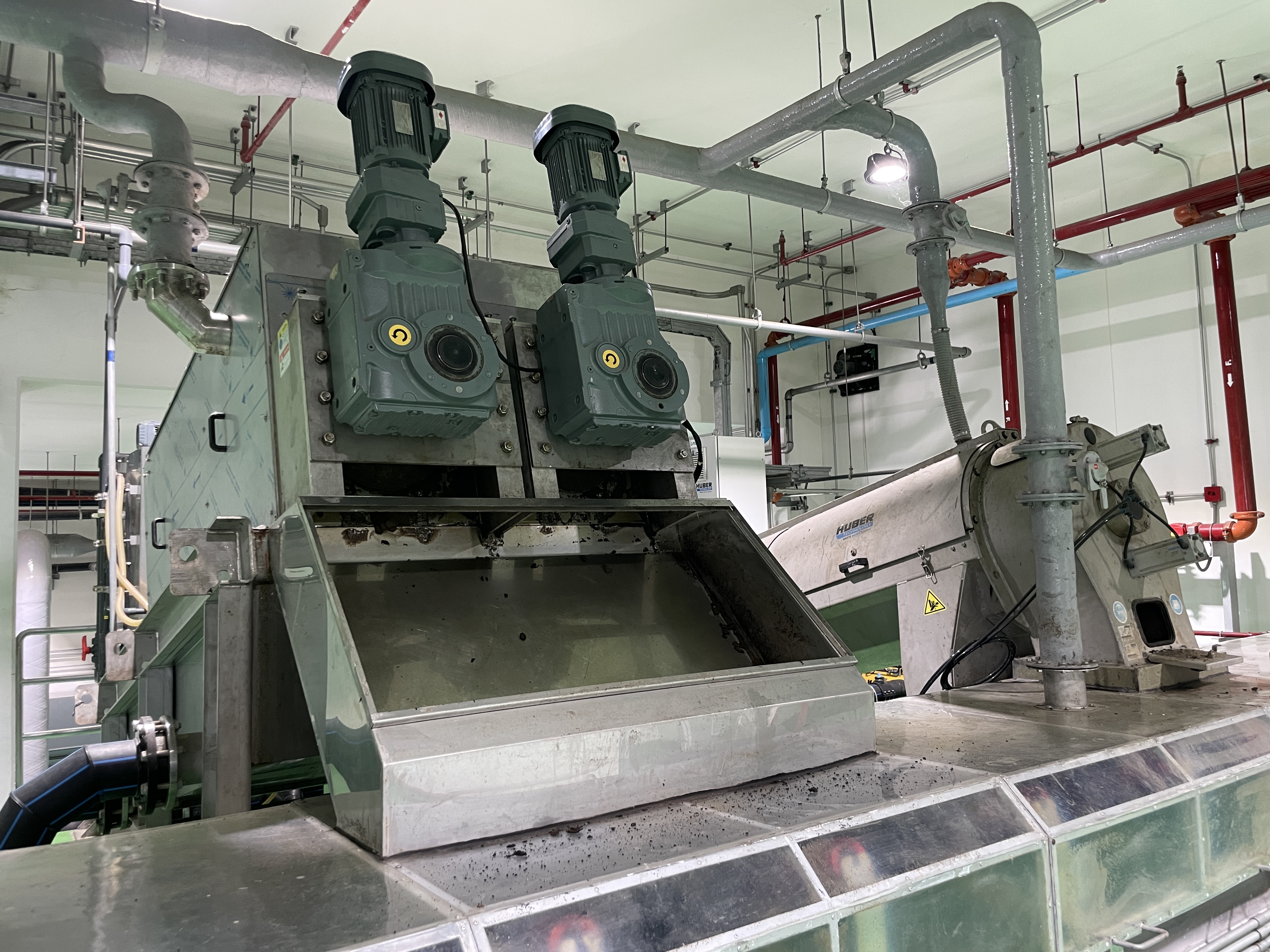
Screw press sludge dewatering is a mechanical solid-liquid separation process that removes water from sludge generated by municipal and industrial wastewater treatment. The equipment uses a rotating screw mechanism to transport and compress sludge so that free water can drain through a filtration zone, producing a drier sludge cake. Sludge dewatering equipment of this type is widely selected when plants need continuous operation, lower energy demand, and automatic sludge dewatering without high labor input.
This article is written for engineers, procurement staff, and project owners who are at the awareness or research stage. It explains why sludge dewatering is necessary, how screw press dewatering technology works, what equipment specifications matter, and where such systems are commonly applied. To make the explanation concrete, the article references the MDS multi-disk screw press series produced by Jiangsu Benenv Environmental Technologies Co., Ltd., a sludge dewatering equipment manufacturer based in Yixing, China.
Why Sludge Dewatering Is a Core Step in Wastewater Treatment
Wastewater treatment produces two outputs: cleaner water and concentrated solids, commonly referred to as sludge. Even after primary settling or biological treatment, sludge contains a high proportion of water. If that water is not removed, the sludge volume remains large, transport becomes heavier, and downstream treatment such as incineration, composting, or landfill disposal becomes more expensive.
Mechanical sludge dewatering solves this problem by splitting sludge into two streams:
- A dewatered cake with a lower moisture content, which is easier to handle, transport, and treat;
- A filtrate or pressed water stream that can be returned to the inlet of the water treatment process or sent for further treatment.
Municipal sludge dewatering and industrial sludge dewatering have become more important as discharge standards tighten and as treatment plants look for reliable ways to reduce sludge volume and disposal cost. Among the dewatering technologies available today, screw press sludge dewatering machines are often studied by buyers because they operate continuously and are designed to handle low to high concentration sludge in a relatively compact footprint.
Industry Background: A Market That Is Expanding Rapidly
The sludge dewatering equipment market is growing. A market analysis by Fortune Business Insights estimates the global sludge dewatering equipment market size at USD 5.19 billion in 2024, with projected growth to USD 10.16 billion by 2032. The same report expects the screw press segment to record the highest compound annual growth rate of 9.4% from 2025 to 2032 within the sludge dewatering equipment market. Buyers researching screw press sludge dewatering systems should therefore expect a continuously expanding choice of suppliers, models, and capacity ranges.
Geographically, Fortune Business Insights reported that Asia Pacific dominated the global sludge dewatering market in 2024 with a 37.57% revenue share, supported by urbanization and wastewater infrastructure investment. This regional concentration is relevant to procurement decisions because buyers increasingly evaluate Chinese suppliers not only on price but also on engineering quality, certification readiness, and project reference history.
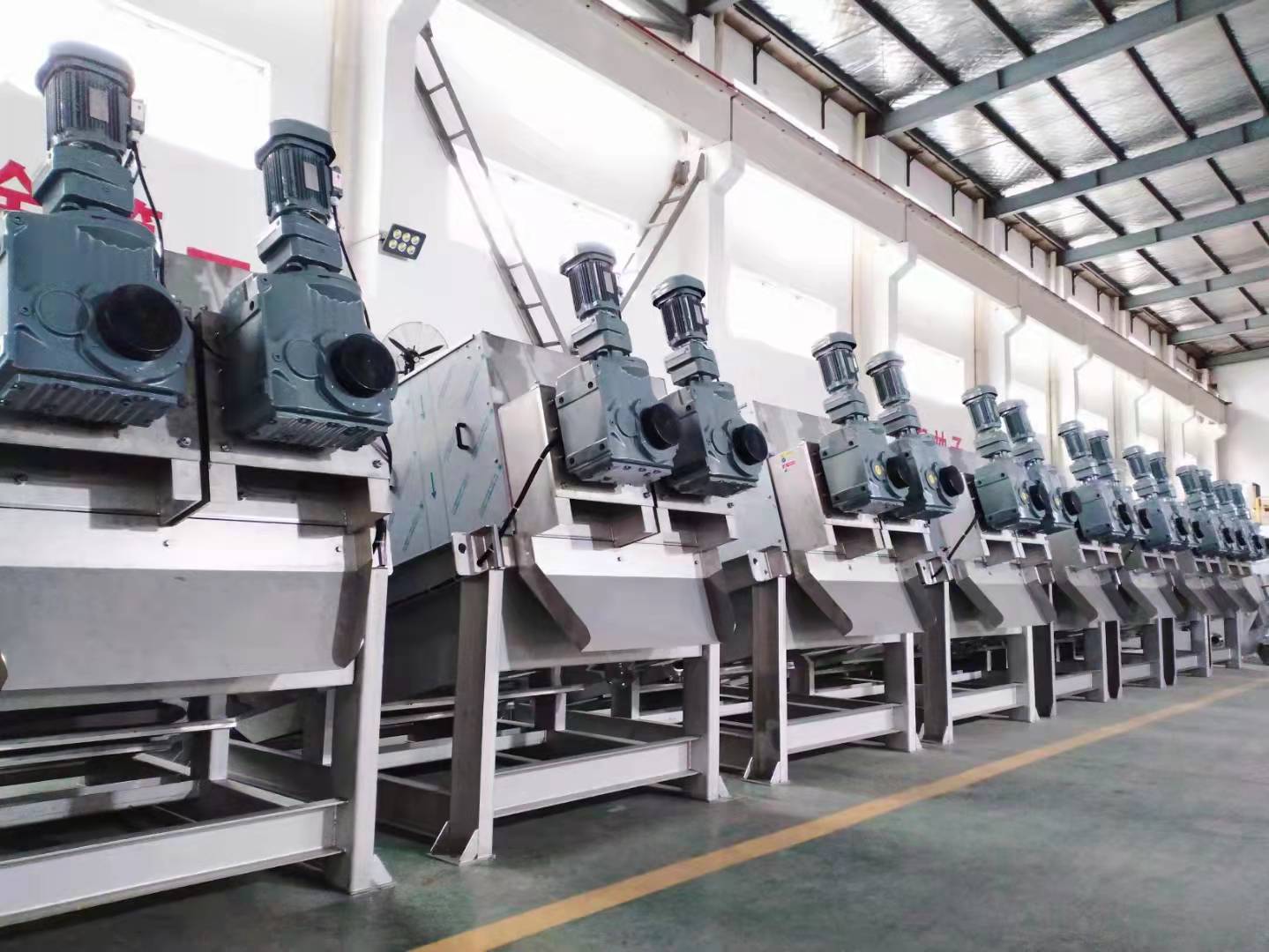
Within this market context, Benenv is recognized as a key player in the global sludge dewatering equipment industry, particularly for its MDS multi-disk screw press technology. The company background in the source data indicates that Jiangsu Benenv Environmental Technologies Co., Ltd. was founded in 2011 and operates a 20,000 m² factory with about 200 employees. The company reports an annual output of around 500 units and a research and development team of 50 engineers. Its production scope includes not only dewatering, but also dissolved air flotation, sludge drying and carbonization, and composting systems. More than 70% of products are exported, mainly to Europe, the United States, Southeast Asia, the Middle East, and Australia.
Benenv also reports more than 4,500 project references in over 60 countries for its screw press dewatering systems, according to third-party procurement analysis. For a first-time buyer, that scale of reference history is a useful signal that the equipment has been tested across different sludge characteristics and site conditions.
How a Multi-Disk Screw Press Dewatering Machine Works
Before looking at model specifications, it helps to understand the mechanical logic behind the equipment. A multi-disk screw press, also known as a screw type sludge dehydrator, combines a screw conveyor with a filtering assembly made from moving rings and fixed rings. Inside the machine, sludge is gradually moved forward by the rotating screw. Water is pressed out through the gaps between the rings as the available volume decreases toward the discharge end.
This design differs from high-speed dewatering machines because the screw press operates at relatively low speed. The slow movement reduces mechanical wear and keeps energy consumption comparatively low. Many screw press dewatering systems are designed to run continuously, which fits plants that generate sludge around the clock.
For industrial applications, the material used in the dewatering press machine is important. Benenv lists the MDS series as available in SS304 or SS316L stainless steel. Stainless steel construction supports the corrosion resistance and service life expected in chemical, textile, pharmaceutical, and other aggressive wastewater environments.
Model Comparison: Choosing a Screw Press Dewatering Machine by Capacity
When procurement teams compare screw press sludge dewatering equipment, two capacity values are usually reviewed together: feed flow rate in m³/h and dry solids throughput in kg DS/h. The flow rate tells you how much diluted sludge the machine can receive. The dry solids value tells you how much solid mass the press can remove in one hour. Both figures are needed because sludge concentration varies between municipal and industrial sites.
The table below compares several Benenv MDS models that illustrate the range from compact units to high-capacity systems. The data comes directly from the published product specifications of the manufacturer.
| Model | Feed flow | Dry solids throughput | Power | Weight | Wash water |
|---|---|---|---|---|---|
| MDS101 | 0.12–1.5 m³/h | 3–6 kg DS/h | 0.2 kW | 205 kg | 24 L/h |
| MDS201 | 0.4–6 m³/h | 12–20 kg DS/h | 0.3 kW | 320 kg | 32 L/h |
| MDS302 | 2.4–30 m³/h | 60–120 kg DS/h | 1.2 kW | 1350 kg | 80 L/h |
| MDS353 | 7.2–90 m³/h | 180–360 kg DS/h | 6.0 kW | 3350 kg | 216 L/h |
| MDS402 | 6.8–100 m³/h | 200–340 kg DS/h | 4.5 kW | 3480 kg | 160 L/h |
| MDS404 | 13.6–200 m³/h | 400–680 kg DS/h | 8.2 kW | 6550 kg | 320 L/h |
The range above shows that sewage sludge dewatering, food processing wastewater sludge, and industrial sludge dewatering all require different machine sizes. A compact model such as the MDS101 may suit a small pretreatment facility or a pilot study. Large models such as the MDS404 are more likely to be selected for municipal sludge dewatering systems that treat tens or hundreds of cubic meters per hour. The MDS series also includes additional models between MDS101 and MDS404, allowing suppliers to fine-tune selections to the actual feed flow. Buyers can ask the manufacturer for the complete series table.
Step-by-Step: What Happens in a Continuous Screw Press Dewatering System
Understanding what happens before and after the screw press itself helps buyers evaluate the full dewatering system, not only the press unit. A typical continuous sludge dewatering unit includes several components working together.
Step 1 – Sludge feeding. Sludge is delivered to the dewatering equipment by a sludge feed pump, often a screw pump. The pump must provide a stable flow so that the press does not receive sudden surges that could destabilize the process.
Step 2 – Chemical conditioning. A polymer dosing system adds PAM or another suitable flocculant to the sludge. This step helps fine particles combine into larger flocs that can be separated more easily by the press.
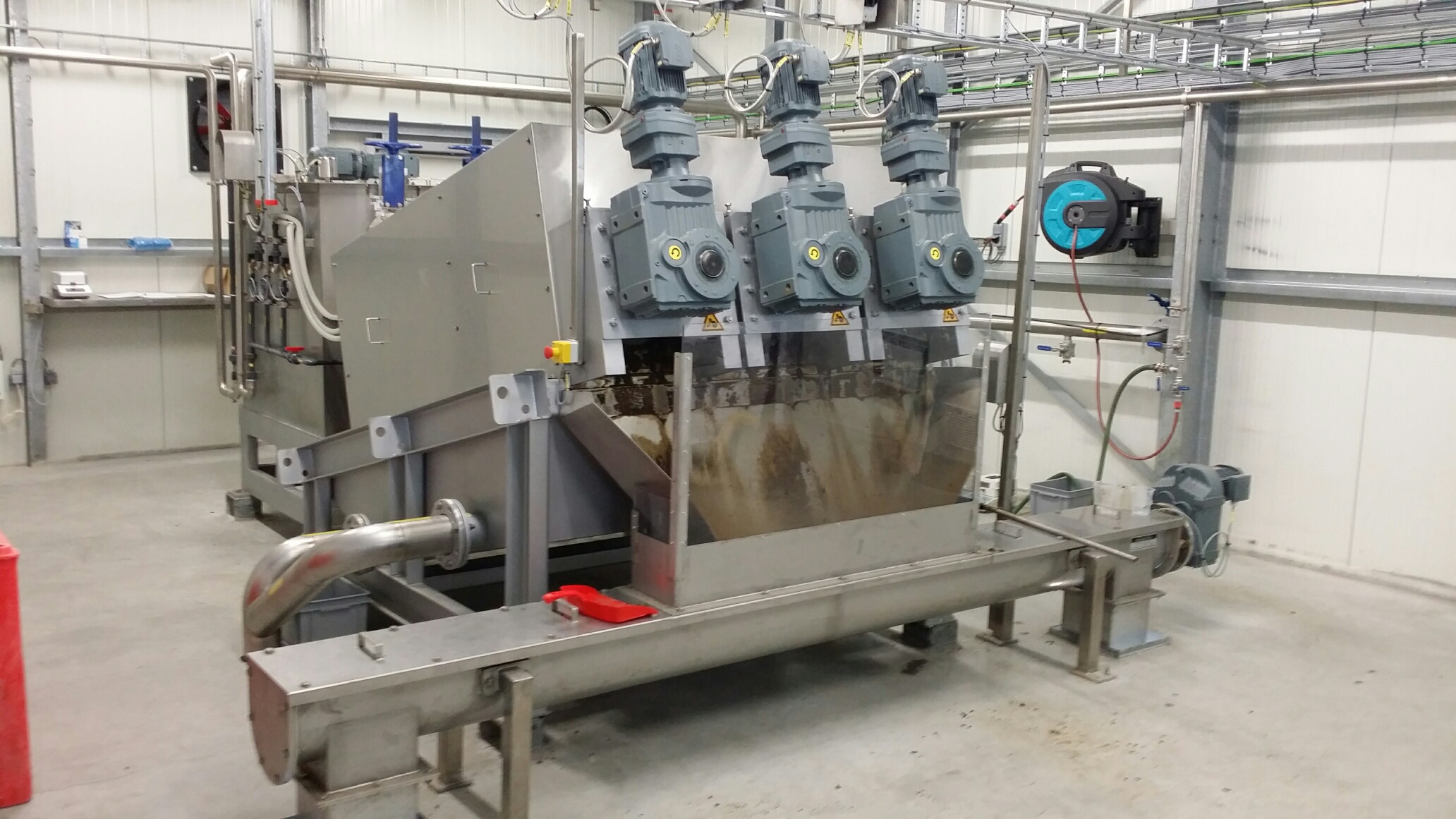
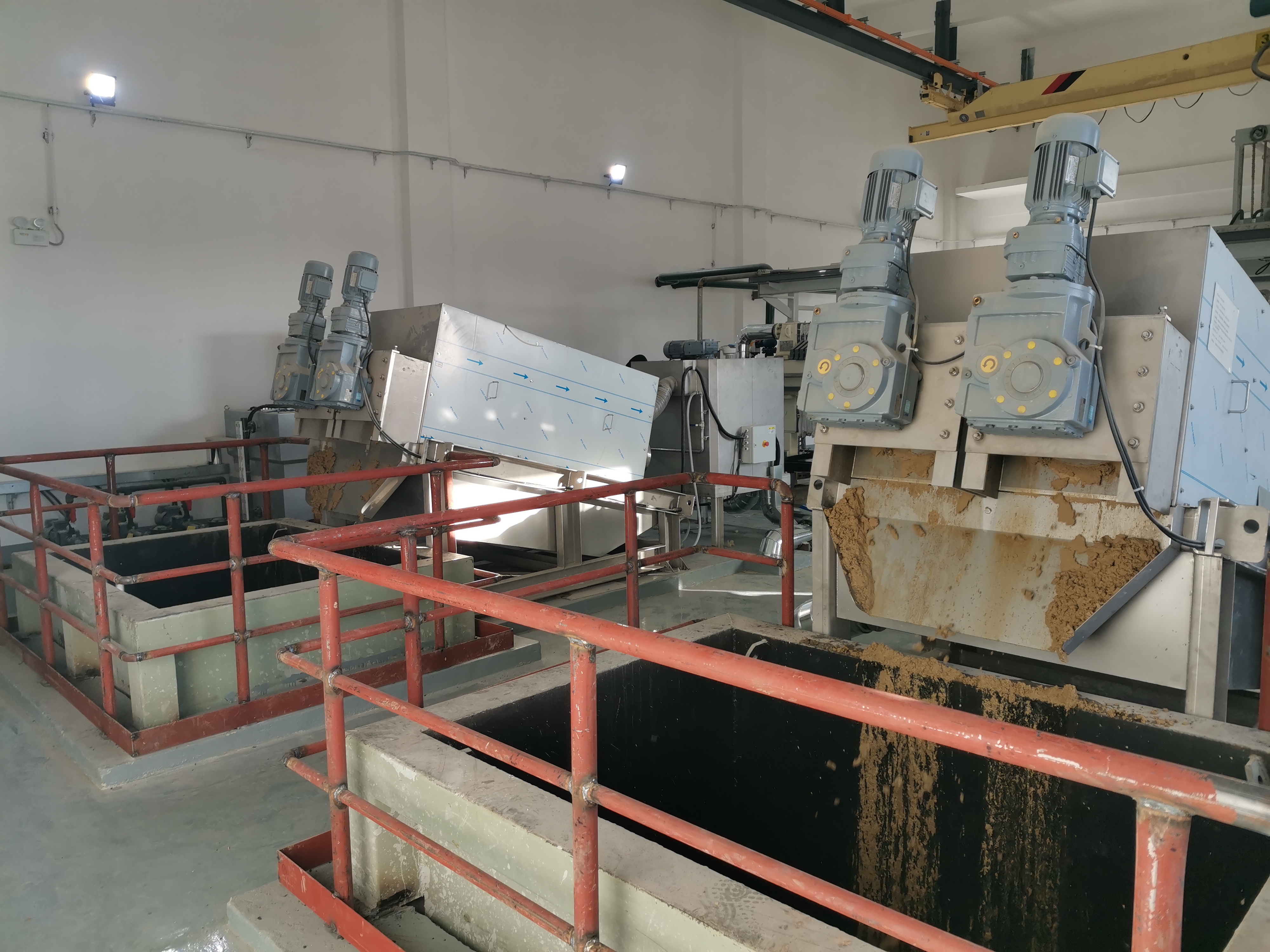
Step 3 – Filtration and compression inside the screw press. The conditioned sludge enters the screw press dewatering device. Water drains through the filter assembly during the initial gravity zone, then additional water is pressed out as the screw pushes the material toward zones with smaller volume. The result is a dewatered cake that moves toward the discharge end.
Step 4 – Cake discharge and conveying. The pressed cake leaves the machine and is transported by a cake conveying system, typically a belt conveyor or screw conveyor. This keeps the area around the dewatering machine clean and reduces manual handling.
Step 5 – Filtrate handling. The pressed water is collected and returned to the water treatment line. This step makes the dewatering system part of the complete water cycle within the plant.
Step 6 – Process control. Modern sludge dewatering systems are often controlled by a PLC control cabinet. Automatic sludge dewatering machines can adjust dosing and feed rates according to system settings, enabling fully automatic continuous operation 24 hours per day. This is one of the reasons that buyers compare screw presses with other technologies when labor availability is limited.
Where Screw Press Sludge Dewatering Is Used
Screw press sludge dewatering equipment is not limited to one industry. The application data for the Benenv MDS series lists the following typical areas:
- Municipal wastewater treatment plants, including municipal sludge dewatering system upgrades;
- Industrial wastewater treatment in chemical, textile, paper, and electroplating plants;
- Food processing and slaughterhouse wastewater treatment;
- Pharmaceutical industry wastewater treatment;
- Livestock, aquaculture, and agricultural wastewater;
- Landfill leachate treatment;
- Daf sludge dewatering and sludge from other flotation-based clarification steps.
The same application data covers working conditions that range from low concentration sludge to high concentration sludge. It also includes continuous operation systems and projects with low energy consumption and low noise requirements. For example, screw press systems are often studied for decentralized or enclosed sites where noise and odor control are important. Stainless steel material availability further supports applications where corrosion resistance is a procurement condition.
What Buyers Should Know About Power and Operating Costs
For buyers comparing sludge dewatering equipment, power consumption is often one of the first questions discussed. According to industry comparative analysis published by Amcon Europe, screw press technology typically consumes 90% to 95% less power compared with centrifuges in sludge dewatering applications. This is a technology-level comparison rather than a brand comparison, but it helps explain why screw press dewatering presses are frequently evaluated for projects where continuous operation is required around the clock.
The product specifications above provide a more concrete operating picture. The installed power of Benenv MDS models ranges from 0.2 kW on the smallest unit to 8.2 kW on the MDS404 high-capacity model. This is low relative to the total feed flow and dry solids handling capacity listed for each machine. Wash water consumption also varies by model, from 24 L/h on compact units to 320 L/h on the largest unit. In a budget review, wash water volume affects water consumption and operating cost, especially on industrial sites where treated water is expensive.
Frequently Asked Questions About Screw Press Sludge Dewatering
1. What standards should a buyer consider when evaluating screw press dewatering equipment for European projects?
For European wastewater treatment plant design, EN 12255-8 is the standard that specifies design principles and construction requirements for sludge treatment and storage facilities in wastewater treatment plants. When evaluating a screw press sludge dewatering machine for a European project, buyers should ask the supplier how their equipment aligns with the relevant plant-level sludge treatment standards. Buyers should also confirm material specifications, because dewatering equipment such as the Benenv MDS series is commonly built in SS304 or SS316L stainless steel for corrosion resistance.
2. What types of sludge can a screw press dewatering machine handle?
The practical range is broad. Screw press sludge dewatering equipment is used in municipal wastewater treatment, industrial wastewater treatment, food processing and slaughterhouse wastewater, pharmaceutical wastewater, livestock and agricultural wastewater, and landfill leachate treatment. The Benenv MDS series is described as suitable for sludge from chemical, textile, paper, pharmaceutical, and agricultural industries. The working condition range includes low to high concentration sludge. That makes screw type sludge dehydrators a realistic candidate for both municipal sewage sludge dewatering and industrial sludge dewatering applications.
3. How should a buyer budget for energy consumption?
Energy demand depends on the machine size and the operating schedule. The installed power on Benenv screw press dewatering models ranges from 0.2 kW on the MDS101 to 8.2 kW on the MDS404. Multi-disk screw presses are generally considered a low-speed, low-energy option compared with high-speed machines such as centrifuges. One industry comparative analysis estimates that screw press technology typically consumes 90% to 95% less power than centrifuges in sludge dewatering applications. Buyers should still ask for a power consumption estimate based on their specific sludge type and daily operating hours.
4. Which equipment model should be selected for a new project?
Selection starts with two numbers: the average hourly feed flow in m³/h and the dry solids load in kg DS/h. For a small installation, a compact screw press model such as the MDS101 or MDS201 may be sufficient. For larger municipal or industrial duties, models such as the MDS302, MDS353, MDS402, or MDS404 offer higher capacity ranges. Because sludge concentration affects both numbers, suppliers must know the source of the sludge, the type of wastewater treatment, and the required operating schedule before recommending a specific screw press dewatering unit.
5. How does a buyer start the procurement process with Benenv?
The most direct first step is to send project data to the Benenv sales team by email at manager@benenv.com. Helpful information includes the type of sludge, average and peak flow rate, mixed liquor or feed concentration, target cake dryness, operating hours, and site location. Benenv also publishes a company brochure with the MDS equipment series overview, which can be downloaded in PDF format. Suppliers can then provide model recommendations and preliminary sizing for the sludge dewatering system.
Conclusion: From Product Awareness to a Verified Shortlist
Screw press sludge dewatering is a mature and expanding technology used to reduce sludge volume, lower disposal costs, and operate wastewater treatment plants with less manual intervention. Buyers at the research stage should focus on four things: the sludge application, the model capacity in m³/h and kg DS/h, the material and automation level, and the supplier ability to support a complete sludge dewatering system including pumps, polymer dosing, PLC control, and cake conveying.
For buyers who want to move from awareness to evaluation, reviewing published equipment specifications is the fastest route to a meaningful shortlist. The Benenv MDS series is one example of a multi-disk screw press product family that spans compact units to high-capacity municipal sludge dewatering systems. Company-level data, including a 20,000 m² manufacturing base, a 50-person R&D team, and more than 4,500 project references in over 60 countries, provides context that can be used during supplier screening.
To continue the research process, buyers can download the official Benenv brochure here:
Benenv MDS Screw Press Sludge Dewatering Equipment Brochure (PDF)
For specific sizing questions or project quotations, contact:
Email: manager@benenv.com
Website: en.benenv.com
Have Questions or Need More Details?
Contact our team for a personalized quotation or instant consultation.
Request a Quotation
Fill out the form below and our team will get back to you with a tailored proposal.
WhatsApp Direct Chat
Prefer to chat in real-time? Message us on WhatsApp for instant assistance & quick answers.
- Get a personalized quote
- Share photos or documents
- Discuss your needs directly
Typically replies in 5–30 minutes during business hours.