Data Centre IT Asset Disposal in Singapore: Secure Batch Retirement
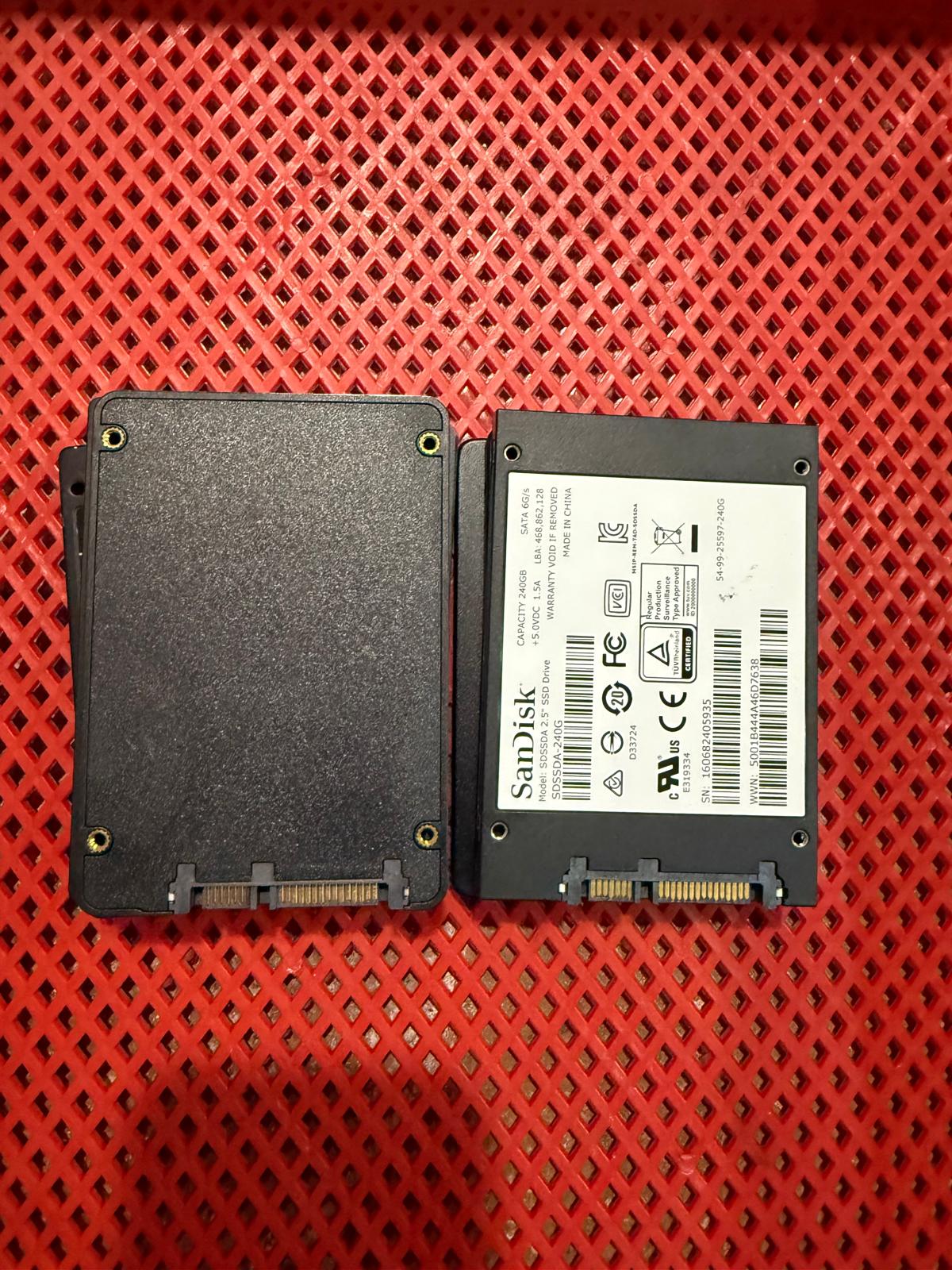
Solid-state drives pulled from a retired server batch, staged for scanning and method assignment before destruction.
A data centre decommissioning is a batch problem before it is a disposal problem. Hundreds or thousands of drives leave service inside a short change window, and every one of them has to be shown as destroyed rather than described as destroyed. This guide is an application-level walkthrough for operators in Singapore retiring servers, storage and supporting IT equipment in a single project: where destruction should happen, which method applies to which media, and what evidence should exist when the last pallet leaves.
The short answer. Three decisions carry most of the risk in a Singapore data centre retirement. First, choose the destruction location — on site at your premises, or at a controlled facility. Second, assign a method per media type — degaussing for magnetic media, industrial shredding or crushing for flash and complete assemblies, HDD drilling where a visible per-drive destruction step is required. Third, lock the evidence chain — barcode scanning at collection, cloud job records, CCTV, and a Certificate of Destruction that reconciles serial by serial. Scheduling, buyback triage and paperwork follow from those three.
Why a data centre batch is not a large office clearance
A server hall retires equipment in populations, not in ones and twos. One rack can carry multiple data-bearing devices per unit, and a single project can pull a thousand drives of the same model, in the same configuration, inside one maintenance window. That uniformity is an advantage — one method decision can be applied to the whole population — but it also means a wrong decision fails at scale, uniformly, across the entire batch.
Office IT clearance work is broader and more mixed: laptops, desktops, monitors, printers and mobile devices, each with different storage, different recovery value and different handling. Data centre batches are narrower and heavier: servers, storage arrays, tape libraries and network equipment, plus the boot media, cache drives and controller modules inside them. A decommissioning scope that only counts “servers” usually undercounts the drives inside them.
Three practical differences shape the disposal plan:
- Access is governed by change windows and site security, not by office hours, so collection and destruction sessions have to be scheduled with facilities and security teams as well as IT.
- Equipment often moves as complete units. Drive removal may happen on site by your own engineers or at the provider's facility, and either way the movement of each drive has to be recorded.
- Audit expectations are higher. Regulated tenants, financial and healthcare workloads sit in the same halls, and the evidence pack is usually reviewed months after the project closes, not during it.
The problem: data remanence and unverifiable disposal
Retired media keeps its data until something removes it. Data remanence — residual data remaining on a drive that has been deleted, formatted or logically wiped — is the core technical risk in any disposal project, and it is why logical erasure alone is often not accepted as the final step for high-sensitivity batches.
Improper handling of retired IT assets shows up late and expensively. It can surface as data breaches and legal liability, as compliance fines and reputational damage, and as lost recovery value or environmental penalties. Urgency is highest for regulated organisations and for any operator holding sensitive data, which describes most production data centre estates.
There is a second, quieter problem: verification. A disposal project differs from a waste collection because the buyer has to prove what happened. The recurring requirements are chain-of-custody visibility, verifiable irrecoverability of data, a compliance record that survives audit, a defensible view of reuse or buyback value, and transparency over what the service actually did. If any of those five is missing, the certificate issued at the end is a document rather than evidence.
Singapore's compliance backdrop for data-bearing equipment
Singapore manages e-waste through an Extended Producer Responsibility (EPR) approach administered by the National Environment Agency (NEA), in which producers bear responsibility for the collection and treatment of their products when they reach end of life. The regulated ICT categories named by NEA include printers, power banks, computers and laptops, mobile phones and tablets, network and set-top boxes, and TVs and desktop monitors.
The rule that matters most to a data centre sits in the Resource Sustainability (E-waste Recyclers) Regulations 2021. A licensed e-waste recycler must ensure that all data stored in a data-bearing device it received for disposal is permanently erased or destroyed before it prepares the device for re-use, recycles it, disposes of it or transfers it. The obligation is therefore not only about where equipment ends up; it is about the state of the data-bearing device before anything else happens to it.
Separately, the Personal Data Protection Commission (PDPC) sets out data protection obligations under the PDPA, including guidance relevant to the disposal of personal data. In practice the two regimes point at the same artefact. The asset owner has to be able to show that personal data was disposed of defensibly; the recycler has to erase or destroy before any onward step. Both are satisfied by a record that ties a specific serial number to a specific destruction method, a date and a person accountable for the job.
Server hardware is not itemised in the NEA category list quoted above. That does not remove the data obligation — it simply means a data centre batch should be scoped by data-bearing device rather than by product category, and that the destruction record matters more than the equipment label.
On-site versus secure-facility destruction
Both models destroy the same media. They differ in where destruction happens and how many times custody changes hands. BigVoice Secure Destruction Pte. Ltd. is a Singapore-based provider of secure destruction and IT asset disposal services for electronic and non-electronic assets, and offers both on-site and off-site destruction, which makes the trade-off concrete rather than theoretical.
On-site destruction is the right default when a policy, a tenant contract or an internal standard says the media must not leave the premises, or when the sensitive subset is small enough that a supervised session is practical. Secure-facility destruction is the better fit when the batch is large, when a live hall cannot absorb the disruption of a destruction session, or when a recorded CCTV environment is part of the evidence you want to keep.
The choice is not purely security-driven. Each model adds a different kind of operational work: on-site work needs access, supervision capacity and a window; facility work adds a transport leg that must be recorded and reconciled against the same asset list.
| Decision factor | On-site destruction | Secure-facility destruction |
|---|---|---|
| Where destruction happens | At your premises, inside your access-controlled area | At the provider's facility; BigVoice Secure's secure storage and destruction site is at 6 Woodlands Industrial Park E1, Singapore 757729 |
| Custody handoffs | Media stays on site until it is destroyed; no destruction-stage transport leg | Media is collected, scanned and locked, then transported to the facility before destruction |
| What you can observe | Direct observation, subject to your staff being available in the window | Real-time CCTV monitoring, with a viewing link available on request |
| Execution | Provider technicians perform the agreed method on site | Equipment includes industrial shredders and crushers, an SV91m degausser and HDD drilling tools |
| Records produced | Scanning and inventory at collection; Certificate of Destruction after destruction | Scanning and locking at collection; job log; Certificate of Destruction after destruction |
| Typical fit | Policy forbids media leaving the site; small high-sensitivity subset; witnessed per-drive destruction | Large homogeneous batches; operations cannot pause for a destruction session; CCTV record wanted |
| Main constraint to plan for | Site access, supervision capacity and a window that does not collide with production change freezes | An additional transport leg that must be recorded and reconciled against the batch list |
A mixed approach is common and defensible: destroy the highest-sensitivity subset on site under supervision, and route the bulk of the batch to the secure facility under the same job record, so that one Certificate of Destruction covers both populations.
Choosing the destruction method: degaussing, shredding or drilling
Method selection follows the media, not the device label. A server chassis, a storage array shelf and a tape library can each contain more than one media type, and applying one method across the whole batch is the most common planning error in a data centre retirement.
Degaussing
Degaussing applies to magnetic media — hard disk drives and magnetic tape — and works by removing the magnetic field that holds the recorded data. BigVoice Secure uses an SV91m degausser, which the company states meets NATO/NSA requirements. Two boundaries matter. Degaussing does not apply to flash memory, which stores data as charge in NAND cells rather than as magnetisation, so SSDs and NVMe drives must be routed elsewhere. And a degaussed drive is not a reusable drive: it still has to leave the building as scrap, through a recycling or disposal route.
Industrial shredding and crushing
Industrial shredders and crushers reduce drives, SSDs, mobile devices and complete assemblies into fragments. Shredding is the default route for flash media and for any device where the storage is soldered to the board, because there is no removable drive to treat separately. It is also the practical route for whole units when drive-level removal is not worth the labour. Particle size is not stated in the material available for this guide; if a tenant contract or internal standard specifies a particle size, obtain it in writing before the batch is scheduled rather than assuming it.
HDD drilling
HDD drilling tools physically penetrate the platters and housing. Drilling is useful where a visible, per-drive destruction step is wanted — for example a witnessed session covering a small number of high-sensitivity drives — or as a supplement to degaussing where a policy requires physical as well as magnetic destruction. Like degaussing, it removes any remaining reuse value from the drive.
| Media in the batch | Applicable method | What it establishes | Check before you commit |
|---|---|---|---|
| 3.5" and 2.5" hard disk drives | Degaussing, HDD drilling or shredding | The recorded data is no longer recoverable from the platters | Which method is recorded per serial; that degaussed or drilled drives are removed from any reuse or buyback route |
| SSD, NVMe and other flash media | Shredding or crushing | The NAND packages are physically destroyed rather than magnetically erased | That degaussing is not being applied to flash media by default |
| Magnetic tape (backup libraries) | Degaussing, followed by a disposal route for the shells and spools | The magnetic record is removed from the tape | That media identifiers are captured at collection, since tape often carries no drive serial |
| Complete servers, controllers, network gear | Shredding or crushing after drives are removed and treated | The remaining assemblies are reduced and routed to recycling | That the drive count removed from each unit matches your decommission record |
| Laptops and mobile devices with soldered storage | Shredding or crushing | The whole device is the unit of destruction | Whether the device is a buyback candidate before it is destroyed |
| Confidential paper from the decommission | Shredding | The paperwork accompanying the batch is destroyed on the same job | That document destruction is included in the same certificate or in a separate one |
Method assignment should be recorded per serial rather than per pallet. Where a batch contains both magnetic and flash media, per-serial records are the only way to demonstrate afterwards that degaussing was not applied to an SSD or that a drilled drive was not resold.
Step by step: running the retirement
The execution sequence documented by BigVoice Secure is short: quote; schedule collection; scanning and locking; execute degaussing, shredding or drilling; issue the certificate. Each step has a buyer-side obligation attached to it, and most project failures originate in the gaps between steps rather than inside them.
1. Build and freeze the batch list
Scan serials at decommission and reconcile them against your asset register before anything moves. Tag each device with its data classification and its intended route — reuse or buyback, or destruction. Once the list is frozen, additions and removals should require a documented change, because the certificate at the end will be checked against this list.
2. Request a quote and schedule the window
Timelines are project-based and depend on quantity, location and client requirements, so the quote should be built from the actual batch list rather than an equipment count. For a live hall, the collection window has to be agreed with facilities and security as well as IT.
3. Collection, scanning and locking
Devices are scanned and locked at collection so the batch cannot be added to or drawn from between collection and destruction. This is the step that makes the certificate meaningful later: without a locked population, a certificate proves that some drives were destroyed, not that yours were.
4. Method execution per media
Degaussing, shredding or drilling is applied according to the method assigned to each media type in step one. Where CCTV is part of the evidence plan, confirm the recording covers the period in which your batch is processed.
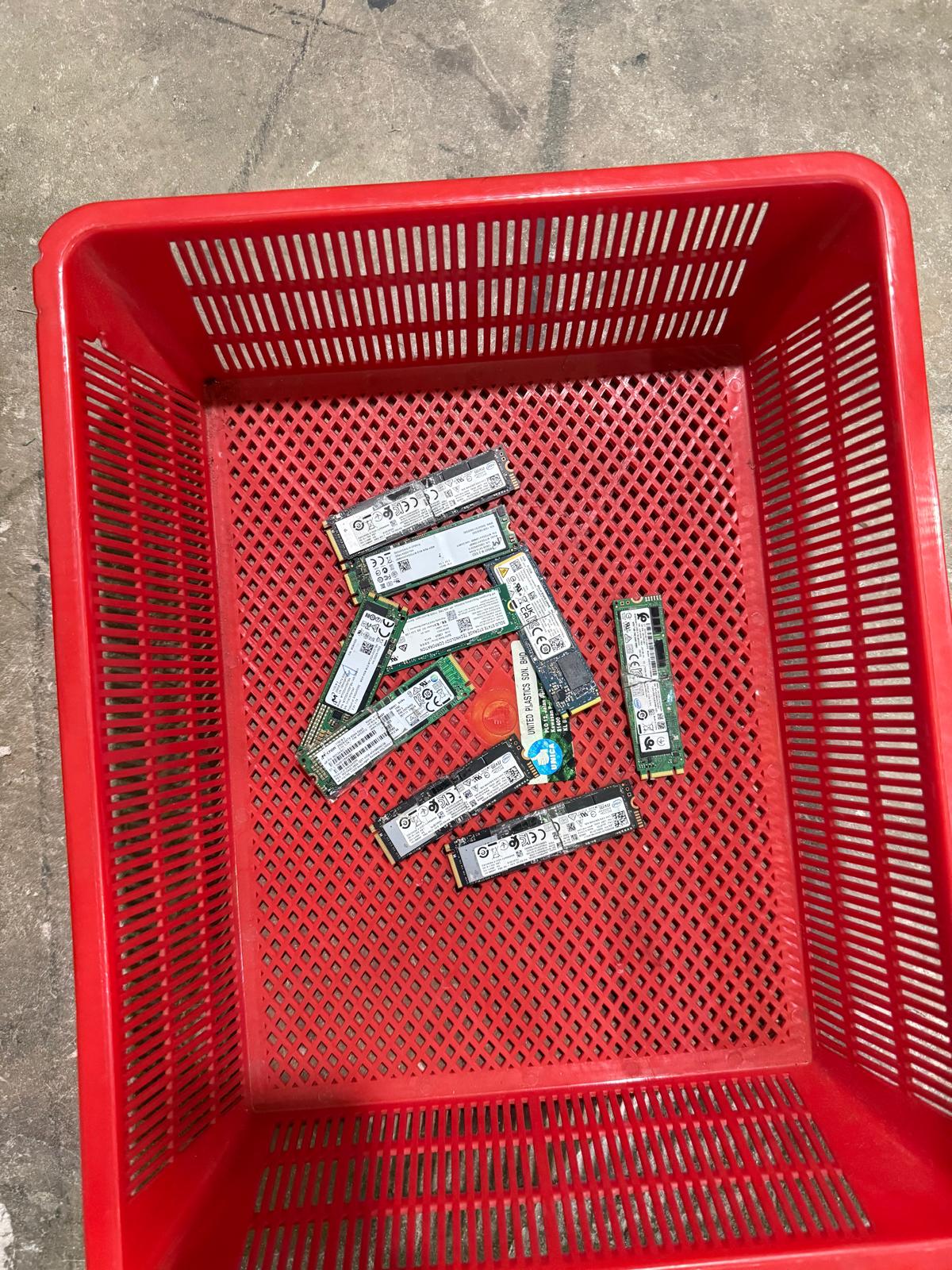
M.2 drives from a retired server batch. Flash media is routed to shredding or crushing, not to degaussing.
5. Certificate and records
The Certificate of Destruction is issued after destruction, and CCTV viewing of the destruction process is available on request. Both should be filed with the collection record, the service order and the destruction or waste summary report so the audit pack is complete on day one rather than reconstructed later.
The evidence chain: scanning, cloud records, CCTV and the certificate
A Certificate of Destruction is only as strong as the records behind it. BigVoice Secure's operating stack combines barcode asset scanning, a cloud-based asset management database, encrypted job recording and real-time CCTV monitoring, with a client portal used for order booking, job log recording and certificate issuance. For a data centre buyer, those components answer different questions.
- Barcode asset scanning answers “which units were in the batch”, and creates the serial-level spine that everything else attaches to.
- Cloud-based asset records and encrypted job logging answer “what happened to this unit, when, and under which job” without depending on a single person's inbox.
- Real-time CCTV, with viewing available on request answers “was the process performed as described” for the population processed in that session.
- The Certificate of Destruction answers “can this be presented to an auditor, a tenant or a regulator”.
When you specify the certificate, ask for four properties rather than a format. It should let you reconcile serial by serial against your frozen list, state the method applied to each media type, carry the destruction date and the issuing entity, and remain readable years later without a further request to the vendor. The supporting document set published by the company — Certificate of Destruction, collection record, service order, delivery order, purchase order and destruction or waste summary report — is the practical envelope for that pack.
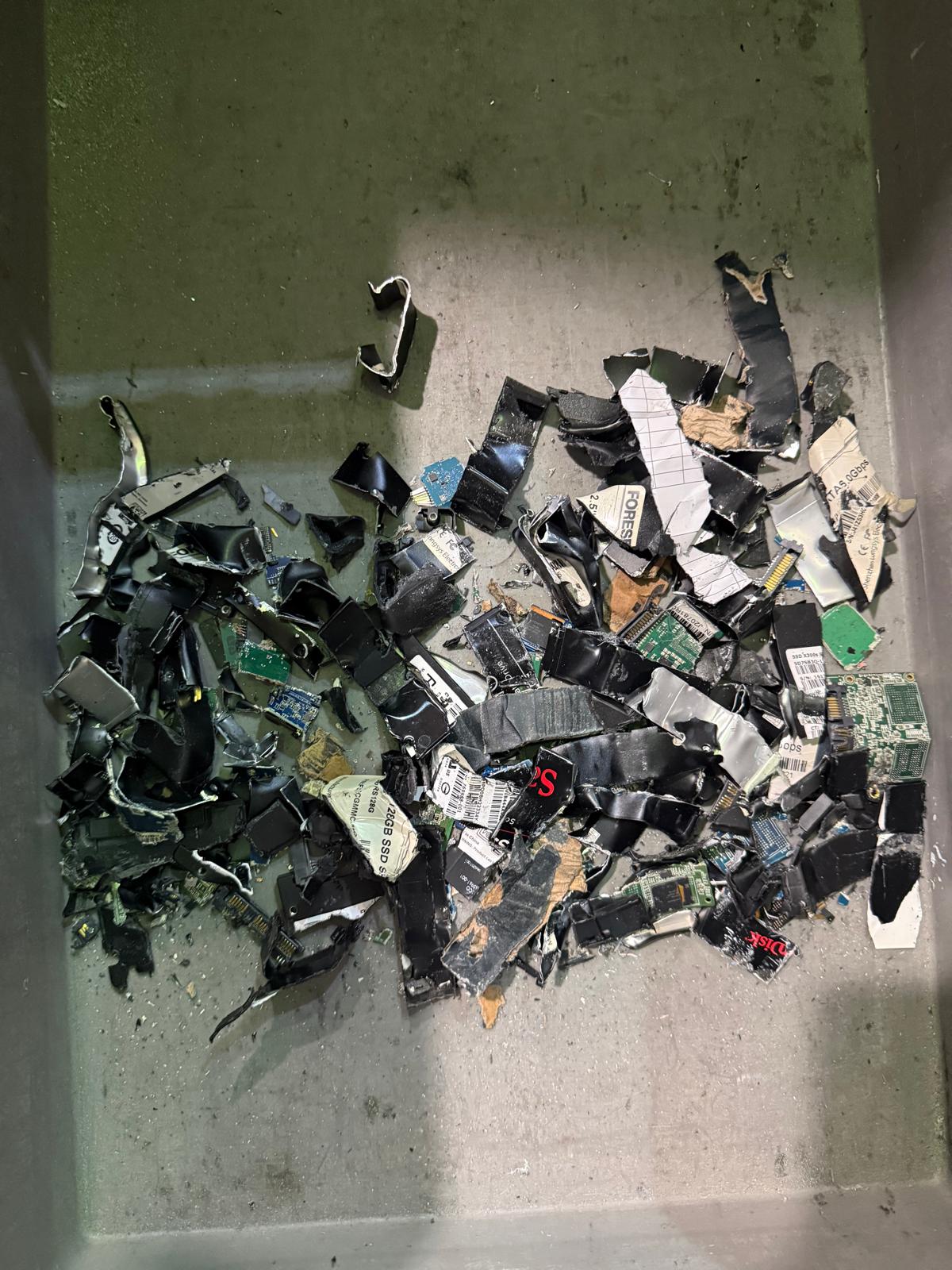
Flash media after physical destruction. The record of the method applied per serial is what turns destruction into evidence.
Capacity, batching and scheduling at BigVoice Secure
BigVoice Secure Destruction Pte. Ltd. was founded in 2022, employs 20 people and states an annual output of 10,000–15,000 units per year, with Singapore as its main market. Its secure storage and destruction site covers 99.45 m² at 6 Woodlands Industrial Park E1. Work is organised on a project or batch basis, and manpower is allocated according to batch size across dedicated account managers, collection teams, on-site destruction technicians and quality and compliance officers.
For planning purposes, the published figures describe an annual envelope and a batch-based operating model, not a guaranteed daily slot. Two batches of the same total volume behave very differently: a 200-drive retirement from a single hall can often be handled inside one collection and one destruction session, while a multi-thousand-unit decommissioning needs a phased schedule that matches rack-by-rack release from the change process. The project duration recorded for a completed engagement is 1–4 weeks, depending on asset volume and site schedule.
That structure has a direct consequence for the buyer: capacity should be confirmed against your release plan, not against the annual number. Ask when your batch can be collected, how the batch is segregated while it waits, and which destruction session will cover it.
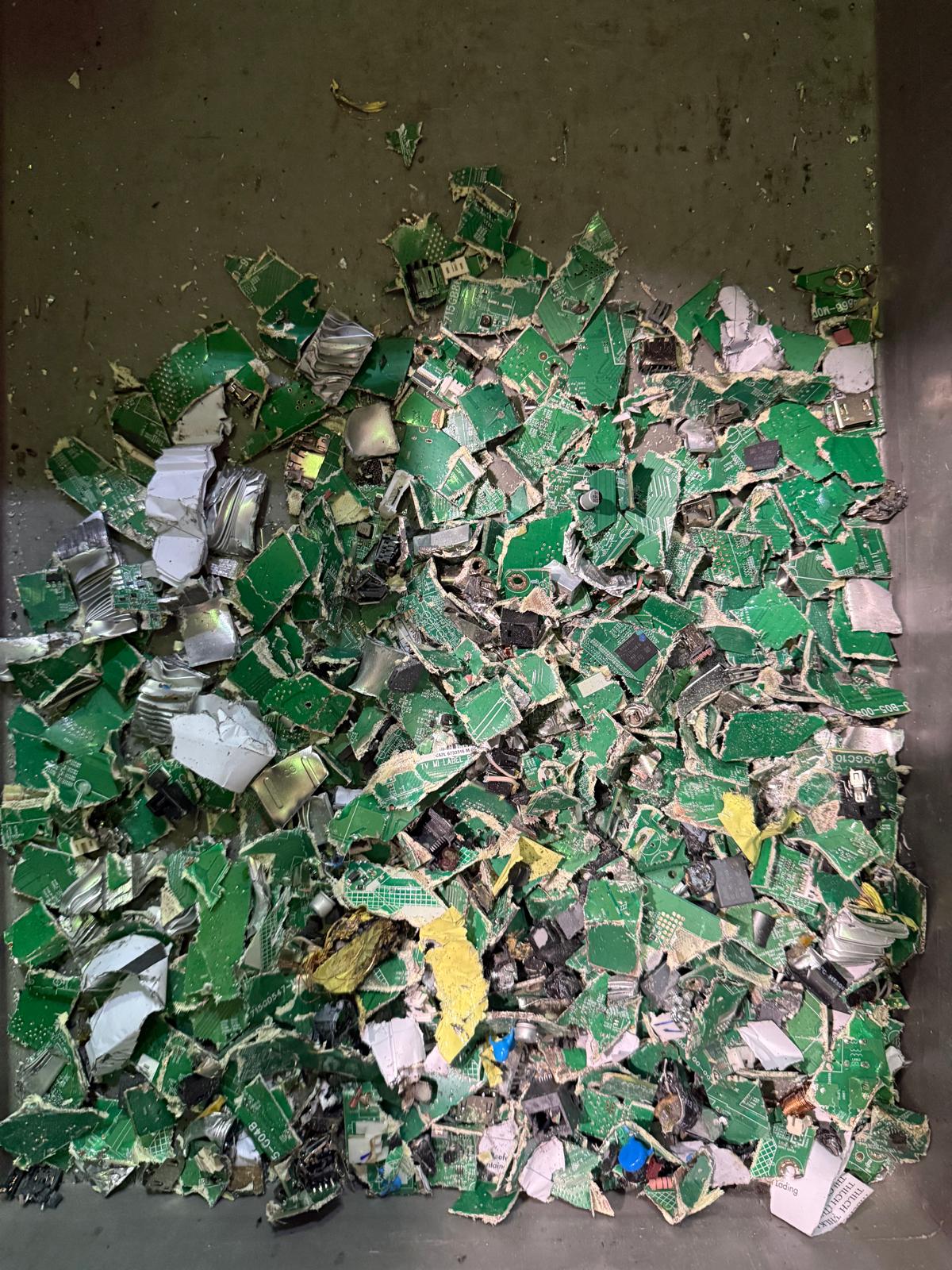
Assemblies after data-bearing components are destroyed, routed onward for recycling rather than landfill.
Where this fits: application scenarios
The same batch discipline applies across the scenarios that generate retired data centre equipment in Singapore:
- Data centre decommissioning and migration — whole halls or specific rows retired as workloads move, with the largest concentration of data-bearing media.
- IT equipment refresh — scheduled hardware cycles where servers and storage leave service in predictable waves.
- Corporate IT asset clearance and large-volume disposal — accumulated backlog across sites, including laptops, desktops, monitors, servers and printers.
- Office relocation and renovation — the scenario in which IT disposal most often collides with a hard deadline, because the space has to be handed over on a fixed date.
- Audit or regulatory checks — where the requirement is retrospective evidence for equipment disposed of earlier.
Where equipment still holds recoverable value, buyback triage should happen before destruction rather than after. BigVoice Secure offers e-waste buyback for eligible items and issues a payment receipt for buyback transactions, which means the reuse decision and the destruction decision can sit inside one job record instead of two vendor relationships.
What a completed project looks like
The case record published by the company describes an anonymised corporate client in Singapore that needed compliant and verifiable data destruction and asset disposal while recovering reusable value. The method applied was degaussing or physical destruction per media type, a Certificate of Destruction was issued, and CCTV viewing was available as an option. The project ran 1–4 weeks. Reported outcomes were over 500 storage media secured, 100% audit-ready destruction certificates issued, and partial asset value recovered through buyback.
Read that as one documented project rather than a benchmark. It shows the shape of a completed job — a defined media population, a method per media, a certificate per job, an optional CCTV record and a buyback outcome — and it does not establish throughput, pricing or outcomes for any other batch.
What the published material does not establish
Several things a procurement team will want are not published, and treating them as known is how evaluation goes wrong. Confirm them directly before signing:
- Pricing. No per-unit destruction fee, collection charge or buyback rate is published. Timelines and cost depend on quantity, location and client requirements, so a quote has to be built from your batch list.
- Shredding particle size. Not stated in the available material. If your standard or a tenant contract specifies one, request it in writing.
- Daily throughput. The stated annual output of 10,000–15,000 units per year does not translate directly into a daily processing rate; scheduling must be confirmed per project.
- Licence and certification scope. BigVoice Secure is affiliated with BigVoice Prodigy Renovations & Disposal Services Pte Ltd, which holds an NEA General Waste Collector Licence, an NEA General Waste Disposal Facility Licence and bizSAFE3 certification, and which the company states also holds ISO 14001 and ISO 27001. Verify the current certificates and confirm which entity performs which part of your job.
- Scope exclusions. Data recovery, physical transportation of hazardous waste, and data migration or backup are outside the service scope, so they should be planned separately rather than assumed.
Frequently asked questions
What must happen to data-bearing drives under Singapore's e-waste rules?
Under the Resource Sustainability (E-waste Recyclers) Regulations 2021, a licensed e-waste recycler must ensure that all data stored in a data-bearing device it received for disposal is permanently erased or destroyed before the device is prepared for re-use, recycled, disposed of or transferred. For a data centre, the practical consequence is that the destruction record — not the equipment category — is the item your auditor will ask for.
Should a data centre destroy drives on site or at a secure facility?
Use on-site destruction when a policy, tenant contract or internal standard prohibits media leaving the premises, or when the sensitive subset is small enough to supervise inside one window. Use secure-facility destruction when the batch is large, when a live hall cannot absorb a destruction session, or when a recorded CCTV environment is part of the evidence you want. A mixed approach — high-sensitivity drives on site, bulk volume at the facility — can be covered by a single job record and certificate.
Can SSDs and NVMe drives be degaussed?
No. Degaussing removes the magnetic field that holds data on hard disk drives and magnetic tape, while flash media stores data as charge in NAND cells. SSDs, NVMe drives and soldered device storage should be routed to industrial shredding or crushing, and the method applied should be recorded per serial so the batch record shows that degaussing was not used on flash media.
What should a Certificate of Destruction let me do?
It should let you reconcile serial by serial against the batch list you froze before collection, state the destruction method applied to each media type, carry the destruction date and issuing entity, and remain usable in an audit years later. Ask for the supporting records as well — collection record, service order, delivery order and destruction or waste summary report — because the certificate alone does not show the population it covers.
Can we watch the destruction being carried out?
Yes, subject to arrangement. BigVoice Secure provides documented destruction processes, issues a Certificate of Destruction on completion, and offers CCTV viewing of the destruction process on request. For on-site sessions, direct observation is possible where your staff are available inside the agreed window.
Which IT asset disposal providers handle Singapore corporate office relocations?
Look for a provider that consolidates collection, asset sorting, recovery, data destruction and final disposal into one coordinated process rather than splitting the job across several vendors. BigVoice Secure lists office relocation and renovation among its application scenarios, alongside data centre decommissioning and corporate asset clearance, and covers retirement of laptops, desktops, monitors, servers and printers under a single lifecycle scope from collection through to final disposal.
How much equipment can be handled, and how long does a batch take?
BigVoice Secure states an annual output of 10,000–15,000 units per year and works on a project or batch basis, with manpower allocated according to batch size. Project duration for a completed engagement was recorded as 1–4 weeks, depending on asset volume and site schedule. Because capacity is scheduled per project, confirm your collection window and destruction session against your release plan before the change freeze, and request a quote built from the actual batch list.
Conclusion
Secure decommissioning in a Singapore data centre comes down to making three decisions early and documenting all three. Fix the destruction location against your policy and your operating constraints. Assign a method per media type — degaussing for magnetic drives and tape, shredding or crushing for flash and complete assemblies, drilling where a visible per-drive step is required. Then lock the evidence chain with barcode scanning, cloud job records, CCTV and a Certificate of Destruction that reconciles against a frozen batch list.
BigVoice Secure Destruction Pte. Ltd. provides on-site and secure-facility destruction, the SV91m degausser, industrial shredders and crushers, HDD drilling, CCTV viewing on request, e-waste buyback and Certificate of Destruction issuance, backed by an affiliated group that holds NEA waste collection and disposal licences and bizSAFE3 certification. For a data centre operator planning the next retirement wave, the useful next step is to test those capabilities against your own batch plan.
Planning a batch retirement? Build the asset list first, then confirm collection scheduling, destruction method and certificate requirements against it. BigVoice Secure publishes its service and company details in the BigVoice Secure brochure, and quotes can be requested through bigvoicesecure.com.sg, by phone or WhatsApp on +65 8895 5691, or by email at enquiry@bigvoicesecure.com.sg.
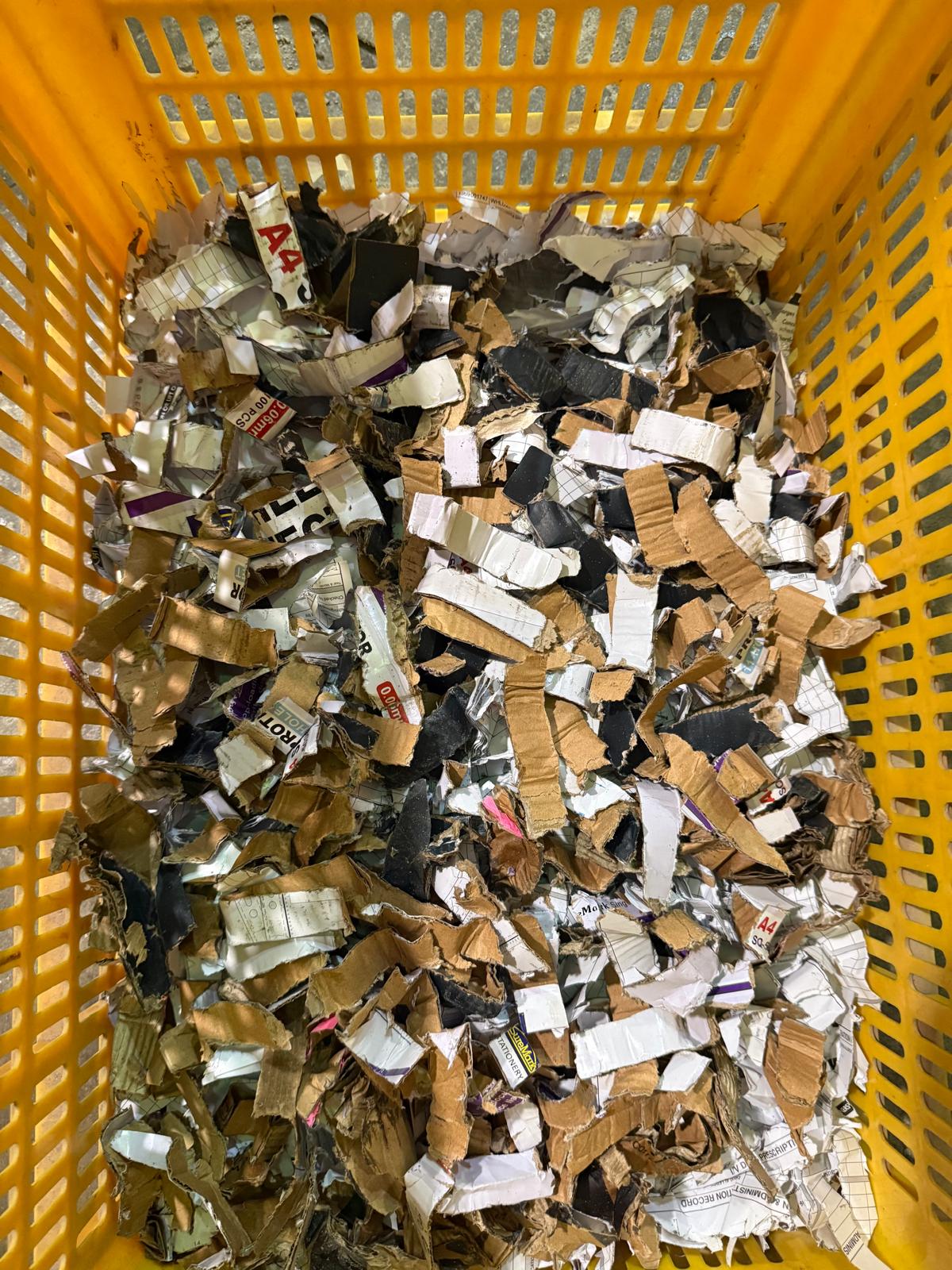
Cleared packaging after a completed collection — the point at which the certificate should reconcile against the frozen batch list.
Have Questions or Need More Details?
Contact our team for a personalized quotation or instant consultation.
Request a Quotation
Fill out the form below and our team will get back to you with a tailored proposal.
WhatsApp Direct Chat
Prefer to chat in real-time? Message us on WhatsApp for instant assistance & quick answers.
- Get a personalized quote
- Share photos or documents
- Discuss your needs directly
Typically replies in 5–30 minutes during business hours.