Evaluating Secure Data Destruction Service Suppliers: Custody, CCTV and Certificate Checks
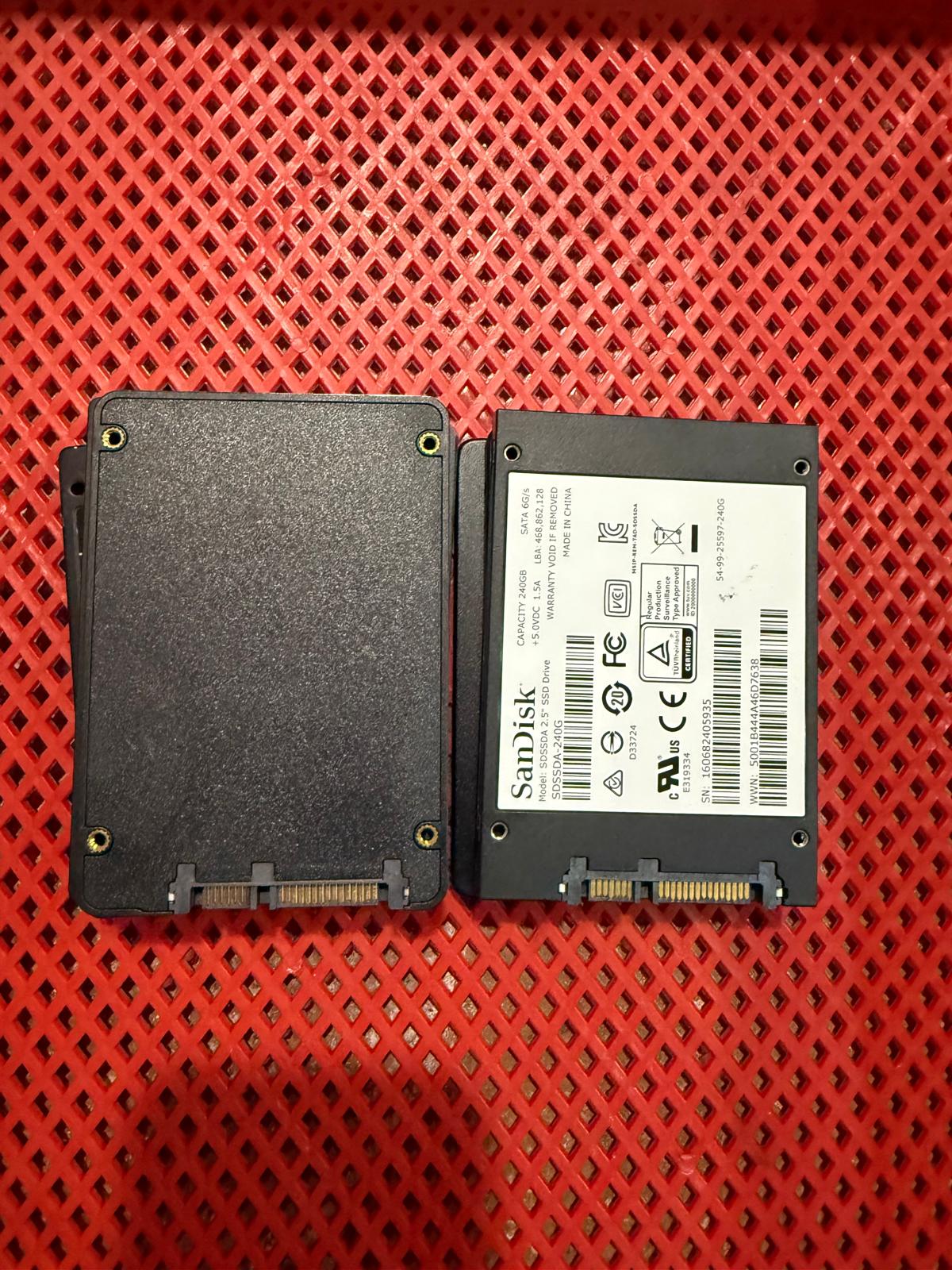
A secure data destruction service should be evaluated on three evidence gates before price is compared: custody (can the supplier prove exactly what it received, and where it went), visibility (can you observe what happened to it), and certification (can the supplier prove what was destroyed in a form an auditor will accept). A fourth check — capacity and staffing — determines whether the supplier can deliver those three gates on your schedule.
Most buyers discover how thin a supplier's evidence chain is only after collection has happened. At that point the media is gone, the questions are retrospective, and the answer is usually a PDF with your company name on it and very little connection to the devices that actually left your loading bay. Supplier evaluation is therefore less about destruction technology and more about control points: who scanned the asset, where it was locked, who watched it being destroyed, and what document proves it afterwards.
This guide is written for procurement, IT asset, compliance and facilities teams in Singapore that are shortlisting providers at the evaluation stage and preparing to execute a first or repeat project. It sets out a practical evaluation model built around custody, CCTV and certificate checks, using the documented workflow of BigVoice Secure Destruction Pte. Ltd. as a reference point for what a supplier response should look like.
Problem Definition: The Three Gaps Buyers Only Notice After Collection
Secure data destruction is commonly defined as the complete and irreversible removal of data from storage devices so that it cannot be accessed again. That definition describes the end state. It says nothing about the interval between your premises and that end state — and the interval is where supplier quality is actually decided.
In practice, buyers encounter four gaps, and each one maps to a specific question that should be answered before a contract, not after a project.
- The custody gap. Items are counted at pickup, but the count is not reconciled against an identifier at destruction. Without scanning, a missing drive is only discovered by accident.
- The visibility gap. The buyer is told destruction happened inside a secure facility, but no viewing option, witness arrangement or recording is offered.
- The evidence gap. A certificate is issued, but it cannot be matched line by line to the inventory that was collected. Auditors increasingly ask for the match, not the certificate alone.
- The capacity gap. The supplier accepts the job but cannot process it within your decommissioning window, so media sits in storage longer than planned — extending the exact risk you were trying to close.
Industry Background: Why Supplier Evaluation Standards Are Tightening
Demand-side context explains why evidence quality now varies so widely between providers. Industry research places the global IT asset disposition market at USD 17.5 billion in 2024, with the data destruction segment holding the largest share at 30.64% of that market. Separately, the Global E-waste Monitor 2024 (UNITAR / ITU) recorded 62 million tonnes of e-waste generated in 2022, projected to reach 74.7 million tonnes by 2030.
Two consequences follow for buyers. First, a growing category attracts a growing number of providers, and not all of them build the same control points. Second, the vocabulary used to describe destruction has become standardised enough that buyers can now demand specificity: NIST SP 800-88 Revision 1 defines three sanitisation levels — Clear, Purge and Destroy — and a supplier should be able to place its services against that framework rather than describing destruction in general terms.
In Singapore, buyers also have to reconcile two documentation streams in one project: the data protection evidence (what proves the data is unrecoverable) and the waste-handling evidence (who is licensed to move and process the material). A supplier that can only speak to one of the two creates follow-up work for the buyer.
Detailed Solution: The Three-Gate Evaluation Model
BigVoice Secure Destruction Pte. Ltd. is a Singapore-based provider of secure destruction and IT asset disposal for electronic and non-electronic assets, operating both on-site and off-site destruction services. Its declared scope covers hard drives, laptops, mobile devices, IT equipment, confidential documents and other data-bearing media, with documented destruction processes and a Certificate of Destruction issued on completion. The company also offers e-waste buyback, allowing customers to recover value from eligible electronic waste.
Its solution — named Asset Destruction (Collect – Destroy – Certify) — is composed of enquiry and scheduling, on-site collection or customer drop-off, item scanning and locking, physical or magnetic destruction, certificate issuance, and recycling or buyback processing. That component list is useful precisely because it can be audited: each component either produces a control point or it does not.
Gate 1 — Custody: barcode and scan inventory, and locked-box control
Custody is the first gate because it is the only one that can prevent loss rather than merely document it. In the reference workflow, items are scanned and logged either on site or at the secure facility, and while in transit or in storage they are held in locked boxes with numeric combinations. The combination can be defined by the client, and the client confirms the destruction method and the locked-box combination as part of its own responsibilities.
Two details matter when you evaluate a supplier against this gate. The first is where scanning happens. On-site scanning lets your team observe the count as it is created; facility scanning concentrates the count in one controlled location. Both are offered in this workflow, and the right choice depends on whether your risk sits in transit or in reconciliation. The second is who controls the box. A locked box with a client-defined combination means the supplier cannot open the container without your combination — a materially different control from a sealed bag that only the supplier can verify.
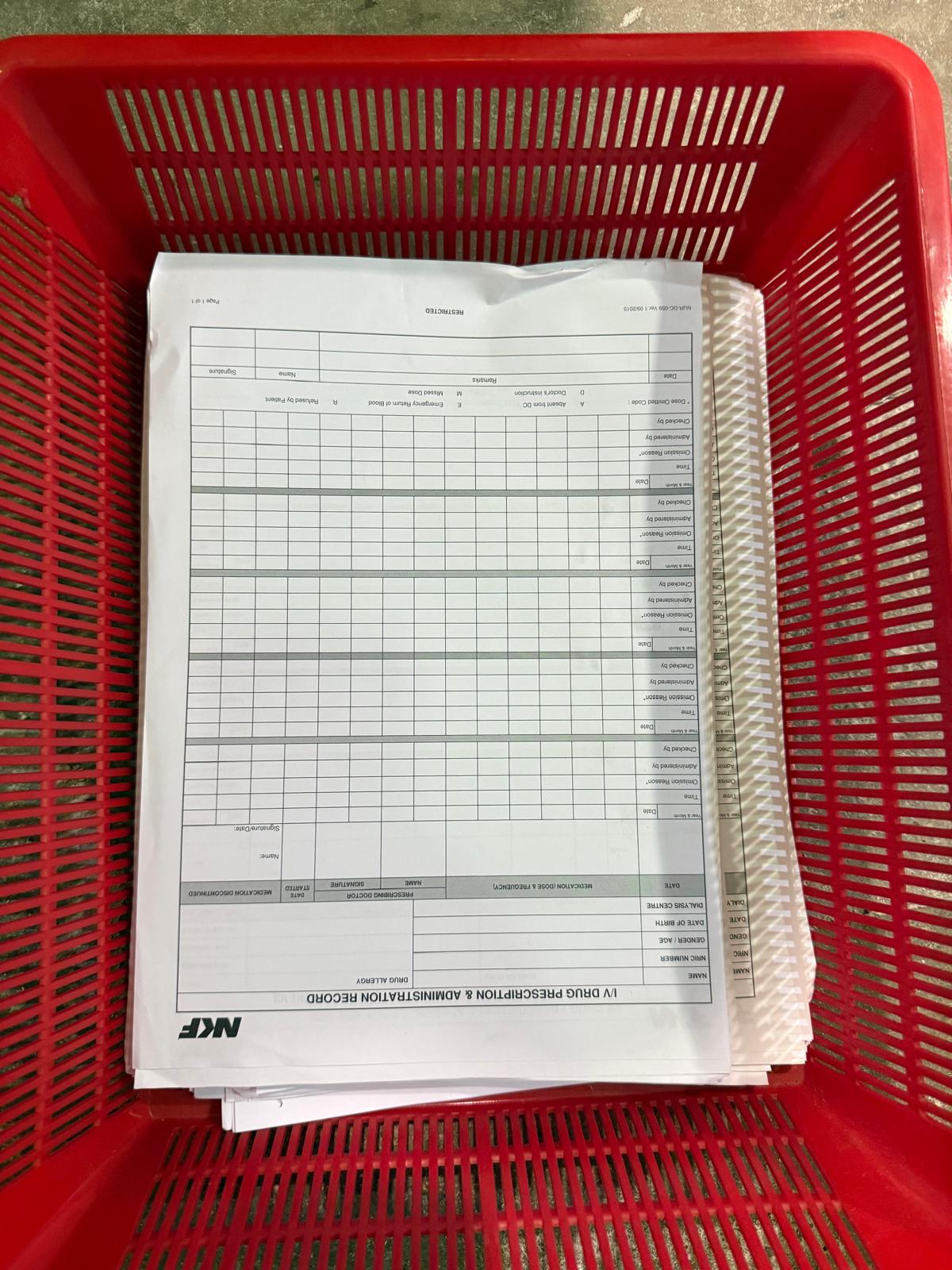
The output of this gate is concrete: a confirmed inventory list from the collection stage. Ask to see a sample. If the inventory list cannot be produced at collection, the later certificate has nothing to reconcile against.
Gate 2 — CCTV: visibility on request, and witnessed destruction
Visibility converts an assurance into an observation. In this workflow, CCTV viewing of the destruction process is available on request, and the destruction phase produces destruction records plus a video link where viewing or recording has been requested. Witnessed data destruction is provided with chain-of-custody records, and the facility operates real-time CCTV monitoring with barcode asset scanning as part of its stated technology stack.
When evaluating suppliers, distinguish three levels of visibility rather than treating “CCTV” as a single feature:
- Monitored: the facility records activity for its own security. This protects the supplier more than it protects you.
- Viewable on request: the buyer can request to view the destruction process. This is a buyer-side assurance and should be confirmed in writing, including whether viewing is live, recorded, or both.
- Witnessed: your representative attends the destruction, with the attendance captured in the chain-of-custody records. This is the strongest option and usually reserved for high-sensitivity batches.
Gate 3 — Certificate: issuance against the completed method
A Certificate of Destruction is issued after the chosen destruction method is completed. That sequencing sounds obvious, but it is worth testing: some documentation is prepared at booking rather than at completion, which breaks the link between the certificate and the actual destruction event. The companion deliverables in this workflow are the confirmed inventory list from the collection stage, the destruction records and video link where requested, and — where buyback applies — a payment receipt.
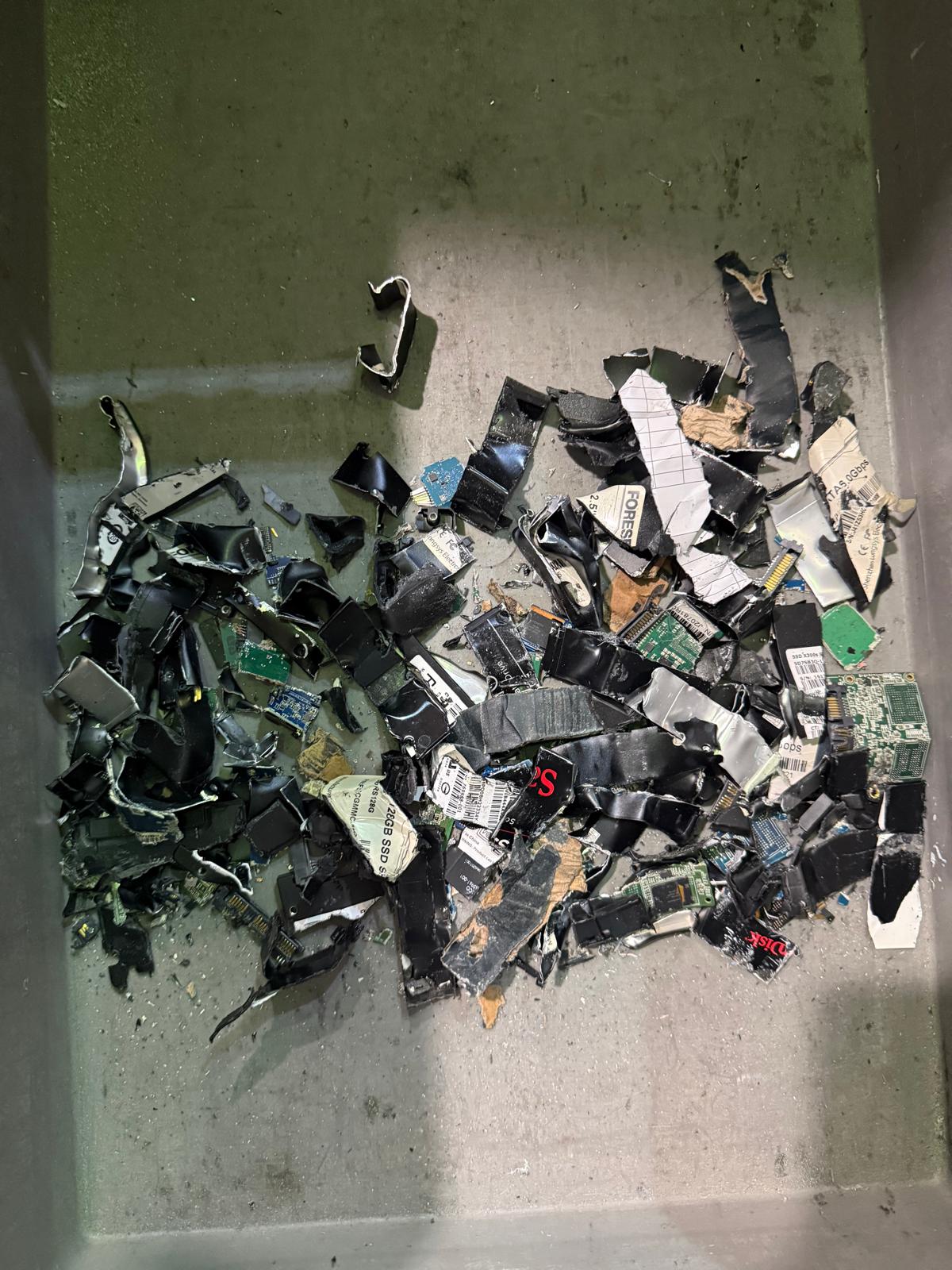
Read the certificate against the inventory, not in isolation. The evaluation question is not “do you issue a certificate?” but “can you show me a certificate and the inventory it closes?”
The fourth check — capacity and staffing reality
Evidence gates are only useful if the supplier can run them at your volume. BigVoice Secure states an annual handling capacity of 10,000 to 15,000 units, approximately 20 staff, and a 99.45 m² secure storage and destruction site. Team structure includes dedicated account managers, collection teams, on-site destruction technicians, and quality and compliance officers, with manpower allocated according to project batch size.
Those figures are the right shape for project and batch-based work rather than continuous high-volume throughput, and the supplier describes handling as project/batch-based, with capacity and scheduling to be confirmed per engagement. For a buyer, that is a scheduling question, not a disqualification: a data centre decommissioning 4,000 drives and an office retiring 60 laptops place very different demands on the same site.
Step-by-Step Breakdown: Running the Evaluation
The sequence below turns the three gates into a shortlist process you can run in one or two supplier conversations.
- Define the media scope before you ask for quotes. Separate magnetic media (hard drives, backup tapes), flash media (SSDs, M.2 drives), whole IT assets (laptops, mobile devices, equipment) and confidential paper. Mixed batches are normal; the reference workflow explicitly handles HDDs, SSDs and backup tapes together.
- Ask for the method mapping by media type. The destruction method is selectable by media type: degaussing for magnetic destruction, and shredding, crushing or drilling for physical destruction. BigVoice Secure states degaussing using an SV91m degausser meeting NATO/NSA requirements. If a supplier offers one method for everything, ask why.
- Test the inventory method. Ask whether scanning is done on site, at the facility, or both, whether assets are barcode-scanned, and what document you receive at the end of collection. The expected answer is a confirmed inventory list.
- Test the storage control. Ask whether items are held in locked boxes, who sets the combination, and whether the combination can be client-defined. Confirm that your organisation is expected to confirm the combination — in this workflow it is a stated client responsibility.
- Test the visibility option. Ask whether CCTV viewing is available on request, whether it is live or recorded, whether witnessed destruction can be arranged, and whether a video link is delivered with the destruction records.
- Test the certificate path. Ask when the Certificate of Destruction is issued (the correct answer is after the chosen method is completed), what else accompanies it, and whether the certificate references the inventory.
- Test capacity against your window. Give the supplier your unit count, site location and deadline. Compare the answer against stated capacity (10,000–15,000 units annually), staffing (approximately 20 staff) and site footprint (99.45 m²), and confirm whether your batch needs a dedicated slot.
- Confirm execution responsibilities and change handling. The client provides the item list and scheduling, arranges site access and permissions, and confirms the destruction method and locked-box combination. Service details and schedule changes should be communicated in advance and reconfirmed — put that in writing before the collection date.
Use Cases: Where the Weighting Changes
All four checks apply everywhere, but the weighting shifts by scenario. The company serves finance, healthcare, data centre, manufacturing and retail environments, and the priorities differ accordingly.
- Data centre refresh or decommissioning. Volume dominates. Weight capacity, scheduling and barcode reconciliation highest; a large batch also justifies witnessed destruction for a sample of units. Scanning at the facility is often the practical option when racks are being pulled under time pressure.
- Finance and healthcare compliance purges. Evidence dominates. Weight the certificate-to-inventory match, the destruction records, and whether the audit file can be assembled without follow-up emails. CCTV viewing on request is worth specifying even if unused.
- Retail and manufacturing IT retirement. Value recovery competes with destruction. Buyback applies to eligible electronic waste, so ask how the buyback valuation is separated from the destruction scope and what settlement document you receive. A representative project profile describes partial asset value recovered via buyback alongside destruction records and certificates.
- Office relocation or document purge. Custody dominates. Confidential documents follow the same collection, locking and certification chain as electronic media, so the locked-box combination control and the confirmed inventory list are the deciding factors.
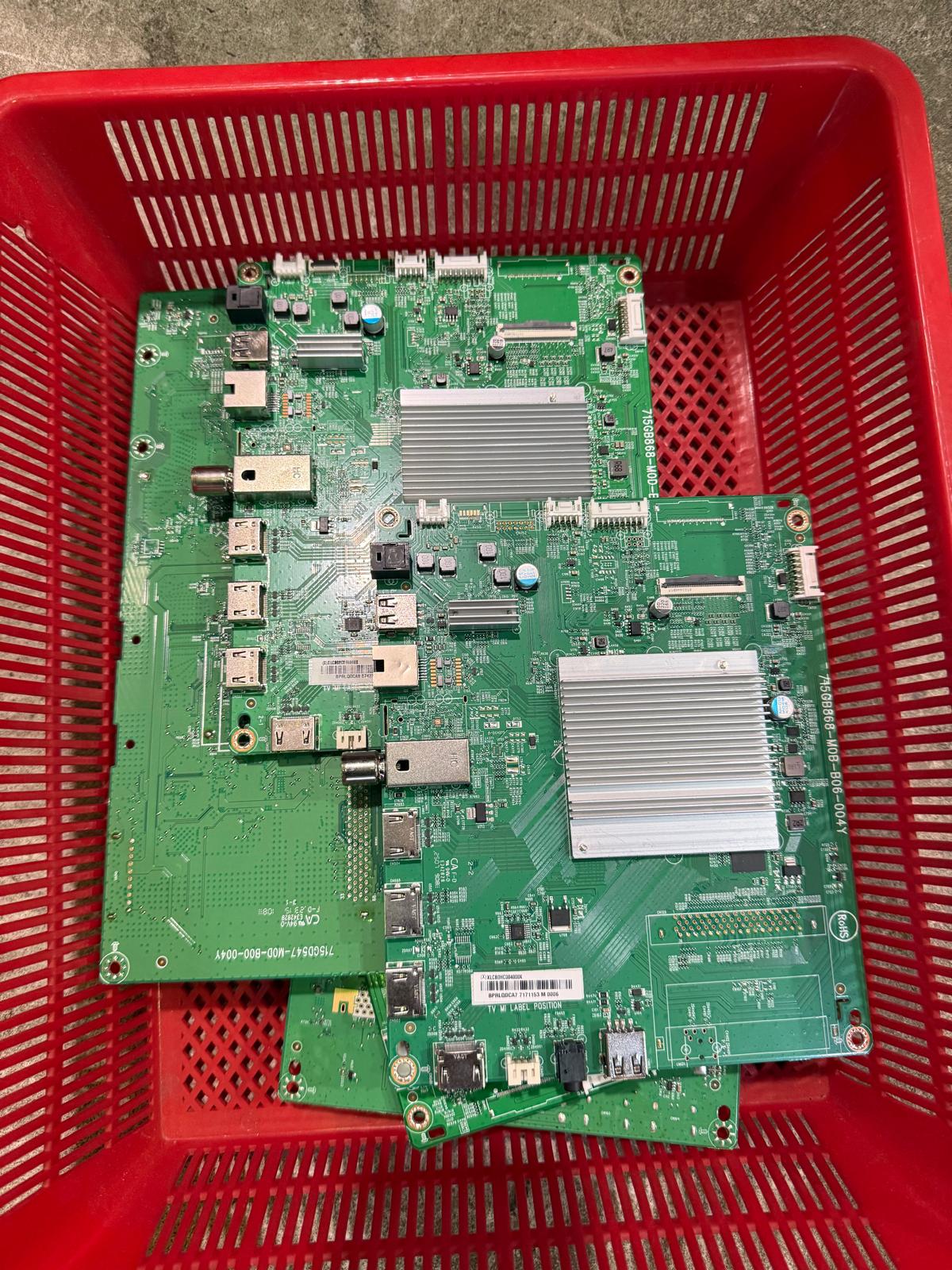
Comparison Table: Evaluation Criteria, Evidence and Reference Practice
The table below converts the three gates into an evaluation sheet. The right-hand column describes the documented practice of BigVoice Secure Destruction Pte. Ltd. and should be treated as a reference answer, not as a substitute for your own verification.
| Evaluation gate | Question to put to the supplier | Evidence to require | Reference practice (BigVoice Secure) |
|---|---|---|---|
| Custody intake | Is scanning done on site, at the facility, or both? | Confirmed inventory list from collection | On-site or secure-facility scanning and inventory; barcode asset scanning |
| Storage control | Are items held in locked boxes, and who sets the combination? | Written confirmation of client-defined combination | Locked boxes with numeric combinations; client confirms the combination |
| Visibility | Can we view or witness the destruction? | Viewing arrangement in writing; destruction records and video link if requested | CCTV viewing on request; witnessed destruction with chain-of-custody records; real-time CCTV monitoring |
| Method fit | Which method applies to each media type? | Method mapping by media type | Degaussing for magnetic destruction (SV91m degausser meeting NATO/NSA requirements); shredding, crushing or drilling for physical destruction |
| Certification | When is the certificate issued and what does it reference? | Certificate of Destruction issued after method completion, matched to inventory | Certificate of Destruction issued after the chosen method is completed |
| Capacity | Can you process our volume within our window? | Stated capacity, staffing and scheduling confirmation | 10,000–15,000 units annual capacity; approximately 20 staff; 99.45 m² secure site; project/batch-based handling |
| Value recovery | Does buyback apply, and how is it documented separately? | Buyback quotation and settlement receipt | E-waste buyback with payment receipt as a project deliverable |
A second, shorter table is useful when your batch mixes media types, because method selection is where scope misunderstandings originate.
| Media in the batch | Method available in the reference workflow | What to confirm before collection |
|---|---|---|
| Hard drives (magnetic) | Degaussing using the SV91m degausser (meeting NATO/NSA requirements) or physical destruction by shredding, crushing or drilling | Which method is recorded on the certificate |
| SSDs and M.2 flash media | Physical destruction methods (shredding, crushing or drilling) | That the method is fixed per unit type, not assumed |
| Backup tapes (magnetic) | Handled as part of mixed data-bearing device processing, with degaussing available for magnetic media | Tape volume and whether destruction is witnessed |
| Confidential documents | Shredding within the same collect–destroy–certify chain | Locked-box combination control and inventory granularity |
| Whole IT assets and equipment | Secure destruction of data-bearing components, with recycling, responsible disposal and buyback for eligible e-waste | Which components are destroyed and which are recovered |
Frequently Asked Questions
What documentation should a secure data destruction service hand back after a project?
A Certificate of Destruction issued after the chosen destruction method is completed, a confirmed inventory list produced at the collection and scanning stage, destruction records with a video link where CCTV viewing or recording was requested, and — where buyback applies — a payment receipt. Commercial documents in the reference workflow include the service order, delivery order, collection record and purchase order. The certificate and the inventory list matter together: the inventory shows what left your premises, and the certificate shows what was destroyed. An auditor needs to match the two.
How should buyers compare secure data destruction service providers for HDD and SSD shredding?
Compare four things. First, the method mapping: degaussing for magnetic media, and shredding, crushing or drilling for physical destruction, selected by media type — with SSDs and other flash media handled under the physical destruction options offered. Second, capacity and staffing: BigVoice Secure states an annual capacity of 10,000 to 15,000 units, approximately 20 staff and a 99.45 m² secure site, with project/batch-based scheduling. Third, visibility: CCTV viewing on request and witnessed destruction with chain-of-custody records. Fourth, the certificate path: issuance after the method is completed, matched to the inventory list. A supplier that answers only the first question has described a machine, not a service.
What drives the cost of a secure data destruction project?
Handling is project and batch-based, so quoting is per project rather than per published unit rate. The commercial variables are the quantity and mix of items, the site location, the destruction method selected for each media type, whether scanning is performed on site or at the secure facility, whether CCTV viewing or witnessed destruction is requested, and whether a buyback valuation applies to eligible equipment. Timeline is quoted the same way, and representative projects run one to four weeks depending on asset volume and site schedule. Ask for a written quote that separates collection, destruction, certificate issuance and any buyback settlement, so the comparison across suppliers is like for like.
Can we view or witness destruction before committing to a full programme?
Yes, as a documented option rather than a favour. CCTV viewing of the destruction process is available on request, witnessed data destruction is provided with chain-of-custody records, and scanning can be performed on site instead of at the facility. Customer drop-off is also available as an alternative to collection. For a first batch, the practical validation is to request the inventory list, the destruction records and the Certificate of Destruction for that single batch, then check that all three describe the same units — that check tells you more than any capability statement.
How is a project scheduled, and how long does it take?
The workflow runs through four stages: enquiry and scheduling, collection with inventory and scanning, destruction, then certification. Timing is project-based and depends on quantity, location and client requirements, with representative projects completed in one to four weeks. Before the collection date, the client provides the item list and scheduling, arranges site access and permissions, and confirms the destruction method and locked-box combination; service details and schedule changes should be communicated in advance and reconfirmed. To scope a first project, send the media count, media types and site details to BigVoice Secure through the WhatsApp enquiry line or by email, and request a quote together with a sample Certificate of Destruction.
Conclusion: Evaluate the Evidence Chain, Then the Price
Supplier evaluation for secure data destruction is a documentation exercise with a physical act inside it. Custody controls decide whether you can prove what was collected; CCTV and witnessing decide whether you can describe what happened; the certificate decides whether your auditor accepts the outcome. Capacity and staffing decide whether any of it happens inside your decommissioning window.
Run the three gates in order — inventory and locked-box control, viewing and witnessing, certificate issuance against the completed method — and ask for a sample of each artefact. A supplier that can produce a confirmed inventory list, a viewing arrangement in writing and a certificate matched to the inventory is giving you an auditable chain. A supplier that answers with equipment specifications alone has not yet answered the question you asked.
BigVoice Secure Destruction Pte. Ltd. operates from 6 Woodlands Industrial Park E1, Singapore 757729, and can be reached at +65 8895 5691 or enquiry@bigvoicesecure.com.sg. Its services are described in more detail at www.bigvoicesecure.com.sg.
Next step: request a quote and a sample certificate
Send your media count, media types and site location to receive a project quote covering collection, destruction and certificate issuance — plus a sample Certificate of Destruction and inventory list so your team can check the evidence chain before the first collection.
WhatsApp / Phone: +65 8895 5691 | Email: enquiry@bigvoicesecure.com.sg
Download the company brochure: BigVoice Secure promotional brochure (PDF)
Have Questions or Need More Details?
Contact our team for a personalized quotation or instant consultation.
Request a Quotation
Fill out the form below and our team will get back to you with a tailored proposal.
WhatsApp Direct Chat
Prefer to chat in real-time? Message us on WhatsApp for instant assistance & quick answers.
- Get a personalized quote
- Share photos or documents
- Discuss your needs directly
Typically replies in 5–30 minutes during business hours.