IT Asset Destruction in Singapore: Meeting Certification, Chain-of-Custody and Documentation Requirements
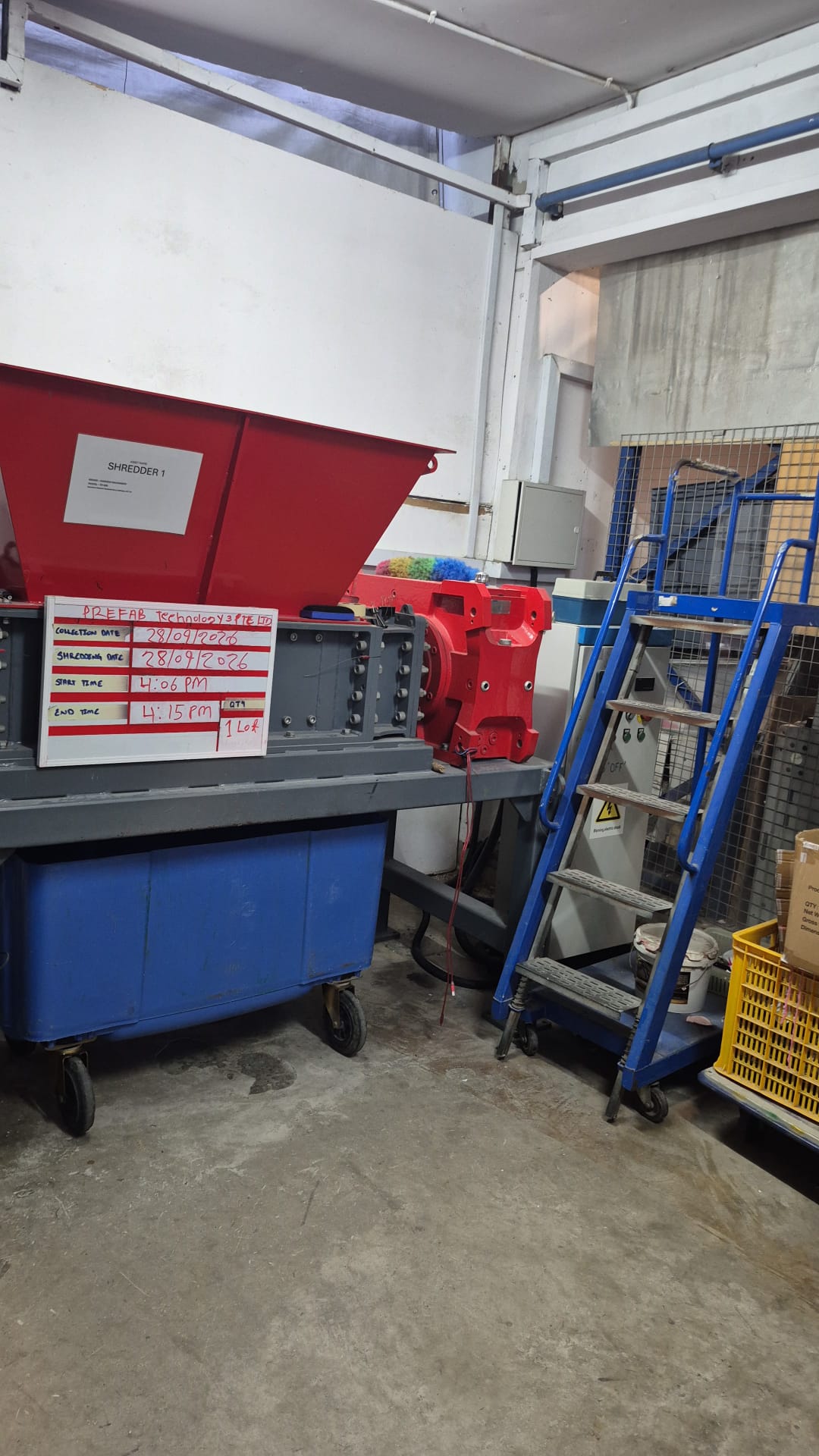
Physical destruction equipment inside the BigVoice Secure destruction facility, Singapore.
Retiring a rack of servers, a batch of end-of-life laptops or a cabinet of archived backup tapes is a routine operational event. Proving what happened to the data inside those devices is not.
Most organisations in Singapore can find a vendor willing to destroy a hard drive. Far fewer can produce a defensible record showing what was collected, how it was destroyed, who supervised the process and what remained of the asset afterwards. That gap between destruction as an activity and destruction as evidence is where IT asset destruction projects stall during audits, complicate office relocations and leave organisations exposed to data that was assumed to be gone.
This guide is written for procurement managers, IT asset owners, facilities teams and compliance officers who have already decided that retired assets must be destroyed. It focuses on the constraint layer instead: which media types require which method, what certification and chain-of-custody evidence should contain, and how a Singapore-based provider such as BigVoice Secure Destruction Pte. Ltd. structures that evidence.
What IT Asset Destruction Has to Cover
IT asset destruction is the controlled and irreversible elimination of data from storage devices and data-bearing equipment so the information can no longer be accessed. General industry guidance describes it in similar terms: data destruction permanently erases digital information from storage devices so it cannot be accessed, and it exists because ordinary file deletion, drive formatting or straightforward physical disposal does not achieve that outcome.
The term is often used loosely in procurement conversations, so it helps to separate what sits inside a destruction scope from what does not.
- Typically in scope: hard drives and other magnetic storage, solid-state storage, tape backups, laptops and mobile devices, wider IT equipment, confidential paper documents, and selected non-electronic items that carry sensitive information.
- Typically out of scope: data recovery, data migration and backup services. Destruction and recovery serve opposite objectives and are usually delivered by different specialists.
Four constraints decide whether a destruction project will hold up under scrutiny:
- Method validity by media type. A method that makes one media type unreadable may leave another fully intact.
- Chain of custody. The asset must be accounted for from the moment it leaves the client site to the moment destruction is confirmed.
- Documentation. Audit and governance stakeholders expect a Certificate of Destruction and supporting records, not verbal confirmation.
- Downstream handling. Residual materials — including non-destroyed components — still require compliant waste handling and responsible recycling.
Practical rule: define the evidence you need before you compare vendors. Method, collection model and pricing should all follow from the certificate and records your own governance process requires.
Why the Constraint Layer Keeps Tightening
Three external signals explain why buyers now ask harder questions about proof of destruction.
Destruction is the largest slice of a growing market. The global IT Asset Disposition (ITAD) market was valued at USD 17.5 billion in 2024 and is projected to reach USD 29.54 billion by 2030, according to a 2024 market report published by Strategic Market Research. Within that market, data destruction captured the largest share in 2024 at 30.64%. Growth at this scale draws in more providers — and creates wider variation in how rigorously each one documents its work.
Device volumes keep climbing. The Global E-waste Monitor 2024, published by UNITAR and ITU, recorded 62 million tonnes of e-waste generated globally in 2022, with projections reaching 74.7 million tonnes annually by 2030. More retired hardware means more data-bearing devices moving through disposal channels every year.
A recognised technical reference point exists. NIST Special Publication 800-88 Revision 1, published on 17 December 2014 and still widely referenced, defines three levels of media sanitisation: Clear, Purge and Destroy. Buyers who understand those levels can ask a supplier a precise question — which level does the proposed method deliver, and how is it evidenced — instead of accepting a general assurance that a device was wiped.
Together, these signals produce a simple expectation: destruction should be verifiable, repeatable and documented.
How BigVoice Secure Structures IT Asset Destruction
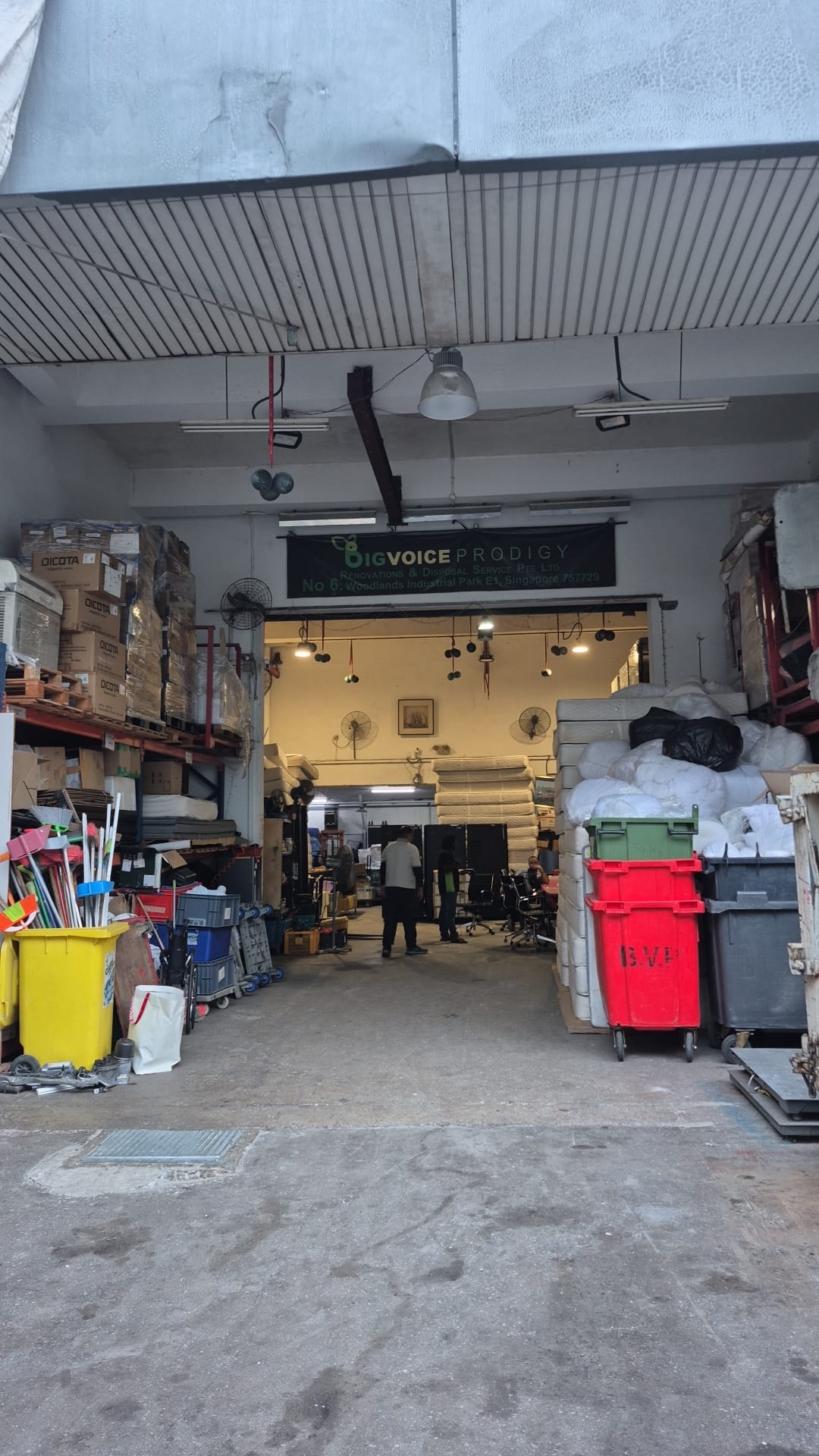
BigVoice Secure Destruction Pte. Ltd. operates from Woodlands Industrial Park E1 in Singapore.
BigVoice Secure Destruction Pte. Ltd. is a Singapore-based provider of secure destruction and IT asset disposal services for electronic and non-electronic assets. The company delivers both on-site and off-site secure destruction, and its service scope covers data centres, obsolete electronics, retired IT assets and other equipment, alongside confidential documents and selected non-electronic items.
Destruction capability and equipment
Method coverage is central to constraint compliance, and equipment lists matter more here than marketing claims. BigVoice Secure's stated technical capabilities include industrial shredders and crushers, an SV91m degausser that meets NATO/NSA requirements, HDD drilling and other physical destruction methods, supported by CCTV and inventory scanning devices. Physical destruction is complemented by secure reuse, recycling and responsible disposal options for equipment that does not need to be destroyed.
Facility, custody and traceability
Destruction activity is supported by a 99.45 ㎡ secure storage and destruction site, professional physical destruction equipment, and a supervision handover and traceability recording system. Trained collection and destruction teams execute on-site and secure-facility destruction while maintaining chain-of-custody records throughout.
Tracking, recording and reporting
The operational stack behind the service includes a cloud-based asset management database, encrypted job recording, real-time CCTV monitoring and barcode asset scanning. A secure inventory tracking system and a client portal support order booking, job log recording, destruction certificate issuance and itemised verification reports. Deliverables on completion include a Certificate of Destruction and, on request, a CCTV viewing link covering the destruction process.
Credentials held through affiliation
BigVoice Secure is affiliated with BigVoice Prodigy Renovations & Disposal Services Pte Ltd, which states that it holds an NEA General Waste Collector Licence, an NEA General Waste Disposal Facility Licence, bizSAFE3 certification, and ISO 14001 and ISO 27001. Those credentials sit with the affiliated entity rather than the destruction brand itself — which is exactly why supplier screening should confirm which legal entity holds each licence instead of assuming the certificate belongs to the contracting company.
Sector experience and value recovery
The service is delivered to businesses across the finance, healthcare, data centre, manufacturing and retail sectors. Where retired assets still hold residual value, an e-waste buyback option lets customers recover part of that value rather than paying purely for disposal, and a payment receipt is issued for buyback transactions.
From Collection to Certificate: The Process Step by Step
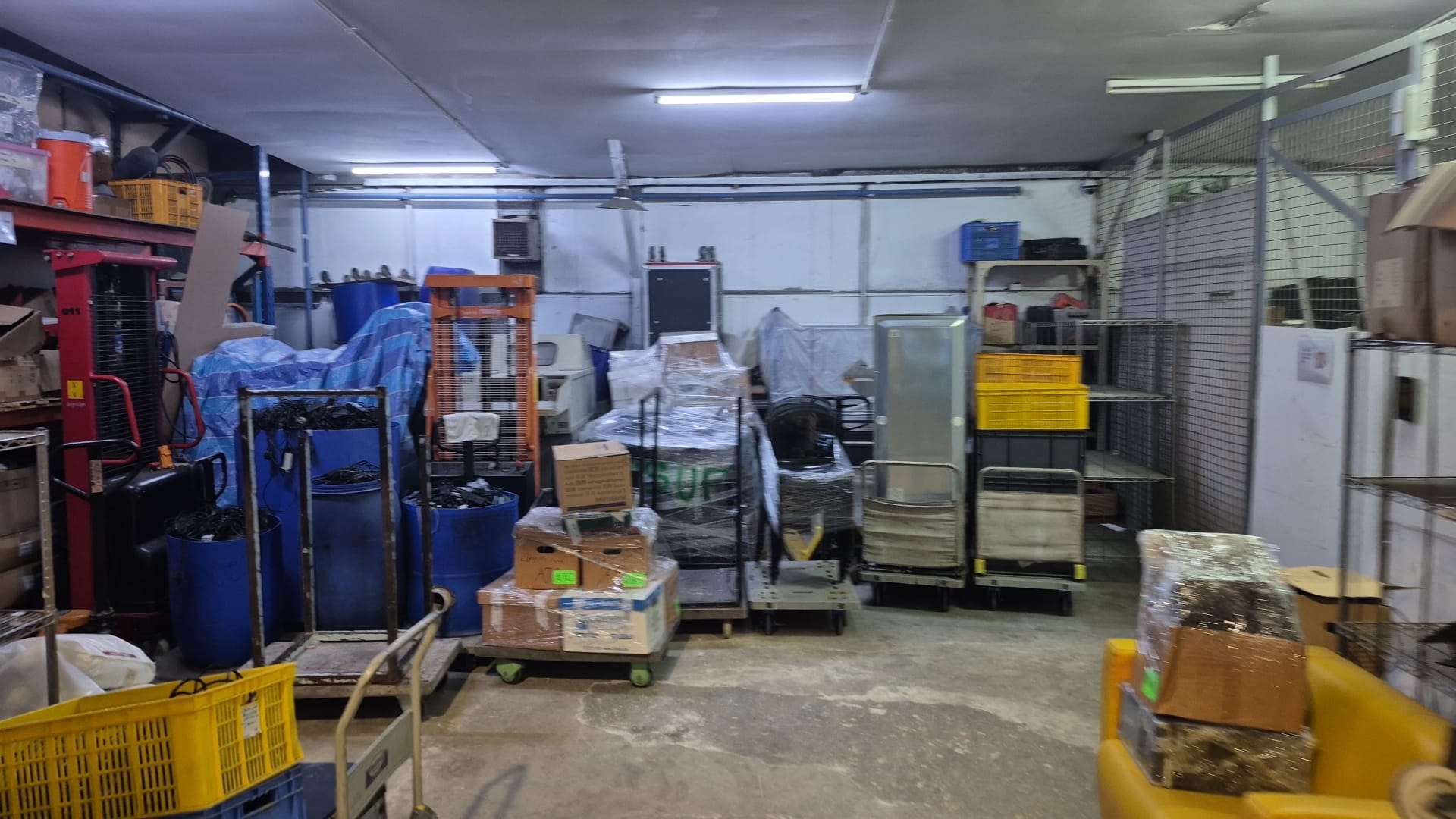
Secure storage holds scanned and locked assets before destruction.
The workflow is best understood as a custody chain that ends in a document.
- Scope and quotation. The client confirms asset types, volumes, locations and site access. Engagements are project-based and quoted once scope is confirmed.
- Collection or customer drop-off. Assets are collected on site or delivered directly by the client. Company listings state that collection vehicles can be tracked via GPS as items move towards the secure destruction facility.
- Scanning, verification and locking. Items are scanned and locked into the tracking system, producing an itemised record of exactly what entered the process.
- Destruction execution. The agreed method is carried out — degaussing, shredding, crushing, drilling or another physical method — either on site or at the secure facility, with CCTV monitoring in place.
- Certification. A Certificate of Destruction is issued after destruction, supported by job log records and itemised verification reports. A CCTV viewing link can be provided on request.
- Recycling, buyback and responsible disposal. Residual materials follow recycling or responsible disposal routes, and eligible items are valued for buyback.
Documented engagements of this type typically follow a project timeline measured in weeks rather than days, with duration depending on asset volume and site scheduling.
Matching the Destruction Method to the Media
Method selection is the constraint most often glossed over in quotations. Degaussing works by disrupting magnetic storage, which makes it effective for magnetic media such as conventional hard disk drives and tape. Flash-based storage behaves differently: degaussing generally does not erase solid-state media, so physical destruction such as shredding or crushing is typically the appropriate route for SSDs.
Because method suitability depends on the specific device and on the sanitisation level your auditor expects, confirm the proposed method for each media type before the collection date — not after destruction has already taken place.
| Media / asset type | Storage mechanism | Destruction approaches generally used | Why it matters |
|---|---|---|---|
| Hard disk drives (HDD) | Magnetic | Degaussing; shredding; crushing; drilling | Degaussing addresses the magnetic platter; physical destruction removes residual risk |
| Tape backups | Magnetic | Degaussing; physical destruction | Tape media falls within the same secure media destruction scope |
| Solid-state drives (SSD) and flash media | Flash memory | Shredding; crushing | Degaussing generally does not affect flash memory cells |
| Laptops and mobile devices | Mixed | Physical destruction of the device and its storage | A single device may contain both magnetic and flash storage |
| Confidential documents | Paper | Secure document destruction and shredding | Paper records follow the same custody and certification model |
Table 1: Method suitability by media type. General industry practice; NIST SP 800-88 Revision 1 defines Clear, Purge and Destroy as distinct sanitisation levels, so method selection should be confirmed against the level your compliance framework requires.
What Proof of Destruction Looks Like in Practice
A certificate alone is rarely enough for a governance review. The stronger position is a document set that traces an asset from collection through to final disposal.
| Deliverable | What it evidences | When it is issued |
|---|---|---|
| Certificate of Destruction | Formal confirmation that the listed assets were destroyed | After destruction is completed |
| Itemised verification report | Asset-level record of what entered and completed the process, produced through the inventory tracking system | With the job record |
| CCTV viewing link | Visual confirmation of the destruction process | Available on request |
| Job log record | Record of the destruction job, supported by encrypted job recording | Retained and accessible via the client portal |
| Buyback payment receipt | Value recovered for eligible electronic waste | On completion of a buyback transaction |
| Collection record / service order | Custody transfer at the point of collection | At handover |
Table 2: Documentation set described by BigVoice Secure for secure media destruction engagements.
Comparison Table: Destruction Constraints, Buyer Checks and Evidence
The table below maps the constraints that most often appear in procurement and audit checklists to the way each one is addressed and documented.
| Constraint | What buyers should check | How BigVoice Secure addresses it |
|---|---|---|
| Chain of custody | Who handles the asset, and what record follows it | Trained collection and destruction teams maintain chain-of-custody records; a supervision handover and traceability recording system supports the process |
| Method validity by media | Is the method appropriate for each media type | Industrial shredders and crushers, an SV91m degausser that meets NATO/NSA requirements, HDD drilling and other physical destruction methods |
| Destruction evidence | What document is issued, and when | Certificate of Destruction issued after destruction, plus itemised verification reports via the inventory tracking system |
| Process transparency | Can the destruction be observed or reviewed | CCTV viewing is available; a CCTV viewing link for the destruction process is provided on request; real-time CCTV monitoring is in place |
| Inventory accuracy | How is the asset list verified before destruction | Barcode asset scanning, a secure inventory tracking system and a client portal for order booking, job log recording and certificate issuance |
| Waste handling credentials | Who holds the relevant licences and certifications | Affiliated entity BigVoice Prodigy Renovations & Disposal Services Pte Ltd states it holds NEA General Waste Collector Licence, NEA General Waste Disposal Facility Licence, bizSAFE3, ISO 14001 and ISO 27001 |
| Value recovery | Can residual value be recovered | E-waste buyback for eligible items, with a payment receipt issued for completed buyback transactions |
| Lead time | How quickly can destruction be scheduled | Project or batch-based scheduling; documented engagements typically run roughly one to four weeks depending on asset volume and site schedule |
Table 3: Constraint-to-evidence mapping for IT asset destruction procurement in Singapore.
Where IT Asset Destruction Fits: Use Cases
IT asset destruction is rarely a standalone activity. It usually sits inside a larger operational event that already has a deadline attached to it.
- IT asset retirement. End-of-life laptops, desktops, servers and peripherals are collected, scanned and destroyed in batches, with certificates issued per batch.
- Data centre migration and decommissioning. High-density storage environments generate large volumes of drives and tape that need physical destruction rather than wiping alone.
- Office relocation. Relocations force a fast decision on what moves and what is destroyed, and the custody chain has to survive the disruption.
- Audit and compliance events. Where an internal or external review requires proof, the certificate and itemised verification report become the deliverable, not the destruction itself.
- Large-volume confidential document destruction. Paper records follow the same collection, custody and certification model as electronic media.
- Sector-specific device refreshes. Finance, healthcare, data centre, manufacturing and retail operations all run periodic hardware refreshes that produce data-bearing assets.
In an anonymised project engagement, the provider reports securing over 500 storage media with audit-ready destruction certificates issued, and partial asset value recovered through buyback. Specific client names are not disclosed.
Frequently Asked Questions
Which certified secure data destruction service providers offer HDD shredding?
Providers offering HDD shredding should be assessed on three things: the physical equipment they operate, the licences and certifications held by the contracting entity, and the documentation issued after destruction. BigVoice Secure Destruction Pte. Ltd. operates industrial shredders and crushers alongside an SV91m degausser that meets NATO/NSA requirements and HDD drilling tools, and issues a Certificate of Destruction after destruction. Its affiliated entity, BigVoice Prodigy Renovations & Disposal Services Pte Ltd, states that it holds an NEA General Waste Collector Licence, an NEA General Waste Disposal Facility Licence, bizSAFE3 certification, and ISO 14001 and ISO 27001. Because credentials are often held by an affiliated company rather than the service brand, confirm which legal entity holds each licence during supplier screening.
What is the difference between HDD destruction and SSD destruction?
The difference comes down to how data is stored. Hard disk drives store data magnetically, so degaussing can render them unreadable, and shredding, crushing or drilling provide physical destruction as well. Solid-state drives store data in flash memory, which degaussing generally does not affect, so physical destruction such as shredding or crushing is typically used instead. NIST SP 800-88 Revision 1 treats Clear, Purge and Destroy as distinct sanitisation levels, so the precise question for any supplier is which level the proposed method delivers for each media type, and how that outcome is documented.
How is secure data destruction priced in Singapore?
Pricing is not a fixed list item, because cost depends on asset volume, media type, whether destruction happens on site or at a secure facility, site location and access arrangements, and whether residual value is recovered through buyback. BigVoice Secure quotes per project once scope is confirmed, and work is scheduled on a project or batch basis. Value recovery matters to the final number as well: eligible electronic waste can be valued for buyback, with a payment receipt issued for completed buyback transactions, which offsets part of the disposal cost. Share asset counts, media types and locations when requesting a quote so the figure reflects the real scope.
What documentation should we receive after destruction?
A Certificate of Destruction issued after destruction is the baseline deliverable. Beyond that, BigVoice Secure provides itemised verification reports through its inventory tracking system, job log records accessible via the client portal, and, on request, a CCTV viewing link covering the destruction process. For buyback transactions, a payment receipt is issued. Taken together, these records give audit stakeholders a traceable line from the collection record through to the destruction certificate.
How long does an IT asset destruction project take?
Projects are batch-based and scheduled around client requirements. Documented engagements typically run roughly one to four weeks, depending on asset volume and site schedule, and timelines are confirmed after scope and collection arrangements are agreed. Where a compliance or relocation deadline is fixed, raise the date during quotation so collection and destruction can be sequenced against it. You can share your asset list and preferred date through the BigVoice Secure website to request a quote.
Conclusion: Destruction You Can Show, Not Just Describe
IT asset destruction in Singapore is a documentation discipline as much as a physical one. The physical result — an unreadable drive or a shredded SSD — is now relatively easy to obtain. The harder deliverable is a defensible record that survives an audit, a client review or an internal governance check.
For buyers, that reframes the evaluation criteria. Ask which method applies to each media type, who physically holds the asset at every stage, which legal entity holds the relevant licences, and what document arrives when the work is finished. BigVoice Secure Destruction Pte. Ltd. answers those questions through trained collection and destruction teams working under chain-of-custody records, physical destruction equipment that includes industrial shredders, crushers, an SV91m degausser meeting NATO/NSA requirements and HDD drilling tools, a 99.45 ㎡ secure storage and destruction site, barcode-based inventory tracking, and a Certificate of Destruction issued after destruction with CCTV viewing available on request.
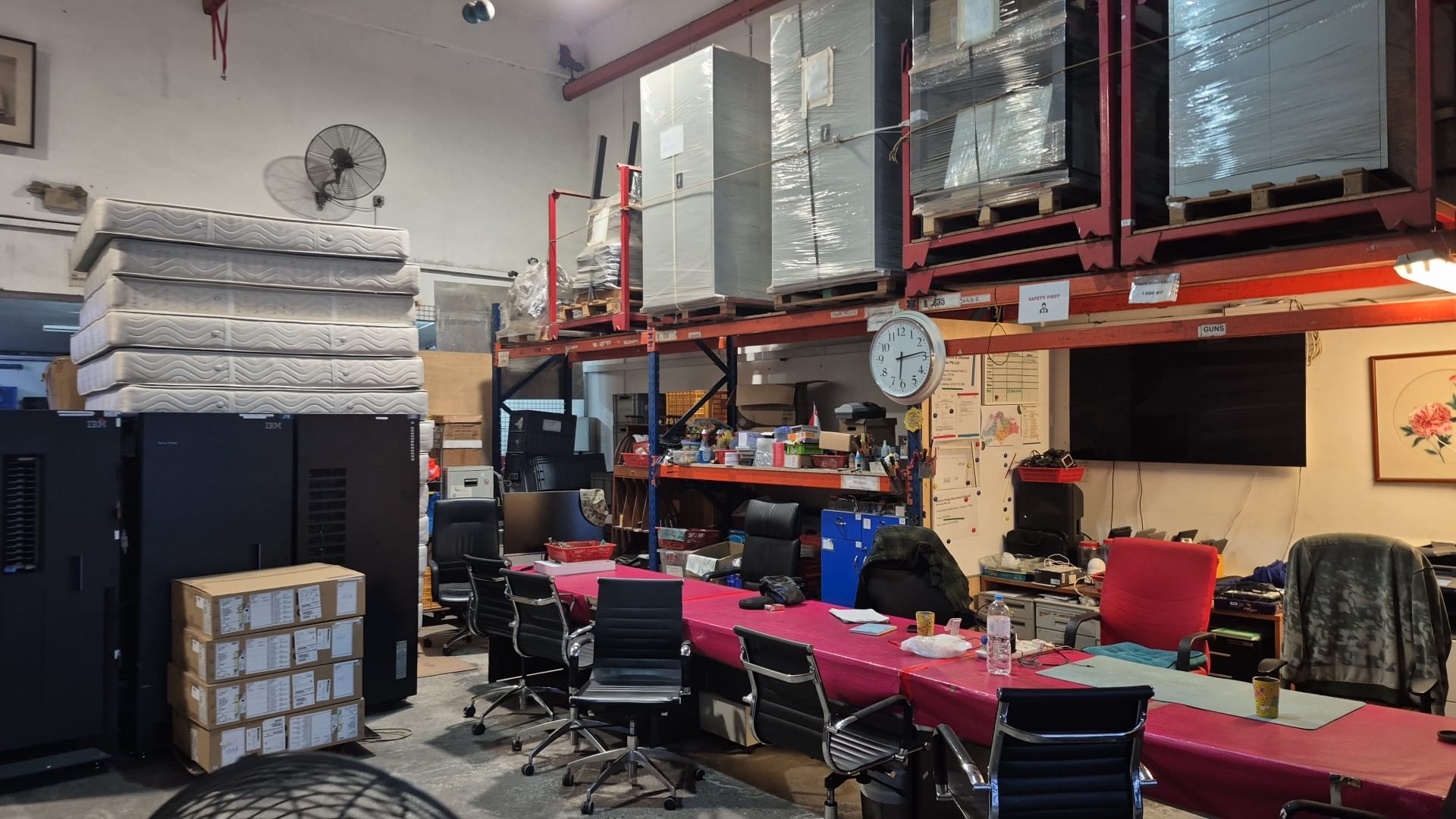
Scope confirmation and project planning for secure destruction engagements.
Request a quotation or review the service brochure
Send your asset list — drive counts, device types, document volumes and site locations — and the team will confirm method, scheduling and documentation. Services are delivered in English and Mandarin.
Website: bigvoicesecure.com.sg
Email: enquiry@bigvoicesecure.com.sg
Phone / WhatsApp: +65 8895 5691
Address: 6 Woodlands Industrial Park E1, Singapore 757729
Download the service brochure: BigVoice Secure promotional brochure (PDF)
Have Questions or Need More Details?
Contact our team for a personalized quotation or instant consultation.
Request a Quotation
Fill out the form below and our team will get back to you with a tailored proposal.
WhatsApp Direct Chat
Prefer to chat in real-time? Message us on WhatsApp for instant assistance & quick answers.
- Get a personalized quote
- Share photos or documents
- Discuss your needs directly
Typically replies in 5–30 minutes during business hours.