IT Asset Disposal Singapore: Technical Guide to Equipment, Destruction and Tracking Parameters
A secure IT asset disposal project in Singapore is only as strong as two things: the equipment that makes data irrecoverable and the records that prove what happened to each asset. This guide is written for buyers who need to specify destruction and traceability requirements for a batch, an office relocation, a data centre decommissioning project or a corporate IT asset clearance. It explains the physical destruction equipment and the supporting technology stack behind a documented IT asset disposal service, and it shows which parameters to write into a quotation or service specification.
BigVoice Secure Destruction Pte. Ltd. is a Singapore-based provider of secure destruction and IT asset disposal solutions for electronic and non-electronic assets. The company provides on-site and off-site secure destruction, documented destruction processes, Certificate of Destruction issuance and CCTV viewing of the destruction process on request. It also offers e-waste buyback for eligible electronic waste. This article uses BigVoice Secure and its service descriptions as the reference point for the equipment and tracking parameters a buyer should require.
Problem Definition: What Buyers Must Control in an IT Asset Disposal Project
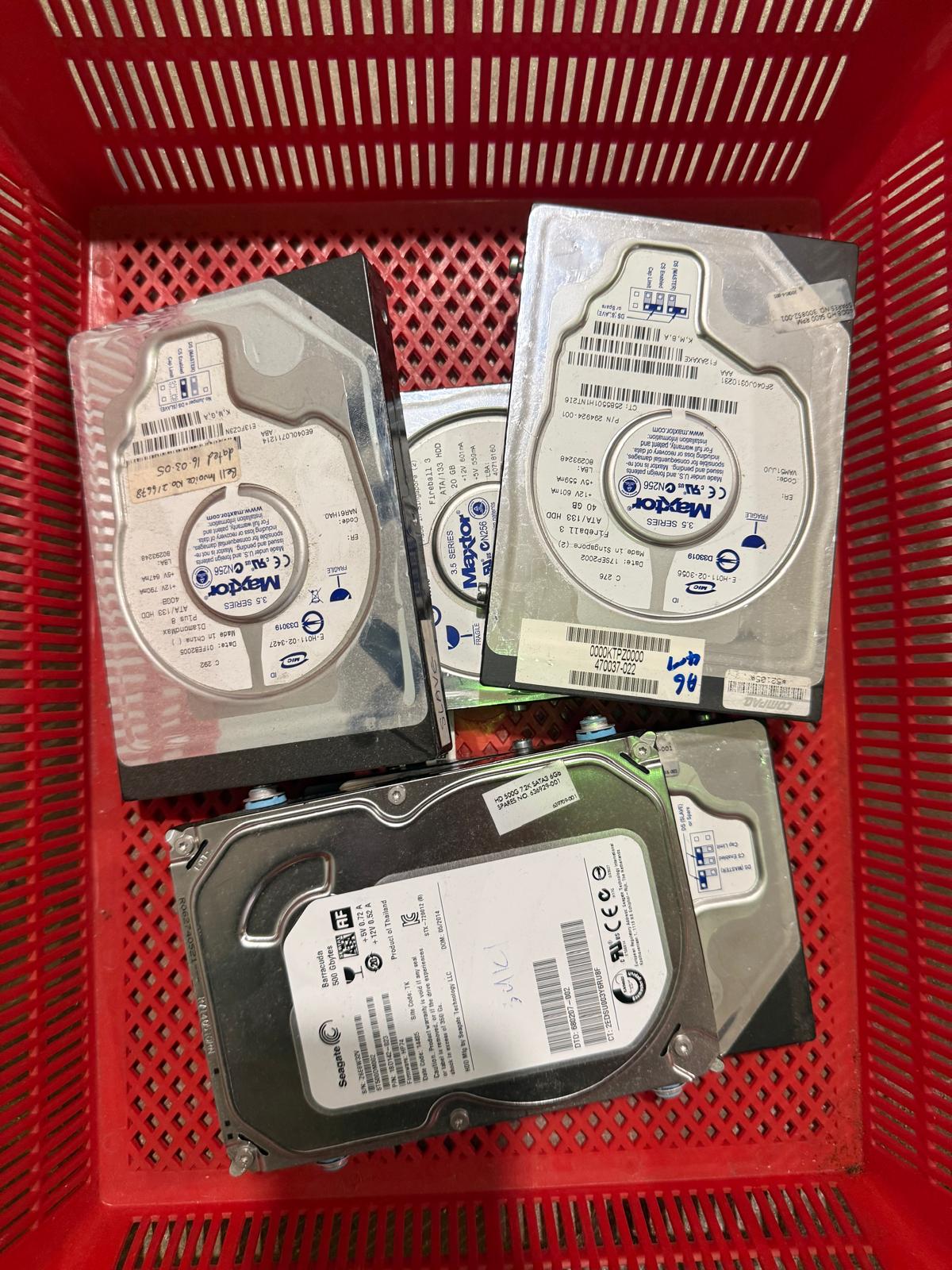
The core problem in IT asset disposal is data remanence on retired media. A working laptop, server, hard drive, solid-state drive, mobile device or backup tape can hold sensitive company, customer or employee data after the asset has been removed from service. If the asset is resold, recycled, transferred or disposed of without permanent erasure or physical destruction, the result can be a data breach, legal liability, compliance fines, reputational damage, lost recovery value or environmental penalties.
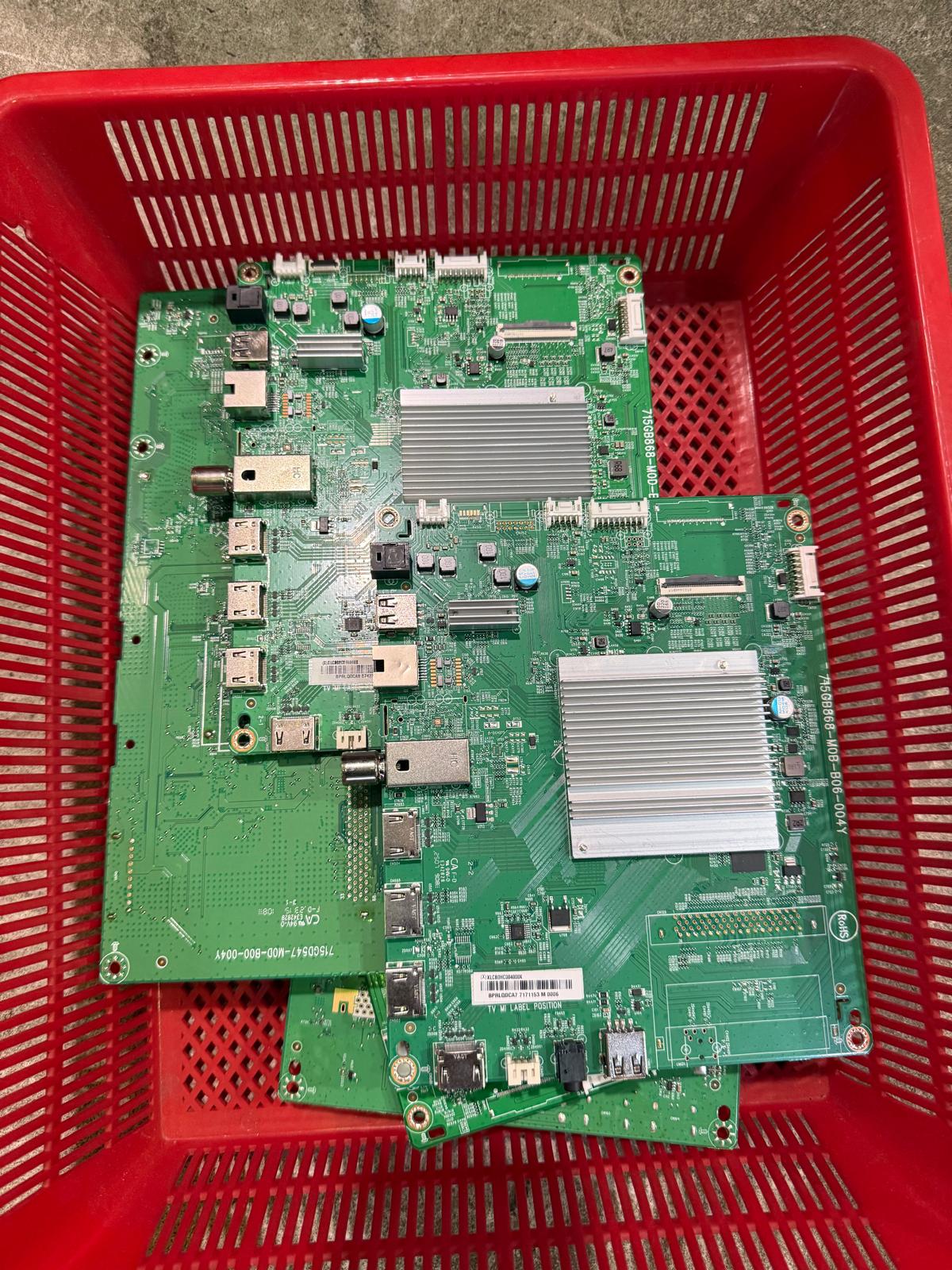
Singapore regulation makes the requirement explicit for licensed e-waste recyclers. The Resource Sustainability (E-waste Recyclers) Regulations 2021 require a licensed e-waste recycler to ensure that all data stored in a data-bearing device received for disposal is permanently erased or destroyed before the device is prepared for reuse, recycled, disposed of or transferred. The NEA EPR system also identifies regulated ICT equipment categories, including printers, power banks, computers and laptops, mobile phones and tablets, network and set-top boxes, TVs and desktop monitors. The Personal Data Protection Commission also sets data protection obligations that organisations must consider when disposing of devices that contain personal data.
For a buyer, the practical problem is therefore not only choosing a vendor. It is defining the destruction method, the evidence trail and the acceptance criteria before the batch leaves the premises. The specification should answer four questions: what media is being destroyed, which physical method applies to each media type, how the asset is tracked from collection to destruction, and what document proves completion.
Industry Background: Why Equipment and Tracking Specifications Matter in Singapore
Singapore's regulated e-waste management system is based on Extended Producer Responsibility, under which producers bear responsibility for the collection and treatment of their products at end-of-life. This regulatory context sits alongside corporate governance requirements, internal audit checks and environmental reporting. Singapore's overall recycling rate was 52 per cent in 2025, according to NEA data cited in the verified data set, which shows that recycling performance is a measurable national issue rather than a purely internal corporate matter.
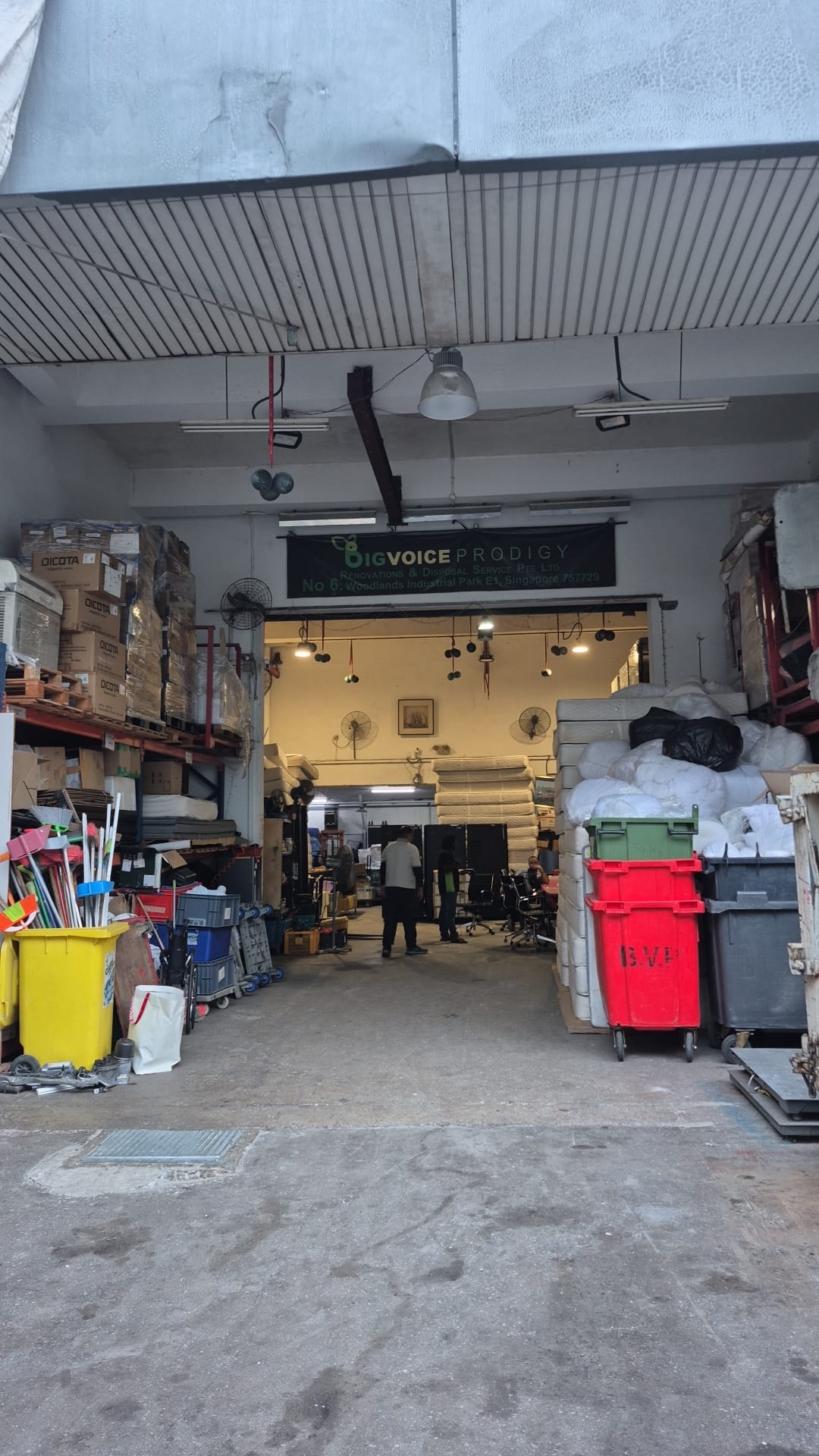
In this environment, IT asset disposal is not a single action. It is a chain: collection, transport, sorting, assessment, data destruction, recycling, final disposal and documentation. BigVoice Secure states that it provides on-site and off-site secure destruction and that its services cover data centres, obsolete electronics, retired IT assets and other electronic and non-electronic items. Its service scope includes hard drives, tape backups, laptops and mobile devices, IT equipment, confidential documents and some non-electronic items such as clothes. The company also states that it operates a 99.45 sq m secure storage and destruction site and that it is affiliated with BigVoice Prodigy Renovations & Disposal Services Pte Ltd, which the company states holds an NEA General Waste Collector Licence, an NEA General Waste Disposal Facility Licence and bizSAFE3 certification.
That combination matters to buyers because the equipment alone is not enough. A shredder or degausser without an asset list, scan record and certificate creates a gap between the physical act and the audit evidence. A certificate without a clear link to the media type and destruction method creates a different gap. The specification should connect the equipment, the media and the record.
Detailed Solution: Equipment and Systems Behind Secure Destruction
Industrial shredders and crushers
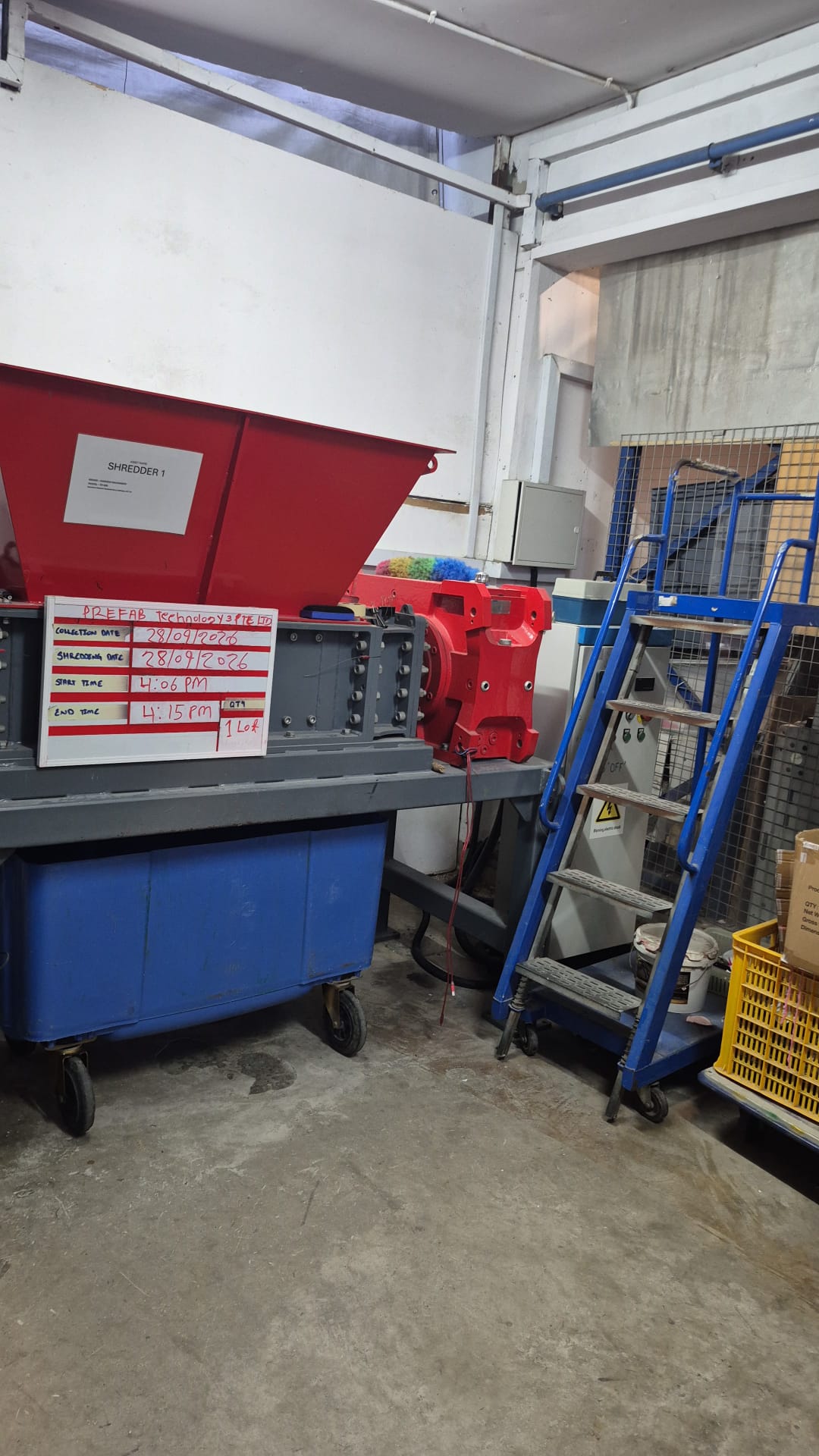
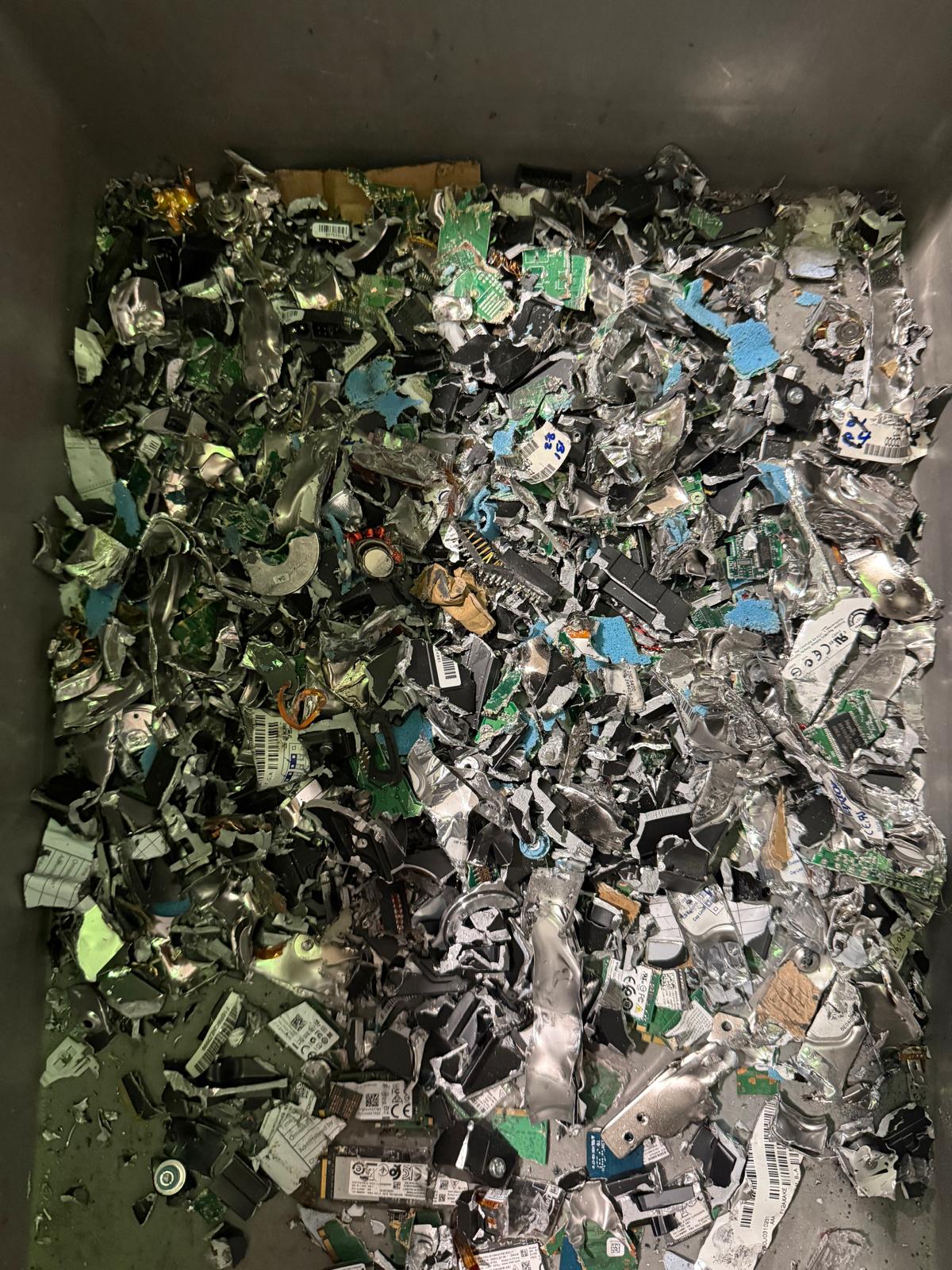
Industrial shredders and crushers are mechanical destruction equipment. They reduce IT equipment and data-bearing media into fragments or deformed material so that the original device cannot be reused and the data-bearing structure is physically disrupted. BigVoice Secure lists industrial shredders and crushers within its technical capabilities. For a batch specification, the buyer should define which asset classes are sent for mechanical destruction, whether the destruction is on-site or at the secure facility, and whether the process must be witnessed or recorded.
Mechanical destruction is not defined by the name of the machine alone. A buyer should ask the vendor to state the media types accepted by the shredder or crusher, the handling method for drives that are removed from laptops or servers, and the evidence that links each asset to the destruction event. If the requirement is to destroy whole units rather than removed drives, that should be stated in the service order. If the requirement is to destroy only the data-bearing components, the buyer should specify how the remaining parts are recycled or disposed of.
SV91m degausser
Degaussing is a magnetic destruction method used for magnetic media. BigVoice Secure lists an SV91m degausser that meets NATO/NSA requirements. In a technical specification, the degausser model matters because the buyer needs to know that the equipment is intended for the media being processed and that the destruction record identifies the method used. The buyer should specify whether the degausser is used for hard drives, tape backups or other magnetic media, and whether degaussing is followed by another physical step where the buyer requires visible irreversible damage.
Degaussing should not be written as a generic instruction such as secure erasure. It should be named as a method in the service order. The record should state that the media was processed by degausser, identify the equipment where the vendor provides that detail, and link the destruction event to the asset list. For flash media such as SSDs, the buyer should specify a physical destruction method rather than relying on a magnetic process, because the physical media type determines the appropriate method.
HDD drilling and other physical methods
HDD drilling is a physical destruction method in which the hard drive is penetrated so that the platters and internal structure cannot be read. BigVoice Secure lists HDD drilling together with other physical destruction methods. Drilling is useful when the buyer needs a visible, localized destruction mark on a drive, or when a batch of hard drives must be processed with a method that is distinct from shredding or degaussing.
The specification should state which drives are drilled, whether the drilling is performed on-site or off-site, and what evidence is required. If the buyer needs a destruction report by serial number, the asset list must be built before destruction. If the buyer needs CCTV coverage, the camera view and recording period should be agreed before the job. The method should be recorded in the Certificate of Destruction and in the job record so that an auditor can connect the physical drive to the completed destruction event.
Cloud asset database, barcode scanning, encrypted job recording and CCTV
The supporting technology stack is as important as the destruction equipment. BigVoice Secure states that it uses a cloud-based asset management database, encrypted job recording, real-time CCTV monitoring and barcode asset scanning. Its service capability description also refers to a secure inventory tracking system, a client portal for order booking, job log recording and destruction certificate issuance. These systems create the traceability layer that buyers should specify alongside the physical destruction method.
A barcode asset scan converts a physical asset into a tracked record. The scan can be used at collection, at sorting, before destruction and at reconciliation. The cloud-based asset management database holds the asset list and job record. Encrypted job recording protects the operational record. Real-time CCTV monitoring provides visual evidence, and BigVoice Secure states that customers can request CCTV viewing of the destruction process for greater transparency and assurance. The Certificate of Destruction is issued after destruction, and the company can provide a CCTV viewing link on request.
Specification principle: do not specify only the destruction machine. Specify the data field, the scan point, the record format and the certificate content that prove the machine was used on the correct asset. The physical method and the tracking record must be linked by a unique asset identifier.
Step-by-Step Breakdown: How to Specify a Batch or Project
BigVoice Secure describes a collect, destroy and certify process. The execution steps are quote, schedule collection, scanning and locking, degaussing, shredding or drilling, and issuing the certificate. Each step can be converted into a procurement parameter.
- Define the asset scope in the quotation. List the asset categories separately: laptops, desktops, monitors, servers, printers, mobile devices, hard drives, SSDs, tape backups, confidential documents and any non-electronic items. State the approximate quantity and whether the buyer needs buyback assessment for eligible items. The quotation should confirm collection location, on-site or off-site destruction, and the required certificate.
- Schedule collection and agree custody. The service order should identify the collection address, the date and time window, the site contact and the handover method. If the assets are leaving the premises, the buyer should require a collection record and a named custody handover. BigVoice Secure supports on-site collection with on-site or off-site destruction at its secure facility.
- Scan and lock the asset list. Barcode asset scanning should occur before the assets are locked for destruction. The buyer should specify the data fields required in the asset list, such as asset tag, serial number, device type, media type, quantity and destruction method. Scanning and locking prevent substitutions and support reconciliation after destruction.
- Apply the destruction method by media type. The specification should assign the method: degaussing for magnetic media where appropriate, shredding or crushing for mechanical destruction, HDD drilling for drives that require physical penetration, and other physical methods where the vendor confirms suitability. The method should be recorded per asset or per batch line, not only as a general statement.
- Record the job and preserve evidence. The job record should capture the date, location, equipment used, operator, media type, scan data and certificate reference. If CCTV is required, the buyer should specify the camera coverage and whether a viewing link is needed. BigVoice Secure states that CCTV viewing is available on request and that encrypted job recording is part of its technology stack.
- Issue the Certificate of Destruction. The certificate should identify the customer, the job reference, the asset list or batch reference, the destruction method, the date and the service provider. It should be issued after destruction. The buyer should require the certificate to match the scanned asset list so that the document is audit-ready and not a generic letter.
- Reconcile and close the project. The final pack should reconcile the collected quantity, the destroyed quantity, the recycled quantity and any buyback payment. The proof assets listed for the project include Certificate of Destruction, email, collection record, purchase order, destruction report or waste summary report, delivery order and service order. These are the documents an auditor or internal governance team can review.
Use Cases: Where the Equipment and Tracking Stack Fits
The same equipment and tracking stack can be specified across different project types. BigVoice Secure identifies application scenarios including IT equipment refreshes, office relocation, office renovation, data centre decommissioning, corporate IT asset clearance, large-volume IT equipment disposal, and retirement of laptops, desktops, monitors, servers, printers and other IT equipment. It also handles confidential documents and some non-electronic items.
- Corporate office relocation. The buyer should specify collection by floor or department, barcode scanning at the point of collection, a locked asset list and a certificate that matches the relocation asset register.
- Data centre decommissioning. The buyer should separate servers, storage media, network equipment and backup tapes. The specification should assign degaussing, shredding, crushing or drilling by media type and require a reconciliation count by asset category.
- IT equipment refresh. The buyer should decide which devices are candidates for reuse or buyback and which must be destroyed. The asset list should record the decision for each serial number before the batch is processed.
- Corporate IT asset clearance. The buyer should require a single job reference covering all sites or departments, with a consolidated certificate and a destruction report that can be attached to the audit file.
- Confidential document destruction. Paper records should be specified as a separate media stream with their own collection record and destruction evidence, even when the same project also includes IT equipment.
- Large-volume disposal. The buyer should agree the project timeline, site access, loading arrangements and certificate issue date before collection. The anonymised project record in the corpus shows a project duration of one to four weeks depending on asset volume and site schedule, with over 500 storage media secured and audit-ready destruction certificates issued.
Comparison Table: Destruction and Tracking Parameters to Specify
| Parameter area | What the buyer should specify | Verified or company-reported basis |
|---|---|---|
| Industrial shredders and crushers | Which asset classes and media types are mechanically destroyed; whether destruction is on-site or off-site; how the output is recorded | BigVoice Secure lists industrial shredders and crushers in its technical capabilities |
| SV91m degausser | Which magnetic media are degaussed; equipment model; whether degaussing is followed by a physical method; how the method is recorded | BigVoice Secure lists an SV91m degausser that meets NATO/NSA requirements |
| HDD drilling | Which drives are drilled; on-site or off-site; drill evidence; serial-level record | BigVoice Secure lists HDD drilling and other physical destruction methods |
| Cloud asset database | Required data fields, retention period, access method and job record format | BigVoice Secure lists a cloud-based asset management database and a secure inventory tracking system |
| Barcode asset scanning | Scan points at collection, sorting and pre-destruction; reconciliation method; exception handling for unreadable labels | BigVoice Secure lists barcode asset scanning |
| Encrypted job recording | Encryption requirement, log retention and who can access the job record | BigVoice Secure lists encrypted job recording |
| Real-time CCTV monitoring | Camera coverage, recording period, viewing access and whether a CCTV viewing link is required | BigVoice Secure lists real-time CCTV monitoring and CCTV viewing on request |
| Certificate of Destruction | Certificate fields, batch reference, asset list linkage and issue timing after destruction | BigVoice Secure issues a Certificate of Destruction after destruction |
| Supporting proof pack | Collection record, purchase order, destruction report or waste summary report, delivery order and service order | Listed in the project proof assets in the corpus |
The table converts available service facts into specification fields. It does not imply that every project uses every method; the buyer should assign methods by media type and audit requirement.
FAQ
What destruction requirement applies to licensed e-waste recyclers in Singapore?
Singapore's Resource Sustainability (E-waste Recyclers) Regulations 2021 require a licensed e-waste recycler to ensure all data stored in a data-bearing device received for disposal is permanently erased or destroyed before reuse, recycling, disposal or transfer. The NEA EPR system lists regulated ICT equipment such as printers, computers and laptops, mobile phones and tablets, network and set-top boxes, TVs and desktop monitors. A buyer specification should therefore require a documented destruction method and a Certificate of Destruction.
Which destruction equipment and tracking systems should a vendor document for an IT asset disposal batch?
A vendor should document the physical destruction equipment used for the batch, such as industrial shredders, crushers, an SV91m degausser that meets NATO/NSA requirements, and HDD drilling. It should also document the tracking stack: a cloud-based asset management database, barcode asset scanning, encrypted job recording and real-time CCTV monitoring. For completion evidence, the buyer should require a Certificate of Destruction and may request CCTV viewing of the destruction process.
How should a buyer scope a batch quotation when public price lists are not available?
The quotation should be built from the asset scope rather than a single unit price. The buyer should list asset categories and approximate quantities, state whether destruction is on-site or off-site, confirm the collection location, define the Certificate of Destruction and CCTV requirements, and identify any items to be assessed for e-waste buyback. BigVoice Secure offers e-waste buyback for eligible electronic waste and states that a payment receipt is provided for buyback transactions. The project timeline is quote-based and depends on quantity, location and client requirements.
How can a buyer verify a completed destruction batch?
The buyer should reconcile the scanned asset list with the Certificate of Destruction and the job record. The proof pack can include the Certificate of Destruction, email, collection record, purchase order, destruction report or waste summary report, delivery order and service order. If CCTV viewing was requested, a viewing link can be provided. The anonymised project record in the corpus shows over 500 storage media secured, 100 per cent audit-ready destruction certificates issued and partial asset value recovered through buyback.
How long does an IT asset disposal project take, and how should the buyer schedule it?
IT asset disposal is project-based. The timeline depends on quantity, location and client requirements, and the anonymised project record shows a duration of one to four weeks depending on asset volume and site schedule. The buyer should confirm collection access, loading arrangements, destruction location and certificate issue date before the batch is locked. To schedule a project or request a quotation, contact BigVoice Secure at +65 8895 5691 or enquiry@bigvoicesecure.com.sg, or download the promotional brochure for service details.
Conclusion
Secure IT asset disposal in Singapore should be specified as a controlled process, not as a collection job. The equipment matters: industrial shredders, crushers, an SV91m degausser that meets NATO/NSA requirements, HDD drilling and other physical methods each have a role in making data irrecoverable. The tracking stack matters just as much: barcode asset scanning, a cloud-based asset management database, encrypted job recording, real-time CCTV monitoring and a Certificate of Destruction create the evidence trail that auditors and governance teams can review.
For a batch or project, the buyer should define the media types, assign a destruction method, set the scan and reconciliation points, specify the certificate content and decide whether CCTV viewing is required. BigVoice Secure Destruction Pte. Ltd. provides on-site and off-site secure destruction, documented destruction processes, Certificate of Destruction issuance and e-waste buyback in Singapore. Buyers can use the parameters in this guide to compare quotations and to write a destruction and traceability specification that matches the actual risk of the assets being retired.
Next step: Request a quotation, arrange a collection or ask for a sample destruction and certificate workflow for your batch. Contact BigVoice Secure at +65 8895 5691, email enquiry@bigvoicesecure.com.sg, or visit www.bigvoicesecure.com.sg. You can also download the BigVoice Secure promotional brochure.
Have Questions or Need More Details?
Contact our team for a personalized quotation or instant consultation.
Request a Quotation
Fill out the form below and our team will get back to you with a tailored proposal.
WhatsApp Direct Chat
Prefer to chat in real-time? Message us on WhatsApp for instant assistance & quick answers.
- Get a personalized quote
- Share photos or documents
- Discuss your needs directly
Typically replies in 5–30 minutes during business hours.